Adjust your padel technique for windy conditions by following these steps. First, identify wind direction: watch net movement, feel which cheek catches air, or observe debris. Second, lower your shot trajectory: keep the ball close to the ground, use flat shots with less spin, aim at the lower net third, and take a short backswing. Third, control power: add force into headwinds, reduce power with tailwinds, aim into crosswinds. Fourth, adjust positioning: track the ball from opponent contact, shift left if drifting left, use quick adjustments of no more than three steps, and anticipate changed bounces. Fifth, modify serves: use more power into headwinds, reduce power with tailwinds, aim into crosswinds. Sixth, use lobs strategically: topspin lobs work in tailwinds, backspin lobs in headwinds, prioritize consistency over winners. Continuing your training will reveal more advanced tactical approaches.
Reading Wind Direction Before Every Point
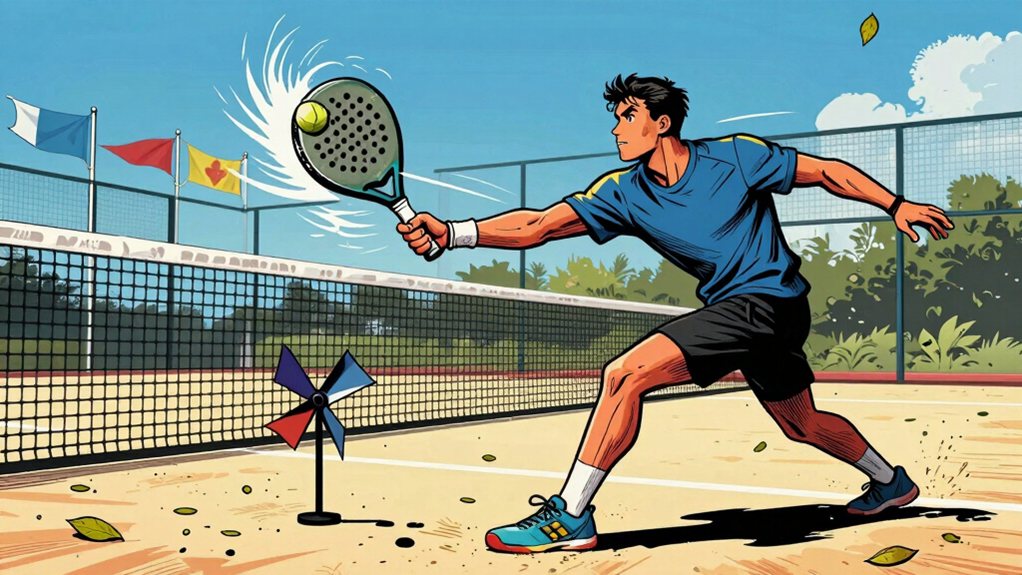
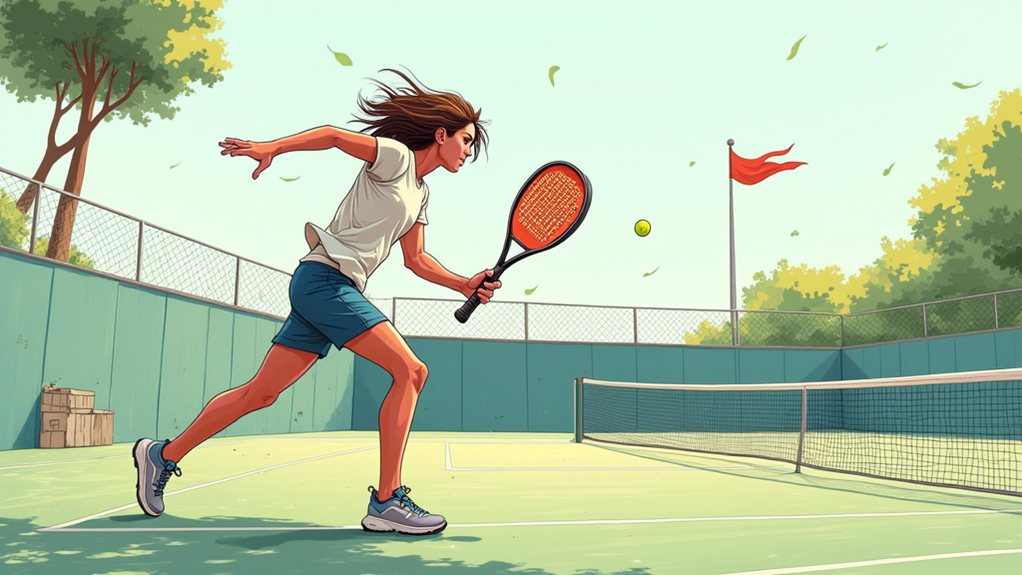
Can you identify the wind direction before each point? This is your first tactical step in windy padel. Watch the flags, the net movement, and feel the air on your face. We classify wind into three types: end-to-end, side-to-side, and diagonal.
How to assess wind direction:
- Watch the net; it shows wind direction clearly.
- Feel which side of your face catches the air.
- Notice debris or leaves on the court.
- Observe how your previous shots behaved.
Choose your court side strategically during the initial draw. Communicate with your partner about what you observe. Your awareness before each point directly impacts your preparation and shot selection.
Adjusting Shot Trajectory for Windy Conditions
You need to lower your shot trajectory over the net to minimize wind interference and keep the ball in play. Use flat shots with less spin to reduce the Magnus Effect and maintain better control in windy conditions. Adjust your flat shot power based on wind direction—you’ll add more power into headwinds and reduce power with tailwinds.
Lower Trajectory Shots
When wind picks up, lowering your shot trajectory over the net helps minimize its disruptive effects on the ball. You reduce the ball’s exposure to wind by keeping it close to the ground. The ball travels a shorter distance. It presents less surface area for gusts to push.
Key adjustments:
- Shorten your backswing to lower your contact point
- Contact the ball slightly in front of your body
- Aim for the lower third of the net
- Keep your racket face stable through contact
- Target the middle zones of the court
You minimize spin on these shots. You maintain firm wrist action. Your follow-through stays controlled and short. These shots work best against headwinds and crosswinds. Practice hitting 10-15 low drives per session in windy conditions.
Flat Shot Power
Master flat shots with reduced spin to counter wind interference. Flat shots travel straighter through air, giving wind less surface area to push. Reduce topspin on your drives. Eliminate backspin on your volleys. Keep your swing path low.
When you play in wind:
- Aim slightly lower over the net
- Use a short, compact follow-through
- Contact the ball in front of your body
| Wind Condition | Flat Shot Adjustment |
|---|---|
| Side wind | Aim 2-3 feet into the wind |
| Tailwind | Reduce power by 20% |
| Headwind | Add 10% more force |
| Crosswind | Compensate aim 1-2 feet |
| Calm day | Use normal technique |
We adjust flat shot power based on wind intensity. Your control improves when you trust these numbers.
Practice these adjustments during warm-ups. Consistency rises when you respect wind forces.
Controlling Power and Placement in Wind
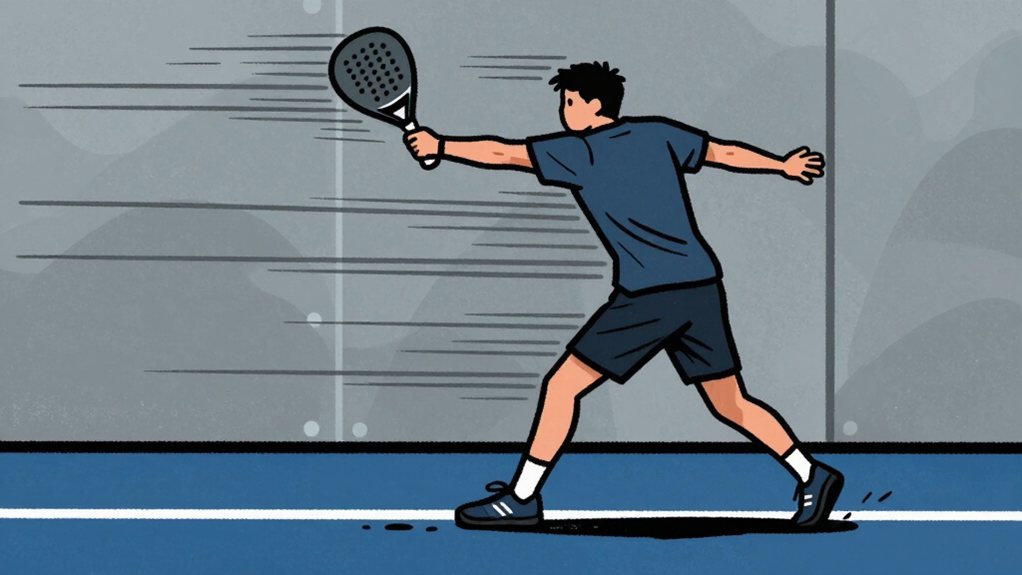
When playing in wind, you must adjust your power based on its direction and strength. Use more force into a headwind to clear the net, and reduce power with a tailwind to avoid overshooting the court.
For placement, prioritize accuracy over power by aiming slightly against crosswinds to compensate for sideways drift, and keep your shots low and controlled to minimize wind interference. Using a smart home energy monitor can help you track and optimize energy consumption when running climate-controlled indoor courts during adverse weather conditions.
Power Adjustment Strategies
Effective power control forms the foundation of successful play in windy conditions. You must adjust your stroke strength based on wind direction and intensity.
- Hit harder into headwinds to maintain ball reach. Increase power by 20-30% to clear the net safely.
- Reduce power with tailwinds to prevent overshooting. Use 15-20% less force on your shots.
- Apply consistent, controlled strokes rather than raw power. Focus on steady acceleration through the ball.
- Modify serve power accordingly. Add power into headwinds; subtract power with tailwinds.
- Maintain firm grip pressure throughout your swing. Avoid tightening up excessively in difficult conditions.
Remember that controlled placement matters more than raw power when wind interferes with ball flight.
Placement Accuracy Techniques
Because wind amplifies every minor error, you must prioritize placement over raw power in your shots. Follow these placement accuracy steps:
- Choose a target zone near the corners or the center of the service box. Avoid aiming at the glass walls.
- Shorten your backswing and keep your swing fluid. This creates a controlled, low-risk shot.
- Use a flatter trajectory with minimal spin. Less spin reduces wind lift, helping the ball stay on line.
- In a crosswind, aim a few degrees into the wind to cancel drift.
- Keep your grip relaxed but firm. Tension causes mis-direction.
- After contact, watch the ball’s early flight and adjust your stance quickly if the wind pushes it off course. You can’t force shots.
Positioning Strategies for Ball Drift
Since wind affects ball trajectory, you must anticipate its drift during flight and prepare to move accordingly. Keep your feet light and your body low. Watch the ball from the moment your opponent strikes it. If the ball drifts left, shift your body left. If it drifts right, adjust right.
- Track ball early. Don’t wait until it reaches you.
- Move to the expected landing spot. Arrive one step before the ball.
- Use short, quick steps. Take no more than three steps to adjust.
- Expect bounces to change. The wind alters spin and speed upon impact.
- Stay centered when unsure. Return to base position between shots.
Keep your weight forward. Stay ready. Anticipate every shot.
Modifying Your Serve for Wind
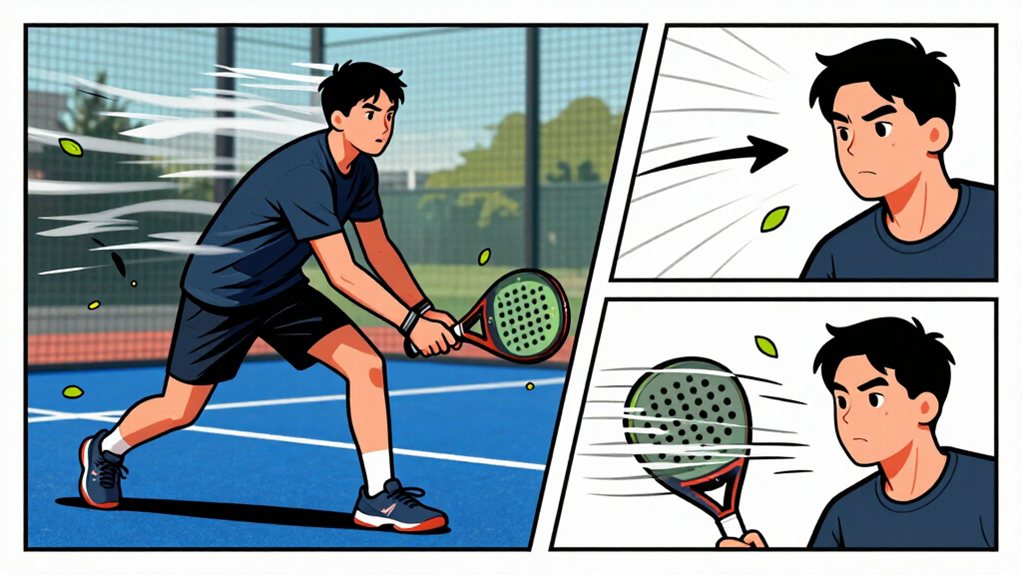
When you adjust your positioning to handle ball drift, you must also change how you serve.
- Add more power into headwinds. Your serve needs extra force to clear the net and land deep in the court.
- Reduce power with tailwinds. Too much force causes the ball to overshoot the target area.
- Account for crosswinds. Aim slightly against the wind direction to compensate for sideways drift.
- Prioritize accuracy over power. Wind amplifies mistakes, so you can’t afford unforced errors.
- Aim for the court center. Avoid risky edges that become more dangerous in windy conditions.
- Communicate with your partner. Let them know wind strength and direction before each serve.
These adjustments help you maintain control and consistency regardless of wind conditions.
Using Lobs and Patience Plays in Windy Conditions
While windy conditions challenge your game, you can use lobs and patient play to gain advantage. Here are key tactics:
Wind is a weapon if you wield lobs, patient rally, match spin, and control depth.
- Master the lob. Use topspin lobs in tailwinds for a dipping effect. Use backspin lobs in headwinds for low, extended shots that stay close to the baseline.
- Match spin to wind. Topspin creates extra dip with wind at your back. Backspin keeps balls low when facing into wind.
- Play patiently. Prioritize consistency over winners. Let wind work against your opponents while you stay solid.
- Anticipate longer rallies. Keep your feet light for quick adjustments. Position yourself slightly deeper than usual.
- Control your power. Reduce pace in tailwinds to avoid overshooting. Add power in headwinds to maintain depth.
These strategies turn wind into your advantage.
Frequently Asked Questions
How Do I Choose the Right Racket String Tension for Windy Play?
Choose slightly tighter string tension for windy play, you gain better control over unpredictable ball movement. Lower tension adds power but increases wind interference, compromising your precision when drifts shift mid-court.
What Mental Strategies Help Stay Focused When Wind Disrupts My Rhythm?
Stay present by breathing through disruptions. Trust your preparation over immediate results. Reset after each point. Focus on one shot at a time. Visualize consistent swings. Block out wind noise. Trust your training. Stay confident.
Can Specific Footwork Drills Improve Stability in Gusty Conditions?
Yes, specific footwork drills dramatically improve your stability in gusty conditions. Practice lateral shuffle drills, quick direction changes, and low-center-of-gravity stance practice. Shadow swinging with resistance bands builds stabilizing muscles. Jump rope and cone drills boost agility when wind shifts your balance.
Should I Alter My Warm-Up Routine to Prepare for Wind?
Like a sailor testing the breeze before launch, you must adapt your warm-up. Include dynamic balance drills, practice shadow swings against wind, and do footwork patterns. Prepare your body to dance with unpredictable gusts.
How Does Wind Affect the Ball’s Behavior After It Hits the Glass?
Wind pushes your ball toward the glass walls when it’s side-to-side. After bouncing off the glass, the wind alters the ball’s trajectory and spin, making returns unpredictable and forcing you to adjust your positioning continually.
Final Thoughts
Use the wind as a second player. In a 2022 club match, a 15-mph crosswind turned my straight drive into a sharp angle, and I lost the point. We can’t ignore the wind. We can adapt by always checking the flag before each serve, by aiming 2-3 feet farther into the wind, and by keeping your stance low. Follow these steps:
- Watch flag for direction.
- Aim 2-3 feet into wind.
- Keep knees bent, weight forward.