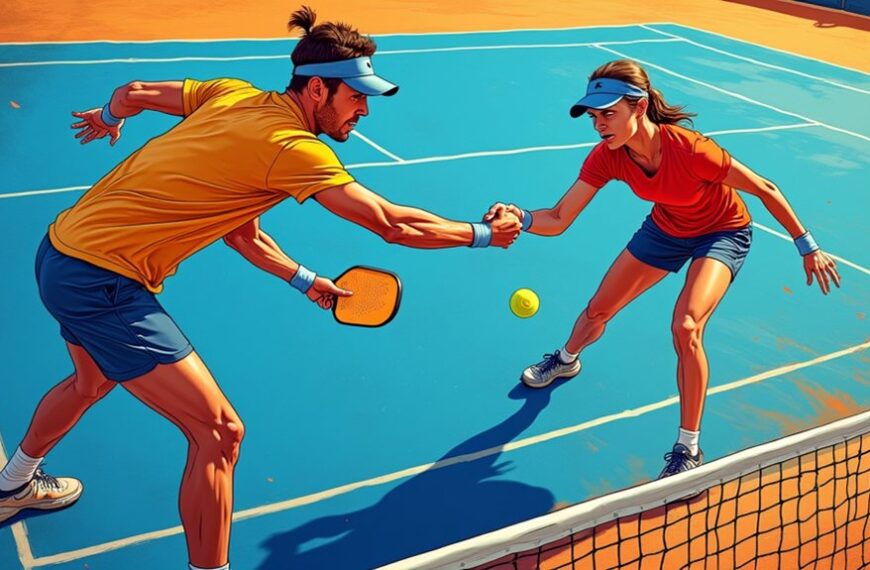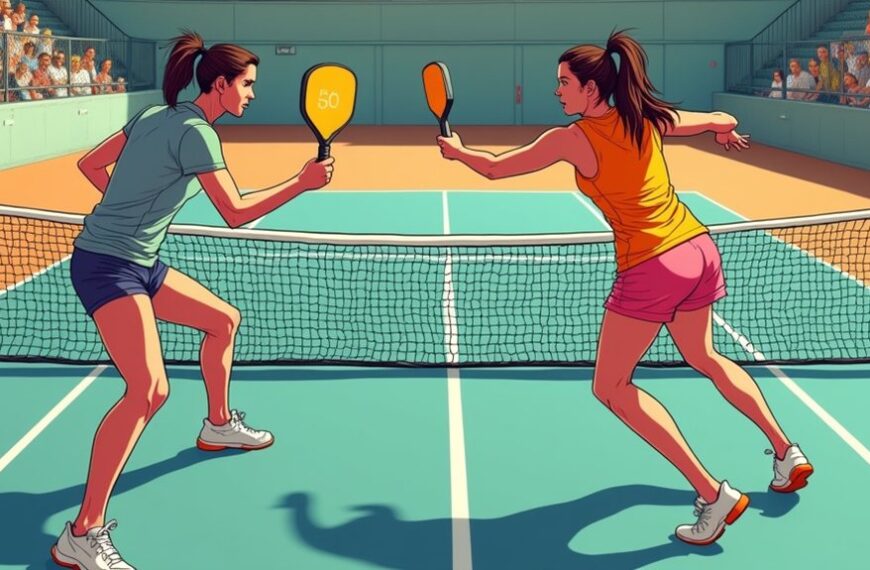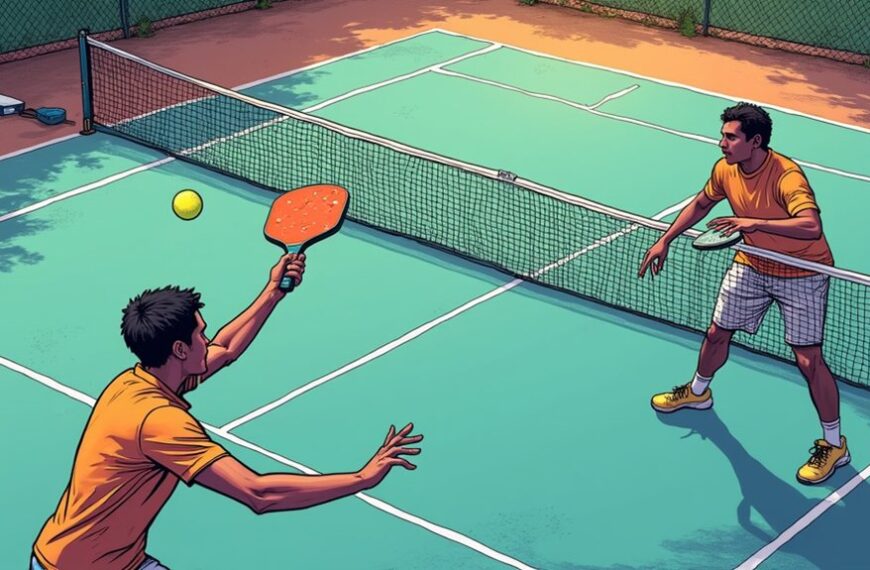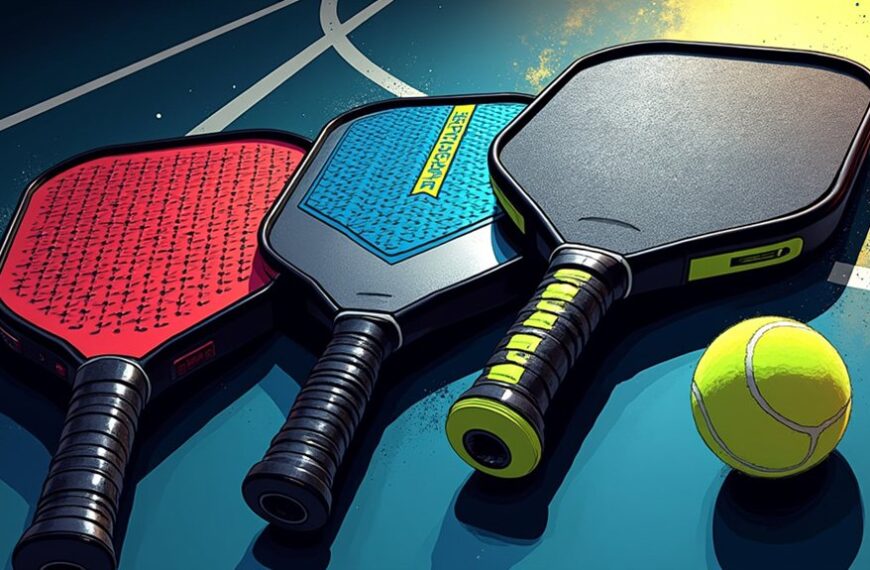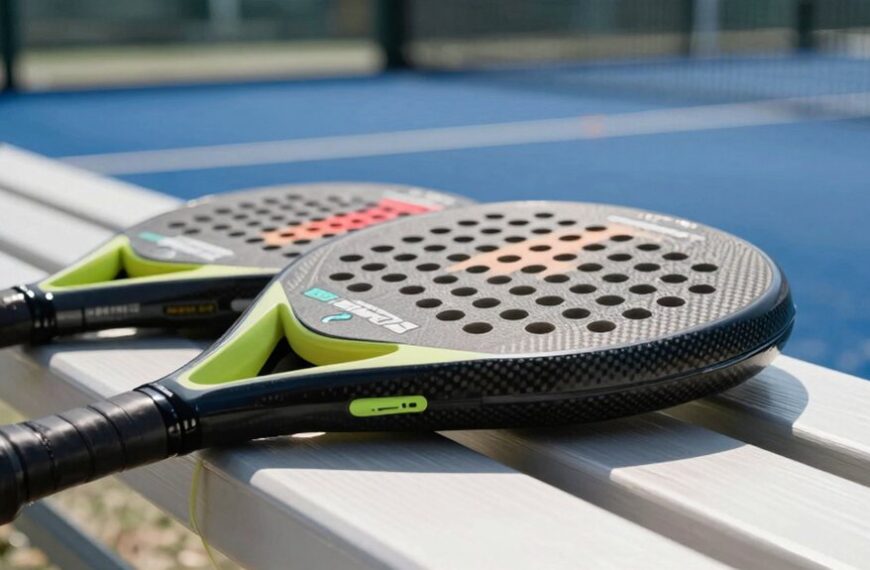
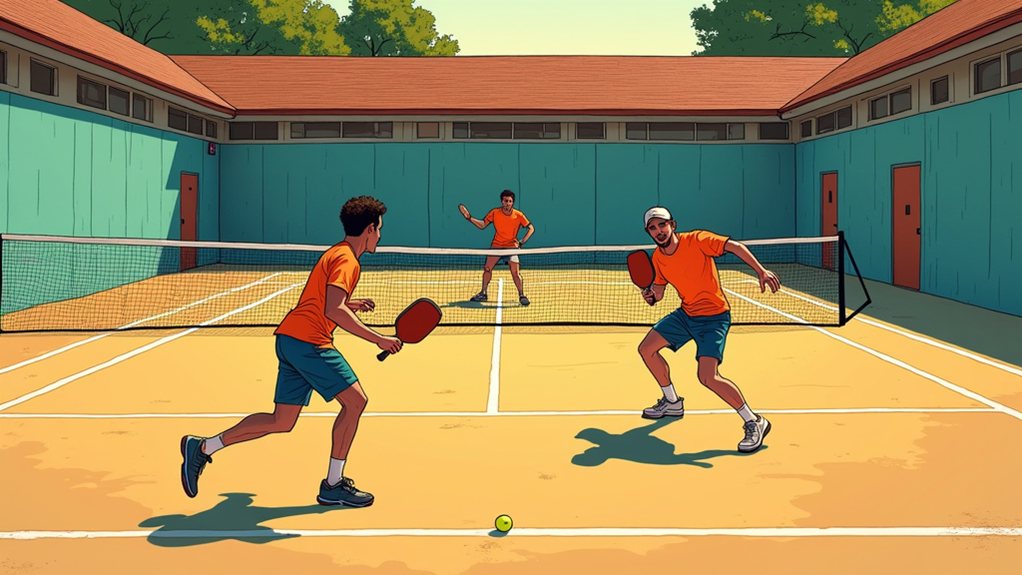
House rules let you customize pickleball for casual play. Choose scoring to 11, 15, or 21 points with a 1 or 2 point margin. Serve rules allow hand or paddle release and prohibit spin. The two-bounce rule requires serve and return each bounce once before hitting.
The NVZ is a 7-foot non-volley zone on each side of the net. Fault calls go to opponents immediately; partner disagreements do not trigger replays. Post clear rules and assign a captain to enforce them consistently. You can explore more variations to match your group’s preferences.
Explore Alternate House Rules in Pickleball
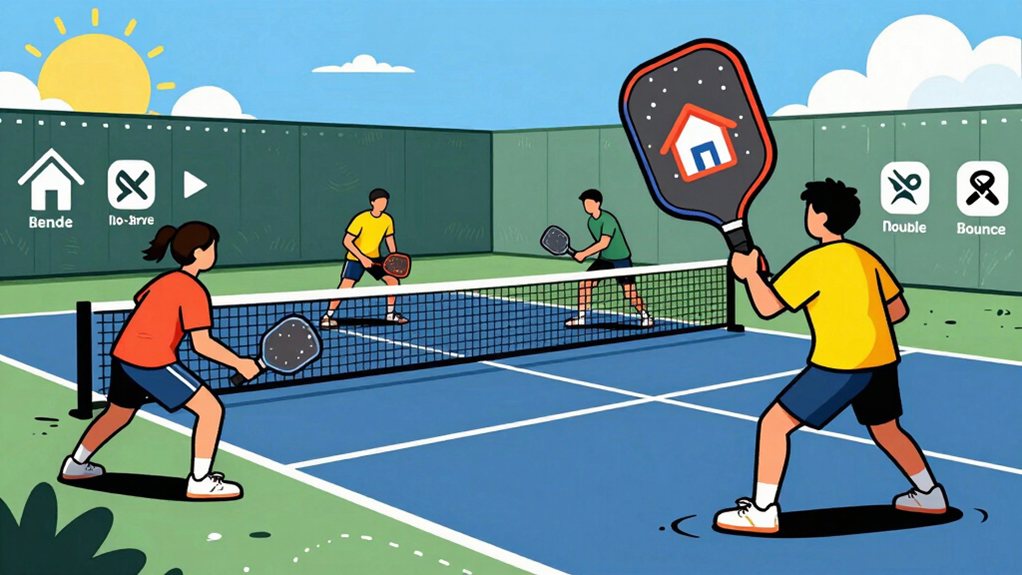
When you’re looking to customize pickleball for recreational play, house rules let you adjust standard regulations to fit your group’s needs.
Pickleball house rules provide flexibility for casual games. You set your own parameters.
- Scoring options: Play to 11, 15, or 21 points. Alternate pickleball scoring lets both teams score, including the receiving team, not just the serving team.
- Fault consequences: Decide whether faults cost the rally or only stop play.
- Call disputes: Establish who resolves disagreements, you, both partners, or the opposing team.
- Serving rules: Allow hand or paddle release. Prohibit spin on serve.
- Rotation: Swap players after each game or after losing a game.
Test these recreational pickleball rules in your first match. Adjust as needed.

PROFESSIONAL QUALITY: Designed by Franklin pickleball pros, this premium quality paddle has been constructed to compete, and win, at the highest level

USAPA CERTIFIED: Approved by the USAPA for tournament level play; Practice with an official regulation paddle made with advanced materials and cutting-edge design to take your game to the next level
Master Two-Bounce and NVZ Rules
We’ll master the two‑bounce rule basics, the NVZ boundary fundamentals, and the strategic play implications, and you’ll see the difference in your game.
Step 1: The serve and the return must each bounce once before you hit the ball.
Step 2: The NVZ is a 7‑foot area each side where you can’t volley;
Step 3: Use the rally time to position for a shot.
Between rallies, tracking indoor conditions with a smart air quality monitor can help ensure your indoor court environment stays comfortable and safe for play.
Two-Bounce Rule Basics
The two-bounce rule forms the foundation of fair play in pickleball. This rule requires the ball to bounce once on each side before players can volley.
Here’s how it works:
- The server hits the ball. It must land in the opposite diagonal court.
- The returner lets the ball bounce once before hitting it back.
- After the initial two bounces, players may volley or play from the air.
- The ball can bounce additional times on each side if needed.
This rule prevents serve-and-volley advantages. It extends rallies and creates longer, more strategic points.
Both the serve and the return must bounce before being hit. You can’t intercept the ball before it bounces. Your opponent gets that point if you violate this rule. Remember: bounce-hit, then volley when ready.
NVZ Boundary Essentials
Mastering NVZ boundaries guarantees you avoid faults and play with confidence. The non-volley zone (NVZ) is a 7-foot rectangle on each side of the net. You can’t volley inside the zone, but you may step in after the ball bounces.
The ball must always clear the NVZ line on your serve, otherwise the serve is a fault. Follow these points to stay legal. 1. Stay behind the NVZ line while volleying. 2. Enter the zone only after the ball bounces. 3. Make sure serve clears NVZ line.
| Dimension | Measurement | Rule |
|---|---|---|
| Width | 7 ft | Parallel to net |
| Depth | 7 ft | Extends from net |
| Volley rule | No volleying | Inside NVZ forbidden |
| Line clearance | Must clear | Serve must cross line |
| Step-in allowed | After bounce | Enter only after bounce |
Strategic Play Implications
Understanding NVZ dimensions leads directly to how you position yourself during rallies. The two-bounce rule changes your strategy completely. You must let the serve and return bounce before hitting, which eliminates serve-volley advantages and extends rallies.
The NVZ spans 7 feet from the net on each side. You can’t volley inside this zone. You may step in only after the ball bounces.
Consider these four strategic adjustments:
- Position yourself 2-3 feet behind the baseline to allow two bounces before attacking
- Use deep returns that force opponents to hit from the NVZ
- Aim shots at opponents’ feet to limit their volley options
- Wait for the second bounce before approaching the net
These adjustments maximize your court’s width and force errors.
Try These Multi-Player Pickleball Variations
- 4-Square Pickleball: Played like traditional 4-square, but use paddles and a pickleball. You set up four squares in a grid. One player occupies each square. The server hits the ball into an empty square. That player hits it to another square. You rotate clockwise when a player exits. This variation builds reflexes and angles.
- 6-Player Pickle Speed: Three teams of two play simultaneously. Losers rotate off the court. A waiting team steps in immediately. This format keeps everyone active and creates fast-paced competition.
- Team Rodeo: Two paddles sit in a line. Players hit the ball, then run to grab the next paddle. You continue until a team fails to return the ball.
| Variation | Players | Key Feature |
|---|---|---|
| 4-Square Pickleball | 4 | Rotating squares |
| 6-Player Pickle Speed | 6 | Loser rotation |
| Team Rodeo | 4+ | Paddle passing |
Choose Your Scoring System: House Rules Options
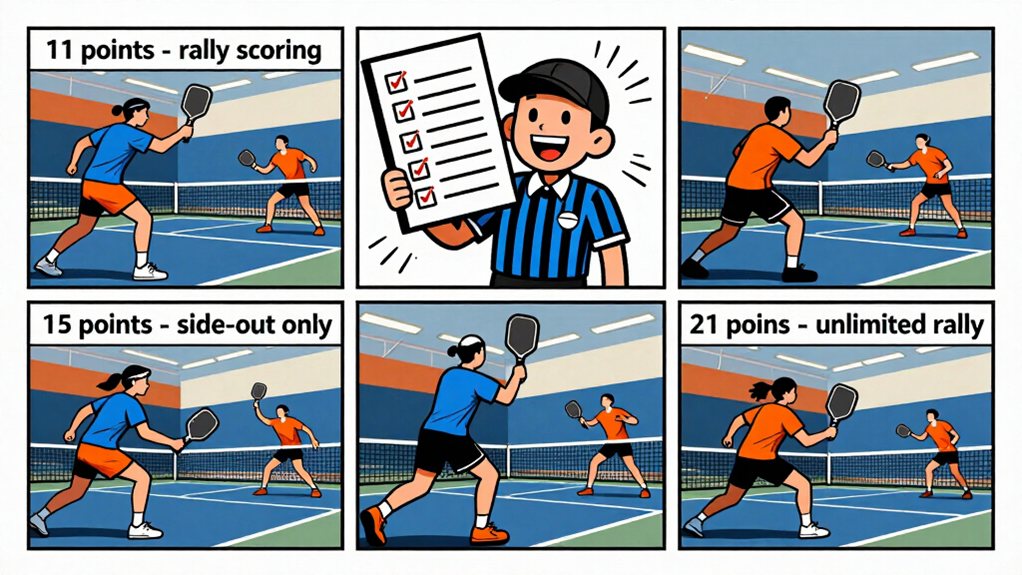
Pick your scoring system from the options below to match your group’s skill level and time constraints. You can choose provisional scoring options that allow rally scoring for every rally, traditional scoring that awards points only when serving, or score to fifteen for faster games.
We’ll examine each option so you can decide what works best for your recreational play.
Provisional Scoring Options
Provisional rally scoring awards a point on every rally, regardless of who served. This format speeds up games and keeps all players engaged.
You score when the opposing side commits a fault, even if you didn’t serve. Games typically end at 11, 15, or 21 points with a two-point margin required for victory.
Consider these four provisional scoring approaches:
- Rally scoring to 11, Every fault awards a point to the opposing team; first team reaches 11 wins by 2.
- Rally scoring to 15, Same rules but with higher point target for longer matches.
- Rally scoring to 21, Used in competitive recreation play; requires 2-point winning margin.
- No-ad scoring, Games end at 7, 11, or 15 when a team reaches set score, regardless of margin.
Pick the option that matches your group’s skill level and time availability.
Traditional Scoring Choices
Traditional scoring follows the original pickleball format used in tournament play.
You play games to 11 points.
The serving team scores every rally.
The receiving team doesn’t score, even when it wins the rally.
You must win by 2 points.
If the score reaches 10-10, you continue play until one team leads by 2.
Your server keeps serving until a fault occurs.
After each fault, the other team serves.
In doubles, partners take turns serving in sequence.
You announce scores yourself.
Your score comes first, then your opponent’s score, then your server number (1 or 2).
This system keeps games short while requiring consistent play to win.
Score To Fifteen
Often, recreational players prefer longer games that allow for more rallies and strategy development. When you choose score to fifteen, you extend your match beyond the standard eleven-point games.
This option suits players who want more gameplay time and fewer sudden endings.
Here is how score to fifteen works:
- Games end when a team reaches fifteen points.
- You still need a two-point advantage to win.
- If the score reaches fourteen-fourteen, you play until one team leads by two points.
- You score points only when your team serves.
This system gives you longer rallies and more strategic play. You maintain the same serving rules and two-bounce requirements.
Handle Partner Disagreements and Replays
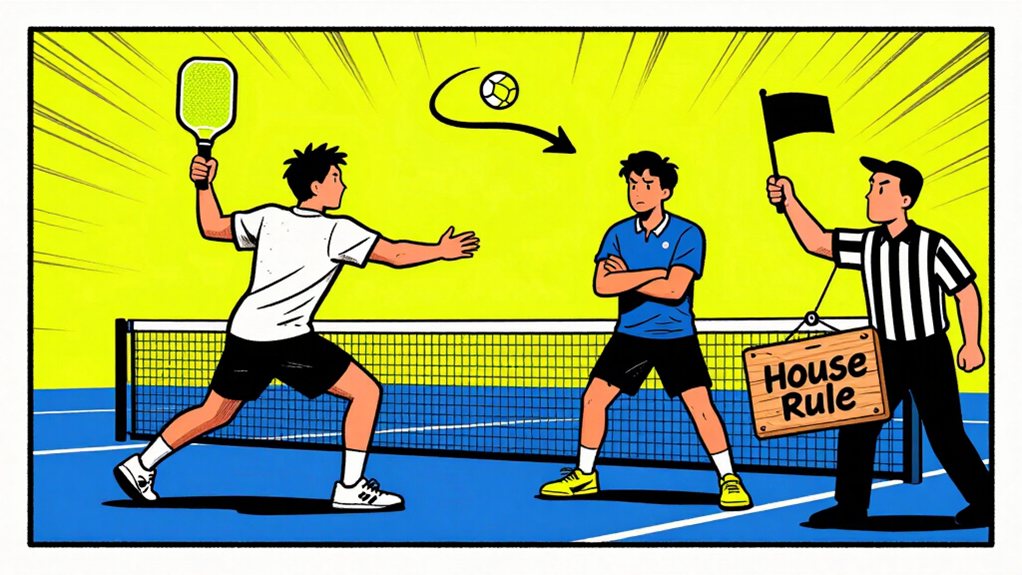
When partners disagree on a fault call, the rule favors the opposing team. This removes doubt and keeps play moving.
In recreational play, apply these steps:
- One partner calls a fault; the other disagrees.
- Award the point to the opposing team immediately.
- Don’t replay the rally.
- Resume play with the correct server.
Replays occur only in specific situations:
- Line judges and a referee can’t make a call.
- The ball contacts a permanent object during play.
- Play stops for an injury.
The rulebook clarifies that partner disagreements don’t trigger replays. You resolve the dispute by giving the point to the opponent.
Use Flexible Serve Options for Casual Games
For casual games, the serve rules give you more flexibility than tournament play. You can agree on serve options that fit your group’s skill level and preferences. This creates a more relaxed atmosphere while still keeping the game competitive.
- Serve release by hand or paddle, your choice. Some players find hand releases more comfortable, while others prefer the paddle drop method.
- No spin on the release, keep it simple. You don’t need to add spin during the serve for casual play.
- Choose your scoring format. Play to 11, 15, or 21 points depending on time and energy levels.
- Allow repositioning after score calls. When the score changes, give yourself and partners a moment to adjust positions.
These options make games more enjoyable for recreational players.


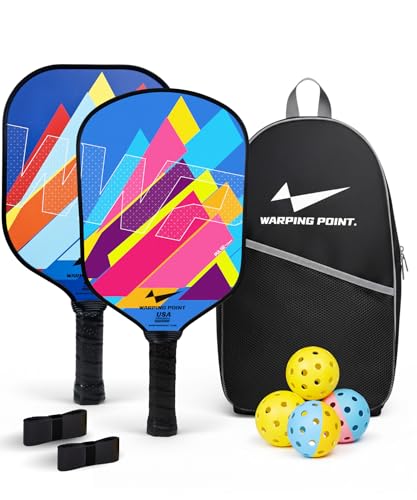
𝐔𝐒𝐀𝐏𝐀 𝐂𝐞𝐫𝐭𝐢𝐟𝐢𝐞𝐝 𝐏𝐫𝐨𝐟𝐞𝐬𝐬𝐢𝐨𝐧𝐚𝐥 𝐐𝐮𝐚𝐥𝐢𝐭𝐲: Our USAPA approved pickleball paddles set rigorously tested to meet official tournament standards. Designed for professional-level performance and durability, this pickleball paddle ensures you play with confidence in every game
Adapt Leagues and Rotations for Larger Groups
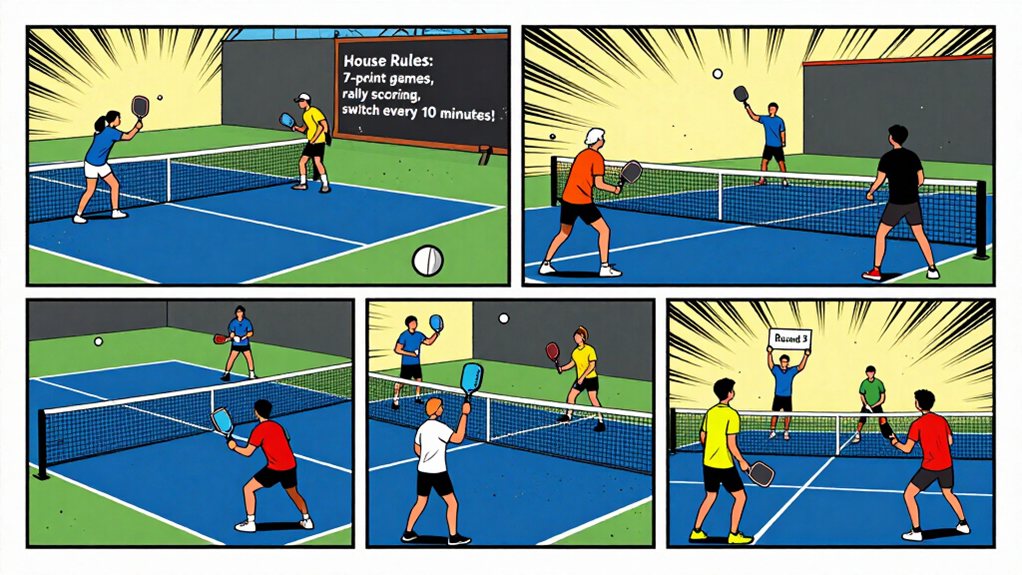
If your league has more than two players per team, you must set up rotation systems that keep everyone engaged. You can rotate players on serve, or you can alternate games between roster members.
Here are effective methods:
- Use server numbers (1 or 2) to track rotations clearly.
- Winners stay on court; losers rotate off.
- Waiting teams step in after each loss.
- Ensure every attending player gets at least one game.
- Track participation with a simple sheet.
Players make their own line calls. A brand ambassador can assist when disputes arise, but you don’t need a formal referee.
Keep groups small to maintain fair matches. This system adapts to three-on-three or four-on-four play.
It also works for six-player variations where teams rotate after each rally.
Set Up and Enforce House Rules
Your league needs clear house rules once you establish player rotations. Post the rules where all players can see them. Review the rules before each session starts. Assign a league captain to answer questions and resolve disputes.
Set clear house rules, post them visibly, review before each session, and appoint a captain to answer questions and resolve disputes.
- Define scoring method (rally or side-out), target score (11, 15, or 21), and win margin (1 or 2 points).
- State call resolution policy: players make own calls, disputed calls benefit opponents, and captains mediate unresolved conflicts.
- Specify rotation method: rotate on serve, rotate after each game, or alternate games between groups.
- Outline equipment standards: paddle approval, ball type, and court orientation requirements.
Enforce rules consistently. Apply warnings for first offenses, point penalties for repeat violations.
Keep a detailed log of all rule breaches for season review.
Frequently Asked Questions
Can We Adjust the Net Height for House Pickleball Matches?
You can adjust net height for house matches. Standard pickleball nets measure 34 inches at center and 36 inches at sidelines, yet recreational play permits modifications through mutual player agreement to customize gameplay.
What Is the Procedure if a Player Misses a Scheduled House League Match?
Missing your scheduled match forfeits the game to your opponents, and your team loses the point. You must contact your league coordinator immediately to report the absence and arrange a make-up if the league allows rescheduling.
Are Non‑Standard Paddles Permitted in Recreational House Games?
Check your house league’s specific rules. Most recreational games require USA Pickleball-approved paddles. You’ll need to use paddles that meet their official specifications and are on the approved paddle list for tournament play in competitions.
Do House Rules Allow a Warm‑Up Period Before Each Game?
House rules typically allow a brief warm-up period before each game. You should confirm your specific league or club’s detailed policy, as warm-up duration and rules can vary meaningfully between different facilities and organizers.
How Is a Rally Handled if the Ball Contacts an Unplayable Surface?
A rally stops immediately, like hitting a wall, when the ball contacts an unplayable surface. You call a fault, and the opposing team scores or serves, depending on who caused the unplayable ball to go completely out.
Final Thoughts
Apply these house rules to your next game. We recommend starting with one variation at a time. Test the two-bounce rule first, then add serve modifications.
Track your scores using rally scoring until your group adapts. A local club in Ohio reduced court wait times by 40 percent after implementing rotation systems. You will find the right mix for your group through experimentation. Keep rules simple and communicate all changes clearly before play begins.

Know your air – An Alexa air quality monitor that makes it easy to understand what’s in your indoor air.

【16-in-1 Air Quality Monitor Indoor】Experience the ultimate indoor air quality monitoring with our 16-in-1 Air Quality Monitor, offering real-time detection of 9 key parameters including CO2, PM2.5, PM1.0, PM10, HCHO, TVOC, Temperature, Humidity, AQI, and Time. With 7 distinct AQI alert buzzers, this air quality tester ensures your family breathes with ease. (*Note: "16-in-1" refers to the combination of 9 key detectable parameters and 7 types of AQI alert buzzers.)

High Accuracy & Fast Refresh Data: With this smart sensor, the PM2.5 accuracy is ±15 µg/m³ while temperature and humidity accuracies are ±0.54°F and ±3%RH.The two-second correction data feature shows the latest changes in PM2.5, temperature, and humidity.Keep sensor clear for accurate detection.