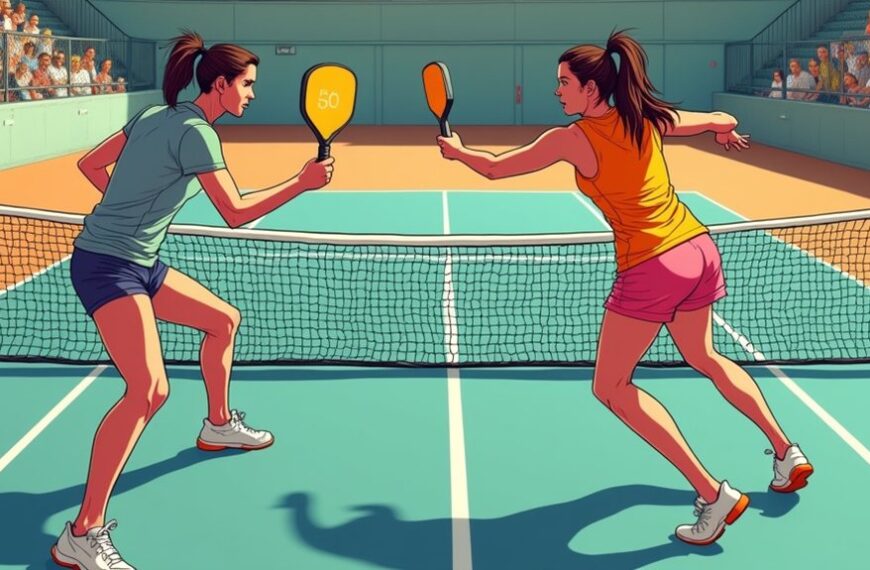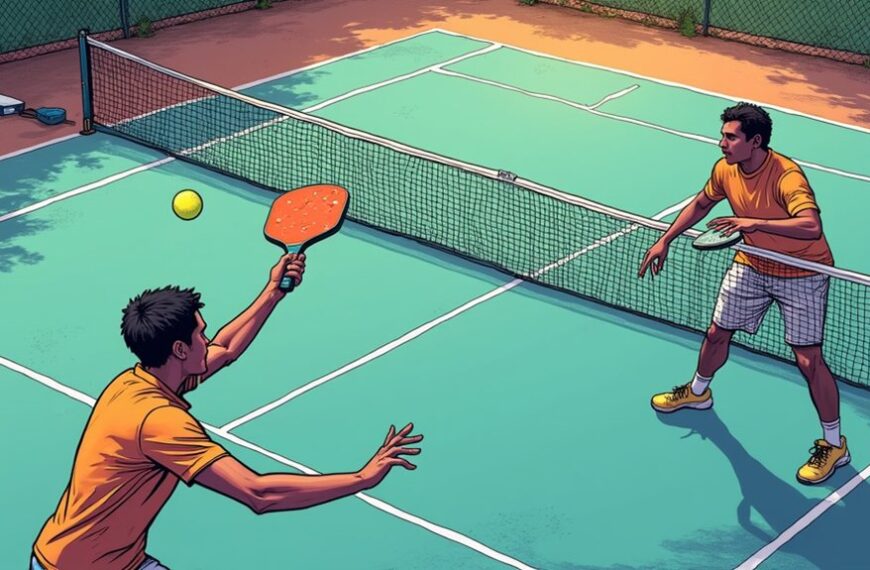
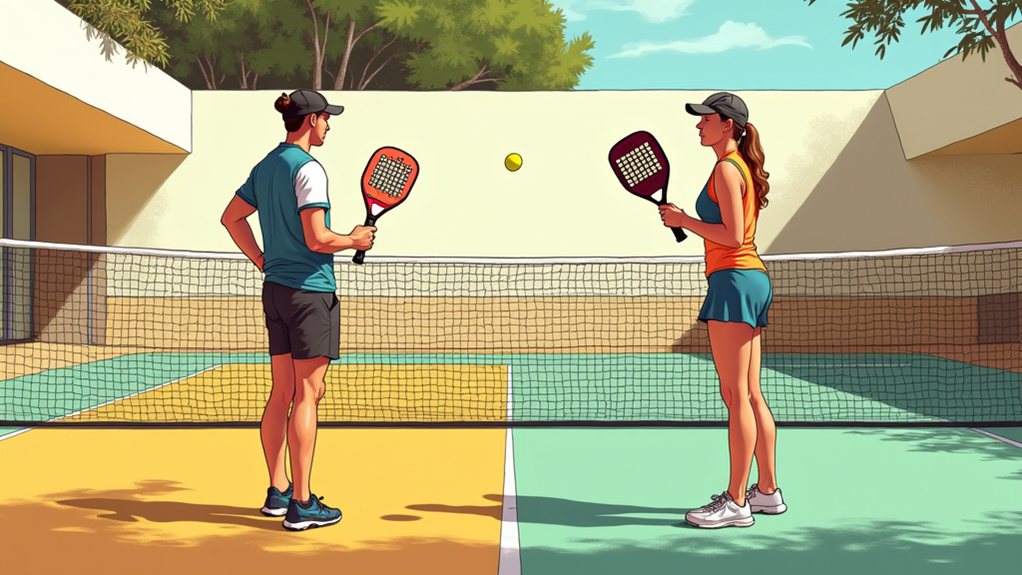
Start by rating your skills 1–5 in serving, returning, volleys, and lobs. Visit local padel clubs or join online Facebook groups to find partners. Match exact skill level for equal challenge, or choose slightly higher to accelerate learning. Identify complementary styles, defensive pairs with offensive partners for balanced court coverage.
Schedule 3 practice sessions before committing. Test communication, trust, and court coverage together. Use clear pre-point signals and discuss one constructive observation after each game. Continued application builds strong partnerships.
Find Compatible Padel Partners Near You
Where do you start when searching for a compatible padel partner? You begin by exploring local padel clubs. Most clubs offer group training sessions, ladder leagues, and social mixers. These venues let you meet players of various skill levels.
You attend club events regularly to observe playing styles. You join online padel communities and local Facebook groups. You participate in padel meetup apps and platforms. You ask club staff about available partners.
You watch others play to identify potential matches. You approach compatible players directly. You exchange contact information for future games. You build your network through consistent participation. You prioritize partners who share your availability and commitment level.

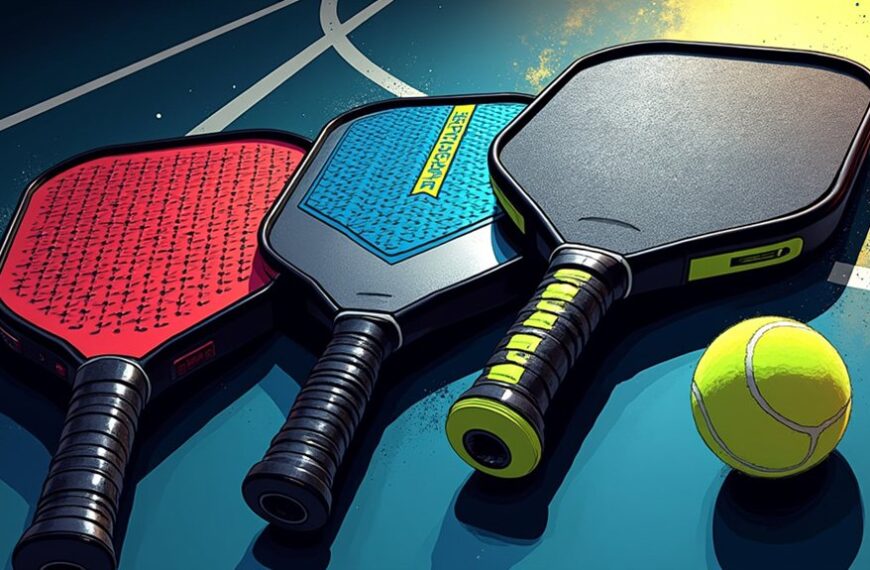
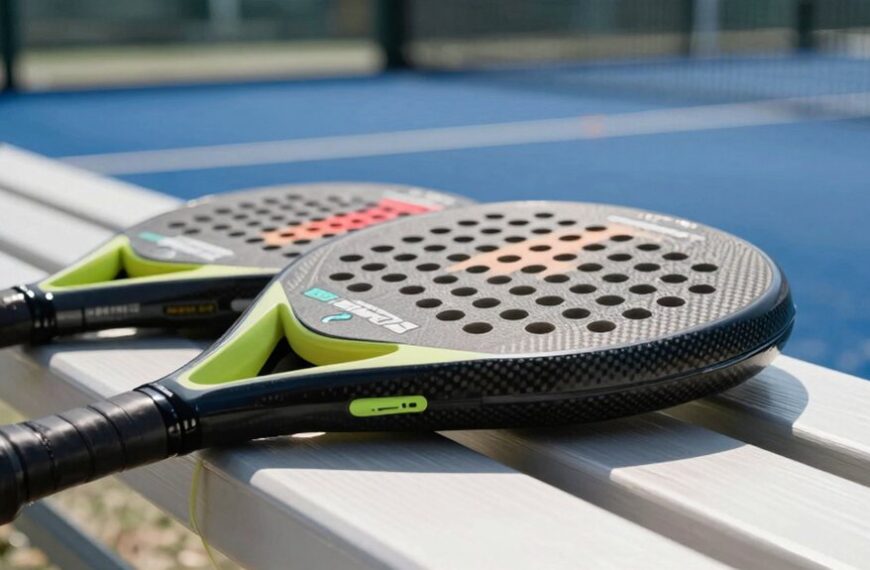
AFFORDABLE: Save money with a set of two padel paddles and a Padel cover bag, perfect for couples or friends who play together regularly. Ideal Padel Gift for the coming...
Assess Your Skill Level Honestly
In evaluating your skill level, you must be honest with yourself. Be objective about your abilities.
Consider these factors:
- Rate your skills from 1 to 5. Include serving, returning, volleys, and lobs.
- Assess your fitness. Note your speed, endurance, and reaction time.
- Know your game knowledge. Understand rules, positioning, and basic strategy.
- Identify your common errors. Write down three mistakes you make most often.
- Review recent match results. Count your wins and losses over ten games.
- Ask for feedback. Request honest input from coaches or experienced players.
Avoid inflating your abilities. False confidence leads to poor partner matching.
Your honest assessment helps you find a compatible teammate. It ensures balanced gameplay and mutual improvement.
Match Skill Levels: Exact or Slightly Higher?
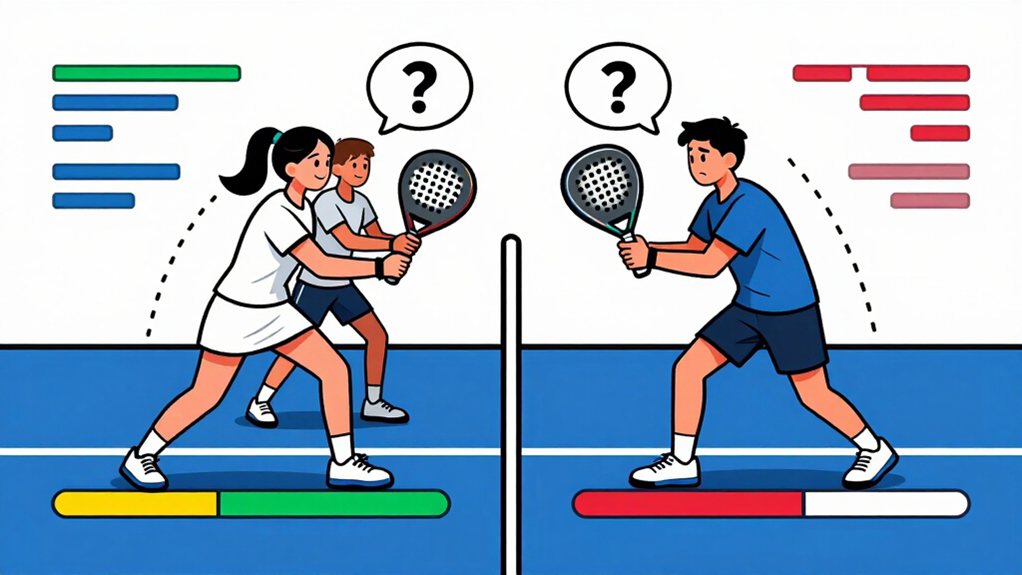
When selecting a padel partner, you must decide between matching your exact skill level or choosing someone slightly more advanced. An exact skill match guarantees you both challenge each other equally, while a partner with slightly higher abilities pushes you to improve. We recommend testing skill compatibility through practice sessions before committing to regular play.
- Exact skill match benefits: equal challenge, mutual growth
- Slightly higher challenge: accelerates learning, builds confidence
- Testing skill compatibility: play 2-3 practice games together
Exact Skill Match Benefits
Because matching skill levels creates balanced competition, you and your partner can push each other to improve together. When both players share similar abilities, you create predictable rally dynamics.
Each point becomes a true test of your current skills. You can measure progress accurately over time.
Exact skill matching offers clear advantages:
- Both partners face equal challenge level
- You can track improvement together
- Competition stays fair and balanced
- Communication feels natural when abilities match
- You build confidence through evenly matched rallies
Consider these skill comparison points:
| Aspect | Exact Match Benefit |
|---|---|
| Rally Length | Predictable exchanges |
| Strategy Development | Equal tactical challenge |
| Skill Growth | Measurable progress |
| Confidence | Balanced match play |
| Motivation | Mutual encouragement |
You will notice immediate improvements in your game when playing with a similarly skilled partner. The consistency allows focused practice on specific techniques.
Slightly Higher Challenge
While exact skill matching offers balanced competition, playing with a slightly more experienced partner presents unique growth opportunities.
When you pair with a more skilled player, you elevate your game through observation and exposure to advanced techniques. Your partner demonstrates positioning, shot selection, and tactical awareness during matches.
You absorb these lessons naturally through repeated play.
Consider these benefits:
- You learn advanced strategies by watching your partner read the game.
- You receive real-time feedback on positioning and shot choice.
- You develop mental toughness by competing at a higher level.
- You build confidence when you successfully execute learned techniques.
Just as a mesh wifi system expands and strengthens your network’s reach, partnering with a more skilled player extends the range of your abilities across the court.
Testing Skill Compatibility
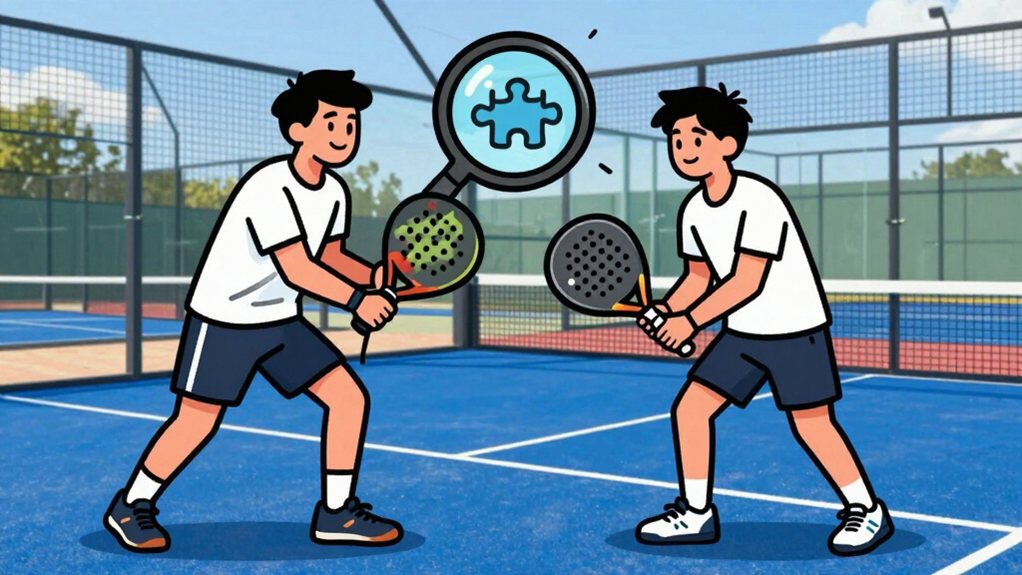
Test your skill compatibility through structured group training sessions and controlled match play. These formats let you observe how potential partners react to coaching, handle pressure, and execute strategies. Watch their footwork, shot selection, and communication on court.
- Join a group clinic with 4 to 6 players.
- Rotate partners every 2 games.
- Note each player’s consistency and adaptability.
- Play 3 controlled sets with your top candidate.
- Assess if they match your pace and style.
Key areas to evaluate:
- Groundstroke depth and placement
- Net play confidence
- Recovery speed after shots
- Willingness to call balls in or out
Choose a partner whose skill level mirrors yours or sits slightly above. Exact matches provide balanced rallies. Slightly higher partners push your development without overwhelming you.
Discover Playing Styles That Complement Yours
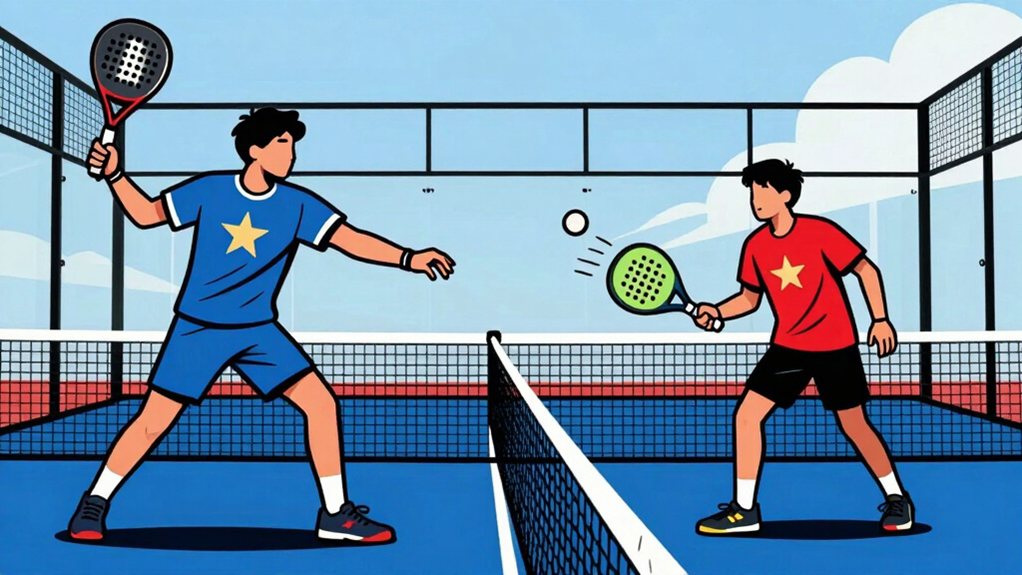
How do you find a partner whose playing style complements yours? You must first recognize your own strengths and weaknesses on the court. Then look for a player who fills those gaps. Complementary styles create a balanced team.
- Identify if you’re defensive or offensive.
- Note your forehand versus backhand preference.
- Check if you prefer net play or baseline rallies.
- Look for opposite styles that balance your game.
Pair a steady defender with an aggressive net player. This combination improves court coverage and anticipation. Test these roles in practice sessions before you commit to tournaments.
Build Chemistry and Trust On and Off Court
You and your partner can’t build chemistry without practice drills together, trust‑building exercises, and off‑court social activities.
We can’t skip these steps: 1) Schedule regular drills, 2) Add trust‑building exercises, and 3) Plan off‑court social outings.
This method helps you anticipate each other’s moves and strengthens our confidence together, so you’ll feel more connected.
Practice Drills Together
Developing chemistry and trust with your padel partner requires consistent practice drills both on and off the court. You need structured routines that build coordination and mutual understanding. These drills create predictable patterns that translate into match situations. You develop trust through repeated successful interactions.
Try these four practice approaches:
- Shadow swings without a ball for 10 minutes daily to synchronize movement patterns and establish court positioning.
- Feed balls alternately from the baseline for 15 minutes, alternating forehand and backhand returns to improve shot anticipation.
- Practice volleys at the net for 12 minutes, focusing on controlled placement rather than power.
- Play controlled point simulations for 20 minutes, calling out intended shots before executing them to build strategic awareness.
Consistent repetition builds the instinct to anticipate your partner’s next move.
You strengthen communication channels through these shared experiences.
Trust Building Exercises
Building on the foundation of practice drills, specific trust exercises deepen your partnership connection both on and off the court.
- Partner reflection sessions let you discuss match outcomes. You identify what worked, what failed, and how you improve. This builds mutual accountability.
- Blind drills train you to anticipate without visual cues. Your partner calls shots while you react. You build trust in their decisions.
- Pressure scenarios simulate match moments. You practice staying calm when your partner makes mistakes. You encourage instead of criticize.
- Role reversal exercises put you in unfamiliar positions. You experience your partner’s challenges. This creates empathy and support.
- Pre-point routines create consistency. You and your partner agree on a signal before each serve. You trust their plan.
- Feedback loops keep communication clear. After each game, you share one constructive thought.
Off‑Court Social Activities
While you train on court, off-court activities strengthen your partnership bond beyond practice sessions. We build trust when you’ve had meals, attend clinics, or discuss match strategy away from the court. Planning joint activities lets you learn each other’s preferences, communication style, and personality under relaxed conditions.
Regular social interactions create informal feedback loops, improve mood, and increase commitment to joint practice.
- Share a post-match meal and talk about the game.
- Watch a professional padel match together and discuss tactics.
- Attend a padel workshop or fitness class as a pair.
- Set a monthly social goal, such as a friendly doubles tournament or a casual outing.
Consistent off-court bonding translates into easier on-court coordination and stronger match confidence for both partners.
Test the Partnership Before You Commit
Testing the partnership before you commit saves time and prevents frustration later. We suggest you schedule at least three practice sessions to evaluate skill match, communication, and playing style.
Testing the partnership before you commit saves time, prevents frustration, and reveals skill match, communication, and playing style.
- Play a 30-minute mixed-skill game. Use the first 15 minutes to test net coverage and the last 15 minutes to practice lobs and bandeja.
- Run a 2-on-2 drill where each partner switches sides after every 5 points. Observe how you adjust positions and communicate.
- After each session, write down three observations: one about ball control, one about court coverage, and one about verbal cues. Review them with your partner.
If you feel comfortable after three tests, you can decide to commit to regular partnership. Make sure players agree on schedule, goals, and feedback methods daily.
Why the Right Padel Partner Transforms Your Game
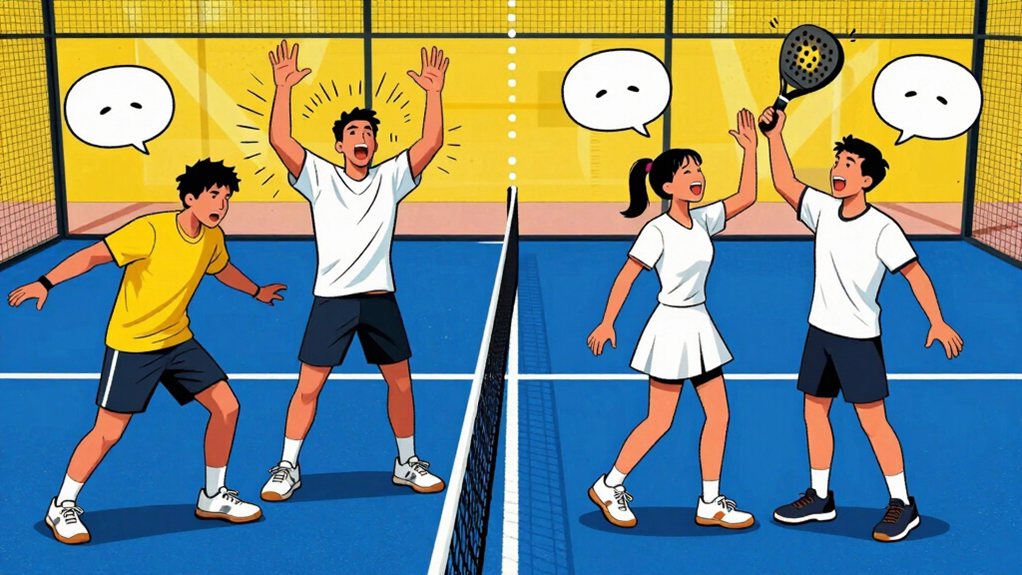
Having the right padel partner transforms your game because it directly impacts your skill development, match performance, and overall enjoyment on the court. You experience faster improvement when your partner matches your skill level. You play with more confidence. You make better decisions during rallies.
You enjoy each match more.
- You learn new techniques faster by observing a slightly more skilled partner.
- You develop better court awareness when you coordinate your movements with your partner.
- You stay motivated during tough matches when your partner encourages you.
- You build trust, which leads to more synchronized play and fewer mistakes.
These factors combine to boost your overall padel performance noticeably.
Frequently Asked Questions
How Do I Discuss Schedule and Commitment With a New Partner?
Tell your new partner you’re looking for consistent practice times. Ask what days work for them, agree on a regular schedule, and commit to showing up. Check in weekly to adjust if life gets busy.
What Should I Do if My Partner Frequently Misses Practice Sessions?
Honestly, if your partner treats practice like an optional brunch, confront them head-on! Tell them missing sessions kills momentum. Set clear expectations or find someone reliable who actually shows up.
How Can I Politely Give Feedback Without Hurting My Partner’s Feelings?
Offer feedback privately, use “I” statements, focus on specific actions rather than personality, acknowledge their strengths first, ask for their perspective, and end with encouragement. Keep your tone calm, supportive, and constructive.
What Signs Indicate It’s Time to Find a Different Padel Partner?
Ever wonder if your partnership has run its course? You’ll know it’s time to switch when communication breaks down constantly, skill levels remain mismatched, temperaments clash, and enjoyment declines despite repeated practice sessions together.
How Do I Manage Differences in Competitive Goals Between My Partner and Me?
Openly discuss your goals, find middle ground, and set shared objectives. Support each other’s competitive desires while balancing team commitment. Compromise on tournament schedules and practice intensity. Communicate honestly, align practice sessions, and celebrate progress together.
Final Thoughts
•1. Confirm ur rating (0,5). •2. Choose a partner whose rating differs by 0,1 points. •3. Discuss court positions (serve, return, net, baseline) before each match. •4. Set clear signals for play style (aggressive, defensive). •5. Schedule a 30,minute test rally. •6. Evaluate chemistry after three games. As the old proverb says, a well,matched pair lifts the game.
Follow these steps, track results weekly, and adjust pairings promptly for you, progress in your club today.