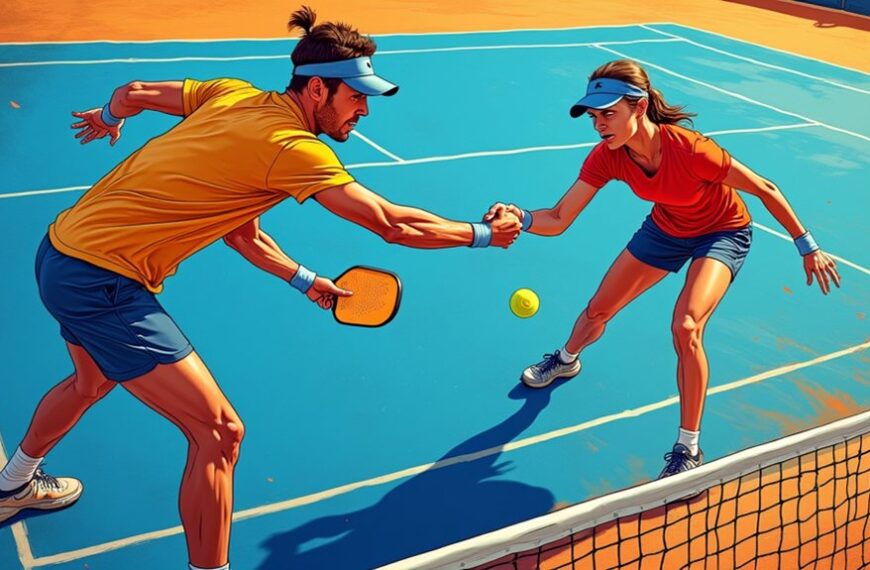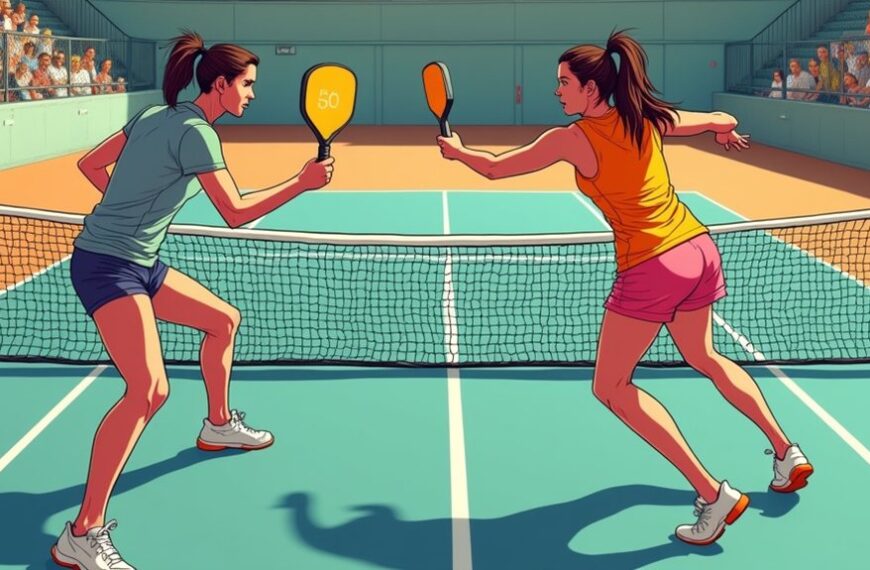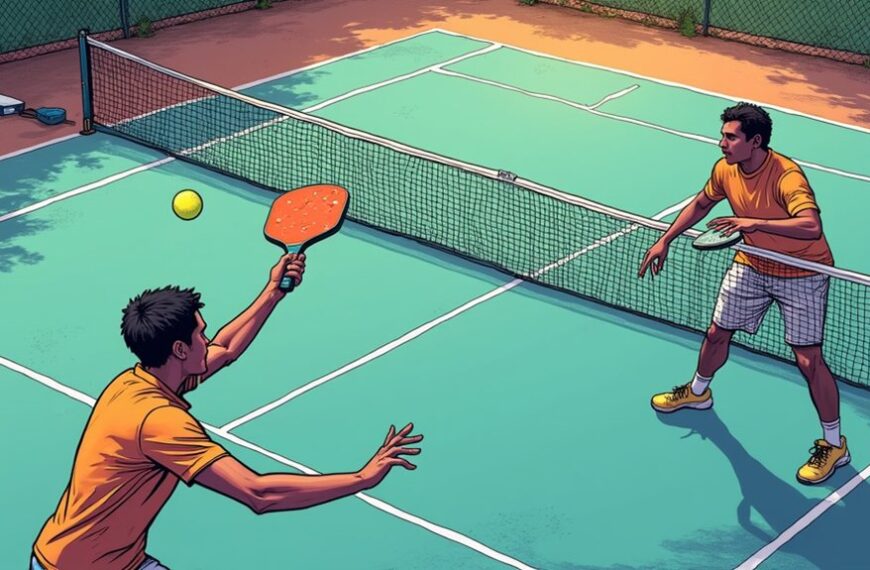
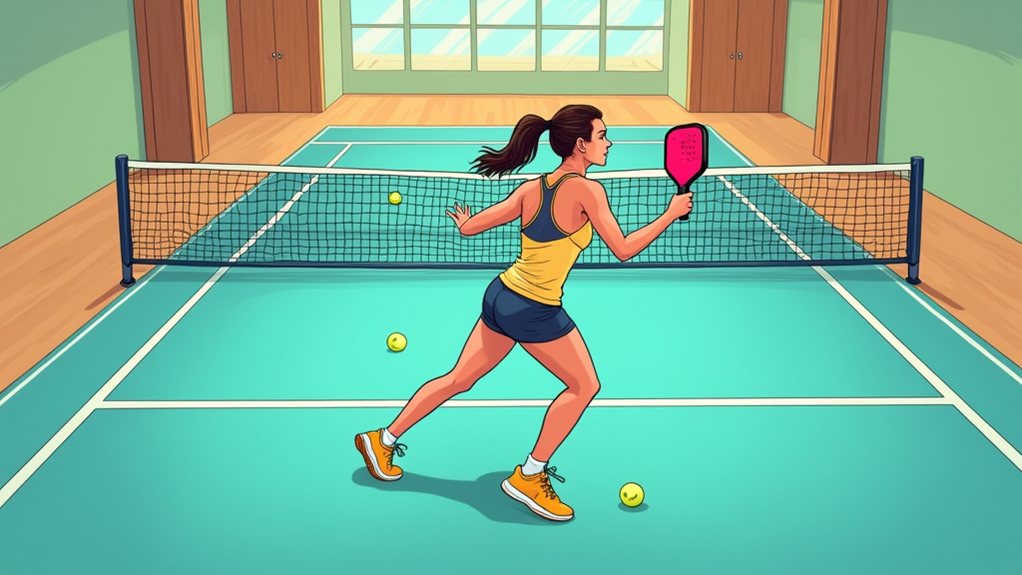
You need five essential shots to reach a 3.5 rating. 1) Third shot drop arcs to the kitchen line after one bounce. 2) Dinking is a low shot that creates five to six shot rallies. 3) Serve past the baseline and return low to the baseline or three feet behind it. 4) Soft game reset uses dinks and drops to neutralize opponents. 5) Topspin roll volley brushes upward from below the ball for net pressure. You’ll find more advanced tips ahead.
Master the Third Shot Drop to Control the Rally
The third shot drop is the first shot you hit after the serve and return, and it’s the only shot that bypasses the two-bounce rule. This shot arcs softly into your opponent’s kitchen. It neutralizes their aggressive positioning and buys you time to advance.
A third‑shot drop arcs softly into the opponent’s kitchen, neutralizing aggression and buying you time to advance.
Key execution points:
- Contact the ball after it bounces once on your side
- Aim for the kitchen line, not the baseline
- Use a soft, controlled swing with moderate pace
- Keep your paddle face open for a gentle arc
- Mix this shot with drives to keep opponents guessing
Practice steps:
- Stand at baseline after returning
- Wait for the ball to cross your sideline
- Contact at waist height
- Push gently forward and downward
- Target the opponent’s kitchen area
Master this shot to control rallies and raise your game to 3.5 level.

THERE IS A LEARNING CURVE ON THIS TRAINER - Please watch our video to learn how to use this trainer.

Build Reliable Dinking Skills for Steady Rallies
While you work toward a 3.5 rating, mastering dinking skills will help you sustain longer rallies and control the game. Dinking is a soft, low shot that lands in the opponent’s kitchen. It forces errors and creates openings.
Follow these steps to build reliable dinks:
- Keep your paddle high and ready.
- Use a short, controlled swing.
- Aim for the opponent’s feet or body.
- Hit cross-court to widen angles.
- Reset with defensive dinks when you’re out of position.
Practice dinking for at least 10 minutes daily. Focus on consistency over power. Your goal is five to six shot rallies that tire opponents and earn points.
Develop Consistent Serve and Return Techniques
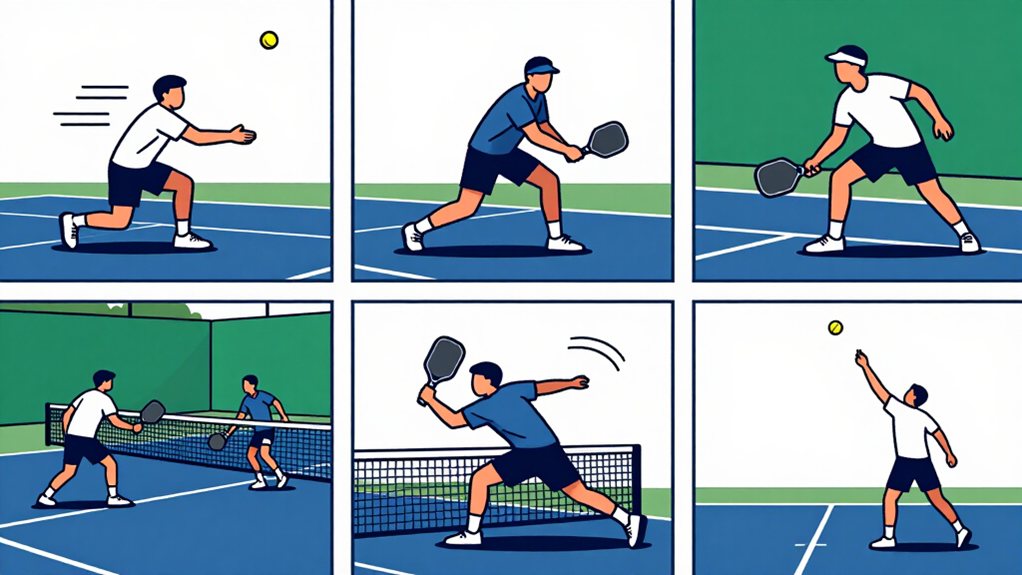
Now you’ll focus on developing consistent serve and return techniques. We’ll cover serve placement tips, return depth control, and consistent footwork to build a strong foundation.
These three elements work together to keep your rallies going and set up your next shot. Just as a reliable wifi security system helps protect your home by monitoring every entry point, a reliable serve and return game helps you monitor and control every point in a match.
Serve Placement Tips
When you master serve placement, you control the point from the start and force your opponent into a weak return. Your serve must land deep in the court, past the baseline, to limit your opponent’s attacking options. Aim for the corners or line edges to create angle confusion.
Vary your placement between the center, deep backcourt, and sidelines to keep opponents guessing.
- Hit to the opponent’s backhand side for lower return success.
- Serve deep to the corners for angle creation and opponent movement.
- Mix short serves occasionally to pull opponents forward.
Return Depth Control
Focus on these three execution elements:
1) Low contact point at waist height creates downward trajectory.
2) Paddle face angled ten degrees closed prevents pop-ups.
3) Target the baseline or three feet from the back line.
You want to hit your return past the opponent’s non-volley zone line. Deep returns force opponents to hit up, giving you control of the point. Aim for the middle of the court or the opponent’s backhand. Practice hitting sixty percent of your returns past the service line.
Vary your depth based on the serve you receive. Shallow returns give aggressive opponents time to attack. Deep returns neutralize hard serves. Track your depth accuracy during practice sessions. Consistent depth control disrupts opponent positioning and creates strategic advantage.
Consistent Footwork
Consistent Footwork
Building on return depth control, consistent footwork provides the foundation for accurate serves and returns.
Place your feet shoulder-width apart in a relaxed athletic stance. Keep your weight centered and your knees slightly bent. This position lets you move quickly in any direction.
- Step into each serve with a small forward lunge, transferring weight from back foot to front foot.
- Pivot your back foot to open your hips for a balanced follow-through.
- Recover to the ready position after each shot, staying on the balls of your feet.
Practice these footwork patterns in each session, and you’ll build muscle memory. You’ll notice better serves, deeper returns, fewer errors.
Keep your eyes on the ball and always stay light on your feet.
Use the Soft Game to Reset Aggressive Plays
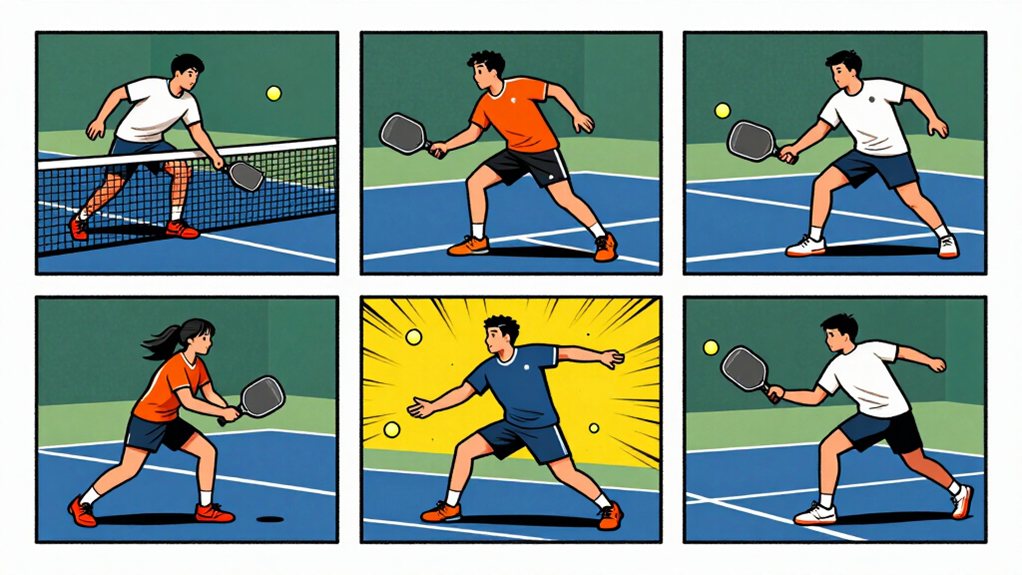
Although opponents speed up the rally, the soft game resets their attack. You use dinks and drops to slow pace and force errors.
Soft game resets opponents’ attacks, using dinks and drops to slow pace and force errors.
Key soft game shots:
- Third shot drop, arcs into kitchen, stops at NVZ line
- Defensive dink, returns ball low over net
- Reset shot, changes aggressive angle to neutral
Positioning tips:
- Stand at baseline on third shot
- Move to kitchen line after drop lands
- Hold line when opponents hit hard
Benefits of soft game:
- Extends rallies to five or six shots
- Forces opponents out of rhythm
- Creates attacking opportunities for you
- Builds point control
Practice these shots daily.
They form the foundation for advancing beyond the 3.5 level.
Add the Topspin Roll Volley for Net Pressure
You add the topspin roll volley to create net pressure and keep your opponents pinned at the baseline. You execute it by lifting the paddle from low to high with a mid-powered backswing, generating topspin that forces opponents back. Follow these steps:
1) position yourself at net height,
2) lift the paddle below the ball,
3) brush upward on contact to create topspin.

2-in-1 Versatility: Rebounder Net + Mini Practice Net – Transform your training with our innovative 6FT system that functions as both a high-tension rebounder for solo practice AND a regulation-height mini net for partner drills. Get game-realistic rebounds for forehands, backhands, dinks, and volleys, then switch to mini-net mode for precision dink training and kitchen control – two professional training tools in one compact package

Net Pressure Strategy
Net pressure becomes a weapon when you master the topspin roll volley, a shot that transforms a defensive position into an offensive advantage.
When you move to the net, you force opponents into difficult decisions. Your positioning at the kitchen line cuts off angles and limits passing shot opportunities.
This strategy forces errors and creates winning chances.
- Establish net position early in each rally.
- Maintain ready stance to react to opponent attacks.
- Use soft dinks to set up aggressive put-aways.
Topspin Roll Execution
Master the topspin roll volley to create aggressive net pressure and force opponents into difficult decisions.
- Stand at the net with knees slightly bent.
- Keep paddle high, face open.
- Watch the ball from opponent’s paddle.
- As the ball drops, swing low to high.
- Snap wrist forward to generate topspin.
- Follow through toward the baseline.
The roll volley stays low over the net and dives into the kitchen, pinning opponents.
You must hit at net height, not after the bounce.
Use medium power, 50,60% of your drive speed.
Practice 20 roll volleys per session to build timing.
When you land the shot, you’ll step into the court to maintain balance.
Use the topspin roll when opponent stays at baseline.
Smart Shot Selection for High-Percentage Plays
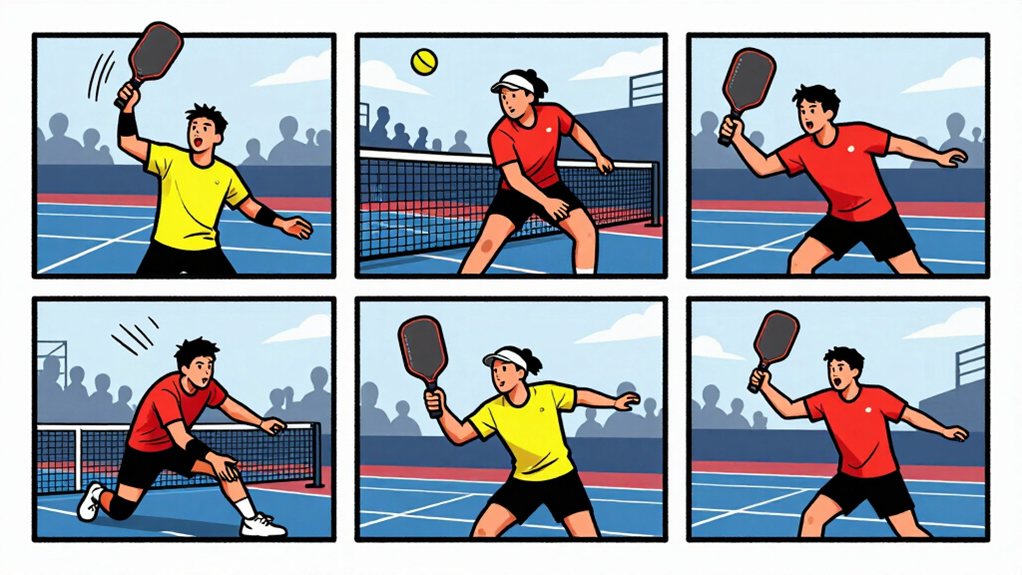
When you understand which shots give you the best chance to win, you play smarter pickleball. Your shot selection determines rally outcomes more than raw power. You must recognize when to attack, when to dink, and when to reset.
Prioritize high-percentage shots over low-percentage winners. We hold the kitchen line on defense against strong shots. We mix drops and drives for unpredictability. Our choices extend rallies and force opponent errors.
Smart decisions build confidence and consistency.
Smart decisions spark confidence. Consistent execution follows. Win more through tactical choices.
- Choose shots that keep the ball in play longer than your opponent expects
- Select dinks and drops to force errors from opponents at the net
- Use drives only when you have a clear advantage in positioning
Your game rises when you think tactically. We execute with purpose. You win more points through smart selection.
The Five Essential Shots to Reach 3.5
To reach a 3.5 rating, you must master five crucial shots. These shots form the foundation of consistent 3.5 play.
- Third Shot Drop: Execute this shot after the serve and return. Arc the ball softly into your opponent’s kitchen. This neutralizes aggression and builds your soft game foundation.
- Dinking Skills: Keep rallies alive with consistent dinks. Use cross-court dinks to widen angles. Target your opponent’s body with aggressive dinks for quick finishes.
- Serve and Return: Deliver reliable serves and returns. Hit deep serves that set up fifty percent power drives at your opponent’s feet. This positions your team for third shot opportunities.
- Shot Selection: Recognize when to attack, dink, or reset. Prioritize high-percentage shots over low-percentage winners. Hold your kitchen line on defense against strong shots.
- Topspin Roll Volley: Take this shot at net height. Use a mid-powered backswing to generate topspin. This keeps opponents pinned at the far court end.
Frequently Asked Questions
What Is the Best Paddle Weight for Executing a Third Shot Drop?
Lighter paddles (7.3-7.8 oz) give you the wrist snap and touch needed for a soft third shot drop. You get better feel and control when you execute that delicate arcing shot into the kitchen area.
How Can I Improve My Dink Consistency During Long Rallies?
Keep your paddle up and stay low. Watch the ball closely and use short, controlled strokes. Aim for the middle of the court, vary your angles, and maintain relaxed grips for consistent contact during long rallies.
What Are Common Serve Faults That Cause Unforced Errors?
The shadow crosses the baseline, your foot faults. The ball sails beyond boundaries or kisses the net. You violate the waist-height rule, step too early, or swing from the wrong position. These silent mistakes surrender points without resistance.
When Should I Switch From Soft Game to Aggressive Drives?
Switch to aggressive drives when opponents are out of position, when you receive a high, short ball, or when you need to force an error. Attack when they crowd the kitchen or hit third shots.
Which Grip Helps Generate Topspin Roll Volleys Without Sacrificing Control?
You use an eastern or semi-western grip, like a tennis player brushing up on the ball. Tests show it adds 15% more topspin while maintaining control, letting you lift from low to mid height and keep opponents pinned at the baseline.
Final Thoughts
Practice these five crucial shots consistently, and you will transform your game. Dedicate at least three hours weekly to drilling the third shot drop, dinking, serve, return, and topspin roll volley. Focus on placement over power. Record your matches to identify improvement areas.
Play with 3.5-level players to test your skills. Your dedication will yield undeniable results.

✔️ ADD REAL SPIN IN JUST MINUTES A DAY – Stop hitting flat shots that float long or pop up for easy put-aways. The TopspinPro shows you the exact paddle angle and wrist action to create true topspin - turning your drives into controlled winners and your dinks into precision shots that drop perfectly over the net.

EASY-TO-USE KNOB CONTROLS - No programming or phone app required.
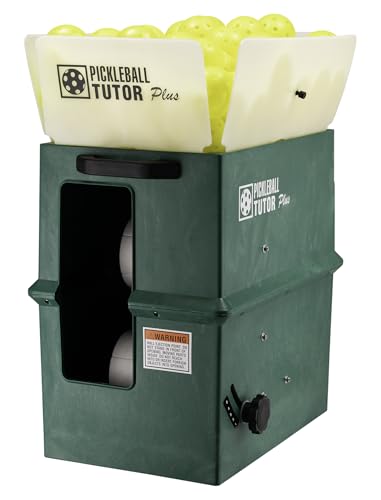
EASY-TO-USE KNOB CONTROLS - No programming or phone app required.