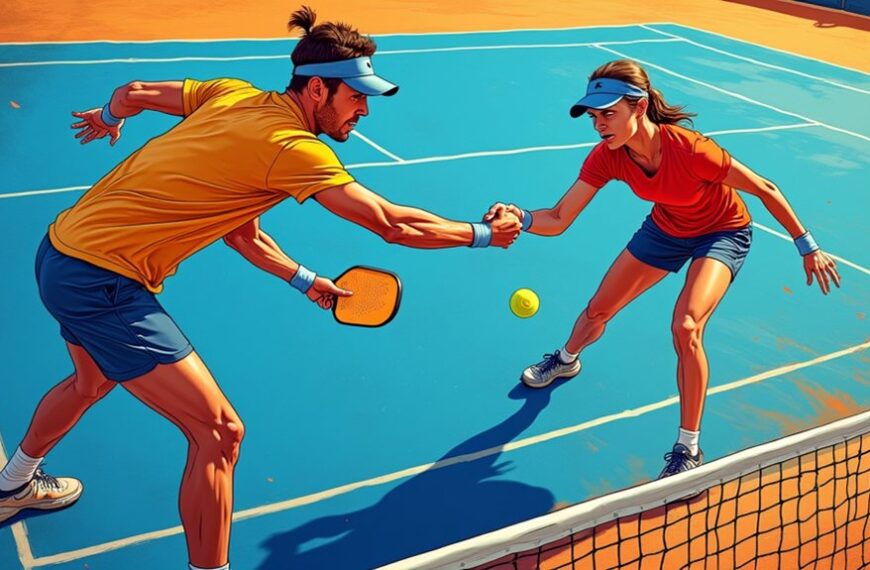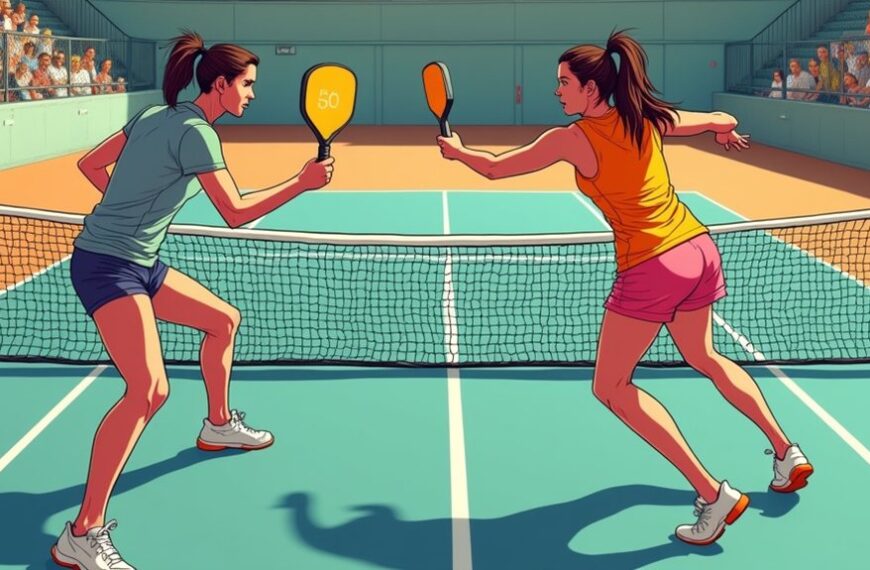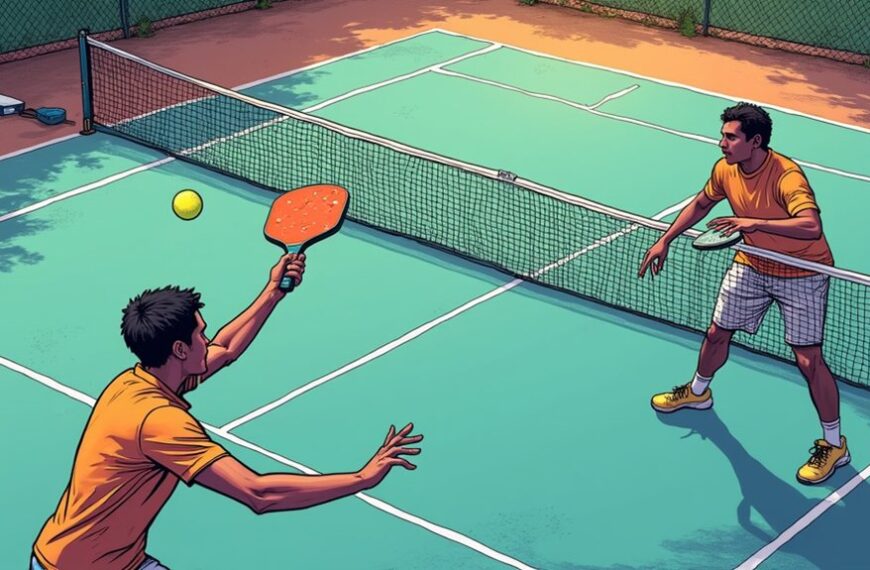
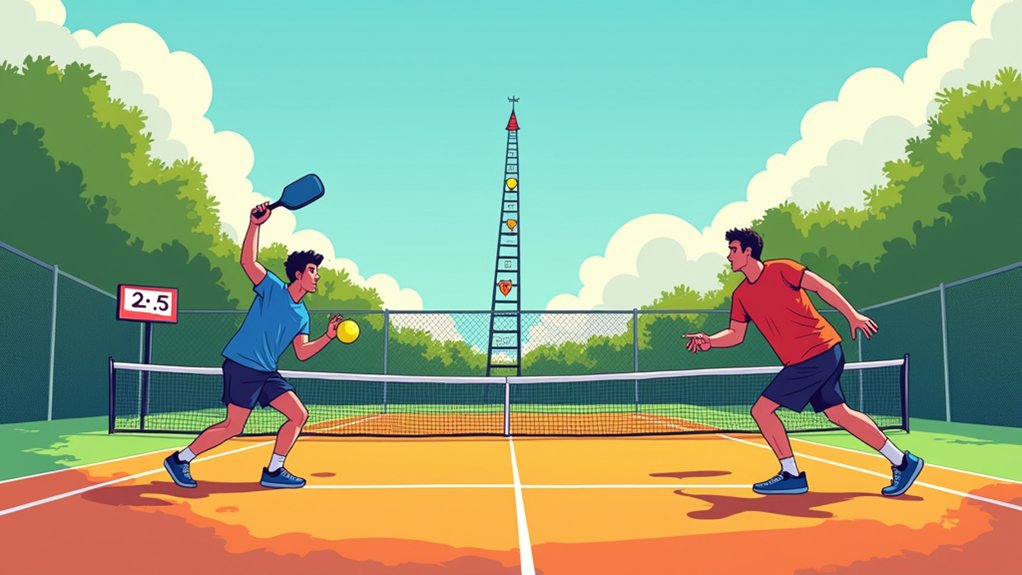
To scale from 2.5 to 3.0, focus on five areas: 1) Serve deep to the back third of the court, aim returns at the opponent’s back foot, and reduce unforced errors. 2) Choose drop shots when stuck behind the baseline, drive when opponents stand deep. 3) Dink to kitchen corners, target the back foot, keep paddles low. 4) Move to the kitchen line after your third shot, avoid no-man’s land. 5) Practice 50 serves, 30 returns, 20 dinks daily. Stay consistent and you’ll keep improving.
Serve and Return Consistency: The Foundation of 3.0 Play
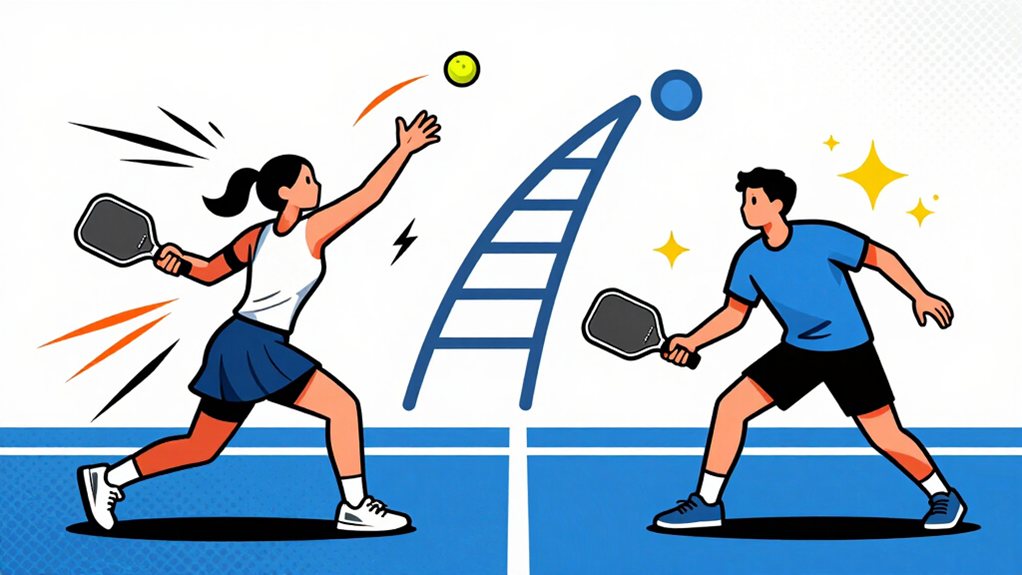
As you progress to the 3.0 level, your serve and return consistency becomes the foundation of every point. You shift focus from power to depth and placement.
Your serves reach deeper into the court. Your returns target the opponent’s back foot more often.
Your serves penetrate deeper, and returns press the opponent’s back foot, creating relentless pressure.
Your directional control improves with practice. You develop better feel for ball placement.
Consistent serves build confidence. Reliability pressures opponents. You win points through consistency, not power.
Key actions for you:
- Hit medium-paced serves with depth
- Return balls to deeper court areas
- Get ball over net consistently
- Practice forehand and backhand groundstrokes
- Reduce unforced errors through better control
At this level, you build a consistent baseline for all your skills.

Breathable Comfort: Made from lightweight fabric that feels soft against the skin. This breathable, moisture-wicking, and stretchy material keeps you cool and comfortable through every swing, stride, or serve.

Performance Design - This sports skort is made of lightweight,moisture-wicking,and quick-dry fabric ensure you stay dry,flattering and comfortable during high impact activities.
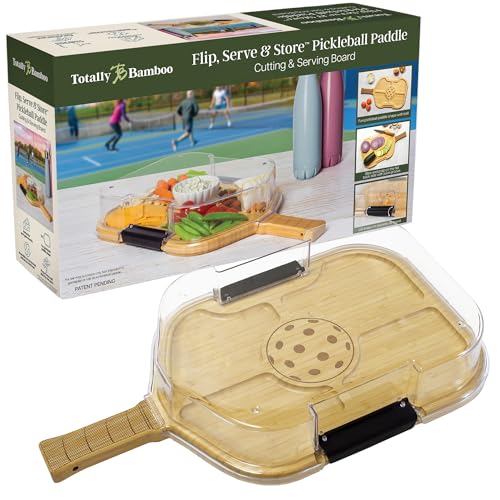
Serve Up Pickleball Snacks – Shaped like a pickleball paddle with an engraved pickleball center, this charcuterie board with lid brings court-inspired fun to appetizers, cheese, crackers, fruit, and snack spreads
Third Shot Decisions: When to Drop and When to Drive
Third shot decisions separate 3.0 players from lower levels.
Your choice between a drop and a drive depends on your position, your opponent’s position, and your goal for the point.
When you’re stuck behind the baseline and your opponent controls the net, a drop shot moves you forward and forces them to hit upward; when you have time and space, a drive gives you power and takes away their advantage.
You must decide your intent before you hit: are you trying to get to the kitchen, or are you trying to win the point outright?
Drop Or Drive
The third shot presents you with a critical choice: drop it into the kitchen or drive it past your opponents.
When you drop the ball, you aim for the kitchen line. The ball must bounce before your opponents can hit it. You create time to move forward. You force your opponents to hit upward.
When you drive the ball, you hit with pace. You aim for your opponents’ feet or backs. You keep them on defense. You rush their reaction time.
Choose drop when:
- You’re stuck in no man’s land
- Your opponents stand deep
- You need time to advance
Choose drive when:
- Your opponents stand close to the net
- You have an open court
- You want to pressure them
Your decision shapes the point.
Shot Selection Strategy
Your shot selection on the third shot determines your team’s momentum. When you drive, you take time away from opponents and pressure their feet. When you drop, you buy time to advance to the net.
| Situation | Shot Choice | Result |
|---|---|---|
| Return lands deep | Drive | Force quick error |
| Return lands short | Drop | Advance to net |
| Opponent at baseline | Either | Control the point |
Make the drive when opponents stand deep or hit weak returns. Make the drop when you have time and want to control the point. You’ll see the difference in your third-shot performance by understanding these triggers.
Practice both shots until they feel natural. This builds consistency and helps you control the point. At 3.0, you’re developing decision-making skills that separate you from 2.5 players. Your intent matters as much as your execution.
Mastering the Dink: Depth and Placement at the Kitchen Line
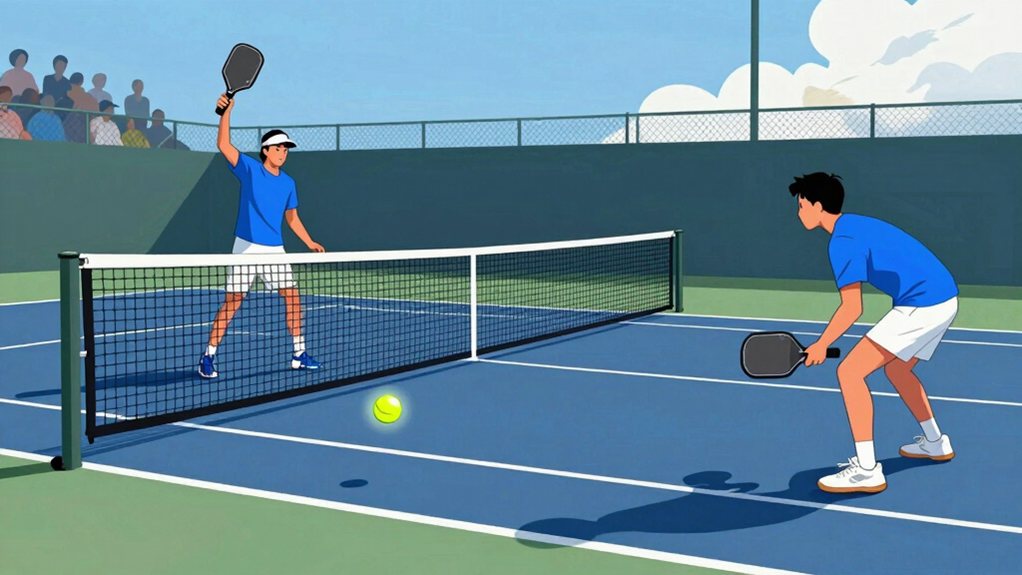
As you develop your 3.0-level dinking game, focus on two key elements: depth and placement.
Depth matters. Your dinks must land in the kitchen, not at the baseline. Aim for the back foot of your opponent. This forces them to hit an upward shot. Good depth limits their attacking options.
Placement complements depth. Target these areas:
- The corners of the kitchen
- The feet of the player at the net
- The space between two opponents
Vary your placement. Don’t hit the same spot twice in a row. Watch your opponent’s paddle position. Place your dink away from their ready position.
Control the rally. Let your opponent make the mistake. Your consistent, well-placed dinks will win points at the 3.0 level.
Kitchen Positioning: Moving In With Purpose
When you play at the kitchen line, move there with purpose and timing to avoid getting stuck in no-man’s land.
Approach the kitchen after your shot, and step in when the ball is heading toward your opponent.
Stay alert and move forward only when the timing is right.
Just as a smart mesh wifi system eliminates dead zones in your home by providing seamless coverage, eliminating the dead zone in the middle of the court requires deliberate positioning and movement.
Approach The Kitchen
Once you hit your third shot, we begin the shift toward the non-volley zone. Your goal is to advance after your third shot lands. Don’t rush. Move in small, controlled steps.
Step 1: Hit your third shot with purpose. Aim for the kitchen line.
Step 2: Watch where the ball lands. If it goes deep, you have time to move forward.
Step 3: Take two to three quick steps toward the NVZ after your shot.
Step 4: Stop at the kitchen line. Don’t cross into the volley zone until it’s safe.
Key points:
- Stay on the court side of the kitchen line until your opponent hits
- Keep your paddle up and ready
- Position yourself to attack the next ball from the kitchen line
- Avoid getting stuck in no man’s land between the baseline and kitchen
Timing Your Move
Timing matters more than speed when you approach the kitchen line. You must read your opponent’s shot before you move. Watch the ball’s trajectory and your partner’s position. Move when the ball travels past the non-volley zone line. Don’t rush forward on every shot.
- Wait for the ball to cross the kitchen line.
- Step forward with your outside foot first.
- Stop about one arm’s length from the line.
- Keep your paddle up and ready.
You control the pace when you hold your position at the kitchen. Your body faces the net. You split your weight between both feet. You stay balanced and prepared to react at all times.
Avoid No‑Man’s Land
No-man’s land is the dead zone between the baseline and the kitchen line. It’s the worst place to stand in pickleball because you can’t attack or defend effectively from there. When you hit your third shot, move all the way to the kitchen line or stay back at the baseline. Don’t stop in the middle.
Practice these steps:
- Hit your third shot with enough depth to give you time to advance.
- As your opponent’s return crosses the net, step forward into the kitchen.
- Reach the kitchen line before the ball bounces twice.
- If you’re stuck in no-man’s land, hit a reset shot and recover quickly.
You want to either control the net or hold the baseline. The middle ground costs you points.
Court Positioning: Escaping No-Man’s Land
As you improve, you’ll notice a dangerous area between the baseline and the kitchen line that can undermine your game. This zone, called no-man’s land, sits about 7 feet from the net. When you stand here, you can’t attack or defend effectively.
Avoid no‑man’s land, the seven‑foot zone where you can’t attack or defend.
Here’s how to escape it:
- Split step when your opponent hits the ball, then move forward or backward with purpose.
- If you receive a short return, attack it and move inside the kitchen line.
- If you receive a deep shot, retreat to the baseline rather than stopping mid-court.
- Take small adjustment steps to find your ideal ready position.
- Communicate with your partner about who covers which gaps.
When you reach the kitchen line, stay low and hold your paddle up. You control more court from here, and you force your opponents to hit up.
Rally Consistency: Keeping the Ball in Play
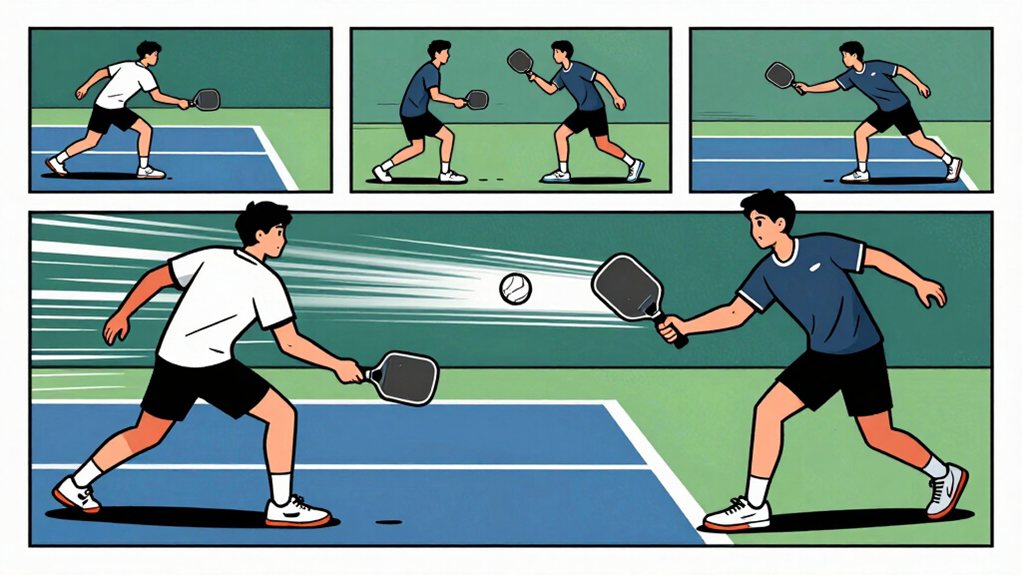
Once you’ve mastered moving to the kitchen line, focus on keeping the ball in play. Your goal shifts from hitting winners to extending rallies and forcing errors.
- Aim for the middle of the court when unsure. This reduces angles and gives you time to recover.
- Use steady, controlled swings. Power comes after consistency.
- Watch your opponent’s paddle. React to their shot direction rather than guessing.
- Keep your paddle up and ready. Stay on your toes between shots.
- Practice hitting with medium pace. Consistency beats power at this level.
- Reset when pressured. A soft shot gives you time to reposition.
Your unforced errors will decrease as you develop patient, rhythmic play.
Shot Selection: Dink vs. Speed-Up Decisions
Understanding the difference between dinking and speeding up is key to advancing your game. A dink is a soft shot that drops into the kitchen. A speed-up is a hard drive aimed at your opponent’s feet or body.
Choose to dink when:
- Your opponent stands deep in the court
- You need to reset the point
- The ball bounces high
Choose to speed up when:
- Your opponent stands inside the kitchen line
- You have time to set up and drive the ball
- Your opponent shows weak paddle position
We read the situation first. We decide second. Your decision determines the outcome.

Ultra realistic details including scale patterns, gill plates, 3D eyes and flash foil inserted in the belly. Fishes won't be able to ignore this lure.

Ultra realistic details including scale patterns, gill plates, 3D eyes and flash foil inserted in the belly. Fishes won't be able to ignore this lure.

Drills That Build Reliable 3.0 Skills
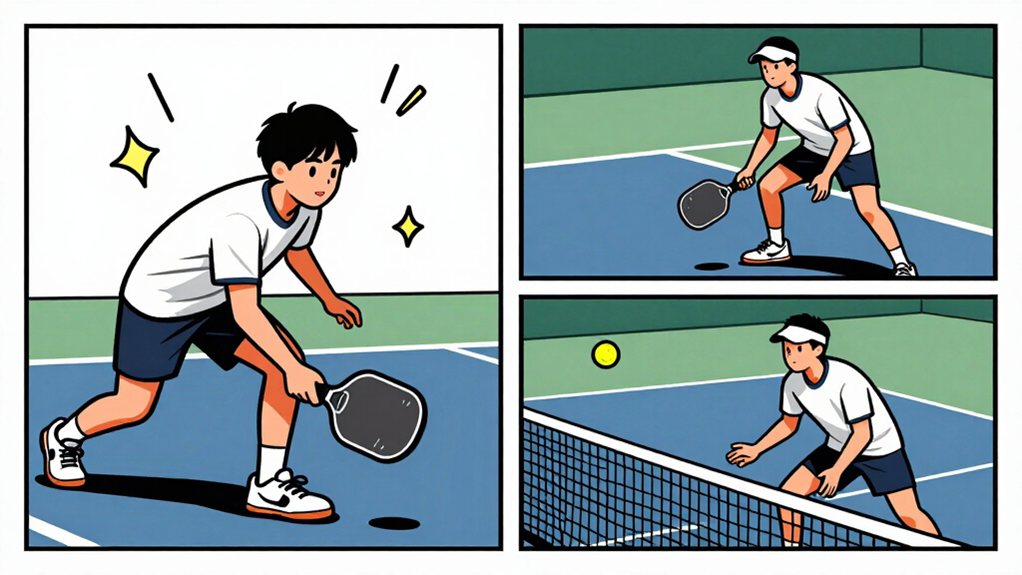
If you want to reach the 3.0 level, you need drills that target consistency, depth, and controlled placement.
- Serve and Return Drills
- Practice 50 deep serves. Aim for the back third of the court. Focus on consistent toss and steady swing.
- Hit 30 returns with purpose. Target the opponent’s back foot.
- Dink Rally Drills
- Maintain 20 consecutive dinks across the net. Keep your paddle low and wrists firm.
- Practice 15 controlled dinks to each corner. Feel the ball stay low.
- Third Shot Development
- Execute 10 drop shots and 10 drives from the baseline. Notice which feels natural.
- Consistency Challenge
- Play 5-minute live drills with a partner. Count rallies. Aim for 15+ shot rallies.
- Track your unforced errors. Work to minimize them.
Common Mistakes Holding 2.5 Players Back
You have two main issues: weak serve return and inconsistent dinking.
You often make a weak serve return that lacks depth and direction, and you can’t start rallies strong.
We’ll eliminate these mistakes by focusing on serve return drills that develop controlled power and by practicing low, steady dinks to build consistency.
Weak Serve Return
When you struggle with serve returns, several common mistakes keep your game from advancing. You lack directional control. You hit returns without depth. You fail to keep the ball in play consistently. You neglect developing reliable groundstrokes.
- You aim shots too close to lines instead of targeting deep court areas
- You rush your return instead of waiting for proper contact point
- You use inconsistent paddle faces, causing erratic ball flights
- You neglect practicing both forehand and backhand returns equally
Focus on consistency first. Get the ball over the net and into play.
Practice hitting to deeper court areas. Develop reliable direction control. Your goal is to force errors from opponents while keeping your returns in bounds.
Inconsistent Dinking
Many 2.5 players struggle with dinking consistency due to several fixable errors.
You likely pop dinks up too high or hit them with too much pace. We see three main problems in your dink game right now.
Common Dinking Mistakes:
- Your paddle faces the sky on contact
- You generate too much power on soft shots
- You rush the ball instead of waiting
Fix Your Dinking:
- Keep your paddle face open and neutral
- Use your shoulder rotation, not your wrist
- Let the ball come to you before swinging
- Aim for the middle of the kitchen
Practice this pattern: hit five dinks to your partner, then switch to five backhand dinks. Do three sets.
You’ll notice more control and lower ball height within two weeks.
Your Path Forward: From 3.0 and Beyond
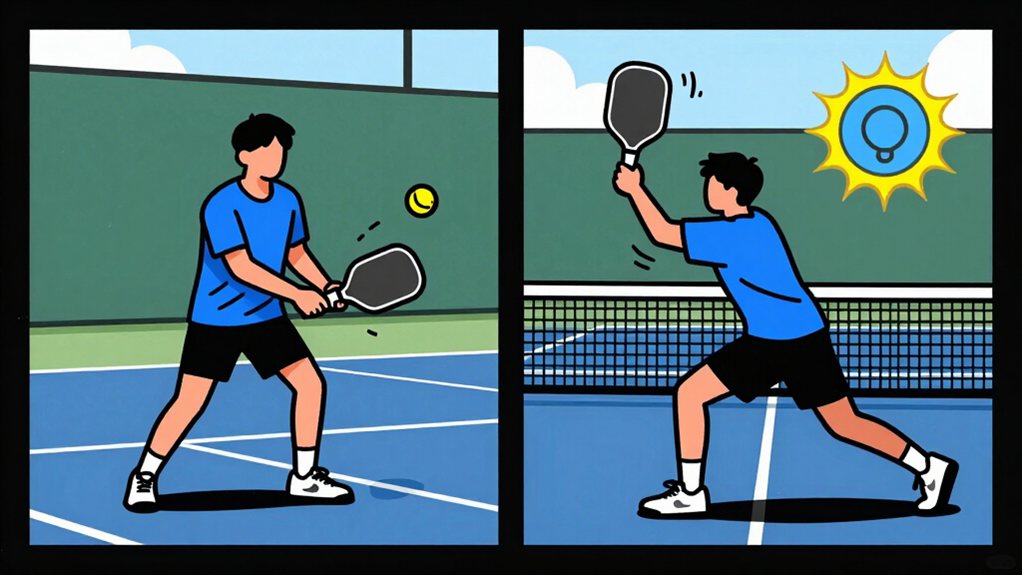
As you reach the 3.0 skill level, your game starts resembling real pickleball rather than just rallied bouncing.
You now aim for deeper serves, consistent returns, and controlled dinks.
Focus on moving toward the non-volley zone while keeping the ball in play.
Develop a third-shot decision, choosing a drop or drive based on your opponent’s position.
Practice forehand and backhand groundstrokes to build reliability.
Daily drills help you.
- Deepen your serve to the backcourt and aim for consistent depth each time.
- Return serves with deeper placement, targeting the corners of the court and gain.
- Choose third-shot drops to the kitchen or drives based on your opponent’s position.
- Practice dink rallies, aiming for low, controlled shots that stay inside the kitchen.
Frequently Asked Questions
How Can I Improve My Mental Focus During Long Rallies?
Stay present by focusing on your breath between shots. Visualize your next contact point. Trust your training. Control what you can, your position, paddle, and attitude. Let points go quickly and reset your focus for each rally.
What’s the Best Paddle Material for a 3.0 Player?
You can’t judge a book by its cover, but you should pick composite or graphite paddles for your skill level. These materials offer excellent control and responsiveness, helping you refine your technique without overwhelming your developing game.
How Do I Warm up Effectively Before a Match?
Start with light cardio for 5 minutes, then dynamic stretches targeting shoulders, hips, and ankles. Hit gentle groundstrokes and dinks, gradually increasing pace. Practice your serves and returns. Finish with a few 3rd shot drops.
What Stretches Help Prevent Pickleball Elbow Injuries?
Your arm acts like a bowstring, flexibility prevents snapping. Do wrist flexor stretches, forearm extensor rotations, and elbow circles before playing. Hold each for 30 seconds. You’ll stay elastic and dodge inflammation that ends play.
How Can I Find Competitive Partners at My Skill Level?
Join local clubs and Facebook groups, attend open plays, and ask opponents you match up with to play again. Register for 3.0 tournaments and request partner recommendations from more experienced players.
Final Thoughts
You’ve learned the fundamentals. You now see the court differently. Your serves land with purpose. Your dinks find the kitchen.
Your positioning creates pressure. Your third shots now dictate play.
- Keep practicing.
- Keep moving.
- Keep sharpening these skills.
The gap between 3.0 and 3.5 substantially narrows with each match you play today. Trust the process. Trust your training. The next level awaits your continued dedication and commitment to excellence.

A classic line every pickleball regular knows and repeats with pride after a close call at the net or a sharp winner that keeps the rally alive

Pickleball Training Equipment: Become a master with tournament grade pickleball practice rebounder net. Perfect for all levels, it’s ideal for sharpening your skills, whether training solo or with a partner paly pickleball

Cute pickleball queen design for women, moms and players who dominate the kitchen line. Perfect for dinking enthusiasts, doubles partners and competitive athletes who love strategy, finesse and court confidence.