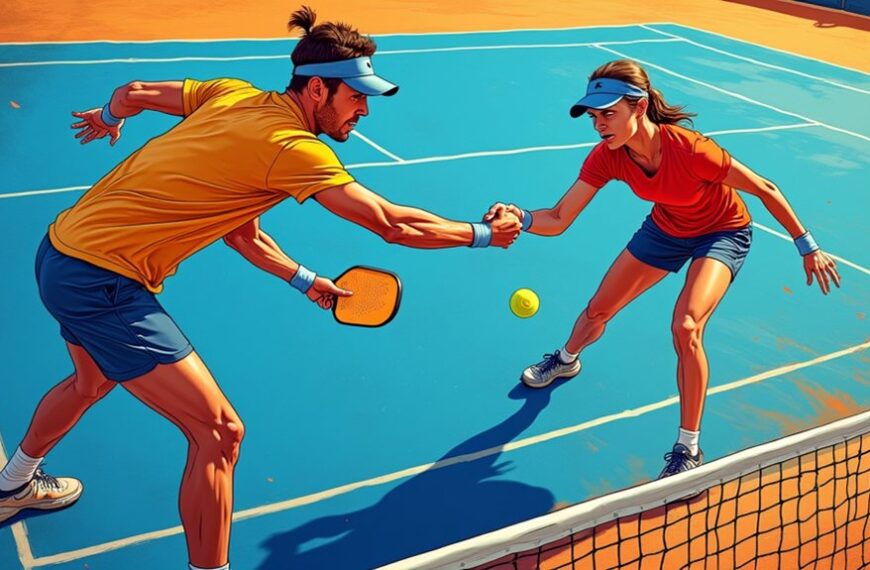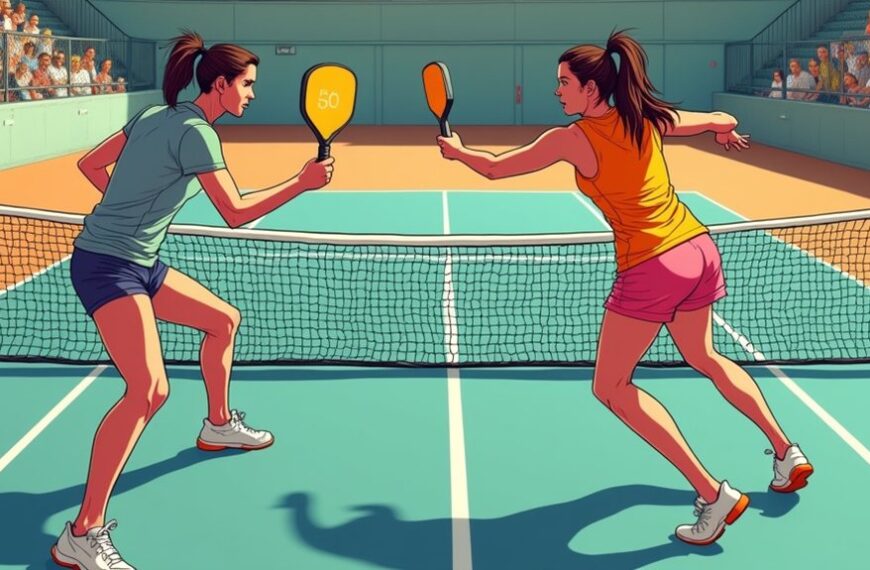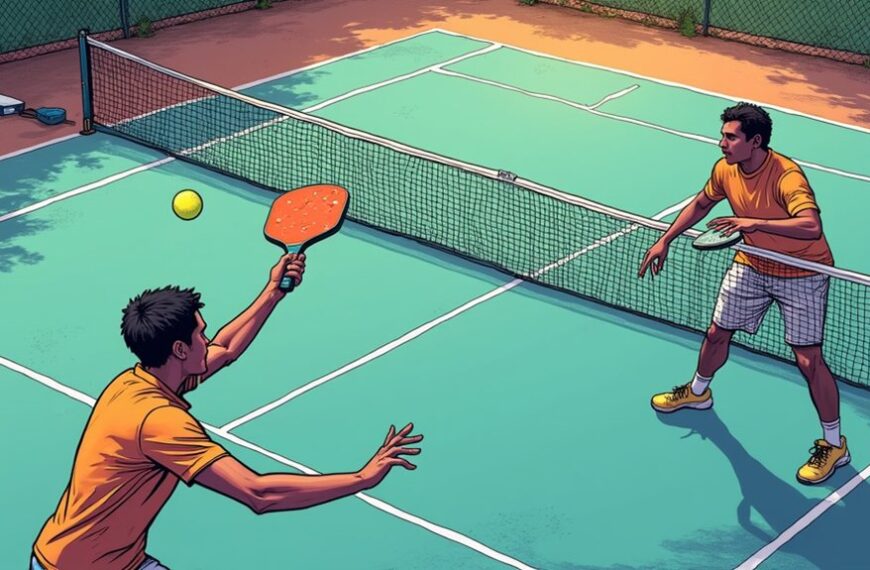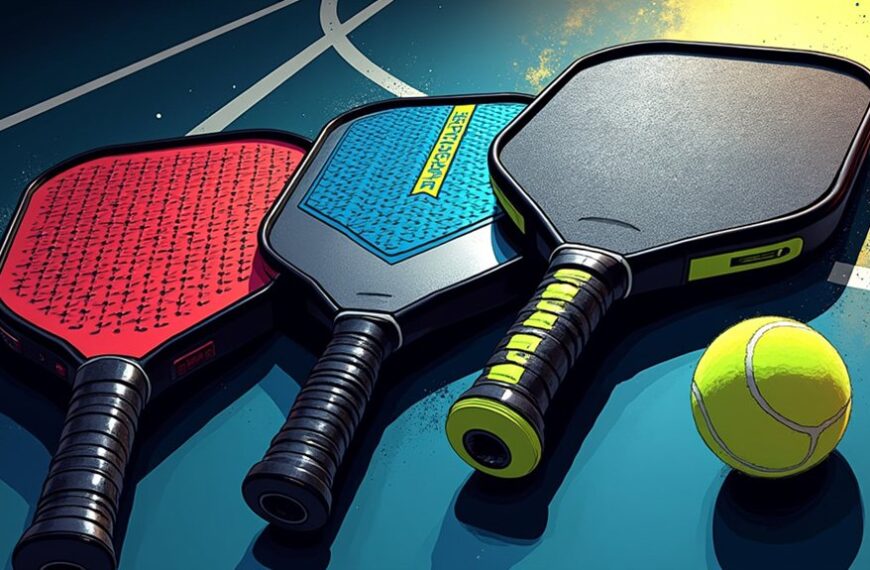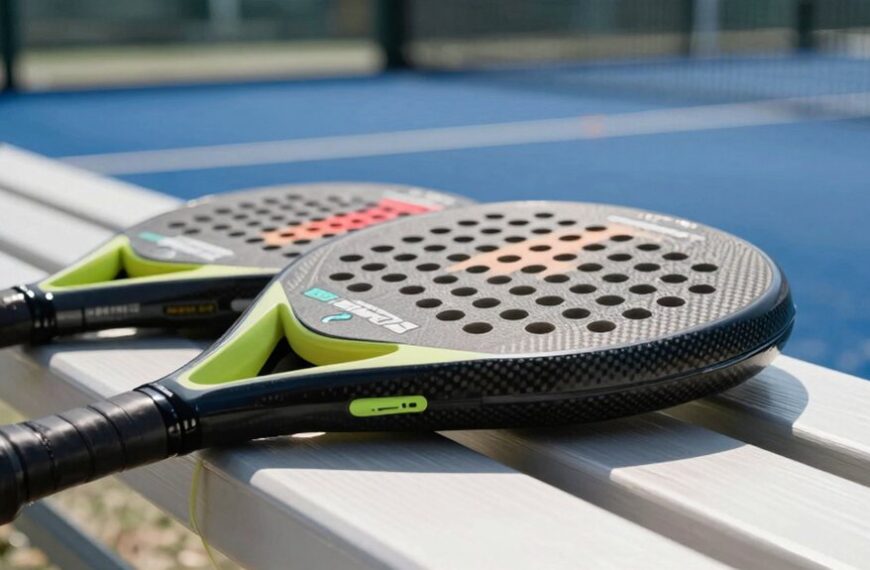
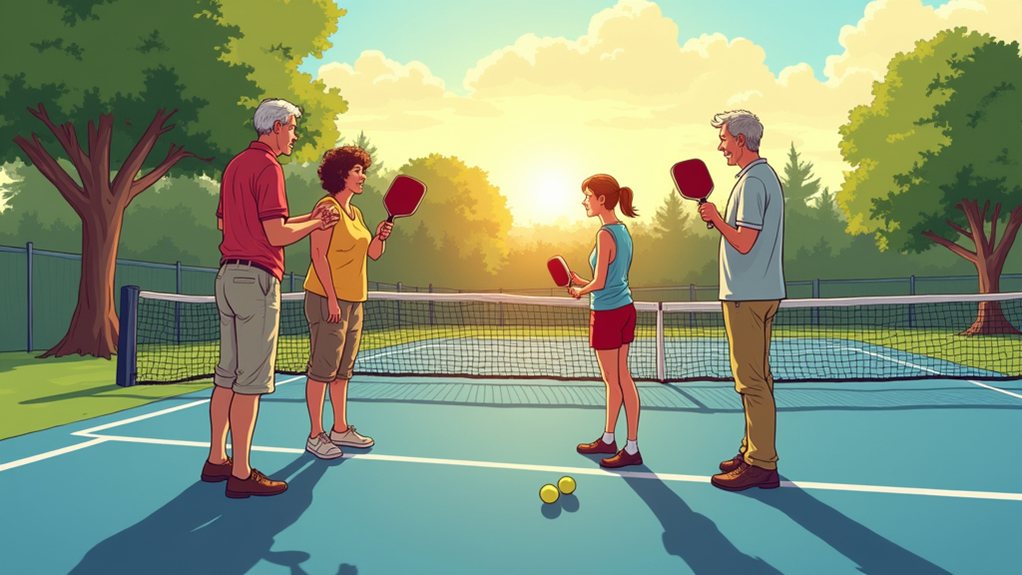
Start with the basics. Pickleball uses a 44-by-20 foot court with a 34-inch net. Teach the underhand serve from behind the baseline into the service box. Use the two-bounce rule: each team must let the ball bounce once before volleying.
Explain the kitchen: stay 7 feet from the net, don’t volley inside this zone. Play to 11 points, win by 2. Choose a paddle. Keep lessons short, celebrate progress. These fundamentals provide a strong start, and more advanced techniques await as skills develop.
Why Pickleball Is the Perfect Activity for Your Parents
Pickleball offers your parents a low-impact sport that combines social interaction with gentle exercise. This makes it ideal for older adults who want to stay active without strain.
Here are the key benefits:
- Low impact protects joints and reduces injury risk
- The court is smaller than tennis, requiring less running
- Paddle and ball are lightweight and easy to handle
- Games are short, lasting about 15-20 minutes
- You can play doubles, adding social connection
- The non-volley zone, called the kitchen, keeps players safe
- Scoring goes to 11 points, keeping matches manageable
We recommend starting with casual play.
This helps your parents build confidence gradually while enjoying time with family and friends.

USAPA Approve Pickleball Paddles: The pickleball paddles of 2 are USA pickleball approved & with USAPA approval lable ith high safety and professionalism, and can be used in tournaments

USAPA approve of victory: niupipo pickleball paddles’ strict requirements for products make it pass the USAPA certification and can be used in tournament play, paddle dimensions: 15.43" L x 7.80" W x 0.41" H; Also, the high quality of the pickleball paddles set of 2 allow you to be more powerful in the tournament and easily withstand the challenges of various competitions.The best valentine's day gift for your love
Master the Basic Rules Before Stepping Onto the Court
Before we play, you need to master three rule areas: court layout basics, serve rules, and the scoring system.
The court is a 44 by 20 foot rectangle with a 34-inch net, and you must serve underhand from behind the baseline into the diagonal service box.
Games are played to 11 points, you must win by two, and only the serving team scores points.
Court Layout Basics
The rectangular court measures 20 feet wide by 44 feet long. You and your parents will find the court marked by clear lines that define each zone.
- The net stretches across the middle; it stands 36 inches high at the sidelines and 34 inches at the center.
- The non-volley zone, called the kitchen, is a 7-foot area that extends from the net to the back line on each side.
- The baseline runs 22 feet from the net on each end; the diagonal areas between the baseline and the net.
You’ll call a ball in if it touches any line. The court also has side lines and a center line that split the playing area. We must watch the kitchen line. Remember this key rule. If you’re teaching your parents at home, a mesh WiFi system can help you stream instructional videos across the entire property without losing signal.
Serve Rules
Master the serve, and you’ll set the tone for every rally. Your serve must travel diagonally into the opposite service box. Follow these rules:
- Stand behind the baseline when you serve.
- Hit the ball underhand, below your waist level.
- Aim diagonally to the opponent’s service box.
- The first serve starts on the right side; switch sides after each point.
- Call the score as your points-opponent points-server number before serving.
- You may use a volley serve or a drop serve, but don’t toss the ball upward.
Keep your serve low and accurate to force your opponents into difficult returns.
Scoring System
Once you understand the scoring system, you can track every point accurately during gameplay. Pickleball matches are played to 11 points. You must win by 2 points. Only the serving team scores when the opponent faults.
Faults include hitting the ball out of bounds, hitting the net, or failing to return the serve properly. Both players on a team serve until they lose a point. The server announces the score before each serve using the format: your score, opponent score, server number.
| Situation | Who Scores |
|---|---|
| Opponent faults | Your team |
| You fault | Opponent |
| Win by 2 | Match ends |
| 11 points | Game ends |
Gear Up: Picking the Right Paddle and Ball for Older Beginners
Paddle weight matters because lighter paddles reduce arm fatigue while heavier paddles provide more power.
We must also select the right ball type for indoor or outdoor play. Let’s explore both factors to help you make the best choices.
Paddle Weight Matters
When selecting a paddle for older beginners, weight plays a critical role in comfort and control. Heavier paddles strain your shoulder and wrist during long rallies. Lighter paddles reduce fatigue but offer less power.
Key weight guidelines:
- Light: 6-7.5 oz
- Medium: 7.5-8.5 oz
- Heavy: 8.5+ oz
For parents over 60, we recommend medium-weight paddles (7.5-8.5 oz). Test paddles at a local store. Hold each for 30 seconds.
Choose the lightest option that feels stable. Grip circumference matters too. Thicker grips reduce hand fatigue.
Avoid wooden paddles. They’re too heavy and cause vibrations. Composite or graphite paddles work best for older players. Your paddle choice affects every shot you make.
Ball Type Selection
The ball you choose affects every rally in pickleball. We use perforated balls similar to wiffle balls. Pickleball balls come in two basic types: indoor and outdoor.
- Indoor balls have larger holes. They fly slower and bounce lower. Use these when playing inside.
- Outdoor balls have smaller holes. They fly faster and bounce higher. Use these outside because wind affects them less.
Consider ball color for visibility. Yellow and orange balls stand out best against most courts. Check your ball before each game. Press the ball gently. It should give slightly but not dent.
Replace balls when they crack or lose their round shape. Older balls become unpredictable. Your paddle and ball work together. Choose quality equipment. It helps your parents enjoy the game more.
Teach Essential Techniques: Serves, Returns, and the Two-Bounce Rule
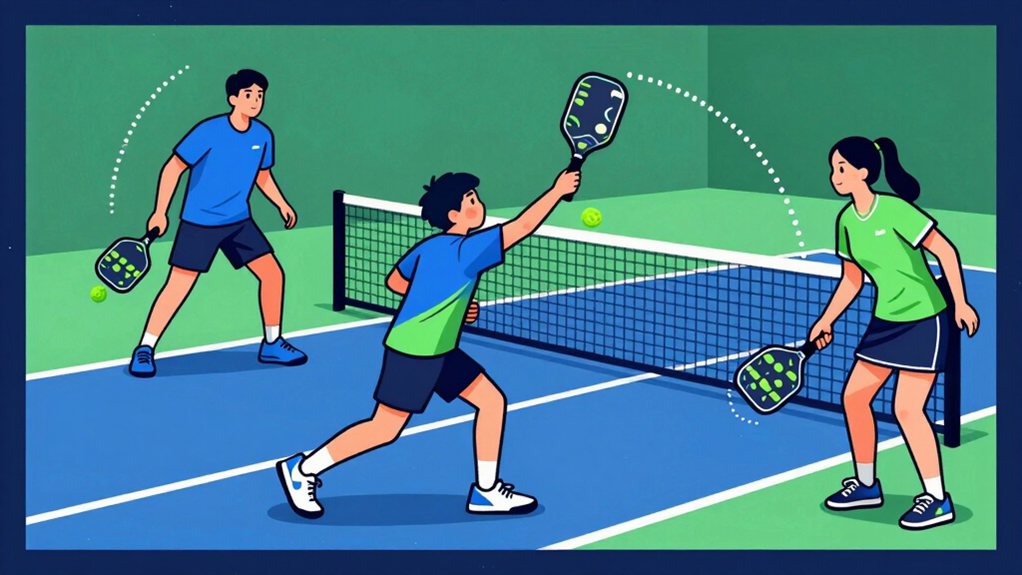
Since your parents are new to pickleball, we’ll begin with the fundamental serve. Position yourself behind the baseline. Use an underhand motion. Keep the paddle below your waist. Hit the ball diagonally into the opposite service box.
The return requires the ball to bounce once in your court before you hit it. This is the two-bounce rule. Wait for the ball to land. Then swing. Do not volley the serve.
Master these basics first. Practice serves and returns separately. Then combine them.
| Technique | Key Action |
|---|---|
| Serve | Underhand, below waist, diagonal |
| Return | Let it bounce, then hit |
| Two-Bounce | Both sides bounce before volley |
These three elements form the foundation of pickleball rally play.
Navigate the Kitchen and Court Positioning Safely
Now that you’ve practiced serves and returns, let’s discuss the kitchen. The kitchen is the non-volley zone. It extends 7 feet from the net. You can’t volley while standing inside this area.
- Stay behind the kitchen line when hitting volleys.
- Step into the kitchen only after the ball bounces.
- Keep your paddle below waist level during kitchen play.
Position at the kitchen line after returning serve. Move back only when the ball goes deep.
Keep your knees bent and weight forward. Communicate with your partner about who takes shots.
Watch the ball at all times. Move your feet quickly.
Keep your shots low and soft. This prevents your parents from making unforced errors in pickleball.

THE STANDARD ON COURT: USAP approved, chosen as the official ball for both the US Open Pickleball Championships and USA Pickleball, and engineered for official size and weight, these pickleball balls deliver consistent performance for both pro and amateur players

FAMILY-OWNED: At Selkirk, we are committed to fueling the pickleball obsession found within every player. Through uncompromising quality and a never-satisfied drive for innovation, we serve players around the world from beginners to pros.

USAPA Approved for Tournament Play: CYCLOTRON Pickleballs meet USAPA regulations and are approved for sanctioned tournament play. Practice With Approved Balls, Improving Your Real Game Skills Efficiently.
Keep It Fun and Positive: Building Confidence and Enjoyment
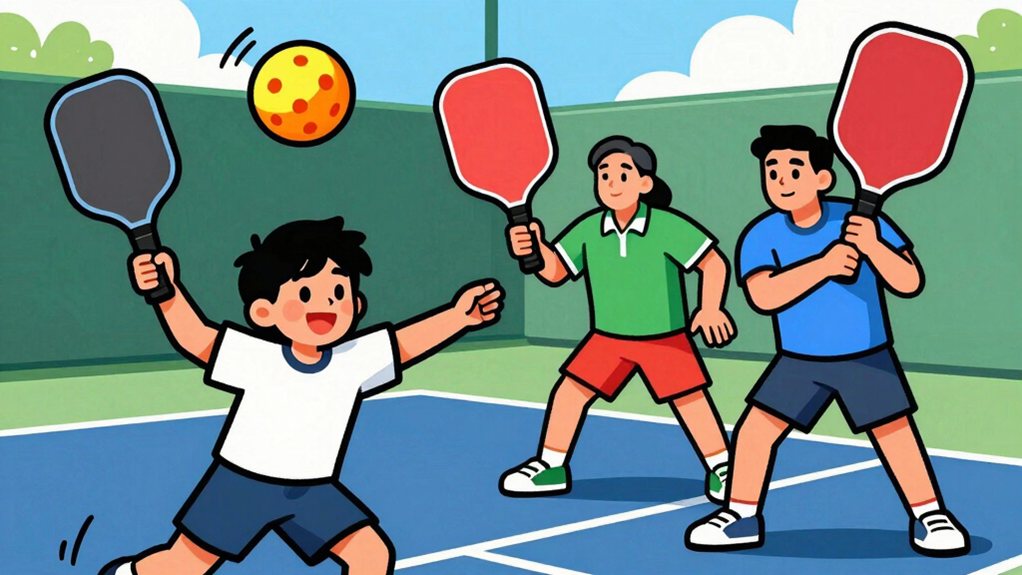
While your parents learn pickleball, keep the experience fun and positive to build their confidence.
Start with basic rules. Explain the scoring system clearly. Celebrate each point they win. Don’t criticize mistakes. Offer gentle corrections instead.
We recommend these approaches:
- Praise effort, not outcome
- Play casual games without pressure
- Set realistic goals for each session
- Allow breaks when frustration appears
Avoid competitive pressure. Remind them that enjoyment matters more than winning. Laugh together when errors occur. This creates positive memories.
Focus on their progress. Track improvement over time. Adjust teaching pace to their comfort level. You build their confidence through encouragement. They’ll enjoy the game naturally.
Frequently Asked Questions
What if My Parent Has Joint Pain or Limited Mobility?
Adapt the game to your parent’s needs. Use lighter paddles, shorter practice sessions, and focus on gentle movements. Let them serve from a comfortable position, and encourage them to stop immediately if they feel pain.
Can We Play Doubles With Just Two People, or Do We Need Four?
You can play doubles with just two players, it’s called singles. Or you form teams of one versus one. Community courts adopt this flexible format. Adjust the game to your group size.
How Do I Find a Local Pickleball Group or Senior-Friendly Court?
Over 4.8 million Americans play pickleball, and you can find local groups through community centers, Facebook groups, or the USA Pickleball app. Check parks departments for senior-friendly courts with beginner sessions and open play times.
What Are the Best Ways to Keep the Ball Low and Slow for Beginners?
Hit with a continental grip, angling your paddle downward. Use soft hands and controlled swings. Aim for the kitchen line, keeping shots shallow. Practice dropping the ball just over the net with minimal pace.
How Do I Adapt the Scoring to a Shorter Game for Tired Players?
“Keep it short and sweet”, reduce the target from 11 to 7 points for tired players. Use no-ad scoring where only the serving team scores, and call the score as team’s points-opponent’s points. First to 7 wins by 1.
Final Thoughts
You now have the tools to teach your parents pickleball. Follow these steps: 1) Review the 11-point game, win by 2. 2) Choose a paddle 7-8 oz and a ball. 3) Demonstrate an underhand serve, keep it within 3 ft of the baseline. 4) Enforce the two-bounce rule: each side must let the ball bounce once before volleying. 5) Position them behind the non-volley line and encourage dinks.
Practice regularly, stay positive, and we’ll watch confidence grow.

1.Minutes of Convenient Installation System: This product has a total of 12 accessories, The magnetic cable will be connected to the corners with a double magnetic snap module to enhance the pulling force, All line-to-line connections will use a single magnetic snap module for quick fixing.

This design is a timeless Court Blueprint. Immerse yourself in the heritage of pickleball with our vintage court diagram, highlighting the game's historic dimensions in a design that resonates with the timeless spirit of this beloved sport.

CREATES A FULL SIZED PICKLEBALL COURT: The Professor Pickleball outdoor pickleball court tape measures 200 feet long and 2 inches wide, providing enough tape to create pickleball lines for an entire outdoor court! Perfect for temporary court setups or quick repairs!