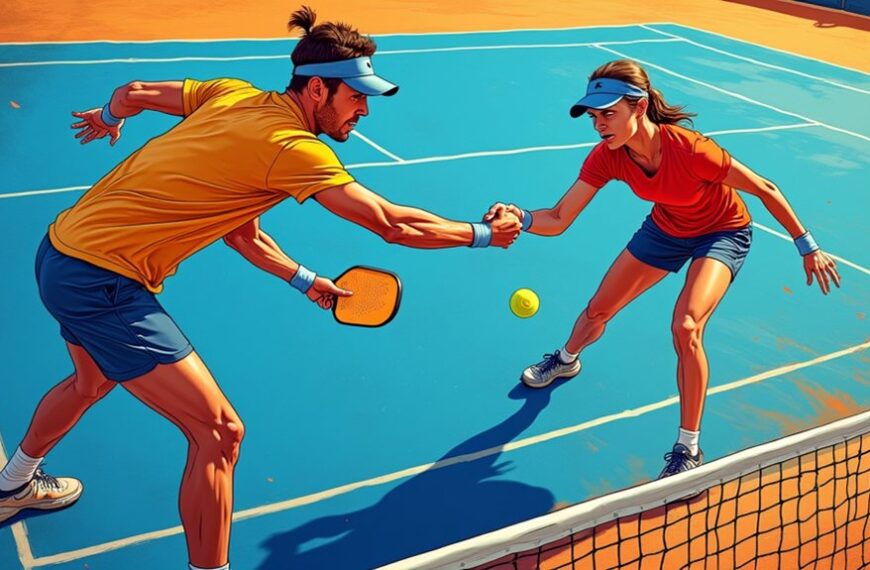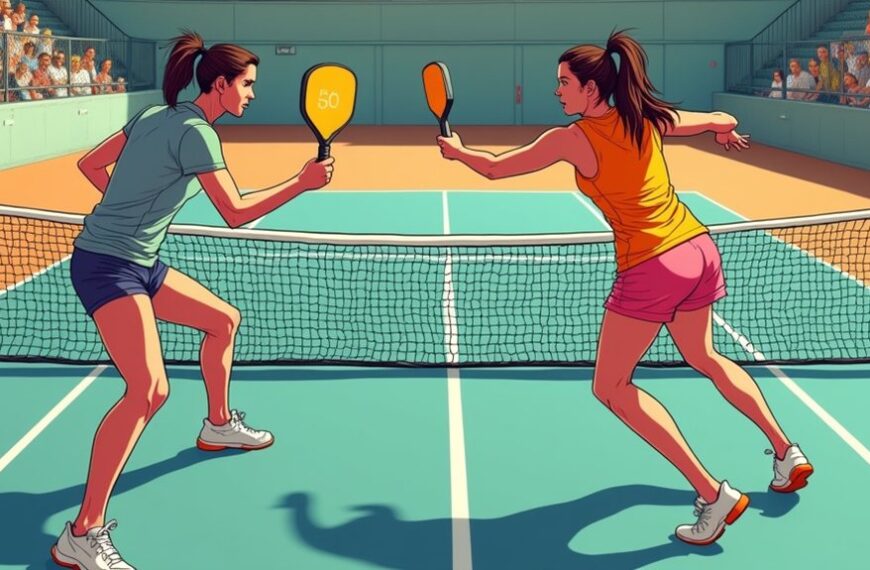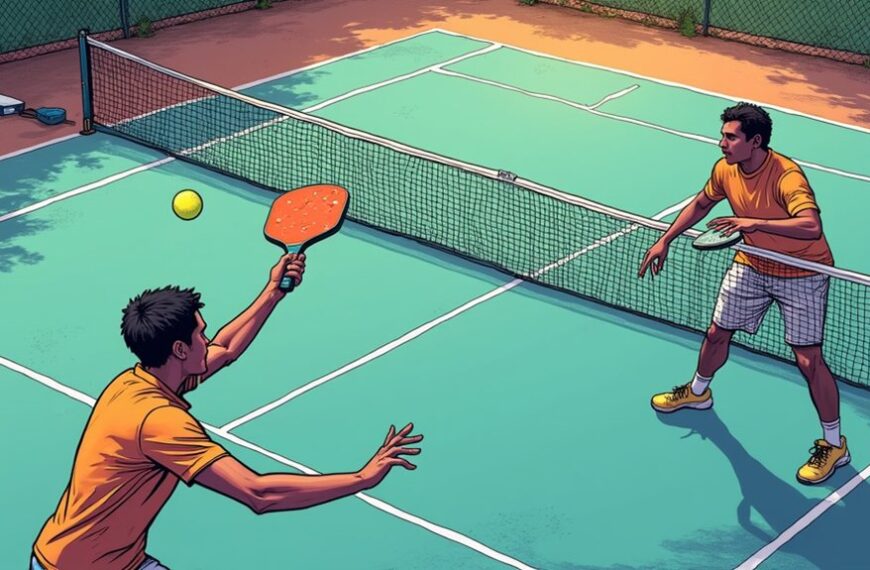
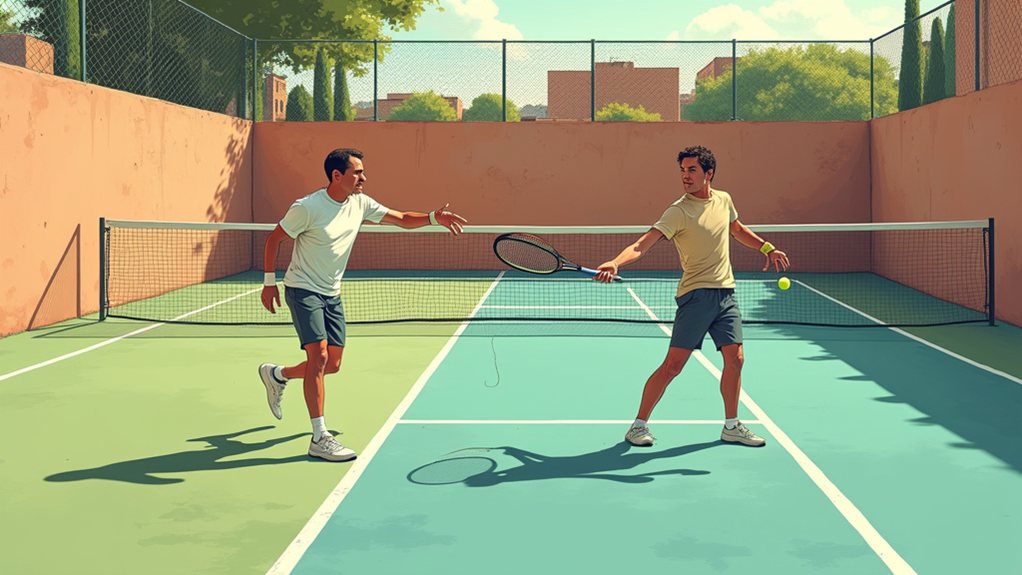
Transition from tennis to padel by resetting your footwork completely. The padel court measures 10 meters by 20 meters, much smaller than a tennis court. You cannot retreat backward because glass walls block your path. Stay 2-3 feet from the back glass to judge rebound angles.
Keep your knees bent and stay on the balls of your feet in ready position. Move your feet first before swinging, and keep your paddle at chest height. After each shot, recover quickly to center within 2 meters of the net.
Practice lateral agility drills like side shuffles and crossovers three times weekly to handle tight spaces. Replace long linear sprints with short-burst lateral shuffles. Turn defense into offense by stepping forward when the ball bounces off the back glass. Consistent practice will sharpen your padel movement instincts.
Why Your Tennis Footwork Needs a Complete Reset for Padel?
When you step from a tennis court onto a padel court, your footwork habits will fail you. Your tennis training built habits for a different game. We must reset your movement entirely.
Your tennis footwork will betray you on padel; you must reset your movement entirely.
Key reasons:
- Glass walls surround the play area. You can’t retreat backward like in tennis. You must move forward and laterally instead.
- The net sits much closer. You stand near the net in padel, not at the baseline. Your ready position changes completely.
- Short bursts replace long sprints. Padel demands quick lateral steps and fast recoveries. You seldom run far distances.
- Wall play requires new instincts. You use walls to return balls. Your footwork must anticipate rebounds.
- Center positioning keeps you safe. You avoid the glass by staying central. Your movement patterns shift to compact zones.
Adapt these changes:
- Keep your knees bent always
- Stay on the balls of your feet
- Move your feet first before swinging
- Keep your paddle at chest height

Wilson Hurakn Lite Men's Padel Shoe - Black/Infared/White, Size 9.5 US A lightweight and breathable padel shoe, offering responsive cushioning, reliable traction, and...
How the Smaller Padel Court Changes Your Movement?
The padel court measures 10 meters wide by 20 meters long, which is particularly smaller than a tennis court. This reduction changes how you move.
- Your coverage area shrinks dramatically. You now defend roughly 200 square meters instead of 260 square meters.
- Linear sprints become less useful. You replace long baseline runs with quick lateral shuffles.
- Net play dominates. You stay within three meters of the net for most rallies.
- Glass boundaries limit retreat. You can’t back up beyond the back wall.
- Reactions must be instant. The ball returns off glass in under one second.
- Position central. You stand near the center mark to reach both sides efficiently.
A smart home automation hub can integrate with motion sensors to track your court positioning patterns and help analyze your movement efficiency during training sessions.
These adjustments help you adapt tennis footwork to padel’s compact space.
Master Lateral Agility Drills to Handle Tight Spaces
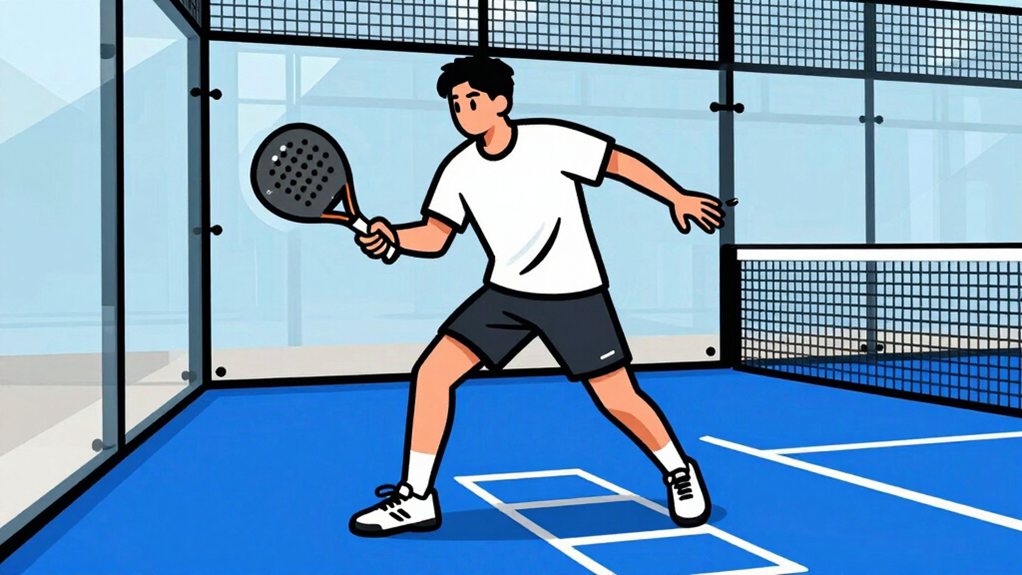
As you adapt to padel’s tighter boundaries, lateral agility becomes your most critical skill. You must train lateral movement patterns that tennis players rarely practice.
- Side shuffle drills: Set up 5 cones in a line 3 feet apart. Shuffle sideways for 10 reps, then reverse direction. Complete 3 sets.
- Crossover steps: Practice crossing your front foot over your back foot while moving sideways. Perform 8 reps each direction for 2 sets.
- Lateral bound jumps: Leap sideways onto a marker, land softly, and immediately leap back. Do 6 reps per side for 2 sets.
- Reaction ladder work: Place a speed ladder on the court. Enter each square laterally for 5 runs, focusing on quick foot placement.
These drills develop the hip flexibility and lateral power that padel demands. Train 3 times weekly for best results.
Use the Walls Effectively: Turn Rebounds Into Offensive Opportunities
Use the walls to your advantage in padel. Position yourself 2-3 feet from the back glass to judge rebound angles, then step forward to hit before the ball reaches the side wall.
Turn defensive rebounds into offensive opportunities by moving toward the net when your opponent hits into the glass.
Rebound Angles
When the ball hits the back glass, it creates unique rebound angles you can exploit. The ball often bounces higher than expected, giving you time to move forward. You must learn to read these rebounds quickly.
- Low backglass rebounds stay near the ground and invite attacking volleys.
- High rebounds bounce over your shoulder and demand quick lateral adjustments.
- Sharp-angled rebounds bounce toward extreme corners, forcing opponents out of position.
Study each rebound pattern during practice. Your footwork adjusts to each angle automatically with repetition. You control the point when you predict the glass rebound correctly.
Wall Positioning
Because the walls are your best ally in padel, you must position yourself closer to them than you’d in tennis.
- Stand two to three feet from the back wall during rallies.
- Keep your body angled toward the nearest side wall.
- Move laterally along the wall rather than retreating backward.
- Hold your paddle high, ready to redirect rebounds.
- Watch the ball bounce off the glass before it reaches you.
- Step into the court to take balls early.
- Use wall rebounds to create difficult angles for your opponents.
Turn Defense Into Offense
If you understand how to use the walls, you can turn defensive positions into aggressive offensive opportunities. The glass walls create unique angles that you can weaponize against your opponents.
When an opponent hits hard, the ball often rebounds with reduced pace.
You can step in and attack.
- Wait for the ball to bounce off the back glass
- Move forward to take the ball early
- Hit a winning shot while your opponent recovers
Practice this daily.
Your returns will improve.
Your confidence will grow.
The walls become your ally when you master these three steps.
Shift From Linear Sprints to Short-Burst Recovery Steps in Padel
As you leave the baseline mentality behind, you enter a court where explosive lateral steps replace the linear sprints that defined your tennis game.
Leaving the baseline mindset, you step onto a padel court where explosive lateral steps replace the old linear sprints.
In padel, you cover 10 meters less than a tennis court. Your movement shifts to short bursts.
After each shot, recover quickly to the center.
Stay within two meters of the net during rallies.
Use quick shuffles rather than long strides.
Lateral agility matters more than speed.
Practice these steps:
- Take three quick lateral steps to reach the ball.
- Return to center position within one second.
- Keep your weight on the balls of your feet.
- Anticipate wall rebounds. The glass creates unexpected angles. You must react fast. Train with cone drills that last five seconds.
Repeat ten times per side.
Your footwork becomes efficient through repetition.
The compact space rewards quick adjustments over sustained sprints.
Adjust Your Ready Position and Swing Mechanics for Padel
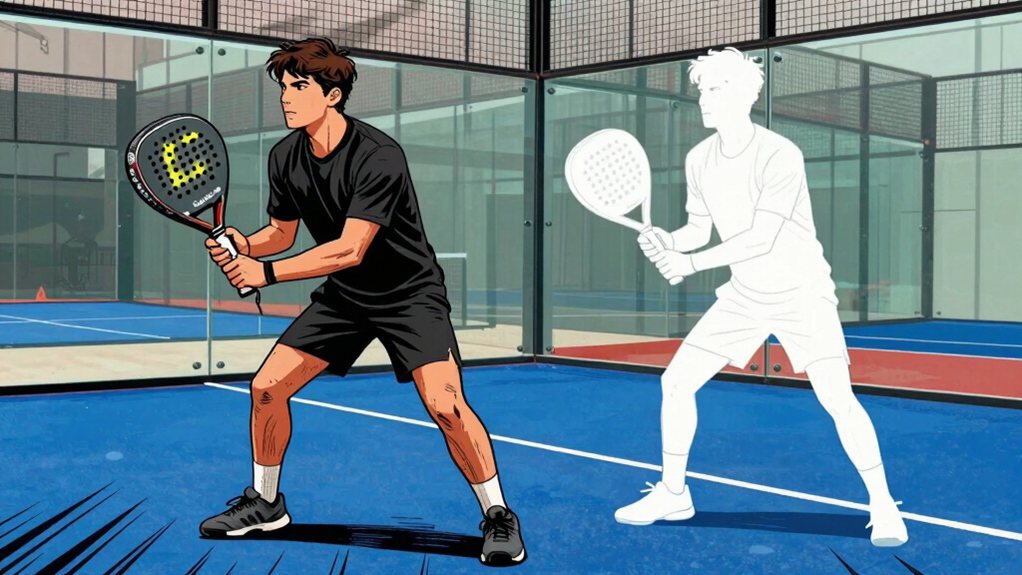
Your padel ready position differs from tennis. Hold your racket higher, near chest level, with knees slightly bent. This height allows quick reactions to rebound shots off the glass walls.
- Keep your racket head above wrist level for fast swings.
- Bend knees and shift weight to balls of feet.
- Stand closer to the baseline than in tennis.
We adjust swing mechanics for padel’s enclosed court. Shorten your backswing to hit balls in front of your body. Use compact strokes that absorb the ball’s pace. Contact the ball before it drops below waist height.
Control your swing speed to place shots rather than blast them. Practice hitting against walls to develop proper rebound timing. This repetition builds consistency for match play.

Enhance Athletic Performance: 12 adjustable crossbars are designed for dynamic training, improving footwork accuracy, reaction speed, and coordination. Especially suitable for training in sports such as soccer, basketball, and rugby.

Practical and helpful- Ankle resistance bands application for football/tennis/baseball training ,physical training and home workout.It is helpful for the people who want to increase speed and agility

✔MULTIFUNCTIONAL TRAINING EQUIPMENT: Our patented design features three products in one: Agility Ladder, Hurdle, and Wall. With slidable rungs and extendable hook and loop design, you can quickly adjust the workout ladder, even on the fly, to various configurations , while reducing the amount of equipment to be hauled to each training venue. Now you can give your team drills a whole new dimension, and more exciting ways of developing speed, agility, and coordination.
Build Specific Physical Conditioning for Padel’s Demands
You’ll need to build specific physical conditioning that targets three pillars: lateral agility drills, paddle‑specific endurance, and injury prevention circuits.
For lateral agility, we incorporate ladder footwork, side‑shuffle sets, and cone drills, performing for 15 seconds then resting 10 seconds, repeat six times per side.
We build endurance with 20‑second bursts and 10‑second rest, repeat eight times, do prevention circuits targeting shoulders, knees, and ankles in three sets of twelve.
Lateral Agility Drills
Because padel courts are smaller than tennis courts, you must develop lateral agility to cover tight spaces quickly. Lateral agility drills build the quick side-to-side movement needed for padel’s tight exchanges. Your training should focus on rapid direction changes and fast recoveries.
Perform these three drills three times per week:
- Side Shuffles: Set up five cones in a line 3 feet apart. Shuffle laterally between cones for 20 seconds, moving both directions. Rest 10 seconds. Repeat 6 times.
- Lateral Bounds: Jump side to side over a low hurdle. Land softly. Repeat 15 bounds per set. Complete 4 sets.
- Agility Ladder Drills: Run ladder patterns using lateral steps. Focus on quick foot contact. Complete 8 runs.
These drills improve your ability to move efficiently in confined padel spaces.
Paddle‑Specific Endurance
Regular training builds the specific endurance padel demands. You must shift from tennis cardio to padel-specific conditioning. Padel rallies last 8-15 seconds with 10-20 second rest periods. Your training should match this pattern.
Key conditioning elements:
- Interval training with 15-second sprints
- Lateral movement circuits
- Repeated acceleration and deceleration
- Court coverage at match intensity
Include high-intensity intervals, lateral agility work, and sport-specific endurance. Your body adapts to padel’s stop-start movement.
Build stamina for tight spaces and quick recoveries during matches.
| Training Element | Duration/Reps |
|---|---|
| Sprint Intervals | 15 seconds |
| Lateral Drills | 20 reps |
| Recovery Periods | 15 seconds |
| Circuit Rounds | 8-10 sets |
Injury Prevention Circuits
While tennis builds your fitness base, padel demands specific injury prevention circuits to protect your body from new movement stresses.
The confined court, glass walls, and lateral demands create unique injury risks.
You must train smart.
We build circuit sessions around three focus areas:
- Lateral agility ladder drills, 10 sets of 6-repetition lateral jumps protect ankles and knees from sideways strain during net approaches.
- Deceleration box squats, 3 sets of 8 reps at 60% intensity strengthen quadriceps for sudden stops near walls.
- Rotational medicine ball throws, 4 sets of 5 throws each side develop core stability for paddle swing forces.
Complete circuits three times weekly during your first eight weeks.
Listen to your body and adjust volume as needed.
Develop Strategic Net Positioning to Control the Point
In padel, you must stay near the net to control the point because the court is smaller and the ball bounces off walls. Follow these steps to develop your net positioning:
- Establish your base position 2-3 meters from the net, centered between the side walls.
- Move forward when your opponent hits a weak return.
- Step back quickly only when the ball travels deep near the back glass.
- Read your opponent’s body language to anticipate shot direction.
- Cover the angles by positioning yourself diagonally toward the side wall.
- Maintain a ready position with your paddle high and knees bent.
- Communicate with your partner to avoid coverage gaps.
Stay aggressive at the net to force your opponent into difficult shots. Your forward position puts pressure on returns.
Control the point by remaining alert and adjusting position after each shot.
Frequently Asked Questions
Do I Need Different Shoes for Padel Compared to Tennis?
Yes, you need padel-specific shoes. They provide superior lateral support and gum sole grip for synthetic turf. Tennis shoes won’t handle padel’s rapid side-to-side movements and glass wall collisions as effectively, increasing your injury risk.
How Does Padel Scoring Differ From Tennis, and Does It Affect Footwork?
Picture this: Padel uses 15-30-40 scoring like tennis, but no-ad scoring means every point is sudden death. These shorter, intense rallies demand explosive footwork, you’re constantly ready for quick lateral moves rather than long baseline exchanges.
Can I Use a Tennis Racket in Padel, or Do I Need One?
No, you can’t use a tennis racket for padel. You need a padel racket, which is thicker, stringless, and heavier to handle the ball’s bounce off walls and control rebounds during intense competitive play sessions.
What Common Footwork Mistakes Should I Avoid When First Playing Padel?
Retreat backwards, ignore glass walls, and forget to move your feet first. Don’t take wide swings, keep your racket too low, and completely neglect lateral agility. Stay planted, and you’ll lose critical court coverage.
How Do I Adapt My Serve Footwork for Padel’s Rules?
During your serve, you stand behind the service line, bounce the ball, and hit it below waist level. You can’t step into the court until the ball bounces. Keep your feet completely stationary until contact.
Final Thoughts
Your transition from tennis to padel footwork is now complete. You have learned to move in tighter spaces, use walls strategically, and adjust your ready position. Apply these skills consistently. Practice lateral agility drills three times per week.
Focus on short-burst recovery steps instead of linear sprints. Position yourself six to eight feet from the net during serves. The court is your canvas, and your feet are the brush, paint your way to victory with precision and control.

LIGHTWEIGHT, SECURE UPPER: Breathable mesh upper with a new engineered knit sock construction delivers stability, comfort, and a sock-like fit, while offering enough stretch for easy on and off.

Wilson Bela Pro Padel Shoe - Black/Red, Size 14 US

【Top-Notch Slip-Resistance】The tread pattern rubber sole of Fitville mens pickleball shoes ensures anti-slip and long-lasting durability.