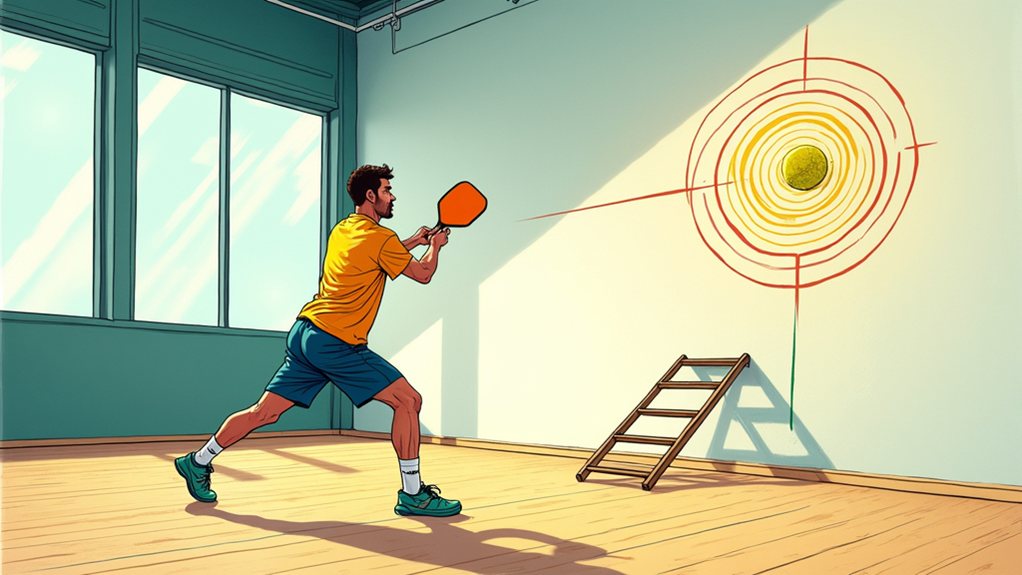
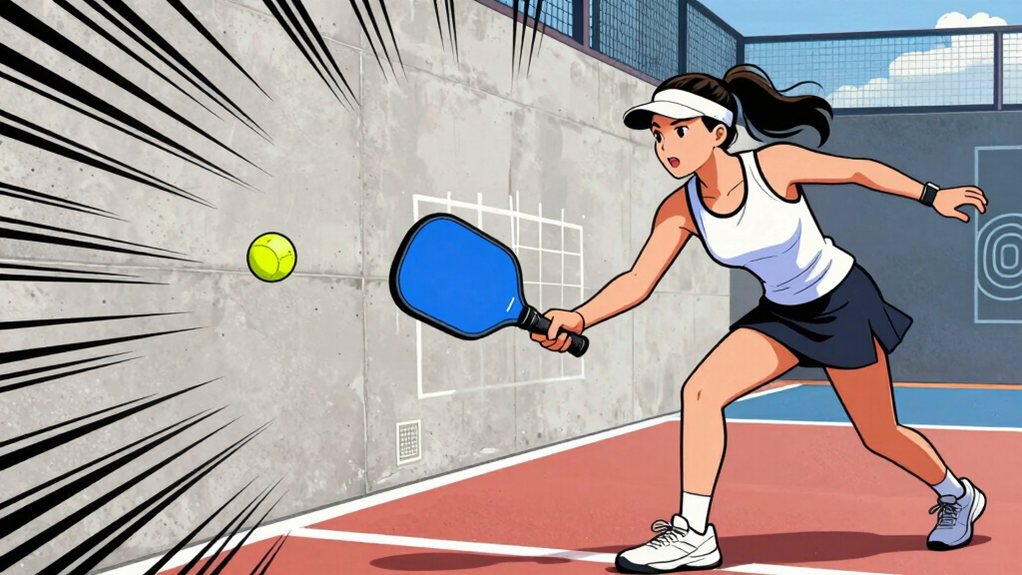
Set up a wall in your garage or basement. Stand 5-7 feet from the wall. Mark a 36-inch target line to simulate net height. Hit soft dinks that land at net height using a punch-style block.
Alternate forehand and backhand volleys. Aim for 10-100 consecutive successful hits. Keep your paddle face slightly open and your grip soft. Maintain a low athletic stance.
After dink control improves, add side-to-side shuffles. This builds faster hands and sharper reflexes for game play. You can develop consistent contact point development and muscle memory through this solo practice. There is more detailed information available to help you further develop your volley skills.
How Wall Drills Supercharge Your Pickleball Volleys
Wall drills build faster hands and sharper reflexes for pickleball volleys. You develop timing and accuracy through repetitive contact with a solid surface.
Wall drills build faster hands and sharper reflexes for pickleball volleys, developing timing and accuracy through repetitive contact with a solid surface.
Here’s how wall drills boost your volleys:
- Stand 5-7 feet from the wall
- Mark a target 36 inches high to simulate net height
- Hit forehand volleys for 50 successes
- Switch to backhand volleys for 50 successes
- Alternate rapidly to build quick hands
- Progress from high targets to low targets
Benefits include:
- Improved hand-eye coordination
- Better reaction time
- Strengthened muscle memory
- Consistent contact point development
These drills simulate game sequences and deliver faster results immediately.

ModFamily Pickleball Practice Dink Pad - Professional pickleball training aid for improving volleys, accuracy & control. Stop hitting balls too high keep it low and avoid giving your opponents an easy return shot! High quality reusable vinyl with extra reenforced backing adhesive for multiple use practice sessions.

ELEVATE YOUR GAME - FIVE MINUTES AT A TIME!

Premium Tungsten Weighted Tape for Pickleball Paddles – Enhance your paddle's performance with our high-quality tungsten tape designed specifically for pickleball enthusiasts.
Set Up Your Wall for Pickleball Solo Practice
You can transform any solid wall in your garage or basement into an effective solo practice station. Follow these steps to set up your wall for maximum benefit.
- Stand 5,7 feet from wall for most drills
- Mark target 36 inches above floor with tape to simulate net
- Use solid wall or plywood in garage/basement
- Create small rectangular target above net line
- Mark horizontal line across corner walls for footwork
| Equipment | Purpose |
|---|---|
| Tape marks | Net height target |
| Plywood | Rebound surface |
| Tape line | Footwork guide |
| Small target | Accuracy focus |
We keep setup simple. You achieve results with minimal equipment.
Master the Continuous Dink Control Drill
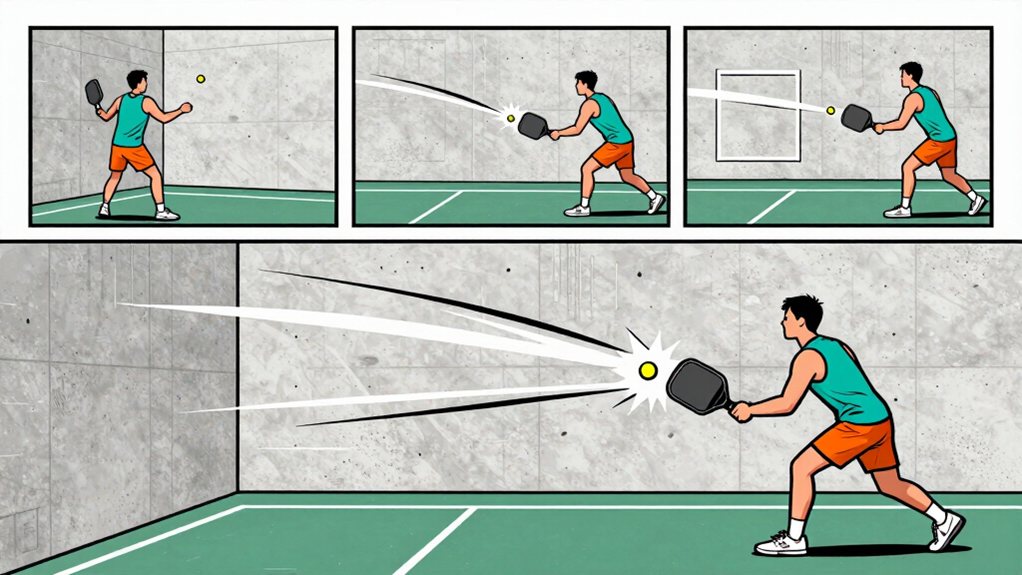
Now that your wall is marked and ready, we can begin the continuous dink control drill.
Position yourself 5-7 feet from the wall. Use the 36-inch tape line as your net target. Hit soft dinks that land at net height.
Follow these steps:
- Start with a balanced, compact stance
- Hit the ball softly using a punch-style block
- Alternate forehand and backhand volleys
- Aim for 10-100 consecutive successful hits
Key points:
- Keep your paddle face slightly open
- Absorb the ball’s speed with a soft grip
- Maintain a low athletic position
- Focus on control, not power
This drill builds hand-eye coordination and feel for soft shots. Consistency matters more than speed.
Add Footwork Drills for Real-Game Transitions
Once you’ve built consistent dink control, adding footwork drills will prepare you for real-game turnarounds.
- Stand 5-7 feet from the wall in a low athletic stance.
- Perform side-to-side shuffles, touching the wall with your non-paddle hand at each end.
- After each shuffle, catch a reflex volley.
- Then do a quick forward step, tap the wall with your paddle, and retreat immediately.
This drill builds lateral agility and better court positioning. Alternate forehand and backhand volleys after each movement sequence.
Complete 10 shuffles per side, then 10 forward-recovery sequences. Your footwork becomes automatic, so you shift seamlessly when opponents attack.

PRACTICE SOLO ANYWHERE, ANYTIME: Perfect your swing, reflexes, and accuracy without needing a court or partner. Ideal for indoor or outdoor use—train in your garage, driveway, patio, or yard and enjoy real pickleball fun wherever you are.

【2PCS Pickleball Training Pads】 One package contained TWO dink pads, each training pad is 3.7 feet x2.8 feet. Each exercise mat has been cut into two pieces, left and right for easy to assemble. You can use our better-looking and user-friendly practice mat to inspire you to improve your skills.

Packing List of Dink Pad - Two posters (you need to put the two posters together to form a complete DINK sticker), level, marking pencil and tape measure, all the tools needed for posting are included to help you put up the poster easily.
Build Your Solo Practice Routine for Faster Results
When you combine specific drills into a structured routine, you develop faster hands and better court awareness. Here’s a balanced 20-minute session:
- Warm up without paddle for 5 minutes
- Toss ball underhand, let it bounce once, catch it
- Stand 5,7 feet from wall
- This builds reaction time
- Paddle work for 15 minutes
- Practice continuous dink control: aim for 10,100 soft hits
- Alternate forehand and backhand volleys
- Hit forehand volleys until you reach 50 successes
- Hit backhand volleys until you reach 50 successes
- End with footwork integration
- Do side-to-side shuffles at arm’s length from wall
- Incorporate reflex volleys after each shuffle
This routine develops hand-eye coordination, improves timing, and simulates game sequences.
Frequently Asked Questions
Can I Use a Tennis Ball Instead of a Pickleball?
Not recommended. You can’t use a tennis ball. It’s too big and bouncy, so you’ll develop incorrect timing. You’ll struggle switching back. Use a proper pickleball or a dead tennis ball for better practice simulation.
How Do I Avoid Disturbing Neighbors With Wall Drills?
You’ll shake the very foundations of the earth if you don’t use sound-absorbing panels behind the wall, pad your paddle with cushioning, schedule drills during daytime hours, and choose interior rooms away from neighbors.
What’s the Best Wall Surface for Practicing Volleys?
A solid, flat plywood wall in your garage or basement gives you the best surface. It absorbs impact well, lets you see your ball clearly, and creates consistent, predictable rebounds for effective volley practice daily.
Should I Warm up Before Starting Wall Drills?
Yes, warm up before wall drills. Start with five minutes of no-paddle reaction drills to improve hand speed and build reaction time without paddle fatigue. Then shift to paddle work for maximum benefit and injury prevention.
How Long Does It Take to See Improvement in Volleys?
After 1-2 weeks of consistent wall drill practice, you’ll notice better hand-eye coordination and timing. Notable volley improvements typically appear within 3-4 weeks as your reflexes sharpen through dedicated solo wall work.
Final Thoughts
Apply these wall drill techniques consistently, and you will see *notable* improvement in your volley control and footwork. Practice the continuous dink drill for 10 minutes daily, then add footwork *changes* for 5 minutes.
Stand 10 feet from the wall, hit 20 volleys per set, and complete 3 sets per session. Your muscle memory will develop naturally, and game-time reactions will become automatic. Commit to solo practice, and your pickleball skills will advance *considerably*.

Made of durable fiberglass rod with good flexiblity feature. Pole rebounds back if struck by vehicle

Pickleball Net Set 22ft with carry bag study Regulation Size

Molded head on flexible fiberglass-reinforced rod