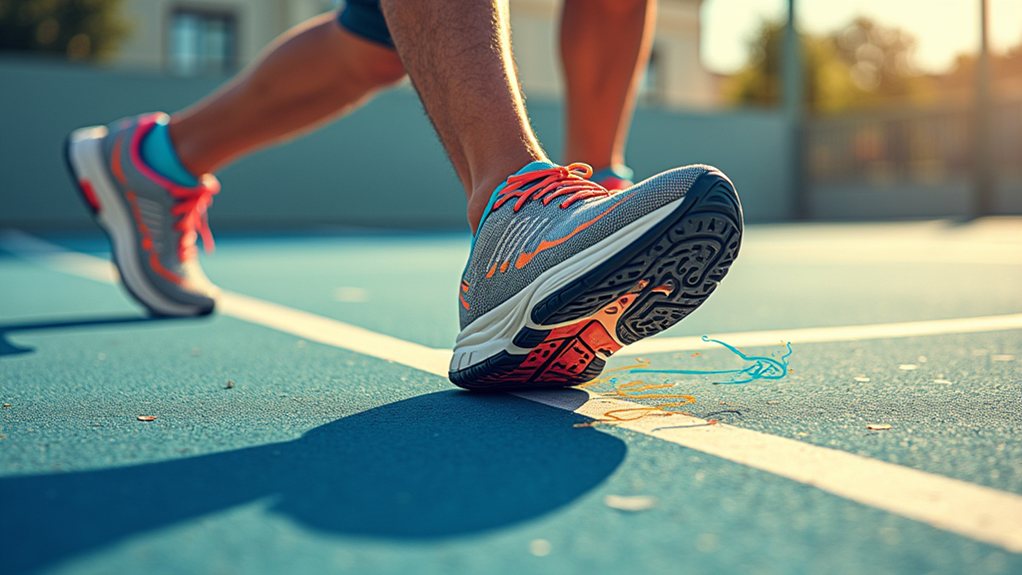
Lateral stability is the most critical feature in pickleball court shoes. You need a firm heel counter that extends at least 1 inch above your ankle bone. Look for reinforced sidewalls that grip the court during quick pivots. A stiff midsole shank prevents twisting when you change direction rapidly.
Choose shoes with a wide base for balance during lunges. Avoid running shoes, they lack lateral support and cause ankle sprains during side-to-side movements. Your knees will thank you when you wear shoes designed for lateral motion.
Why Pickleball Demands Better Lateral Stability Than Running?
Pickleball courts measure 20 feet wide and 44 feet long. You spend most of your time moving side to side on this compact surface. Unlike running shoes, you need lateral stability.
Running shoes flare at the soles. They flex forward for straight-line motion. They don’t handle quick pivots. You’ll twist an ankle without proper support.
Pickleball demands side-to-side shuffling. You pivot constantly. Your shoes mustn’t buckle under lateral pressure. We choose shoes with reinforced sides.
Key differences:
- Running shoes lack torsional stability
- Court shoes have sidewalls and heel counters
- Lateral support prevents foot rolling
- Pickleball shoes grip the court during lunges
You need shoes designed for these specific movements. Running shoes will fail you in pickleball.

Lightweight Stability for Pickleball - Built for pickleball players, Ultrashot Light supports explosive lateral movement, quick cuts, and controlled stops with a lighter, more stable feel on court.

Lightweight Stability for Pickleball - Built for pickleball players, Ultrashot Light supports explosive lateral movement, quick cuts, and controlled stops with a lighter, more stable feel on court.

Durable synthetic leather toe overlays
How Lateral Support Prevents Ankle Sprains and Knee Pain?
When you wear shoes with proper lateral support, you protect your ankles and knees from common pickleball injuries. Lateral support prevents dangerous foot twisting during quick direction changes. Consider these four protective features:
- Reinforced heel counters that cup your ankle and stop outward rolls
- Midsole shanks that resist twisting forces and protect knee joints
- Upper overlays that distribute pressure evenly across your foot
- Higher ankle collars that reduce ligament strain during stops
Your knees absorb less torque when your feet stay stable under you. You reduce ankle sprain risk with every lateral movement.
The shoes catch your weight during quick plants. Your ligaments stay aligned instead of twisting awkwardly. A wifi security system can also help you monitor your court area and surrounding property for added peace of mind during outdoor play.
Must-Have Shoe Features for Side-to-Side Pickleball Movement
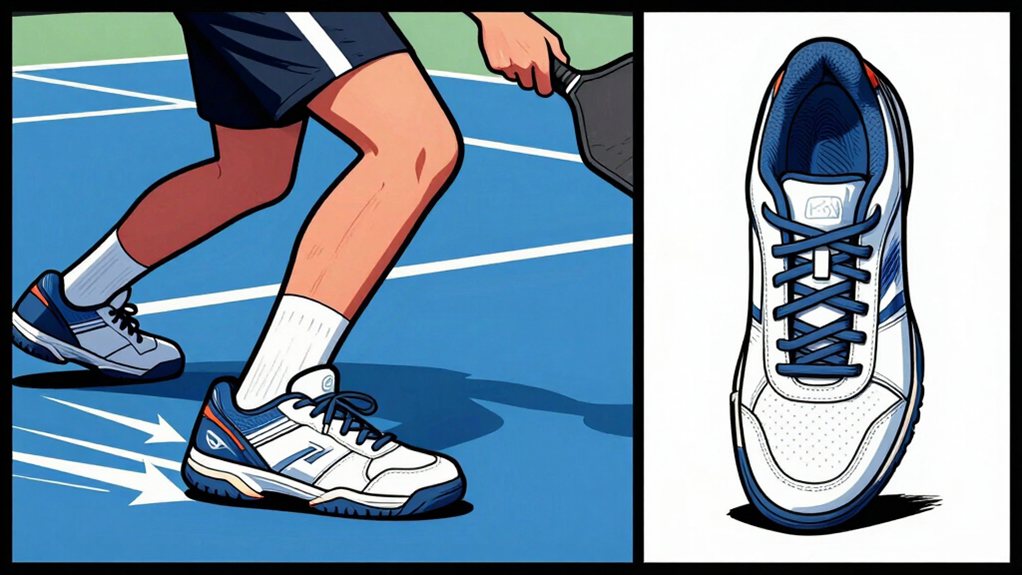
When you play pickleball, you’ll need shoes that support side-to-side movement.
Look for three key features: lateral support, torsional stability, and a reinforced toe cap.
These elements keep your foot stable during quick direction changes so you can avoid injuries.
Lateral Support
Because lateral movements dominate pickleball play, your shoes must provide specific stability features. You need shoes with reinforced sidewalls to prevent your foot from rolling outward during quick direction changes on the court.
Look for firm heel counters that lock your ankle in place when you stop suddenly. The midsole should resist compression on the outside edge to keep you stable during lunges.
Your lateral support system must include key features:
- Reinforced toe caps and outer overlays that resist wear during side drags
- Firm heel counters extending at least 1 inch above the ankle bone for maximum stability
- A wide base past the ball of your foot to prevent tipping during pivots
- Stiff exterior materials that don’t stretch after hours on the court
Torsional Stability
Building on lateral support, torsional stability addresses the twisting forces your shoe faces during pickleball’s rapid direction changes. When you pivot quickly, your foot tries to twist inside the shoe. A stable shoe resists this motion through its midsole shank and heel counter design.
Key torsional stability features include:
- Midsole shanks maintain shoe shape during lateral loads
- Heel counters lock your foot in place
- Rigid outsoles prevent twisting
| Feature | Function | Benefit |
|---|---|---|
| Midsole shank | Prevents sole twist | Maintains stability |
| Heel counter | Locks rearfoot | Prevents ankle roll |
| Rigid outsole | Resists torsion | Protects joints |
| Wide base | Improves balance | Reduces fatigue |
You should look for shoes with these features when playing pickleball. The midsole shank runs between your heel and ball, keeping the shoe rigid during side moves. Your heel stays secure when you stop suddenly.
Reinforced Toe Cap
Serving as your first line of defense during abrupt stops and direction changes, reinforced toe caps protect the front of your foot from impact and wear. You need a toe cap made of durable materials like rubber or polyurethane.
These caps shield your toes from scuffs when you slide across the court. They also prevent premature breakdown of the shoe’s upper.
Reinforced toe caps guard you against:
- Abrupt stops that place intense pressure on your toes
- Quick direction changes that drag your toe along the surface
- Frequent lunges that expose your toe to impact
- Continuous shuffling that causes toe cap wear
Your reinforced toe cap extends the life of your shoe. It keeps you stable during aggressive movements. You avoid painful toe injuries. Choose shoes with visible toe reinforcement for maximum protection.
Torsional Stability and Heel Counters: What They Actually Do
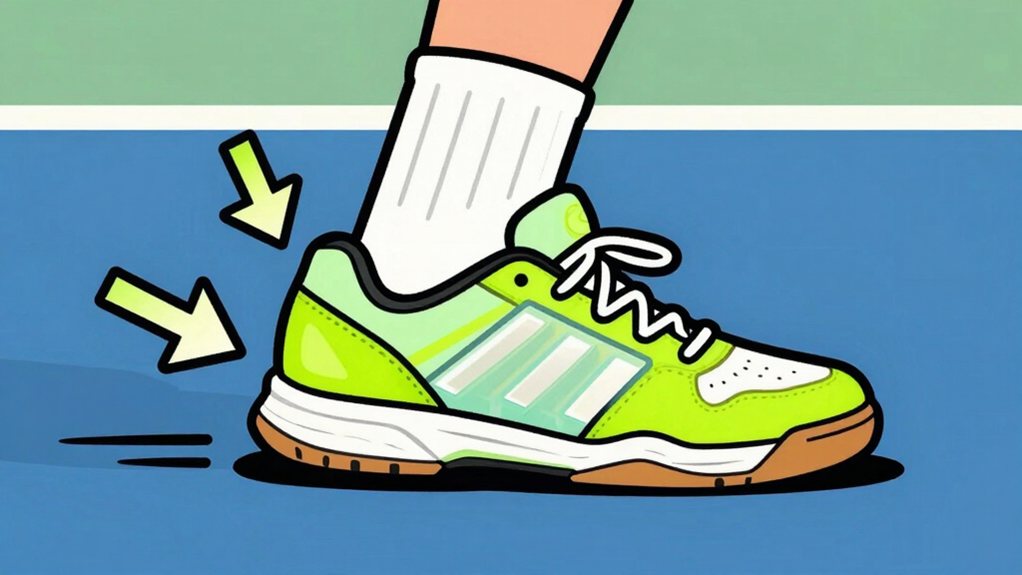
Torsional stability keeps your foot from twisting when you pivot quickly on the pickleball court.
The heel counter is a rigid piece at the back of your shoe that cups your heel and prevents it from slipping during sudden stops.
Together, these features give you the stable base you need for safe lateral movements and quick direction changes.
Torsional Stability Explained
When you change direction quickly on the pickleball court, your feet face a complex twisting force. Torsional stability prevents your shoe from bending and losing support during these moves. Your shoe resists this twisting through four key features:
- A stiff midsole shank runs through the shoe’s bottom to maintain shape under lateral stress
- Reinforced upper materials around the toe box and outer foot catch weight during quick plants
- Durable outsole compounds grip the court without warping under pressure
- Strategic internal framing holds the shoe together when you push off sideways
Your feet stay secure because these elements work as a unified system. Without torsional stability, your shoe folds and your ankle rolls. Pickleball shoes are built to resist this twisting so you can move with confidence.
Heel Counter Function
The heel counter is a firm piece of material that wraps around the back of your shoe. It locks your heel in place during quick direction changes. You feel its support when you pivot suddenly on the court.
The heel counter performs three main functions:
- Prevents heel slippage inside the shoe
- Supports the ankle during lateral movements
- Provides structural integrity at the rear of the foot
Without a firm heel counter, your foot slides backward on impact. This creates unnecessary strain on your ankles.
A quality heel counter reduces ankle roll risk during side-to-side shuffles. It keeps your heel centered on the shoe’s sole.
You notice improved stability during lunges and quick stops. The firm back structure also protects the Achilles tendon area from excessive movement.
A reinforced heel counter maintains its shape under repeated stress. It works with the midsole to control rearfoot motion.
Choose shoes with sturdy heel counters for better lateral stability.
Combined Stability Benefits
These two features work together to lock your foot in place during rapid direction changes on the court. Torsional stability keeps the midfoot from twisting. Heel counters secure the rearfoot from rolling. Together they prevent the rolling, twisting, and buckling that cause ankle sprains and knee pain.
Here’s what each component does:
- The midsole shank resists twisting forces during side-to-side slides and pivots.
- The reinforced heel cup holds your heel steady when you stop suddenly.
- The upper overlays bind these elements to your foot securely.
- You shift direction with confidence and experience fewer injuries.
This integrated support system gives you the stability pickleball demands.
Why Running Shoes Twist During Quick Pickleball Direction Changes?
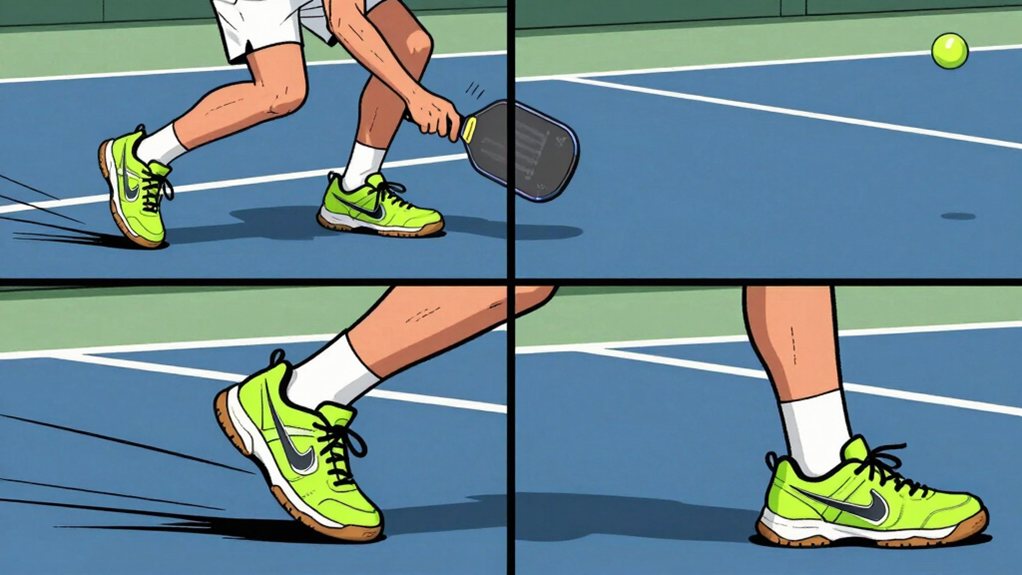
Because running shoes are built for forward motion, they lack the torsional stability needed for pickleball’s lateral movements. Here is why they twist during quick direction changes:
Running shoes twist during pickleball’s lateral moves due to insufficient torsional stability.
- Running shoes flare at the sole edges. This design aids heel strikepronation but fails under lateral pressure.
- The midsole flexes horizontally when you push sideways. This causes the shoe to torque unnaturally.
- Upper mesh stretches during lateral drift. Your foot slides inside the shoe.
- Heel counters are soft and flexible. They don’t lock your foot during pivots.
- Outsole tread patterns grab the court inconsistently. You experience micro-slips with each direction change.
These design flaws create twisting moments that compromise your balance and increase injury risk.
Pickleball Shoes vs. Tennis Shoes: Key Differences for Lateral Moves
If you want to maximize your lateral movement on the pickleball court, understanding the differences between pickleball shoes and tennis shoes matters. Both options provide better lateral support than running shoes, but they serve different purposes.
Key differences include:
- Weight: Pickleball shoes weigh approximately 10-12 ounces, while tennis shoes typically weigh 12-14 ounces.
- Court size optimization: Pickleball shoes are designed for the smaller court dimensions, enabling quicker resets and faster direction changes.
- Durability focus: Tennis shoes prioritize longer rally durability with reinforced toe caps and more robust materials.
- Outsole patterns: Hard-court tennis shoes feature more aggressive tread patterns designed for outdoor pickleball traction and sliding.
How Lateral Stability Improves Your Explosive Stops and Turns?
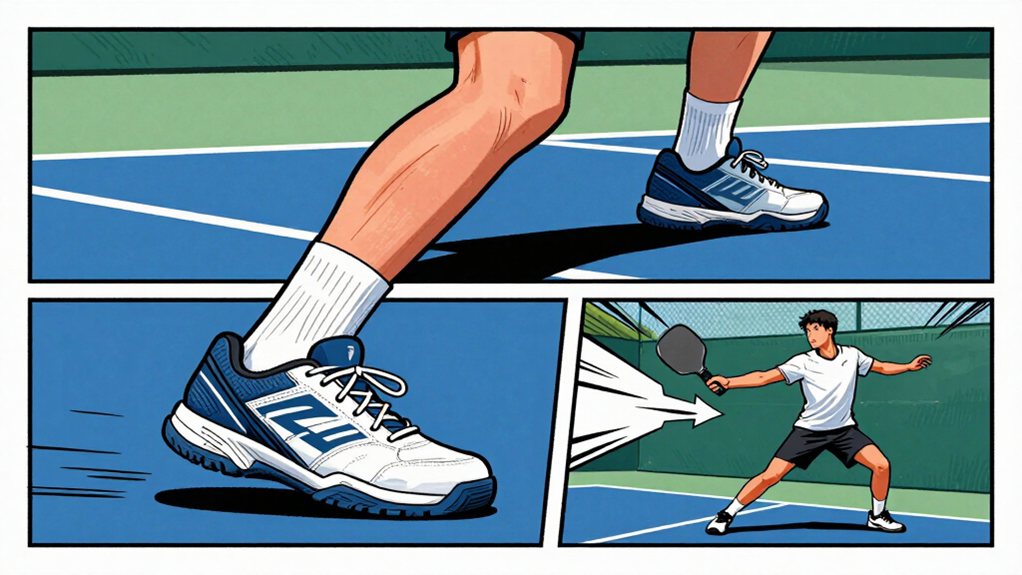
When you need to stop fast on the pickleball court, your shoes’ lateral stability keeps your feet stable and prevents slipping. Quick direction changes put stress on your feet, but reinforced sidewalls and heel counters help you stop with confidence.
We rely on this stability to move from one shot to the next without losing balance.

PLAYER LEVEL: Designed for the entry level, part-time, weekend player. For frequent players, we recommend the Express Light Pickleball Shoe. Advanced players, players playing 6-7 days per week, the Pickleball Supreme Shoe is the recommended style

IN WITH THE KNU: Born in '98, the Knu Skool shoe puts an unapologetic spin on the original Old Skool to create an entirely new low-top, rooted in classic Vans' heritage.

ICONIC T-TOE CONSTRUCTION: Heritage court detail anchors this design with classic appeal, while fresh proportions deliver a modern edge; balance tradition with innovation for a look that feels both familiar and progressive
Quick Direction Changes
How does lateral stability help you make explosive stops and turns on the pickleball court? Pickleball demands constant lateral adjustments as you chase shots across the compact surface. Your shoes must respond instantly when opponents angle their returns.
A stable shoe base provides these benefits:
- The reinforced sidewalls grip the court during sudden pivots, preventing your foot from sliding outward.
- The torsional shank locks your midfoot, transmitting force directly from your legs to the ground.
- The outsole pattern bites the surface, giving you confidence to push off aggressively.
- The low-to-ground design keeps your center of gravity secure during quick cuts.
When your footwear supports lateral movement, you redirect energy efficiently. You explode from one position to the next without bracing for instability. Trust your lateral stability to handle the quick direction changes pickleball requires.
Stability Improves Stops
Once you’ve mastered quick direction changes, the next priority is controlling your stops. Lateral stability gives you explosive stopping power for quick turns and direction switches. Here’s how stability improves your stops:
| Stability Feature | Stop Performance Benefit |
|---|---|
| Reinforced heel counter | Prevents foot sliding on impact |
| Sidewall support | Controls inward foot roll |
| Midsole shank | Maintains shoe rigidity |
| Wide base | Increases balance surface area |
- Your foot stays planted during sudden stops.
- The shoe resists twisting when you change direction.
- Your ankle remains aligned during quick pivots.
- You recover faster for the next shot.
We see improved traction and stability in every stop you make.
What to Look for in Pickleball Shoes Before You Buy?
Your feet deserve shoes built for pickleball’s unique lateral demands. When you shop for pickleball shoes, check these four key features:
Your feet deserve shoes built for pickleball’s unique lateral demands—check these four key features before buying.
- Look for reinforced sidewalls and a sturdy heel counter. These components lock your foot in place during quick side shuffles and prevent dangerous rolling.
- Select shoes with non-marking outsoles that grip the court surface without leaving marks. The sole pattern must handle sudden pivots and stops.
- Verify the midsole provides adequate arch support and cushioning. Your feet need protection from the impact of repeated lateral movements.
- Choose a shoe that sits higher on your ankle bone. This design offers additional stability and reduces the risk of ankle injuries during play.
Common Pickleball Shoe Mistakes That Cause Injuries
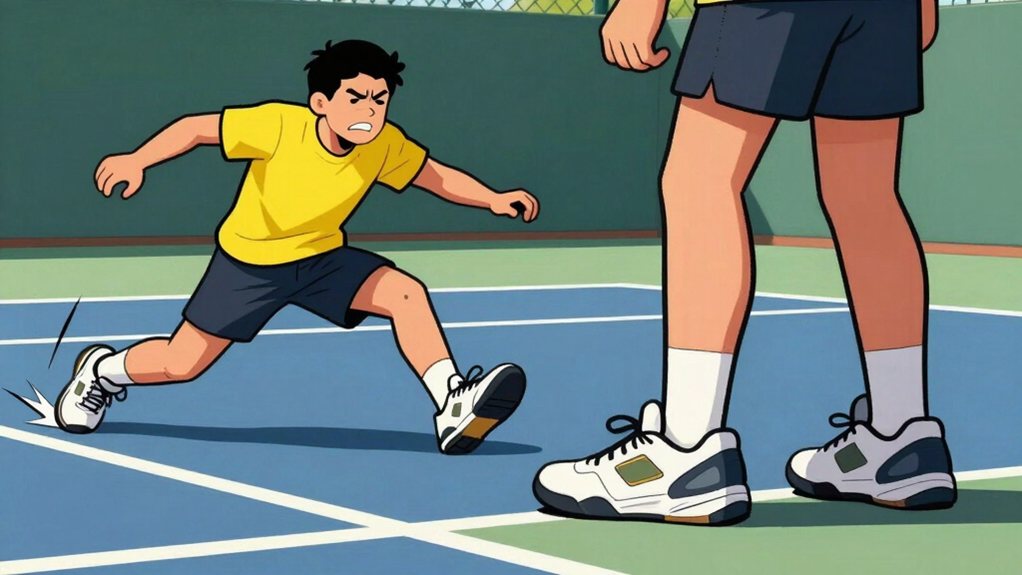
Common pickleball shoe mistakes cause unnecessary injuries on the court. You make several errors that risk your safety.
- You wear running shoes. They flare at the sole. They lack torsional stability. They buckle during side-to-side moves. This causes ankle sprains.
- You ignore shoe fit. Loose shoes let feet slide. Tight shoes restrict movement. Both cause blisters and knee strain.
- You skip arch support. This leads to inward rolling. It creates back soreness.
- You choose worn-out shoes. Outsole traction fades. You slip during quick pivots.
- You ignore heel counters. They stabilize stops. Without them, you risk ankle twists.
We correct these mistakes. We select proper court shoes. We protect our bodies.
Finding the Most Stable Shoes for Fast Pivots and Lunges
When you’re ready to find stable shoes for fast pivots and lunges, focus on three key features. First, examine the midsole shank for torsional rigidity. This component prevents your foot from twisting during quick direction changes. Second, check for reinforced sidewalls and heel counters. These structures lock your ankle securely in place during aggressive lunges. Third, look for reinforced toe caps on the shoe’s exterior. They protect your foot during hard plant movements.
- A stiff midsole shank keeps your shoe stable when you push off sideways during rapid direction shifts
- High-top ankle support prevents rollovers during quick pivots and protects lateral ligaments
- Rubber outsole treads with multi-directional patterns grip the court for explosive stops and quick resets
- Padded collar cushioning reduces ankle fatigue during long matches and provides comfort during extended play
Frequently Asked Questions
How Often Should I Replace My Pickleball Shoes for Optimal Stability?
You should replace your pickleball shoes every 3-6 months of regular play. Watch for worn treads, compressed midsoles, or reduced lateral support. Replace them when you notice decreased stability during side-to-side movements or increased ankle and knee discomfort.
Can I Use Indoor Court Shoes for Outdoor Pickleball?
You can use indoor court shoes for outdoor pickleball, but they’ll wear faster. Outdoor courts are more abrasive than indoor surfaces, so indoor shoes lack the outsole durability and traction you need for concrete or hard court play.
Are High-Top Shoes Better for Ankle Support in Pickleball?
High-top shoes give you better ankle support in pickleball. They rise above your ankle bone, preventing rolls during quick pivots. The reinforced heel counter locks your ankle in place, reducing sprain risk.
What Is the Best Way to Break in New Pickleball Shoes?
Marvel at your new pickleball shoes that feel like wooden stocks. Wear them 15 minutes daily indoors. Add time gradually. Stuff with newspaper to stretch tight spots. Your feet will eventually surrender to comfort.
Do I Need Special Insoles for Arch Support in Pickleball?
Check your shoes first, if they already have solid arch support, you won’t need custom insoles. If you experience foot fatigue or roll inward, add supportive insoles for better stability and comfort during lateral movements.
Final Thoughts
You need lateral stability in pickleball shoes. You stop and change direction hundreds of times per match. A shoe with weak lateral support rolls your ankle when you pivot. For example, you lunge for a dink, your foot tilts inward, and you land on your ankle.
Choose shoes with reinforced sidewalls and firm heel counters. Test stability by pressing the shoe sides. Your knees and joints will thank you.

FuelCell foam delivers a propulsive feel to help drive you forward
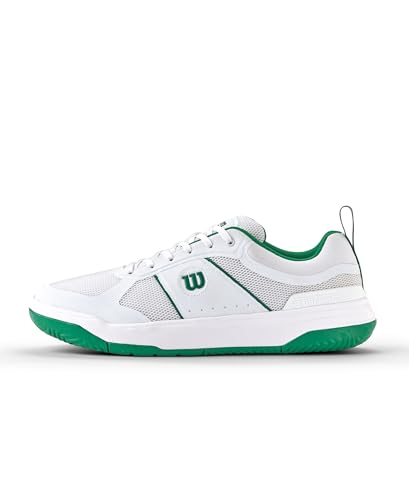
Wilson Pickle Pro Men's Pickleball Shoe - White/Bosphorus, Size 9 US

FuelCell foam delivers a propulsive feel to help drive you forward