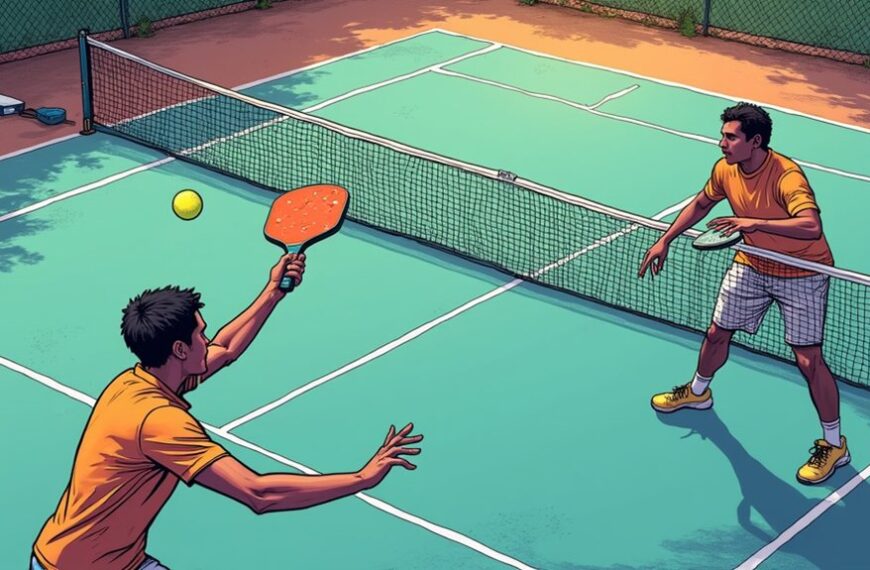
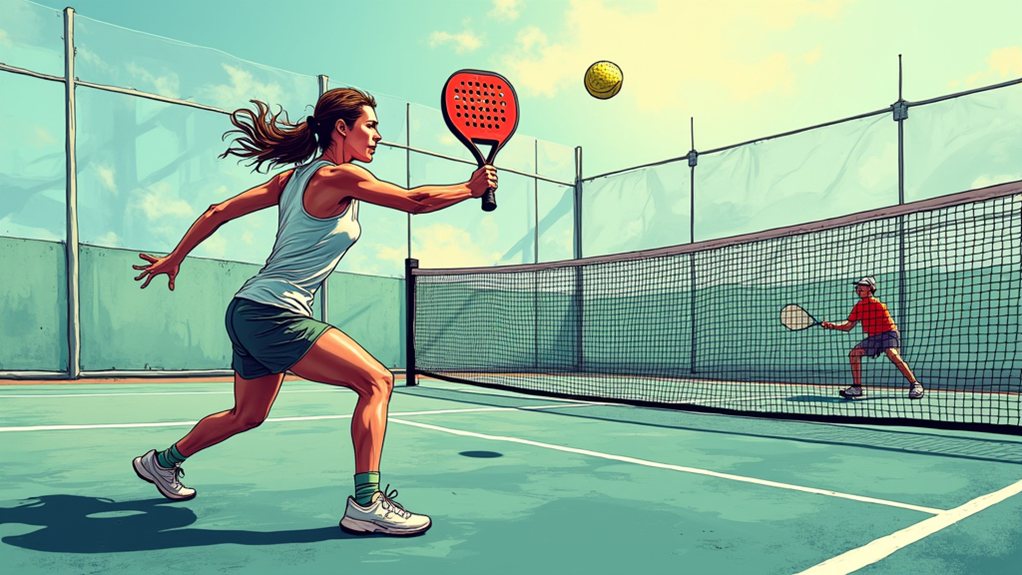
To stop getting lobbed, you need five crucial skills. First, adopt a low volley stance: bend your knees, keep feet shoulder-width apart, and hold your racket at shoulder height with weight on the balls of your feet. Second, master split-step timing by jumping as your opponent contacts the ball and landing with bent knees. Third, use overhead volley technique by snapping your wrist downward at the 1 o’clock position for right-handers.
Fourth, position yourself 2,3 feet inside the service line for offensive play. Fifth, anticipate lobs by watching your opponent’s paddle angle and shoulder rotation. Implement these techniques to neutralize lob attacks and control the net. Continuing will reveal additional strategic insights.
Get Low: The Padel Volley Stance That Stops Lobs Dead
The low volley stance gives you the best chance to smash any lob your opponents throw at you. You must bend your knees and lower your center of gravity. This position prepares you to move in any direction quickly.
Bend your knees, lower your center of gravity, and stay ready to smash any lob quickly.
- Keep your feet shoulder-width apart.
- Bend your knees until your thighs are parallel to the ground.
- Hold your racket up at shoulder height.
- Keep your weight on the balls of your feet.
- Hold your head steady and watch the ball at all times.
This stance gives you power and control. You can reach high balls without overextending your arms.
Practice this position before every point.
Your body will develop muscle memory. You’ll feel balanced and ready to attack any lob that comes your way.
Split-Step Timing: React Faster to Lob Attacks
Once you’ve mastered the low volley stance, your next focus should be the split-step timing that lets you react to lobs. The split-step is your explosive first move. You jump slightly as your opponent contacts the ball. Your feet leave the ground together.
You land with knees bent, ready to move any direction. This takes practice.
Here’s how to train it:
- Practice the timing without a ball first. Watch your partner. Jump when they swing.
- Start with slow feeds. Focus on your timing. Build speed gradually.
- Land in an athletic stance. Your weight stays forward. Your knees stay flexed.
- Move immediately after landing. Don’t freeze. Read the ball. React fast.
You need to time your jump with their swing contact. This gives you 0.3-0.5 seconds of preparation time. You’ll cover more ground. You’ll reach lobs you previously missed.
The split-step transforms your reaction speed. It’s your best defense against high attacks.
Hit High: The Overhead Volley Technique for Lob Defense
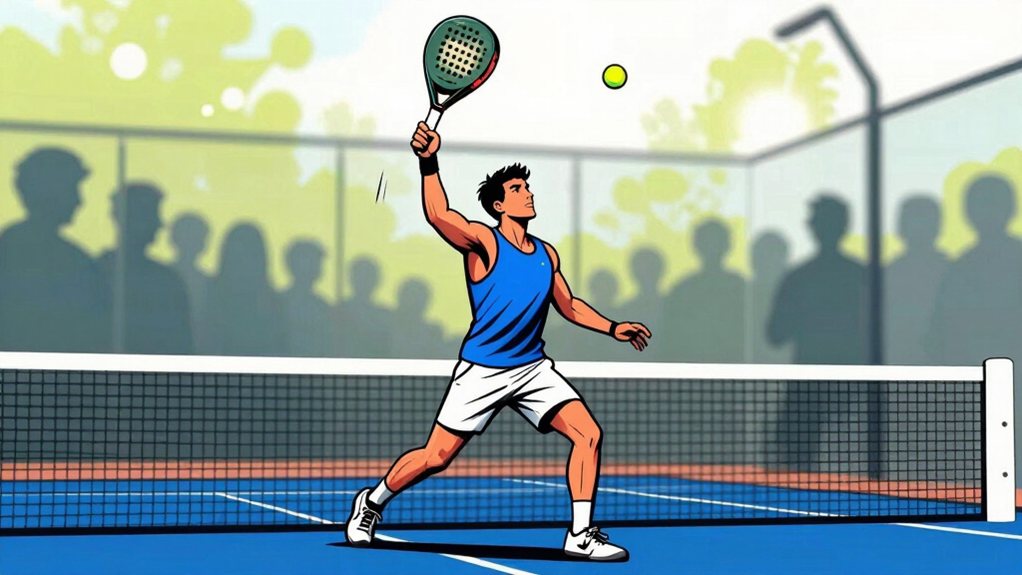
When an opponent lobs the ball high over your head, you must strike the ball before it reaches its highest point. This gives you power and control. Here is the technique:
- Identify the lob early. Watch your opponent’s racquet face at contact.
- Move quickly beneath the ball. Position yourself with your body sideways to the net.
- Raise your racquet arm. Keep your elbow above your shoulder height.
- Snap your wrist downward. Contact the ball at the 1 o’clock position for right-handers.
- Follow through low. Direct your swing toward the opposite court.
- Land with balance. Step forward with your opposite foot after contact.
Your racquet head speed determines the shot’s depth. You generate maximum force by using your core and shoulder rotation together.
Practice this motion without the ball first. Focus on the timing window between the ball’s peak and its descent. You’ll develop consistency through repetition.
Where to Stand: Net Positioning Secrets
After executing that overhead shot, your positioning at the net determines whether you maintain the offensive advantage or give your opponents an opening. You must move forward immediately after contact. Aim to land two to three feet inside the service line. This position gives you control of the net while keeping you safe from lobs.
Stand with your feet shoulder-width apart. Keep your knees slightly bent. Hold your racket in front of your body. Watch your opponent’s racket at all times. React quickly to any high shot. A wifi mesh security system installed at your home court facility can help monitor blind spots and keep players safe during intense net exchanges.
| Position | Distance from Net |
|---|---|
| Offensive | 2-3 feet inside |
| Neutral | At service line |
| Defensive | 2-3 feet behind |
Adjust your stance based on your partner’s coverage. Communicate constantly. Stay aggressive but ready to defend.
See It Coming: How to Anticipate Lobs Before Your Opponent Hits
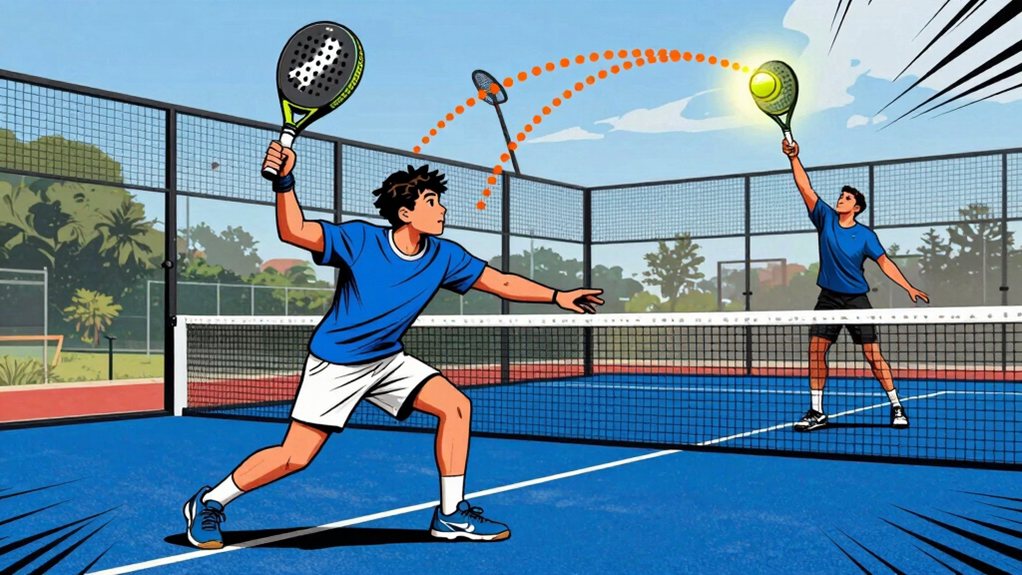
How do you know a lob is coming before your opponent swings? You watch the opponent’s paddle angle, weight shift, and ball height. If the paddle faces upward and the shoulders rotate back, the lob is likely.
Move to the net, keep your eyes on the ball, and prepare your swing. Apply these cues to read the lob:
- You look for a high paddle lift and open face.
- You notice the opponent’s body weight shifting back.
- You track the ball early; a rising trajectory signals a lob.
Practice these cues in each rally, and you’ll anticipate lobs before your opponent swings.
We’ll also recommend reviewing match footage to reinforce the detection pattern. This habit builds confidence on court daily, always.
Frequently Asked Questions
What Racket Weight and Balance Are Best for a Reactive Padel Volley?
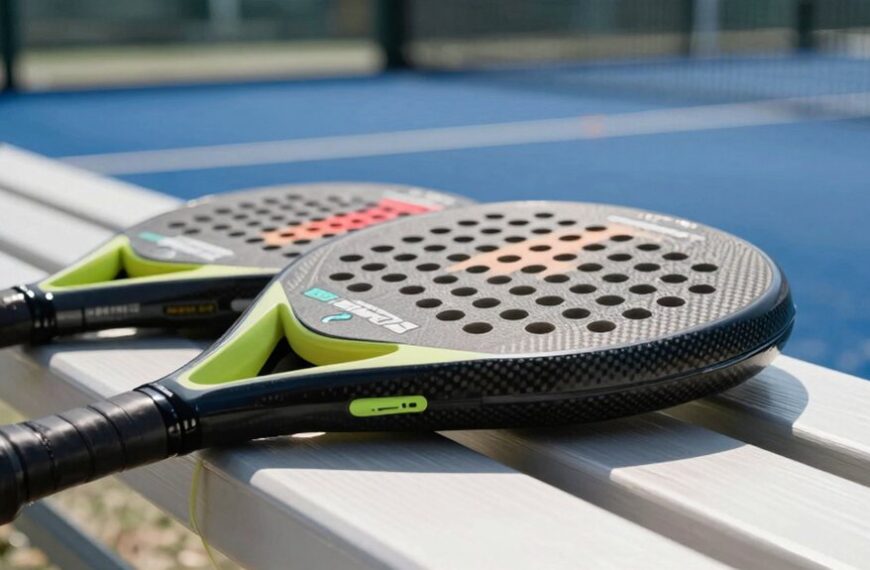
A reactive padel volley needs a lighter racket, around 350-370g, with a balanced or head-light feel. You’ll get quick maneuverability, fast reactions, and solid control at the net from this setup.
How Can I Improve My Reaction Time to Unexpected Lobs During Rallies?
Stay on your toes with your racket at chest height. Watch your opponent’s racket face to anticipate lobs. Practice split-steps before each shot and react quickly by tracking the ball and moving your feet efficiently.
What Are the Best Drills to Practice Split-Step Timing for Net Play?
Execute shadow swings while your partner feeds random balls, practice ladder footwork drills, use reaction ball exercises, and simulate match scenarios with unexpected lobs. You’ll develop quicker anticipation and better court coverage during net exchanges.
How Should I Adjust My Footwork When the Opponent Hits a Deep, High Lob?
You scramble backward as your opponent lofts a lob over your head, you’re positioned too far forward. Quickly shuffle your right foot back, pivot, and track the ball while keeping your eyes on it.
What Mental Strategies Help Me Stay Focused at the Net Against Aggressive Lobbers?
Anticipate the lob before each shot, you’ll react faster. Stay low, control your breathing, and trust your positioning. Visualize confident volleys to block out pressure and stay sharp.
Final Thoughts
Remember, the key to a padel volley is low stance, split-step, and overhead swing. Stand 1 foot inside the baseline, move forward on serve, and keep your eyes on the opponent’s racket. We practice the three-step sequence: get low, split-step, and strike.
When you anticipate the lob, shift your weight and snap the ball down, even as it hovers. Master these steps, and you’ll dominate the net without fear of being lobbed in every competition.