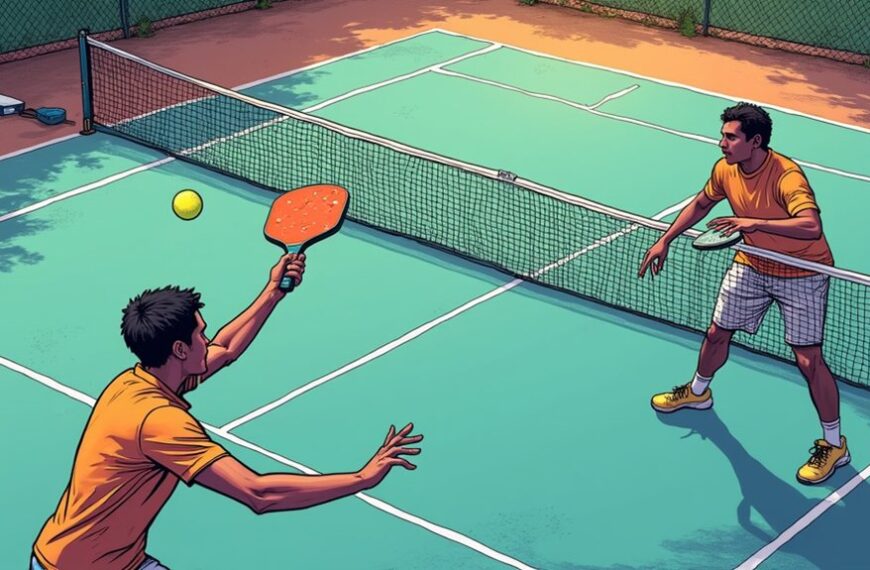
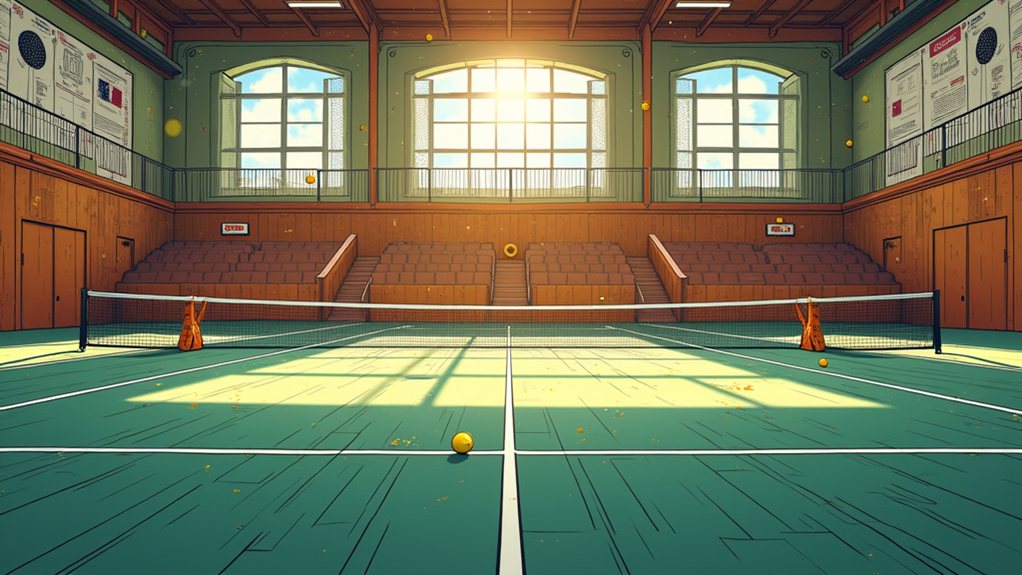
Stop and reset with one deep breath before each shot. Locate your exact court position relative to the net and walls. Pick one simple target spot for your return. Use short, controlled swings, reducing power for accuracy. Move your feet before contact.
Stay parallel with your partner and spread horizontally to cover full width. Call “yours” or “mine” quickly when both reach for the same ball. Trust your training and focus on the process, not the outcome.
How to Regain Padel Control When Pressure Destroys Your Coordination
When pressure builds during a padel point, your coordination can break down in seconds, but you can regain control if you act immediately.
- Stop and reset your breathing. Take one deep breath before the next shot.
- Identify your position on court. Know exactly where you stand relative to the net and walls.
- Focus on one simple target. Choose a specific spot for your next return.
- Use short, controlled swings. Reduce power to increase accuracy.
- Communicate with your partner. Say “mine” or “yours” clearly every time.
- Move your feet before you hit. Small adjustments prevent rushed strokes.
- Slow down your rhythm. Take an extra second between each shot.
Practice these steps during calm points. Repeat them under pressure until they become automatic. Your coordination improves through consistent repetition in training sessions.

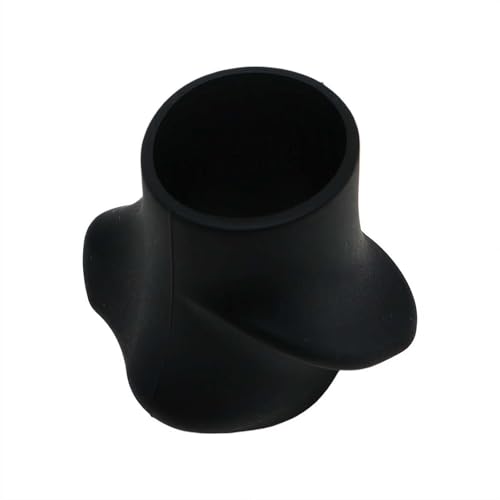
【Precise Hand Position Guide】This tennis racket handle cover features a precise hand position guide that enforces correct grip technique, preventing bad habits and reducing wrist strain for tennis, padel, and pickleball players

Positioning Tactics That Stop Opponents From Disrupting Your Rhythm
Once you’ve mastered the reset techniques, you can use positioning tactics to prevent opponents from breaking your rhythm in the first place. Proper court coverage stops opponents from finding gaps.
Master reset tactics, then own the court: position yourself to block gaps and keep opponents from disrupting your rhythm.
- Stay parallel with your partner at all times. Spread apart horizontally to cover the full width. When one moves forward, the other holds the baseline.
- Anticipate the ball direction. Read the opponent’s paddle angle early. Move to the expected spot before they hit.
- Control the net triangle. You and your partner form a triangle pointing toward the opponents. Hold this shape on every shot.
- Use the walls strategically. Position yourself near wall edges to cut off angles. Force opponents to hit difficult lobs.
- Recover fast after each shot. Return to your base position within two seconds. Maintain readiness for the next play.
Just as a strong mesh wifi system eliminates dead zones in your home network, consistent court positioning eliminates coverage gaps that opponents can exploit.
Partner Communication Cues for Instant Sync During Chaos
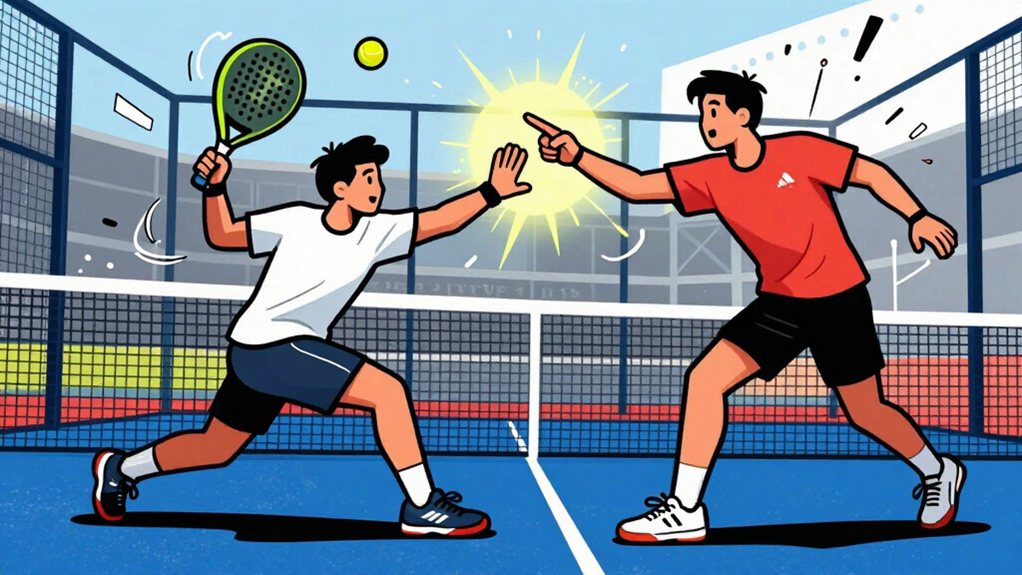
After you establish proper positioning, you must communicate with your partner to maintain sync when chaos erupts on court. Use clear verbal cues that your team decides before each match.
- Call “yours” or “mine” quickly when both of you reach for the same ball.
- Shout “switch” when you plan to change sides after a shot.
- Say “stay” when your partner should hold their current position.
- Use “ball” to warn of a return coming behind you.
- Call “net” or “back” to signal desired positioning after your shot.
Establish three simple words maximum. Repeat them in practice until they become automatic. Your partner listens for cues, not explanations. Keep your voice loud enough to hear over opponent calls.
Non-verbal signals work too. Point to the space you want your partner to cover. Nod quickly to confirm you have the play. These cues replace hesitation with instant reaction.
You and your partner build trust through consistent use. Communication prevents collision and creates coverage. When chaos hits, your established system keeps you coordinated.
Drills That Build Automatic Reactions Under Match Pressure
Consistently practicing specific drills trains your muscles to react without thinking. You build automatic reactions through high-intensity simulation drills that mimic match pressure. Try these critical drills:
Train your muscles to react without thinking; high‑intensity drills mimic match pressure, building automatic reactions.
- Change-over situation points start from mid-court. Your partner feeds balls quickly. You must reorganize position within two seconds.
- Pressure simulation requires constant net attack. Players alternate serves and volley immediately. You learn to react under fatigue.
- Lob and wall drop game alternates defensive lobs with drops. You change positions repeatedly. This builds tactical flexibility.
- Short angle exercise uses cross and sliced shots. Cones delimit target areas. You practice opening spaces under time pressure.
- Dynamic wall ball throws and catches occur one meter from the wall. Hand alternation after bounce varies the challenge. Your reflexes sharpen rapidly.


The A Swing - A stands for Alternative - is a simple way to swing the club, which follows biomechanically sound, scientific principles, and only requires minimal practice.

BUILDS HAND–EYE COORDINATION FAST: Designed with a compact 21-inch length and training-style barrel to improve contact accuracy, bat control, and swing mechanics. Perfect for youth players developing precision hitting skills.
Why Coordination Breaks Down Under Pressure (And What Triggers It)
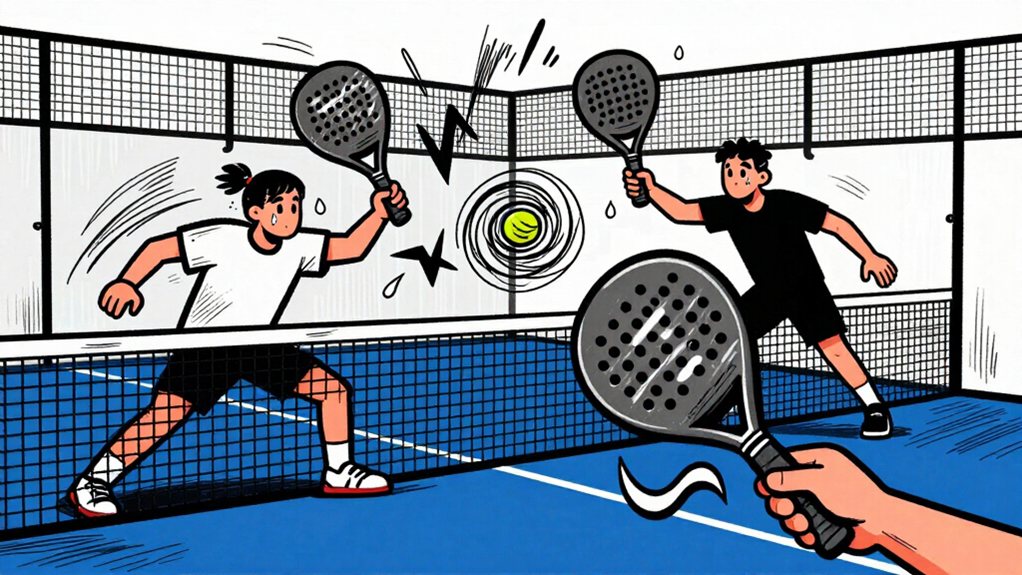
When you train hard with drills, you expect your body to respond automatically during matches. Instead, coordination breaks down when pressure rises. Here’s why.
- Arousal interference. Your brain diverts attention to threat assessment. Motor planning slows down.
- Muscle tension. You grip the paddle tighter. Fine motor skills suffer.
- Attentional narrowing. You focus on outcomes. Technique breaks down.
Key triggers include:
- Unexpected ball speed changes
- Partner miscommunication
- Emotional reactions to errors
- Physical fatigue accumulation
When you recognize these triggers, you can counter them. Focus on process, not results. Trust your training.
Frequently Asked Questions
What Is the Best Warm-Up Routine to Prevent Coordination Breakdown?
Begin with a baseline-to-volley rally, then alternate lobs and aggressive shots. Practice wall drills varying depth and angles, incorporate smash timing, and finish with rapid low volley exchanges. This complete progression’ll prevent your coordination breakdown.
How Do I Choose the Right Padel Racket for Better Control?
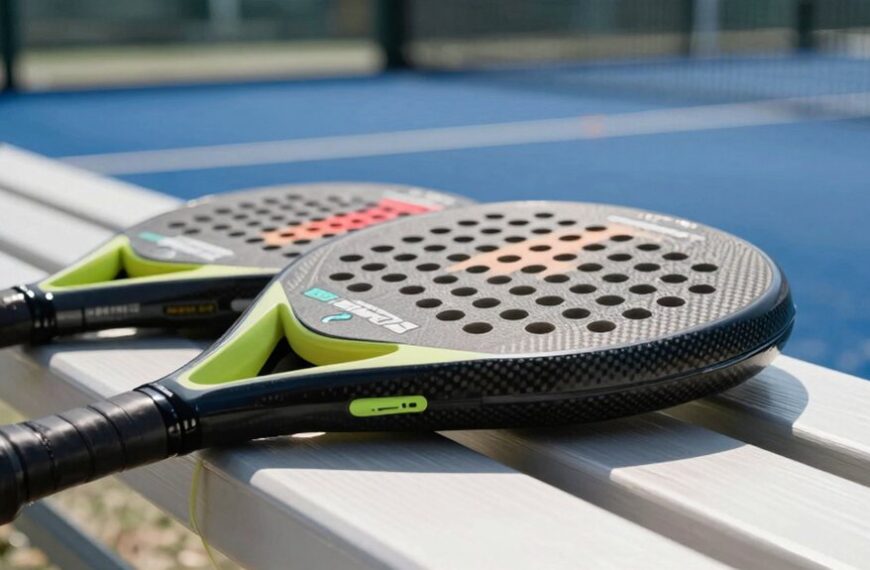
You choose a racket by testing its weight, balance, and grip size. Prioritize a round shape for control, check the foam core density, make sure the string pattern matches your skill level, and test it in actual play.
Can Mental Visualisation Help Maintain Coordination Under Match Pressure?
Yes, mental visualization helps you maintain coordination under match pressure. You picture seamless transitions, anticipate ball trajectories, and rehearse shot sequences. This builds neural pathways that translate into calmer, more controlled movements when you’re competing.
What Recovery Exercises Reduce Muscle Fatigue That Affects Coordination?
Give your hardworking muscles a gentle breather, try light stretching, foam rolling, and dynamic cool-downs to maintain flexibility and blood flow. Stay hydrated, and you’ll keep coordination sharp when you return to competitive play again.
How Often Should I Practice Reflex Drills to Keep Reactions Sharp?
Practice reflex drills three to four times weekly, fifteen minutes each session. Your reactions sharpen with consistent, repeated exposure. Daily short workouts outperform occasional long ones, your nervous system needs regular stimulus to maintain speed.
Final Thoughts
Research shows pressure triggers coordination breakdown. One theory suggests your brain switches from automatic to conscious control under stress. We test this weekly in match simulations.
When you practice under pressure 200+ times, your automatic responses strengthen. Position at the net within 2 meters of your partner. Communicate using three specific calls: “mine,” “yours,” “switch.” Your coordination improves when drills match match conditions. Trust the process consistently. Your sync will develop with time.


1. [Precise Grip Correction]: Master the perfect swing instantly. This highly innovative handle cover actively enforces the correct hand position for every single shot. It perfectly prevents frustrating bad habits and agonizing wrist strain, allowing you to hit with maximum power during your intense outdoor cardio matches.