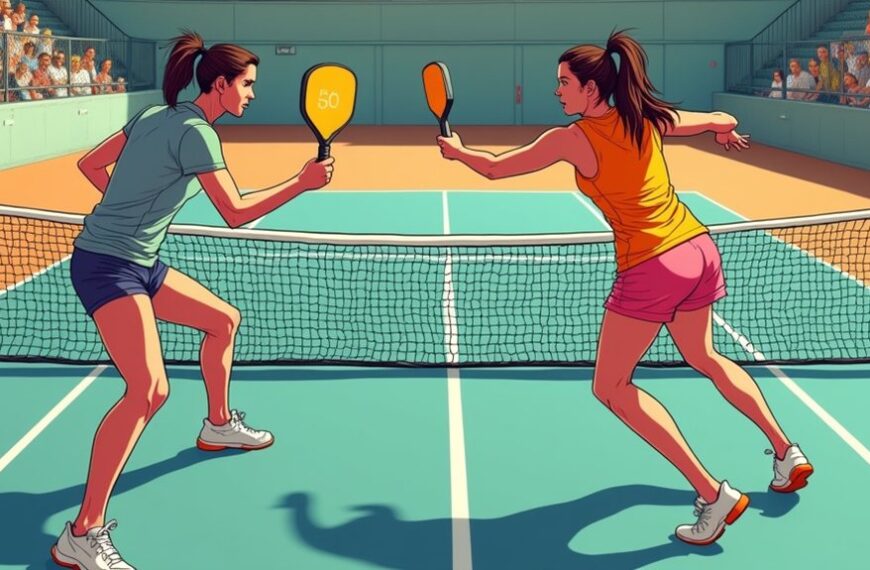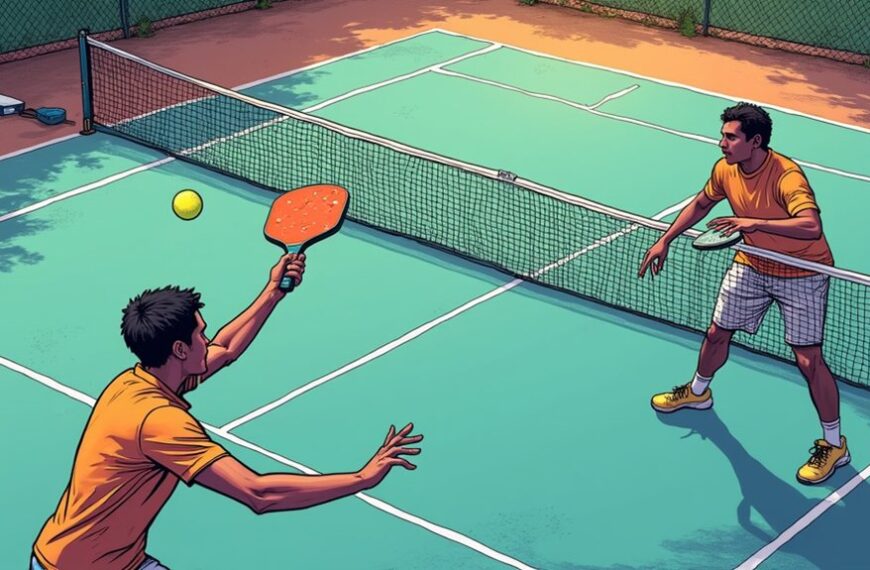
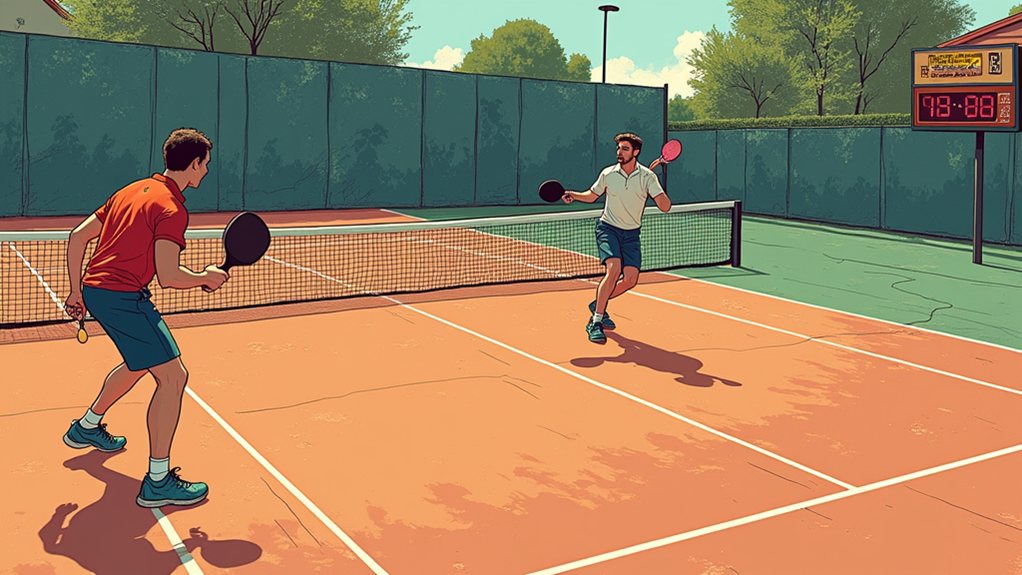
The weirdest pickleball rules involve the kitchen, momentum, serve, bounces, and lines. You cannot volley inside the 7-foot non-volley zone near the net, or you’ll commit a fault. If you volley outside but momentum carries you onto the line, that’s also a fault.
Your serve must be underhand with the paddle below your navel and ball below your waist, dropped straight down. After the serve and return, you must let the ball bounce once before playing it. Balls landing on any line count as in. To learn more about these rules, continue below.
Why You Can’t Volley in the Kitchen (And What to Do Instead)?
The non-volley zone, also called the kitchen, is the seven-foot area extending from the net to the baseline on both sides.
You can’t volley while touching this area. A fault occurs if any part of your body or paddle contacts the kitchen while volleying. This rule prevents players from dominating at the net.
Instead of volleying, use these strategies:
- Step back outside the kitchen before hitting.
- Let the ball bounce first (the two-bounce rule allows this).
- Dink the ball softly into the kitchen.
- Move your feet to reset your position after each shot.
Practice dinking drills. This shot keeps the ball low and forces your opponent to hit upward. You maintain control without entering the restricted zone. For added peace of mind during outdoor matches, a motion sensor security system can help monitor your court area and surrounding space.

Blue pickleball court graphic in perspective with net, white lines, two 7 ft markers, and the phrase NON VOLLEY ZONE.


The Momentum Rule: Why Carrying Into the Kitchen Is a Fault
When you hit a volley near the non-volley zone, your body may carry you forward after contact. This momentum rule often surprises new players. Here is how it works:
- You volley the ball while standing outside the kitchen.
- Your momentum carries you into the non-volley zone after contact.
- You fault because your feet touch the kitchen line while still in motion.
- Both feet must reestablish outside the kitchen after any volley.
- You can’t stop yourself in time if momentum pushes you forward.
The rule prevents players from volleying while moving toward the net. Stay stationary or step back after each volley.
Never volley while moving toward the net; stay stationary or step back after each volley.
Your feet must settle completely outside the seven-foot zone before you prepare for the next shot. This helps ensure fair play.
Underhand Serve Rules: Drop Serve Requirements Explained
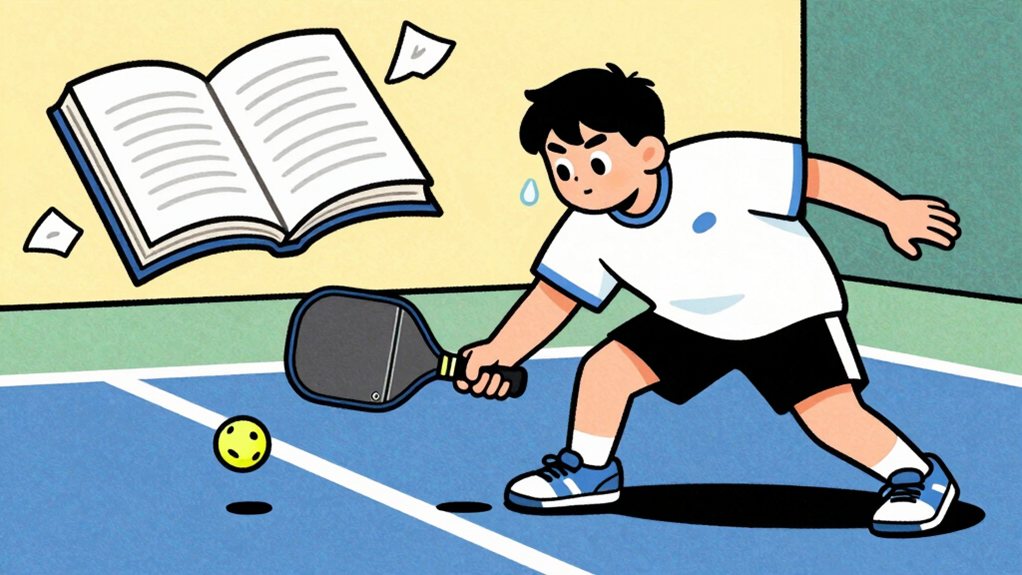
If you want to serve in pickleball, you must use an underhand motion and contact the ball below your navel. Your paddle must strike the ball below your waist. The ball must drop from your hand or paddle without any upward toss. You can’t toss the ball into the air.
Follow these steps:
- Hold the ball at waist level or lower.
- Drop the ball straight down.
- Strike the ball after it bounces once.
- Contact the ball below your navel.
- Keep your serve in bounds.
Your serve must clear the non-volley zone and land in the diagonal court. If the ball hits the net and drops into the proper area, it counts as a valid let during play.
Double Bounces and Double Hits: When They’re Legal
Do you wonder when double bounces and double hits are legal in pickleball? Let’s explain these rules clearly.
- Double Bounce Rule
- After the serve, the receiving team must let the ball bounce once.
- After the return, the serving team must let the ball bounce once.
- After these two bounces, you may volley or play the ball off the bounce.
- This rule gives both teams time to get into position.
- Double Hit Rule
- You may hit the ball twice in one continuous stroke moving in a single direction.
- Your paddle mustn’t stop between hits.
- If your swing stops and you hit again, that’s a fault.
- If a second player contacts the ball, that’s also a fault.
Remember: continuous motion means your paddle travels in one direction through the contact point. This rule prevents players from gaining extra power by swinging twice.
These rules keep the game fair and predictable for all players.

THERE IS A LEARNING CURVE ON THIS TRAINER - Please watch our video to learn how to use this trainer.
Precision Training: Our PATENT PENDING pickleball training equipment is specifically engineered to enhance your accuracy, control, and power. Whether you're a beginner or an advanced player, you'll notice an immediate improvement in your shots and overall performance.
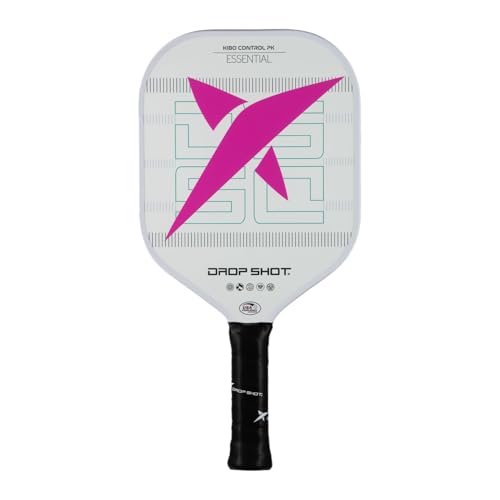
【】 Introducing the Kibo Control PK Pickleball Paddle, a game-changing innovation designed to give you ultimate control and precision on the court. Crafted with state-of-the-art fiberglass construction and advanced honeycomb core technology, this paddle combines cutting-edge materials with precision engineering to take your game to the next level.
Court Lines: Why Balls on the Line Count In
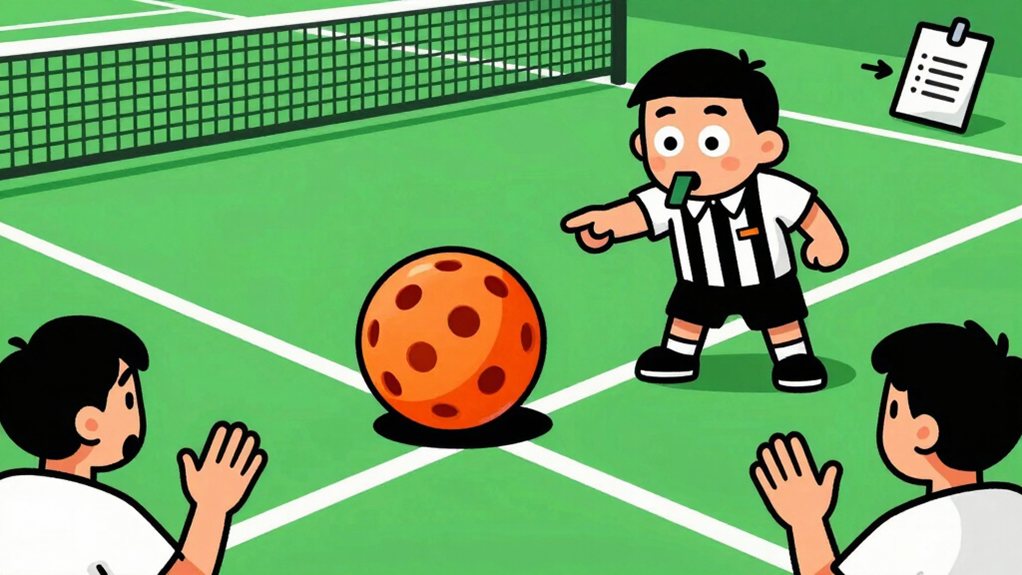
Because pickleball uses the same boundary system as tennis, balls that land on any line are considered in bounds.
Pickleball follows tennis’ boundary rule—balls landing on any line count as in bounds.
Step One Identify the line where the ball lands.
Step Two Verify that the ball touches the line without crossing the outer edge.
Step Three Call the ball in immediately, using a clear voice.
Step Four If you’re unsure, quickly pause the rally and ask your opponent for agreement.
Remember that the line is part of the court. When you see the ball touch any line, you must count it as in. This rule eliminates disputes and keeps the game moving.
Call line balls quickly and confidently. Your teammates and opponents will trust your judgment, and play continues without unnecessary delays in a friendly manner.
Frequently Asked Questions
Is It a Fault if the Ball Cracks During a Rally?
If the ball cracks during a rally, you can’t immediately call a fault. You must replay the point only if both you and your opponent agree that the crack affected the play. Otherwise, play continues.
Can I Hide the Ball From My Opponent During Play?
No, you can’t hide the ball. Pickleball rules require you keep it visible to your opponent at all times; hiding it results in a fault. If you conceal the ball, your opponent calls a fault.
What Happens if My Ball Falls Out of My Pocket During a Rally?
Did you know over 4 million Americans play pickleball weekly? If your ball falls out of your pocket during a rally, you immediately fault. The ball is considered out of play, and your team loses the point. Keep your pockets empty or secure.
Is Jumping Over the Non‑Volley Zone to Hit a Ball Allowed?
You cannot jump over the non-volley zone to hit a ball, it’s illegal in pickleball. The momentum rule forbids crossing into or jumping over the kitchen during play, and it always results in a fault.
Does the Ball Have to Be Visible to Both Players at All Times?
You must keep the ball visible to your opponent during play. Hiding the ball from your opponent’s view constitutes a fault, and both players need clear sight throughout each rally.
Final Thoughts
Follow these rules to play confidently. You must stay out of the kitchen during volleys. The momentum rule prevents you from carrying forward after hitting. Serve underhand, keep your feet behind the baseline, and drop the ball before contact. Allow one bounce per side during play. Remember: a ball on the line is in.
Practice these fundamentals, and you will improve quickly. As they say, “practice makes perfect.”

PICKLEBALL RULES TAGS - No more guessing or arguing on the court about the rules. Our tags are simplified for easy understanding. Includes diagrams, covers the basics and more including serving, two bounce rule, scoring, serving rotation, the kitchen rules, terms & more. Takes the confusion out of the rules of pickleball. Quick start guide to playing pickleball.
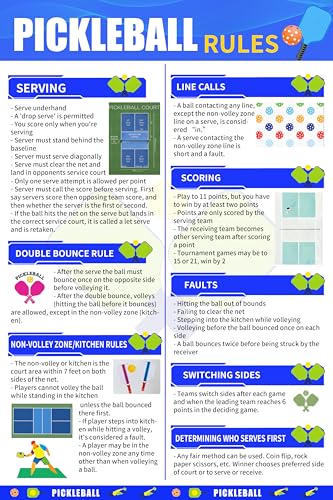
COMPREHENSIVE RULES REFERENCE: Educational pickleball poster displays all essential game rules including serving techniques, scoring system, line calls, and fault guidelines in an easy-to-read format for quick reference during play

COMPREHENSIVE RULES REFERENCE: Educational pickleball poster displays all essential game rules including serving techniques, scoring system, line calls, and fault guidelines in an easy-to-read format for quick reference during play