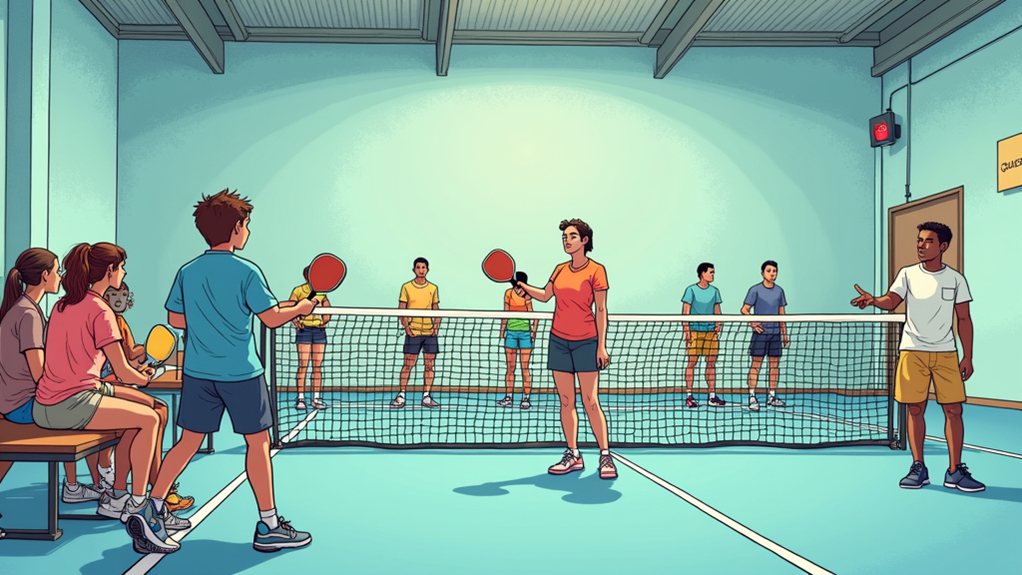
Pickleball clinic etiquette keeps you safe and earns respect from players. Call “ball on” when stray balls enter and wait for rallies to end. Use honor system for line calls and give opponents the benefit of the doubt.
Follow rotation rules and tap paddles with opponents before and after matches. Watch opponents move and adjust your game to their skill level. Keep practicing these basics and you’ll build confidence and improve faster on the court.
Why Pickleball Etiquette Matters for Beginners
Understanding pickleball etiquette helps you play safely, build confidence, and earn respect on the court.
- Safety First
- Call “ball on” when stray balls enter play.
- Wait for rallies to end before crossing behind courts.
- Retrieve balls only during breaks in play.
- Fair Play Rules
- Give opponents the benefit of the doubt on close calls.
- Admit your own faults immediately.
- Make clear line calls and announce scores before each serve.
- Good Sportsmanship
- Tap paddles with opponents before and after matches.
- Play to your skill level; avoid dominating weaker players.
- Stay calm during disputes and use respectful language.
- Court Awareness
- Follow waiting rotation systems at your facility.
- Bring your own ball when possible.
- Respect court boundaries and give other players space.

PICKLEBALL RULES TAGS - No more guessing or arguing on the court about the rules. Our tags are simplified for easy understanding. Includes diagrams, covers the basics and more including serving, two bounce rule, scoring, serving rotation, the kitchen rules, terms & more. Takes the confusion out of the rules of pickleball. Quick start guide to playing pickleball.
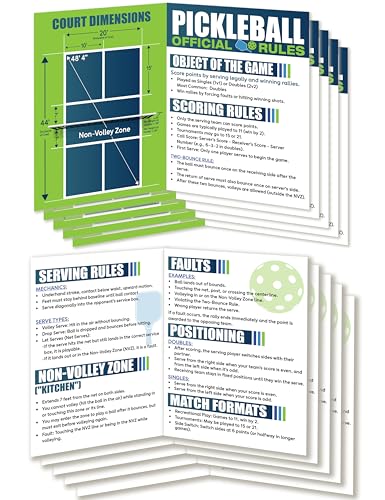
Pickleball rules card – Say goodbye to confusion on the court with this easy-to-follow bi-fold rules reference. Side 1 and Side 2 feature official pickleball rules, including serving rules, scoring, the kitchen rule explained, and more. A great pickleball quick guide for players of all levels.
Greet Court Mates Before Play Starts
Now we’ll discuss greeting your court mates before play starts.
First, you make eye contact with each player.
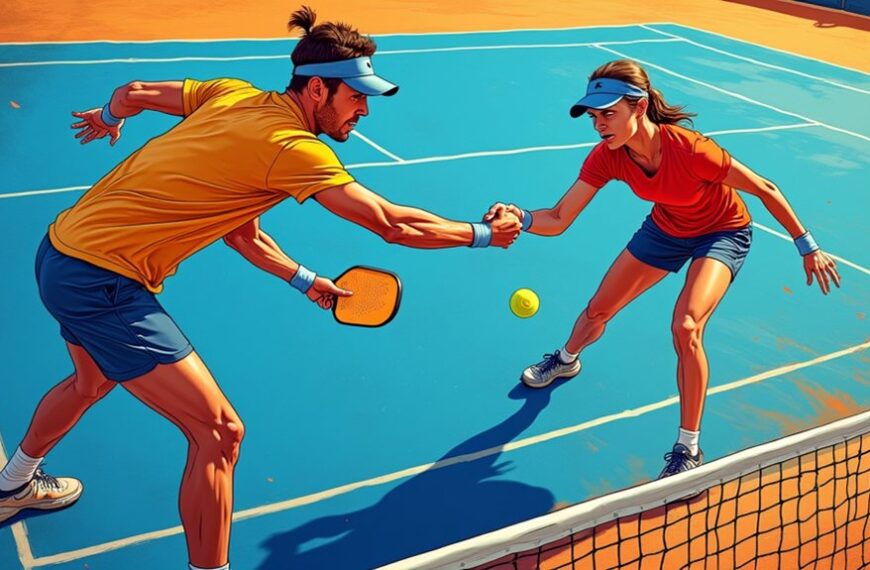
Second, you shake hands politely, and third, you use friendly greetings like “hello” or “good luck” to set a positive tone.
Make Eye Contact
Before stepping onto the court, make it a habit to greet everyone playing on that court. Make eye contact with each player before you begin. Look directly at your partner and opponents when speaking. This simple gesture shows respect and builds trust.
Hold your gaze for one to two seconds. Avoid looking at the ground or scanning the area while talking. When you make eye contact, smile briefly to appear friendly. This helps create a positive atmosphere.
Practice this with every new player you meet. It establishes connection before the game starts.
Eye contact signals that you see each player as a person, not merely an opponent. It creates an environment of mutual respect. Players will feel more comfortable communicating with you during matches.
You will notice fluid interactions when you make this practice routine. Consistent eye contact helps build team cohesion and community at the pickleball clinic. Just as a Home Assistant smart hub connects devices to create a seamless experience, consistent eye contact connects players to foster a unified and welcoming court environment.
Shake Hands Politely
When you step onto the court, walk directly to your partner and opponents and offer a firm handshake. This simple gesture sets a respectful tone for the match. Extend your right hand confidently and make brief eye contact. A proper handshake conveys sportsmanship and mutual respect.
- Approach your partner and opponents before the warm-up
- Greet your partner first, then shake with each opponent
- Use your right hand with a firm grip, but avoid crushing
- Maintain eye contact while shaking
- Keep the handshake brief, around two to three seconds
- Say “Good game” after each match
- Thank opponents for playing
Use Friendly Greetings
A warm greeting establishes a positive tone and builds camaraderie on the pickleball court. You introduce yourself to partners and opponents before each match begins. Use simple phrases like “Hello, I’m [your name]” or “Good to meet you.” This breaks the ice and eases tension.
- Offer a friendly wave or nod to players on adjacent courts.
- Say “Good game” after matches conclude.
- Thank players for their time with a quick “Thanks for playing.”
| Greeting Type | When to Use |
|---|---|
| Verbal introduction | Before first game with new players |
| Wave or nod | When passing other courts |
| “Good game” | After each match ends |
You also acknowledge unfamiliar players. This builds community and makes everyone feel welcome. A simple smile and greeting go a long way in creating a positive clinic environment.
Respect Ball Ownership During Rally Play
During rally play, you must respect ball ownership by letting the rally finish naturally.
When the rally ends, retrieve the ball safely without interrupting other games, make eye contact with the opposing player, and roll the ball back gently.
Always call out “ball on” if a stray ball enters your court to alert other players and prevent injury.
Finish Rally Properly
Once the rally ends, you must respect ball ownership by completing the proper finish sequence. Follow these steps to always finish the rally properly:
- Stop play immediately when the ball bounces twice or the referee calls the point.
- Look at your opponent and make eye contact.
- Nod or say “good rally” to show you acknowledge the rally is over.
- Keep your paddle down and avoid any extra swings.
- Wait for the server to call the score before moving to the kitchen line.
- Don’t reach for the ball; let the opponent handle it.
Completing each step shows respect for ball ownership and keeps the game fair every time.
It also helps beginners learn the correct flow and prevents disputes.
Retrieve Ball Safely
When the rally ends, you must retrieve the ball safely to respect ball ownership.
- Wait for the point to finish before you step onto the court.
- If a ball from another court rolls into your area, stay on the sideline and shout “ball on” to warn players.
- Retrieve the ball only after all players have stopped play or the referee signals a break.
- Don’t run across an adjacent court while a point is still active; always wait for a pause in the action.
- Keep a safe distance from players when picking up a stray ball.
- Make eye contact with the opponent who’s got the ball before handing it back.
- Have an extra ball ready so you can replace a lost one quickly right away.
Return Ball Gently
After retrieving the ball, you must return it properly to respect ball ownership. This shows courtesy and keeps rallies flowing easily.
Here’s how to return the ball gently:
- Make eye contact with your opponent before rolling the ball back.
- Roll the ball along the ground toward their court.
- Aim for a spot near the baseline or center of their side.
- Avoid rolling the ball too fast or too far from them.
- Wait for them to acknowledge receipt before turning back.
We don’t spike the ball back or throw it aggressively. Returning the ball gently demonstrates good sportsmanship.
It also prevents distractions and keeps everyone focused on play.
Practice this habit at every clinic session.
Call Lines Fairly Using the Honor System
In recreational pickleball, we rely on the honor system for line calls. This means you give opponents the benefit of the doubt when balls land near lines. If you’re unsure whether a shot was in or out, call it in favor of your opponents.
Follow these steps for fair line calls:
Watch the ball, call promptly, give opponents the benefit of the doubt, admit fouls, consult your partner, decide decisively.
- Watch the ball closely from the moment it leaves your opponent’s paddle until it lands.
- Make your call immediately after the ball bounces.
- Give the benefit of the doubt to your opponents when you’re uncertain.
- Admit your own fouls promptly without dispute.
- Consult your partner if you’re uncertain about a call.
- Make decisive calls; avoid wishy-washy decisions that create conflict.
Key guidelines for fair play:
- Call scores clearly before every serve.
- Make decisive line calls.
- Admit own fouls promptly.
- Give benefit of the doubt on close calls.
- Consult partner if uncertain.
Read Your Opponents and Adjust Your Game
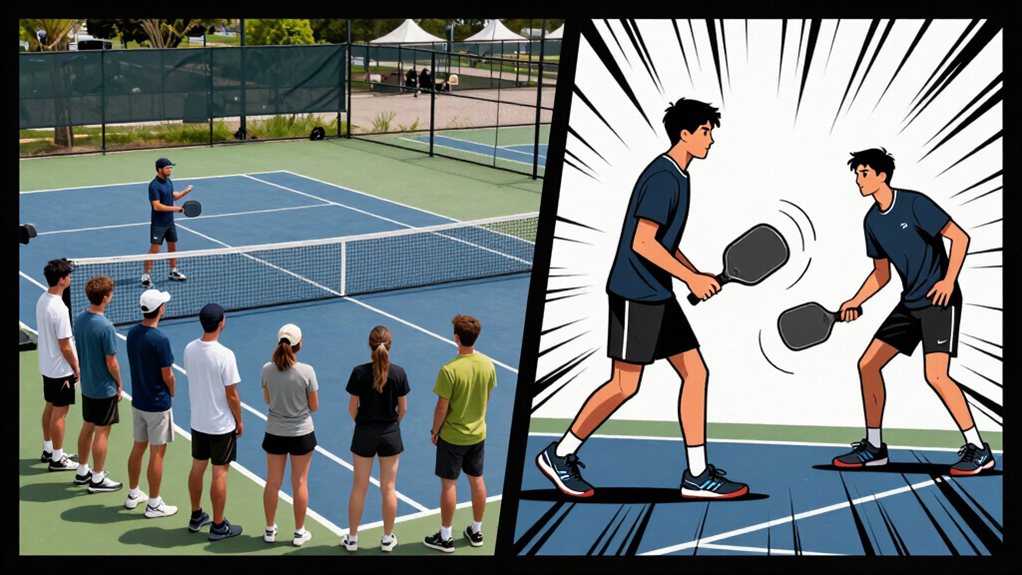
Pay attention to your opponents throughout the match.
-Watch how they move, where they stand, and what shots they use.
-Adjust your play to their level.
-If they hit hard, give low, fast returns that limit their swing.
-If they prefer soft dinks, move to the net and place your shots away from their reach.
-Use their position to your advantage.
-When they stay deep, hit a drop shot near the kitchen line.
-When they crowd the net, lob the ball deep.
-Change your serve speed based on their reaction.
-Communicate with your partner using calls like “mine” or “yours”.
-Keep a calm tone and stay focused.
-By reading their style and adapting, you improve your chances to win and keep the game friendly.
Wait Your Turn Using Court Rotation Systems
Learn the local rotation system before you join a game. Observe how courts rotate at your facility. Most venues use paddle stacks or sign-up sheets. Place your paddle in the stack when waiting.
When your turn arrives, move to the court quickly. Don’t skip ahead or move paddles without knowing the system. Ask staff or experienced players for clarification if needed. Follow these steps for easy play:
- Watch the rotation flow before joining.
- Place your paddle in order.
- Step onto the court when called.
- Clear the court promptly after your game ends.
USEFUL FOR MANY BUSINESSES AND INDUSTRIES
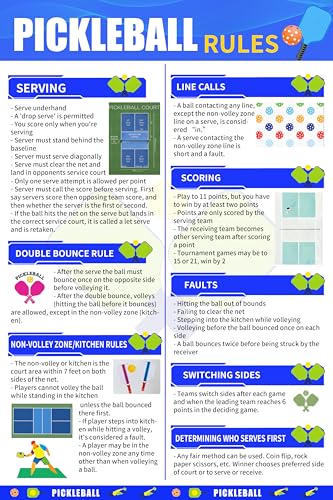
COMPREHENSIVE RULES REFERENCE: Educational pickleball poster displays all essential game rules including serving techniques, scoring system, line calls, and fault guidelines in an easy-to-read format for quick reference during play

Use Safety Signals to Alert Others to Stray Balls
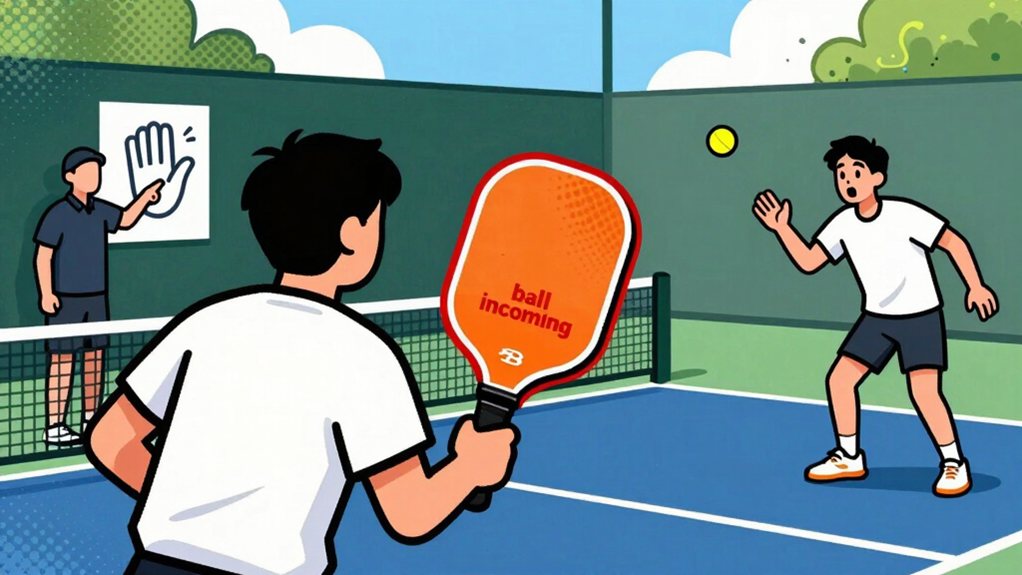
When a stray ball enters your court during play, you must alert others immediately to prevent injury.
- You shout “ball on” so players hear you.
- Raise one arm and point at the ball for a cue.
- Keep your voice calm, do not scream.
- We stay on our side of net until rally stops.
- Don’t run across the playing area while a point is live.
- When play pauses, walk quickly to the ball, pick it up, and roll it back to the opponent.
- Use the signals below to keep communication clear.
| Signal | When to Use |
|---|---|
| Verbal “Ball!” | A stray ball enters the playing area |
| Hand point | You see the ball but cannot speak |
| Stay still | The point is live and the ball rolls near you |
Tap Paddles and Show Good Sportsmanship
Once we’ve ensured safety with clear ball signals, we move to showing good sportsmanship on the court. You tap paddles with your opponent before and after each match. This simple gesture shows respect and creates a positive atmosphere. A paddle tap replaces a handshake and works well when spacing requires it.
You celebrate good shots politely and accept calls with grace.
You celebrate good shots politely and accept line calls with grace.
- Tap paddles with opponents before and after games
- Congratulate opponents on good plays
- Accept line calls without arguing
- Maintain a positive attitude whether winning or losing
- Thank your opponents for the match
Build Confidence Through Consistent Etiquette Practice
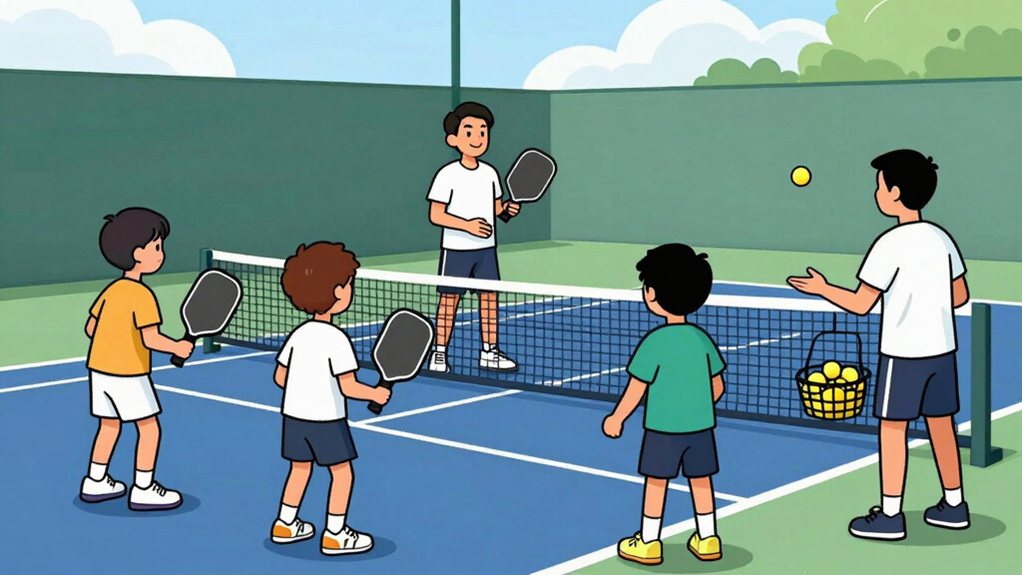
Building confidence on the court comes from consistent etiquette practice. When you follow etiquette consistently, you build trust with your partners and opponents. This trust creates a positive environment where you feel comfortable taking risks.
- Follow the rules every time you play.
- Make eye contact when returning the ball.
- Call out “ball on” for stray balls.
- Wait your turn before entering the court.
You develop muscle memory for good behavior. This repetition removes uncertainty from your game. When you know the social customs, you focus on your skills instead of worrying about what to do next.
Practicing etiquette consistently helps you feel like you belong. You stop second-guessing yourself during matches. Your confidence grows naturally through repeated proper conduct.
Frequently Asked Questions
What Should I Bring to My First Pickleball Clinic?
Bring a paddle, court shoes, water bottle, and athletic clothing. Pack a spare ball if you have one. Arrive early to introduce yourself, shake hands with opponents, and thank your host for the clinic session.
Are There Any Dress Code Requirements for the Clinic?
Step onto the court dressed for victory like a champion entering the arena: wear supportive sneakers, a breathable shirt, and athletic shorts. Always leave jewelry and open-toed shoes behind, they’re accidents just waiting to strike!
Can I Join a Game That Is Already in Progress?
Wait for a break in play before joining. Don’t interrupt an active rally. Ask politely if you can sub in, and follow the court’s waiting rotation system. Always respect the current players’ space and timing.
What Is the Best Way to Ask for a Time-Out?
Call out “time-out” clearly before serving or during a natural break in play. Wait for your opponent’s acknowledgment, then discuss strategy with your partner briefly. Keep time-outs very brief to respect the game flow.
How Do I Handle a Disagreement About a Rule?
Like a steady drumbeat, you’re still calm, ask an official for clarification, explain your view, listen to your opponent, and accept group’s decision. If issue persists, propose pause, consult rulebook, and let the majority vote.
Final Thoughts
- Follow etiquette to play slick, like a well,oiled machine.
- We greet partners and opponents before the first serve.
- Call balls in or out honestly, using the honor system.
- Wait for your turn in the court rotation, and use safety signals when a ball strays.
- Tap paddles after each point to show sportsmanship and build confidence.
- Practice these habits really consistently, and you’ll see faster improvement, slicker matches, and more fun on the court every time.

ENHANCE STABILITY, CONTROL, & POWER: Personalize the feel, performance, and balance of your pickleball paddle by adding weight exactly where you want it.

ENHANCE STABILITY, CONTROL, & POWER: Personalize the feel, performance, and balance of your pickleball paddle by adding weight exactly where you want it.

ENHANCE STABILITY, CONTROL, & POWER: Personalize the feel, performance, and balance of your pickleball paddle by adding pickleball weights for paddles.