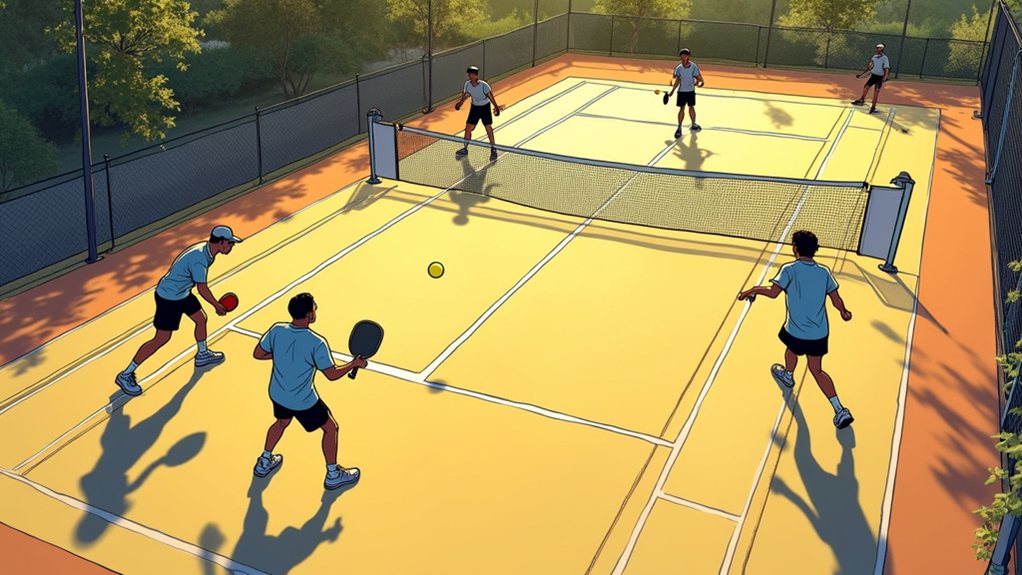
Most players think professional pickleball is about power and aggression. It’s not. The real strategy focuses on consistency, depth, and forcing opponents to make mistakes.
You must master deep serves that land near the baseline. You must hit deep returns that keep opponents back. Target your opponent’s feet to disrupt their balance. Use the third shot drop to control the kitchen.
Target the weaker player when you can. Apply these principles to control points and win more matches. If you use them, you’ll see immediate improvement in your game.
Master the Deep Serve First: It’s Your Foundation for Point Control
When you master the deep serve, you control the point from the first shot. Deep serves push your opponent back. This gives you better angles on your next shot. It also forces them to hit their return from deeper in the court.
- Aim for the baseline or deeper.
- Use a high arc on your serve.
- Focus on consistency over power.
- Practice until you hit 80% deep serves.
Benefits of deep serving include:
- More time to get to the net
- Opponents struggle with low returns
- You set the pace of the point
- Fewer unforced errors from you
Master the deep serve first. Build your strategy around it. This foundation gives you control.

Why Feet Targeting Destroys Opponent Balance (Not Just Their Shots)
Because you hit the ball to their feet, opponents cannot set up for powerful shots. You force them into low volleys or defensive bounces. This disrupts their balance and pushes them off ideal court lines. The technique works at every skill level.
Target your shots to feet in these zones:
| Court Zone | Effect on Opponent |
|---|---|
| Baseline | Forces backpedaling, limits angle options |
| Transition Zone | Creates decision-making pressure |
| Non-Volley Zone | Induces weak dinks or errors |
| Mid-Court | Prevents powerful put-aways |
| Corners | Draws opponents out of position |
You win points through induced errors. Your opponents make mistakes because they cannot execute their preferred shots. Consistent feet targeting gives you control over each rally.
The Third Shot Drop: Your Secret Weapon to Control the Kitchen
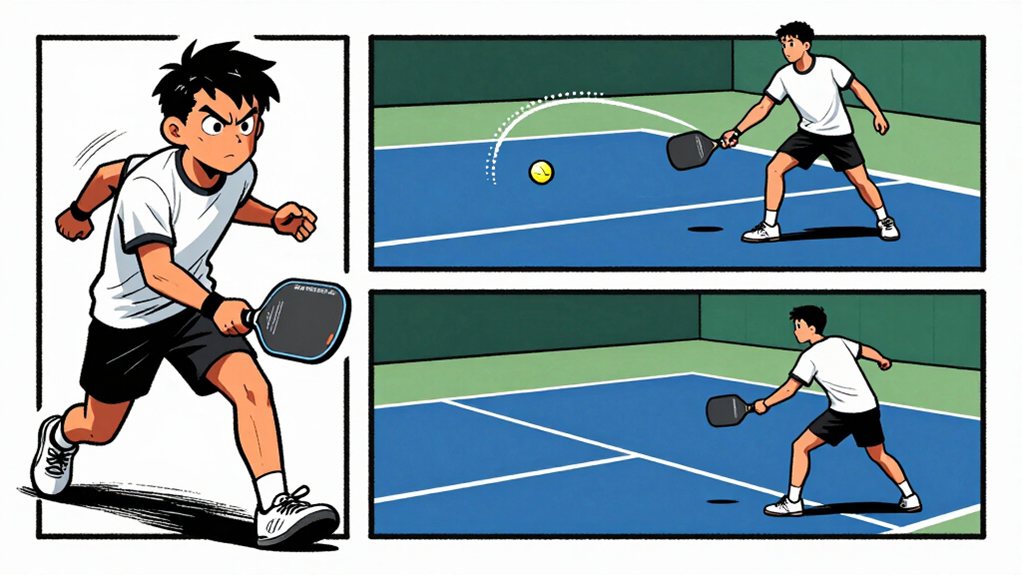
When we use the third‑shot drop, we move from the baseline to the kitchen and control the point.
You must focus on three elements: drop‑shot mechanics, shift footwork, and kitchen control.
Practice hitting the drop shot with a loose grip, stepping forward with your front foot, then quickly shift to the kitchen line.
Drop Shot Mechanics
The third shot drop stands as your most critical tool for advancing to the kitchen line. Master these mechanics to control points.
- Grip the paddle loosely. A tight grip kills your touch.
- Aim 3 feet above the net for the right arc.
- Swing with forward body weight. Keep shoulders low.
- Use a long follow-through. Finish near your chest.
- Contact the ball at waist height or slightly below.
Key points:
- Use minimal wrist movement for soft contact
- Land the ball in the kitchen, not past it
- Your opponent stays stuck at the baseline
- You gain time to move forward
Practice these five steps until they feel natural. Repeat the sequence consistently. Your opponent will struggle to counter your controlled advancement.
Transition Footwork
Master the third shot drop, then sync your feet to the kitchen for maximum control. After you hit the drop, step forward with your inside foot first. Take 2 quick steps to reach the non-volley line. Keep your weight forward, not back on your heels. Your toes point toward the net. Stay on the balls of your feet for quick reactions.
- Hit the third shot drop with forward momentum.
- Step inside foot first toward the kitchen.
- Take 2 more steps to reach the line.
- Stop with feet shoulder-width apart.
- Hold your ready position until the ball returns.
| Step | Action | Foot Placement |
|---|---|---|
| 1 | Hit third shot drop | Both feet loaded |
| 2 | Step inside foot | Forward, toward net |
| 3 | Step outside foot | Complete the move |
| 4 | Arrive at kitchen line | Feet shoulder-width apart |
| 5 | Prepare for return | Ready position, balanced |
This positioning sets you up for the next play.
Kitchen Control
Once you master the third shot drop, you control the kitchen and the point. This shot lets you move from the baseline to the kitchen line. You aim three feet above the net with forward body weight. Your grip stays loose.
Your wrist stays firm. Your follow-through extends long toward the target.
The third shot drop creates pressure. Your opponents must decide quickly. They either hit a low volley or let the ball bounce. Both options work in your favor.
Key execution points:
- Keep your grip loose and your wrist firm
- Aim three feet above the net with forward body weight
- Use a long follow-through toward your target
Middle Targeting Works When Aggressive Angles Fall Apart
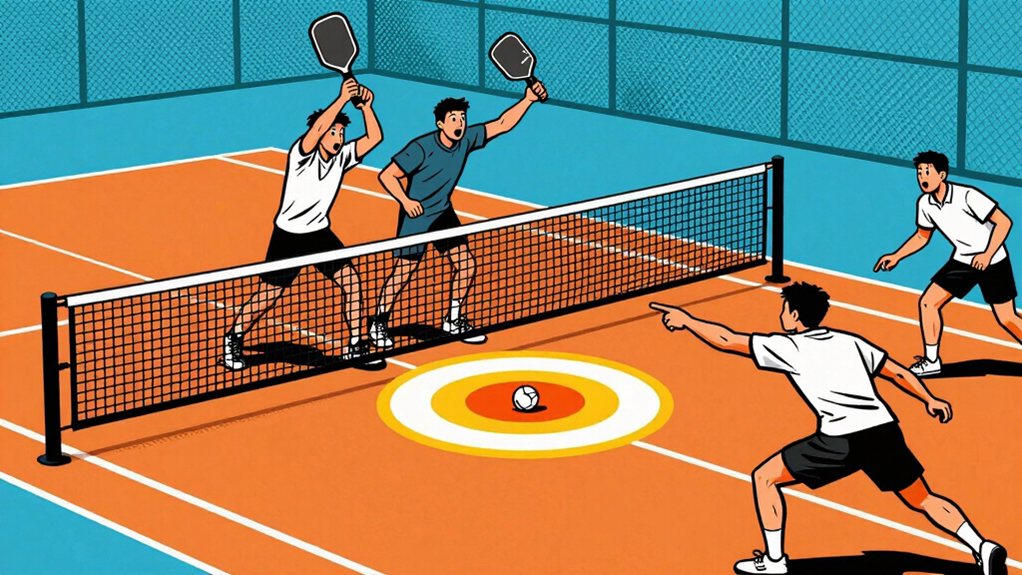
When aggressive angles fall apart, middle targeting becomes your reliable fallback strategy. You aim at the center hash mark. This spot forces the lowest net clearance. It limits opponent attacking angles. Your error margin increases substantially.
Middle targeting works best when opponents position wide. You hit the ball to the middle. Both players hesitate. This creates confusion. You win the point or force an error.
- Identify wide positioning
- Hit toward center hash
- Watch hesitation
- Capitalize on gaps
Use this when aggressive angles fail. It shifts pressure back to opponents.
| Shot Type | Target Zone | Strategic Result |
|---|---|---|
| Dink to middle | Center hash | Forces low volley |
| Drive to middle | Midcourt | Limits angle options |
| Lob to middle | Baseline | Creates retreat |
| Drop to middle | Kitchen line | Invites error |
| Reset to middle | Changeover zone | Buys recovery time |
How Shading Position Reads Intent Before Your Opponent Acts
Step 1: You observe your opponent’s paddle angle and shoulder rotation to read intent before they strike.
Step 2: You anticipate the shot direction by watching where the paddle contacts the ball, then step toward that line.
Step 3: You adjust your footwork early, shifting your shading position to cover the expected return. Just as athletes track movement patterns to gain a competitive edge, smart home energy monitors track real-time consumption patterns to identify inefficiencies before they compound.
Set of 25 Mini Disc Cones: This high-quality set includes 25 durable disc cones with a 5-inch diameter—perfect for drills and field setup.

[Affordable Set]: Whether you are an amateur or a professional athlete, this 65-pack of training cones can meet all your training needs. It also comes with a mesh bag and a strap, making it easy to bundle the cones together and carry them conveniently.
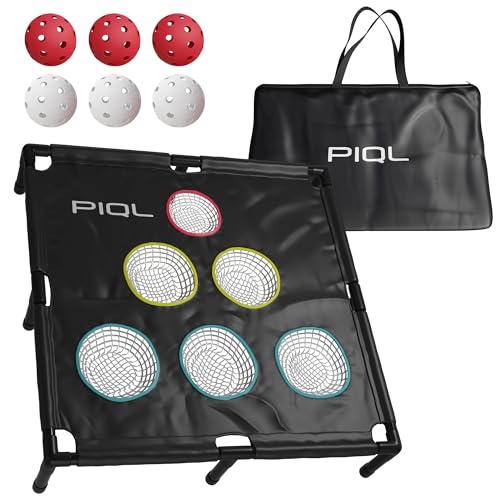
Precision Training: Our PATENT PENDING pickleball training equipment is specifically engineered to enhance your accuracy, control, and power. Whether you're a beginner or an advanced player, you'll notice an immediate improvement in your shots and overall performance.
Reading Opponent Intent
How does your positioning reveal your opponent’s next shot before they even swing? Watch their shoulders rotate early. That rotation signals the direction before their paddle moves. You notice their weight shift, too.
A transfer to the back foot means power. You see a slight crouch, and they prepare to dink. You adjust your shade based on these cues. You gain court control through reading intent.
- Shoulders rotate early to signal direction
- Weight shift to back foot indicates power
- Knee bend shows preparation for a soft shot
Anticipating Shot Direction
Your shading position becomes your greatest weapon when you learn to read your opponent’s intent before they act. When you shade correctly, you force your opponent to hit shots they don’t want to hit.
- Notice your opponent’s paddle angle before contact.
- Watch their shoulder rotation for directional clues.
- Track their body weight transfer for shot power.
- Identify early grip changes that signal lob or drive.
- Position yourself three to four feet inside the court.
- This angle cuts off their preferred shot options.
- You create doubt in their decision-making process.
The key is proactive positioning, not reactive guessing. You read the situation, you adjust your shade, and you take away angles. Your positioning does the work before they strike.
Adjusting Footwork Early
Once you recognize your opponent’s intended shot through paddle angle and body positioning, you can shift your feet early and take away their preferred angles before they strike.
This pre-adjustment puts you in control of the point before your opponent commits to their shot.
Watch their shoulders turn and note how their paddle preparation signals direction.
Move your feet as soon as you detect these cues.
You gain court coverage and force erratic returns when you shade correctly.
- Left-side player slides to cover down-the-line shots
- Partner shifts to cover middle simultaneously
- Follow ball with feet to maintain strong court coverage
Pickleball Attack Selection: Pressure the Right Opponent Every Time
When choosing which opponent to attack, you must identify the weaker player first. Watch during warmup. Note who makes errors. Notice who looks uncomfortable. Then target that player consistently throughout the match.
Spot the weaker player in warm‑up, then hammer them all match—doubt will undermine their game.
Target the aggressive player on their fourth shot. They rush and make mistakes when pressured. Hit balls to their feet. Force low volleys. Take away their time.
Green light opportunities:
- Balls above shoulder or chest level
- Opponents out of position
- Returns landing short
- Study opponents before match start
- Hit to consistent player when aggressive one is at net
- Force decisions by keeping pressure on weaker player
This creates doubt. Opponents second-guess their partner. You win more points.
Deep Returns Keep Opponents Back and Win Points by Default
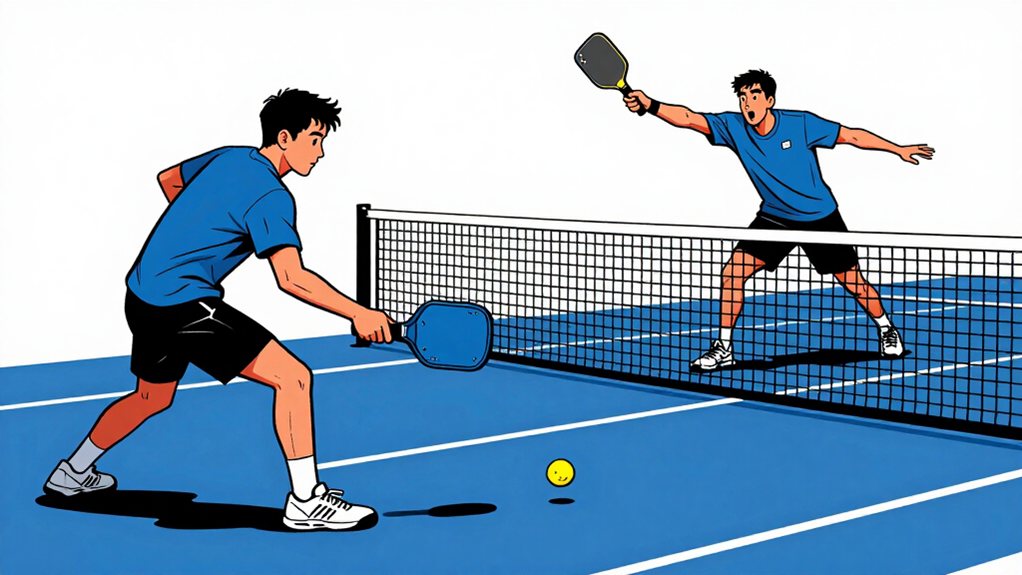
Now shift your focus from opponent selection to return depth. You force errors when you hit deep returns consistently. The serving team can’t attack when you keep them back at the baseline. We win points by default when opponents struggle to create attacking opportunities.
- Deep returns push opponents further from the net
- Your opponents get no easy attacking angles
- They must hit perfect shots to stay in the point
Aim for the back third of the court on every return. You buy time to advance to the kitchen line.
Your consistency beats their power when you control depth. The receiving team gains the advantage when returns land past the service line consistently.
Frequently Asked Questions
Why Do Many Players Think Power Matters More Than Placement in Pickleball?
You prioritize power because you see flashy highlights and assume hard hits win points. You don’t realize targeting feet or middle court systematically dismantles opponents without needing physical strength.
How Can Recreational Players Apply Professional Tactics Without Elite Foot Speed?
Master placement over power to outmaneuver faster opponents. Use feet-targeting to force errors, shade correctly to cover gaps, and drop third shots to neutralize speed disadvantages without elite mobility.
What Are the Biggest Myths About Pickleball Strategy Among Amateur Players?
You mistakenly think power wins points, but you misunderstand that consistency and placement beat aggression. You falsely believe foot speed matters most, yet positioning and patience consistently outperform raw speed at your amateur level in game play.
Do You Need Advanced Equipment to Execute Deep Serves and Third‑Shot Drops?
Stop believing that expensive paddles give you better serves, you don’t need advanced equipment. Focus on technique: use a relaxed grip, generate momentum from your core, and aim for consistent depth. That’s all it takes.
Can These Strategic Principles Work Effectively in Mixed‑Skill‑Level Matches?
Yes, you can use these strategies effectively in mixed-skill matches. Focus on depth, targeting feet, and proper positioning to force errors, control points, and dominate regardless of your opponents’ skill level.
Final Thoughts
Think of pickleball mastery like building a house. Each skill forms a brick. The deep serve is your foundation. The third shot drop is your doorway to the kitchen. Feet targeting removes opponent balance.
- Serve deep to the baseline.
- Drop third shots into the kitchen.
- Target feet when opponents back up.
- Shade middle when angles fail.
We’ve built our game one skill at a time. We win point by point.

Bulky profile

For the dinker who studies stroke mechanics, schedules pickleball before everything and lives by the kitchen line. Third Shot Drop.