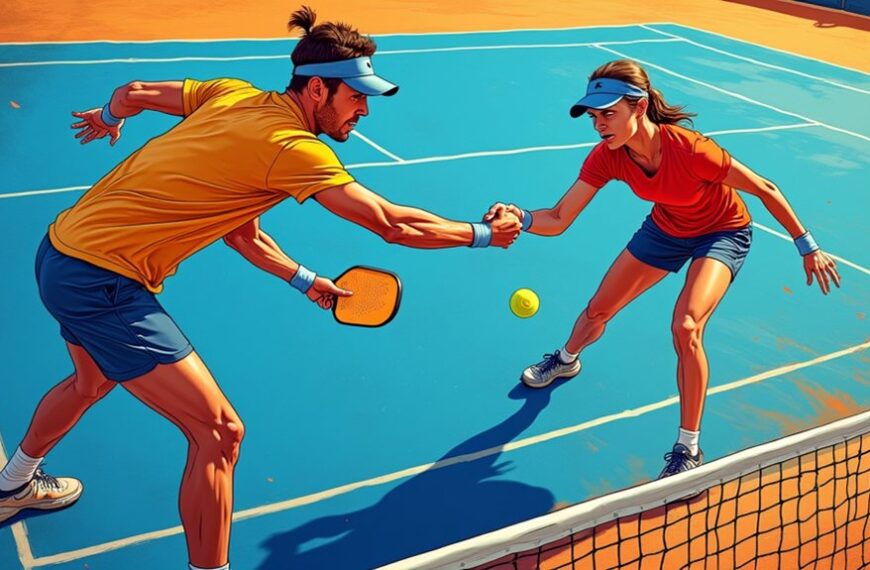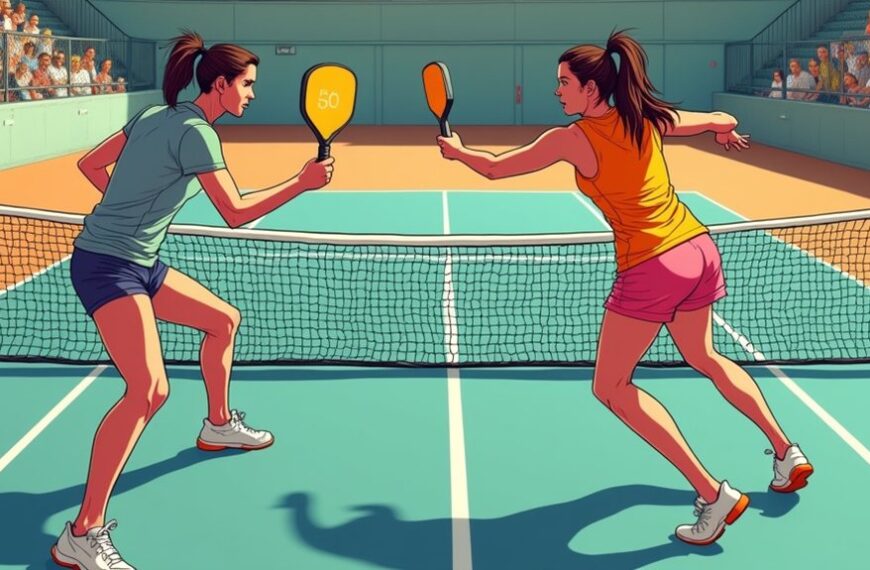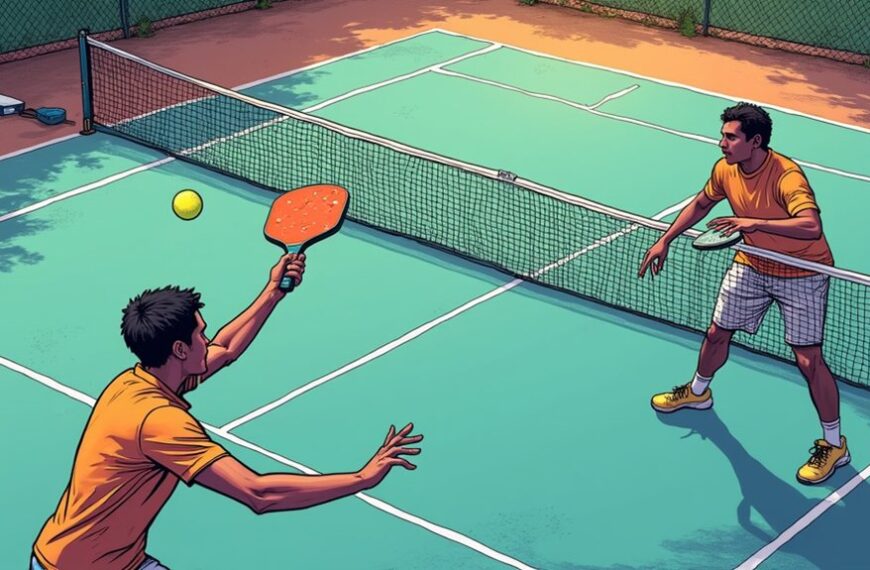

Focus on accumulating individual points across all matches, not winning every match. Play conservatively and target at least 50% of points in each game. Communicate clearly with each new partner using “mine” and “yours” calls. Identify opponent weaknesses in the first game and exploit them repeatedly.
Stay hydrated, drink 500ml water every 20 minutes. Keep errors low and prioritize high-percentage shots. You’ll develop a complete game plan that maximizes your point total throughout the tournament.
Padel Americano Rules and Scoring Explained
In Padel Americano tournaments, you compete as an individual even though you play with a temporary partner each match. Partners rotate every round, so you pair with every other participant once. The winner has the highest cumulative point total.
Rules:
- Each match goes to a fixed point count, commonly 24, 31, or 32 points.
- Every point you score counts toward your total, regardless of whether your pair wins the match.
- The tournament ends when all rounds finish.
- The player with the most total points wins.
- The recommended 32-point format gives each player equal serves.
This format rewards consistent point-scoring over match victories. You maximize your total by focusing on winning individual points rather than dominating entire matches.

Wilson Hurakn Lite Men's Padel Shoe - Black/Infared/White, Size 8.5 US

Wilson Hurakn Lite Men's Padel Shoe - White/Bosphorus, Size 9.5 US
How the Scoring System Changes Your Padel Strategy
Now that you understand the scoring rules, your strategy shifts. The Americano format rewards individual point collection over match victories. Every point adds to your total, so your mindset changes completely.
Your new focus:
- Play for points, not for dominating opponents
- Take smart risks when the score is tight
- Never give up on any point, even when losing a game
You chase every ball. You prioritize winning your service games. You aim for at least 50% of points in each match.
You adjust your risk level based on the score. You communicate with your partner about rotation and coverage. You accept that losing a match doesn’t mean losing the tournament. Just like a smart home automation hub centralizes control across multiple devices, your tournament strategy must centralize around every single point rather than individual match outcomes.
Building Instant Chemistry With Every New Partner
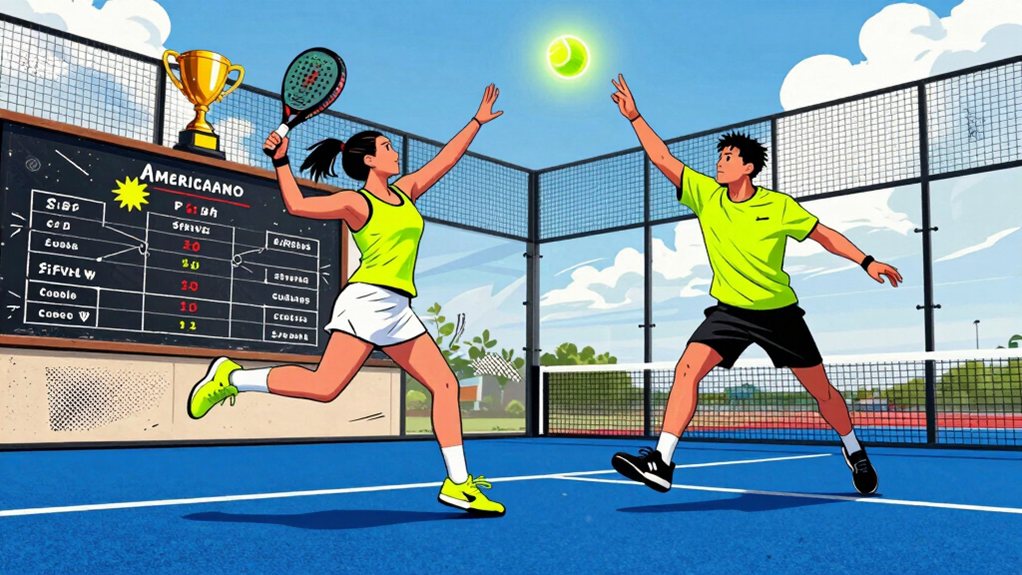
You must exchange clear signals before each point and confirm your preferred court positions with every new partner.
We suggest establishing three basic call-outs, agreeing on who covers the net versus the baseline, and practicing two quick trust exercises during warm-ups.
Quick Communication Tips
Always establish clear communication signals with your new partner before the first point begins. Simple but clear verbal cues and visual gestures work best under pressure.
Clear signals prevent confusion and help you cover the court effectively.
Use these three crucial communication tools:
- Call “mine” or “yours” loudly on every ball
- Point to indicate who takes the net on serve returns
- Give a brief positioning update after each point
Speak clearly during play. Call the ball early so your partner hears you. Use short words like “switch,” “stay,” or “press.”
Keep your voice calm even when points get tense. Your partner depends on your clear calls to make split-second decisions.
Trust your signals and follow through with your calls every single time.
Consistency builds trust, and trust builds winning chemistry on the court.
Align Playing Styles
When you step onto the court with a new partner, quickly assess their strengths and weaknesses during the first few points. Match your positioning to complement their style.
Quick Style Alignment Steps:
- Identify who controls the net vs. who stays back
- Call out your preferred side early
- Adjust your shot selection to their comfort zone
- Follow their pace rather than forcing yours
| Situation | Your Action | Partner’s Role |
|---|---|---|
| Net player | Cover baseline | Take volleys |
| Baseline player | Create angles | Move to net |
| Strong server | Start points | Cover return |
| Weak return | Protect middle | Attack serve |
| Fast opponent | Drop shots | Lob deep |
Use this framework to create instant chemistry. Your adaptability determines both your points and your partner’s success. Every rotation demands a fresh approach.
Trust Building Drills
Because chemistry with new partners doesn’t develop instantly, we use trust building drills during warm-ups to accelerate the process.
These drills help you communicate better and predict your partner’s movements.
You establish rhythms that transfer into match situations.
- Voice your calls early: Say “mine” or “yours” on every shot during warm-up. This builds automatic communication.
- Mirror shadow drills: Follow your partner’s movements without a ball. You learn their tendencies and positioning.
- High-five ritual: Exchange a high-five after each won point during practice. This creates positive association and trust.
Once you complete these drills, you feel more confident during actual competition.
You’ll naturally anticipate where your partner moves on the court.
Trust becomes automatic and you play with much more freedom and less hesitation.
Point Hunting: Why Individual Scores Beat Match Wins
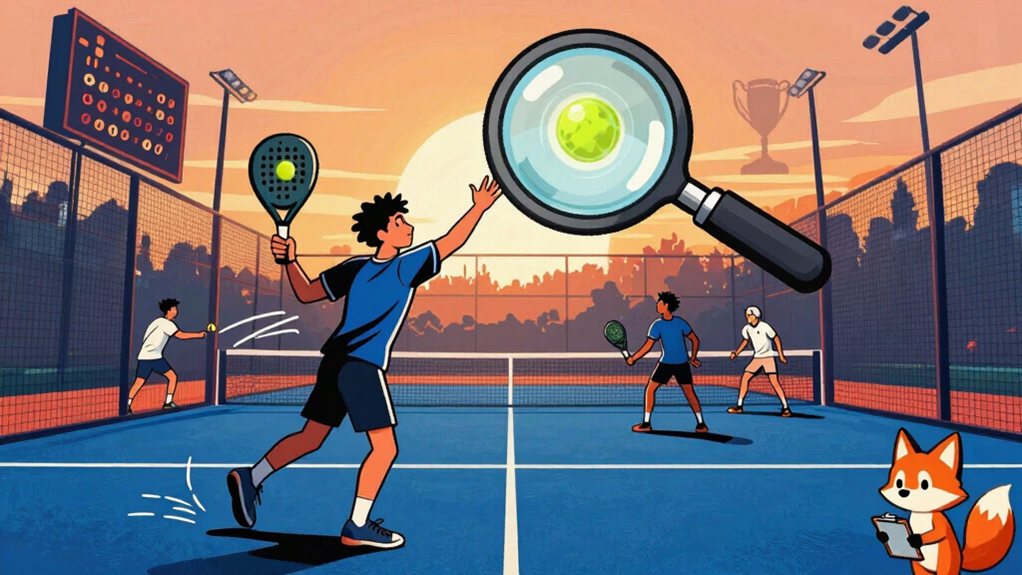
In Padel Americano tournaments, your individual point total determines the winner, not match victories. Every point you’ll earn adds to your total, even if your pair loses the game. Focus on accumulating points across all rounds rather than chasing match wins.
Your point total, not match wins, crowns the champion in Padel Americano—every point you earn adds to your total, even if your pair loses.
- We track each point after game.
- Prioritize high-percentage shots over risky winners.
- Keep errors low; each unforced point lost reduces your total.
- Use consistent serve placement to secure easy points.
- Return with depth; force opponents to hit difficult balls.
- Stay calm; a steady point-by-point approach yields the highest cumulative score.
Check the score sheet after each match, add your points, and aim for the highest total to win the tournament. Consistent point collection beats occasional match victories today.
Court Positioning That Works With Any Partner
Now that you understand how point accumulation determines your tournament success, let’s examine how court positioning amplifies those point gains. Your court position directly influences how many points you score.
When you play with any partner, position yourself in the best spots to maximize your scoring opportunities.
- Stand 2-3 feet inside the baseline when receiving serve to take time away from opponents
- Move to the service line when your partner hits a deep shot to pressure the net
- Stay centered between the alleys to cover both crosscourt and down-the-line returns
These three positioning rules work regardless of your partner’s style. You control your own position on every point.
Practice these positions until they become automatic.

**Versatile Storage**: This multifunctional **Padel backpack** is perfect for athletes, efficiently storing **padel rackets**, pickleball paddles, or a **tennis racket** Polyurethane a material

🎾 Drop Shot Tournament Tech – FIP Approved Tournament Tech padel balls designed to meet official standards for competitive and club-level play.
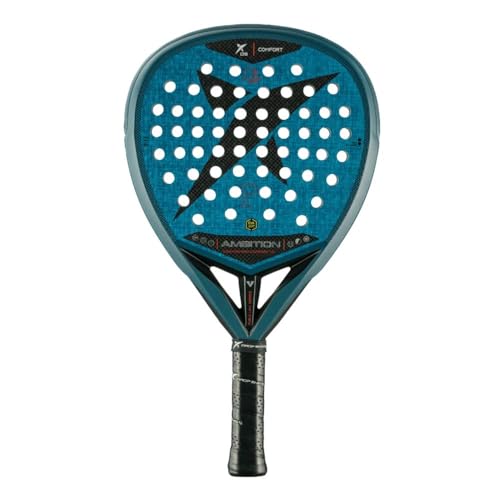
Level: Advanced / Professional Shape: Diamond Thickness: 38mm
How to Read Opponent Weaknesses in the First Game?
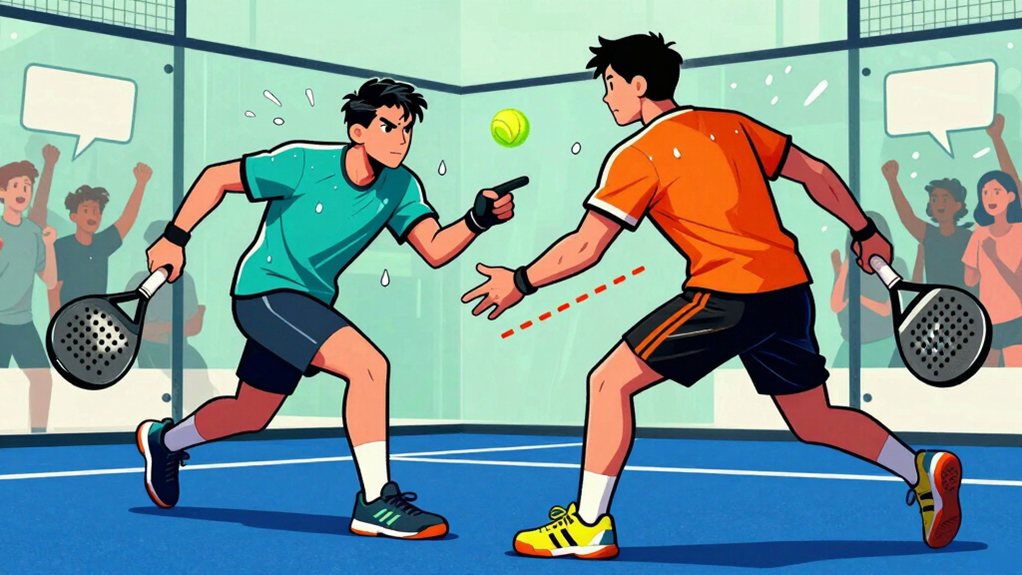
In the first game, you watch your opponents closely to identify patterns in their shots, footwork, and decision‑making. Note their weak shots—often the backhand, the lob, or the return—and we note which areas they avoid under pressure.
Once you see a pattern, exploit it by targeting that weak shot on every point you can, forcing errors and increasing your point total.
Identify Opponent Patterns
How quickly can you spot your opponent’s weakness in the first game? You must watch carefully during the opening points. Look for recurring habits in their positioning, shot selection, and footwork. Identify opponent patterns by observing their consistent behaviors across multiple points.
Use your first few rallies to gather intelligence before adjusting your strategy.
- Notice if they favor one side of the court
- Track whether they hit crosscourt or down the line most often
- Observe how they move when you hit to the corners
We analyze patterns to predict their next move. You gather this information silently while playing. Your partner should also watch and share observations between points.
This mental notes approach helps you anticipate shots without giving away your strategy.
Exploit Weak Shots
As you identify patterns in your opponents, you can immediately start exploiting their weak shots. Watch closely during the first game. Note their recurring errors. Target their weaknesses with purpose.
- Find weak backhands. Serve or return to that side repeatedly.
- Spot poor volleyers. Rush the net when they struggle at the baseline.
- Notice slow footwork. Hit deep shots to force awkward movement.
- Identify hesitation at net. Use drop shots or lobs to exploit poor positioning.
Managing Energy and Recovery Throughout the Tournament
Because padel americano tournaments run about 2 hours, managing your energy becomes essential for peak performance. You must pace yourself across all matches.
Your body needs recovery between rounds.
- Drink 500ml of water every 20 minutes during play
- Eat a banana or energy bar during the 5-minute break between matches
- Do light stretching while waiting for your next round to start
We recommend that you arrive early and complete a proper 10-minute warm-up.
Take deep breaths between points to lower your heart rate.
Stay focused on each point individually.
Your cumulative energy management determines your final ranking in the tournament.
Frequently Asked Questions
What Paddle Weight and Grip Size Should I Use for Americano?
You should choose a paddle weighing 350-380 grams if you’re male or 340-360 grams if you’re female, with a grip size between 4 1/4 and 4 3/8 inches. Always test both weights before your tournament.
How Do I Handle an Odd Number of Players in the Draw?
Two’s company, three’s a crowd, add a floater or bye. You pair the odd player with a different partner each round, keeping them active while everyone else rotates in the standard cycle.
Can I Substitute a Partner if They Are Injured Mid‑Tournament?
Check tournament rules first, as some allow substitutes while others require forfeiting matches. If permitted, bring a backup player or ask the organizer for help. You’ll likely lose any points your original partner previously earned.
What Is the Best Way to Record Cumulative Scores Across Rounds?
Use a dedicated scoreboard or app that tracks each player’s individual points per match. Create a simple spreadsheet with player names across rounds, updating cumulative totals after every match. Designate one person as official scorekeeper.
Should I Warm up Differently for Each New Partner?
Yes, adjust your warm-up for each partner. Identify their strengths and weaknesses quickly, practice shots they’ll likely use, and coordinate your positioning. Communication during warm-up helps you maximize compatibility and point potential together during play.
Final Thoughts
- Apply these strategies consistently across all matches.
- Adapt positioning based on your partner’s strengths and opponent patterns.
- Manage energy by taking brief recovery periods between games.
- Communicate clearly with each new partner about preferred court coverage.
- Focus on point hunting rather than match wins.
- Stay mentally sharp by analyzing opponent weaknesses within the first two games.
By following this structured approach, you maximize tournament success. Your instant chemistry with any partner will improve. Your scoring efficiency will increase notably. Remember: consistent execution beats occasional brilliance every time.
Trust the process. Execute the plan. Win the tournament.

Dual mounting system: magnetic + suction cup. Quick and intuitive installation. High compatibility with all smartphones. Robust structure, designed to last. Ideal for all...