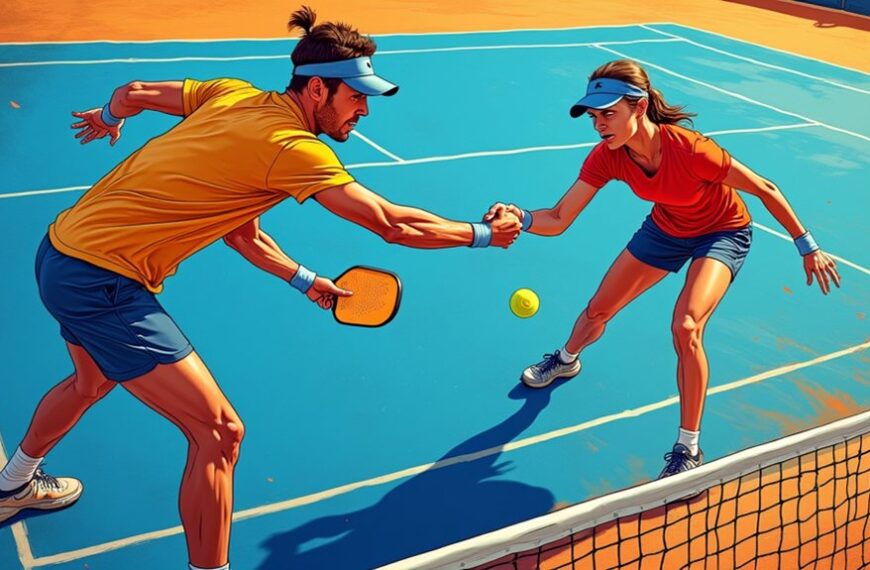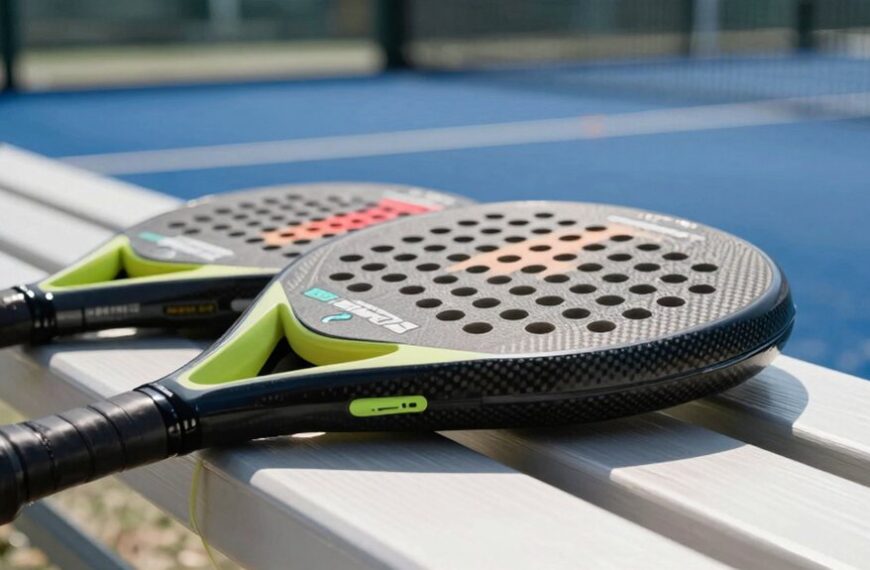
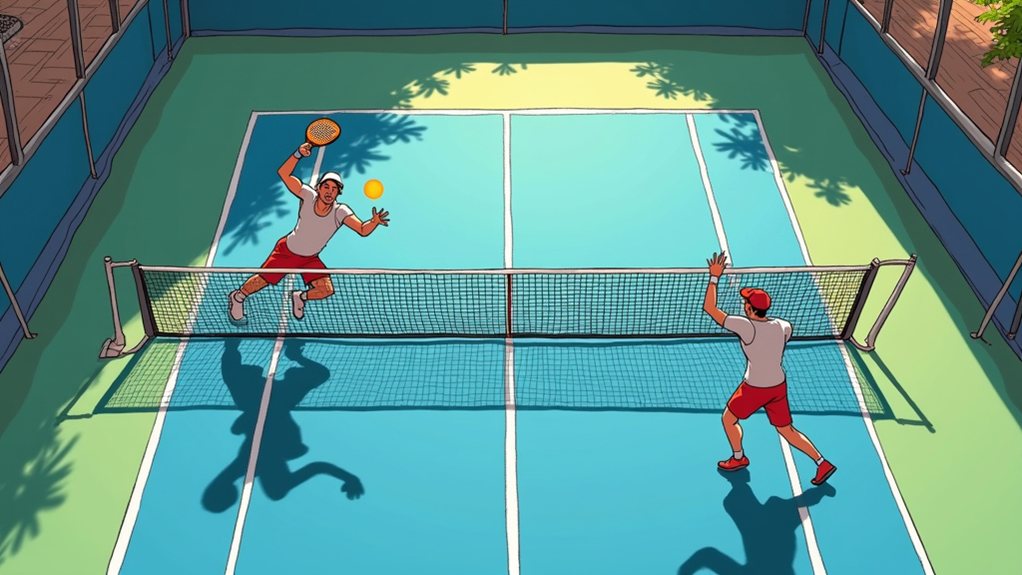
Control the net to win points since 80% of winners in padel are created near the net. Approach the net by closing distance quickly after your shot, using a split step before your opponent hits and an explosive push toward the ball. Stand 2-3 meters from the net with your racket head up.
Attack with angled volleys and bandeja shots to finish points. When opponents hit deep lobs, retreat to baseline immediately and lob to reset. Move together with your partner to maintain compact formation. Practice net approach sprints and volley sequences to build reflexes. Master these tactics and you’ll dominate the net position.
Why Net Dominance Wins Points in Padel
When you control the net, you control the point. This principle drives success in padel. Statistics show that 80% of winners occur near the net.
When you control the net, you control the point; 80% of padel winners are created there.
Winning pairs execute attack actions at the net in 85% of points. They spend more time in the net area and hit fewer back-court shots.
Here’s why net dominance matters:
- You force opponents into defensive positions.
- You create shorter angles for winning shots.
- You limit opponent reaction time.
- You control point rhythm and space.
Average rallies last 9-10 shots. When you occupy the net, you reduce this number. You finish points faster.
You force errors from returners. To further optimize your court setup and control, home assistant hub devices can help you track performance data and automate training environment settings with ease.

PRECISION BOA FIT: Dual Li2 BOA dials with PerformFit Wrap deliver a micro-adjustable, locked-in fit for speed, control, and confidence on every point. CORE-FRAME STABILITY:...
The Net Approach Technique in Padel
The approach from baseline to net defines your attacking opportunity in each point. The goal is to close the distance quickly while keeping control of the ball. Start with a split step just before the opponent hits.
Move explosively after you strike the ball to close the gap.
Use a deep lob to push your opponent back and create space for the advance. If you hit a bandeja, explode forward immediately after contact to maintain pressure.
- Split step as opponent prepares to hit.
- Hit a lob or bandeja toward the opponent’s backcourt.
- After contact, quickly push off the front foot and sprint toward the net.
- Keep racket head up, you’re ready for volley.
- Stay low, move with short steps, keep eyes on the ball.
Where to Stand at the Net in Padel
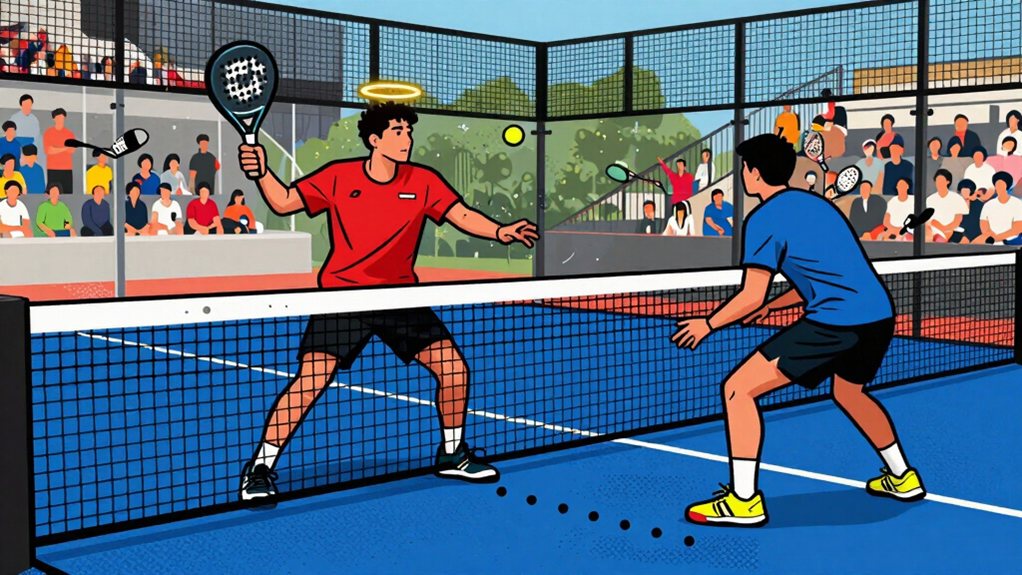
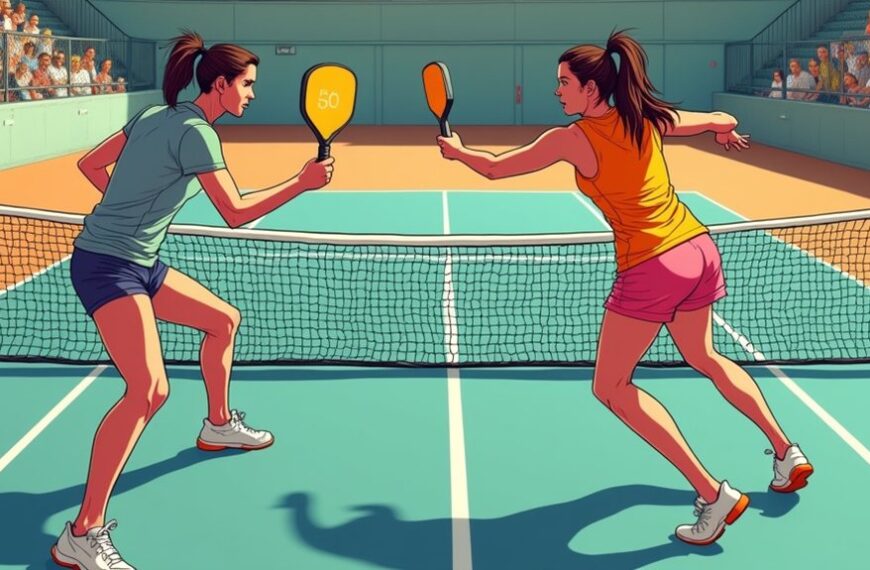
Your best net position sits about 2-3 meters from the net, giving you room to handle lobs and volleys.
- Stand 2-3 m away from net.
- Align side-by-side with partner, tightly facing opponent.
- Keep racket head up, elbows slightly bent always.
- Split step as opponent quickly prepares to hit.
- Move forward together always when your team attacks.
- Retreat step if a deep lob lands near the baseline.
Place feet shoulder-width apart, weight on balls of feet, keep steady eyes on opponent’s racket.
Stay within arm’s reach of the net, but don’t press against it.
Too close limits reaction time; too far reduces pressure.
Adjust your stance to cover the diagonal to your partner, and keep communication clear to avoid gaps.
Winning Shots While at the Net
When you move to the net, you’re aiming to finish points with fast, angled volleys and a well‑placed bandeja.
Hit your volley at a 30‑degree angle, keep the ball low, and force your opponent out of position.
Use these winning shots: 1) volley angle shots, 2) bandeja placement, and keep your racket up 2‑3 meters behind the net.
Volley Angle Shots
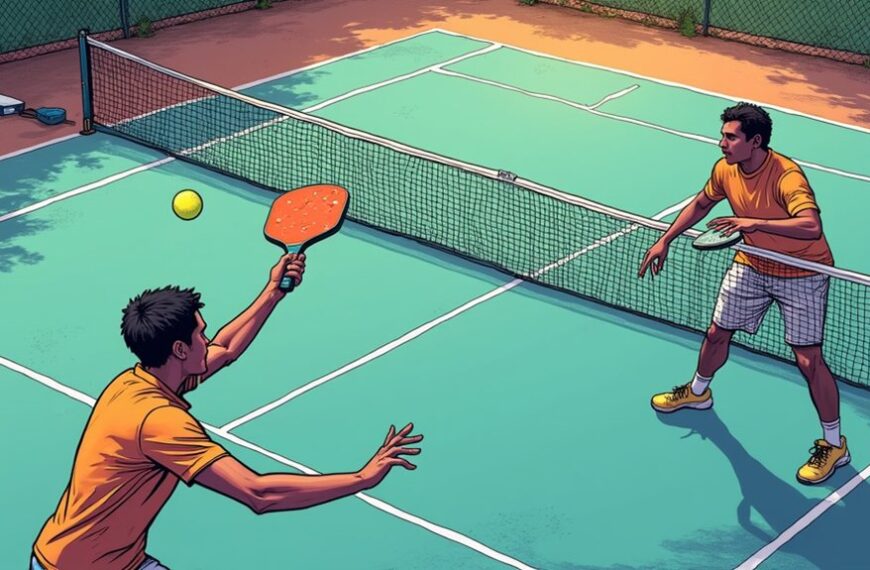
How do you execute winning volley angle shots while positioned at the net? Follow these steps:
- Keep your racket head above the ball.
- Aim for the opposite corner of the opponent’s court.
- Snap your wrist outward to create angle.
Your shot should land in open space, forcing your rival to move laterally. Practice the pattern to build consistency. Use the table below to compare key elements.
| Shot Type | Angle | Target Area |
|---|---|---|
| Cross-court volley | Wide | Opponent’s side line |
| Inside-out volley | Sharp | Near the middle |
Bandeja Placement
The bandeja serves as your main weapon for maintaining net dominance while forcing opponents into difficult positions. Master these placement principles:
- Aim at the opponent’s feet. Low bandeja forces returners to hit up, limiting their attack options.
- Hit toward the side with most open court. This creates uncertainty and often results in weak returns.
- Direct bandeja down the middle draws both opponents forward, opening side gaps for winning volleys.
- Vary your pattern. Mix wide placements with central shots to prevent predictable positioning.
- Execute with split step. Time your push off the court immediately after contact.
- Follow through across your body. This guarantees spin and control.
- Target the glass wall. Balls return at unpredictable angles, disrupting opponent rhythm.
Practice these placements until they become automatic. Consistency beats power at net.
Net Defensive Strategies When Pushed Back
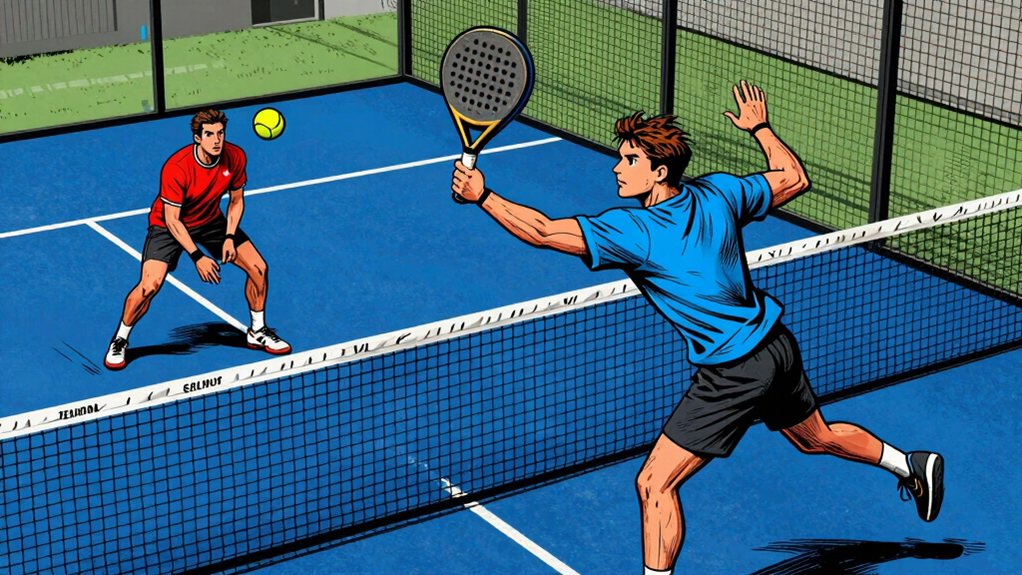
When you’re pushed back from the net, you must choose between three defensive tactics: retreat to baseline, lob and reset, or cover the sides.
First, you retreat quickly to the baseline to give yourself time to react.
Second, you hit a high lob to force your opponents backward and reset the point.
Third, you shift position to cover the open areas of the court.
Retreat To Baseline
Once you’re pushed back from the net, your primary goal shifts to surviving the rally and regaining control. You must adopt a defensive baseline position.
- Stand 1-2 meters from the back glass. This gives you reaction time.
- Keep your racket prepared. Stay low and ready.
- Let high balls bounce against the walls. Use the rhythm.
- Hit deep groundstrokes. Push your opponents back.
- Look for an opening. Wait for a short ball.
- Communicate with your partner. Cover the court together.
When you execute a solid defensive shot, advance toward the net as a pair. Your coordinated movement creates pressure. You restore net dominance by controlling your retreat strategically.
Lob And Reset
If you’re pushed back from the net, the lob becomes your primary tool for resetting position and buying time. You must hit the ball high enough to clear the opposing net players, but not so deep that it bounces twice before reaching the back wall.
Aim for a trajectory that forces your opponents to retreat while you advance.
- Hit the lob with moderate topspin to control depth.
- Move forward immediately after hitting the lob.
- Communicate with your partner about who’ll take the next shot.
- Be ready to shift from defense to attack within two shots.
The key is timing. You don’t wait for the ball to come to you. You take control of the net position as soon as the lob lands in the front section of the court.
Cover The Sides
Under pressure at the net, you must protect the court’s flanks to prevent opponents from exploiting open spaces. When opponents drive balls wide, shift your weight laterally and keep your racket prepared for crosscourt replies. Your feet should remain agile, positioned slightly wider than shoulder-width for balance.
Key defensive positions:
- Move toward the side of the incoming ball
- Keep your body between the ball and the sideline
- Angle your racket to redirect shots back to center
| Situation | Action |
|---|---|
| Ball to your side | Step laterally, prepare racket |
| Ball to partner side | Shift coverage toward center |
| Both sides attacked | Spread apart, maintain court width |
When you cover sides effectively, you reduce passing shot opportunities and force opponents to hit difficult angles.
Partner Coordination at the Net
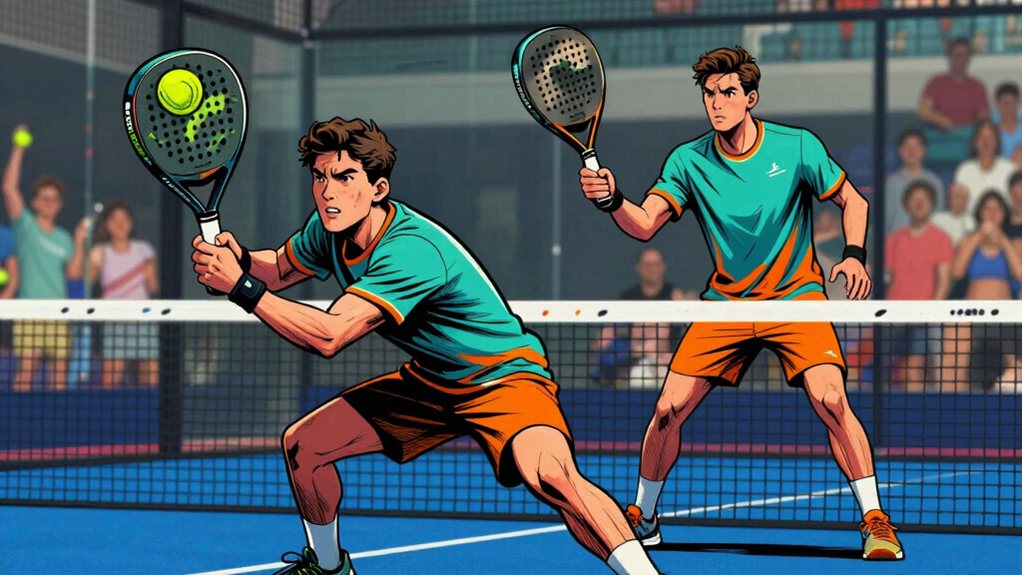
When you’re at the net with your partner, moving as a unified team determines your success. You must coordinate your movements to cover the court effectively.
Your positioning depends on your partner’s location.
Your positioning must align with your partner’s movements, ensuring seamless coverage and strategic advantage.
Adjust your stance based on their movements. Cover open spaces dynamically. Maintain constant communication about court coverage and defensive strategies.
- Keep your racket up and stay 2-3 meters behind the net line for quick reactions to lobs and volleys.
- Move forward together when attacking, maintaining a compact formation that limits opponent angles.
- Split step before each shot, then explosive push toward the ball with controlled weight transfer.
- Retreat immediately when opponents hit deep lobs, staying ready to recover and defend the court.
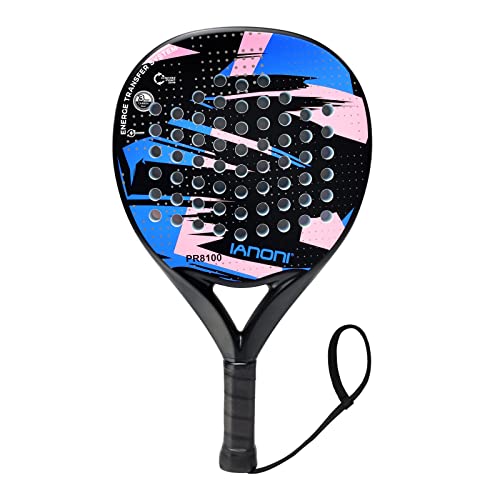
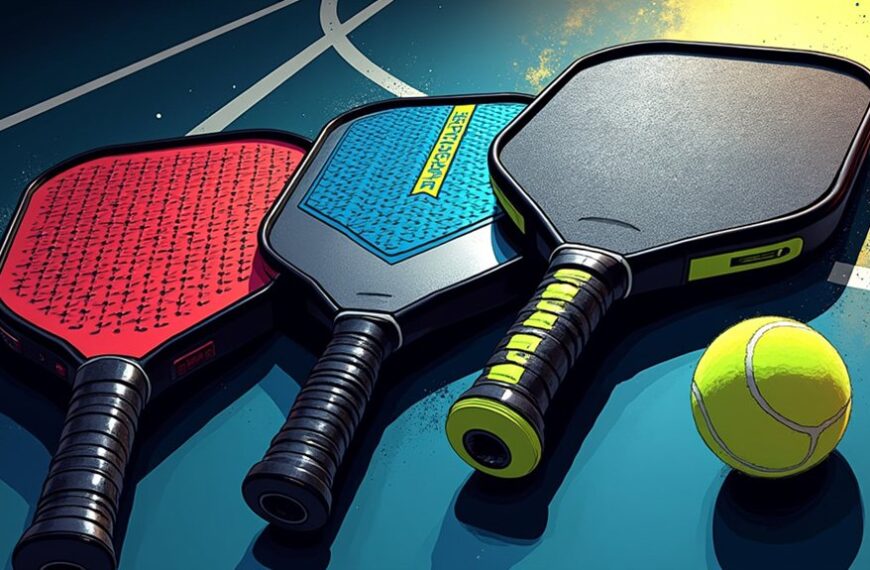
【ADVANCED MATERIAL】-The Carbon Fiber Face provides the surface with traction, perfect accuracy for maximum ball control. High Density Pro EVA Core allows players to get more feel on their strokes.

Comfort and easy power for anyone new to padel

Green-Round shaped Design: Ideal for beginners, the enlarged sweet spot centered on the racket provides exceptional flexibility in handling, delivering high playability even for entry-level players.
Common Net Play Mistakes to Avoid
How you position yourself at the net often determines whether you win or lose the point. Avoid these common mistakes to keep control.
-Standing within 1 meter of net reduces reaction time.
-Keeping racket low causes missed quick volleys.
-Moving alone instead of with partner creates gaps.
-Hitting flat volleys when angled shots give better placement.
-Ignoring communication leads to hesitation on split-second decisions.
-Failing to retreat for high lobs lets opponents score.
-Overhitting on easy put-aways increases unforced errors.
-Not adjusting after opponent’s lob leaves you out of position.
-We forget to keep racket up, slowing reaction.
-We stay too far behind net, missing close volleys.
-We don’t move as a unit, leaving uncovered areas.
-We ignore opponent’s lob, failing to retreat quickly.
Drills to Improve Your Net Game
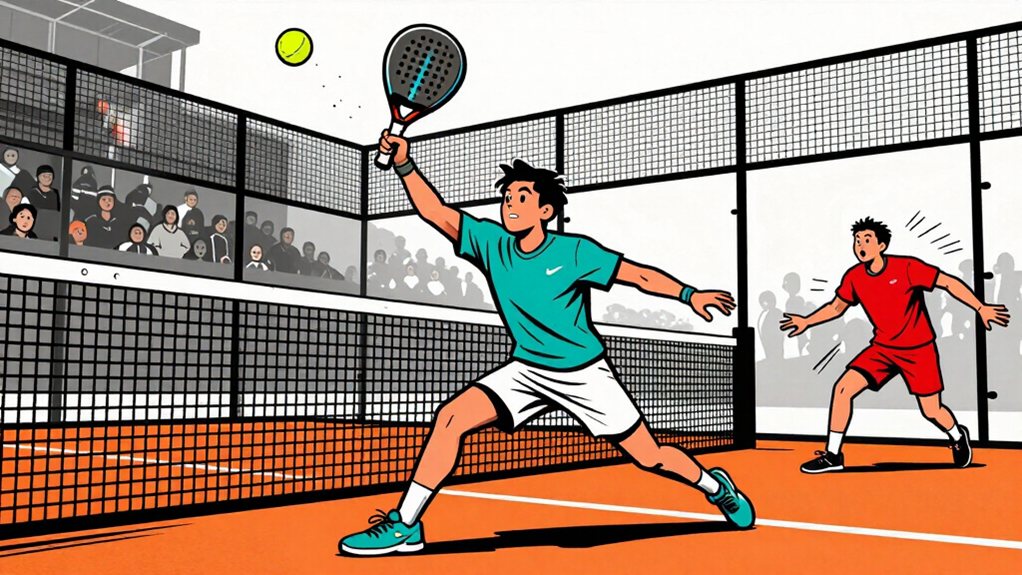
Since net play determines most rally outcomes, dedicated drill work builds the reflexes and positioning sense you need. We recommend four vital drills that change net-specific skills.
Since net play decides most points, dedicated drill work hones reflexes and positioning.
- Volley sequences: Stand 2-3 meters from the net with a partner. Hit consecutive volleys while moving side to side. This builds quick racket preparation and reaction speed.
- Bandeja change: Start at the service line, execute a bandeja shot, then immediately recover to ready position. Repeat for 20 repetitions per side.
- Net approach sprints: From the baseline, sprint to net position after a serve and execute a controlled volley. Focus on split step timing and explosive first step.
- Net rally games: Start each point at net and aim to finish within three shots. Track your success rate weekly.
These drills develop the instincts and positioning that separate aggressive net players from passive baseline competitors.
Frequently Asked Questions
What Grip Should I Use for Net Volleys in Padel?
Use a continental grip for net volleys in padel. Keep your grip relaxed but firm, and position your hand toward the racket’s base. This grip lets you handle forehand and backhand volleys efficiently.
What Is the Best Warm-Up Routine for Net Play?
Like a tennis pro at Wimbledon, you need a dynamic 10-minute warm-up. Start with shadow swings, progress to lateral movements, add split steps, then practice controlled volleys with your partner to build chemistry.
How Can I Read Opponent’s Net Intentions During a Point?
Watch their body position, racket preparation, and footwork. If they shift weight forward or raise the racket, they’re approaching. Also notice their eye contact with net and paddle angle, these clues reveal net intentions early.
What Mental Strategies Help Stay Aggressive at the Net?
Imagine yourself as a lion guarding your territory, own the net with full confidence. Trust your training, stay present, and accept the pressure. Visualize winners before they happen, and let aggression flow naturally from your preparation.
How Do I Adjust Net Position When Wind Affects the Ball?
Move back 1-2 meters when facing headwind for more reaction time. Move slightly closer with tailwind. Keep your racket up, prepare earlier, and adjust your split step timing to compensate.
Final Thoughts
Master the net, and you control the point. Position yourself 2-3 meters from the net after every shot. Move with your partner, cover the middle, and strike when the ball rises.
Practice these steps daily, and you will win more points. The net is your battlefield, claim it. Stay low, stay alert, and stay ahead. Your net game will become your greatest weapon on the court.

PREMIUM STEP BIT: Each unibit is constructed of #4241 industrial high-speed steel (HSS) with a titanium nitride coating for durability and strength to punch and drill clean holes in materials like plastic, aluminum, wood, copper, stainless steel, and other types of sheet metal.

HSS Titanium Coating: The step drill has excellent sharpness and durability due to its high speed steel material and titanium coating
【Material】Made of high speed steel with titanium coating, ensure our step drills’ Durability. This also proves the capability and durability of the drill to last through multiple drillings on surfaces such as: plastic, aluminum, copper, stainless steel, and so much more.