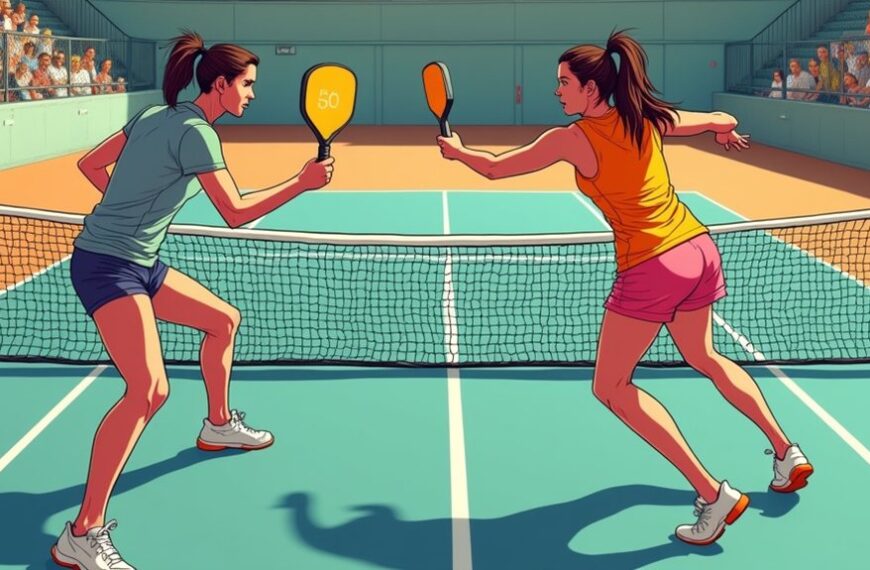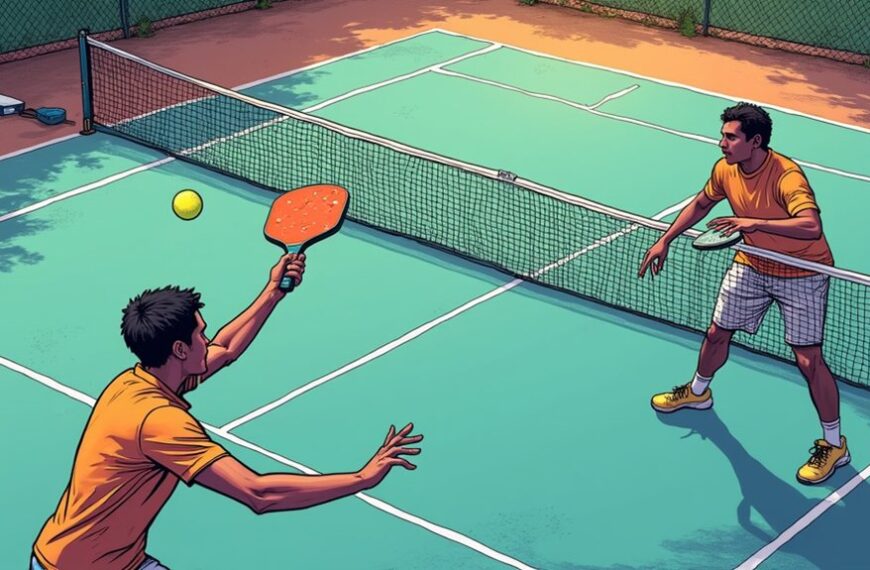
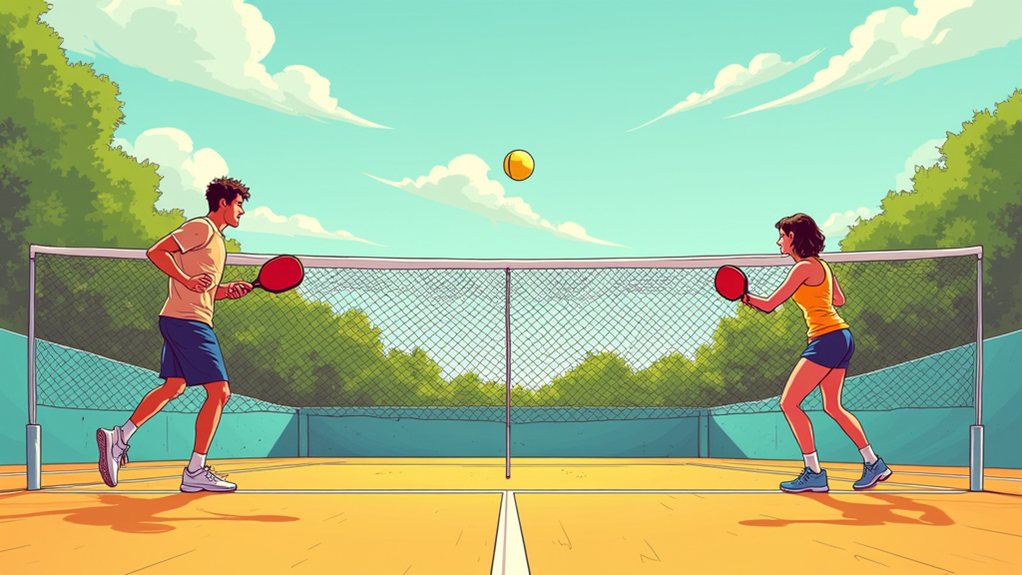
You need to know five important pickleball rules. First, serve underhand with contact below your navel and stay behind the baseline. Second, your serve must land past the kitchen line in the diagonal service box. Third, the two-bounce rule requires both the serve and return to each bounce once before volleying.
Fourth, the kitchen is a 7-foot non-volley zone on each side of the net. Fifth, games go to 11 points and you must win by two. Applying these rules will improve your game immediately.
How to Serve in Pickleball: The Underhand Rule Beginners Need to Know
The underhand serve is the only legal serve in pickleball, and you must master it to play properly.
The underhand serve is the only legal serve in pickleball, master it to play correctly.
Contact requirements:
- Keep your contact point below your navel
- Use an underhand motion, not overhand
- Stay behind the baseline when serving
Serve placement:
- Aim for the diagonal opposite service box
- Land the ball past the kitchen line
- The ball may clip the net and still be good
Court position:
- Stand on the right side when your score is even
- Stand on the left side when your score is odd
- Call your score before serving
After the serve lands, both teams must follow the two-bounce rule, meaning the ball must bounce once on each side before either player can volley it out of the air.
The serve counts as a fault if the ball lands in the kitchen or outside the correct service box. Follow these steps to serve correctly and keep the rally alive.

HOLDS 100 PICKLEBALL BALLS: A must have for pickleball coaches, pickleball machines, & practice sessions; Suitable for indoor & outdoor pickleball courts; Works as a...
The Pickleball Double Bounce Rule: What It Means for Your Third Shot
Once you understand the double bounce rule, your third shot strategy will make much more sense.
Here’s the sequence:
- Your team serves the ball.
- The receiving team must let the serve bounce once.
- Your team must let that return bounce once.
- After both bounces occur, volleys become allowed.
This rule prevents immediate attacking and creates fair rallies.
Your third shot can’t be a volley because the ball must bounce first. You have two options:
- Let the return bounce, then hit it after one bounce.
- Move forward and hit the ball in the air before it bounces.
If you choose the second option, you take control of the net quickly. Most beginners prefer letting the ball bounce.
Both approaches are legal after the double bounce occurs. The rule applies at the start of every rally, regardless of the score.
The Kitchen in Pickleball: Non-Volley Zone Rules That Surprise New Players
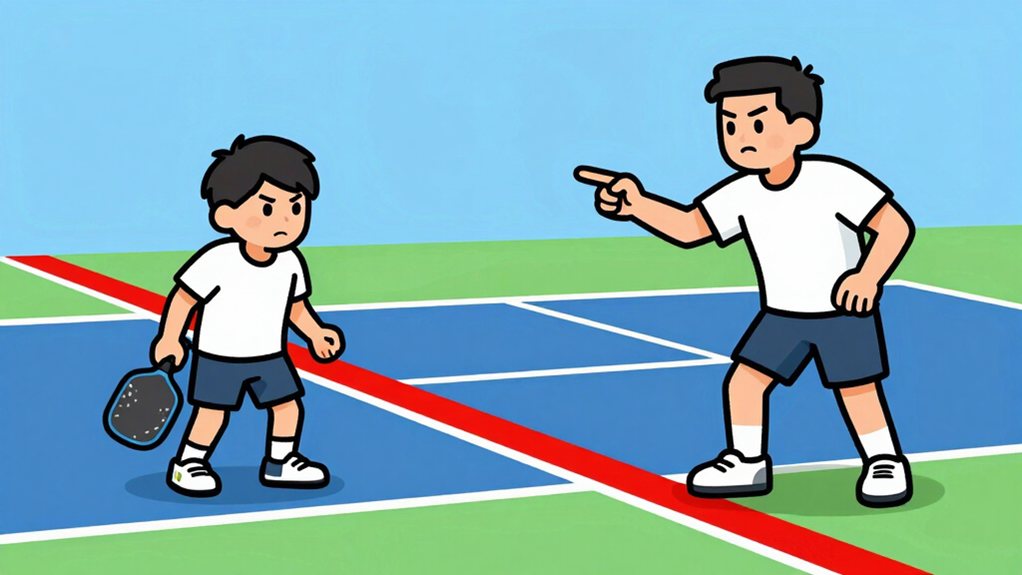
When you step onto a pickleball court, you’ll notice a 7-foot area on each side of the net called the kitchen, or non-volley zone. This area creates unique rules that surprise many beginners.
- You can’t hit a volley while standing inside the kitchen. A volley means hitting the ball before it bounces.
- You can legally return a ball that bounces in the kitchen. Let the ball hit the ground first, then swing.
- Your momentum matters. If your swing carries you into the kitchen after hitting a volley, you commit a fault.
- The ball can land on the kitchen line. This counts as inside the kitchen and in-bounds.
These rules force strategic positioning. Players often retreat to the kitchen line during rallies.
Pickleball Scoring Explained: Games to 11, Win by 2
Moving from positioning, let’s look at how you score points in pickleball.
- Games go to 11 points. You must win by 2. A score of 11-9 works. A score of 12-10 works. You can’t win at 11-10.
- Every rally gives a point. You score whether you serve or receive. This is called rally scoring.
- When your team wins a point while serving, you get a second serve. Your partner serves next if you fault.
- You stand on opposite sides based on score. When your score is even, you serve from the right side. When odd, you serve from the left.
- If both servers fault, the serve passes to the other team. This is called a side-out.

PREMIUM MATERIAL: Our doormats are made of polyester and rubber, backed with non-slip recycled rubber, and feature high-quality, lasting construction that's stain-resistant.
Stylish Home Decoration: This beautiful doormat adds a touch of style to your entryway, enhancing the overall ambiance of your home and making it more inviting.
Common Pickleball Faults That End Your Rally Immediately
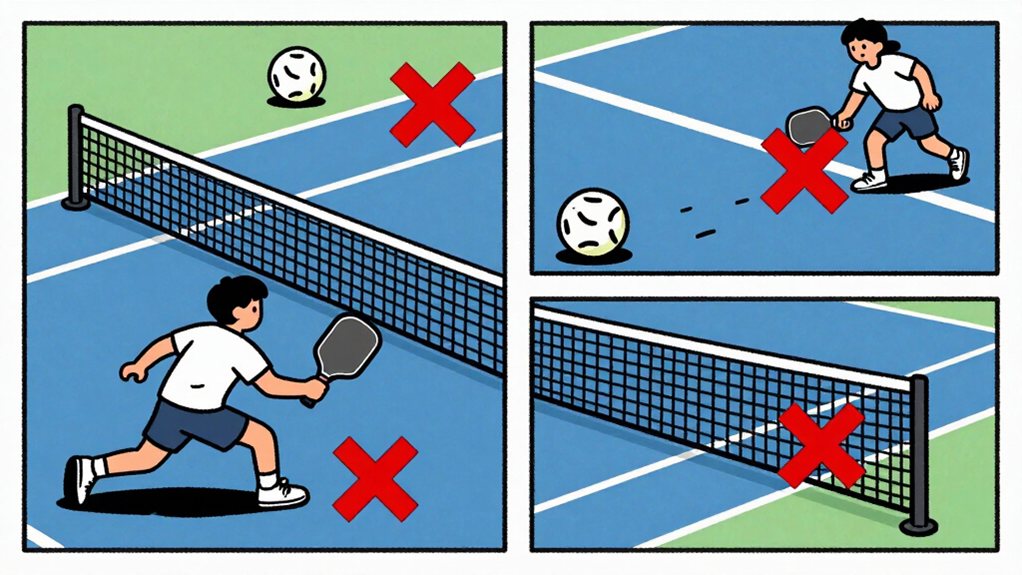
Because faults end rallies and award points to your opponents, knowing them protects your scoreboard. In pickleball, a fault stops play and gives your opponent a point. You must recognize the three common faults to avoid losing points.
In pickleball, faults end rallies and award points to opponents—know them to protect your scoreboard.
- Hitting the ball out of bounds: any shot landing outside sidelines or baseline is a fault.
- Stepping into the non-volley zone (kitchen) and volleying the ball before it bounces: you can’t volley while any part of your body is in the kitchen.
- Violating the double-bounce rule: the serving team must let the ball bounce once on their side before returning, and the receiving team must also let the serve bounce before returning.
Avoid these faults now to keep rallies and protect your lead.
Frequently Asked Questions
What Constitutes a Foot Fault on Serve, and How Is It Called?
You commit a foot fault when you step on or over the baseline before contacting the ball. The receiver calls it, and the fault ends the rally. You must stay behind the baseline when serving.
Can You Step Into the Kitchen to Hit a Ball After It Bounces?
Yes, you can step into the kitchen to hit a ball after it bounces. The non-volley zone rule only prohibits volleying while standing in the kitchen, you may enter freely once the ball bounces. This strategic nuance keeps rallies alive and tests your positioning.
How Do You Announce the Score Before Each Serve in Doubles?
You announce three numbers: your score first, then the opponents’ score, then your server number. For example, you call ‘5-3-1’ when you have 5 points, they have 3, and you’re serving as the first server.
What Happens if the Ball Bounces Twice on Your Side During Play?
You might think a second bounce gives you extra time, but it’s a fault. If the ball bounces twice on your side during play, you lose the point and your opponents score.
Is It a Fault if Ball Hits Net and Lands in Kitchen?
Yes, it’s a fault when the ball hits the net and lands in the kitchen during a serve. Your serve must clear the non-volley zone and land in the diagonal service box. If it hits the net and drops into the kitchen, you lose the point.
Final Thoughts
You’re now equipped with five crucial Pickleball rules. Remember: serve underhand below waist height, wait for the double bounce before attacking, stay out of the kitchen unless the ball bounces, play to 11 points win by 2, and avoid common faults that end rallies.
Master these fundamentals. Practice consistently. Your game will improve faster than you expect. Ready to step onto the court with confidence?

OFFICIAL PADDLE SPONSOR OF WORLD #1 PICKLEBALL PLAYER BEN JOHNS: An innovator & global leader in table tennis for 70+ years, JOOLA teams up with Ben Johns to create a new line of pickleball equipment that will forever change the game.

High-elasticity Rope: Pickleball training equipment's rope is made from selected high-elasticity latex material, our elastic rope ensures superior bounce-back performance for your hits, allowing you to practice efficiently without the need to constantly run after the ball, and easily enhances your skills.

Versatile Practice Tool: Attach this strap-on device to your own pickleball paddle to transform it into a training/drill tool for practicing serves, dinks, lobs, and drives without a partner.