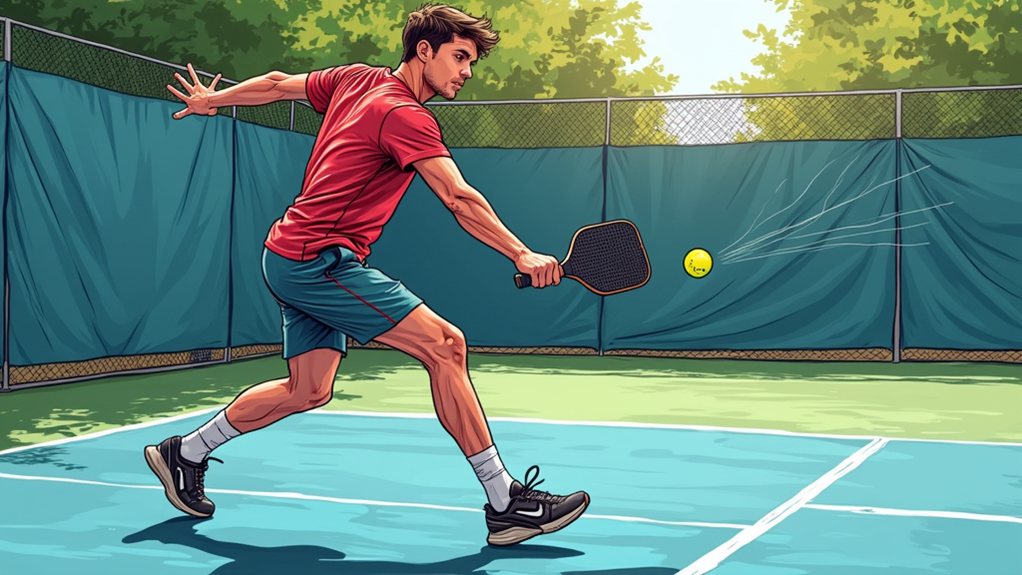
To hit a backhand slice in pickleball, use a continental grip with your index finger knuckle on the third bevel. Keep your wrist locked and your paddle face angled at 45 degrees. Start with a closed stance, bend your knees, and step forward with your back foot.
Swing high to low, brush downward through the ball, and contact it 6-12 inches in front of your leading hip. Extend toward the target and hold your finish for two seconds. Keep practicing to master the backhand slice.
Grip and Paddle Setup for a Backhand Slice
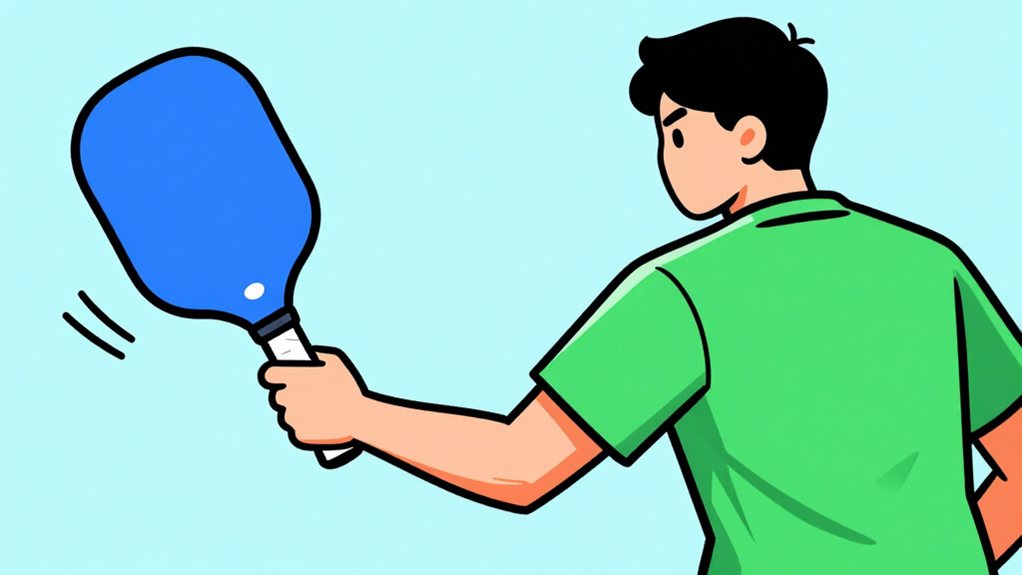
Mastering the grip and paddle setup for a backhand slice starts with the continental grip. This grip provides control and maneuverability for the pickleball backhand slice. Place your index finger knuckle on the paddle’s third bevel. Keep your wrist locked and cocked throughout the shot.
Use a continental grip, place your index knuckle on the third bevel, and keep your wrist locked throughout the shot.
- Hold the paddle with a relaxed but firm grip.
- Position the paddle head high, above your wrist.
- Angle the paddle face at 45 degrees for precision.
- Avoid excessive wrist movement to prevent errors.
The pickleball slice technique requires proper wrist positioning. Maintain the locked wrist position until after contact.
This creates the backspin backhand pickleball players need for low-bouncing returns. Your paddle setup directly influences the effectiveness of your shot. Just as smart home technology allows precise climate control through wifi-compatible thermostats, a precise grip setup gives you exact control over your slice shot.

Comfort & Efficiency: The patented hexagonal design expands the contact surface between hand and handle, increasing grip efficiency by up to 14%. It allows a secure hold with less effort and tension, helping players maintain control and comfort during every shot.
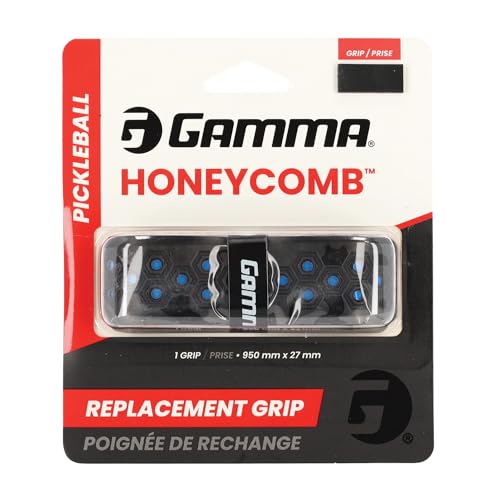
Features. Honeycomb Cushion grip. Comes in different colors so that you can match your grip to your favorite pickleball paddle.

Comfort & Performance: The unique hexagonal design expands the contact surface between hand and handle, increasing grip efficiency by up to 14%. This allows you to hold the paddle with less effort, reducing finger and wrist strain for a smoother, more controlled swing.
The Athletic Stance: Building a Solid Foundation
Adopt a closed stance by positioning your dominant leg and shoulder toward the target. This alignment creates your power base. Keep your knees bent and your chest forward. Your weight stays centered over your feet.
- Position your dominant foot slightly forward.
- Angle your shoulders to face the target.
- Bend your knees to at least 30 degrees.
- Keep your non-dominant hand raised for balance.
Your non-dominant hand guides your shoulder rotation. It points toward the ball. This creates proper alignment. Your shoulders stay level.
Your eyes track the ball. This stance provides stability for your backhand slice. You maintain control through your locked wrist position. Your body remains athletic and ready to move.
The Footwork Sequence for Power and Accuracy
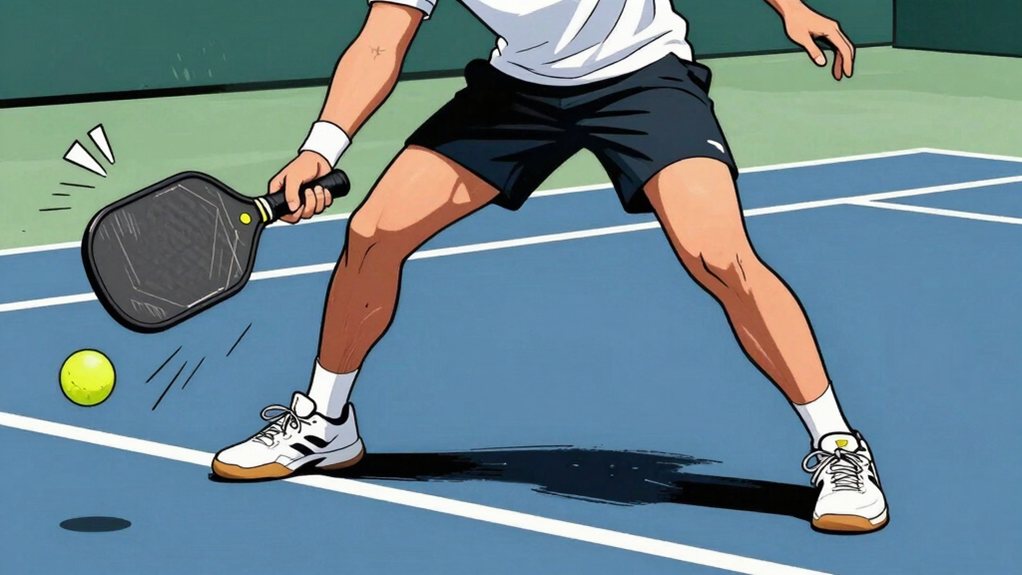
The footwork sequence drives power and accuracy in your backhand slice. You initiate movement with your back foot first. Then your front foot steps forward as you prepare to strike.
Initiate with your back foot, then step forward to power your backhand slice with precision.
This sequence creates a kinetic chain that transfers energy through your body. Your front leg bends slightly to lower your contact point. You step toward the target to direct the ball.
Proper footwork positions your body for consistent execution.
Key elements of proper footwork:
- Push off your back foot to generate forward momentum
- Transfer weight to your front foot during the swing
- Keep your knees bent throughout the movement
- Step toward the intended direction of the shot
- Maintain balance by landing on your front foot first
The Swing Path: Creating High-to-Low Motion
With your feet positioned and weight loaded, you now move into the swing itself. The high-to-low path generates backspin and keeps the ball low after bounce. Start your paddle above the ball’s target height. Swing from your shoulder, not your wrist. Let the paddle face brush downward through the contact point. This creates the cutting motion needed for slice.
Key swing elements:
- Paddle starts high
- Brushes down through ball
- Shoulder drives the motion
- Wrist stays locked
Swing Phase Breakdown:
| Phase | Paddle Position | Body Movement |
|---|---|---|
| Start | Above ball height | Shoulders rotate |
| Mid | Through ball level | Arms extend forward |
| Finish | Below ball level | Hip rotation completes |
The non-dominant hand guides your shoulder rotation. You maintain a continuous forward path. The Nike Swoosh path describes the ideal swing arc. Your body opens for fluid motion during execution. Extend toward the target with purpose. You achieve the desired low bounce trajectory.
Contact Point: Hitting With Precision
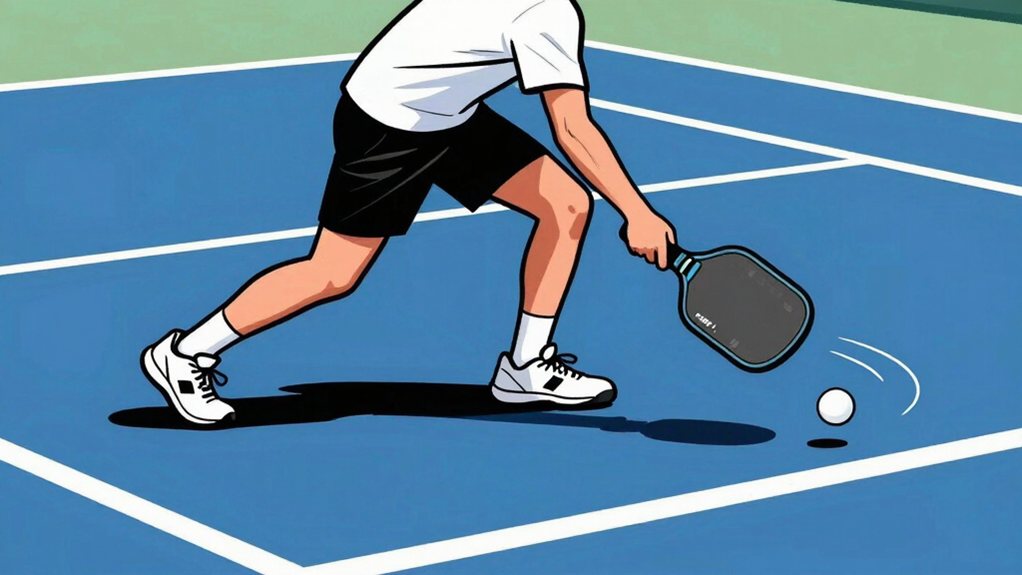
Hit the ball at the advantageous ball position, which is in front of your body, slightly to your dominant side.
Time your contact zone correctly by striking the ball as it drops to waist height, and transfer your weight from your back foot to your front foot through the shot.
Practice these three elements—advantageous ball position, contact zone timing, and weight transfer—until they become automatic.
Optimal Ball Position
Where should you contact the ball for maximum precision on your backhand slice? Contact the ball in front of your body, roughly 6 to 12 inches away from your leading hip. This position lets your arm extend fully and keeps your swing natural. Your paddle meets the ball at the highest point of your reach, usually around waist to chest height. The ball sits at the apex of your swing arc for clean contact.
- Contact the ball 6-12 inches in front of your leading hip
- Aim for waist to chest height at contact point
- Extend your arm fully at the moment of contact
- Meet the ball at the top of your swing arc
- Keep a consistent contact zone for reliable shots
Contact Zone Timing
Timing determines whether your backhand slice lands with precision or sails long.
You must contact the ball in front of your body, roughly 12 to 18 inches away.
This contact zone allows your arm to extend fully and your paddle to swing through the Nike Swoosh path.
Catch the ball early as it drops from the peak of the bounce.
Your paddle face stays at a 45-degree angle throughout contact.
Your eyes track the ball from your opponent’s paddle to your strings.
Keep your wrist locked.
Do not swing late or you’ll push the ball into the net.
Don’t swing early or you’ll pop the ball up.
Practice hitting at these precise distances until your muscle memory develops naturally.
Weight Transfer
Your weight transfer drives backhand slice power and precision. You shift your weight from your back foot to your front foot as you strike the ball. This transfer generates momentum through your legs and into your paddle.
Your back foot pushes off first, then your front foot plants firmly before contact. We want your weight moving forward at impact for consistent depth and control.
- Shift weight from back foot to front foot during swing
- Push off back foot to initiate forward momentum
- Front foot plants firmly before ball contact
- Keep knees bent throughout the transfer sequence
- Transfer energy through legs, hips, and into paddle face
The Follow-Through: Finishing With Direction
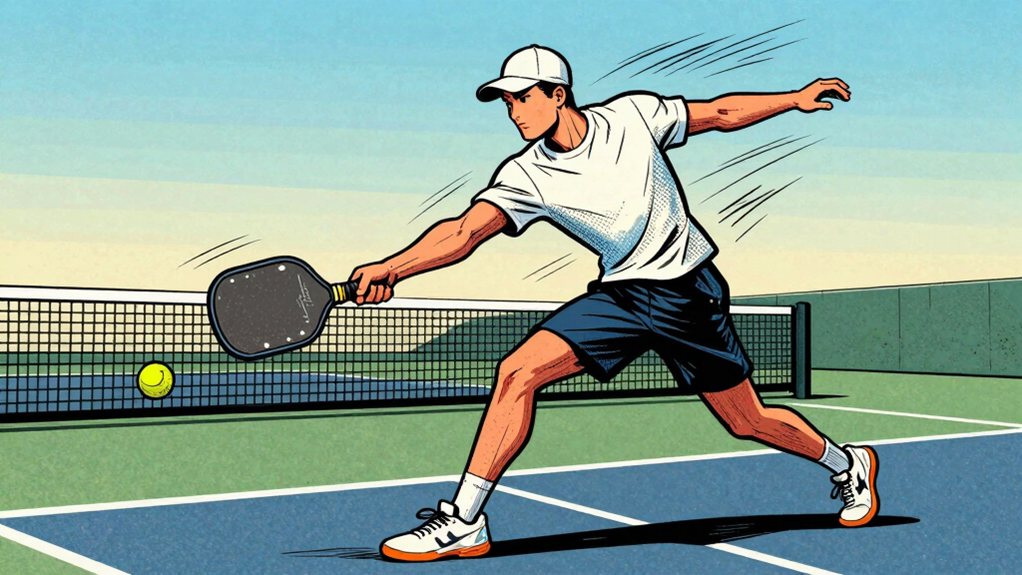
How does the follow-through determine your shot’s accuracy?
Your follow-through guides the ball toward your target. Extend your paddle toward the intended spot. Hold your finish steady. Keep your head still.
Look up as the ball leaves your paddle. Your non-dominant hand helps set the correct angle. Point your paddle straight at the target. Maintain this position for two seconds.
This confirms direction and adds control. The finish shows your accuracy. A compact, controlled finish means precision. Let your paddle naturally extend past contact.
Do not stop abruptly. Follow through completely for consistent results. Your body stays balanced throughout. The paddle face stays open at contact. You maintain wrist stability during the entire motion.

Material: Electrophoresis Zinc alloy,has excellent features in high abrasion resistance, rust proof and stability. Notice:The Edge is right angle,relatively Sharp, Gloves are...
Drills to Develop a Reliable Backhand Slice
Sharpening your backhand slice means committing to targeted drills.
We’ll start with the slice footwork drill to build proper foot positioning and weight transfer.
Then we’ll use controlled ball repetition to develop consistency and precision in your slice technique.
Slice Footwork Drill
For developing reliable backhand slice footwork, we start with the Slice Footwork Drill. This drill isolates your footwork without hitting the ball. You’ll practice the sequence of back foot, front foot, then contact. We use shadow swings to build muscle memory.
- Stand in ready position at the baseline
- Push off your back foot and step forward with your front foot
- Practice the closed stance with your dominant shoulder leading
- Move your non-dominant hand to guide shoulder rotation
- Repeat the footwork pattern 10 times before adding your paddle
Controlled Ball Repetition
Once you’ve mastered the footwork pattern, we move to Controlled Ball Repetition drills. This phase builds muscle memory and consistency. Follow these steps:
- Stand at the baseline, feet shoulder,width apart.
- Hold the paddle with a continental grip, paddle face at 45°.
- Drop the ball to the side of your body.
- Swing high,to,low, contact the ball in front, follow through toward the target.
- Repeat the motion for the prescribed number of reps.
| Drill Name | Repetitions | Focus |
|---|---|---|
| Mirror Drill | 30 per side | Paddle angle |
| Partner Toss | 20 per side | Timing |
| Target Hoops | 15 per side | Direction |
| Mirror,Feed | 25 per side | Rhythm |
Keep your wrist locked, eyes on the ball, and chest forward. Adjust grip pressure as needed. Practice regularly, see results.
Common Mistakes to Avoid in Your Backhand Slice
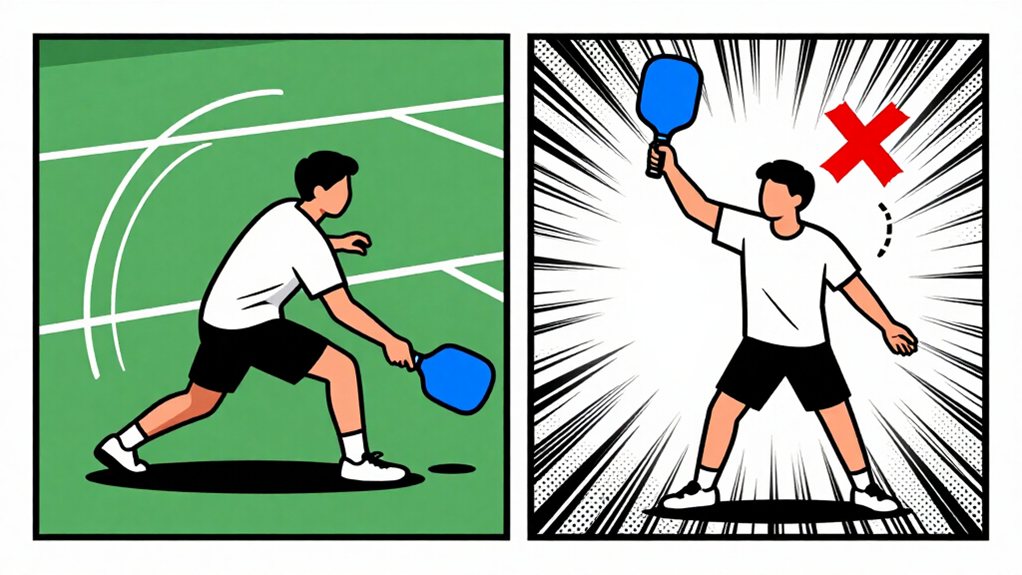
One of the most common errors in backhand slice involves improper grip and paddle preparation. You must use a continental grip for control. Your paddle should start high and maintain a 45-degree face angle. We avoid excessive wrist movement that ruins consistency.
- Failing to keep your wrist locked and cocked throughout the swing
- Using an open stance instead of a closed stance with your dominant leg leading
- Contacting the ball too late or behind your body
- Not following through toward your target with a straight paddle finish
- Leading with your wrist instead of your shoulder during the swing
When to Use the Backhand Slice Strategically
When should you use a backhand slice strategically? Use it when you’re under pressure and need recovery time. It creates space by forcing your opponent to move laterally. You disrupt pace by slowing the ball and keeping it low.
Apply the slice in these situations:
- Defensive baseline returns
- Low-speed dinking exchanges
- When your opponent rushes the net
- To change rhythm mid-rally
- When you need a lower ball trajectory
The slice produces side spin. The ball curves away from right-handed opponents. This forces extra steps and buys you setup time.
Your stroke stays compact for accuracy. You maintain control while creating strategic advantage. This technique gives you flexibility on the court.
Frequently Asked Questions
Can a Backhand Slice Be Used Effectively in Doubles Play?
Yes, you can use a backhand slice very effectively in doubles play. It creates space by forcing opponents to move laterally, disrupts their rhythm with slower pace, and buys you recovery time in defensive situations.
What Paddle Weight Is Optimal for Generating Backspin on a Slice?
Imagine your paddle as a weighty brush, sweeping beneath the ball. You’ll want a medium-heavy paddle (around 8.0-8.5 ounces) to generate the momentum needed for that high-to-low slicing motion and heavy backspin in your shots.
How Do Wind Conditions Affect the Trajectory of a Backhand Slice?
Windy conditions force you to adjust your slice trajectory. Headwinds push your shot shorter, while tailwinds extend it further. You must aim into the wind and add more backspin to counteract lateral movement and maintain control.
Should I Use a Backhand Slice Against a Left-Handed Opponent?
Absolutely, you should use your backhand slice against a left-handed opponent! It’s incredibly effective because the ball will naturally curve away from their dominant side, creating massive confusion and forcing them completely out of position.
How Can I Increase Consistency of My Backhand Slice Under Pressure?
Stay calm, focus on your grip and paddle angle, keep your wrist locked, contact the ball in front of your body, and maintain a even high-to-low swing path. Practice deep breathing under pressure.
Final Thoughts
We practice your backhand slice as a weapon. It keeps the ball low, forces errors, and lets you dictate tempo. Follow these steps:
- Rotate shoulders, drop paddle head below ball.
- Brush underneath, sweep outward, keep follow-through low.
- Step forward, shift weight, stay balanced.
Your slice becomes a silent shadow that slips past opponents, neutralizing attacks and creating openings for winning shots. Use it consistently now, and you’ll control the point each match.

2 PACK REPLACEMENT GRIP TAPE FOR PICKLEBALL PADDLES: Easily regrip your pickle ball paddle & make it feel brand new or upgrade from the handle wrap your racket came with; Comes with everything you need to change your pickleball or tennis racket grip tape

TOP-PERFORMANCE RACQUET GRIP TAPE: GAMMA Supreme Overgrip will help you rule the court; These soft grip-tape wraps are made to be long-lasting and feature absorbent material combined with extreme durability to keep up with your game.

OFFICIAL PADDLE SPONSOR OF WORLD #1 PICKLEBALL PLAYER BEN JOHNS & THE PPA TOUR: An innovator & global leader in table tennis for 70+ years, JOOLA teams up with Ben Johns to create a new line of pickleball equipment that will forever change the game