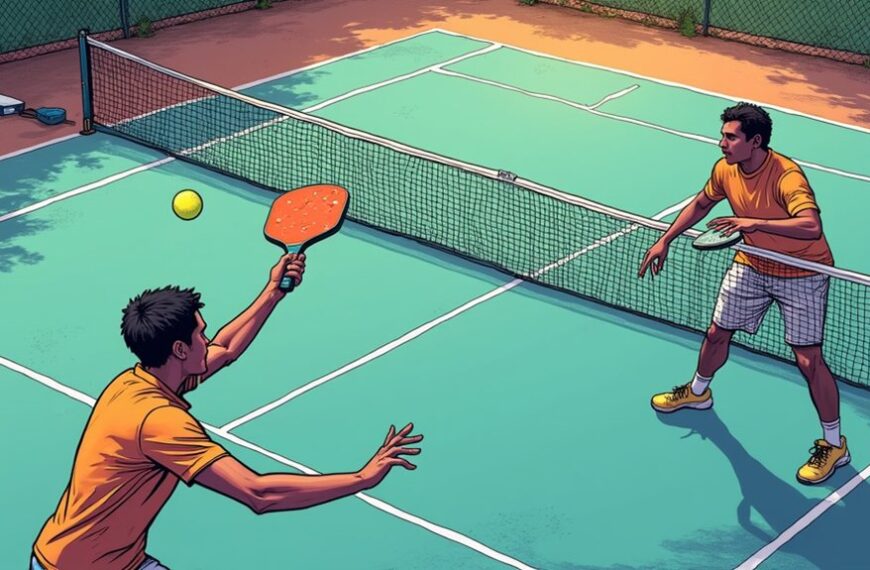
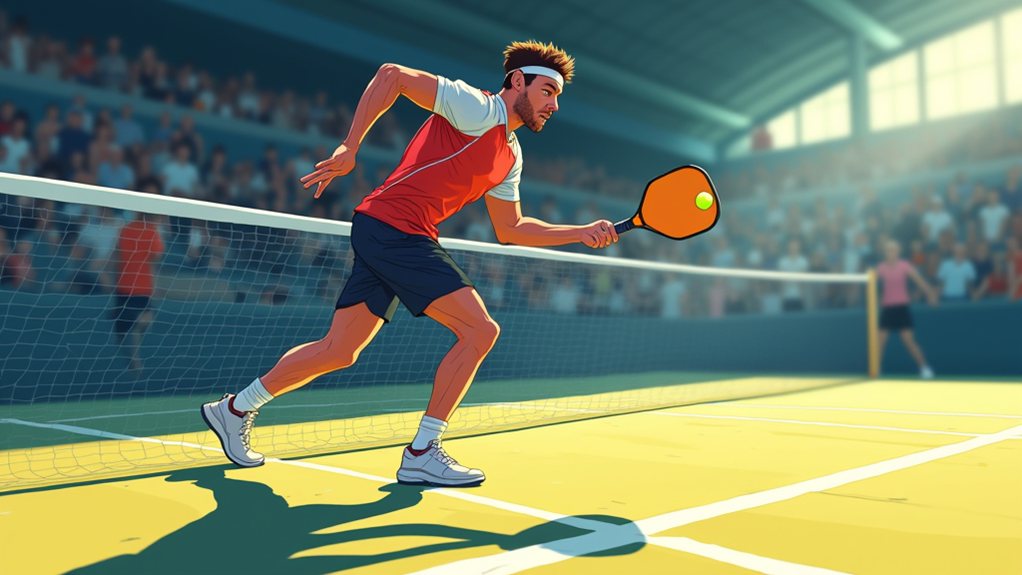
Master the topspin forehand by starting with a continental grip, then shifting to a semi-western grip (45 degrees left for right-handers). Keep your paddle below hand height with a slightly open face and relaxed wrist. Use quick, small steps and stay on the balls of your feet with knees slightly bent. Maintain one arm’s length of spacing in front of your body.
Shift weight from your back leg to front leg through contact. Swing low-to-high in a brushing arc, contacting the ball in front of your right knee. Finish above shoulder level with full hip and shoulder rotation.
Practicing these fundamentals consistently will improve your control, power, and shot variety. Continuing to apply each element will raise your game.
Why the Topspin Forehand Changes Your Pickleball Game
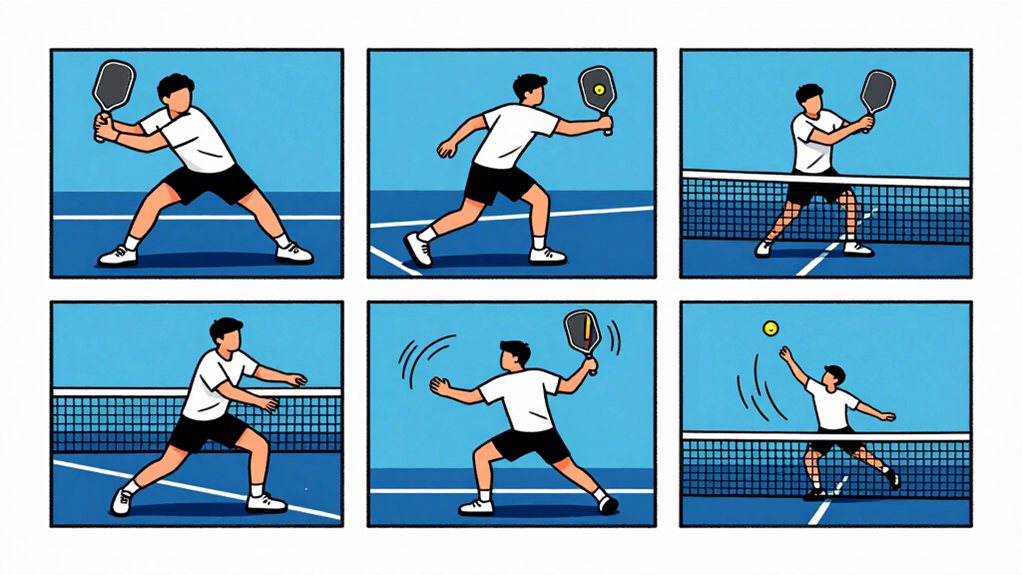
The topspin forehand transforms your game by giving you more control, more power, and more ways to win points. This shot changes how you approach every rally. You create a downward arc that pulls the ball into the court. The topspin forehand pickleball technique gives you these benefits:
The topspin forehand transforms your game, delivering more control, power, and winning opportunities in every rally.
- Higher net clearance reduces errors.
- Faster ball speed keeps opponents back.
- Harder to block than flat shots.
- Creates weak return opportunities.
- Adds consistency to your shots.
You mix your topspin forehand pickleball shots with drops and dinks. This confuses opponents and breaks their rhythm.
Your consistency improves by 20-30% when you use proper technique. You hit harder while keeping the ball in play. The pickleball topspin technique gives you more margin for error on every shot. You control the point more often.

Comfort & Efficiency: The patented hexagonal design expands the contact surface between hand and handle, increasing grip efficiency by up to 14%. It allows a secure hold with less effort and tension, helping players maintain control and comfort during every shot.

2 PACK REPLACEMENT GRIP TAPE FOR PICKLEBALL PADDLES: Easily regrip your pickle ball paddle & make it feel brand new or upgrade from the handle wrap your racket came with; Comes with everything you need to change your pickleball or tennis racket grip tape
Features. Honeycomb Cushion grip. Comes in different colors so that you can match your grip to your favorite pickleball paddle.
Master Your Grip for Maximum Spin
Your grip determines how much topspin you create. Let’s master it now.
- Start with a continental grip. Hold the paddle as if shaking its hand. Keep your grip firm but relaxed.
- Shift to a semi-western grip for more spin. For right-handers, rotate the paddle 45 degrees left. Your base knuckle should align with the paddle’s right bevel.
- Position your paddle correctly. Keep the paddle head below your hand height. Angle the paddle face slightly open. Hold your wrist relaxed.
- Ready your paddle position. Place the paddle head down by your dominant leg. This eliminates unnecessary backswing and prepares you for the low-to-high brushing motion.
Remember: your grip controls spin production. Practice this grip daily until it feels natural.
Footwork and Spacing That Generate Power
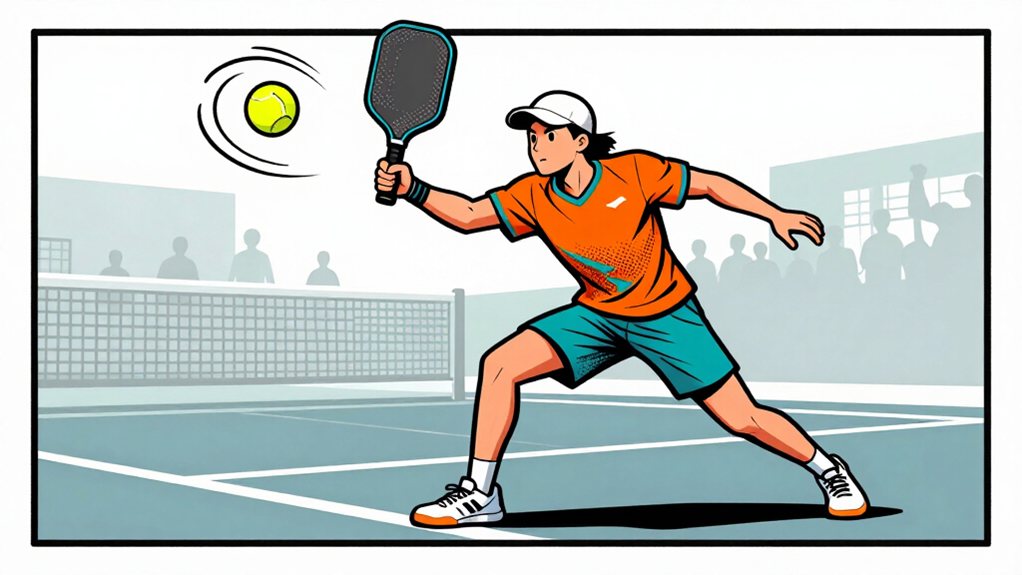
Stay light on your feet with quick, small steps to adjust to the ball’s bounce.
Maintain ideal spacing about an arm’s length out in front of your body.
Shift your weight from your back leg to your front leg and drive through the ball to generate power.
Light Steps Adjust Bounce
A proper stance begins with light, springy steps that let you react to how the ball bounces. You stay on the balls of your feet. You keep your knees slightly bent.
You move with the ball’s trajectory. This gives you quick direction changes.
- Keep your weight forward
- Step lightly with each bounce
- Stay low through contact
- Transfer weight into each shot
- Recover quickly to ready position
When you feel the ball’s pace, you adjust your footwork.
You shift your weight from back to front.
You use small steps to fine-tune your position.
This creates a solid base for power.
You load your legs before contact.
You explode through the ball.
Your footwork generates the force for your topspin forehand. Just as athletes track their movement patterns on the court, smart home energy monitoring helps you track and maximize efficiency in every area of your life.
Optimal Spacing Arm Length
Position yourself an arm’s length away from the ball’s contact point to maximize topspin power. This distance lets your paddle swing up through the ball without crowding your motion. Your non-dominant hand helps you gauge this spacing as if you’re catching the ball.
Keep your feet planted but stay light on your toes. Adjust your stance based on the ball’s trajectory and height. This creates the best angle for topspin brush.
Use this spacing guide to develop consistency:
| Distance | Feel |
|---|---|
| Arm’s length | Full swing possible |
| Closer | Loss of power |
| Farther | Ball drops short |
| Adjust | Based on ball height |
Step back when the ball bounces high. Move forward when it bounces low. Your ready position determines your contact point. Maintain this spacing for best topspin generation. Find your ideal distance through consistent practice. This develops reliable topspin technique. How you position matters for shot accuracy. Always. Today.
Weight Shift Drives Power
Once you’ve established the right distance from the ball, shift your weight to generate topspin power. You must load your legs like a spring to store energy. This energy transfers forward through your body as you swing.
Your back leg anchors the turn. Your front leg receives the weight on contact. Drive through the ball with your entire body, not merely your arm.
- Step into the court with your non-dominant foot first.
- Transfer weight from your back leg to your front leg during the swing.
- Keep your knees bent throughout the entire motion.
- Rotate your hips through the contact point.
- Finish with your weight fully on your front foot.
The Swing Path Professionals Use
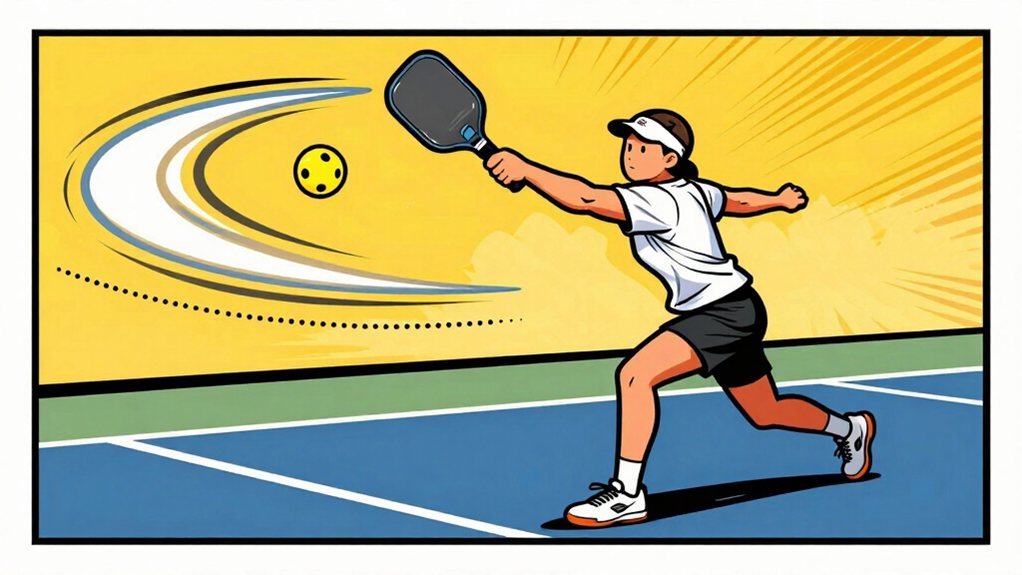
Professional players use a specific swing path that maximizes topspin generation.
You create a low-to-high brushing arc rather than taking a big cut at the ball.
Your contact point stays in front of your right knee to maintain paddle control and generate consistent spin.
Professional Swing Path
The swing path professionals use creates topspin through a low-to-high brushing motion. You swing upward on the ball rather than cutting across it. This brushing action grabs the ball and forces it to dive downward after crossing the net.
The key lies in accelerating your paddle quickly through contact rather than pausing or slowing down. Your body rotates as you swing, generating power from your core muscles.
- Your paddle starts below the ball’s path
- You brush upward and forward in one fluid motion
- Your wrist stays relaxed to create more spin
- You contact the ball in front of your body
- You follow through fully toward your target
Swing Arc Mechanics
Building on the concept of the brushing motion, let’s examine the specific mechanical components that make this swing work.
The swing arc creates topspin through a defined path. Follow these steps:
- Start with paddle below ball height.
- Brush upward in a low-to-high arc.
- Contact ball at waist height.
- Continue upward through contact point.
- Finish with paddle above shoulder level.
Your swing path follows a C-shape curve. You swing outward, then upward, then inward. The arc spans approximately 90 degrees from start to finish.
Your arm extends fully at contact. You brush the ball’s back for maximum spin. The ball leaves your paddle with forward momentum and topspin rotation.
Key mechanics to remember:
- Paddle path stays consistent throughout.
- Keep your arm relaxed during the swing.
- Snap your wrist at contact for added spin.
- Complete your follow-through to finish the arc.
How to Finish Your Swing for Control
As you complete your topspin forehand swing, extending fully through the contact point gives you better control over the ball’s trajectory. Your finish position matters more than you think. We want the paddle to continue traveling upward and forward after contact.
Extend fully through contact, let the paddle rise and move forward, finishing above the shoulder for consistent, controlled topspin.
This extended finish creates a more steady, more consistent shot. Your body rotation should follow through naturally.
The key finishing elements include:
- Full extension of your hitting arm toward the target
- Paddle ending above shoulder height on your dominant side
- Hips and shoulders rotating fully through contact
- Weight shifting to your front foot
- Relaxed wrist with paddle face closing naturally
These finishing mechanics help you control shot depth and placement. You’ll notice more consistent rallies when your follow-through remains steady.

USA Pickleball Approved: BAGAIL pickleball paddles have been approved by the USA Pickleball Association (USAPA) for tournament play, ensuring high safety and professionalism. Each paddle is manufactured strictly according to USAPA standards, and carries a USAPA approval label

USAPA approve of victory: niupipo pickleball paddles’ strict requirements for products make it pass the USAPA certification and can be used in tournament play, paddle dimensions: 15.43" L x 7.80" W x 0.41" H; Also, the high quality of the pickleball paddles set of 2 allow you to be more powerful in the tournament and easily withstand the challenges of various competitions.The best valentine's day gift for your love

Hybrid blend of power and control, for players at any skill level.
Drills That Build Consistent Topspin
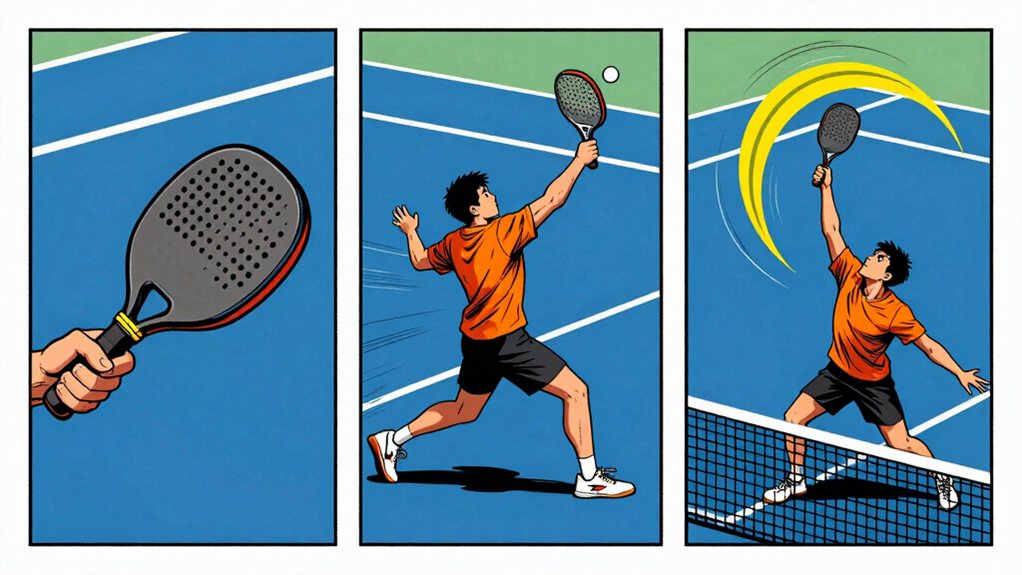
Put your finishing technique into action with targeted drills that build consistent topspin. You need three core practices for mastery.
- Slinky Drill: Drop ball and let it reach apex or decelerate. Step back to create spacing. Brush low-to-high through contact. This builds topspin on dinks and drops.
- Spacing Practice: Use your non-dominant hand to gauge distance. Maintain one arm’s length out front. Load your legs and transfer weight forward through each shot.
- Crosscourt Dink Drill: Focus on forehand crosscourt dink for aggressive topspin application. Contact in front of right knee. Open hips through contact for power transfer.
Practice these drills weekly. Slot paddle head low-to-high during each repetition for drive mastery.
Common Mistakes to Avoid
Avoiding these errors will improve your topspin consistency and power. You must recognize and correct these five critical mistakes to develop a reliable and effective topspin forehand in pickleball.
- You drop your paddle too low before contact, causing inconsistent spin and loss of power.
- You fail to brush up on the ball quickly, resulting in weak topspin and floating returns.
- You open your paddle face at contact, sending the ball into the net or out of bounds.
- You neglect proper weight transfer from back foot to front foot, limiting your shot depth and pace.
- You rush your follow-through, failing to extend through the contact point and reducing overall spin generation.
Frequently Asked Questions
How Do I Know if I’m Using Too Much Topspin?
If your shots sail long or pop up excessively high, you’re using too much topspin. Your ball lands beyond the baseline or floats too slowly. Adjust by brushing up less and contacting the ball flatter.
Can Topspin Be Used Effectively on the Serve?
Super serves with topspin succeed spectacularly. You’d create deadly dips, forcing opponents back. Your spin surprises them, adding variation. Practice proper brush technique: angle paddle low-to-high, accelerate through contact for consistent, reliable spin generation today.
What Paddle Type Helps Maximize Topspin Spin?
You want a carbon fiber or textured paddle with a gritty surface. These materials grab the ball better and help you generate more topspin during your swing. A rough paddle face maximizes spin potential.
How Do I Practice Topspin Alone Without a Partner?
You’ll love this brilliant solo topspin practice: grab a ball machine or find a wall, hit 200+ balls daily, and whisper ‘who needs a partner anyway?’ while perfecting your low-to-high brush motion consistently for results.
Does Topspin Work Better on Certain Ball Types or Surfaces?
Topspin performs best on heavier, slower balls and outdoor courts with more texture. You generate better bite on textured surfaces, while slicker indoor balls require faster brush speeds during play for the same spin generation.
Final Thoughts
Conclusion:
You now possess the topspin forehand toolkit. Apply these three fundamentals daily: low-to-high swing path, wrist snap at impact, and full extended follow-through. Practice each element separately before combining them.
We recommend 50 repetitions per session, three times weekly. You will notice increased ball dip, higher net clearance, and opponent difficulty returning your drives. Your forehand becomes a weapon. Master these fundamentals, and you control the point.

IMPROVE YOUR GAME: Increase your power swing, control, and stability with our pre-weighted 3g (0.1oz) lead tape for pickleball paddles. Widening your sweet spot can increase the power and head heavy spin, giving you the power to win the game.

𝗨𝗟𝗧𝗥𝗔-𝗗𝗘𝗡𝗦𝗘 𝗣𝗢𝗪𝗘𝗥: Built with premium tungsten, this upgrade delivers maximum mass in a compact form. These pickleball weights for paddles add stability and punch without altering swing feel, making them ideal paddle weights for players who want stronger drives while keeping a clean, low-profile setup.

Improves Maneuverability: Lowers the paddle’s balance point for quicker hands, faster flicks and better maneuverability at the net.