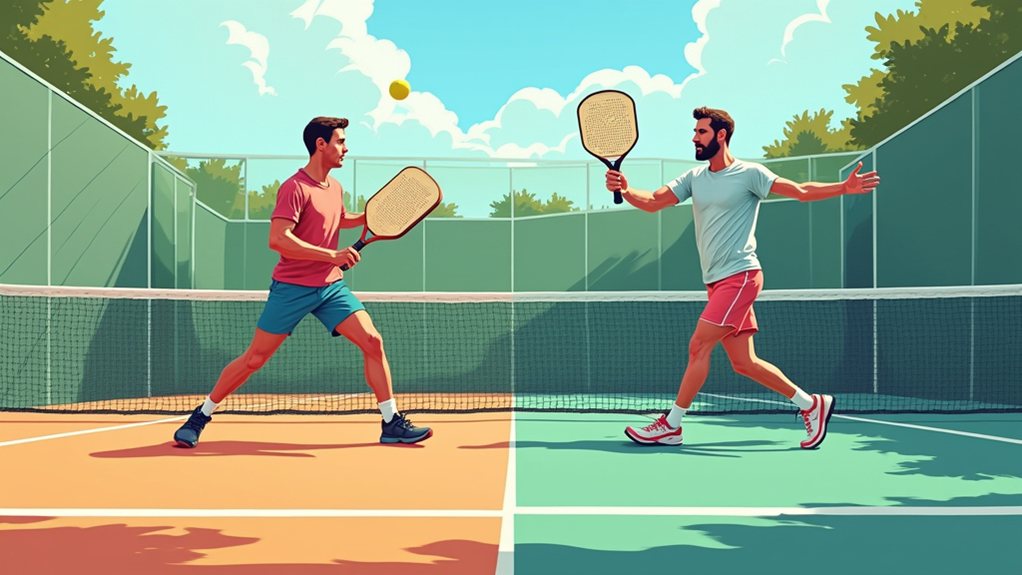
Pickleball plays to 11 points rally scoring, padel uses tennis scoring (15, 30, 40). Continuing further will give you more details.
How Pickleball and Padel Court Design Affects Play
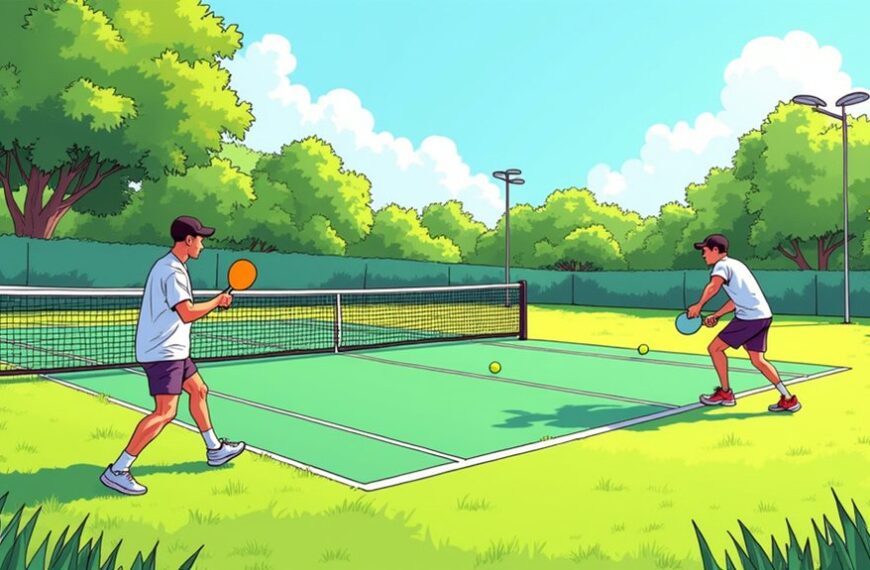
The court design in pickleball and padel shapes how you play each game. The open pickleball court measures 13.41 x 6.10 meters, similar to a badminton court. You stand without walls around you, so every shot comes directly from your opponent.
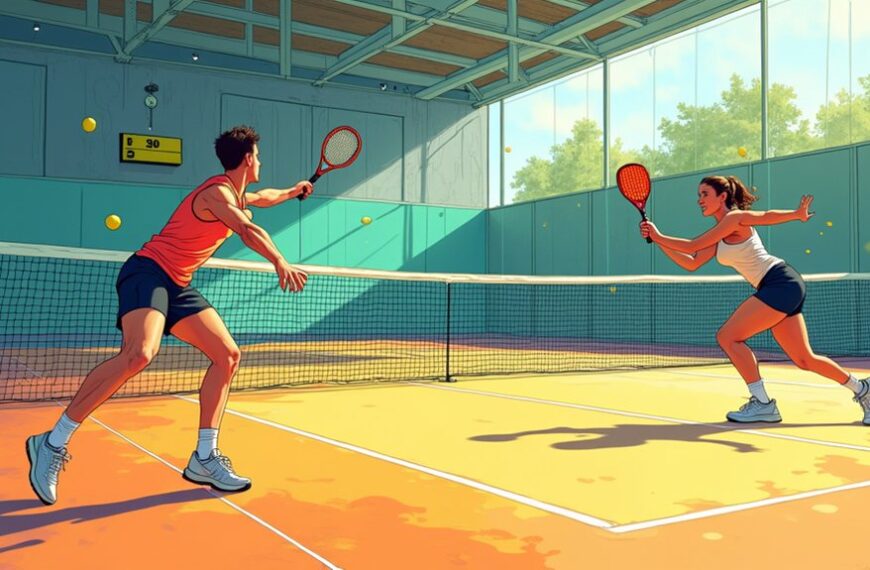
The padel court spans 20 x 10 meters, twice the size of a pickleball court. Glass and mesh walls surround you. The walls become part of the game. The ball bounces off walls after you hit it, creating longer rallies.
- Pickleball features a non-volley zone called the kitchen. It extends 7 feet from the net. You can’t step into this zone when hitting volleys. In wheelchair pickleball, front wheels may enter the non-volley zone during a volley, but rear wheels cannot touch the NVZ when striking a volley.
- Padel has no kitchen. You move freely around the entire court. The walls replace the non-volley zone concept.

Energetic pickleball design layout featuring court paddle, perforated plastic ball, and sporty typography. Built for passionate pickleball players, tournament dinkers, and court enthusiasts dominating the non-volley kitchen zone.

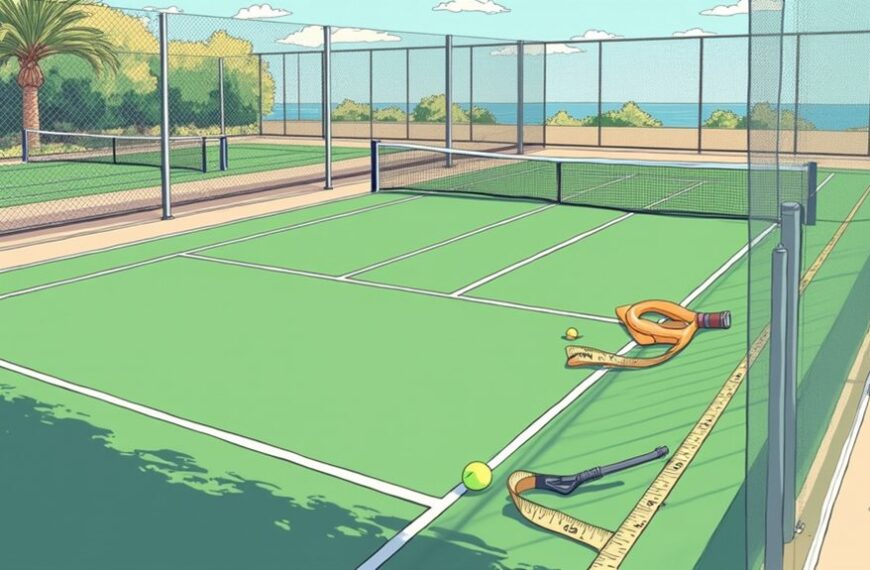
Clear court layout artwork showing baseline, sideline, service courts, centerline, net, kitchen zone, and recommended playing area.

Pickleball vs Padel Equipment: Paddles and Balls
Because pickleball and padel use different equipment, understanding the distinctions helps you choose the right gear.
Pickleball and padel use distinct equipment—different paddles and balls—so understanding these differences helps you pick the right gear.
- Paddles differ in design:
- Pickleball paddles are wider, shorter, and have a even solid surface. They weigh less and typically use carbon or fiberglass materials.
- Padel rackets are smaller but thicker, featuring a perforated surface without strings. Manufacturers make them from carbon or composite materials.
- Balls also vary greatly:
- Pickleball uses a perforated plastic ball resembling a wiffle ball. It moves slower and bounces lower, requiring you to bend your knees more.
- Padel uses a pressurized rubber ball similar to a depressurized tennis ball. The ball is smaller and bounces lower than a tennis ball but higher than a pickleball ball.
These equipment differences directly affect how you play each sport.
How Serve Rules Differ Between Pickleball and Padel
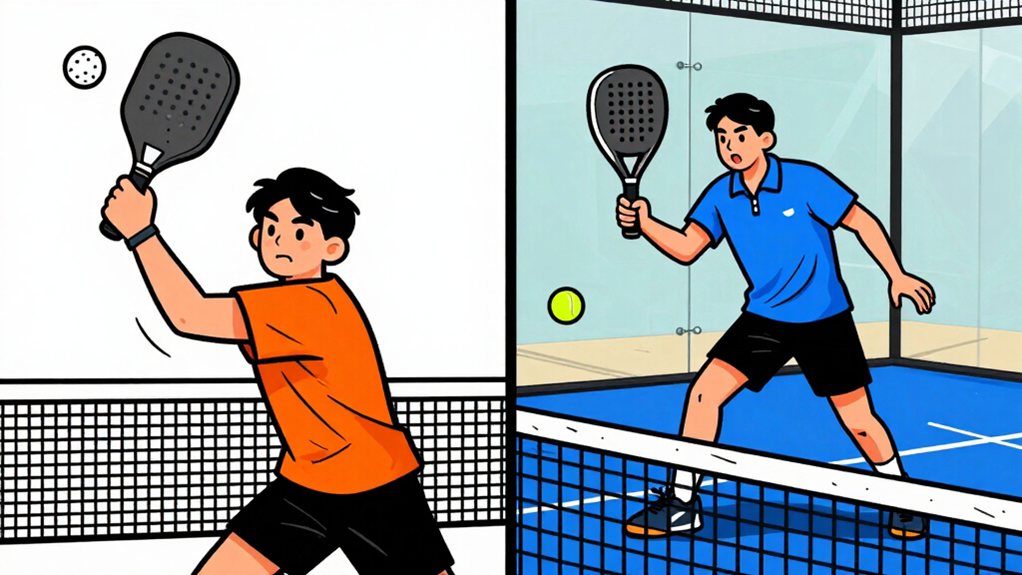
How do serve rules differ between pickleball and padel? Here are the key distinctions:
1. Pickleball serve: You must serve underhand, below waist level. The ball is struck directly from the air with an upward arc. Your paddle must contact the ball below your waist.
2. Padel serve: You serve from waist height. The ball must bounce once on your side before you strike it. You can’t hit the ball directly from the air.
3. Both sports use underhand serves, but the technique differs meaningfully. In pickleball, you hit the ball in mid-air after your toss.
In padel, you wait for the ball to bounce first.
4. Strategy matters in a different way. Padel’s bounce requirement adds wall play considerations.
Pickleball’s direct hit creates different timing challenges.
Scoring Systems and Gameplay: Pickleball vs Padel
Pickleball and padel set themselves apart through fundamentally different scoring systems and gameplay approaches.
Pickleball uses rally scoring to 11 points. You must win by 2. Only the serving team scores, so you can’t win unless you hold serve.
Padel follows traditional tennis scoring. You track points as 15, 30, 40, then game. You play best of three sets, which creates longer matches.
In gameplay, pickleball emphasizes precision. You rely on dinks (soft shots) near the non-volley zone. The kitchen restricts your movement within 7 feet of the net. This rule forces you to mix patience with aggression.
Padel delivers longer rallies. The walls become part of the game, the ball bounces off them after every shot. You must anticipate deflections and angle deflections.
The court is twice as large, giving you more ground to cover. Padel is primarily a doubles sport, which adds team strategy to the mix.


Hands-Free Recording: Effortlessly mount your phone on smooth padel court glass walls using the sticky phone grip, offering a secure and stable solution for capturing your match. Our innovative phone suction grip ensures your phone stays firmly in place during intense gameplay. WWith the silicone suction phone grip, you can quickly peel, press, and stick the mount in just 20 seconds-an easy setup suitable for recording games without extra accessories.

Which Sport Fits Your Playing Style?
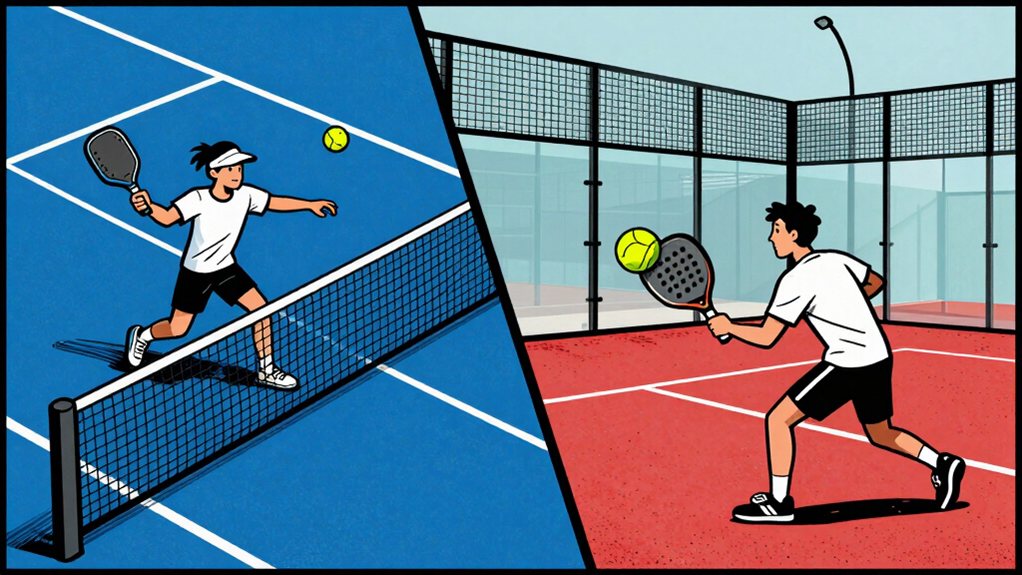
Court size, movement, equipment, scoring, stamina—choose between compact pickleball or expansive padel.
Decide if you prefer a compact 13.41 x 6.10 meter court or a expansive 20 x 10 meter arena. Consider these factors when choosing your sport:
- Court size matters. Pickleball fits you if you enjoy quick reflexes and close net play. Padel suits you if you like covering larger spaces and using walls strategically.
- Choose based on movement style. You thrive in pickleball if you prefer short sprints and kneeling shots. You excel in padel if you enjoy longer rallies and lateral movement.
- Pick your equipment. You’ll use a larger paddle for pickleball. You’ll use a perforated racket for padel.
- Match your preferred scoring. You win in pickleball by reaching 11 points. You win in padel by winning sets like tennis.
Consider your physical fitness level. You’ll need less endurance for pickleball. You’ll need more stamina for padel.
Frequently Asked Questions
Which Sport Is Easier for Beginners to Pick Up?
Pickleball is easier for you to pick up. The smaller court, simpler scoring, and underhand serve make it more accessible. You can learn basic dinks and volleys quickly and enjoy immediate play with minimal instruction.
Can You Play Pickleball or Padel Solo, or Are They Only Doubles?
Picture yourself on the court, pickleball welcomes you solo or with a partner, while padel typically demands doubles play. You can dominate pickleball alone, but padel thrives on teamwork, offering dynamic wall play.
How Much Does It Cost to Build a Padel Court Versus a Pickleball Court?
You’ll spend notably more on a padel court, anywhere from $40,000 to $80,000, due to its glass walls, larger size, and complex construction. A pickleball court typically costs between $5,000 and $20,000 to build.
What Are the Most Common Injuries in Each Sport?
Both sports injure your joints differently, pickleball strains your elbow and shoulder from repetitive serves, while padel twists your ankles and knees from rapid direction changes and wall rebounds. Protect yourself with proper warm-ups and stretching.
Are Pickleball and Padel Played in the Olympics or World Championships?
Pickleball isn’t in the Olympics yet, but you can compete in the World Pickleball Championship. Padel also lacks Olympic status, though you can play in the World Padel Tour and international championships worldwide.
Final Thoughts
Both sports offer unique paths to fitness and fun. Padel gives you walls that keep the ball in play and a social, enclosed experience. Pickleball gives you faster action on a smaller court. Your choice depends on what energizes you most.
Consider this: in 2023, padel grew 40% in Europe while pickleball surged 85% in the United States. These aren’t just games; they’re communities waiting for you. Try both. Play regularly. Track your progress. Your preferences will guide you to the game that keeps you moving, social, and engaged for years to come.

Official Ball of the PPA Pro Pickleball Tour

LEADING PICKLEBALL MANUFACTURER – ONIX is the lead manufacturer of performance pickleball paddles, balls, and accessories that enable players to compete at their highest level. ONIX is devoted to giving athletes of every level the best paddle and ball for their game.

【Sturdy and Durable】Our outdoor pickleball balls are made of high-quality plastic with 40 ball holes. Adopting seamless design. Providing greater stability and durability, can withstand repeated hits over time and maintain their shape.