
Padel scores with love, 15, 30, and 40. You win games by two points. At 40-40, deuce applies and you need two straight points. Pro events use golden point, winning the next point wins the game. Serve underarm after one bounce into the service box. Win six games with a two-game lead for a set. At 6-6, a tie-break to 7 points decides the set. Best-of-three sets wins the match. Continue for more scoring details.
Padel Scoring: Love, 15, 30, and 40 Explained
Padel uses the same point system as tennis. Points progress from 0 (called love) to 15, then 30, then 40.
You score the first point at 15.
The second point gives you 30.
The third point puts you at 40.
The fourth point wins the game, but you need a two-point lead.
- Zero = love
- First point = 15
- Second point = 30
- Third point = 40
At 40-40, you reach deuce.
Deuce means you need two straight points to win the game.
You must win two points in a row from deuce.
If you win the next point, you get advantage.
If you win the next point after advantage, you win the game.
If you lose, you return to deuce.
This continues until someone wins by two points.
In racket sports like pickleball, games are similarly decided by a two-point lead requirement, where a player must reach 11 points and win by two.
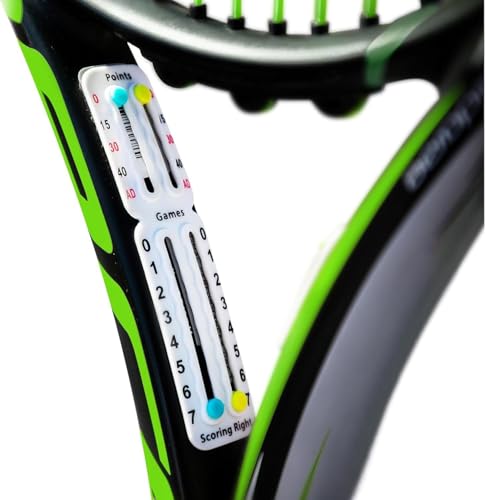
Lightweight & Practical: The convenient, lightweight, and portable score keeper is the perfect way to keep track of the points, games, and sets in any tennis match

Lightweight & Practical: The convenient, lightweight, and portable score keeper is the perfect way to keep track of the points, games, and sets in any tennis match
Lightweight & Practical: The convenient, lightweight, and portable score keeper is the perfect way to keep track of the points, games, and sets in any tennis match
How to Serve in Padel: Rules and Techniques
Now let’s examine how to serve in padel. You’ll learn the serve rules and technique key that form the foundation of your serve. We’ll cover the underarm serve requirements, proper bounce placement, and the two-serve system.
Serve Rules Overview
The serve in padel is an underarm technique performed after the ball bounces, and you must keep the serve below waist height.
- You’ve got two serves per point; if the first lands out, you take a second.
- The ball must bounce in the opponent’s service box, then hit the back wall before the fence.
- If the serve hits the net and lands in the correct box, it’s a let immediately and you serve again.
- The receiver must let the ball bounce once just before hitting it; volleying the serve isn’t allowed.
- You’re behind the baseline, inside the service area, and serve to either service box.
- The serve stays below waist height; a swing above waist’s definitely a fault.
Serve Technique Essentials
Mastering the serve in padel requires you to understand both the proper stance and the execution. Follow these steps for an effective serve:
- Position yourself behind the baseline, centered in your service box.
- Hold the ball in your non-dominant hand and the paddle in your dominant hand.
- Toss the ball upward and let it bounce once below your waist height.
- Strike the ball with an underarm motion, keeping your paddle below waist level.
- Aim for the opponent’s service box so the ball bounces before reaching the back wall.
- Avoid hitting the cage or walls directly on your serve.
- You get two attempts per service turn.
Your stance matters. Keep your feet shoulder-width apart. Bend your knees slightly. Transfer your weight forward during the swing.
This generates power without excessive force. Maintain a relaxed grip on your paddle. Watch the ball throughout your entire motion.
You must let the ball bounce in the correct service box. It must then hit the back wall or the fence above it.
A ball that hits the side wall or cage before bouncing is a fault. Practice these fundamentals until they become automatic.
Winning a Game: The Two-Point Lead Requirement
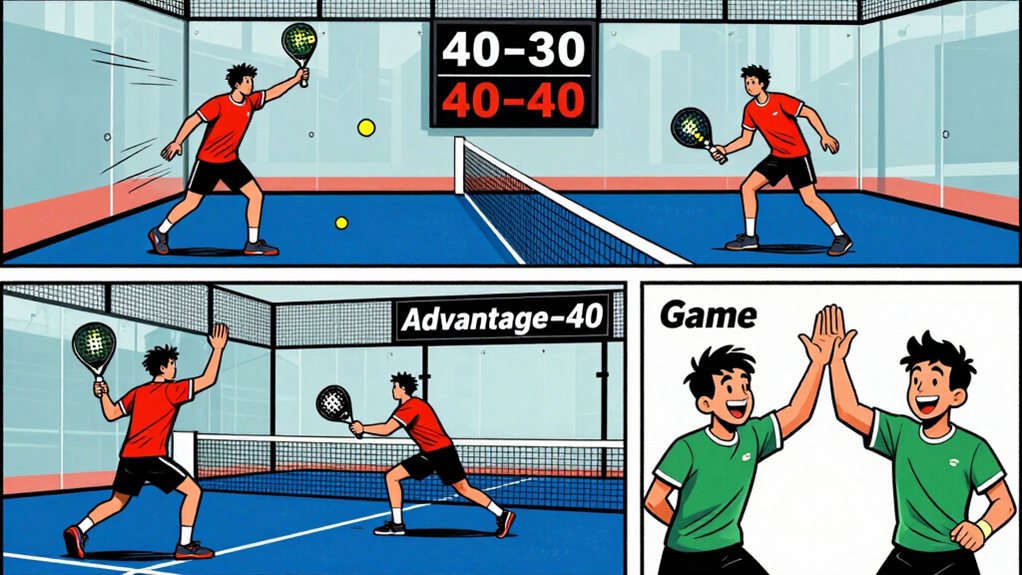
Understanding how games are won in padel requires you to know the two-point lead rule.
Games are played to 4 points: 0 (love), 15, 30, and 40.
You win a game when you reach 40 and hold a two-point lead over your opponent.
For example, scores of 40-30, 40-15, and 40-0 are winning scores.
You need two more points than your opponent, not only 40 points.
The score 40-30 means you have two more points than your opponent (40 versus 30).
The score 40-30 gives you the win.
When both players reach 40-40, you enter a tied scenario.
At this point, play continues until one team gains a two-point advantage.
This rule makes sure you can’t win by a narrow margin.
Key winning scores:
- 40-30
- 40-15
- 40-0
In World Padel Tour events since 2020, a golden point rule applies at 40-40.
The receiving team chooses where the server must land the ball.
One clean point decides the game.
This eliminates the extended advantage-deuce cycling seen in traditional scoring.
Deuce and Advantage: Understanding the Momentum Shift
When the score reaches 40-40, you enter deuce, which changes how points are scored. At deuce, you need to win two consecutive points to win the game; the first point gives you advantage.
If the player with advantage wins the next point, they take the game; if they lose, you return to deuce.
Deuce Mechanics
If the score reaches 40-40, you’ve hit deuce. The game doesn’t end on the next point. Here is how deuce mechanics work:
- You must win two consecutive points to take the game.
- If you win the first point after deuce, you gain advantage.
- If your opponent wins the next point, you return to deuce.
- The cycle repeats until one team wins two points in a row.
The two-point requirement creates an extended battle at 40-40. Teams often trade points multiple times before someone breaks through.
Each point carries extra weight because the margin remains tight. The pressure builds as the deuce cycles continue.
You must maintain focus and execute under these demanding conditions. Winning from deuce requires consistency and mental toughness.
The game rewards teams that can string together two quality shots when it matters most. This is where matches are often decided.
Advantage Impact
Advantage Impact
After reaching deuce, the next point decides who holds advantage. When you win that point, you gain the upper hand in the game.
You now serve with the advantage, and your opponents must break your momentum to survive.
Here’s how advantage changes your game:
- You hold control when you have advantage
- Your opponents face pressure to win the next point
- One more point gives you the game victory
- If you lose, the score returns to deuce
The player with advantage feels the match tilt in their direction. Your confidence rises when you reach this position.
The opposing team must execute perfectly to survive. You must stay focused and play your natural game.
Don’t let the opportunity pass you by.
Golden Point: The Deciding Point at 40-40
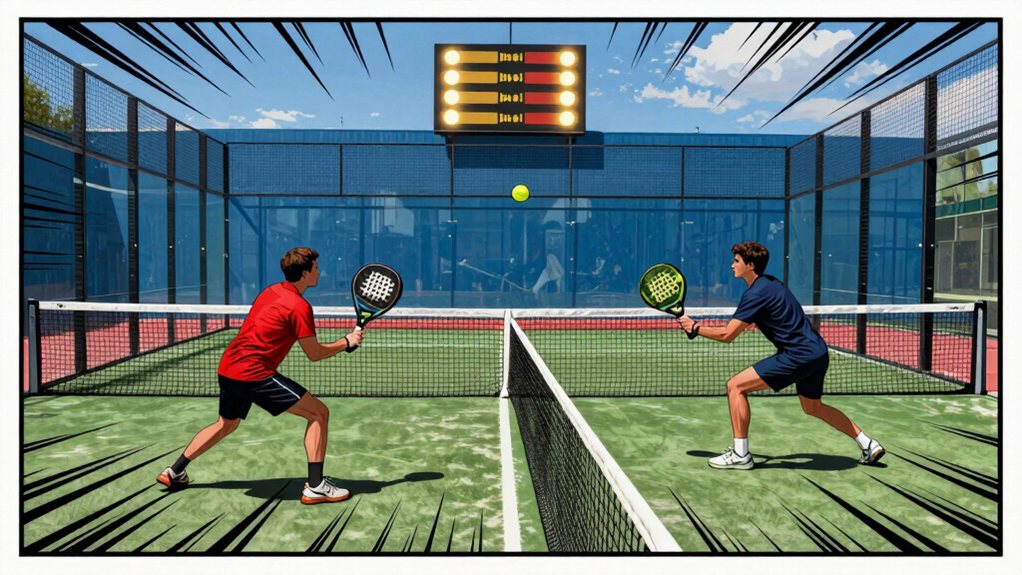
Since the score reaches 40-40, professional padel introduces the golden point system to decide the game. This rule applies in professional circuits since 2020.
When you reach 40-40, the next point becomes the golden point. You win the game immediately if you win this single deciding point.
The receiving team chooses where the server must direct the ball. There’s no advantage or deuce cycle. One clean point ends the game.
The World Padel Tour uses this format. You must perform well because there’s no second chance after this point.
Scoring Points: What Gives You the Edge
Understanding how you earn points gives you the edge in padel. You’ll win a point when the opponent hits the net, double bounces, hits their body, goes out of bounds, or hits the wall without bouncing.
We use placement, force errors, and target open spaces to convert rallies into points.
Point Scoring Strategies
You score points in padel when the opponent fails to keep the ball in play. Here’s how you can increase your scoring opportunities:
- Force your opponent into two bounces. Hit the ball deep toward the back wall. Wait for the rebound. Make your opponent rush.
- Hit the ball at the opponent’s body. They must return it or it hits them for a point.
- Use the walls strategically. The ball bounces off the back and side walls. Place your shots to exploit angles.
- Keep the ball low. Low shots force difficult returns. High balls give opponents easy volleys.
- Target the corners. Corner shots limit your opponent’s options. They can’t angle their return effectively.
- Vary your spin. Mix topspin with underspin. This changes ball behavior and creates uncertainty.
- Watch for errors. Many points come from opponent mistakes. Stay patient and force errors.
Winning Point Tactics
Now that you know how to create scoring opportunities, let’s examine the tactics that convert those opportunities into won points.
Winning Point Tactics:
- Hit the ball at the opponent who’s furthest from the net. This forces a difficult defensive return.
- Target the feet of the player charging the net. They can’t generate power from that position.
- Use lobs when both opponents advance. The high ball pushes them backward and buys you time.
- Maintain a low stance during exchanges. You react faster and control the rally tempo.
- Look for the side-to-side shot. Moving opponents laterally creates gaps in their coverage.
- Vary your pace. Mix slow drops with fast drives to disrupt opponent rhythm.
- Exploit the walls strategically. Use rebound shots to angle the ball away from opponents.
- Apply pressure after errors. Attack when opponents hesitate or mistime their shots.
These tactics convert opportunities into won points. Practice them consistently.
Winning a Set: From Six Games to the Tie-Break
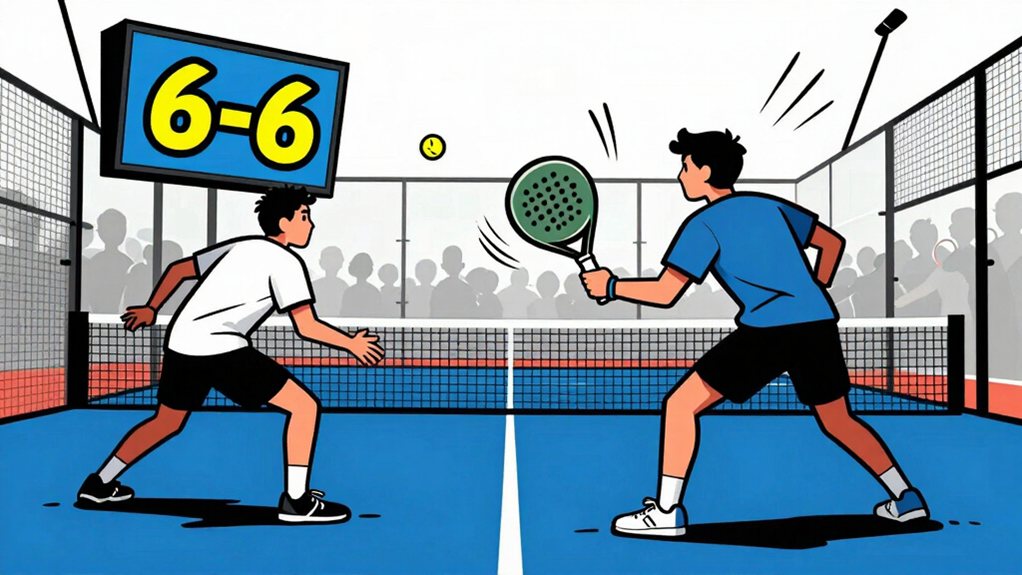
When a team reaches six games with at least a two-game lead, they win the set. You need to win six games while maintaining a two-game advantage over your opponents. Here’s how the set progression works:
- You win the set at 6-0, 6-1, 6-2, 6-3, 6-4, or 6-5
- If the score reaches 5-5, you must win the next two games to take the set at 7-5
- The set continues until one team achieves a two-game lead after six games
The only exception to the six-game rule occurs when both teams reach six games. In that case, you enter a different scoring format.
Note: The tie-break rules at 6-6 will be covered in the next section.

[NEVER LOSE TRACK OF THE SCORE ]Works perfectly for both TENNIS and PADEL matches, helping players of all ages — including KIDS — avoid score disputes, enjoy smoother games, and focus on having fun.

FASTER TO THE BALL: Jump into the Babolat Men’s Premura 3 Lebron Padel Shoes and be the fastest player on court. Made for expert players to help them fly on court and outpace their opponents. The Premura 3 retains the famous "teeth" that provide exceptional forefoot support, while incorporating bold new features. The 3D heel design and ultra-light tongue guarantee enhanced stability and optimum comfort. This shoe offers a perfect balance between responsiveness, lightness, and breathability.

INVEST SMARTER, NOT OFTEN: End the financial drain and hassle of constant replacements. These durable padel balls are your guide to extended, long-lasting durability, solving the internal cost frustration for academies and frequent players. This choice provides the authority of continuous, peak performance that maximizes the value of your raquetas de padel investment. Choose the reliable paddle balls that respect your budget and padel sessions.
What Happens at 6-6: Tie-Break Rules Explained
If the score reaches 6-6 in a set, you enter a tie-break to decide the winner. This is a shortened game that determines who takes the set. The rules are simple:
- Play continues until one team reaches 7 points.
- You must win by a margin of 2 points.
- Points are counted 1, 2, 3, 4, and so on, no tennis scoring here.
- Your server changes every two points.
- The team with 7 points and a 2-point lead wins the set.
Example: If you lead 6-5, you need one more point for 7-5. If the score reaches 6-6, you play on until someone builds a two-point lead.
The tie-break replaces the normal set completion, so the final score might read 7-6 instead of 7-5.
Winning the Match: Best-of-Three Sets Format
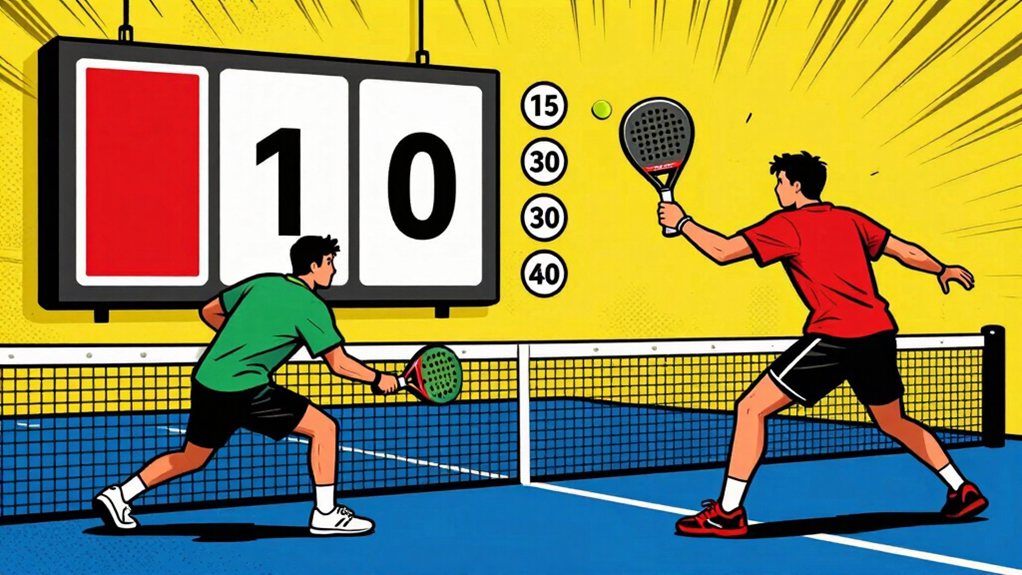
Once you’ve mastered individual sets, the match format determines the final winner. In padel, you play a best-of-three sets match. This means the first team to win two sets wins the entire match.
- You win the match if you take the first two sets.
- If each team wins one set, you play a third set.
- The team that wins the third set takes the match.
This format tests your endurance and consistency. You can’t rely on winning only one strong set. You must maintain focus across all sets.
Most competitive padel matches use this best-of-three format. It guarantees the better overall team wins the match, not the better player in a single set.
Padel vs Tennis: Key Scoring Differences
Now that you understand the best-of-three format, let’s examine how padel scoring compares to tennis.
Padel and tennis share the same point system. You score points as 0, 15, 30, and 40. You need a two-point lead to win a game. At deuce (40-40), both sports use advantage rules.
However, padel introduced the golden point system in professional play since 2020. This means at deuce, one single point decides the game. The receiving team chooses where to serve. There’s no advantage-deuce cycle.
Both sports play best-of-three sets. You must win by two games. At 6-6, you play a tie-break. The first to seven points wins if you lead by two.
Serving rules are identical. You use an underarm serve after one bounce. You get two serves per turn.
Key difference: padel uses walls during play, while tennis does not.
Frequently Asked Questions
Who Serves First in a Padel Match, and How Is the Choice Decided?
You start with a coin toss; the winner’s choice decides to serve or receive. After each game the serve alternates, and at the start of a set the side that received in the final game serves.
Can Player Request Let if Ball Hits Net During Rally?
Picture your opponent hitting a sharp volley that clips the net and dribbles over, you cannot call let; play continues immediately. In padel, lets are only called on serve, not during rallies, so the point stands.
How Many Players Are Required to Form a Padel Team on the Court?
You need exactly two players on each team, so you’ll always compete in doubles format with a partner against another duo. Four players total share the court during every padel match you play in competition.
Are There Penalties for Taking Too Much Time Between Points in Padel?
Ever wonder if you can stall in padel? Yes, referees enforce time limits between points. You receive warnings, and repeated violations result in point penalties. The World Padel Tour strictly monitors slow play to maintain match pace.
What Is the Maximum Allowed Duration of a Padel Match?
In padel, you don’t have a strict maximum match duration. However, officials can penalize you if you take too long between points, and most matches typically finish within 1-2 hours depending on set competitiveness and tie-break occurrences.
Final Thoughts
Padel scoring is simple: you play points, games, sets, matches.
- Points: 0,40, game.
- We’re winning a game with a two,point lead.
- At 40,40, you play golden point; the next point wins the game.
- A set ends at six games with a two,game lead; a 6,6 set goes to a tie,break.
- A match is best of three sets.
Think of scoring as a ladder: each rung lifts you closer to victory.
Lightweight & Practical: The convenient, lightweight, and portable score keeper is the perfect way to keep track of the points, games, and sets in any tennis match

Suitable for most rackets:Our tennis score keeper is suitable for most rackets and can be mounted on the inside or outside of the racquet throat. Attachment is easy, stick it to the racquet.