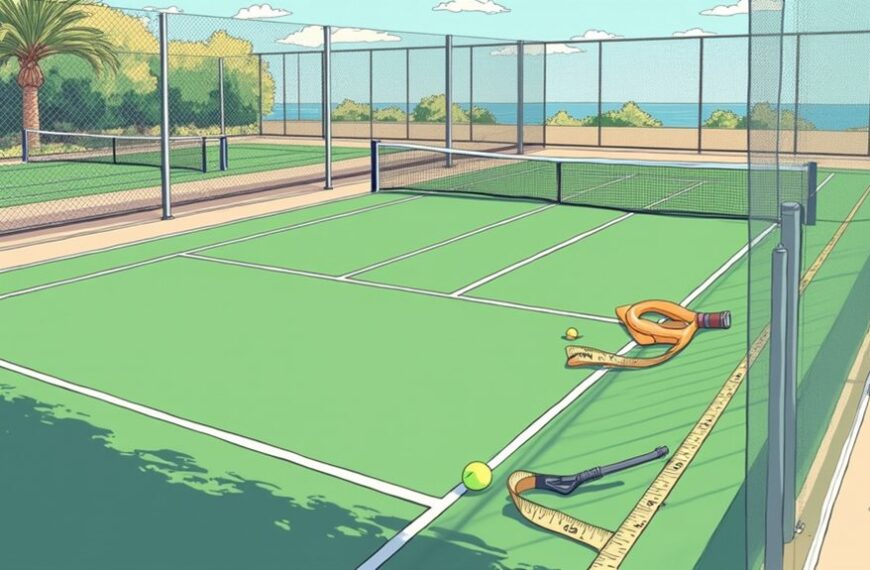
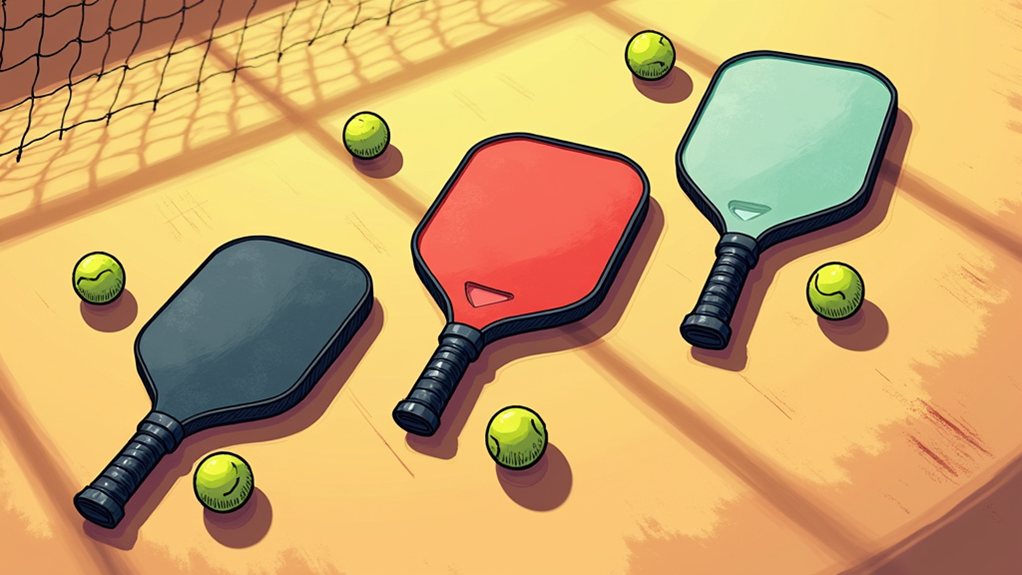
1. Measure length: standard 16 in., elongated 16.5 in., blade ~17 in. 2. Measure width: standard and widebody 8 in. or more, hybrid 7.5–7.7 in., blade ~7 in. 3. Check sweet spot placement: standard and widebody centered, elongated and blade higher, hybrid in between. Use these dimensions, and you’ll identify the shape.
Each shape offers different power, control, forgiveness, and performance for your game today. Continuing will give you extra tips for picking the perfect paddle.
How Paddle Shape Impacts Your Power and Control
The shape of your paddle directly affects your power and control on the court. Understanding this relationship helps you choose the right paddle for your game.
The shape of your paddle directly affects your power and control on the court; choose the right paddle to elevate your game.
Here’s how shape influences performance:
- Longer paddles give you more reach. You extend your swing distance with elongated shapes.
- Wider paddles increase your sweet spot. You miss fewer shots with widebody designs.
- Thinner paddles offer quicker maneuverability. You react faster with blade shapes.
- Balance point affects swing weight. You feel the difference in head-heavy versus balanced paddles.
Power comes from paddle length and weight distribution. Control comes from sweet spot size and grip comfort.
Match your paddle shape to your playing style. Choose based on whether you prioritize reach, forgiveness, or quick reactions.

#1 BRAND IN PICKLEBALL: At Selkirk, we are committed to fueling the pickleball obsession found within every player. Through uncompromising quality and a drive for innovation, we're trusted by more players around the world than any other pickleball brand.

#1 BRAND IN PICKLEBALL: At Selkirk, we are committed to fueling the pickleball obsession found within every player. Through uncompromising quality and a drive for innovation, we're trusted by more players around the world than any other pickleball brand.
What Defines Each Shape: Dimensions and Sweet Spots
You can identify each paddle shape by its dimensions and sweet spot location.
The standard shape measures about 16 inches by 8 inches with a generous center sweet spot.
The elongated shape extends to 16.5 inches by 7.5 inches with a higher sweet spot, while the widebody shape provides the largest sweet spot area.
Thermoformed paddles achieve their expanded sweet spot through even thickness distribution, which creates a more consistent center-feel area that extends closer to the edges regardless of paddle shape.
Dimensions Overview
Dimensions Overview
Understanding paddle dimensions and sweet spots helps you choose the right shape for your game. Paddle dimensions directly affect your reach, swing speed, and maneuverability.
- Standard paddles measure 16 inches long by 8 inches wide. Grip length ranges from 4.5 to 5.25 inches.
- Elongated paddles stretch 16.5 inches long but narrow to 7.5 inches wide. Extra-elongated variants reach 17 by 7 inches.
- Widebody paddles feature widths of 8 inches or greater. Length typically falls between 15.5 and 16 inches.
- Hybrid paddles offer a middle ground. They measure approximately 16.25 inches long and 7.5 to 7.7 inches wide.
- Teardrop paddles present a rounded, unique shape. They widen toward the hitting face.
- Blade paddles represent the longest option. They stretch nearly 17 inches in length with a very thin profile. Width remains narrow for maximum reach.
Sweet Spot Differences
Each paddle shape delivers a different sweet spot experience that directly affects your consistency and power.
- Standard shape, Center sweet spot offers forgiveness. It’s generous and balanced. You get reliable performance on mis-hits.
- Elongated shape, Sweet spot sits higher on the face. It provides reach and power. But you lose side-to-side forgiveness.
- Widebody shape, Largest sweet spot area. Beginners benefit most. It’s the most forgiving option available.
- Hybrid shape, Balanced sweet spot between standard and elongated. You gain versatility without extreme tradeoffs.
- Teardrop shape, Wider face creates extended sweet spot. Consistency improves on off-center hits.
- Blade shape, Compact sweet spot sits high. It demands precision. This shape suits advanced players seeking control.
Standard vs. Widebody: Best Paddle for Beginners
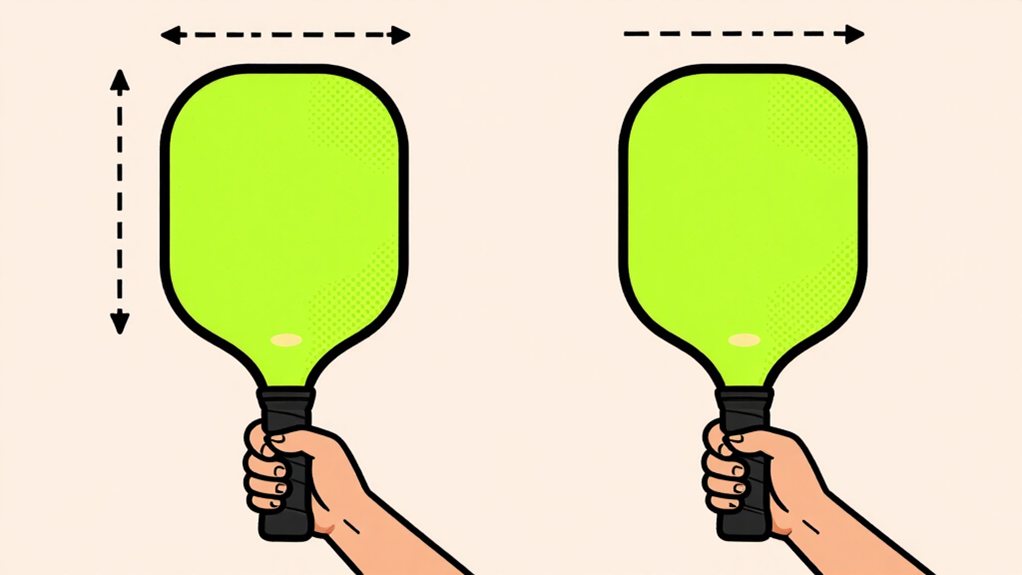
You can compare standard and widebody paddles by examining three key factors: sweet spot size, control versus power balance, and weight handling.
Standard paddles measure 16 inches by 8 inches and offer a balanced sweet spot that provides good power and control.
Widebody paddles exceed 8 inches in width and deliver the largest sweet spot, which helps beginners make consistent contact.
Sweet Spot Size
Looking at sweet spot size, the widebody paddle gives you the largest hitting area, while the standard paddle offers a more moderate zone. The widebody sweet spot stretches across the full width, often 8.5 inches, and sits near the center. The standard sweet spot sits in the middle and measures about 6 to 7 inches wide. This size fits most, and you’re easy to manage.
,Widebody: sweet spot spans 8–8.5 inches, giving you forgiving off-center hits.
,Standard: sweet spot measures roughly 6–7 inches, providing a balanced feel.
,Placement: paddles place the sweet spot in the center, above the handle.
,Beginner benefit: wider area on a widebody reduces miss-hits, helping you learn faster.
- Find sweet spot.
- Measure width.
- Pick size for you.
Control vs Power
When choosing between a standard and widebody paddle, you’ll decide between balanced control or maximum forgiveness. Standard paddles measure about 16 inches long and 8 inches wide, giving you a slightly longer hitting area that generates more power on drives. Widebody paddles extend to 8.25 inches or wider, producing the largest sweet spot on the market and letting you guide the ball with precision.
For beginners, the widebody’s extra width provides confidence on off-center hits, while the standard shape offers a middle ground for players who want both power and control.
- Standard paddles generate more power from their longer hitting surface overall.
- Widebody paddles give you a larger sweet spot for precise placement.
- Beginners gain forgiveness from widebodies; advanced players pick standard for power.
Weight And Handling
Understanding how paddle weight affects handling helps beginners make an informed choice. Paddle weight ranges from 7 to 8.5 ounces. Lighter paddles offer quick maneuverability. Heavier paddles provide more power.
Standard paddles typically weigh 7.3 to 7.8 ounces. Widebody paddles often weigh 7.8 to 8.5 ounces. The extra weight improves stability on contact.
Consider these factors:
- Your arm strength matters. Lighter paddles reduce fatigue during long sessions.
- Your playing style matters. Widebodies suit defensive players seeking consistency.
- Your evolution matters. If you come from tennis, you may prefer heavier paddles.
Test paddles before buying. Hold each for 30 seconds. Notice how quickly you can swing. Check if the weight feels comfortable. Your ideal paddle matches your physical comfort and playing goals.
Elongated vs. Hybrid: Reach and Forgiveness Tradeoffs
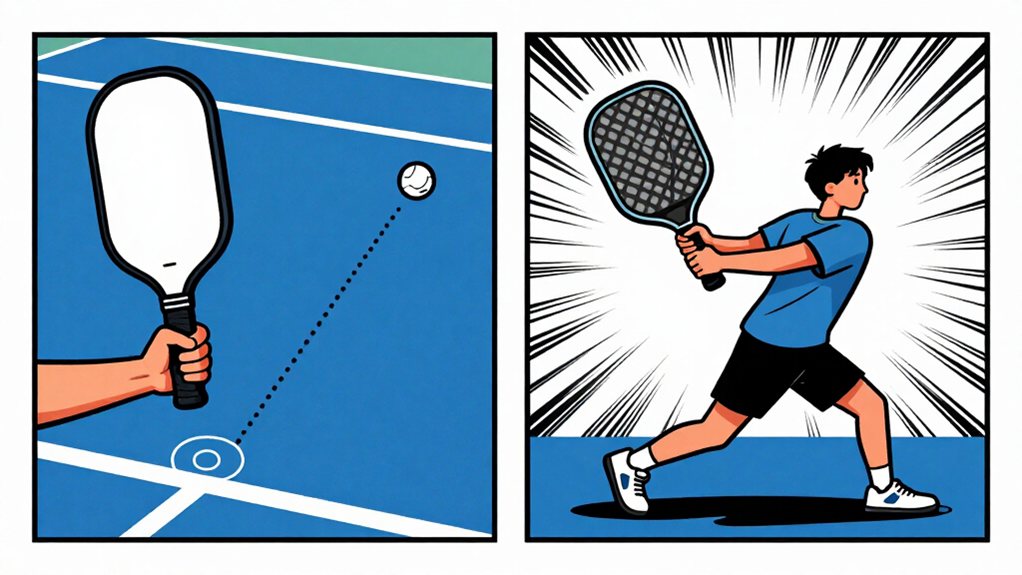
If you’re deciding between an elongated and hybrid paddle, you need to know how each affects your reach and forgiveness on the court. Both shapes give you more reach than a standard paddle.
An elongated paddle measures 16.5 inches by 7.5 inches. It extends your reach for deep serves and volleys at the net. The tradeoff is a smaller sweet spot. You’ll feel more vibration on off-center hits.
A hybrid paddle measures about 16.25 inches by 7.5 to 7.7 inches. It sits between standard and elongated sizes. You get a balance of reach and forgiveness. Consider your skill level and playing style when choosing.
- An elongated paddle measures 16.5 inches by 7.5 inches. It extends your reach for deep serves and volleys at the net. The tradeoff is a smaller sweet spot. You’ll feel more vibration on off-center hits.
- A hybrid paddle measures about 16.25 inches by 7.5 to 7.7 inches. It sits between standard and elongated sizes. You get a balance of reach and forgiveness.
- Consider your skill level and playing style when choosing.
Teardrop vs. Blade: Which Shape Matches Your Playing Style?
The teardrop and blade shapes serve different player needs on the court. Choose the teardrop if you want a generous sweet spot that helps you hit consistent shots. The rounded face balances weight upward and makes upper hits easier. This shape works well for beginners and intermediate players seeking reliability.
Choose teardrop for reliability and consistency, or blade for extended reach and advanced control.
Choose the blade if you prefer extra reach and a narrow profile. The nearly 17-inch length appeals to tennis players moving to pickleball. The compact sweet spot sits high on the surface, so you need skill to use it effectively.
Consider these points:
- Teardrop suits all skill levels
- Blade suits advanced players
- Your game style determines the best fit
Match your shape to your playing style for optimal performance.

#1 BRAND IN PICKLEBALL: At Selkirk, we are trusted by more players than any other pickleball brand due to our uncompromising quality and performance innovation. The official pickleball sponsor of Jack Sock, former tennis star and elite pickleball pro.

OFFICIAL PADDLE SPONSOR OF WORLD #1 PICKLEBALL PLAYER BEN JOHNS & THE PPA TOUR: An innovator & global leader in table tennis for 70+ years, JOOLA teams up with Ben Johns to create a new line of pickleball equipment that will forever change the game

Optimized Paddle Shape for Versatile Play: The Perseus Pro IV features a standard, elongated shape designed to provide an extended sweet spot. This geometry offers players the perfect balance of reach for powerful drives and a reliable, forgiving hitting surface for precise dinks, making it an excellent choice for players who want confidence from all areas of the court
Common Mistakes When Choosing Paddle Shape
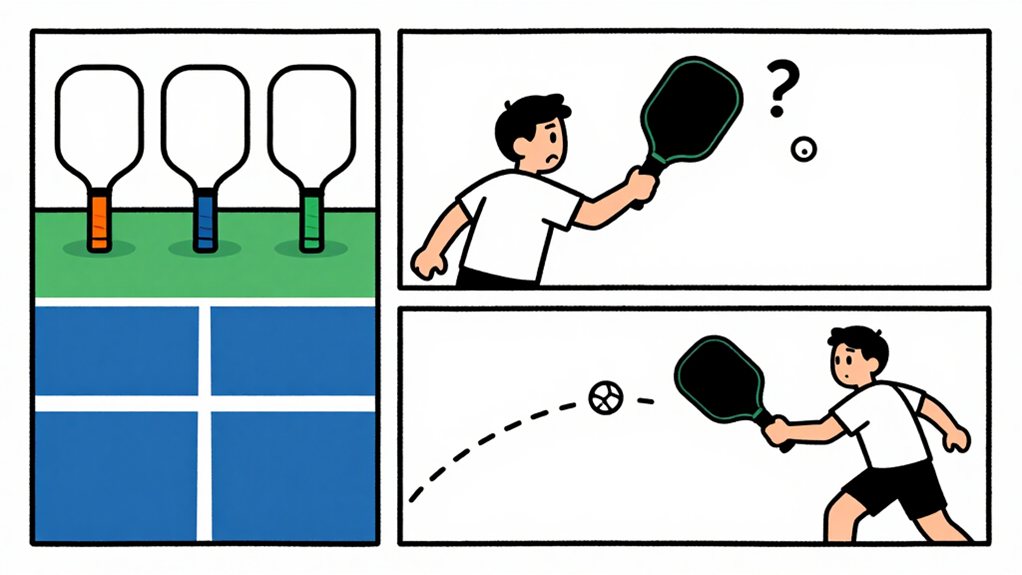
Many players select the wrong paddle shape because they don’t consider their actual needs. You focus on aesthetics instead of performance. You choose a paddle based on color or brand without testing it first. You assume more expensive paddles improve your game automatically.
- You ignore your skill level. Beginners need widebody paddles for larger sweet spots. Advanced players benefit from elongated shapes for reach. Matching paddle to skill prevents frustration.
- You overlook your play style. Singles players need extra reach. Doubles players benefit from maneuverability. Control players prefer standard shapes. Power players select elongated paddles.
- You neglect grip size. Incorrect grip causes fatigue and blisters. Measure your hand and select appropriate circumference. Proper grip strengthens control and prevents injury.
Frequently Asked Questions
Are There Official Size Limits for Each Paddle Shape in Tournaments?
Official tournament regulations don’t categorize shapes, but they set maximum limits: 24 inches total length and 8 inches width. You must stay within these bounds regardless of your paddle’s shape.
Which Paddle Shape Produces the Least Noise During Play?
Wider paddles with larger faces, like widebody shapes, typically produce the least noise because their bigger surface area absorbs more sound. You’ll find them quieter than narrow blades during play.
Do Certain Shapes Require a Longer or Shorter Grip for Comfort?
Your grip is your handshake with the paddle, and elongated shapes benefit from longer grips (5-5.5″) for reach and control, while standard and widebody shapes suit shorter grips (4.5-5″) for better maneuverability and wrist action.
How Does Paddle Shape Influence Spin Generation?
Your paddle shape directly impacts spin. Widebody paddles maximize spin with larger contact areas. Elongated shapes enable powerful wrist snaps. Larger sweet spots create consistent spin. Reinforced surfaces limit spin potential, while textured faces dramatically increase spin generation.
Which Shape Is Best for Players With Wrist Pain?
Choose a widebody paddle for wrist pain. Its largest sweet spot absorbs impact effectively, reducing strain on your wrist. You’ll generate power with minimal effort, and its forgiving surface minimizes wrist stress on off-center shots.
Final Thoughts
Test at least 3 paddle shapes before you buy. You will feel the difference in reach, sweet spot, and control. We recommend starting with a standard shape if you are a beginner.
Elongated paddles give you reach but reduce forgiveness. Widebody shapes offer larger sweet spots for more consistent contact. Your game improves when the paddle matches your style.
Follow these steps: 1) Measure your hand size, 2) Note your playing position, 3) Test at least 3 shapes, 4) Track your unforced errors.

【 EXCELLENT PICKLEBALL TRAINER 】These pickleball training paddles encourage players to be more precise with their shots and help improve pickleball skills. Truly an ideal practice tool. You can also use them to warm up before practice or competition to enhance concentration and competitive performance

【USAPA Approved Pickleball Paddles】The Paddles are USA Pickleball Approved & with USAPA Approval Lable for Tournament Play. USAPA APPROVED on 06/11/2021. Please check it on USAPA official web via route: TOURNAMENTS-RESOURCES-APRROVED PADDLES & BALLS

DURABLE, QUALITY PICKLEBALL RACQUETS: A lightweight fiberglass paddle face surface is ideal for those who want power and speed in their hitting and returns, even with a backhand. The wide-body shape creates an ideal surface for spins, slices, and pop on those power shots. The polymer honeycomb core offers an ideal blend of power and precision.