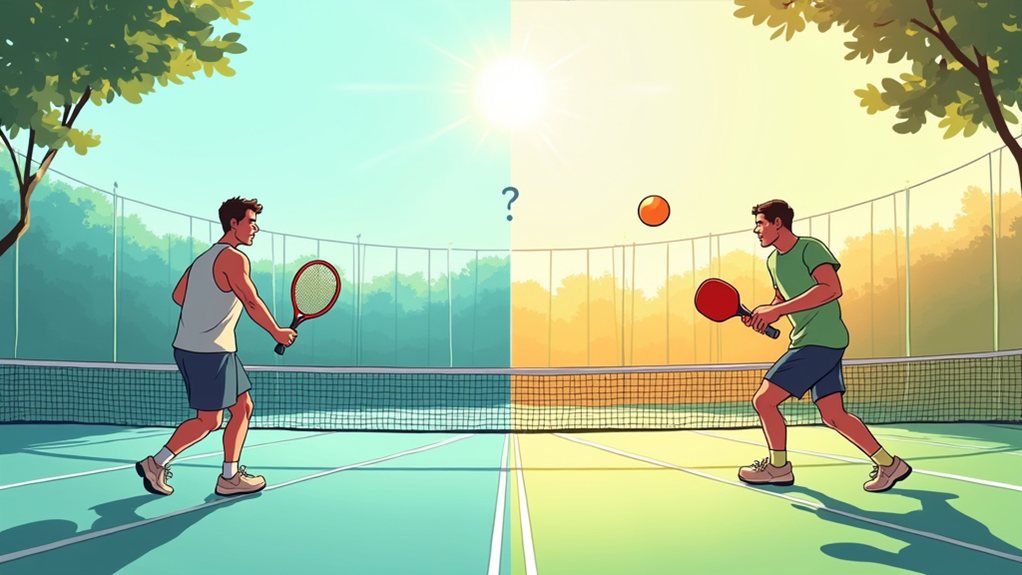
Pickleball is dramatically easier to learn than padel. You’ll play real points within your first session on a 13.4m × 6.1m court with no walls. Padel demands weeks of practice to master wall bounces on a 66 × 33 ft court.
Pickleball equipment costs under £10; padel requires £80+ rackets. You’ll rally within minutes in pickleball versus 4-6 sessions in padel. Start with pickleball for quicker success.
Pickleball vs Padel: Which Is Easier to Learn?
Which sport offers you the fastest path to playing a real game? Pickleball gives you results faster than padel.
Most beginners rally within 3–5 minutes and play a full game in their first session. You feel competent almost immediately.
Beginners rally within minutes and play a full game in their first session—feeling competent almost immediately.
Consider these key differences:
- Pickleball uses a smaller court and slower ball. You get more time to react.
- Padel requires weeks to master wall play. The ball rebounds off glass and mesh walls.
- You need good footwork for padel. The court is larger and demands more running.
- Pickleball costs £5–10 to start. Padel requires more equipment and a bigger investment.
With pickleball’s simple rules, you master fundamentals quickly. Your first hour brings genuine fun rallies.
Padel takes longer to feel comfortable due to wall dynamics. Both sports let you rally within minutes, but pickleball offers a gentler start on day one. Most beginners reach a 3.0 skill rating within 3 to 6 months of practising two to three times per week.
Court Size Comparison: Why Pickleball Feels Less Intimidating
The court size directly affects how quickly you feel comfortable playing.
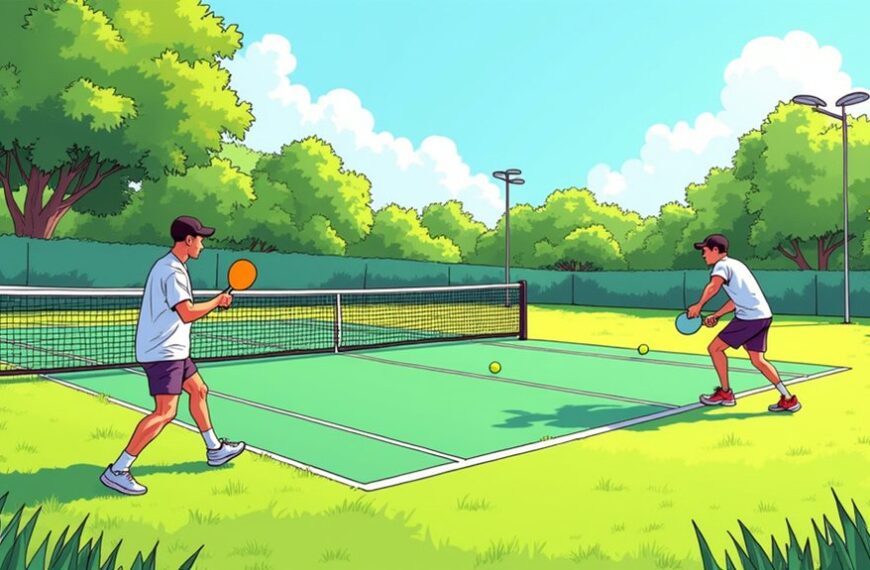
Pickleball uses a 13.4m × 6.1m court. This is roughly 44 × 20 feet.
You cover less ground in each point.
Padel uses a 66 × 33 ft court, which is about twice the size.
- Pickleball court benefits:
- No walls create simple boundaries
- Smaller space means fewer running demands
- You reach more balls without extreme movement
- Padel court challenges:
- Glass and mesh walls stay in play
- Balls bounce off walls unpredictably
- You must read rebound angles quickly
The smaller pickleball court reduces intimidation.
You feel capable sooner.
Movement demands remain low.
This helps beginners build confidence rapidly.
What Equipment Do You Need: And How Much Does It Cost?
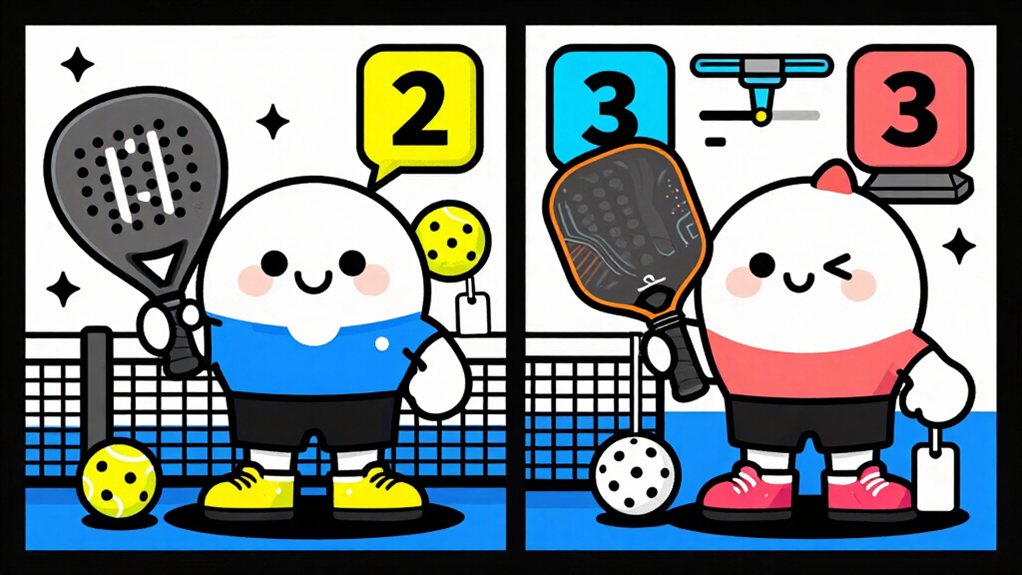
Both sports require specific equipment, but the costs differ markedly for you.
Pickleball uses a solid paddle and a hard, perforated plastic ball, with paddles from £20 to £80 and balls at £5 to £10.
Padel uses a heavier racket and standard tennis balls, with rackets typically costing £80 to £200 and balls adding another £5 to £15.
Equipment Needs
Equipment Needs
Getting started with either sport requires minimal equipment, but the costs and items differ between the two.
For pickleball, you need:
- A solid paddle (graphite or composite materials)
- A hard plastic ball with holes (similar to a wiffle ball)
- Comfortable athletic shoes
- Paddles typically weigh 6 to 14 ounces
For padel, you need:
- A padel racket (solid, stringless, heavier than tennis rackets)
- Padel balls (similar to tennis balls but with less pressure)
- Court shoes with good lateral grip
- The court includes glass walls and mesh fencing in play
Pickleball equipment is lighter and easier to handle. Padel rackets feel different and require adjustment.
Both sports require proper footwear for safety and performance.
Price Comparison
When comparing costs, pickleball equipment is generally less expensive than padel gear. A quality paddle costs £30–£60, while balls come in packs of £5–£10. Padel rackets are heavier and cost £80–£150. Indoor court shoes for padel add another £50–£100. Pickleball shoes are cheaper at £30–£60.
You also need to account for court fees. Indoor padel courts charge £15–£25 per hour. Pickleball courts at community centres cost £5–£10 per session.
| Item | Price Range |
|---|---|
| Pickleball Paddle | £30–£60 |
| Pickleball Balls (pack) | £5–£10 |
| Padel Racket | £80–£150 |
You spend less upfront with pickleball. The sport’s lower equipment and court costs make it easier to start.
The Wall Play Learning Curve in Padel
You face a learning curve with wall play in padel that you don’t encounter in pickleball. You must learn to read wall bounces, master the back glass, and develop proper timing and positioning.
We recommend starting with simple rebound drills before attempting advanced angle shots.
Reading Wall Bounces
Although the walls may seem confusing at first, reading wall bounces is a fundamental skill in padel that separates beginners from intermediate players.
When the ball hits the back glass, it bounces differently than off the side walls.
You must judge the angle and speed quickly. The ball often comes faster off the back glass than you expect.
Key steps to improve:
- Watch the ball, not your opponent
- Move to the expected bounce point early
- Adjust your stance for low, medium, and high rebounds
- Practice hitting off walls during drills
Start with these basics:
- Stand 2-3 feet from the back wall
- Call “mine” or “yours” clearly
- Keep your paddle ready at waist height
We recommend 10-15 minutes of wall practice per session.
This builds your instincts within 4-6 weeks.
Back Glass Mastery
Building on the basics of reading wall bounces, the back glass presents its own unique challenges in padel. You must account for the ball’s angle after it hits the glass, which changes based on where it contacts the surface and your position. The glass acts as a second opponent, returning the ball at unpredictable angles.
Key challenges include:
- Positioning yourself correctly after wall shots
- Anticipating the ball’s rebound speed
- Adjusting your swing for glass-created angles
Mastering back glass play requires weeks of practice. You develop this skill by:
- Playing regular games against experienced players
- Practicing wall drills for 15-20 minutes daily
- Watching how pros use the glass strategically
Once you master the back glass, your overall padel game improves markedly.
Timing And Positioning
Timing and positioning are critical skills in padel that develop through deliberate practice. You must learn to read ball angles off the glass walls and position yourself accordingly. The ball bounces differently off each surface, so you need to adjust your timing on every shot.
Key timing and positioning tips:
- Move to the ball early when it comes off the back glass
- Step inside the court when your opponent hits near the walls
- Cover the middle when your partner moves to the net
- Wait until the ball crosses the net before you swing
- Stand 2-3 feet behind the service line when receiving
We recommend practicing wall rallies for 10-15 minutes daily. This builds muscle memory for reading rebounds and positioning yourself correctly during points.
Physical Demands: Matching Your Fitness Level
When choosing between padel and pickleball, consider how much physical effort you can sustain during play. Padel is the more demanding sport.
Assess your stamina: padel pushes harder with longer rallies and larger courts, while pickleball offers a gentler, more accessible game.
You’ll run more, move faster, and play longer rallies.
A padel match can burn 400,600 calories per hour.
The court is larger at 66 × 33 ft. You must cover more ground with lateral movements.
Pickleball is less intense.
You’ll burn 250,450 calories per hour.
The smaller court (13.4m × 6.1m) lets you react more easily.
The slower ball gives you extra time.
This sport is gentler on your joints.
Consider these factors:
- Your current fitness level
- Any joint or mobility issues
- How long you want to play
- Your recovery time after exercise
Match the sport to your body.
Your First Session: What to Expect
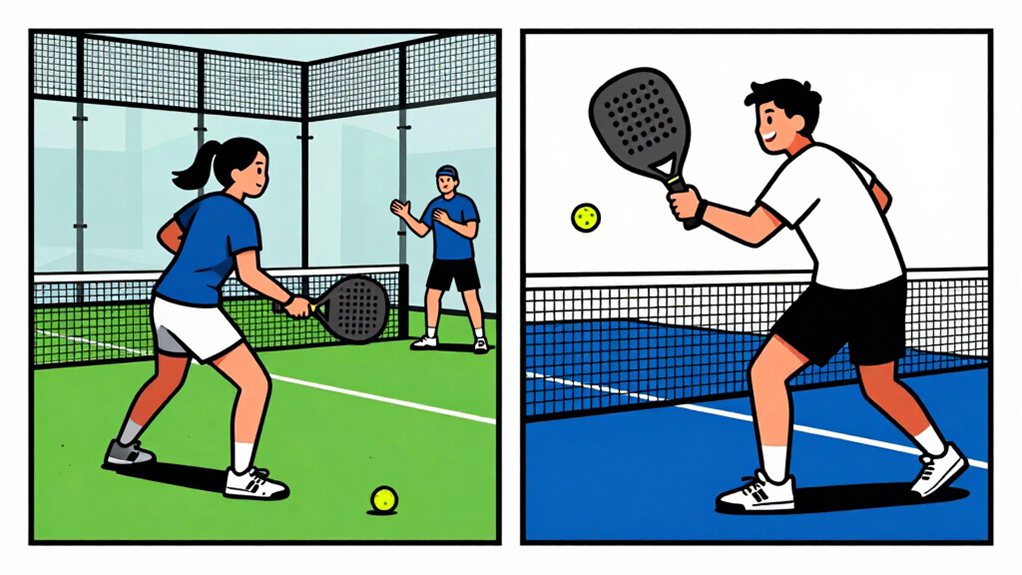
Your first session will feel different depending on which sport you choose. In pickleball, you grab a solid paddle and a perforated plastic ball. The court measures 13.4m × 6.1m with no walls. You serve underhand and the game starts quickly.
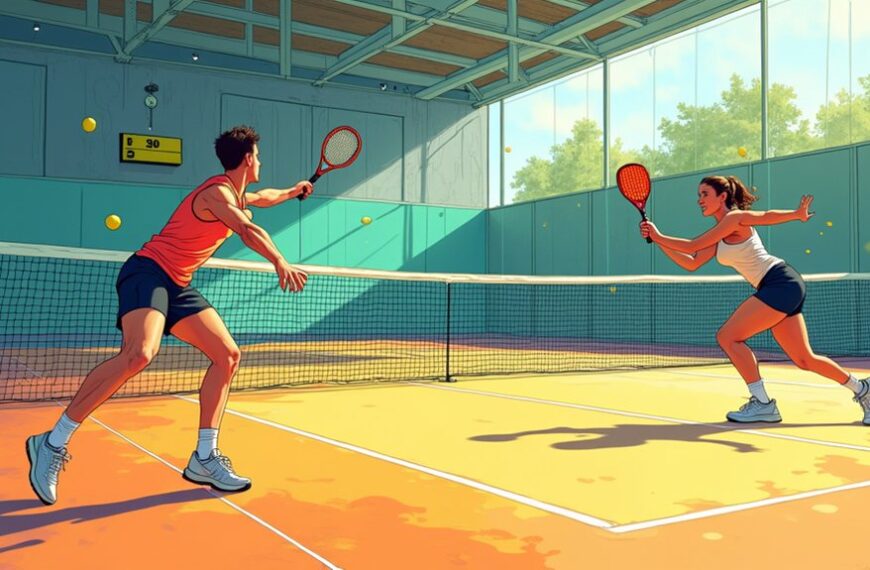
In padel, you use a heavier racket. The court is 66 × 33 ft and enclosed by glass walls. The ball stays in play off the walls. You also serve underarm.
Key first-session differences:
- Pickleball: you rally within minutes, simple rules
- Padel: you learn wall rebounds, larger space to cover
Both sports let you have fun immediately.
How Many Sessions Until You Play Confidently?
How many sessions will it take before you feel confident on the court? The answer depends on which sport you choose.
In pickleball, most beginners rally within minutes and play a full game during their first session. You’ll feel competent after just one to two sessions.
For padel, expect a longer timeline. Wall dynamics require additional learning. You’ll likely need four to six sessions to feel comfortable playing real points. Existing pickleball skills can accelerate this process.
Pickleball progression:
- First session: Learn rules and basic strokes
- Second session: Play your first real points
- By session two or three: Feel confident in matches
Padel progression:
- Sessions one to two: Learn wall play and positioning
- Sessions three to four: Develop rally consistency
- Sessions five to six: Feel ready for competitive play
Pickleball offers faster initial confidence. Padel requires more practice but delivers satisfying results once you adapt to the walls.
Accessibility and Entry Barriers Compared
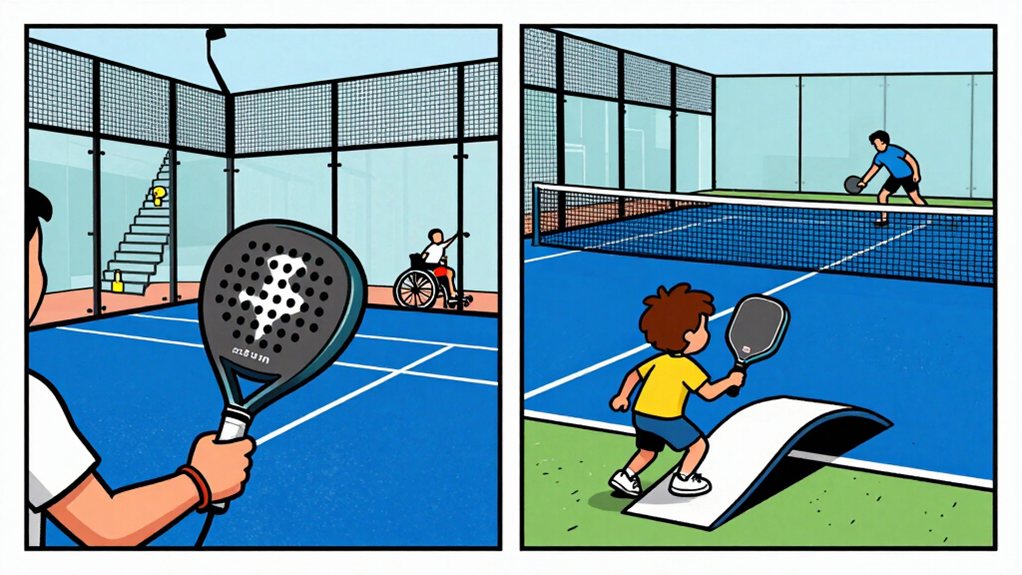
Let’s examine what it takes to start playing each sport. The entry barriers differ noticeably between these two racquet sports. Pickleball wins immediately on accessibility due to its simpler setup and lower equipment costs.
You can play with a basic paddle and a few balls costing under £10
You can find courts in most communities, often converted from unused tennis or badminton spaces
You need only a partner to start a casual game anywhere the lines fit
Padel requires more investment upfront. You need access to a specialized enclosed court. You must purchase a padel racket, which costs more than a pickleball paddle. The wall dynamics also mean you spend more time learning proper positioning before feeling comfortable.
Pickleball or Padel: Making Your Choice
Consider these factors when you choose between pickleball and padel. Your choice depends on your goals, fitness level, and preferences.
- Choose pickleball if you want a lower-impact sport with a gentler learning curve. You can start playing real points within your first session. It burns 250,450 calories per hour and is easier on your joints.
- Choose padel if you seek higher intensity and don’t mind a steeper learning curve. You’ll burn 400,600 calories per hour and need weeks to master wall play.
- Consider your specific budget. Pickleball costs £5,10 for basic equipment. Padel requires more investment in racket and court access.
- Think about your fitness goals. Padel demands better footwork and stamina. Pickleball suits all ages and athletic abilities.
Frequently Asked Questions
Can I Play Padel or Pickleball as a Singles Game?
You can play pickleball as singles, though it’s typically played as doubles. Padel, however, is almost exclusively a doubles game, singles play is extremely rare, and courts aren’t really designed for solo competition.
Are There Age Restrictions for Playing Either Sport?
Picture sunrise over a court; you step onto it without limits. Both padel and pickleball welcome all ages, with youth leagues and senior sessions, so there’s no age barrier, you simply grab a paddle and play.
What Type of Shoes Are Best for Padel and Pickleball?
You’ll need non-marking court shoes with good lateral support for both sports. Look for tennis or badminton shoes with non-marking soles. Pickleball-specific shoes offer stability, while padel players benefit from shoes designed for lateral movements.
Do Padel Courts Need Lighting for Night Play?
Yes, padel courts require proper lighting for night play. You’ll need illuminated poles or overhead lights installed around the court perimeter to meet regulations and ensure safe visibility during evening matches with proper glare control.
Which Sport Has More Availability of Courts Near Me?
The early bird catches the worm, you’ll find pickleball courts everywhere in your area. With tens of thousands across the US, pickleball offers far greater availability than padel, which currently remains newer and less widespread.
Final Thoughts
Pickleball or padel? We think it’s about your goals today. Use these steps to pick today:
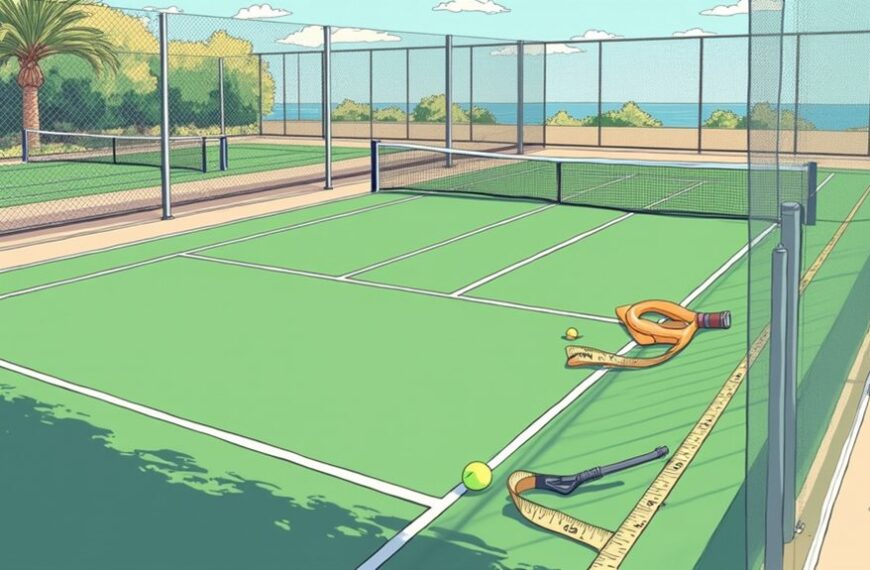
- Measure court size. Pickleball fits a 20‑by‑44‑foot area; padel needs 33‑by‑66‑feet with walls.
- Set a budget. A pickleball paddle costs $30‑$80; a padel set costs $70‑$150.
- Test the wall. Padel rebounds add complexity; pickleball stays open.
- Match fitness. Pickleball needs less sprint; padel needs much more lateral movement.
Which game fits you right now, exactly?