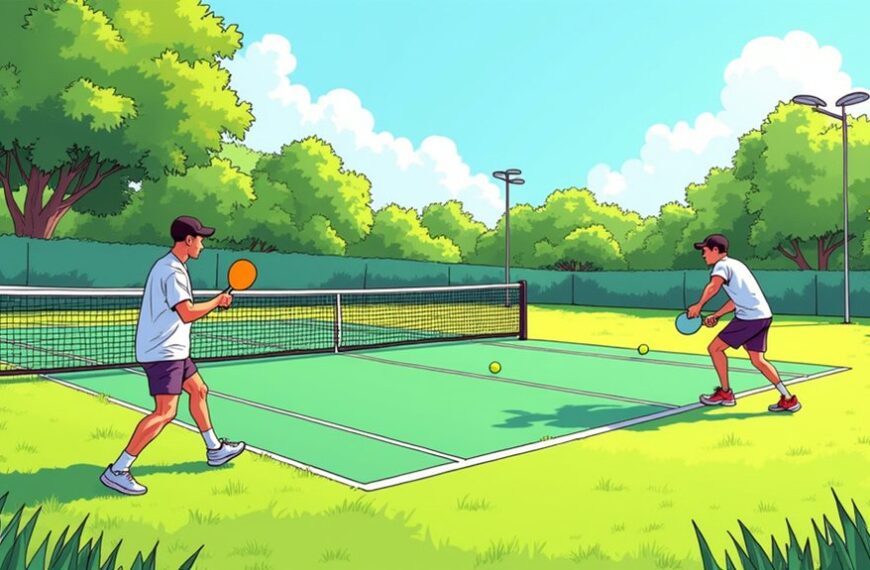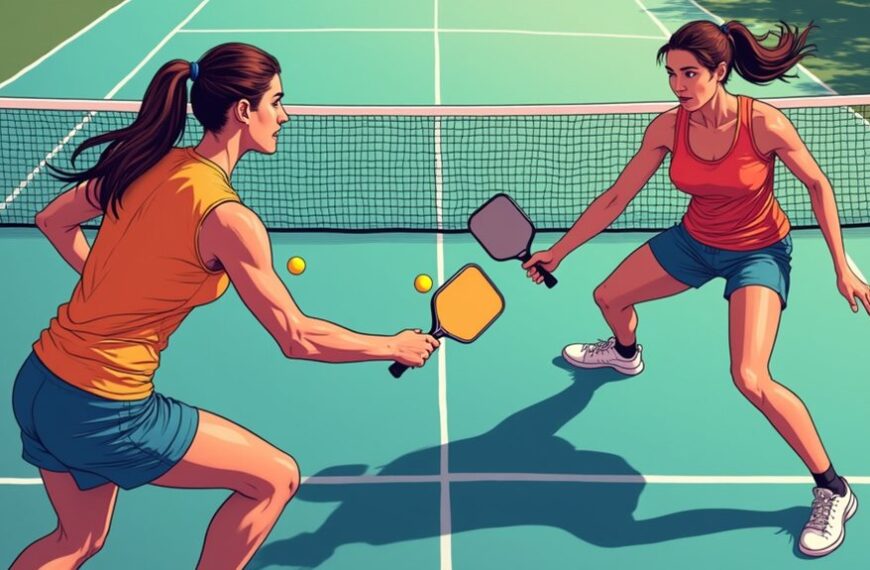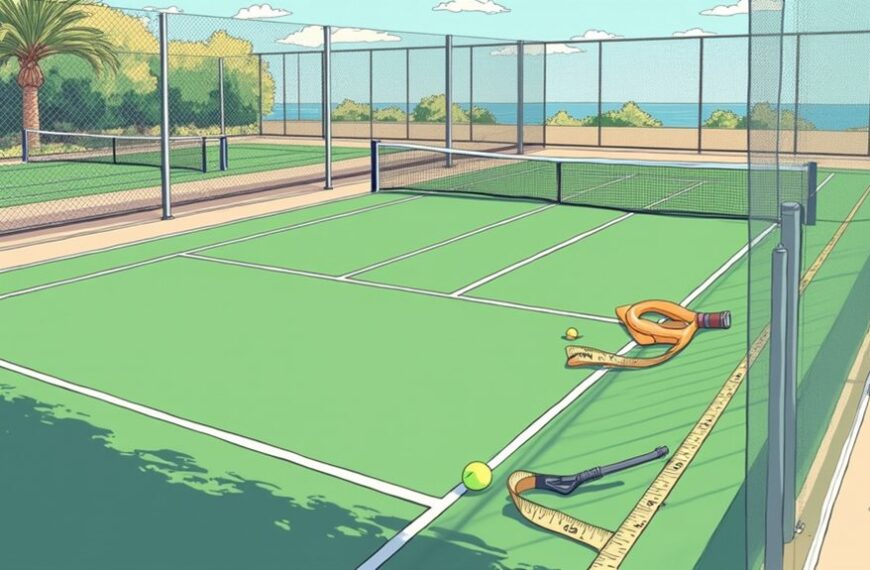
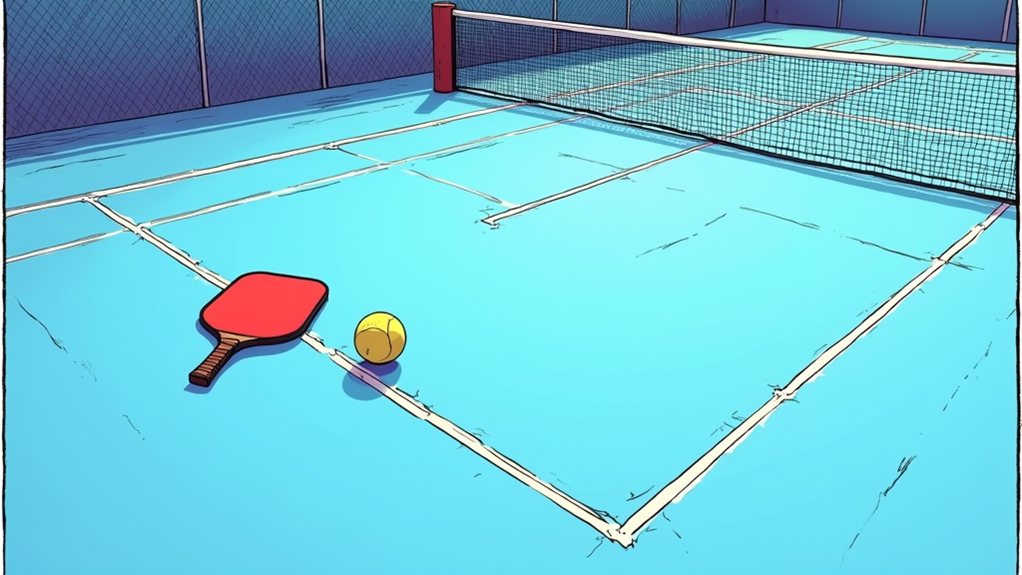
The kitchen is non-volley zone, a 7-ft rectangle side of net; line counts. You can enter, you can’t volley while body or paddle is in zone. You can hit the ball after it bounces, even inside the kitchen. Both feet must stay outside during a volley; touching the line is a fault. Momentum that pulls you into the kitchen after the shot is also a fault. Continue for more details.
What Is the Kitchen in Pickleball?
What’s the kitchen in pickleball? The kitchen is the non-volley zone (NVZ).
The kitchen is the non-volley zone (NVZ)—the area near the net where volleying is prohibited.
It’s the area located on each side of the net where you can’t hit the ball out of the air while standing.
Here are the key points:
- The kitchen spans the full width between the sidelines
- It runs from the net toward the baseline
- The painted line counts as part of the kitchen
- Any body part, paddle, or clothing touching the zone during a volley is a fault
- Momentum carrying you into the zone after a volley is also a fault
You may enter the kitchen at any time.
You can hit the ball after it bounces.
You simply can’t volley while any part of your body touches the zone.
If a stray ball rolls into the kitchen during a rally, it qualifies as a valid hinder and the rally is replayed with no score change.
How Big Is the Kitchen? The 7-Foot Rule Explained
When you step onto the court, notice that the kitchen is a 7-foot deep, 20-foot wide rectangle on each side of the net.
We define its size by measuring from the net to the non-volley line and across the full width between the sidelines.
Here are the exact dimensions:
1) 7 ft from the net to the line, 2) 20 ft across the court.
Exact Kitchen Dimensions
The kitchen, also known as the non-volley zone or NVZ, is a 7-foot rectangular area that stretches the full 20-foot width of the court on both sides of the net.
- 7 ft deep from the net to the baseline.
- 20 ft wide between the sidelines.
The painted line that marks the 7-foot distance is part of the kitchen, so touching it while volleying is a fault. It’s a rule to remember.
The zone is two-dimensional, meaning you may hit the ball after it bounces from inside the area. You see two rectangles, each 7 ft by 20 ft, on each side of the net.
Remember that the line itself belongs to the kitchen, not a buffer. We measure it from the net.
Seven‑Foot Rule Summary
Now that you know the size, here’s how the rule works.
You can’t volley the ball while any part of your body, paddle, or clothing touches the kitchen or the kitchen line. The rule applies during the swing, follow-through, and momentum after your shot. If your momentum carries you into the kitchen after volleying, you lose the rally.
You may enter the kitchen anytime. You may hit the ball in the kitchen only after it bounces. Follow these key points:
- Keep both feet outside the non-volley zone when volleying
- Don’t let your toe touch the kitchen line
- Stay out of the kitchen until the ball bounces
- Control your momentum to avoid drifting into the zone
Why You Can’t Volley in the Non-Volley Zone
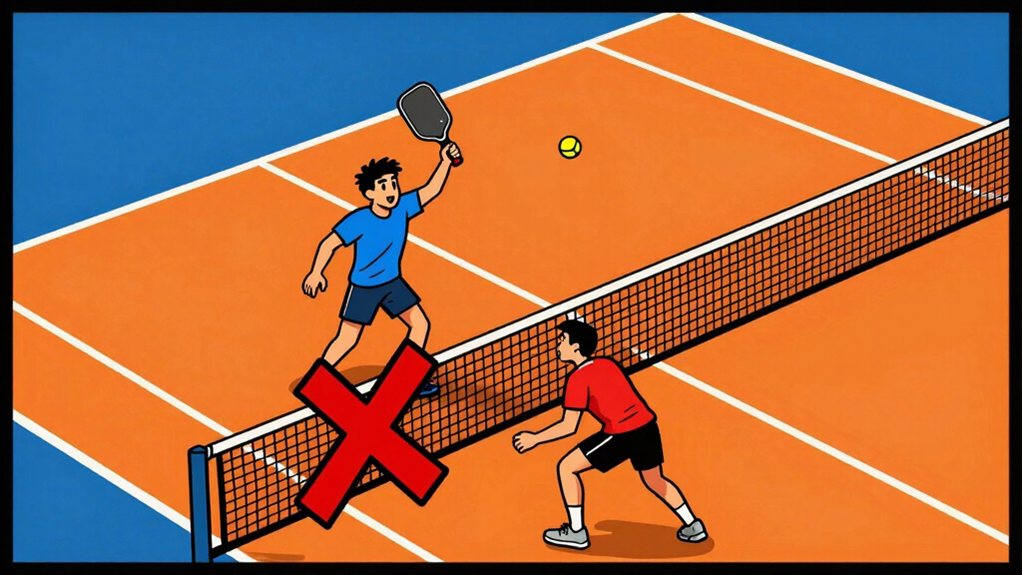
Because the non-volley zone sits just 7 feet from the net, you can’t volley while standing inside it or on its boundary lines. This rule keeps the game fair. You must stay completely outside the zone when hitting the ball out of the air. Your feet must land beyond the line before you make contact.
The 7-foot non-volley zone prevents powerful smashes at close range, keeping the game more strategic and less about raw power.
- The short distance gives you too much advantage if you volley inside the zone.
- The rule prevents powerful smashes right at the net.
- It creates longer rallies by forcing players back.
- The game stays more strategic and less about raw power.
When you volley, your momentum often carries you forward. You lose the point if any part of you touches the line after the shot. Wait until you establish solid position outside the zone before hitting.
The Foot Placement Rule: When Touching the Line Is a Fault
- When volleying, we keep both feet outside the non-volley zone; touching the line or any part of the kitchen with even one toe is a fault.
- Keep your body, paddle, and any equipment clear of the NVZ line during the swing, follow-through, and momentum after the shot.
- If momentum carries you into the kitchen after a volley, the rally ends in a fault even if you regain balance.
Touching The Line Fault
The white kitchen line marks the exact boundary of the non-volley zone, and the line itself counts as part of the kitchen. When you volley, your feet must stay completely outside this line. Touching the line with even one toe while hitting the ball out of the air is an immediate fault.
The same rule applies to your paddle, clothing, or anything you carry. You must establish both feet beyond the line before initiating another volley.
- Any part of your body touching the kitchen line during a volley results in a fault.
- Your paddle can’t contact the line while you’re volleying the ball.
- Clothing, hair, or accessories that touch the line cause a fault.
- Even momentum carrying you into the line after the shot is a violation.
Foot Placement Guidelines
All players must keep both feet completely outside the kitchen line whenever they volley the ball. You can’t volley while any part of your body or paddle touches the kitchen or the line.
Key foot placement rules:
- One foot in the kitchen while volleying is a fault.
- Both feet must land completely outside the line before you volley again.
- Even a toe touching the line causes an immediate fault.
- Your momentum can’t carry you into the kitchen after hitting.
- Anything you wear or hold must stay outside the zone during the volley.
The white line counts as part of the kitchen. You lose the rally if any part of your body, paddle, or clothing touches the line while volleying.
Your feet must be fully outside before you attempt another volley.
How Momentum Pulls You Into a Kitchen Violation
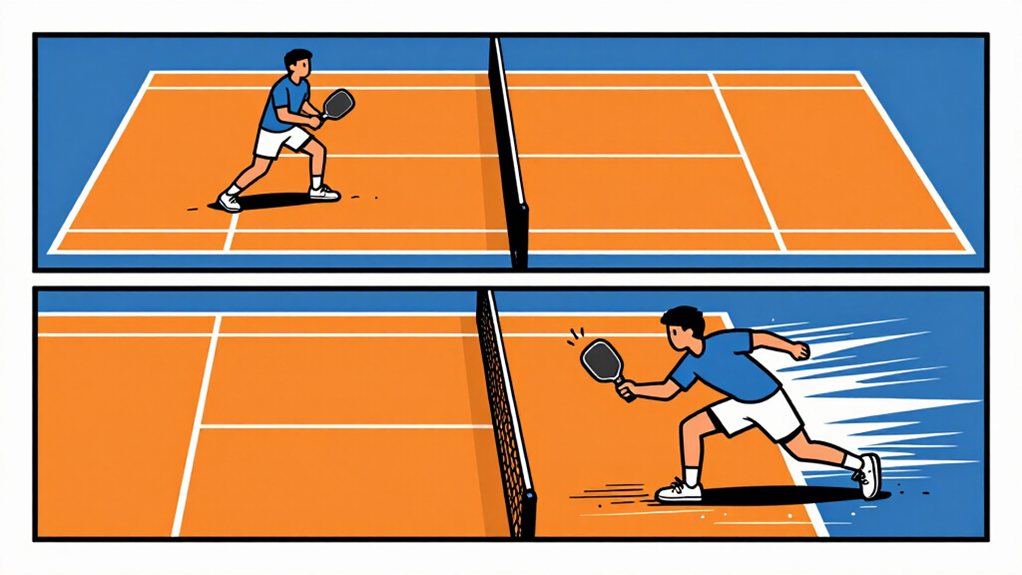
When you volley the ball, the act doesn’t end when you make contact, it continues through your swing, follow-through, and the momentum that follows. You must keep both feet outside the kitchen until your body comes to a complete stop.
Even a quick step forward after contact can drag you into the non-volley zone, and that contact is a fault. The swing, the follow-through, and any momentum generated are all part of the volley, so a late foot placement counts as a violation.
- A hard drive pushes you forward, crossing the line.
- An overhead smash drags your momentum into the kitchen.
- Recovery step can place toe on the line.
- Reflex bounce may pull you inside the non-volley zone.
Stay alert.
What Happens When You Break the Kitchen Rule?
When you break the kitchen rule, the opposing team immediately receives a point.
The rally ends the moment any part of your body or paddle contacts the non-volley zone during a volley.
We call this a momentum fault penalty when your follow-through carries you into the kitchen after hitting the ball.
Immediate Point Award
If you violate any kitchen rule, the consequence is immediate and clear: you lose the rally. The opponent gets a point right away. Your fault is recorded and the ball is dead.
Play resumes with the next serve.
- The opponent scores a point.
- The rally ends instantly.
- The ball is declared dead.
- The server receives the next turn.
If you’re serving when you fault, the opponent gains a point. If you’re returning when you fault, the opponent gains a point.
The rally ends and the opponent receives a point.
The scorekeeper records the point at once, and updates the scoreboard now.
Play continues with the next rally now.
No further discussion occurs until the next serve is made.
We agree.
Rally Loss Result
Breaking the kitchen rule ends the rally immediately and costs you the point. When you volley while any part of your body, paddle, or clothing touches the non-volley zone, you lose the rally. Your opponent earns the point if they’re serving or retains serve if you were serving.
The fault is automatic. You don’t get a warning. The referee calls the fault, and play stops instantly. You can’t argue the call. Your team loses the rally regardless of where the ball lands.
To avoid this penalty:
- Keep both feet outside the kitchen before volleys
- Step back after hitting if momentum carries you forward
- Stay alert about your foot position at all times
Momentum Fault Penalty
Because momentum can carry you into the kitchen after you’ve already hit the ball, the fault is still called and you lose the rally.
The kitchen rule applies to more than just where you stand when you hit the ball. Your momentum after the shot counts as part of the volley.
If you step outside the kitchen to volley but your momentum carries you back in, you commit a fault. Even if you regain your balance briefly, contact with the kitchen after a volley results in a loss.
- The “act of volleying” includes your swing, follow-through, and momentum.
- Anything you wear or carry can’t touch the kitchen during this time.
- You must establish both feet completely outside the non-volley zone before volleying again.
- Stepping into the kitchen to hit an overhead is a fault.
What You CAN Do in the Kitchen (Legal Plays)
Understanding what you can do in the kitchen helps you play confidently and strategically.
- You may enter the kitchen at any time during play.
- You can hit the ball after it bounces, even while standing inside the zone.
- You can stay in the kitchen as long as you don’t volley the ball.
- You may step into the kitchen before the ball bounces, but you must wait for the bounce to hit it.
- Your partner can volley from outside while you stand in the kitchen.
- You can retrieve balls that land in the kitchen without penalty.
- The kitchen gives you time to recover and reposition for the next shot.
Common Kitchen Mistakes That Cost Players Points
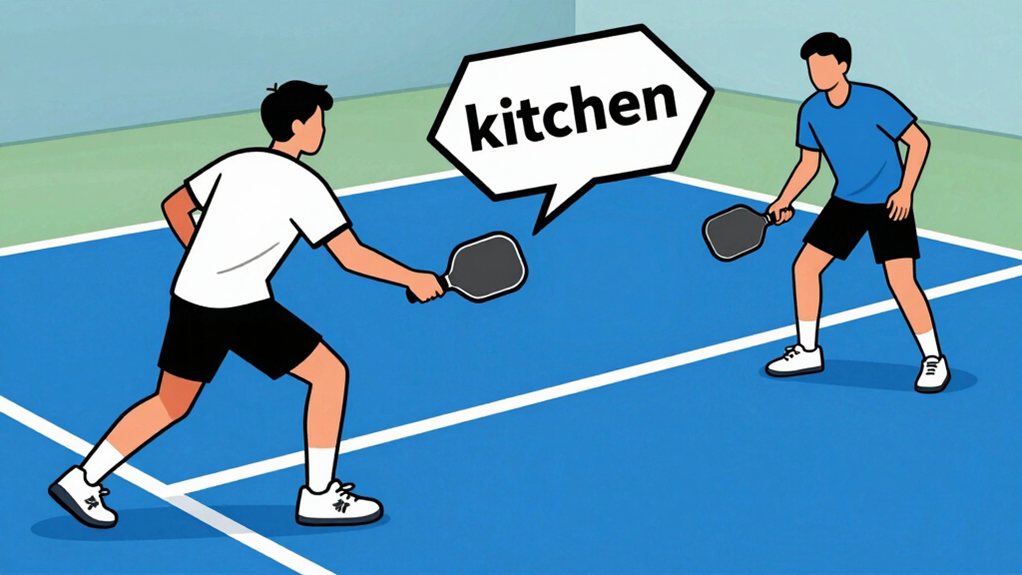
Although the kitchen rule seems simple, many players lose points by making these common mistakes. You must keep both feet completely outside the non-volley zone before and during any volley. Touching the kitchen line, even with one toe, results in an immediate fault. Your momentum carrying you into the kitchen after hitting the ball also costs you the point.
Here are the most frequent violations:
- Stepping on or over the kitchen line while attempting a volley
- Failing to establish both feet outside the zone before swing completion
- Allowing momentum to drag your feet into the kitchen after the shot
- Hitting the ball out of the air while any part of your body touches the zone
You need to stay fully behind the line until your momentum stops completely.
Using the Kitchen Strategically to Win Rallies
Now that you understand the most common kitchen faults, you can learn to use this zone as a powerful weapon in your game.
- Position yourself in the kitchen when your opponent hits a weak return.
- Wait for the ball to bounce before hitting it from inside the zone.
- Use soft dinks to drop the ball close to the net.
- Force your opponent to lift the ball by hitting low shots.
- Move your opponent side to side to create an opening.
- Stay patient and wait for the perfect opportunity to attack.
When you control the kitchen, you control the rally. Hit sharp angles to push opponents out of position.
Use the 7-foot depth to buy yourself time.
Keep your paddle up and be ready to react. Your goal is to make your opponent hit upward while you stay aggressive.
Kitchen Faults: Pictures and Real Examples
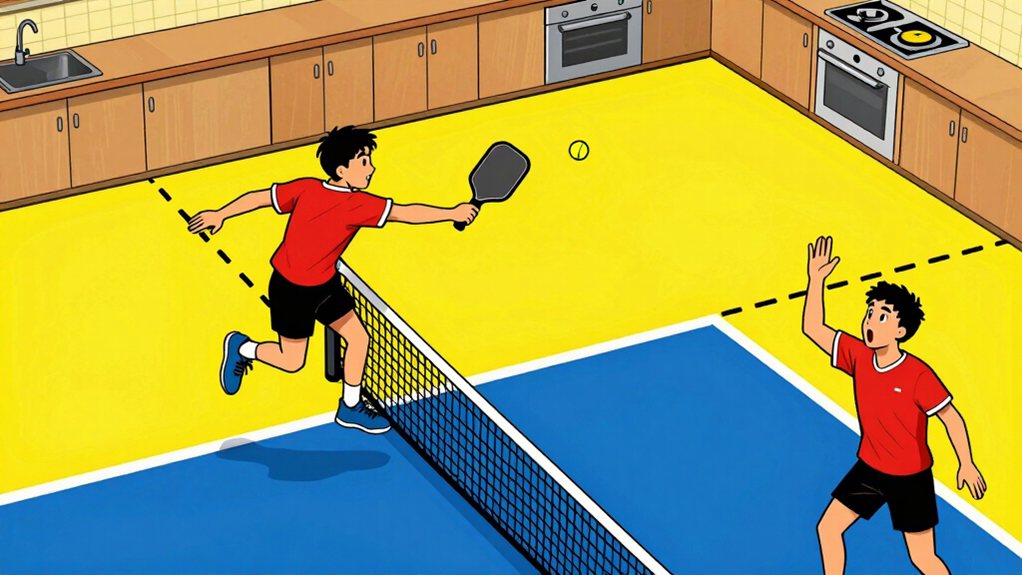
Identifying kitchen faults protects your scorecard and keeps you in the game. You commit a fault when any part of your body, paddle, or clothing touches the non-volley zone while volleying. This includes touching the kitchen line. Momentum carries you into the zone after your shot. You also fault if you volley while standing on the line.
- Momentum Fault, Your momentum carries you into the kitchen after hitting a volley. You lose the rally even if you regain balance before stopping.
- Paddle Contact Fault, Your paddle touches the kitchen line while you’re in the air hitting a volley. The line counts as part of the kitchen.
- Toe Touch Fault, One toe stays on the kitchen line as you swing. Even a tiny touch means an immediate fault.
- Step-In Fault, You step inside the kitchen to smash an overhead before contact. Both feet must land outside before you volley.
Frequently Asked Questions
Can I Step in the Kitchen During a Volley if I Don’t Touch Line?
No, you can’t step into the kitchen while volleying; even if you avoid the line, entering the non-volley zone with any part of your body or momentum causes an immediate fault, you lose the rally.
Does the Kitchen Rule Apply the Same in Both Singles and Doubles Play?
Yes, the kitchen rule applies identically in both singles and doubles play. You must keep both feet completely outside the non-volley zone when volleying, whether you’re playing alone or with a partner on the court.
Can I Use a Drop Shot From Inside the Kitchen Legally?
Yes, you can legally hit a drop shot from inside the kitchen. The rule only prohibits volleying (hitting the ball before it bounces) while you’re standing in the kitchen. As long as you let the ball bounce first, you can hit your drop shot from there.
Is the Non-Volley Zone Used in Tournament Matches Identical to Casual Play?
Yes, the 7-foot non-volley zone applies 100% identically in tournament and casual play. You follow the same kitchen boundaries, foot placement requirements, momentum rules, and fault consequences regardless of competition level. The USAPA rules remain consistent everywhere.
Why Is the Kitchen Called the Non-Volley Zone in the First Place?
Pickleball borrowed the term “kitchen” from shuffleboard, where you couldn’t score. You can’t volley in this 7-foot area, that’s why it became the non-volley zone. Early rules prevented aggressive net play to keep rallies longer.
Final Thoughts
Now you understand the kitchen and its rules. Remember, you cannot volley when any part of your body touches the 7-foot non-volley zone. Your feet must stay completely outside the kitchen lines during volley shots. Use the kitchen strategically—let balls bounce before you attack. Practice proper foot placement until it becomes second nature, like knights practicing their swordsmanship for years. Master these rules, and you will win more points.