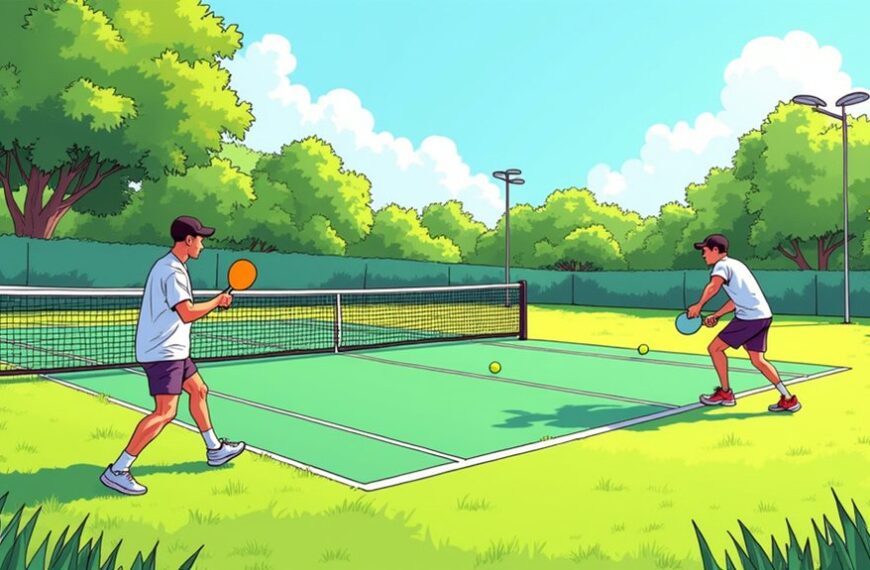
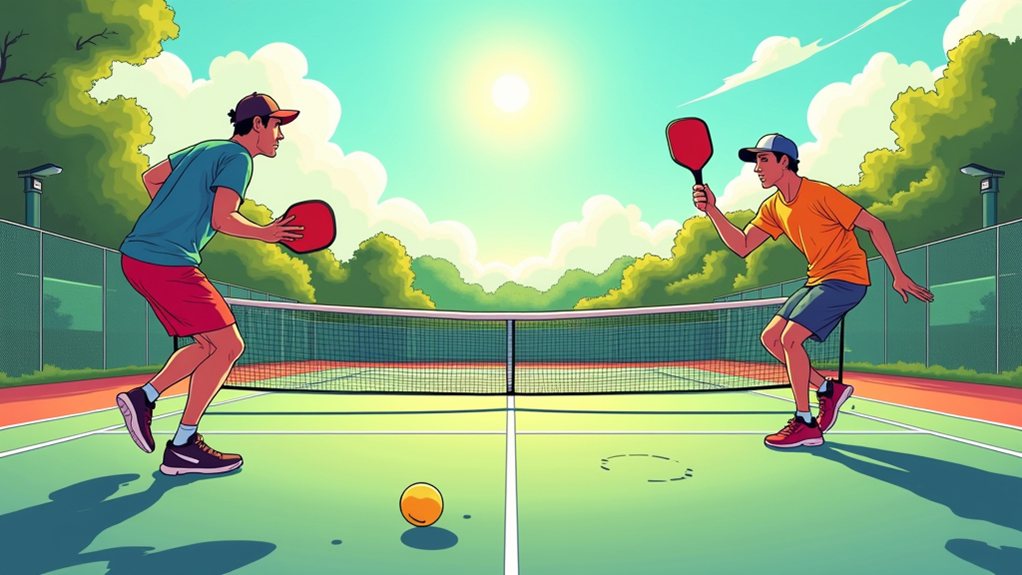
The double bounce rule requires the ball to bounce once on each side before players can volley in pickleball. First, the serve must bounce on the opponent’s side. Second, the return must bounce on the server’s side.
After these two bounces, both teams may volley or play off the bounce. This rule prevents serve-and-volley tactics and gives equal net control opportunity. Violations result in immediate fault. Wheelchair players receive an exception allowing two bounces on their side. You’ll learn more about strategy and specific fault variations next.
The Two-Bounce Rule Explained: What It Is and Why It Matters
The two-bounce rule is one of the most important regulations in pickleball. It determines how you must play the first two shots of each rally.
The two-bounce rule requires the serve and return to each bounce once before players can volley, ensuring fair play and extended rallies.
What the rule requires:
- The serve must bounce on your opponent’s side before you return it
- Your return must bounce on your side before the serving team hits their third shot
- After these two bounces, both teams may volley or play off the bounce
Why this rule matters:
- It prevents serve-and-volley tactics common in tennis
- It gives both teams equal opportunity to control the net
- It extends rallies and creates more strategic play
The rule applies to singles and doubles formats. You follow Rule 7.A in official regulations. The term “double-bounce rule” is a common misnomer; the official name is “two-bounce rule.” A separate fault occurs only if the ball bounces twice on the same side before a player hits it. In padel, a similar concept exists where a double bounce in the service box automatically awards the point to the serving side without requiring a rally.
How the First Three Shots Must Play Out?
Now that you understand the two-bounce rule, here’s exactly how the first three shots must unfold:
- The serve is shot one. You hit the ball over the net. It must bounce in the opponent’s service court. The receiving team can’t volley it. They must let it bounce first.
- The return is shot two. After the ball bounces on your side, you hit it. Your return must land in the opponent’s service court. The serving team can’t volley this return. They must let it bounce first.
- The third shot is shot three. The serving team hits the ball. You may volley now. You may also play the ball off the bounce. The rally is open for aggressive play.
The first two shots require bounces. The third shot gives you options. You control the game’s pace from this point forward.
Two-Bounce Rule Violations and Faults
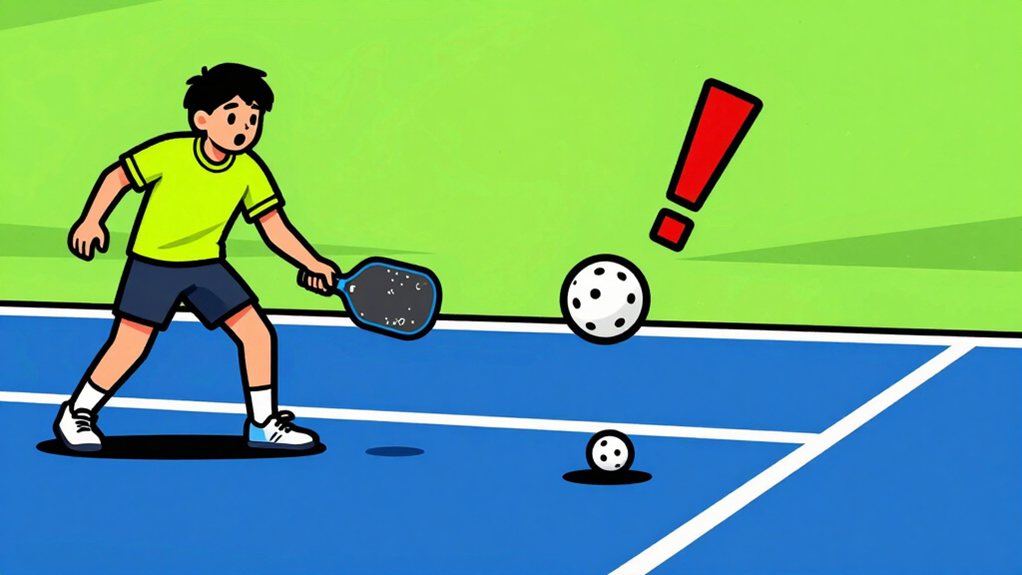
When you break the two-bounce rule, the rally ends immediately.
You commit a premature volley fault if you hit the ball in the air before it bounces on your side after the serve or return.
You also cause a double bounce violation when the ball hits the ground twice on one side before you strike it.
Premature Volley Faults
If you volley the ball before it bounces twice in a rally, you commit a fault and lose the point. Premature volley faults happen when you hit the ball before it bounces twice. The two-bounce rule requires a bounce on each side before volleying begins.
You can’t volley the serve. You can’t volley the return. Wait until the third shot to volley. Violation gives your opponent the point. This applies to singles and doubles. It creates fairer rallies by preventing net dominance. Here’s the sequence:
- Serve must bounce on receiver’s side
- Return must bounce on server’s side
- Then players may volley
Volleying before step three is a fault.
Double Bounce Violations
While premature volley faults occur when you hit the ball too early, double bounce violations happen when the ball bounces twice on one side before anyone makes contact. These violations end the rally immediately. When the ball bounces twice on the return team’s side, the serving team wins the point. When it bounces twice on the serving team’s side, the return team earns the point.
The key is remembering: you must return the ball before it bounces twice on your side of the court. This rule applies at all times during play, not just during the serve.
| Violation Type | Result |
|---|---|
| Double bounce on return side | Serving team scores |
| Double bounce on serve side | Return team scores |
| When violation occurs | Rally ends immediately |
Stay alert during every rally. Watch the ball closely. Make contact before the second bounce occurs on your side.
Wheelchair Player Exceptions to the Two-Bounce Rule
Wheelchair players receive special exceptions to the two-bounce rule.
You can let the ball bounce twice on your side before you must return it.
This adaptive play exception accommodates the unique mobility challenges wheelchair players face.
Wheelchair Bounce Allowance
During play with wheelchair players, the standard two-bounce rule changes to allow extra flexibility. This exception accommodates the physical demands of wheelchair movement on the court. You must comprehend how the rule applies:
- You may let the ball bounce twice before you return it
- Both bounces can occur anywhere on your side of the net
- The extra bounce provides time to position yourself properly
- Your wheelchair creates slower court coverage than standing players
- This allows fair competition against able-bodied opponents
The rule recognizes that wheelchair players can’t move as quickly across the court. You retain the option to volley after one bounce or play the ball off the second bounce.
When playing against wheelchair users, you must wait for the ball to bounce appropriately. This ensures competitive balance while maintaining rally integrity. The allowance applies only to wheelchair players during matches.
Two-Bounce Rule Exemptions
If you play against wheelchair users, the standard two-bounce rule has specific exceptions for them. The standard rule requires the ball to bounce once on each side before volleys begin. However, wheelchair players may let the ball bounce twice before returning it. This exception accounts for the mechanical challenges wheelchair athletes face.
- The ball can bounce twice on the wheelchair player’s side.
- Both bounces may occur anywhere on the playing surface.
- Opponents must still follow standard two-bounce requirements.
- This rule guarantees fair play across all ability levels.
These exceptions apply in all tournament and recreational play. You should familiarize yourself with these rules before competing against wheelchair athletes.
Understanding the rules prevents disputes and promotes inclusive gameplay. The exception allows the ball to bounce twice on the wheelchair player’s side of the court.
Both bounces can occur anywhere within the playing surface boundaries.
Your opponents must still comply with the standard two-bounce rule.
This exception guarantees fair competition for wheelchair athletes.
Adaptive Play Exceptions
In adaptive play, wheelchair players have specific exceptions to the two-bounce rule. You receive an extra bounce when competing in wheelchair-friendly events. The ball can bounce twice on your side before you must return it. This accommodates the physical demands of wheelchair mobility.
Key wheelchair player exceptions:
- You may wait for the second bounce before hitting.
- The extra bounce can occur anywhere on your side of the net.
- Your opponent still must return the ball after one bounce.
- This exception only applies in designated adaptive divisions.
We recognize that wheelchair players need additional time to position themselves. The rules allow this accommodation to ensure fair competition.
You must still hit the ball before a third bounce occurs. Familiarize yourself with these adaptive play guidelines before competing. These exceptions promote inclusive gameplay while maintaining competitive integrity.
Two-Bounce Rule Mistakes That Cause Faults
Understanding the two-bounce rule keeps you from making costly faults. You must wait for the ball to bounce once on your side before volleying during the first two shots of any rally. Violating this rule results in immediate fault and loss of the point. Here are the most common mistakes that cause faults:
| Mistake | Action | Result |
|---|---|---|
| Volleying the serve | You hit the ball before it bounces | Fault |
| Volleying the return | You hit the return before it bounces | Fault |
| Hitting after two bounces | You let the ball bounce twice | Fault |
| Early third shot | You volley before the return bounces | Fault |
| Wrong sequence | You fail to follow serve-return-bounce order | Fault |
Practice the correct sequence: serve bounces, return bounces, then you volley or play off the bounce.
Why Pickleball Requires Two Mandatory Bounces?
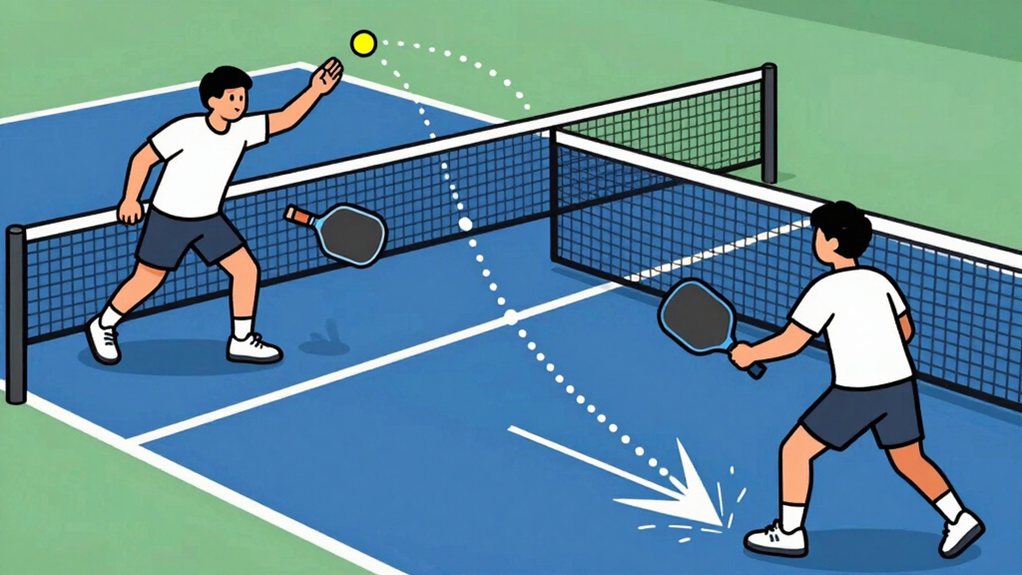
The two-bounce rule exists because pickleball designers wanted to eliminate the serve-and-volley advantage found in tennis. This rule creates fair play by forcing both teams to engage in groundstrokes before volleys begin.
How it works:
- The serve must bounce on the receiving side before you return it.
- The return must bounce on the serving side before you hit the third shot.
- After these two bounces, you may volley or play off the bounce.
This requirement prevents powerful servers from dominating the game immediately.
You can’t rush the net after your serve.
Your opponents can’t attack your serve with instant volleys.
The rule extends rallies and gives both teams equal opportunity to control the point.
Designers created this regulation to balance skill levels and keep games competitive for players of all abilities.
How the Two-Bounce Rule Shapes Pickleball Strategy?
Because the two-bounce rule dictates when you can volley, it directly shapes how you position yourself and plan each shot.
Because the two-bounce rule decides when you can volley, it directly shapes your positioning and shot planning.
- You must stay back until the ball bounces twice.
- The third shot is your first opportunity to attack.
- Use a drop shot to move your opponents forward.
- Hit a dink to force a rally and wait for your opening.
- Wait for the ball to cross the net before advancing to the kitchen.
- The rule forces you to play defense early in each rally.
- You win points by being patient and waiting for the right moment.
- Mastering this rule transforms how you approach every point.
Frequently Asked Questions
Can You Volley in the Kitchen After the Two Bounces?
Yes, you can volley after the two bounces, but not in the kitchen unless the ball has bounced there first. The kitchen rule still applies – you cannot volley in the kitchen unless the ball has bounced in that area.
Does the Two-Bounce Rule Apply When the Serve Lands in the Opponent’s Kitchen?
You serve and the ball lands in the opponent’s kitchen, yes, the two-bounce rule still applies. Your return must bounce on their side before they may volley and they must return it before volleying.
How Many Bounces Are Allowed Before a Player Must Return the Ball?
You must return the ball after it bounces once on your side and once on your opponent’s side. If you volley early you’ll lose the rally and the point goes to your opponent immediately now.
Can a Player Enter the Non‑Volley Zone Before the Ball Has Bounced Twice?
Yes, you can enter the non,volley zone before the ball has bounced twice, but only after the third shot has been completed. Since the serve must bounce once and the return must bounce once, waiting two bounces allows you to volley legally.
Does the Two‑Bounce Rule Affect How Points Are Scored?
Yes, the two-bounce rule directly impacts point scoring in pickleball. When you volley before the required two bounces, you commit a fault and lose the rally. If the ball bounces twice before your return, your opponent scores the point.
Final Thoughts
Follow these steps to obey the two‑bounce rule:
- Let the ball bounce once on your side after the serve.
- Let it bounce once on the opponent’s side before you volley.
- Don’t hit the ball before it bounces twice in total.
We’re using the rule to place your opponent deep and force mistakes. Remember, each side must allow two bounces before volleying. This gives you time to move quickly and improves your consistency.