
Stacking in pickleball is a strategy where both teammates stand on the same side of the court instead of opposite sides. This formation keeps your strongest forehand in the center and creates better shot angles. You follow the even-odd rule: serve from the right at even scores (0, 2, 4, 6, 8, 10) and from the left at odd scores (1, 3, 5, 7, 9).
Use open-palm hand signals to indicate a switch and closed fists to stay in position. You might stack when one player has a stronger backhand, you want to confuse opponents, or you need to hide a weakness. This move is completely legal in tournaments and league play. You’ll find more advanced techniques as you continue.
What Is Stacking in Pickleball and Why It Matters?
Stacking in pickleball is a strategy where both teammates position themselves on the same side of the court instead of the standard opposite sides.
Stacking in pickleball means teammates line up on the same side, ditching the usual opposite‑side formation.
Why teams use stacking:
- You keep your strongest forehand in the center.
- You create easier angles for shots.
- You hide weaknesses on either side.
- You confuse opponents with unfamiliar positioning.
Common situations for stacking:
- A left-handed player and a right-handed player pair together.
- One player has a stronger backhand than forehand.
- You want your best player to cover more ground.
Stacking lets you play to your strengths. You position yourself where you perform best. The strategy is completely legal in tournaments and league play.
Your opponents must still play by standard serving and receiving rules.
You should try stacking if you notice patterns in your games. Identify which side gives you better shots. Test the strategy during practice first.
Most players discover that stacking improves their court coverage and shot options within just a few matches. In open play settings, stacking can sometimes lead to court rotation conflicts when advanced players use the strategy to dominate courts and avoid mixing with lower-skill players.
The Even-Odd Rule: How Stacking Positions Actually Work
Understanding the even-odd rule is important for stacking, because it dictates exactly where you begin on the court. This rule controls your starting position based on your score.
When your score is even (0, 2, 4, 6, 8, 10), you serve from the right side. When your score is odd (1, 3, 5, 7, 9), you serve from the left side. Your partner’s position follows the same pattern.
Here is how stacking works with this rule:
- At the start, you and your partner stand on the same side of the court.
- The server steps into the correct service court based on the even-odd score.
- Your partner lines up beside you, waiting by the sideline.
- After you serve or return the ball, both players shift to their preferred positions.
This positional shift is the core of stacking. You must always serve from the correct court. Your partner must receive from the opposing court. The rule doesn’t change. It only determines where you begin each point.
When to Use Stacking in Your Game?
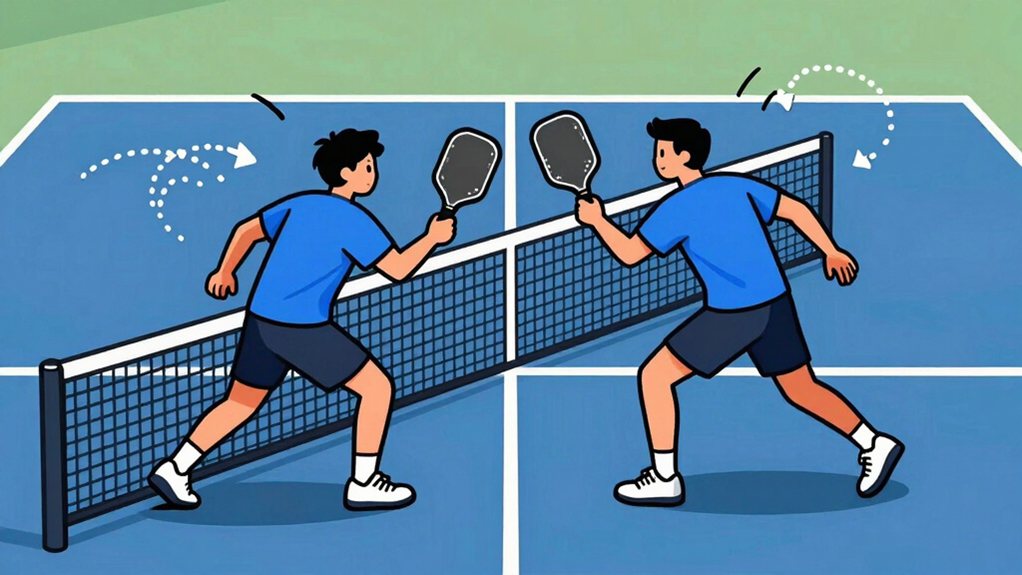
When should you consider using stacking in your game? Use stacking when you have a lefty-righty combo. This benefits from having both forehands in the center. You should also stack when a player has a stronger forehand and you want that shot in the middle.
Use stacking with a lefty‑righty combo to keep both forehands central, or when a player’s stronger forehand demands the middle.
Stack if your team has a weakness you need to hide. Stack when you want to exploit an opponent’s weak side.
Your team can stack when:
- You serve from the right side with an even score.
- You serve from the left side with an odd score.
- You return serve from the proper court.
Communicate with your partner. Use an open palm signal to indicate a switch. Use a closed fist to stay in position. Practice signals.
Why Stacking Gives Teams a Strategic Advantage?
One reason stacking gives teams a strategic advantage is that it lets you maximize your strengths and hide your weaknesses. You place your strongest player in the center where they cover the most court. Your weaker player moves to the sideline where they face fewer difficult shots. This positioning gives you control over point flow.
- You keep both forehands in the middle of the court, giving you the most powerful shot options.
- You force opponents to guess which player will hit the return, creating confusion.
- You protect a player’s weak backhand by moving them to a position where they rarely must use it.
- You create better angles for attacks because your players occupy the ideal side for their skill level.
Hand Signals and Drills to Practice Stacking
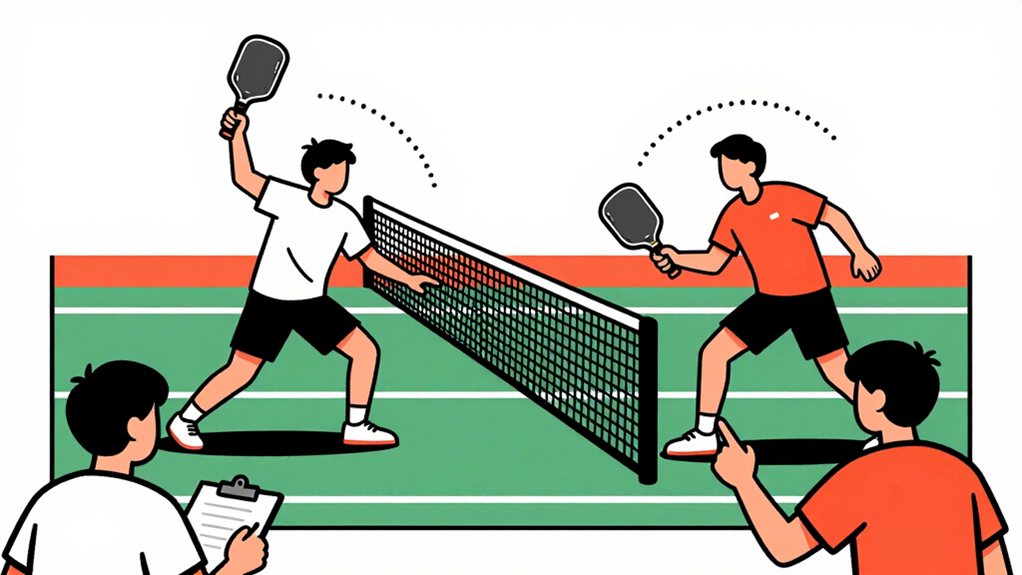
Effective communication makes stacking work. Use simple hand signals to tell your partner what you plan to do. An open palm with all five fingers spread means you’re switching. A closed fist means stay in your current position. Practice these signals until they become automatic.
Drill 1: Hit 10 deep serves or returns. Switch positions as the ball travels. Aim for 80% success.
Drill 2: Play the modified 7-Eleven game. Start from your non-preferred side. Return the ball. Race to the kitchen. This builds speed and positioning awareness.
Practice fake switches too. You’ll read your partner’s signals quickly during matches.
Frequently Asked Questions
Is Stacking Allowed in Tournament Play?
Yes, you can stack in tournament play. Stacking is legal under official pickleball rules with no positioning restrictions beyond serving and receiving requirements. You just follow the even-odd rule for serve positioning.
Can I Stack if I’M the Only Lefty?
Yes, you can stack with only one lefty. Many teams use this to keep their strongest forehand in the center. The lefty-righty combo naturally creates ideal court coverage and forces opponents to adjust their positioning.
Does Stacking Change the Serve Order or Scoring?
No, stacking doesn’t change your serve order or scoring. You still follow the even-odd rule: serve from the right on even scores, left on odd. Specific players must serve and return from their required service courts regardless of your positioning.
What if My Partner Doesn’T Switch on Time?
Picture perfect positioning meets chaotic confusion, when your partner doesn’t switch on time, you leave gaps in coverage, opponents target the open space, you lose offensive advantages, and your team struggles to regain proper court positioning.
How Do I Defend Against a Stacked Opponent?
Target the player’s weak side, force them to hit with their backhand, and exploit the gaps in their formation. You can also aim at the player who’s out of position before they recover.
Final Thoughts
Stacking works. Stacking also confuses opponents. You control positioning. They react to you. Master the even-odd rule. Communicate with your partner. Use clear hand signals. Practice these steps:
- Determine your stronger player’s position.
- Agree on three basic hand signals.
- Switch positions before the serve.
- Recover quickly after each rally.
You will win more points. They will make more mistakes. Stack smart. Play to win.