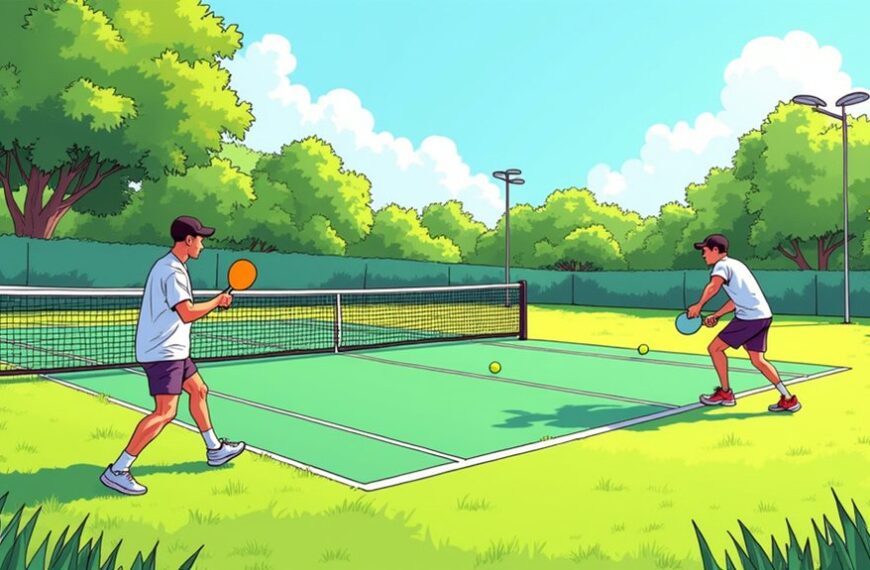
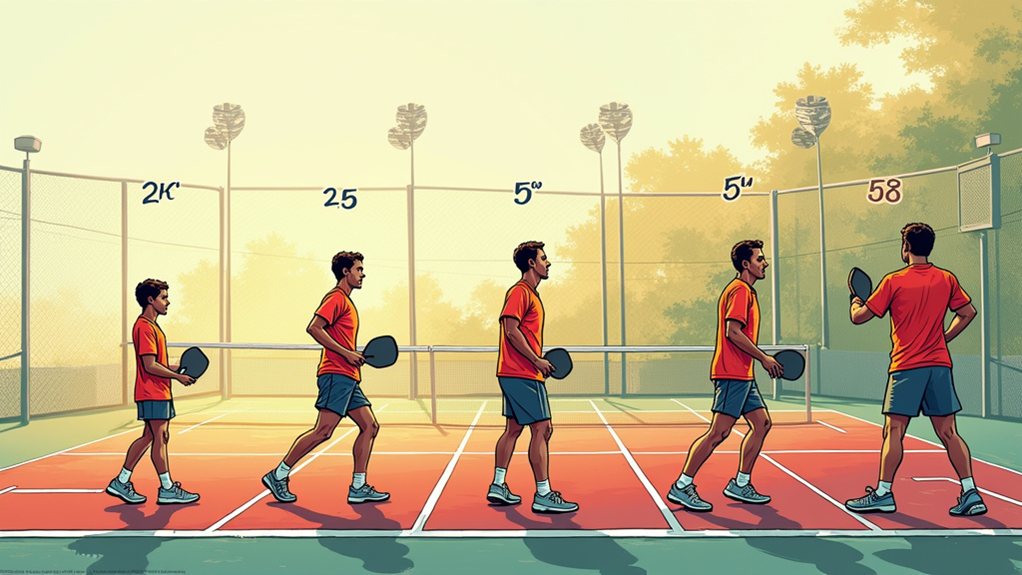
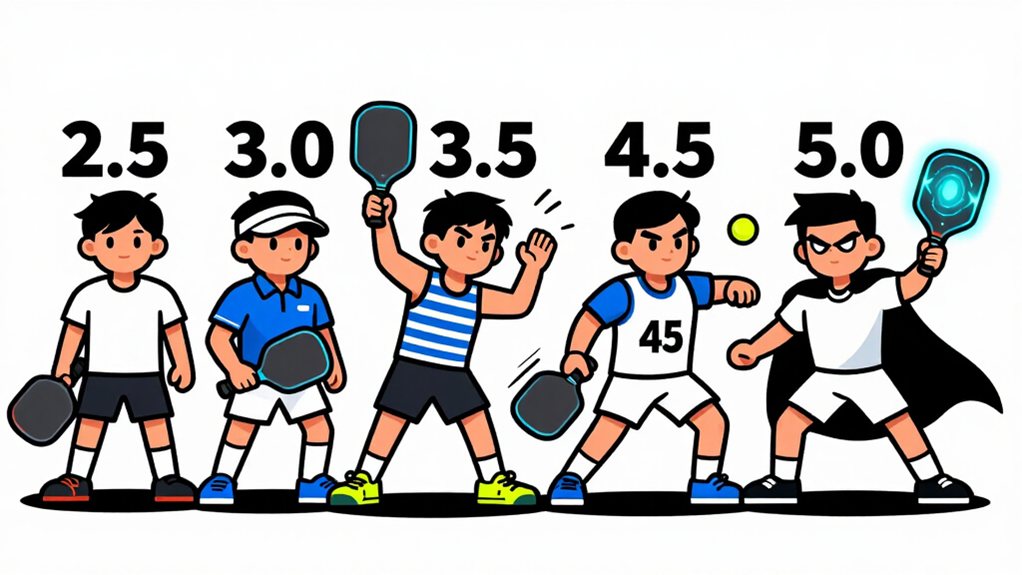
Pickleball rates players from 2.5 to 5.0. A 2.5 rating means you know basic rules and can serve and return reliably. A 3.0 shows developing consistency with better shot placement. A 3.5 indicates intermediate tactical play and strategic awareness.
At 4.0 you have a complete game with soft kitchen shots and patient rally construction. 4.5 and 5.0 players add spin, stacking, and advanced attacking. Honest self-assessment requires video review and tracking errors, consistency, and kitchen play. As you progress, you’ll discover more advanced techniques and competitive strategies.
Pickleball Ratings Explained: What 2.5 to 5.0 Actually Mean
Pickleball uses a 2.5 to 5.0 rating scale to measure skill levels. This numerical system helps players, coaches, and tournament organizers assess ability objectively. Ratings increase by 0.5 increments.
A 2.5 rating indicates a beginner who understands basic rules. A 3.0 rating shows developing consistency. A 3.5 rating reflects intermediate strategic play. A 4.0 rating represents advanced all-around capability.
A 2.5 rating shows a beginner grasping fundamentals; a 3.0 signals developing consistency, while a 3.5 marks intermediate strategy emerging.
A 4.5 rating shows high-level competitive tactics. A 5.0 rating demonstrates expert mastery. Ratings help you find appropriate competition. They help us track improvement over time.
When you register for tournaments, your rating determines your division. You can self-rate using official guidelines. You can earn official ratings through tournament performance. Higher ratings mean more strategic, consistent play. Many pickleball camps use your DUPR rating to place you in the correct skill group before registration is confirmed.
Beginner to Intermediate: Skills at 2.5, 3.0, and 3.5 Levels
As you move from 2.5 to 3.5, you’ll see clear improvements in consistency, strategy, and court awareness.
At the 2.5 level:
- You establish reliable serves and returns
- You begin short rallies with basic consistency
- You understand kitchen rules and restrictions
- You recognize the dink shot as a strategic option
- You develop basic court positioning
At the 3.0 level:
- Your serves become more consistent
- You practice third shot drops with intent
- You maintain longer dinking rallies with your partner
- You reduce unforced errors through improved placement
- You differentiate between drop shots and drive shots
At the 3.5 level:
- You execute consistent third shot drops
- You maintain controlled dink rallies
- You position yourself better on the court
- You read situations and adjust your shot selection
- You demonstrate improved tactical awareness
Reaching 4.0: The Complete Game Every Player Needs
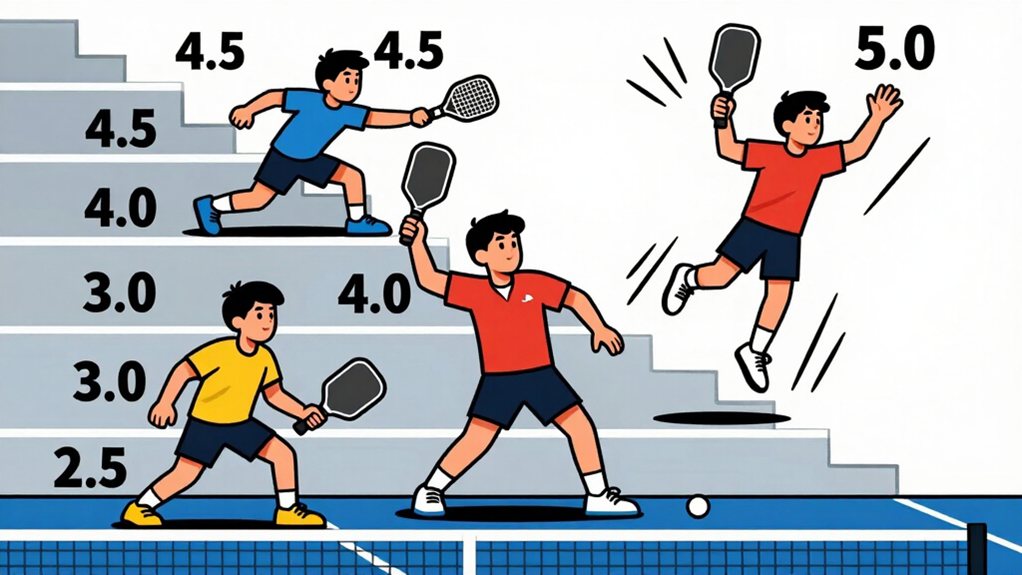
When you reach the 4.0 level, you demonstrate a strong all-around game with consistent execution of all shot types. Your game now includes strategic attacks at opportune moments, not before.
You control the kitchen with soft shots that land precisely where you intend. You move opponents off the baseline with purpose.
You read the flow of each rally and adjust accordingly.
Key 4.0 skills include:
- Consistent execution across all shot types
- Strategic attack timing
- Controlled soft shots in the kitchen
- Tactical shot placement
- Match flow reading and adjustment
At this level, you show improved patience.
Patience becomes a weapon, as you let rallies unfold and strike when the opening appears.
You understand when to attack and when to dink. Your placement becomes more intentional, targeting specific areas to create opponent weakness.
This strategic approach distinguishes your advanced game.
Elite 4.5 and 5.0 Play: Competitive Tactics That Work
At the 4.5 and 5.0 levels, you add spin integration and stacking strategies to your competitive toolkit.
Spin integration means using topspin, backspin, and sidespin to control your opponents’ shots and create unpredictable bounces.
Stacking strategies involve you and your partner switching court positions to exploit weaknesses in your opponents’ formation.
Spin Integration
The strategic use of spin lifts your game to competitive 4.5 and 5.0 levels. You integrate spin into every shot type. Your topspin drives keep balls low and fast. Your backspin drops slow the ball for net play. Your sidespin creates sharp angles.
Key spin techniques at this level:
- Apply topspin on hard drives to keep shots from sailing.
- Use backspin on dinks to make balls die at the net.
- Hit sidespin returns to push opponents wide.
- Switch spin types mid-rally to disrupt opponent rhythm.
- Read opponent spin to anticipate ball behavior.
You practice spin consistency daily. Your goal is predictable spin placement that forces errors.
Stacking Strategies
Although stacking requires practice, it gives you strategic positioning advantages on the court. At the 4.5 and 5.0 levels, you use stacking to create offensive opportunities and confuse opponents.
Your team aligns on the same side before the serve, then switches after contact. This movement puts your stronger player in the ideal hitting position.
Key stacking techniques include:
- Start with both partners on the serving side
- The server moves to the center after contact
- Your partner slides to the opposite side
- The receiving team mirrors your movements
- Execute quick switches to maintain positioning
How to Assess Your Current Skill Level Honestly?
Start by honestly evaluating your current abilities against the skill level descriptions provided. Match your game to the skill level indicators that fit best. Don’t inflate your rating based on isolated good shots. Use these steps:
Honestly evaluate your game: video matches, track errors, assess serves, drops, and kitchen play to avoid inflating your rating.
- Video your matches. Watch your actual gameplay, not your perception of it.
- Identify consistent patterns. One great dink doesn’t equal a 4.0 game.
- Seek honest feedback. Ask skilled players to assess your true ability.
- Count your errors. Track unforced errors during practice sessions.
- Evaluate serve consistency. Note how many serves land in the correct court area.
- Assess third shot drops. Count successful drops versus drive shots.
- Rate your kitchen play. Determine if you control the non-volley zone consistently.
Be objective. Overrating yourself hurts proper development.
Your Path Forward: Moving Up in Pickleball Ratings
Once you’ve honestly assessed your current skill level, you can begin planning your progression through the ratings. Set clear goals for each rating tier. Focus on specific weaknesses identified during self-assessment. Track your improvement over time.
Celebrate small wins along the way.
Consider these proven advancement strategies:
- Practice your third shot drop until it becomes automatic
- Play with partners who challenge your current abilities
- Dedicate time to dinking rallies to develop soft game control
- Learn proper kitchen positioning and footwork patterns
- Compete in local tournaments to gain match experience
Frequently Asked Questions
How Long Does It Typically Take to Advance One Skill Level in Pickleball?
It typically takes you about 6-12 months of consistent practice to advance one skill level in pickleball, but your natural ability, practice frequency, and coaching access can speed up or slow down your progress *noticeably*.
What’s the Difference Between DUPR Ratings and Standard Pickleball Ratings?
DUPR ratings use algorithm-driven match data to calculate your rating dynamically, while standard pickleball ratings (2.5-5.0) are typically self-assessed or evaluator-assigned skill levels based on observed play consistency, shot variety, strategic awareness, and competitive experience.
Can I Play in Tournaments at a 2.5 Skill Level or Is That Too Low?
Yes, you can play in tournaments at a 2.5 skill level. Many tournaments have divisions for all skill levels, allowing you to compete against players at your own level. Start with local events to build experience.
Do Older Players Have Realistic Chances of Reaching 4.0+ Skill Levels?
Can’t you reach 4.0+? Yes, you can. Older players bring patience, strategic thinking, and consistent practice that accelerates your skill development. Your experience translates well, and you achieve tournament-level play with dedicated training and commitment.
How Do I Find Partners at My Specific Skill Level for Doubles Play?
You can find partners at your skill level by joining local pickleball clubs, posting in community forums, using apps like Meetup, asking at courts, and participating in rated round-robin events that group players by ability.
Final Thoughts
Use the guide to find your level. 1. If you’ve identified your rating, record it. 2. Practice 3 sessions per week regularly, focusing on dink consistency and third-shot drops. 3. Enter a sanctioned tournament to earn a higher rating. In 2023, USA Pickleball reported 4.8 million active players, a 20 % rise since 2021. This growth shows the importance of training. Follow these steps, track your progress, and improve. Set clear goals, track progress monthly, adjust plan.