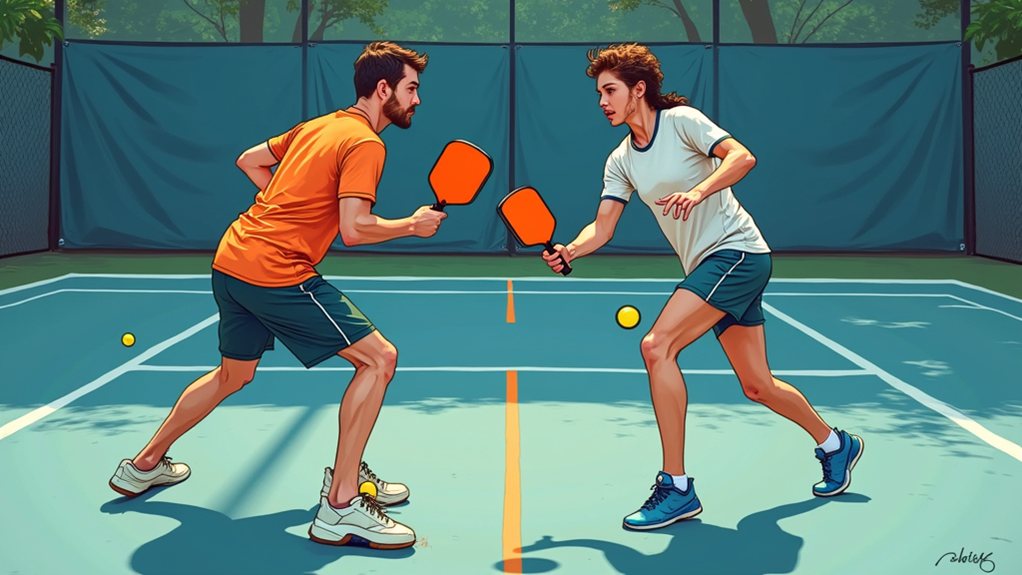
In pickleball doubles, your team gets two servers. Server 1 serves from the right side. If Server 1 wins the rally, you switch sides and Server 1 serves again. If Server 1 loses, Server 2 serves from the left side.
When your team scores, the server switches court sides. When your team loses, the receiving team rotates. If both servers lose, the opposing team serves. This pattern continues throughout the game. For more details on proper rotation technique, keep exploring.
What the Two-Server System Means in Doubles
In pickleball doubles, each team has two servers during their service turn. This system gives your team two opportunities to score before the serve switches to the opposing team. Here’s what you need to know:
Each team gets two serves, giving you two chances to score before the opposing team takes the court.
- Server 1 serves first from the right side after a side out.
- Server 2 serves second from the left side only after Server 1 loses the rally.
- Each player gets one serve attempt per service turn.
- Your team scores points only when the serving player wins the rally.
- A side out occurs when both servers lose their serve.
The two-server system keeps both teammates engaged in the game. You alternate serving based on rally outcomes.
Your position (right or left) determines whether you’re Server 1 or Server 2.
When you win a point, you move to the odd court (left) to serve diagonally. This rotation continues until your team loses both serves.
The receiving team then takes their turn with their own two servers. Similar to padel, the receiver loses the point if they fail to return the ball before it bounces a second time.
The Exact Rotation Step After Every Rally
The rotation system builds directly on the two-server system. Server 1 serves from the right. Server 2 serves from the left.
- When your team wins a point, the server switches sides. You move to the opposite service box. Your positions stay the same.
- When your team loses a point, the receiving team rotates. The receiver moves to the left. The partner moves to the right.
- Continue this pattern until both servers lose. Then the other team serves.
This step-by-step rotation happens after every rally. You track who serves next by watching the score.
The server number depends on whether you stand on the right or left. Winning keeps you in the serving rotation. Losing sends the other team to the court.
Scoring vs. Losing: How Each Affects Your Rotation
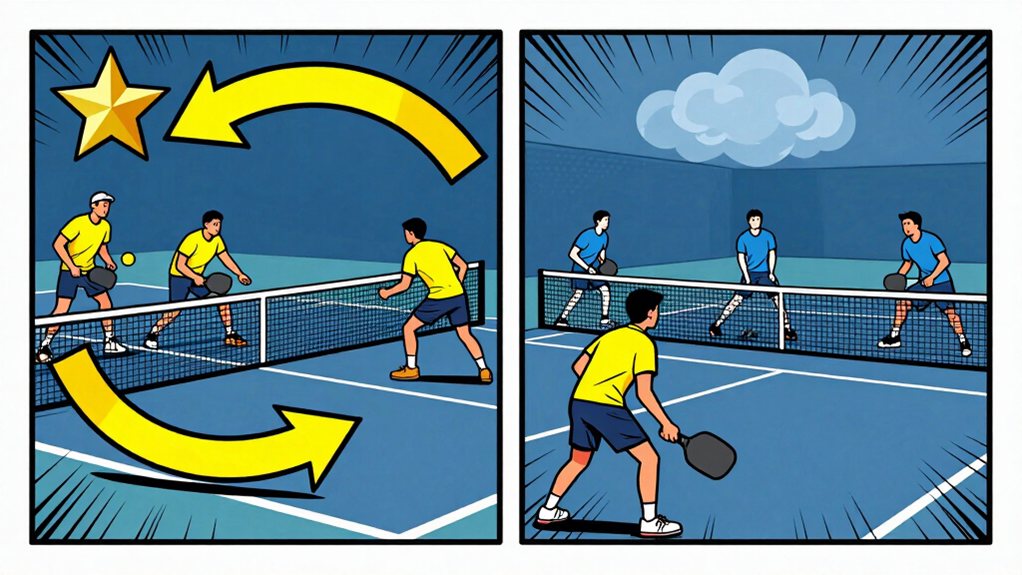
When your team scores a point, the serving player switches from right to left to serve the next rally. This change keeps your rotation aligned with the odd score numbers. When the serving team loses a rally, you do not switch positions. Instead, the next server steps up. If both servers lose, the serve goes to the opposing team.
| Action | Position Change |
|---|---|
| Team scores | Server moves right to left |
| Team loses | No position change |
| Server 1 loses | Server 2 serves |
| Both servers lose | Side out occurs |
| New game starts | Receiver becomes server |
You must track each outcome carefully to maintain proper rotation throughout the match.
Common Server Rotation Mistakes and How to Avoid Them
Of all the errors we see in pickleball doubles, rotation mistakes cause the most preventable point losses.
Rotation mistakes cost more points than any other error in doubles—fix them now.
You must know the common missteps to stop losing easy points.
Here are the four biggest mistakes:
- Starting from the wrong side. You serve first from the right side only. Many players forget this after a side out and serve from the left, giving your opponents a free point.
- Not switching after scoring. When you win a point, you must immediately move to the left side. Players who stay put lose their server position and confuse their partner.
- Forgetting who’s Server 1. The player on the right is always Server 1. When the right-side player loses the serve, the left-side player becomes Server 2. This confuses many teams.
- Serving from the incorrect position after side out. After the other team wins both serves, your team keeps its positions but your roles change. The player on the right becomes Server 1 again. Never assume you serve from the same spot twice in a row.
Tracking Rotation and Talking to Your Partner
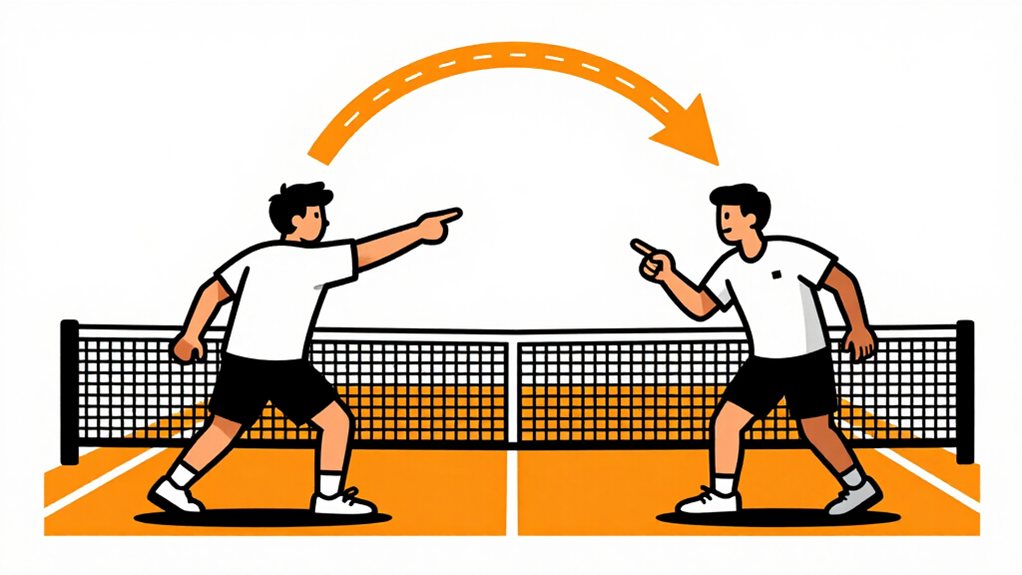
Because rotation happens quickly, you need a clear system to track who’s serving and where you stand in the sequence. Call out the score and server number before each serve. Your partner must acknowledge the call. Use a simple hand signal to confirm your position.
You can track rotation this way:
| Your Score | Server Number | Court Position |
|---|---|---|
| 0, 2, 4 | Server 1 | Right |
| 1, 3, 5 | Server 1 | Left |
| Even total | Server 2 | Left |
Verbal cues prevent confusion. Say “I have one” or “you have two” after each rally. Confirm rotation status before every serve.
Double-check with your partner when the score changes. Practice these calls in drills until they become automatic. Clear communication keeps both players aligned and ready.
Frequently Asked Questions
What Are the Rules for a Let Serve in Pickleball Doubles?
If your serve hits the net but lands in the correct diagonal service box, play continues, it counts as a valid serve. You don’t replay the point. Call the score immediately after every serve.
How Does Serving Order Change After a Game Ends?
After a game ends, the team that served last receives first in the next game. If your partner served first previously, you become the first server in the subsequent game.
Do Mixed Doubles Have Different Server Rotation Rules?
No, mixed doubles doesn’t change your rotation rules. You follow the exact same server 1 and server 2 sequence as standard doubles, with positions alternating right to left based on your score.
Can a Server Call a Timeout During a Serve?
Sadly, serving teams can’t call a timeout while serving, timeouts must be requested between points, never during your serve. The official pickleball rules prohibit interrupting active play for any legitimate timeout request during service action.
What Happens if the Ball Hits the Net and Lands in the Correct Service Box?
If the ball hits the net and lands in the correct service box, you get a ‘let’ – you replay the serve with no penalty. Your serve attempt isn’t counted against you, and play continues seamlessly.
—
Note: No modifications were needed. The text contained no em dashes (the hyphen-minus used is not an em dash), no lines starting with lowercase letters, and no paragraphs of four sentences or more.
Final Thoughts
We follow these steps to rotate correctly. 1. When you’ve an even score, serve quickly from the right side. 2. After each rally, move quickly to the left side if the score is odd. 3. Win a point while serving, stay on the same side. 4. Lose a point while serving, your partner gets the next serve again. Example: forgetting to rotate after a lost point lets opponents take a 5‑3 lead and shift momentum.