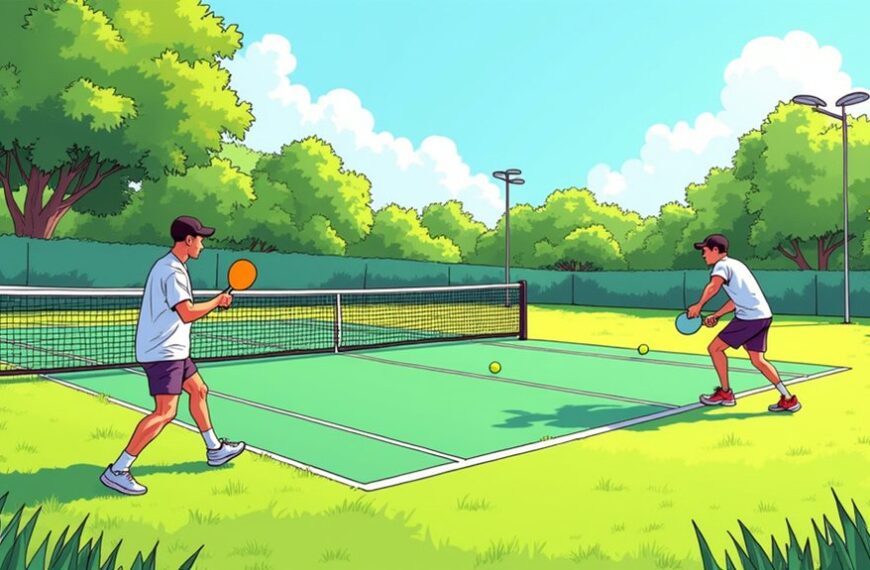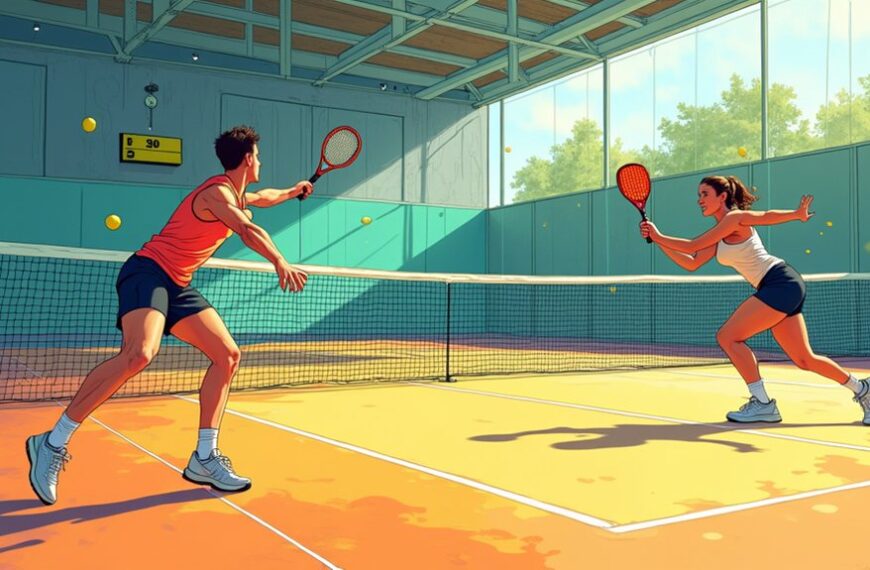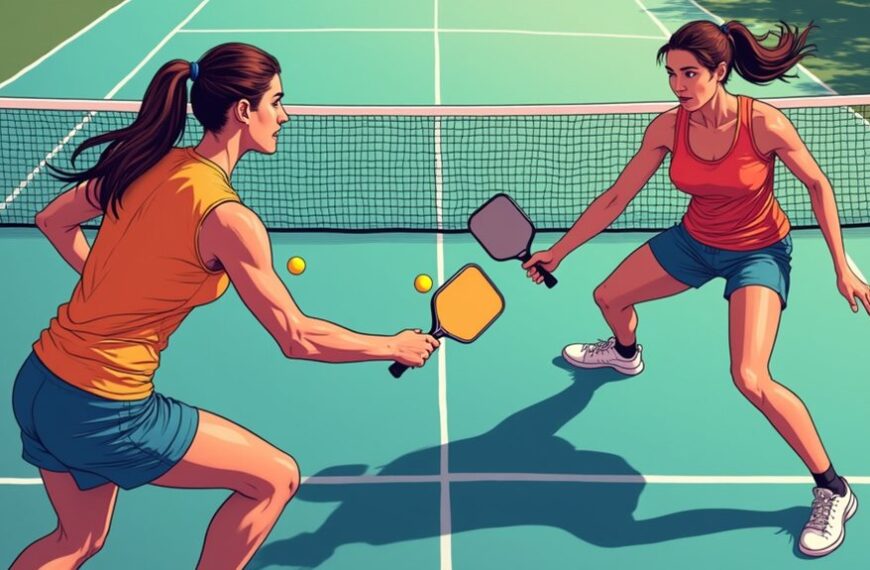
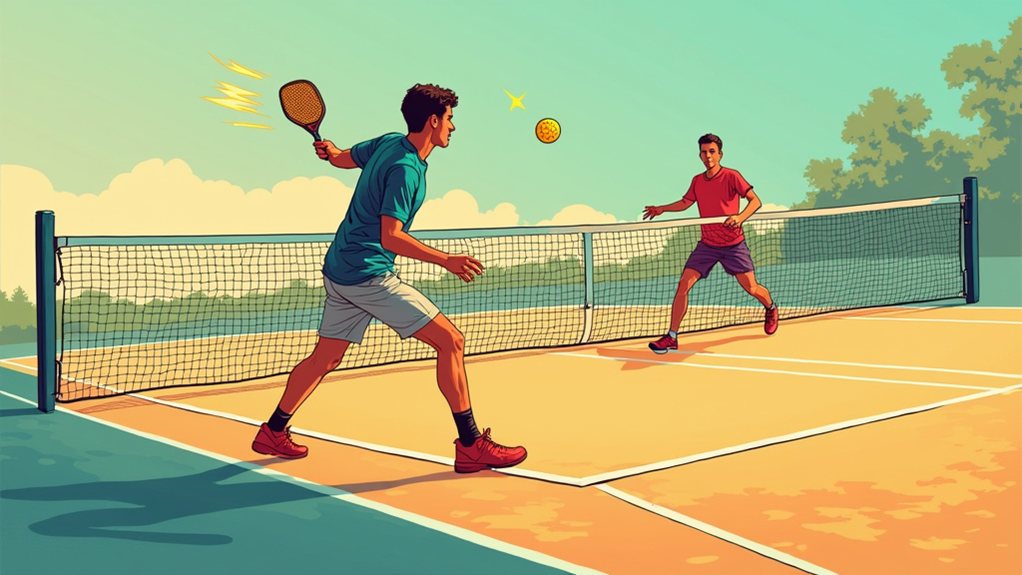
Pickleball uses side out scoring, so you only score on your serve. The serving team wins a point when it wins the rally while serving. The receiving team never scores, even if it wins the rally. The receiving team can only force a side out, transferring serve. This rule forces you to take serve before adding points, emphasizing control. You can learn more about rules and strategy in the rest of this guide.
What Is Side-Out Scoring in Pickleball?
Side-out scoring is the traditional and official scoring method for pickleball, recognized by USA Pickleball. In this system, only the serving team can score points.
You earn a point only when you win a rally while serving. The receiving team can’t score, even if they win the rally.
Key points about side-out scoring:
- Points go exclusively to the server who wins the rally
- The receiving team wins only the right to serve, not points
- A side-out occurs when the server loses a rally, transferring serve to opponents
- This rule applies to both singles and doubles play
- Games typically end when a team reaches 11 points with a 2-point lead
This scoring method is the original system created for pickleball. Most local clubs and recreational leagues continue to use it today.
The rule prevents the receiving team from gaining points without first securing the serve. It places strategic pressure on servers, who must win rallies to advance the score.
In tournament play, games may be extended to 15 or 21 points rather than the standard 11 points used in recreational settings.
The receiving team focuses on winning rallies to gain serve, not to score directly.
How Does Side-Out Scoring Work?
In side-out scoring, only the serving team can score points during a rally.
When you win a rally, you earn a point and continue serving.
When you lose a rally, the serve transfers to your opponent through a side-out.
Points Only On Serve
Under traditional side-out scoring, you score points only when you win a rally while serving. You earn a point each time you win a rally after you serve. The receiving team never scores a point, even if it wins the rally. If you lose the rally, you lose the serve, but the opponent doesn’t gain a point.
You can only increase your score during your turn as the server.
- You must serve to start each rally.
- Only the server can now score.
- A rally loss doesn’t give the opponent a point in this scoring system.
- Serve the ball.
- You win the rally to add a point.
- If you lose the rally, no point is awarded and the next serve goes to the opponent.
Side-Out Transfers Serve
When the server loses a rally, the serve immediately transfers to the opponent without awarding a point to the winner. You now become the receiver, and the opposing player takes the serve. In side,out scoring, only the serving side can earn a point. We call the score with three numbers in doubles and two numbers in singles.
- The server loses the rally.
- The serve passes to the opponent.
- No point is awarded to the winner of the rally.
- The receiver now serves from the correct side.
- The server must win the next rally to score.
- If the receiver wins the rally, the serve stays with them until they lose.
Games are played to eleven points and you must win by two.
Receive Team Gains Serve
You now understand that the server loses the rally and the serve transfers to the opponent. This transfer is called a side-out. When your team wins the rally while receiving, you gain the serve and begin scoring points. The receiving side can’t earn a point during the rally itself. You only earn the right to serve.
How side-out scoring works:
- The serving team fails to win the rally.
- The serve immediately passes to your team.
- Your team now scores points by winning rallies.
- Your team loses serve when you fail to win a rally.
This system creates two distinct phases in pickleball. During the first phase, you defend and wait for your opportunity. During the second phase, you attack and accumulate points.
You must recognize each phase quickly. Your positioning and strategy shift based on whether you hold serve. The side-out rule ensures that only the serving team scores, making serve retention your primary objective.
Why Does Pickleball Use Side-Out Scoring?
Perhaps you’re wondering why pickleball uses side-out scoring instead of letting both teams score on every rally. The answer lies in the game’s original design. Pickleball’s founders wanted a sport that balanced skill and patience.
Side-out scoring requires you to earn the right to score by winning the serve first. This rule keeps the receiving team focused on gaining control rather than accumulating points through opponent mistakes. The system also extends gameplay, giving both teams more opportunities to compete. Traditional play values patience and strategic serving over aggressive returning. USA Pickleball officially adopted side-out scoring as the standard rule in 1984.
| Feature | Side-Out Scoring Impact |
|---|---|
| Server | Scores only when winning rally |
| Receiver | Gains serve but no point |
| Strategy | Defensive play rewards control |
| Game Length | Extended by rally outcomes |
| Origin | Built into pickleball’s design |
Side-Out Rules for Doubles vs. Singles
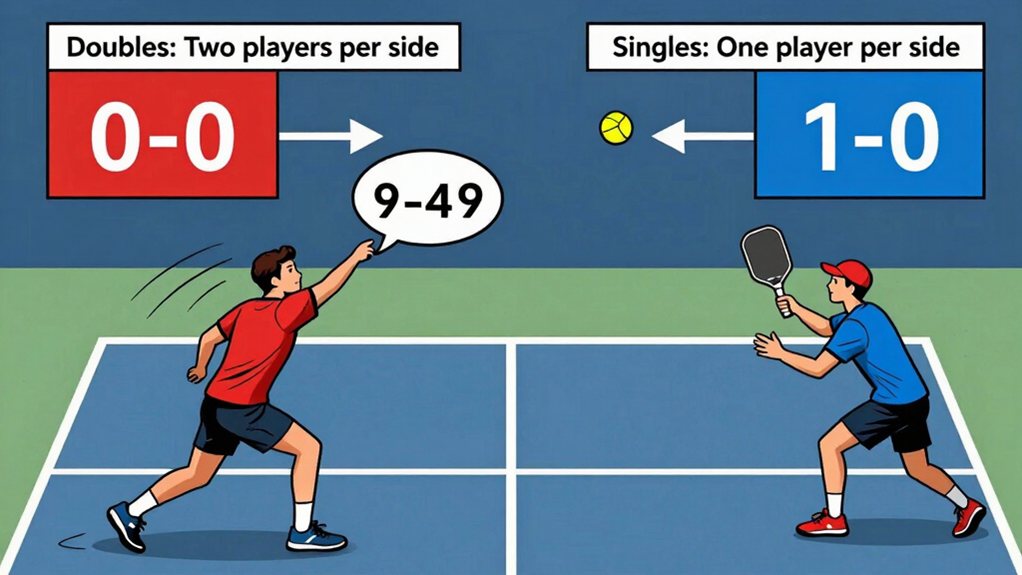
In pickleball, the side-out rules differ slightly between doubles and singles play. Both formats follow the same principle: only the serving team scores when it wins a rally. However, the serve structure and score reporting differ.
In doubles:
- You and your partner each get one serve attempt per side-out
- You serve first; your partner serves second if you win your rally
- When both servers lose, the side-out occurs
- Score calling uses three numbers: your score, opponent’s score, and server number (1 or 2)
In singles:
- You serve alone from your side
- You lose your serve after one rally loss
- Score calling uses two numbers: your score and opponent’s score
Both formats require you to reach 11 points with a 2-point margin to win.
Side-Out vs. Rally Scoring: What’s the Difference?
Understanding the differences between side-out scoring and rally scoring helps you choose the right format for your games.
Side-out scoring awards points only to the serving team. If the server wins the rally, you score a point. If the server loses the rally, you lose the serve. The receiving team cannot score points, no matter what.
Rally scoring allows either team to score on every rally. You score a point whether you serve or return. This format speeds up games. It reduces the time needed to win.
Major League Pickleball uses rally scoring. USA Pickleball officially recommends side-out scoring for most competitions. Most recreational leagues follow side-out rules.
| Format | Scoring Method | Common Use |
|---|---|---|
| Side-Out | Server scores only | USA Pickleball, recreation |
| Rally | Any team scores | Pro leagues, MLP |
| Traditional | Original rules | Local clubs |
| Doubles | Two servers | Partner games |
You should understand both formats. Different leagues use different rules.
Common Faults and Technical Fouls
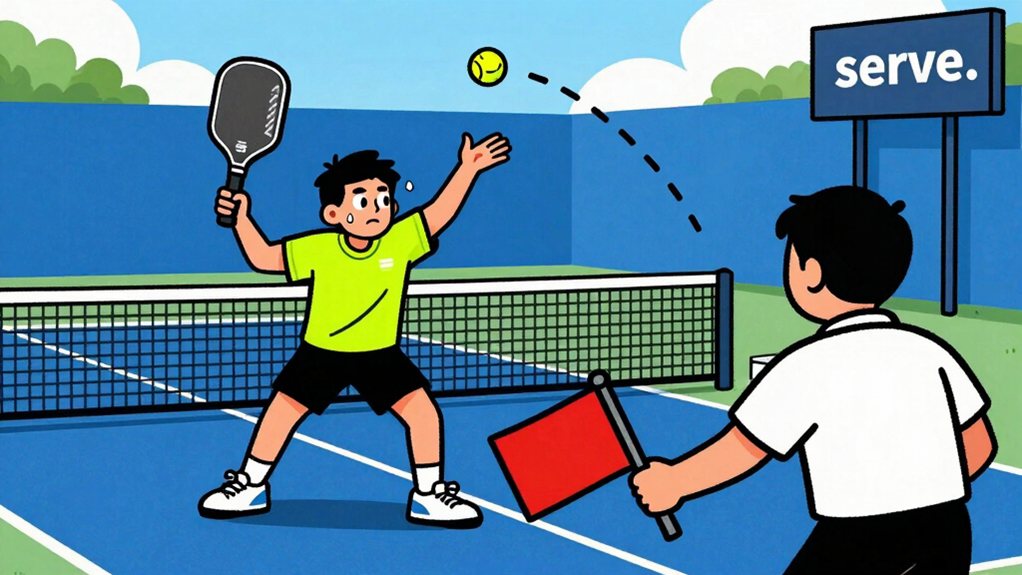
Service faults occur when you hit the ball out of bounds, fail to clear the net, or land in the non-volley zone. These faults result in a side-out without a point for either side.
However, a technical foul by the serving team when you’ve got 0 points awards a point to the receiving team in officiated matches.
Service Fault Types
Why do service faults matter in pickleball? They directly end your chance to score because you only earn points when you win rallies while serving. Service faults result in an immediate side-out, giving your opponents the serve without awarding them a point.
- Net faults: Your serve lands in the net or doesn’t cross the net. You lose the rally instantly.
- Out-of-bounds faults: Your serve lands outside the proper court boundaries. The ball must land within the diagonal service area.
- Non-volley zone faults: Your serve touches the kitchen line or lands in that zone. The entire ball must clear that area.
- Foot faults: You step into the court or past the baseline before contacting the ball. Both feet must remain behind the baseline until you hit the ball.
Understanding these service fault types helps you avoid losing your serve. You maintain control when you execute proper serves that land deep in the court and clear all lines.
Practice your serves consistently to minimize these faults during matches.
Technical Foul Penalties
When technical fouls occur during matches, they can change the score in ways that standard faults do not. In officiated games, a technical foul carries a specific penalty that differs from regular service faults.
Here is what you need to know:
- If the serving team commits a technical foul while having 0 points, the receiving team receives 1 point.
- This penalty applies only when the serving team has 0 points.
- Standard service faults (kitchen line violations, net fails) result in side-outs without points.
- Technical fouls include equipment violations, unsportsmanlike conduct, or illegal player actions.
- You avoid technical fouls by following all game rules and maintaining proper conduct.
The key difference: standard faults end the rally and transfer serve, while technical fouls can award points directly to your opponent. This makes technical fouls more costly than typical faults.
Which Tournaments Use Rally Scoring?
You will find rally scoring in specific professional leagues rather than in most recreational or USA Pickleball events. Major League Pickleball (MLP) uses rally scoring where both teams score on every rally, regardless of who served. The Professional Pickleball Association (PPA) sticks with traditional side-out scoring. Rally scoring speeds up matches and removes the wait for serve changes.
| Tournament Organization | Scoring Type Used |
|---|---|
| Major League Pickleball (MLP) | Rally scoring |
| Professional Pickleball Association (PPA) | Side-out scoring |
| USA Pickleball (Official Events) | Side-out scoring |
| Most Recreational Leagues | Side-out scoring |
The MLP format creates faster games with higher scores. Players adapt their strategies when every rally counts equally. Professional circuits continue experimenting with different scoring approaches to improve viewer experience.
Should You Use Side-Out or Rally Scoring for Rec Play?
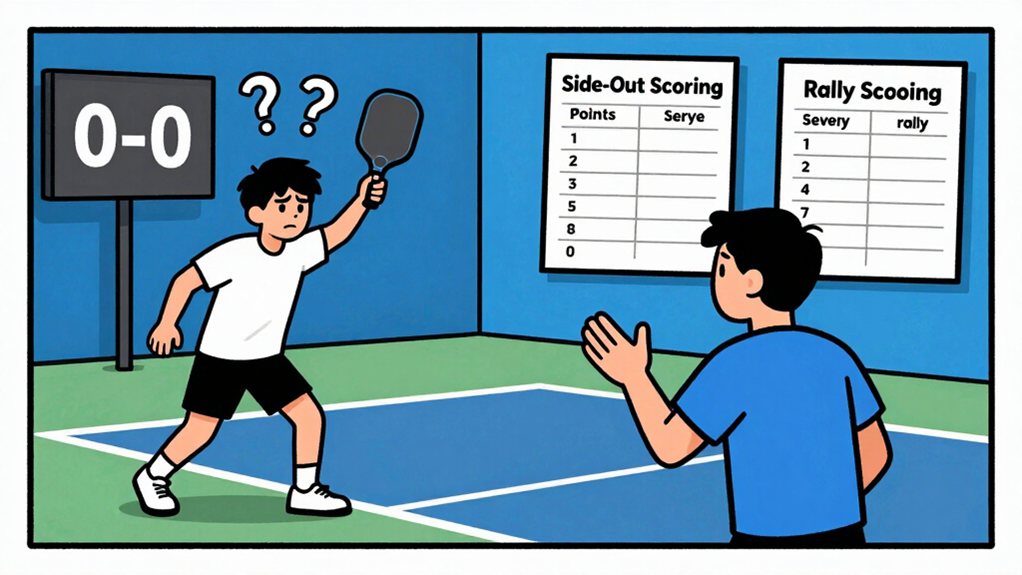
Deciding between side-out and rally scoring for your recreational games depends on several factors. You should consider your group’s skill level, time constraints, and competitive goals.
Pick side‑out or rally scoring based on your group’s skill, time, and competition goals.
Consider these four elements when making your choice:
- Time, Rally scoring produces shorter games that finish faster
- Skill level, Beginners benefit more from side-out scoring’s simpler point system
- Competition, If your group plays competitively, match the scoring used in tournaments
- Enjoyment, Rally scoring keeps every player engaged since both teams can score
Side-out scoring extends game length. The serving team must win rallies to accumulate points. Rally scoring creates faster, more dynamic matches. Your group decides which method fits your needs best.
Frequently Asked Questions
How Does Side‑Out Scoring Affect the Average Length of a Pickleball Game?
You find side-out scoring lengthens average games because only serving side can score, points accumulate slower, rallies extend longer, and games require more rallies to reach a win, you’ve seen that scoring slows games consistently.
Can a Match Be Played With Rally Scoring Instead of Side‑Out in Tournaments?
Like a rally you can substitute rally scoring for side-out in tournaments if the event allows it, but USA Pickleball still uses side-out scoring, unless MLP uses rally scoring as they do in PPA presently.
Do Players Need a Different Mental Approach When Only the Server Scores?
You don’t need a different mental approach because you only score while serving; you treat each rally as a chance to keep the serve and avoid giving opponent a point; you fight to keep serve.
Is Side‑Out Scoring Used in Any Other Racket or Paddle Sports?
You’re playing the platform tennis (paddle tennis) and historically badminton (now rally scoring) where the side, out scoring appears; it’s also used in the platform badminton. You see those sports adopt side, out scoring only in the.
Are There Any Proposals to Change the Official Scoring Method in USA Pickleball?
You might think the sport would modernize, but USA Pickleball hasn’t proposed changing side-out scoring for tournament play or recreational games at all, rally scoring stays in professional leagues while official rules remain unchanged.
Final Thoughts
You hold the paddle like a conductor’s baton. The serve is your opening note. In side-out scoring, your team scores only when you serve. When you lose a rally, the ball passes to your opponents. This creates strategic patience. We win by keeping the serve. We earn points only on our terms.
Key reminders:
- Score only when you serve
- Call the score before each serve: your score, opponent’s score, server number
- Two-server system in doubles