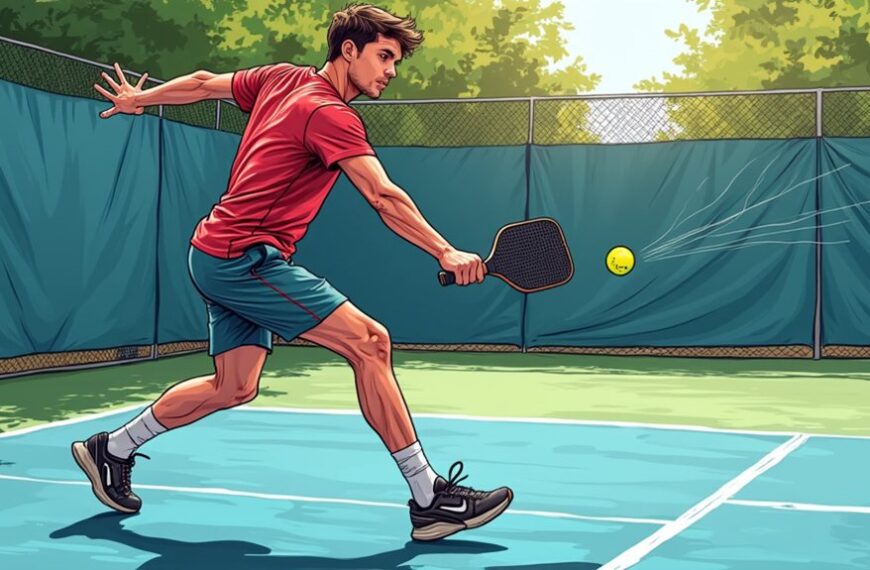
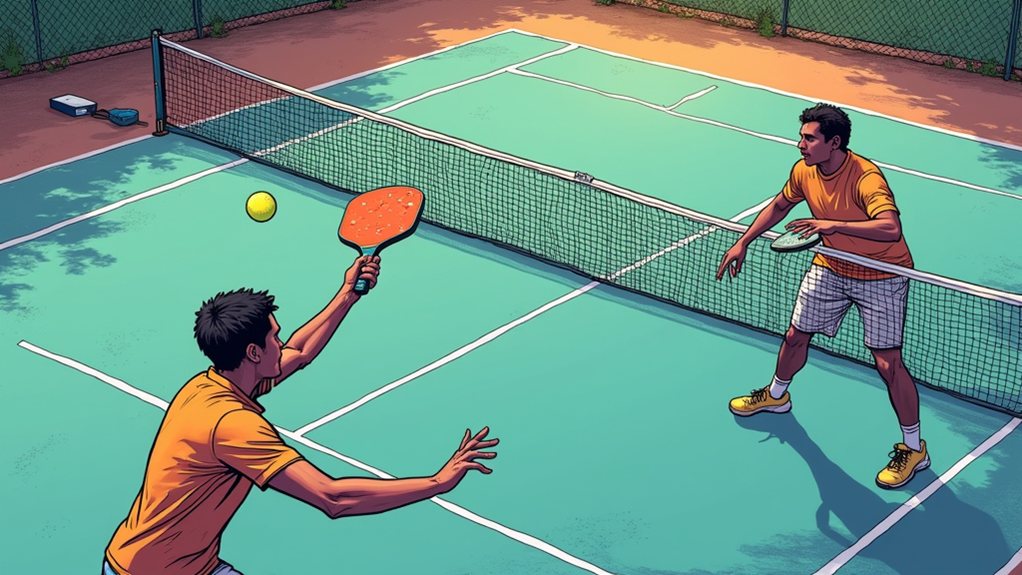
Stand with a semi-open stance, feet shoulder-width apart. Shift weight from back foot to front during the swing. Keep the paddle in front of your body with the head below the ball. Use a relaxed 3-4 grip on a 1-10 scale.
Swing low-to-high in an upward brushing motion. Contact the back of the ball with the paddle face 10-15 degrees open. Aim 8-18 inches above the net, landing in the kitchen. Use this shot after serve or return when opponents move forward. Keep practicing and you’ll improve your third-shot drop.
Stance and Paddle Position for the Third-Shot Drop
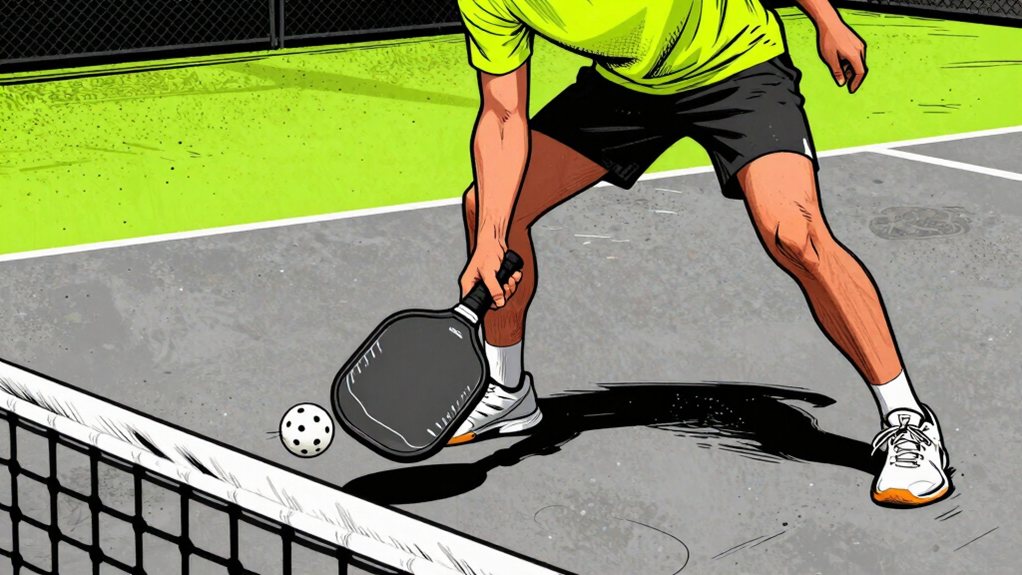
Because the stance controls your swing, you must get it right first. The third shot drop pickleball requires proper positioning before you learn how to hit a 3rd shot drop.
Follow these steps:
- Use a semi-open stance. It keeps movement compact. It also prevents an oversized backswing.
- Use a closed stance for slice drop. Feet align with your target line.
- Keep feet shoulder-width apart.
- Your weight starts on the back foot. It shifts forward during the swing.
- Keep the paddle in front of your body. This eliminates excessive backswing.
- Start the paddle head below the ball. This creates topspin.
- Maintain a relaxed grip at 3-4 on a 1-10 scale. The soft touch comes from relaxed muscles.
Master this pickleball drop shot technique setup. It creates the foundation for controlled shots. The proper stance generates arc and net clearance.
Your paddle position determines the ball flight. Practice these steps until they feel natural.

THE STANDARD ON COURT: USAP approved, chosen as the official ball for both the US Open Pickleball Championships and USA Pickleball, and engineered for official size and weight, these pickleball balls deliver consistent performance for both pro and amateur players

THE STANDARD ON COURT: USAP approved, chosen as the official ball for both the US Open Pickleball Championships and USA Pickleball, and engineered for official size and weight, these pickleball balls deliver consistent performance for both pro and amateur players
Grip and Swing: Generating Controlled Power
Your grip controls the power and touch of your third-shot drop. Keep a relaxed grip at 3 on a 1-10 scale. This pressure absorbs pace from the return and prevents long shots.
- Start with paddle tip down and elbow close to body.
- Use a low-to-high motion for arc and net clearance.
- Create a sideways wave motion for topspin without wrist rotation.
- Finish the stroke over your shoulder for full follow-through and control.
Key points:
- Keep paddle in front to eliminate excessive backswing.
- Avoid swinging too hard; control matters more than power.
- The lift motion generates controlled power that drops softly into the kitchen.
- Your stance should stay compact throughout the swing.
Monitoring your indoor environment with a smart air quality monitor can help you train more effectively by ensuring the air you breathe during practice sessions is clean and free of pollutants.
Spin and Contact: Executing the Perfect Brush
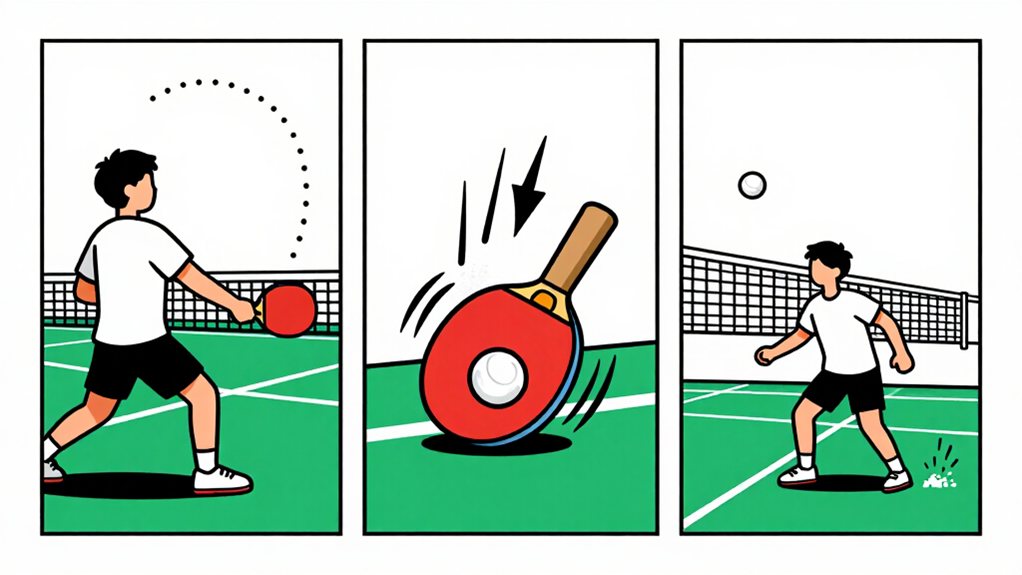
Creating topspin for your third-shot drop starts with brushing the back of the ball using an upward swing. You brush upward and forward to generate the spin that makes the ball dip into the kitchen. Your paddle face stays slightly open. Contact happens in front of your body.
Keep your wrist firm but not locked. Follow through toward your target. This creates the arc that drops the ball in the kitchen.
| Spin Type | Contact Point | Paddle Angle |
|---|---|---|
| Topspin | Back of ball | 10-15° open |
| Slice | Top of ball | 45° open |
| Hybrid | Back-top blend | 20-30° open |
| Drip | Slightly under | 30° open |
| Drive | Center | Square |
Use these contact points to match your shot selection. Adjust your angle for more or less spin. Practice each type until you feel the difference. Your feel develops through repetition.
The brush creates the spin. The angle controls the flight. Your touch determines the result. Trust your practice. Trust the process.
Third-Shot Drop Trajectory: Targeting the Kitchen Zone
When you master the spin techniques, you must then control the trajectory to place your third-shot drop in the kitchen zone.
- You aim 8 to 18 inches (about 0.7-1.5 feet) above the net.
- You swing low to high to create a gentle arc that peaks just before the ball descends.
- You keep the peak height at roughly 1-2 feet above the net so the ball drops into the kitchen.
- You target the center-back portion of the kitchen line; this forces opponents to hit upward.
- You adjust speed to 19-20 mph down the line; a slower pace gives the ball time to drop.
- You finish your follow-through over your shoulder to maintain a consistent angle.
- You aim 8-12 inches over the net; this creates an arc into the kitchen.

Comfort & Efficiency: The patented hexagonal design expands the contact surface between hand and handle, increasing grip efficiency by up to 14%. It allows a secure hold with less effort and tension, helping players maintain control and comfort during every shot.
Outdoor Toys for Kids – Enjoy endless fun with this classic 90s toss and catch game which includes 4 paddles, 4 sticky balls and a storage bag, perfect birthday gifts, stocking stuffers for boys girls aged 3+ at the pool, beach, yard, lawn or playground
When to Use the Third-Shot Drop
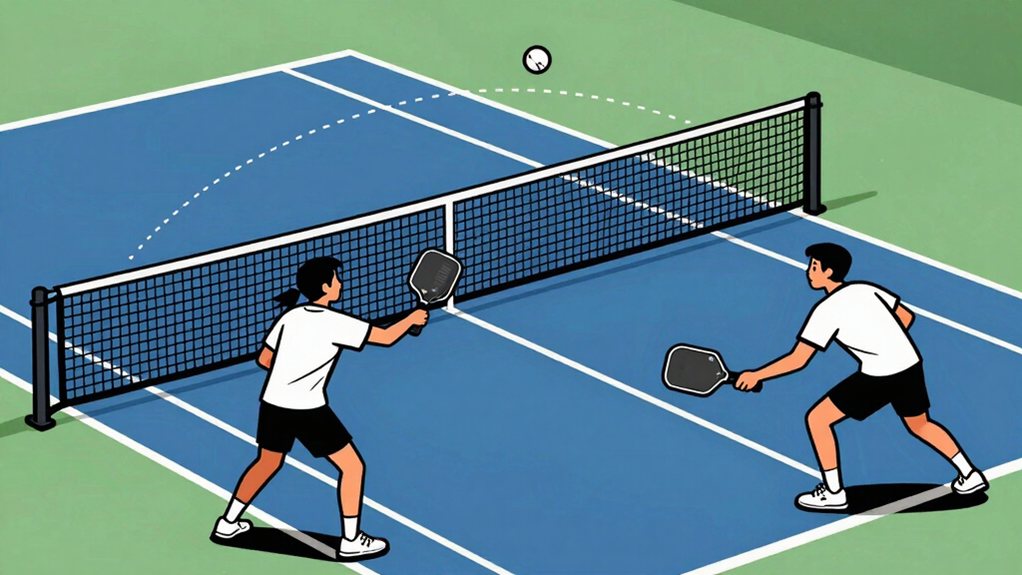
Why use the third-shot drop? You use it to switch over to the net after your serve or return. It puts pressure on your opponents and sets up your partner for a net attack.
Use the third-shot drop in these situations:
- After you serve and the return comes back.
- When you want to change pace from passive play.
- When you see your opponent moving up toward the net.
- When you need to set up your partner at the net.
The drop shot works best when you catch your opponent at the baseline. It forces them to hit upward. Your team then controls the net.
Frequently Asked Questions
What Paddle Weight Is Ideal for a Consistent Third-Shot Drop?
You want a medium-weight paddle between 7.3-8.4 ounces. It gives you enough control for the soft touch needed while providing sufficient power for the low-to-high motion required for consistent depth and placement.
How Do You Adjust the Third-Shot Drop in Windy Conditions?
You adjust your third-shot drop in wind by gripping tighter, hitting with more pace to punch through headwinds, adding extra loft for tailwinds, and aiming opposite crosswinds. Use heavier topspin to stabilize the ball effectively.
What Are the Most Common Mistakes Players Make on the Third-Shot Drop?
You cleverly hit the third-shot drop with excessive power, flat trajectory, and death-grip pressure, then wonder why your arc dies. Your oversized backswing and contact behind your body guarantee kitchen chaos, not the soft drop you intended.
Can the Third-Shot Drop Be Used Effectively on the Serve?
You cannot effectively use the third-shot drop as your serve because it’s the third shot after your opponent’s return. The technique requires different mechanics and serves have specific rules it doesn’t meet in this sport.
How Can I Improve My Third-Shot Drop Consistency Without a Partner?
Drill the low-to-high motion by self-feeding balls. Focus on relaxed grip, paddle below ball, and lifting through. Aim for 8-15 inches over net into kitchen. Film yourself daily to check form and arc consistency.
Final Thoughts
Master the third-shot drop by following these steps. Stand with feet shoulder-width apart. Keep your grip relaxed. Swing from low to high.
Brush upward on the ball. Aim for the kitchen line. Practice these movements daily. You will gain court control.
You will neutralize opponents. You will move confidently from baseline to net. Make this shot your reliable weapon.