To master the net volley, adopt an athletic stance with feet wider than shoulder-width. Hold your continental grip with the paddle edge aligned to your knuckles. Keep your paddle at waist height in the 10 or 11 o’clock position. Stay positioned 2 to 4 feet behind the non-volley zone line.
Use a compact shoulder-driven swing to redirect pace. Execute four crucial volleys: basic, speedup, roll, and topspin. Avoid common errors like gripping too tightly, dropping the paddle low, using wrist instead of shoulder, and overcommitting.
Practice partner volley drills and wall target drills for improvement. Continuing further will provide additional techniques for your game.
Master the Net Volley to Win More Points
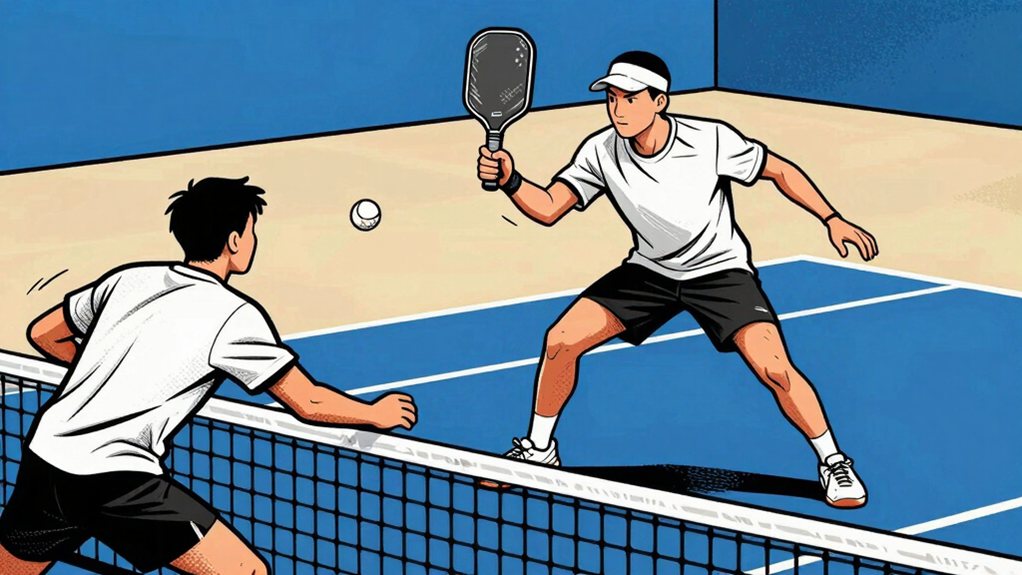
The net volley is your most powerful weapon in pickleball. Master the pickleball volley technique to control the point. You create winners by punching the ball with shoulder-driven power.
The net volley is your most powerful weapon. Master the shoulder‑driven punch to control points and create winners.
Here’s how to volley in pickleball:
- Keep paddle out front at waist height
- Contact ball ahead of your body
- Push through with your shoulder, not wrist
- Angle paddle face to direct the ball
- Follow through low across the net
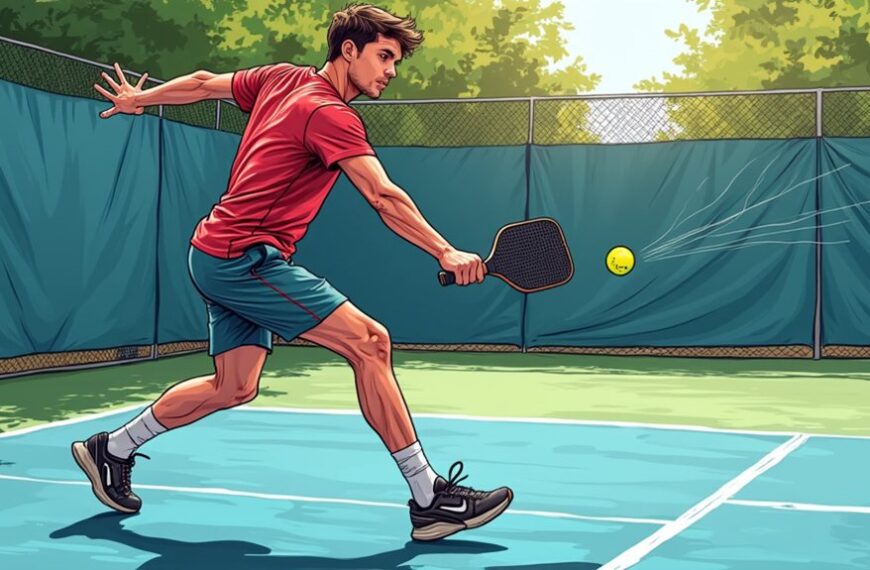
The punch volley pickleball adds speed. Use it when the ball sits at waist level or higher. You absorb opponent pace and redirect it.
Your compact swing keeps the ball low. Practice this shot until it feels natural. You’ll win more points at the net.

Comfort & Efficiency: The patented hexagonal design expands the contact surface between hand and handle, increasing grip efficiency by up to 14%. It allows a secure hold with less effort and tension, helping players maintain control and comfort during every shot.

2 PACK REPLACEMENT GRIP TAPE FOR PICKLEBALL PADDLES: Easily regrip your pickle ball paddle & make it feel brand new or upgrade from the handle wrap your racket came with; Comes with everything you need to change your pickleball or tennis racket grip tape

Comfort & Performance: The unique hexagonal design expands the contact surface between hand and handle, increasing grip efficiency by up to 14%. This allows you to hold the paddle with less effort, reducing finger and wrist strain for a smoother, more controlled swing.
Stance and Grip Setup for Volley Success
Start with a balanced, athletic stance to maximize your volley effectiveness. Position your feet wider than shoulder-width apart. Keep your shoulders squared to the net. Stand tall but ready to move.
Hold your paddle at the 10 or 11 o’clock position in front of your body at waist height. Use the continental or hammer grip with the paddle edge lined up to your knuckles. Keep your grip firm but relaxed. This setup gives you quick reaction time and control for any volley.
- Feet shoulder-width apart provides a stable base for powerful volleys
- Paddle at waist height ready position allows instant reaction to any shot
- Continental grip gives you versatility for forehand and backhand volleys
- Shoulders squared to net makes sure you’re always prepared to strike
Positioning Inside the Non-Volley Zone
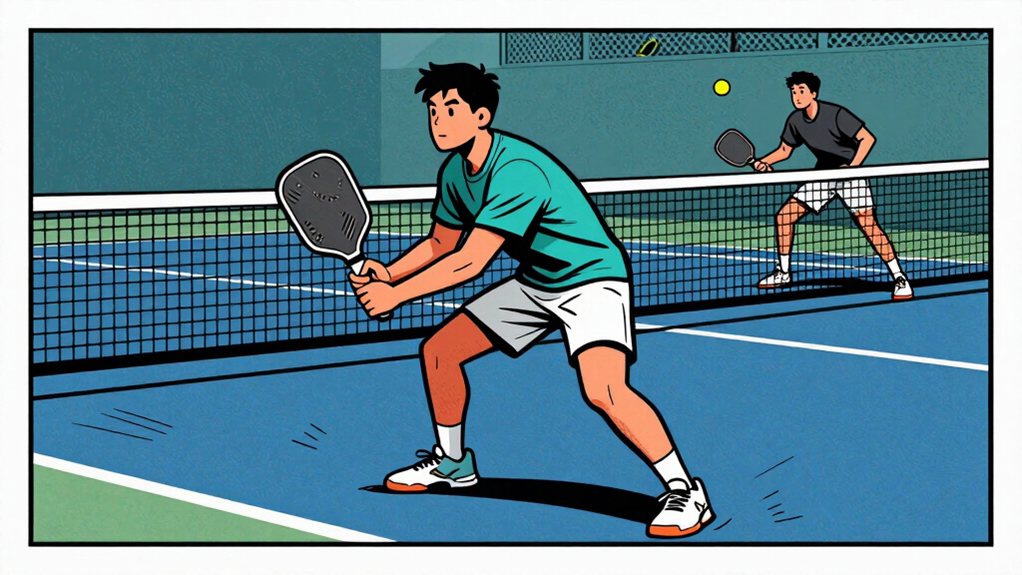
Your stance and grip are set. Now position yourself correctly inside the non-volley zone. Stay 2 to 4 feet behind the line. This gives you reaction time and court coverage. Angle your body toward the center of the court. Keep your weight forward on your toes. Hold your paddle up and stay alert.
| Distance from Line | Best Use |
|---|---|
| 2 feet | Fast reaction to hard shots |
| 4 feet | Better reach and coverage |
- Step into the zone when opponents hit weak returns.
- Stay back when they hit with power.
- Hold your ground until the ball crosses the net.
The Four Essential Volley Types and When to Use Each
You need four important volley types in your pickleball toolkit.
Use basic volleys for upward punches at waist level or above the net cord.
Use speedup volleys for fast swings.
Use roll volleys for low contacts.
Use topspin volleys to attack below the net.
Just as smart home technology allows you to control your environment with precision, mastering these four volley types gives you precise control over your game at the net.
Basic And Speedup Volleys
The basic volley and speedup volley are the two most common volleys you’ll use at the net. Use the basic volley for most situations at the non-volley zone. Contact the ball out in front of your body. Keep your paddle face stable and push through the ball.
This creates an upward arc that clears the net consistently. The speedup volley adds aggressive intent to your game when you see an opportunity.
- Use the basic volley when the ball arrives at waist level or higher
- Generate power from your shoulders, not your wrist
- Accelerate the paddle for speedup volleys to hit past your opponent
- Aim at your opponent’s hips or shoulders for maximum pressure
Stand tall with your feet shoulder-width apart. Keep your paddle at waist height and your eyes on the ball through contact. Your grip should be firm but relaxed.
Roll And Topspin Volleys
Now that you’ve mastered basic and speedup volleys, it’s time to add two more important shots to your arsenal: the roll volley and the topspin swinging volley.
The roll volley handles low balls. Keep your grip relaxed. Brush underneath the ball with an upward motion. This creates topspin that lifts the ball over the net safely. You use this shot when the ball bounces below net level.
The topspin swinging volley attacks high balls. Rotate your shoulder and generate upward topspin. Swing upward and over the ball. This forces a steep angle and pushes your opponent backward.
| Volley Type | Contact Point | Primary Purpose |
|---|---|---|
| Roll Volley | Below net cord | Lift low balls |
| Topspin Swing | Waist to shoulder | Create steep angle |
| Basic Volley | Above net | Punch upward |
| Speedup Volley | Waist level | Attack pace |
Practice both shots daily. Focus on brush contact. Maintain quiet wrists throughout each motion.
Fix These Common Volley Mistakes
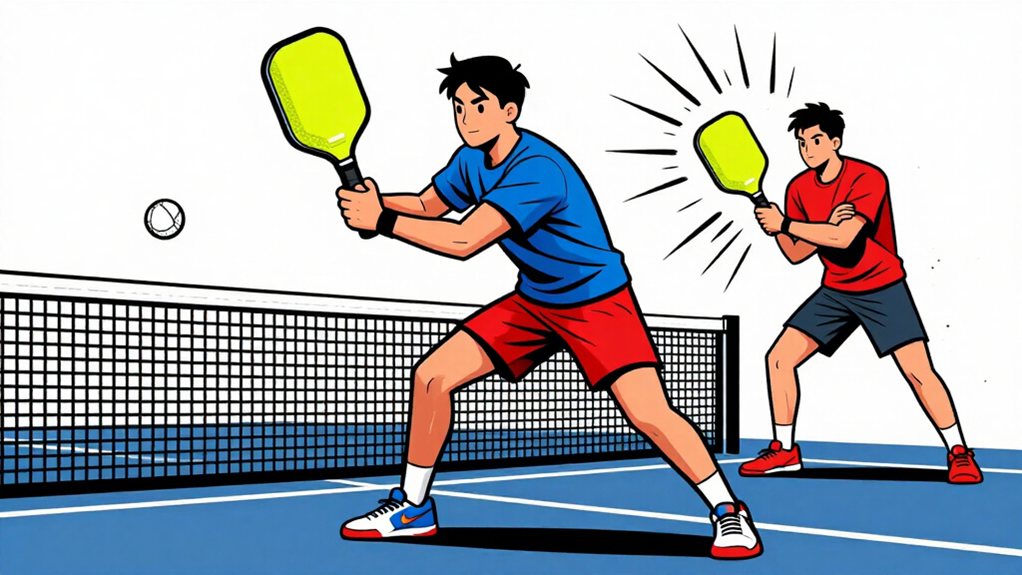
To eliminate common volley mistakes, focus on three key areas: your grip pressure, your paddle position, and your swing mechanics.
Grip mistakes happen when you grip too tight. This causes tension and reduces control. You must relax your grip but keep enough pressure to control your paddle.
Your paddle drops too low between shots when you relax too much. Keep your paddle at waist height and ready position.
Swing errors occur when you use your wrist instead of your shoulder. Use your shoulder to drive the volley.
You overcommit when you reach for balls outside your zone. Stay balanced and let the ball come to you.
- Gripping the paddle too tightly creates tension and kills touch.
- Dropping your paddle below waist level slows your reaction time.
- Using wrist instead of shoulder produces weak, uncontrolled shots.
- Reaching beyond your range throws off your balance and timing.

14FT NET – Great for backyards! Suitable for 1-on-1 play with adults or kids, offering more room for exciting rallies.

[Adjustable Poles with Height Marks] The adjustable poles with a 35.4"-61" height range and 3 clear height marks (42.1", 47.2", 61") make this net suitable for badminton, teen tennis, beach volleyball, and pickleball

[Adjustable Poles with Height Marks] The adjustable poles with a 35.4"-61" height range and 3 clear height marks (42.1", 47.2", 61") make this net suitable for badminton, teen tennis, beach volleyball, and pickleball
Drills to Build Confident Net Volleys
You can build confident net volleys with two effective drills. First, try the Partner Volley Drill by exchanging controlled volleys with your partner from 14 feet away, pushing deep to the torso.
Second, perform the Wall Target Drill by hitting 50 forehand and backhand volleys against a wall toward a 36-inch taped target.
Partner Volley Drill
As you practice the partner volley drill, you’ll develop controlled consistency and confident net play through targeted repetition.
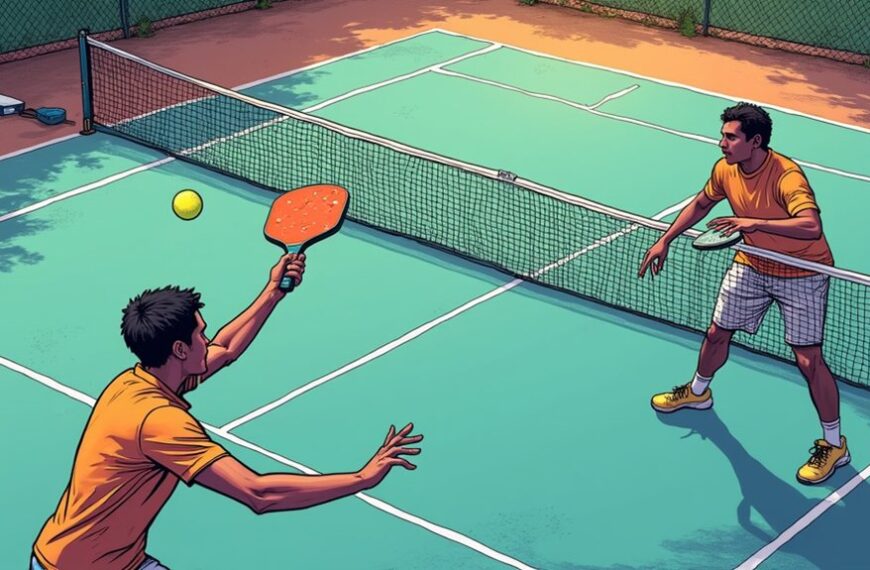
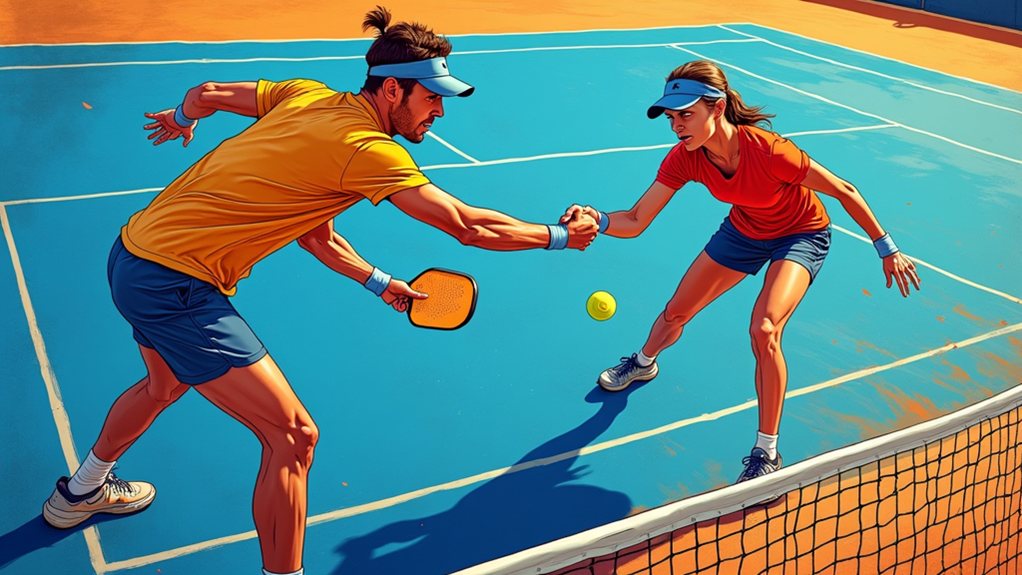
Stand 14 feet apart on opposite sides of the net. Your partner hits controlled volleys toward your torso. You push each ball deep into the opposite court. Maintain the continental grip. Keep your paddle out front. Watch the ball all the way to contact.
- Your partner feeds 20 volleys to your forehand side, then switches to 20 backhand volleys.
- You focus on compact shoulder-driven swings, pushing the ball with controlled pace.
- Switch roles after 40 volleys each, making sure both players receive equal practice time.
- Track your errors and aim to reduce them by half during each practice session.
Wall Target Drill
When you master the wall target drill, you’ll build consistent net volley mechanics. This drill develops precision and repetition without a partner.
Wall Target Drill Steps:
- Tape a 36-inch target on your wall at net height.
- Stand 14 feet from the wall in athletic stance.
- Perform 50 forehand volleys first.
- Then perform 50 backhand volleys.
- Keep your paddle out front at waist height.
- Contact the ball slightly below center.
- Push through the ball toward the target.
- Maintain compact shoulder-driven swings.
- Track your counts accurately.
- Rest briefly between sets.
This drill builds muscle memory. You develop consistent paddle face control.
You improve reaction time. You gain confidence at the net. Practice this drill three times weekly for best results.
Bringing Your Volleys Into Match Play
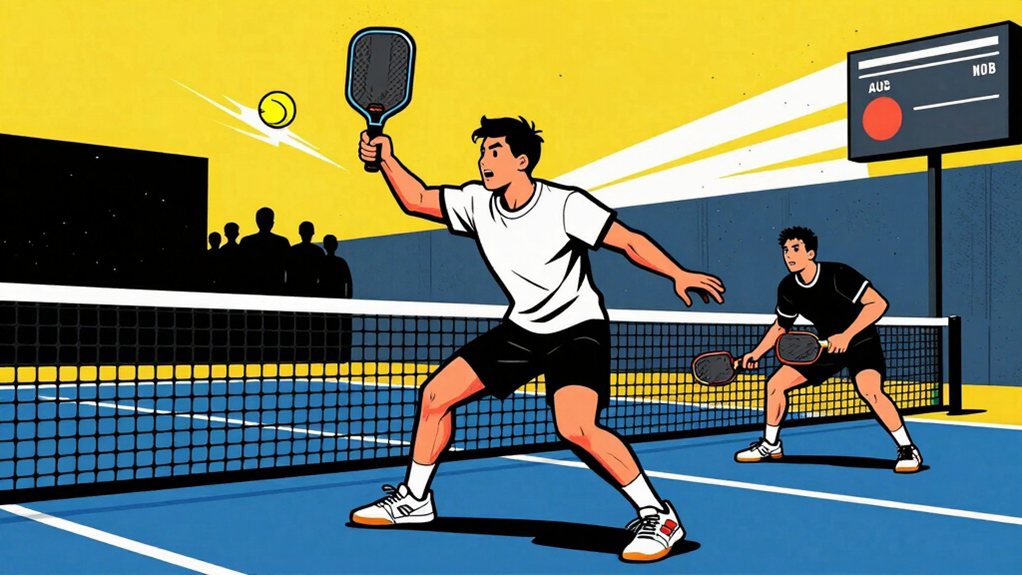
In match play, your net volley technique becomes your primary weapon for controlling the point. You must transfer your practice habits into competitive situations with confidence and precision. Start by positioning yourself inside the non-volley zone line when your opponents hit weak returns.
Position inside the non-volley zone to transform weak returns into aggressive attack opportunities and control the point.
Use your compact shoulder-driven swing to redirect pace back at their feet. Vary your shot selection between pace changes and angle placements to keep opponents guessing. Stay low and maintain your athletic stance throughout each exchange.
- Read your opponent’s paddle face angle immediately to anticipate shot direction
- Exploit any hesitation by attacking the middle of the court first
- Target your opponent’s backhand side repeatedly to force errors
- Dictate pace by using speedup volleys when you hold the offensive position
Frequently Asked Questions
How Do I Adjust Footwork When Caught Out of Position at the Net?
Step quickly with a crossover step, split-step to reset your balance, and shuffle laterally to recover. Stay low, keep your feet moving, reset to athletic stance, and anticipate the next shot.
What’s the Best Way to Maintain Volley Consistency in Windy Conditions?
Think of your paddle as an anchor in a storm. Keep your grip firmer, shorten your swing, and focus on contact out front. Stay low and compact, using the wind’s momentum to guide your returns.
How Can I Prevent Arm Fatigue During Long Net Rally Exchanges?
You can prevent arm fatigue by maintaining a relaxed grip, using shoulder-driven strokes rather than wrist action, keeping your paddle out front with compact mechanics, and letting your body absorb power efficiently.
What Psychological Strategies Help Me Stay Calm During Net Point Battles?
Keep your cool under pressure, breathe deeply, stay present, and swap negative thoughts for confident self-talk. Visualize successful volleys before each rally, treating net battles as growth opportunities.
Should I Use a Lighter or Heavier Paddle for Improving My Net Volleys?
Choose a lighter paddle for net volleys. You’ll enjoy quicker swing speeds, better control in tight spaces, and less fatigue during extended rallies. The lightweight design helps you react faster at the non-volley zone.
Final Thoughts
1. Keep weight forward. 2. Punch the ball with short swing. 3. Snap wrist, follow through toward net. Hold paddle in continental grip, keep it high, stay on balls of feet, eyes on ball, and keep knees slightly bent, always today.
Example: you receive a hard drive, step inside the non-volley zone, punch the ball, and win the point.
Practice these steps daily. Repeat drills, stay aggressive, control reactions. You’ll dominate the net confidently and keep opponents guessing.