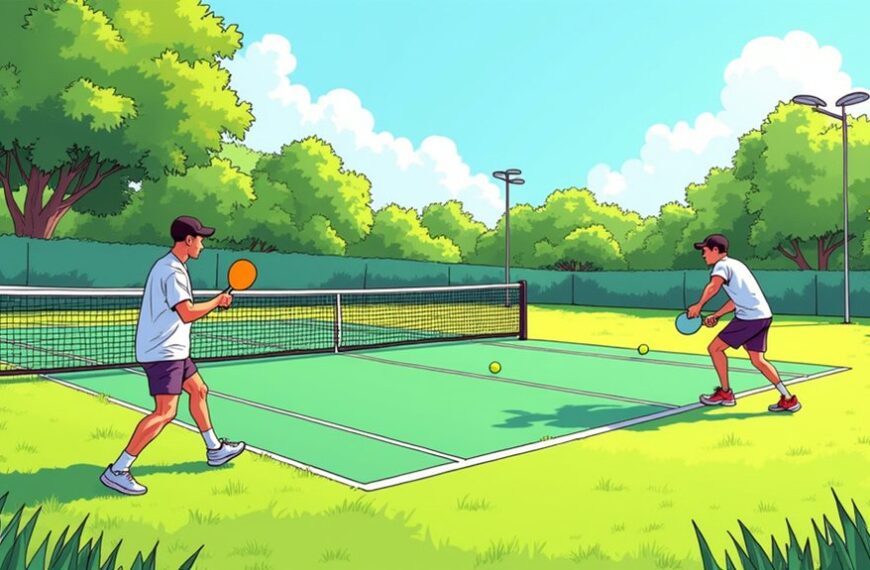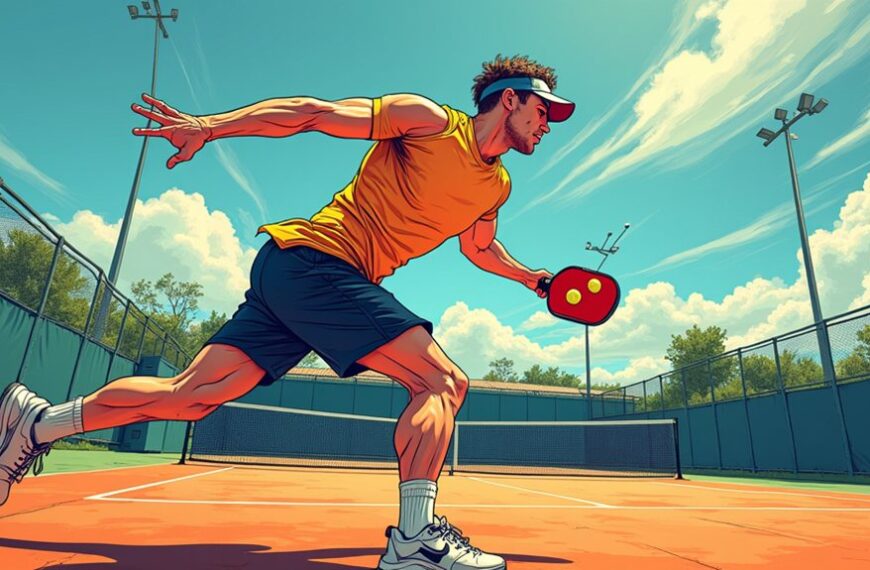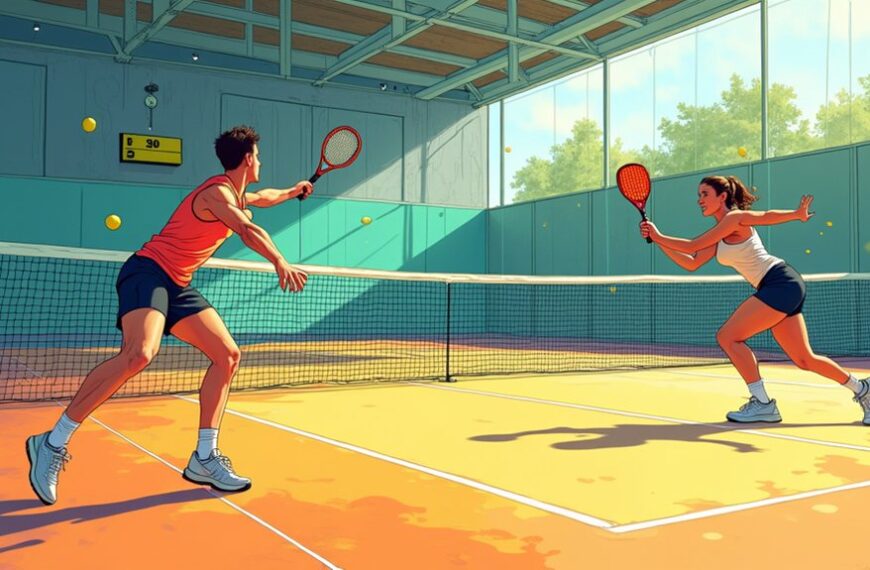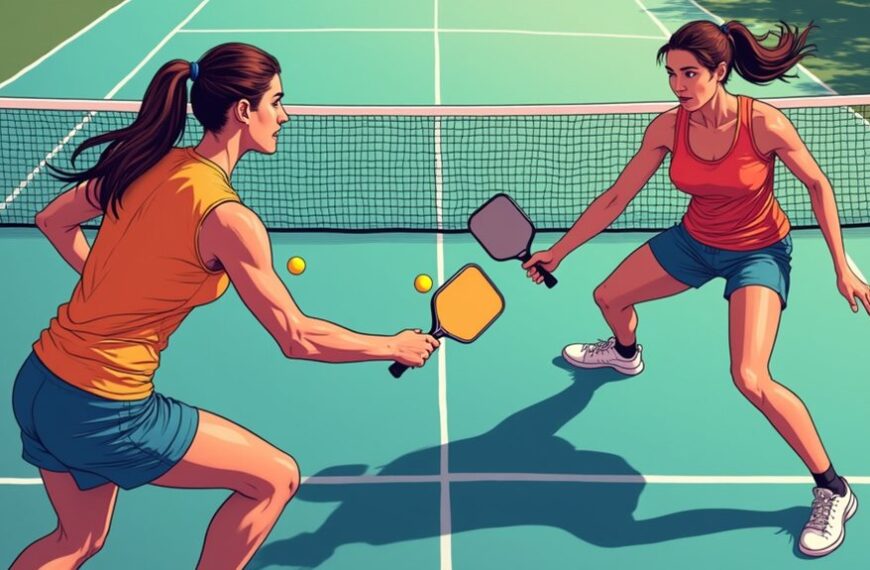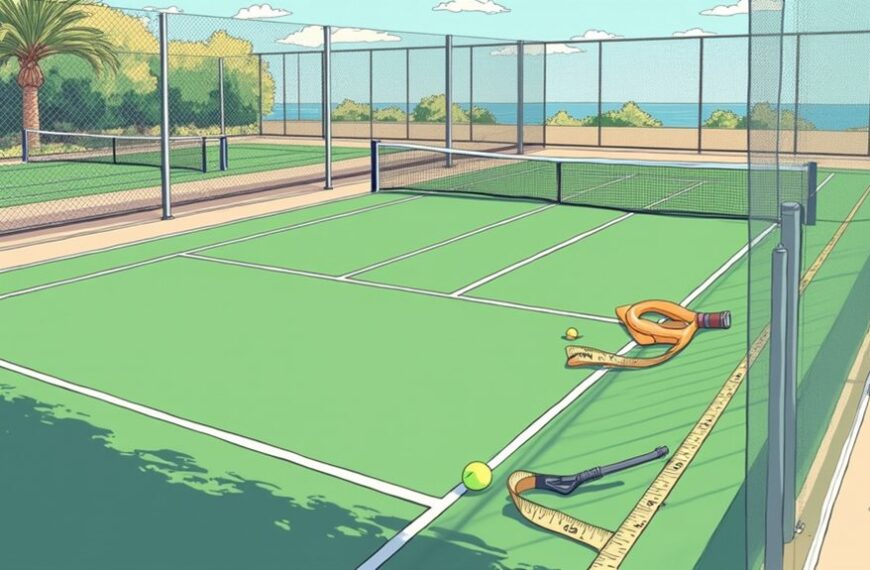
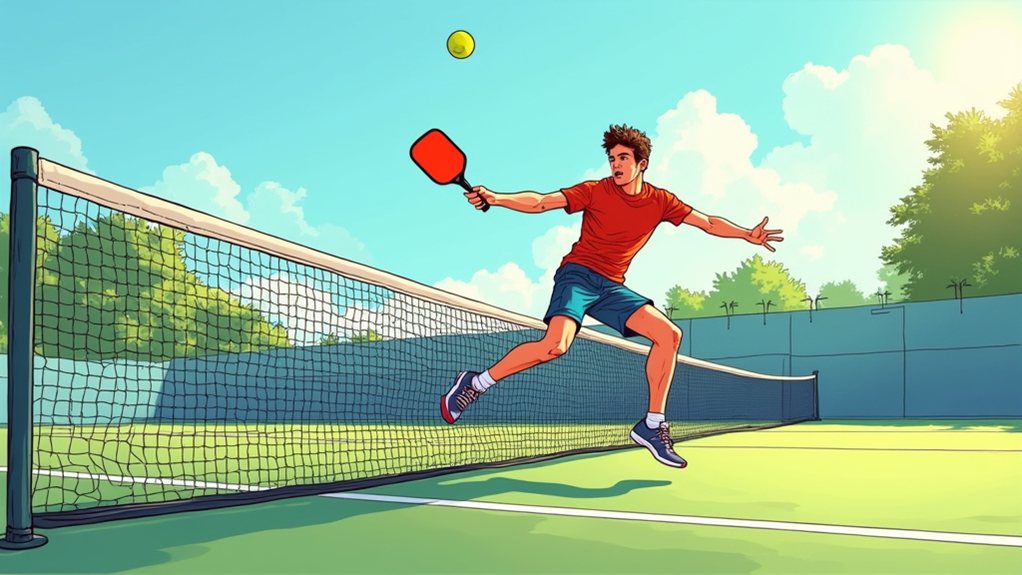
The Erne is an aggressive volley where you jump over the non-volley zone (kitchen), contact the ball outside the kitchen while your body passes over the NVZ line, and land with both feet outside the kitchen. It’s a legal shot when you jump from outside the kitchen, keep both feet outside when you contact the ball, and don’t touch the net. You set it up by dinking to the sidelines to force a straight return, then positioning yourself to attack the ball outside the NVZ.
Timing is critical: you explode toward the net as your opponent strikes, jump off your inside foot, and contact the ball in the air while your body passes over the kitchen line.
You can practice this by starting two feet outside the kitchen, exploding toward the net as your opponent strikes, jumping off the inside foot, reaching across the non-volley zone, contacting in the air, and landing with both feet outside. Repeat until the movement becomes automatic. Mastering this technique gives you a powerful weapon in your pickleball arsenal.
What Is the Erne Shot and Why Should You Learn It?
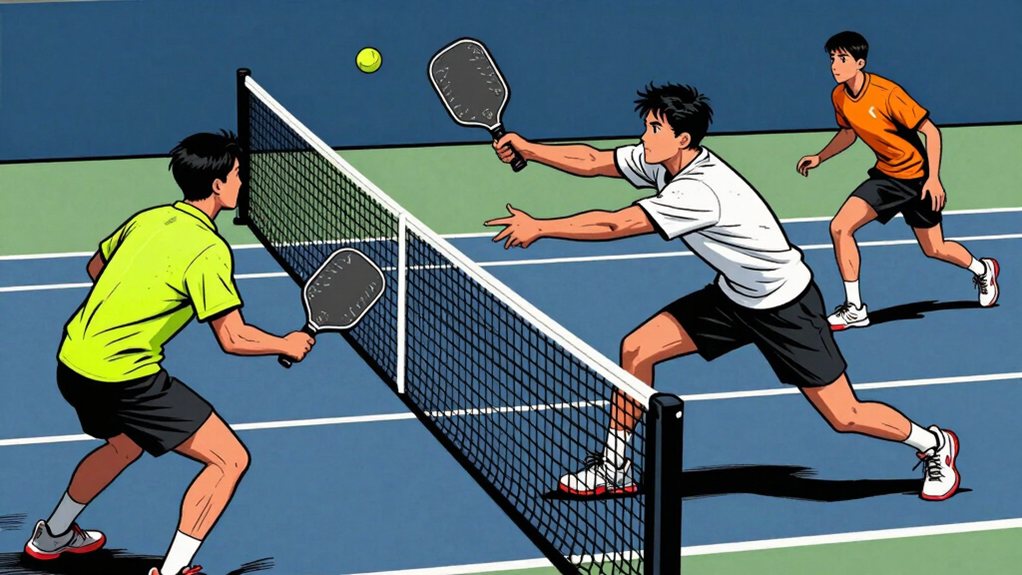
The Erne shot is an aggressive volley you hit while jumping over the non-volley zone (NVZ), also called the kitchen. You contact the ball outside the kitchen while your body passes over the NVZ line.
An aggressive volley executed by jumping over the NVZ, contacting the ball just beyond the kitchen while your body clears the line.
This advanced pickleball technique gives you a powerful attacking option. When you master the pickleball erne shot, you surprise opponents with sharp angles. You reduce their reaction time because you volley close to the net.
Why learn how to erne in pickleball?
- It forces opponents into defensive positions
- It creates scoring opportunities
- It adds variety to your game
- It catches opponents off guard
This high-risk, high-reward move requires:
- Quick reflexes
- Proper timing
- Agility
- Anticipation
You should practice these advanced pickleball techniques sparingly. Use the erne to maintain surprise and shift momentum in your favor.


The Legal Basics: How to Execute an Erne Without Committing a Fault
Now that you understand what an Erne shot is and why it’s valuable, let’s cover how to execute it legally.
You must jump from outside the non-volley zone (kitchen). Your feet must land outside the kitchen. You cannot touch the net or net post during the shot. Contact the ball on your side of the net.
Do not step into the kitchen while volleying. The ball must be in the air when you hit it. You cannot ground your paddle inside the kitchen. Your momentum cannot carry you into the kitchen after the shot. If you land in the kitchen, it is a fault. Practice these points until they become automatic.
Key Legal Requirements:
| Requirement | Description |
|---|---|
| Takeoff Point | Outside NVZ boundary |
| Contact Point | On your side of net |
| Landing Point | Outside NVZ boundary |
| Net Contact | No touching allowed |
| Body Position | No part in kitchen during volley |
Setting Up the Perfect Erne: Strategy and Timing to Create the Opportunity
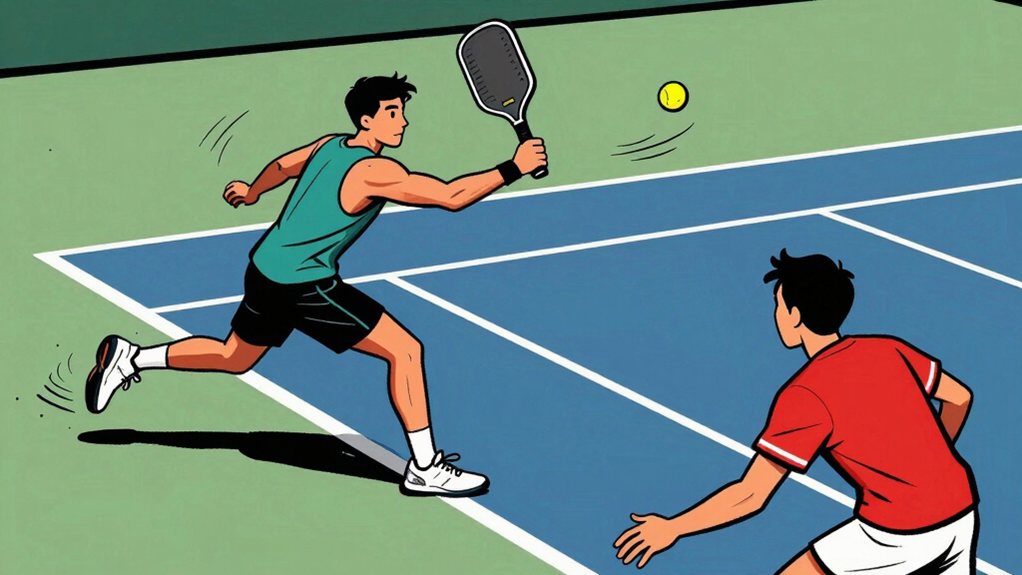
If you want an Erne, create the opportunity first through smart dinking. You force your opponent into a predictable return by targeting specific areas of the court.
- DINK TO THE SIDELINES
- Hit balls near the sideline to force a straight return
- This return travels parallel to the kitchen line
- You position yourself to attack the ball outside the NVZ
- DINK TO CREATE LOFT
- Aim at your opponent’s back foot or head
- This creates a higher, floating return
- You gain more time to move into position
- RECOGNIZE THE PATTERN
- Watch for your opponent’s shot preparation
- Move to out-of-bounds as they contact the ball
- Time your jump to coincide with their return
- BAIT YOUR OPPONENT
- Vary your dinks between middle and sideline
- Lull them into a rhythm
- Strike when they expect a standard rally
- POSITION YOURSELF
- Wait on the left side for right-handed forehand
- Switch to backhand on the right side
- Maintain readiness to exploit the opportunity
A strong home network supported by a mesh wifi system extender ensures you can study match footage and opponent tendencies without buffering interruptions.
Drilling the Erne: Footwork and Timing
After you’ve set up the opportunity through smart dinking, focus on drilling the footwork and timing. Start in ready position two feet outside the kitchen.
Watch your opponent’s paddle closely. As they strike the ball, explode toward the net.
Jump off your inside foot. Reach across the non-volley zone. Contact the ball in the air. Land with both feet outside the kitchen. Repeat this sequence until it feels natural.
- Start in ready position two feet outside the kitchen
- Move quickly as your opponent contacts the ball
- Jump off your inside foot and reach across
- Land with both feet outside the kitchen lines

2-in-1 Versatility: Rebounder Net + Mini Practice Net – Transform your training with our innovative 6FT system that functions as both a high-tension rebounder for solo practice AND a regulation-height mini net for partner drills. Get game-realistic rebounds for forehands, backhands, dinks, and volleys, then switch to mini-net mode for precision dink training and kitchen control – two professional training tools in one compact package
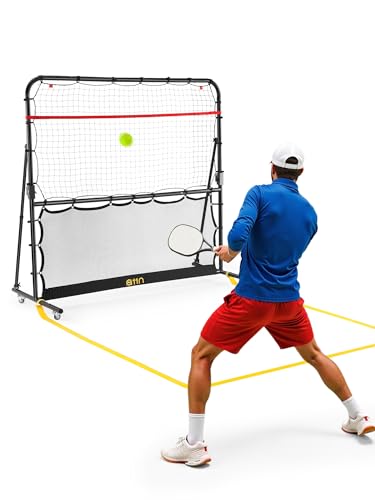
Master Every Shot with Adjustable Angles: Train forehands, backhands, dinks, and volleys with this pickleball rebounder. The 4-angle adjustment simulates real-game scenarios, making it the ultimate pickleball training aid for all skill levels.
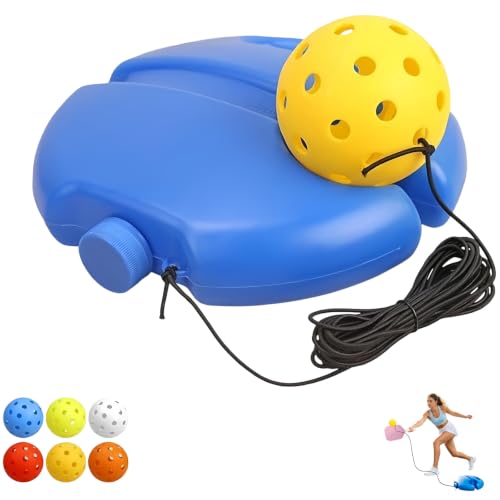
【stable water-filled base】: high-quality, durable material – fill with water for stability, anti-slip pads prevent sliding.
Mastering the Erne: Advanced Variations and Common Pitfalls
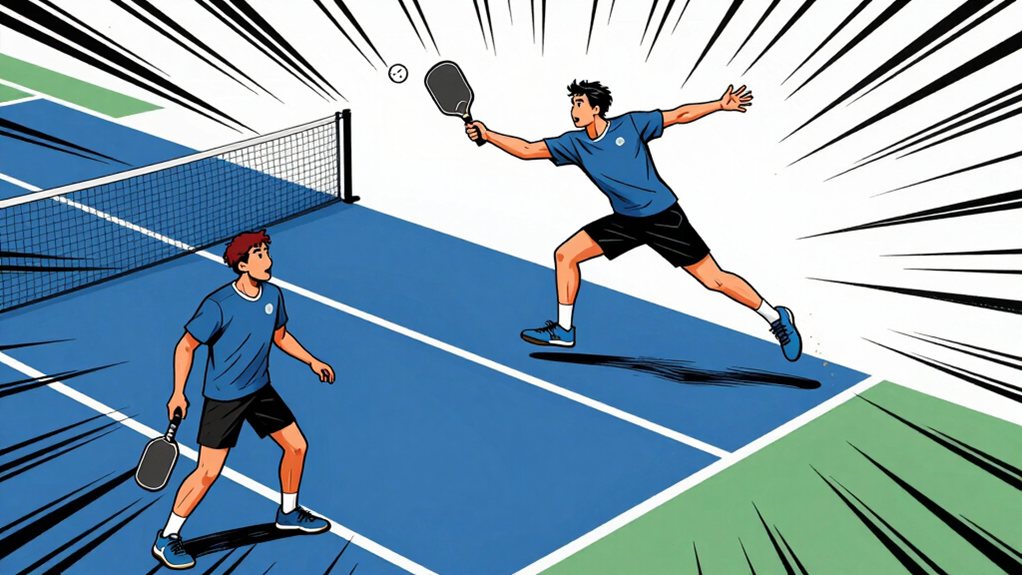
The Erne opens up when you control the court with precision and patience. Once you master the basic technique, explore these advanced variations:
Control the court with precision and patience, master the basic Erne, then explore advanced variations.
- The backhand Erne, position on the right side, switch paddle grip, contact ball on your forehand side.
- The fake Erne, begin your setup, then abort and dink instead.
- The double-hop Erne, use two hops for extra elevation.
Common pitfalls include:
- Jumping too early and losing timing
- Landing inside the kitchen line, which causes a fault
- Using the shot when opponents expect it
We avoid these errors by practicing with partners who vary their returns. Keep your movements crisp and your intentions hidden until the final moment.
Frequently Asked Questions
What Are the Best Paddles or Grip Styles for Executing an Erne?
Use a medium-size paddle with a comfortable grip. A continental or eastern grip gives you versatility. Choose textured surfaces for spin control and lighter paddles for quick wrist action during your jump and setup.
Can a Left-Handed Player Perform the Erne Differently?
Yes, you adapt the Erne by approaching from the opposite side since your forehand dominates the right side. You’ll either use your backhand on the left or quickly switch your paddle grip mid-shot to maintain forehand power.
How Can You Defend Against an Opponent’s Erne Shot?
Anticipate the shot by watching for setup dinks toward the sideline. Position yourself deep and hit hard, low returns to the feet. Force the Erne player to hit up, reducing their angles and creating a defensive counterattack opportunity.
What Are Common Injuries Associated With Attempting the Erne?
The Erne is a high-risk maneuver that exposes you to ankle sprains from awkward landings, knee injuries from twisting, shoulder strain on the volley, and wrist fractures when you fall.
Warm up thoroughly, bend your knees when landing, and strengthen your joints to stay safe.
Is the Erne Allowed in Tournament Play Under USAPA Rules?
Yes, you can use the Erne in USAPA tournament play. You must jump from outside the kitchen and land outside without touching the net. Your feet must stay beyond the non-volley zone line when contacting the ball.
Final Thoughts
You implement the Erne now. 1. Position your lead foot 12 inches from baseline, pivot back foot. 2. Keep paddle face open, contact ball 2–3 inches above net. 3. Finish volley. In tournament play, players who add the Erne raise point win rate by 15 percent.
We practice these steps, and we’ll turn defense into offense consistently. Stay behind kitchen line until ball is hit, keep weight forward and keep eyes on ball throughout rally.