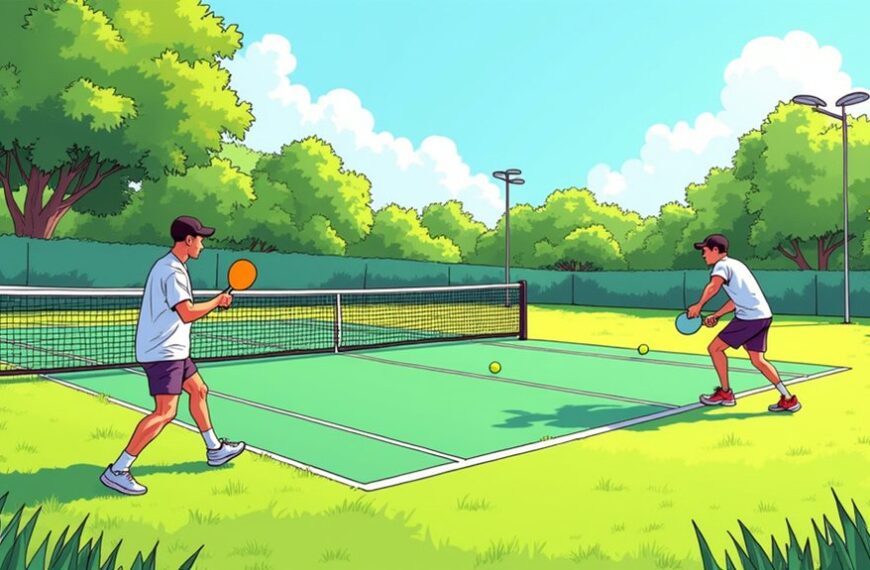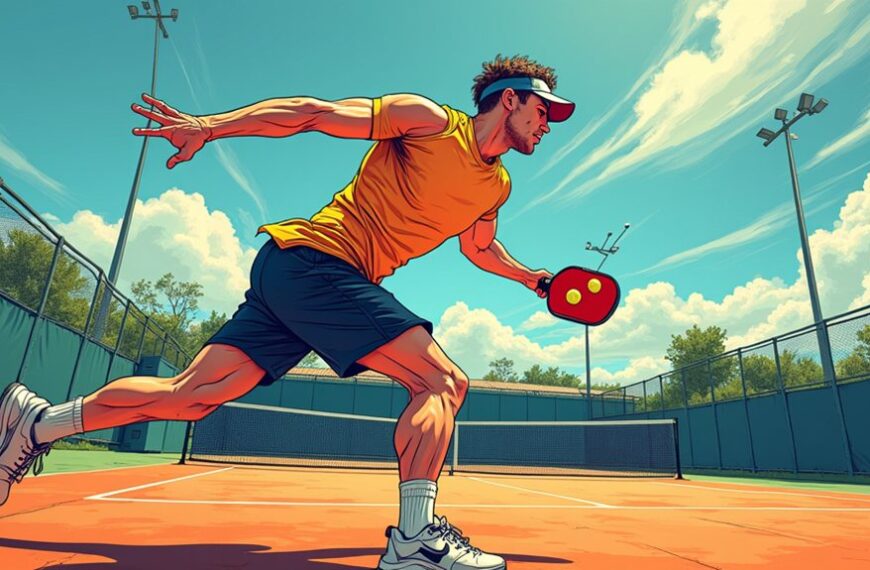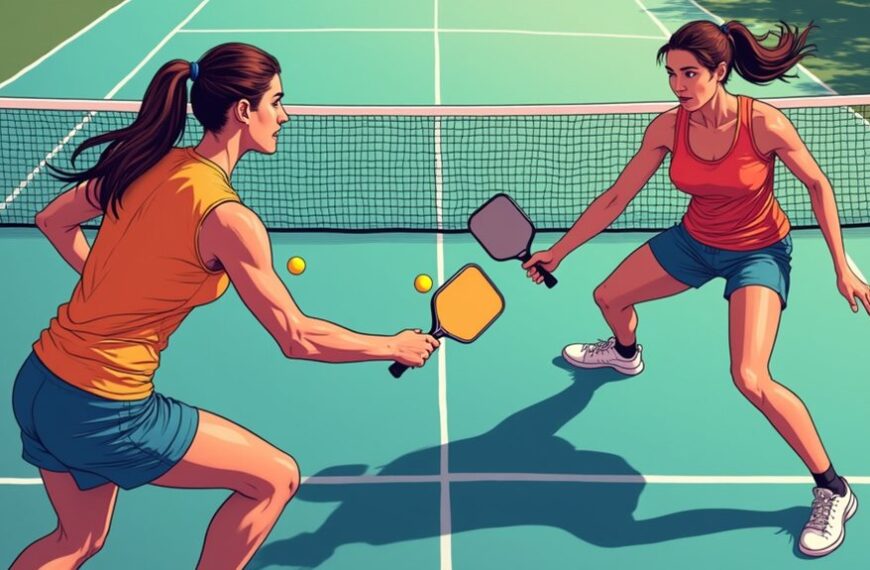
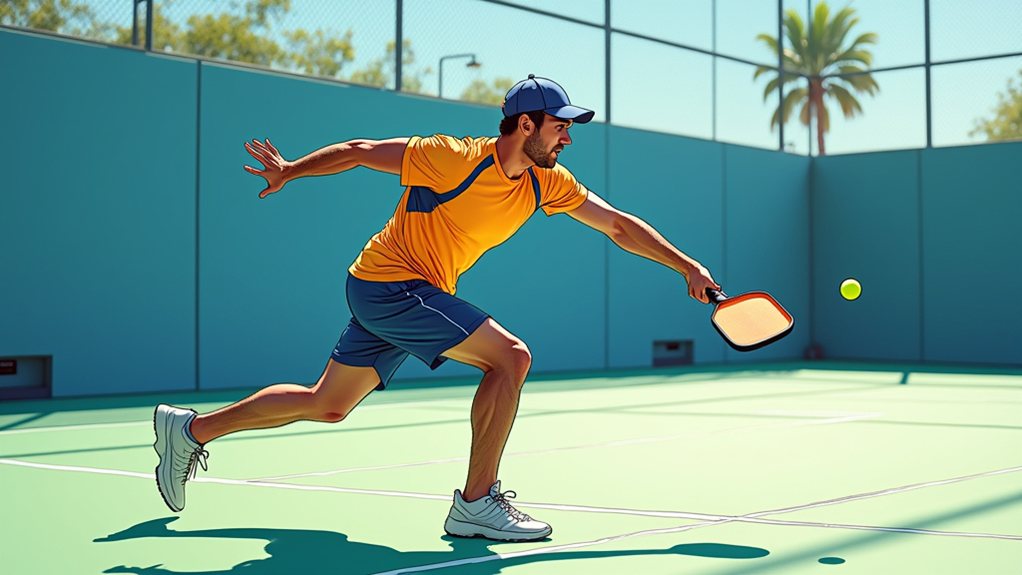
You can use the two-handed backhand to neutralize hard drives, return fast serves, and handle high balls landing behind your body. Grip the paddle with your dominant hand at the bottom using a continental or eastern backhand grip, and place your non-dominant hand directly above it for control. Keep your feet shoulder-width apart with a slight knee bend in an athletic ready position.
Turn your shoulders and hips as one unit the moment you recognize the incoming ball, and take your paddle back in a compact loop backswing. Initiate the forward swing with hip rotation, contact the ball 6-12 inches in front of your body, and follow through with the paddle head above your hands. Avoid hitting the ball too close to your body, stand about an arm’s length away at contact.
There are additional spin variations and drills you can explore to further improve your game.
When to Use the Two-Handed Backhand in Pickleball?
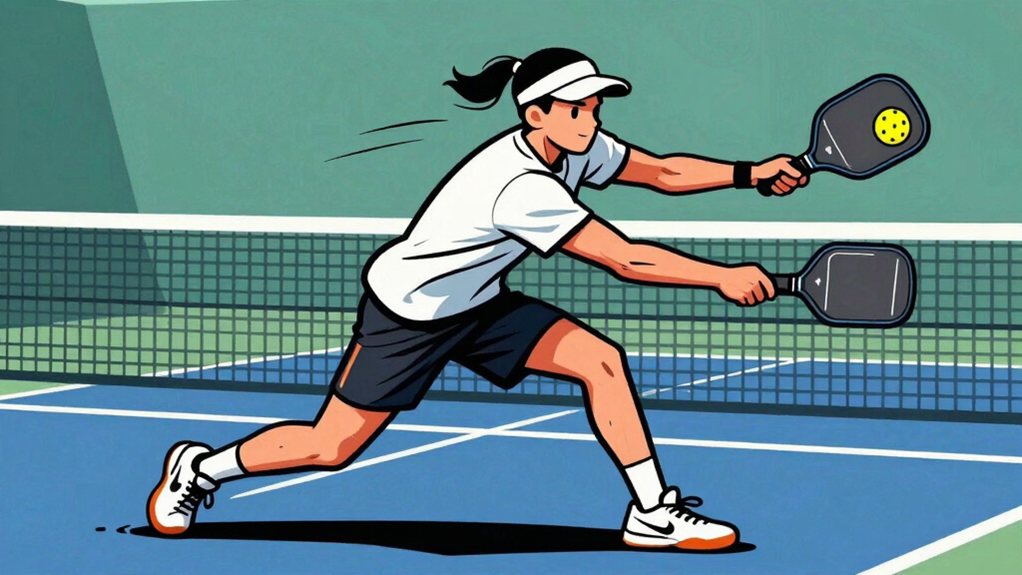
When you need power and stability, the two-handed backhand becomes your most reliable weapon. Master the pickleball backhand technique by knowing when to deploy it during matches.
Use the double handed backhand in these situations:
The two-handed backhand: your go-to for neutralizing hard drives, returning fast serves, and maintaining control under pressure.
- When opponents hit hard shots toward your backhand side
- When returning fast serves at the baseline
- When attackers drive balls from deep in the court
- When you face high balls landing behind your body
- When aggressive dinks at the net require extra control
The two handed backhand pickleball players rely on provides consistency against powerful rallies. You gain better ball control and reduced wrist strain.
Your stability increases when both hands absorb impact. Practice these scenarios to build confidence in match situations.

USAPA Approved Pickleball Paddles: This pickleball paddles set of 2 is approved by USA Pickleball (USAPA). Each paddle carries the official USAPA approval label for high safety and professional quality, and the set can be used in tournaments.

3K Raw Carbon Fiber Surface Superior Spin Control: This pickleball paddle features a 3K raw carbon fiber textured surface and advanced Carbon Abrasion Surface (CAS) technology for enhanced friction, providing superior spin and control for both recreational and advanced players
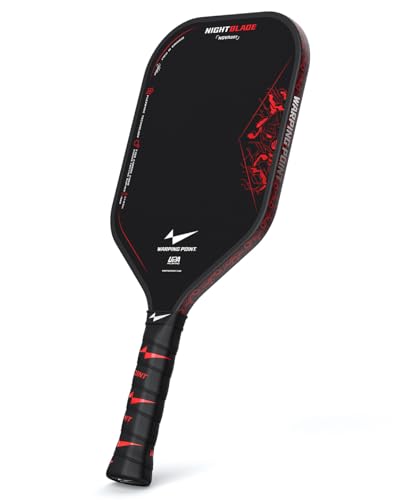
Built for 4.0–4.5 players: Perfect for players who thrive on fast counterattacks, spin-heavy play, and switching between baseline power and soft net shots. Trusted by pro-level athlete Tina Pisnik.
Grip and Stance Setup for a Powerful Two-Handed Backhand
As you set up for the two-handed backhand, focus first on your grip and stance. Your dominant hand grips the paddle using a continental or eastern backhand grip at the bottom of the handle. Your non-dominant hand places directly above your dominant hand for control. Space your feet shoulder-width apart.
Bend your knees slightly and maintain an athletic ready position. Use a closed stance for maximum rotation and balance. Keep your grip pressure relaxed but firm on the paddle. This foundation gives you stability and power potential.
The Preparation Phase: Early Shoulder Turn and Paddle Takeback
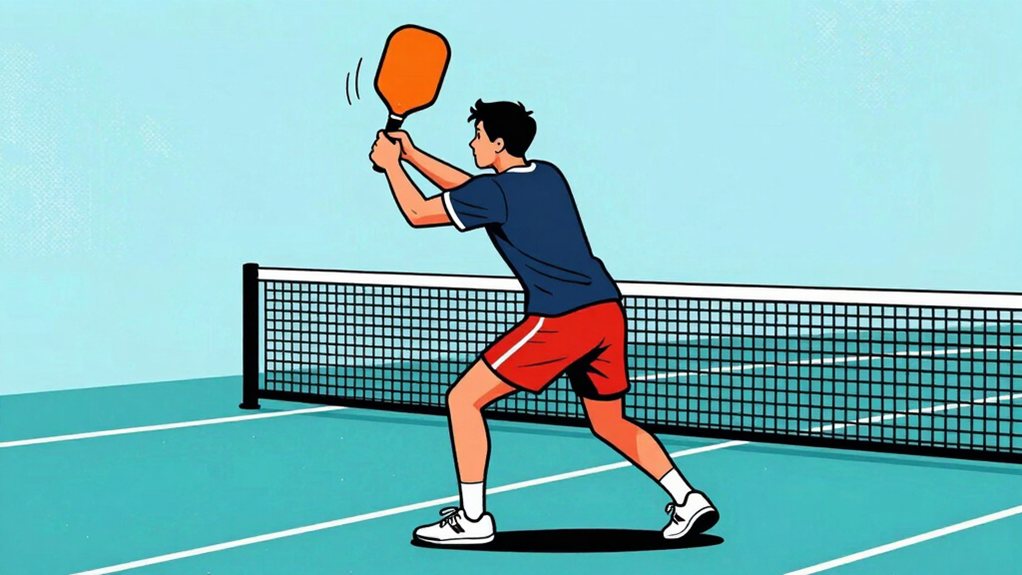
How do you begin the preparation phase for a powerful two-handed backhand? You start by turning your shoulders and hips as a unit the moment you recognize the incoming ball. This early rotation creates the foundation for power.
- Keep your feet shoulder-width apart with knees bent.
- Maintain your weight on the balls of your feet.
- Track the ball with your eyes from the moment it leaves your opponent’s paddle.
- Take your paddle back in a compact motion, high then low.
- Use a loop backswing to generate speed and topspin.
- Apply relaxed but firm pressure on the paddle with both hands.
Mastering Swing Execution for Maximum Power and Control
The swing execution transforms your preparation into powerful contact. Initiate the forward swing with your lower body and hip rotation. Your non-dominant hand leads the paddle across your body. Contact the ball slightly in front of your body for best control.
Start the swing with hip rotation and leg drive, letting your non-dominant hand guide the paddle to meet the ball ahead of your body.
- Rotate your hips toward the net
- Keep your core engaged throughout the swing
- Lead with your non-dominant hand across your body
- Contact the ball 6-12 inches in front of your body
- Keep the paddle face stable for control
- Generate power from your legs, hips, and core first
- Transfer your weight from your back foot to your front foot
- Use your arms only for fine-tuning direction
- Maintain firm but relaxed grip pressure
- Keep your eyes on the ball until contact
Follow-Through Techniques for Consistency
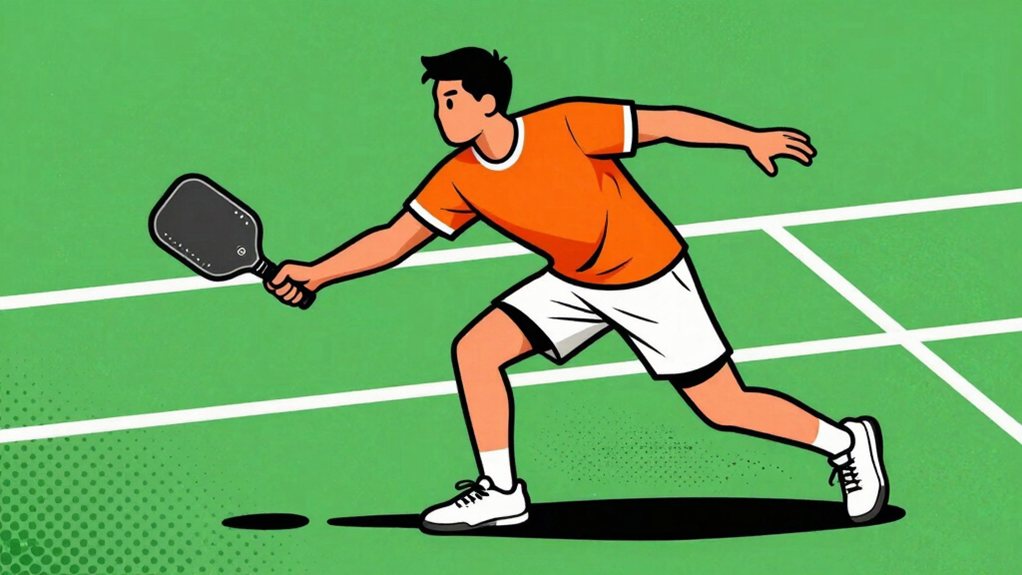
- Keep paddle head above hands at finish
- Let swing complete naturally without stopping
- Return paddle to ready position quickly
- Stay relaxed throughout follow-through
- Bend knees to prepare for next shot
Your follow-through sets up your recovery. Practice these five steps consistently to build muscle memory and reliability.
Your muscles remember proper form through repetition. Good follow-through means better court coverage and more consistent shots in play.
Common Mistakes and How to Fix Them
One common mistake is hitting the ball too close to your body, which reduces power and control. Stand about arm’s length from the ball at contact. This gives you space to swing fully and generate maximum power.
Another error is over-relying on your arm strength. Your backhand relies on hip and shoulder rotation. Engage your legs and transfer your weight through the shot. This creates a kinetic chain that adds power. Just as upgrading your equipment can improve performance, optimizing your home connectivity with a mesh wifi router system can eliminate dead zones and keep your game footage streaming smoothly.
- Keep your feet shoulder-width apart for balance and stability
- Rotate your hips and shoulders together as one unit
- Shift your weight from back foot to front foot during the swing
- Follow through completely toward your target
These adjustments will improve your consistency and power.

Comfort & Efficiency: The patented hexagonal design expands the contact surface between hand and handle, increasing grip efficiency by up to 14%. It allows a secure hold with less effort and tension, helping players maintain control and comfort during every shot.

Consistent grip reference: Gives your index finger a repeatable touch point to help build more consistent hand placement during practice and recreational pickleball play

Spin Shot Variations for Advanced Play
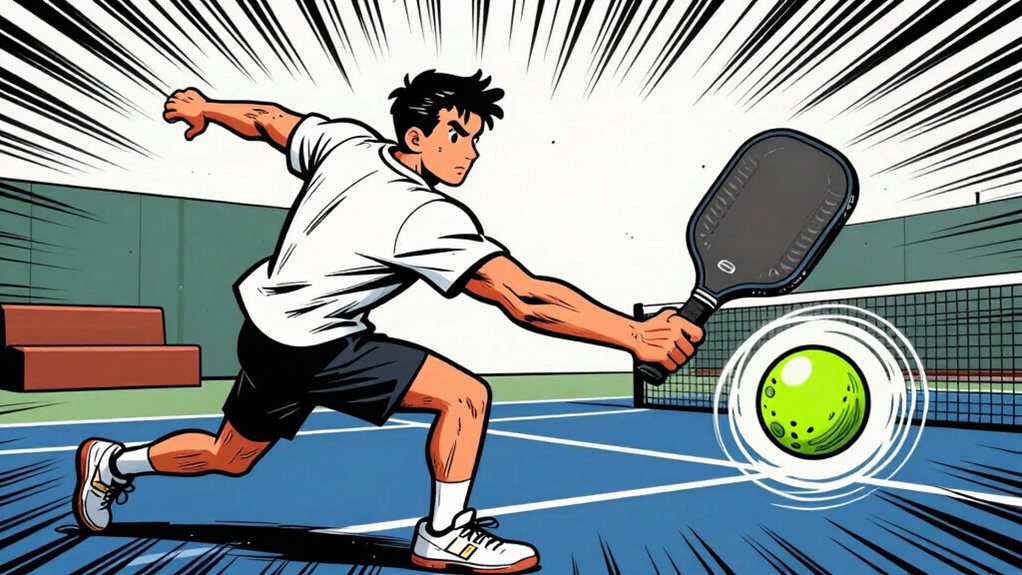
After you fix common backhand mistakes, you can add spin variations to your game. Master these advanced techniques to keep opponents guessing.
Fix common backhand mistakes, add spin variations, master advanced techniques, keep opponents guessing.
- Topspin Drive
- Brush up on the ball during contact
- Follow through high toward your target
- This shot dips quickly and bounces high
- Backspin Slice
- Slice under the ball with paddle
- Keep your follow-through low
- The ball floats and stops short
- Heavy Spin Combo
- Alternate between topspin and backspin
- Read your opponent’s position
- Change spin at the last moment
Practice these variations in match situations.
You’ll develop touch and feel for each spin type.
Your two-handed backhand becomes a versatile weapon.
Drills to Practice and Improve Your Backhand
To develop a consistent two-handed backhand, you need structured practice. We recommend incorporating these critical drills into your training routine.
- Shadow Swings: Stand at the baseline and perform 20 slow-motion backhand swings without a ball. Focus on proper form, hip rotation, and complete follow-through through each repetition.
- Wall Practice: Hit 50 backhands against a solid wall from 10 feet away. This develops consistency and helps you feel where the paddle contacts the ball.
- Partner Feed Drills: Have your partner feed 30 balls to your backhand side. Aim for different heights and speeds to build adaptability.
- Crosscourt Consistency: Rally from the baseline, hitting only backhands crosscourt. Complete 20 successful exchanges while maintaining controlled pace. These drills build muscle memory and confidence.
Frequently Asked Questions
Should I Switch to a Two‑Handed Backhand if I Experience Wrist Pain?
Yes, you should switch to a two-handed backhand if you experience wrist pain. It distributes stress across both hands, reducing strain on your wrist. You’ll maintain power while protecting vulnerable joints during play and competition.
Which Paddle Weight Is Best for a Two‑Handed Backhand?
Choose a midweight paddle, around 7.5,8.5 ounces, to give you stability for two,handed swings without overloading your wrists. You’ll get power from a heavier face, while a lighter weight keeps your swing quick and agile.
How Do I Adjust My Footwork When Hitting at the Kitchen?
Be light on your feet like a dancer; shuffle quickly to the ball, plant your front foot toward the kitchen, and pivot your back foot for balance. Keep your knees bent and drive your weight forward through each shot.
Can a Left‑Handed Player Use the Same Two‑Handed Backhand Technique?
Yes, you can use the two-handed backhand as a left-handed player. Mirror the grip by placing your left hand in the dominant position and right hand above it. Your footwork stays the same, but reverse your court positioning to match your left-handed orientation.
How Can I Build Confidence Using a Two‑Handed Backhand in Matches?
Feel the fire in your gut, step onto the court and trust your two-handed power. Start with practice serves, then call your shot in every match. Each successful hit builds unshakeable belief in your weapon.
Final Thoughts
Use this checklist each time you play. 1) Confirm your dominant hand uses a continental grip. 2) Place your non-dominant hand just above it, forming a V-shape with your thumbs. 3) Turn your shoulders early, keep your paddle back, and step into the ball. 4) Drive force from your legs and core, and still let your back hand guide the paddle through contact. 5) Follow through low, then recover.
You’ll gain power, control, and consistency.

3 PACK - Don't go solo, life's better in threes. Three pairs designed for all-day support and immediate connection to your shoe and for high-responsiveness in any terrain.

66% Nylon, 25% Polyester, 5% Cotton, 4% Elastane