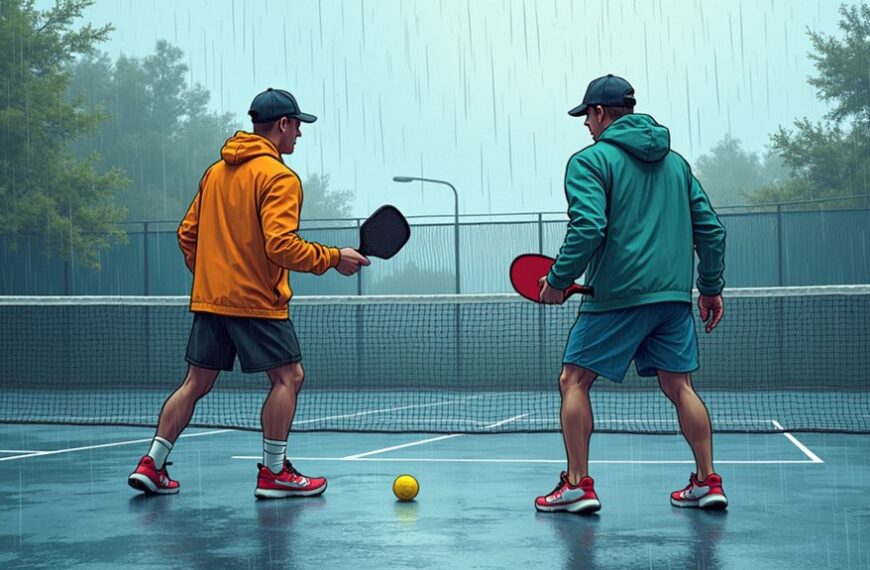
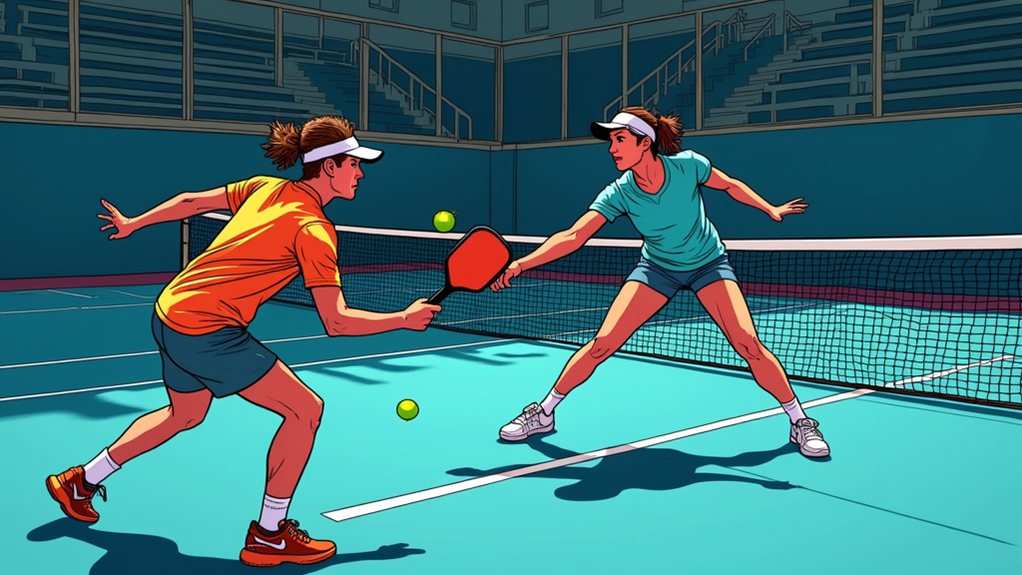
The open-face defensive technique lets you absorb pace and drop the ball into the kitchen. Hold your paddle with a grip at 3 to 4 on a 10-point scale. Tilt the paddle face up 5 to 10 degrees to create loft.
Keep your feet shoulder-width apart and stay low. Move your feet first, then adjust your paddle. This technique turns attacks into returns. You’ll gain confidence when you apply these steps and improve your game.
Stop Getting Stuck in No Man’s Land With This Simple Stance
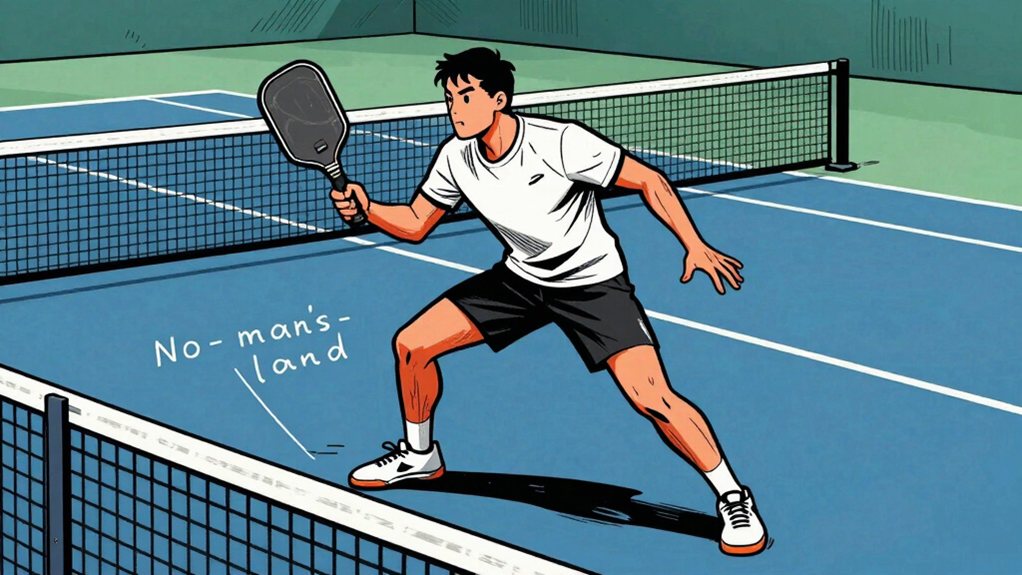
If you find yourself stuck in no man’s land, you’re losing points and giving your opponents easy targets. This area sits between the baseline and the kitchen line. You must commit fully to one position.
- Choose your base position.
- Move to the non-volley zone line for offense.
- Stay at the baseline for defense.
- Never hover between these two points.
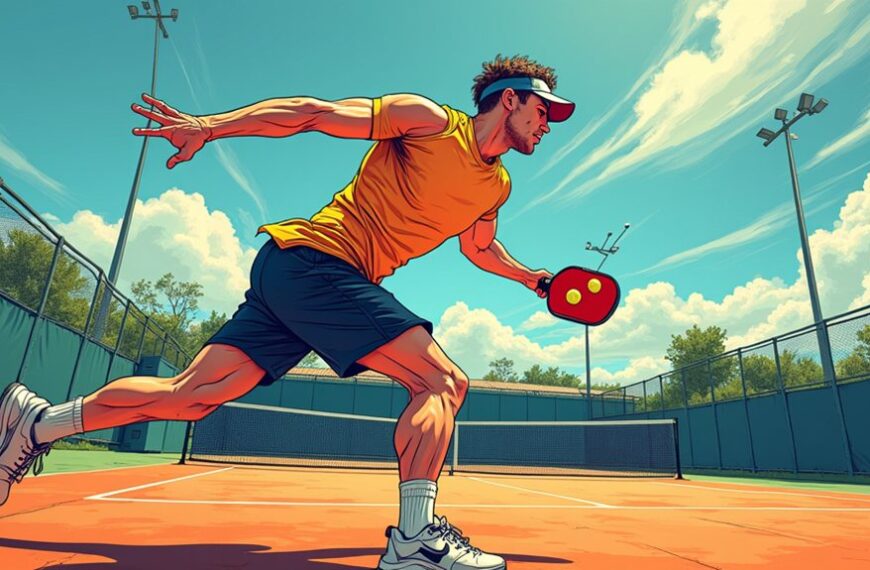
- Maintain proper ready stance.
- Hold your paddle in front of your body.
- Keep feet shoulder-width apart.
- Stay low and balanced.
- Use the open face paddle pickleball technique when digging out a smash pickleball. This pickleball defense technique absorbs pace and redirects the ball softly.
You create reaction distance by moving away from your hitting opponent.
Cut off angles to reduce their return options. Commit fully to each position. Avoid sprinting from baseline to kitchen. This eliminates setup chances for your opponents. Position yourself correctly, and you control the point.
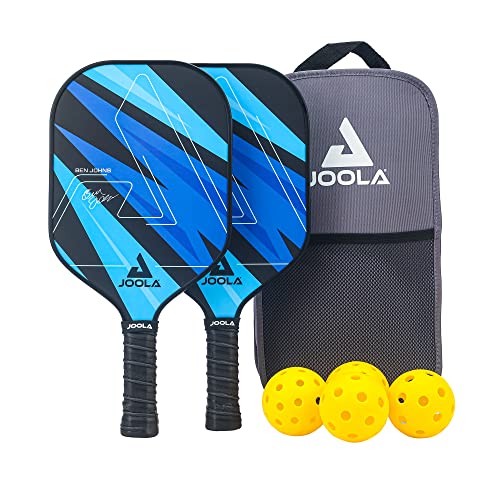
**USAP APPROVED FOR TOURNAMENT PLAY:** JOOLA, a racquet sports brand since 1952, partnered with elite PPA Tour pro Ben Johns to co-design this pickleball paddle kit. Officially USAP approved for competitive play, it features a fiberglass face and honeycomb polypropylene core. Beginner-friendly yet performance-driven, this set combines 70+ years of racquet sports expertise with pro-level design. As the official equipment partner of the PPA Tour, JOOLA delivers a kit players can grow into.

PICKLEBALL RACKET RACK SYSTEM: Determines the players for the next open court. Move the label adsorb on the rack to designate the players who are next to play. The 45° inclined paddle position design enables you to easily locate your paddle.
The Grip That Gives You Control Without Squeezing Too Tight
Your grip pressure sets the foundation for every defensive shot you make.
Aim for a loose grip rated 3 to 4 on a scale of 1 to 10—this keeps the paddle secure without strangling it.
A loose grip absorbs the ball’s impact and lets you guide soft shots into the kitchen.
Just as smart home thermostats allow precise temperature control without constant manual adjustments, a relaxed grip lets you make fine-tuned corrections mid-rally with minimal effort.
Grip Pressure Basics
On a scale of 1 to 10, a loose grip rated 3 to 4 gives you control without squeezing too tight. This pressure prevents the paddle from flying out of your hand when opponents hit hard. It also absorbs impact, letting the ball stay on your paddle longer.
Here’s what happens when you squeeze too hard:
- You transfer power back to your opponent
- Your wrist locks up and loses flexibility
- You struggle to feel the ball
Use these steps to check your grip:
- Hold the paddle naturally
- Imagine you’re shaking someone’s hand
- Keep your fingers relaxed
- Test your grip on serves
A loose grip improves your feel. You guide the ball better. Your wrist moves naturally. Your control increases. Your resets become softer.
Optimal Grip Tension
Finding your ideal grip tension means landing in that sweet spot between too loose and too tight. You want a tension rating of about 5-6 on a 10-point scale. This gives you control without robbing your paddle of feel.
Your grip should feel like holding a small bird. Keep it firm enough to prevent dropping, but loose enough to avoid crushing. Let your fingers wrap naturally around the handle. Avoid squeezing the life out of your paddle.
Here is a guide for you:
| Tension | Feel | Application |
|---|---|---|
| 1-2 | Very loose | Not recommended |
| 3-4 | Light touch | Dink shots |
| 5-6 | Balanced control | Most defensive shots |
| 7-8 | Firm grip | Offensive drives |
| 9-10 | Death grip | Causes fatigue |
Test your tension by tapping the ground. Your paddle stays in your hand but does not fly out. You maintain control and feel. This protects your arm and improves your game.
Loose Grip Benefits
A loose grip in pickleball gives you better control and feel during defensive play. You relax your grip to about a 3 or 4 on a 10-point scale. This tension prevents your paddle from falling out while absorbing the ball’s impact.
A tight grip transfers power to your opponent, enabling counterattacks. We want the ball to bounce softly into the kitchen. Your natural wrist flexion guides the ball without forced snapping.
Benefits of a loose grip:
- Better ball feel and touch
- Absorbs pace from hard shots
- Enables quick paddle adjustments
- Reduces arm fatigue during long rallies
- Allows for natural wrist movement
How to Read Your Opponent’s Shot and React Faster?
Why can reading your opponent’s shot improve your reaction time? You reduce guesswork when you recognize patterns. Watch your opponent’s paddle face at contact. Notice their body rotation and arm extension. These cues tell you the shot direction.
Read your opponent’s body language and paddle position to reduce guesswork and react faster.
Track the ball from your opponent’s paddle to your side. Identify spin by watching ball rotation. Fast pace means less time to react. Slow pace lets you move forward.
Use ready position. Hold paddle in front of your body. Stay low with bent knees. This stance cuts reaction time by half.
Commit to one direction early. Don’t wait until you see the ball’s final path. Move your feet first. Then adjust your paddle. This quick commitment gives you a split-second advantage.
Anticipate the third shot drop. Opponents often hit it soft. Step into the kitchen early. Be ready to block or reset.
Listen for ball contact sounds. A hard hit sounds different than a soft dink. Use this audio cue alongside visual cues to react faster.
The Paddle Angle Secret Nobody Talks About
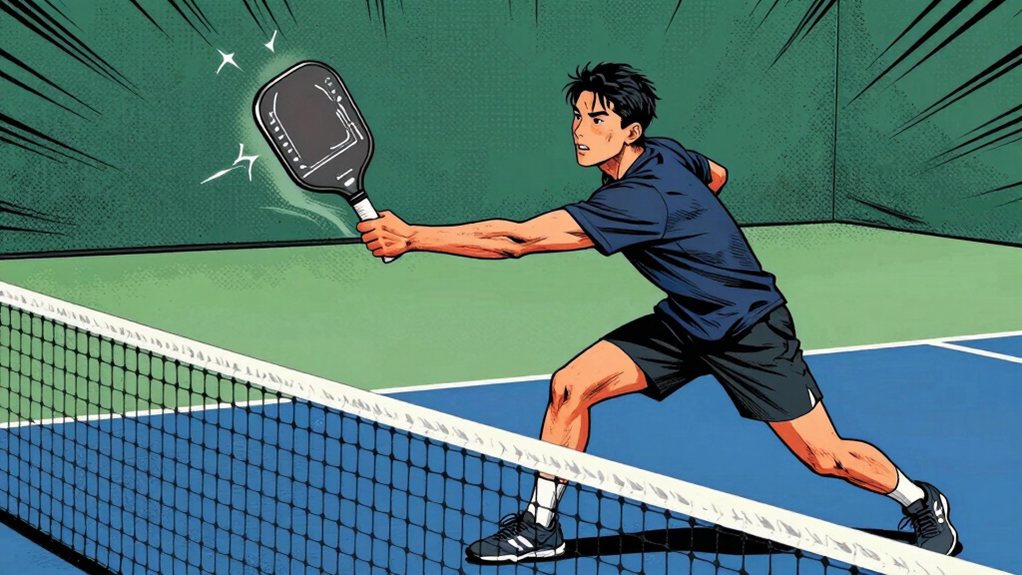
The paddle angle controls depth. You open the face slightly to create loft, and the ball drops softly into the kitchen.
A flat face forces the ball down into the net.
Angle Controls Depth
Understanding how paddle angle controls depth gives you a powerful tool for strategic play.
You’ve easily controlled ball travel distance by tilting the paddle face up or down.
An open angle pushes ball deep effectively; a closed angle drops it short.
Keep the paddle face consistently during block to predict where ball lands.
Adjust the angle carefully in increments, 5 to 10 degrees, to shift depth.
- Open paddle 10 degrees to drive ball to baseline for better placement.
- Close face 5 degrees to place ball in kitchen.
- Keep angle constant while blocking to maintain depth.
- Increase angle to 15 degrees for deep reset.
- Decrease angle to 5 degrees to shorten return.
Practice angle changes in drills until you feel ball lands where you intend.
Loft Creates Softness
Mastering loft gives you control over how softly the ball drops into the kitchen. Loft refers to the open angle of your paddle face at contact.
Key points to remember:
- Open your paddle face 15-30 degrees beyond flat.
- This slight opening absorbs pace from hard shots.
- The ball loses speed and drops gently over the net.
- Your opponent can’t attack a dying ball.
How to practice:
- Set up with a partner at the kitchen line.
- Have your partner hit hard dinks toward you.
- Keep your paddle face slightly open.
- Feel how the ball drops softly into the kitchen.
Common mistakes:
- Paddle too flat causes ball to hit net.
- Paddle too open sends ball too high.
3 Drills to Make Blocking Second Nature
Block training develops your reactive instincts. Practice these drills daily to build muscle memory and automatic reactions at the kitchen line.
- Human Wall Drill: You and a partner dink at the kitchen line while you block their speed-ups, absorbing pace without swinging.
- Partner Speed-Up Drill: Your partner hits hard dinks; you block them back softly using loose grip and open face.
- Serve Return Drill: Return serves at varying speeds from a partner or machine, focusing on paddle angle and stance.
- Transition Block Drill: Practice moving from baseline to kitchen while blocking incoming shots, maintaining balance and ready position.
- Open Face Reset Drill: Work on turning defensive blocks into offensive resets by angling paddle and guiding ball into kitchen.

Comfort & Efficiency: The patented hexagonal design expands the contact surface between hand and handle, increasing grip efficiency by up to 14%. It allows a secure hold with less effort and tension, helping players maintain control and comfort during every shot.

IMPROVED GRIP STRENGTH: PickGrip boasts an ergonomic, hexagonal shape that enhances performance by absorbing shock, reducing vibrations, and improving grip strength through elevated bevels.

Tourna grip is a thin. 44mm over Grip, that is meant to wrap over the original grip on a pickle ball Paddle
The Mistakes That Turn Good Blocks Into Weak Returns
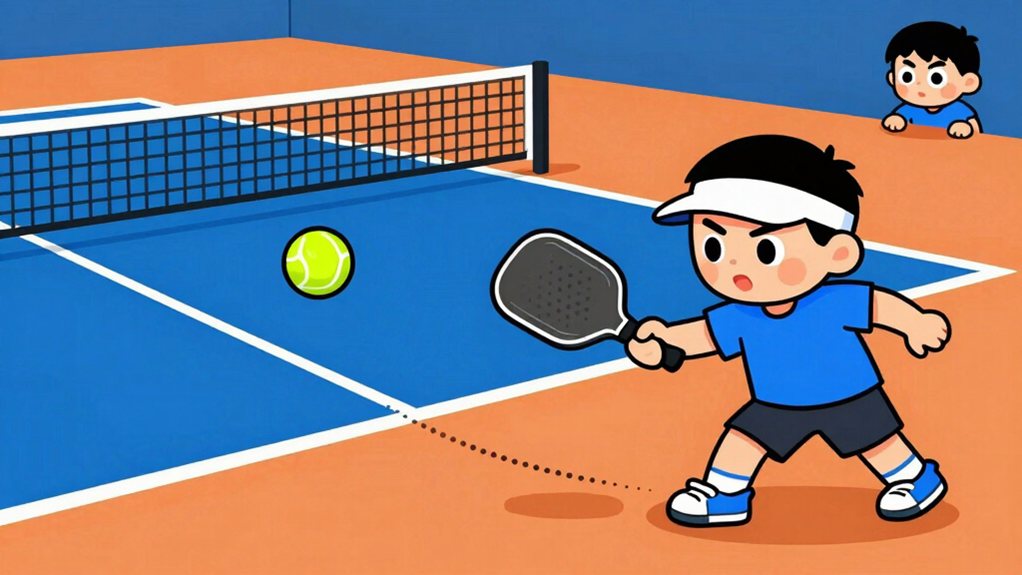
Drills build your blocking instincts, but certain errors turn strong blocks into weak returns.
- Grip errors
- You grip the paddle too tightly. This removes soft absorption. The ball flies back with unwanted pace.
- Keep your grip at 3-4 on a 10-point scale. Loose grip controls direction.
- Paddle face mistakes
- You hold the paddle flat. The ball drops into the net.
- Angle the face slightly open. This creates loft and drops the ball softly.
- Footwork errors
- You reach for the ball. You don’t move your feet first.
- Step toward each shot. Keep your stance shoulder-width apart. Stay low.
- Positional errors
- You stand too far back. Opponents exploit the opening.
- Hold your position near the non-volley zone. This reduces reaction time.
- Timing faults
- You swing at the ball. A block requires no swing.
- Contact the ball with soft hands. Let the paddle absorb pace passively.
Taking Your Defense to the Next Level in Game Play
When you apply the correct grip, paddle angle, and footwork in match situations, your defensive shots become more consistent. You’ll want to raise your level by reading opponents, controlling pace, and using the kitchen line as a shield.
Take these five steps to turn defense into a scoring tool.
- Anticipate opponent’s next shot by watching paddle angle and body position.
- Keep your paddle up and stay low to react fast to speed-ups.
- Use soft blocks to reset the ball, then move forward into the kitchen.
- Shift your position to cut off angles and force opponents to hit up.
- Practice the human-wall drill daily to build stamina and consistency.
Apply always these steps every match, and your defense will become a dominant weapon in play.
Frequently Asked Questions
How Does Wind Affect Open-Face Defensive Shots?
Wind alters your ball trajectory, so you adjust paddle angle. You grip tighter in crosswinds and open your face more into headwinds. You compensate by reading the ball earlier and controlling depth.
What Paddle Weight Is Best for a Soft Defensive Block?
Think of your paddle as a feather in your hand. A lighter paddle (7-8 ounces) gives you the finesse needed for soft defensive blocks, letting you absorb pace while maintaining precise control and even touch.
How Can I Improve Reaction Time Without a Partner?
Practice shadow swings and ready position drills alone. Use a wall for blocking practice. Visualize opponent shots and react quickly. Focus on footwork quickness and paddle positioning. Train with machine serves at varying speeds and angles.
Should I Use an Open-Face Grip on Serve Return?
Yes, use an open-face grip on serve returns. It helps you lift the ball over the net and place it softly in the kitchen, giving you better control and tactical setup for your next shot.
How Do I Communicate With My Partner While Blocking at the Kitchen?
Fire your calls early, yelling “mine,” “yours,” or “switch” instantly. Point at the ball, shout “tight” when opponents crowd the net, and signal “open” for middle coverage. Keep your voice loud, clear, and commanding confidently.
Final Thoughts
You’ll use the open,face dig to turn hard attacks into neutral returns. Follow these steps:
- Keep a loose grip, about 2–3 pounds of pressure.
- Tilt the paddle face 20–30 degrees upward.
- Step forward, plant your front foot near the kitchen line.
- Absorb the pace, lift the ball gently.
Practice these points each rally regularly, and your defense will stay consistent.
We avoid gripping tight, leaning back, or opening the paddle early. These errors reduce control.

Striking illustration of a pickleball player locked in an aggressive low ready stance, radiating competitive intensity and athletic focus — perfect for players who bring everything to the court.

Striking illustration of a pickleball player locked in an aggressive low ready stance, radiating competitive intensity and athletic focus — perfect for players who bring everything to the court.

Striking illustration of a pickleball player locked in an aggressive low ready stance, radiating competitive intensity and athletic focus — perfect for players who bring everything to the court.