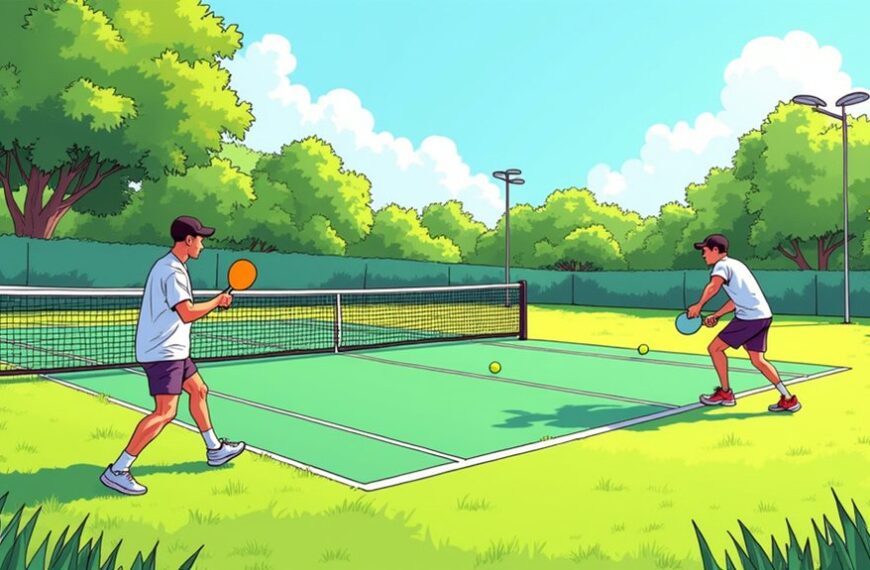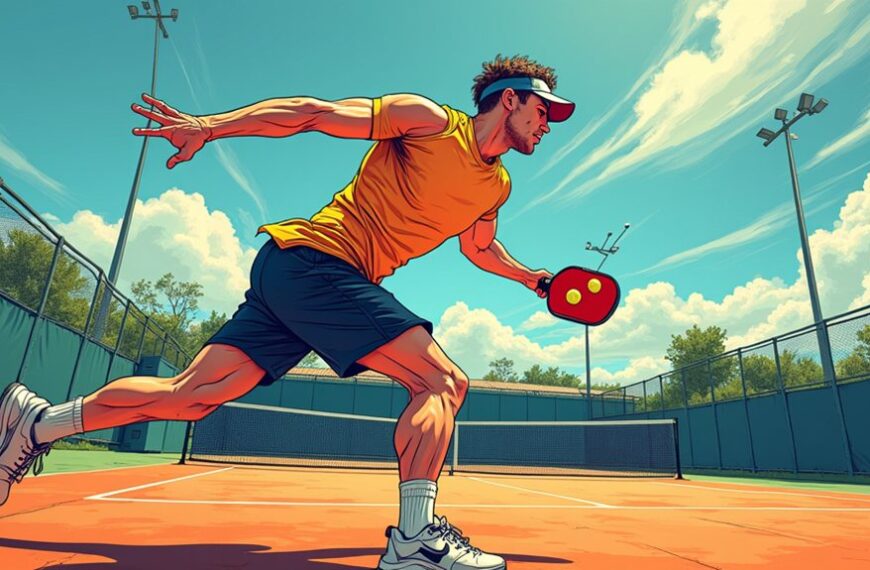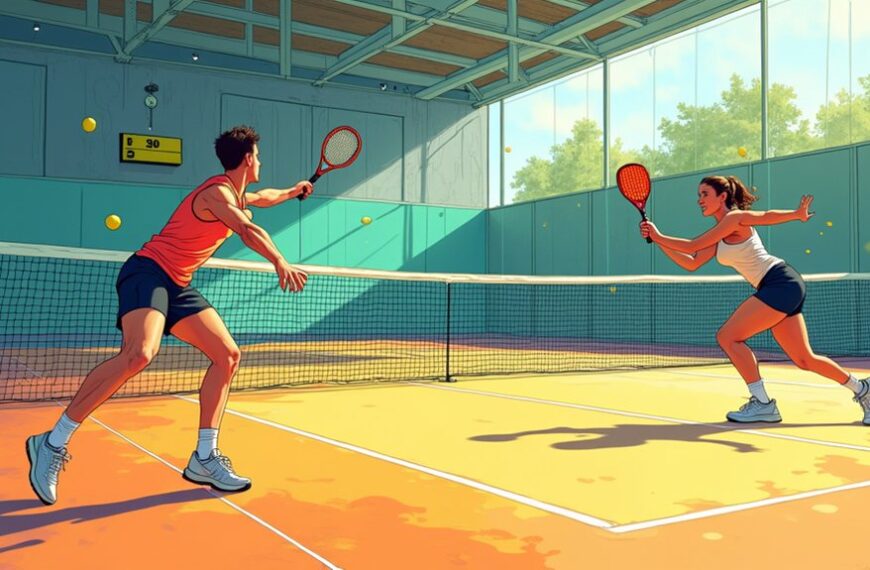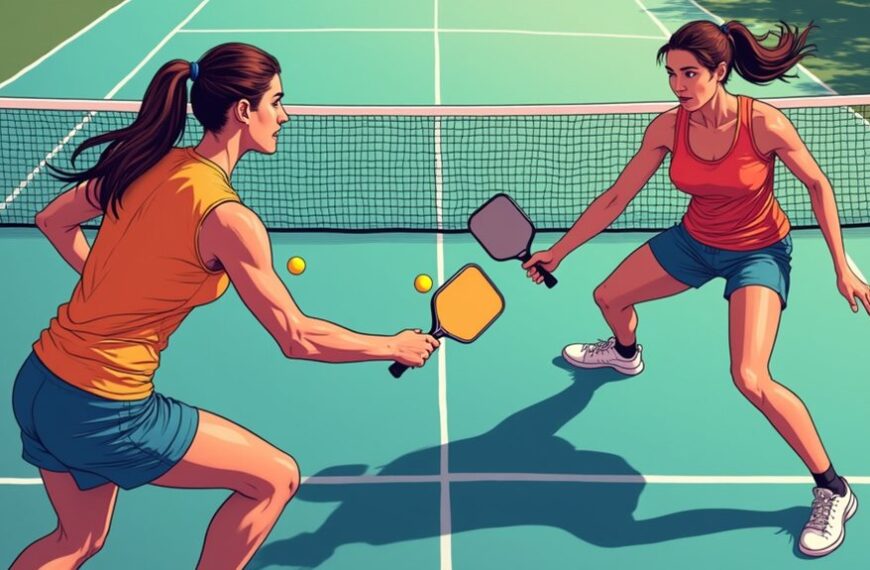
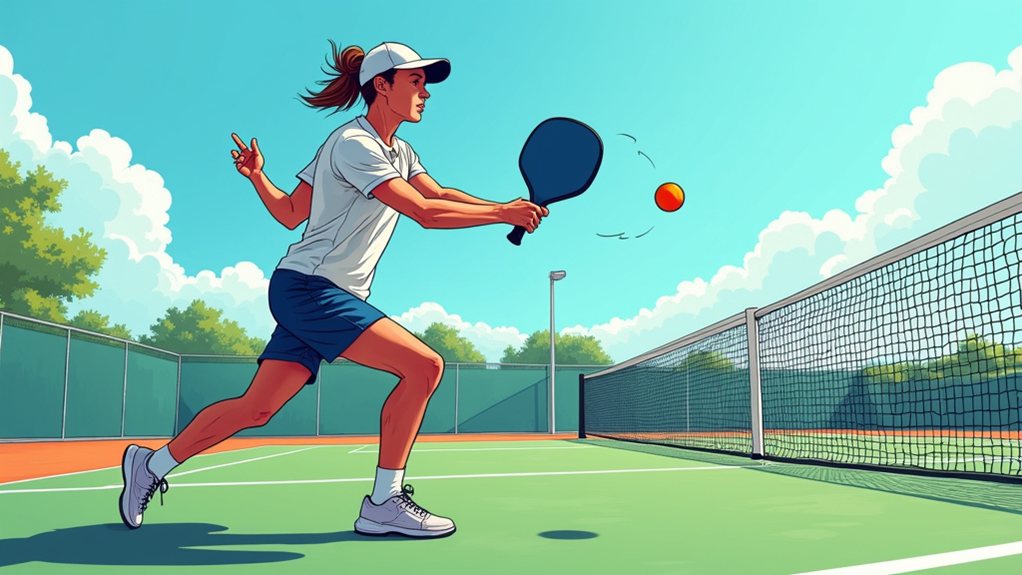
Master the backhand volley by gripping the paddle firmly at chest height with the tip pointing up. Lock your wrist to generate punch-like power and prevent flicking. Keep knees bent, feet shoulder-width apart, weight balanced on the balls of your feet. Angle the paddle tip toward the backhand side in your ready position.
Lead with the paddle tip, not the handle. Rotate your shoulder forward, tighten your core, and push forward with your forearm. Practice kitchen line blocks first, then progress to mid-court drives. You’ll improve faster by avoiding weak grip, wrist flick, and poor balance.
Grip the Paddle Like a Pro for Backhand Volleys
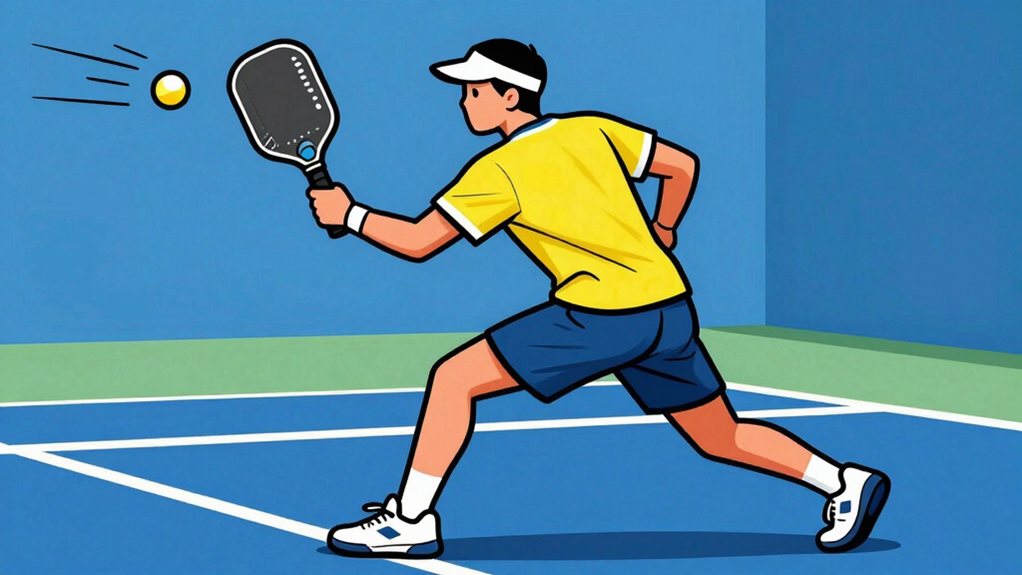
A proper grip sets the foundation for a reliable backhand volley. Master the backhand volley pickleball technique with these steps:
A proper grip sets the foundation for a reliable backhand volley—master the technique to dominate the net.
- Hold your paddle at chest height. Keep the tip pointing up.
- Lean the paddle slightly toward your backhand side. This prepares you for quick reactions.
- Point the back of your hand toward your opponent in the ready position.
- Lead with the paddle tip, not the handle, during the backhand punch volley motion.
- Tilt the paddle tip toward your backhand wing to save time on body shots during pickleball backhand net play.
Practice this grip until it feels natural. Your reactions will improve.
You will handle fast exchanges with confidence. The backhand volley pickleball becomes your reliable weapon at the net.

Comfort & Efficiency: The patented hexagonal design expands the contact surface between hand and handle, increasing grip efficiency by up to 14%. It allows a secure hold with less effort and tension, helping players maintain control and comfort during every shot.

Consistent grip reference: Gives your index finger a repeatable touch point to help build more consistent hand placement during practice and recreational pickleball play

Lock Your Wrist for Punch-Like Power
Lock your wrist firmly to generate punch-like power on your backhand volley. A locked wrist prevents flicking or waving. It converts your swing into a compact punch motion. This creates a stable platform for consistent contact.
- Keep your wrist rigid throughout the volley.
- Push forward with your forearm while maintaining wrist firmness.
- Think of your paddle as a punching glove extending from your arm.
- Stop your swing in front of your body, not behind it.
The locked wrist loads energy like a springboard. It releases that energy in one fast motion. Your forearm drives the shot, not your wrist.
Practice this technique to gain consistency and power on your backhand side. This approach gives you control and eliminates unwanted wrist movement that reduces accuracy.
Engage Your Shoulders and Core for Consistent Shots
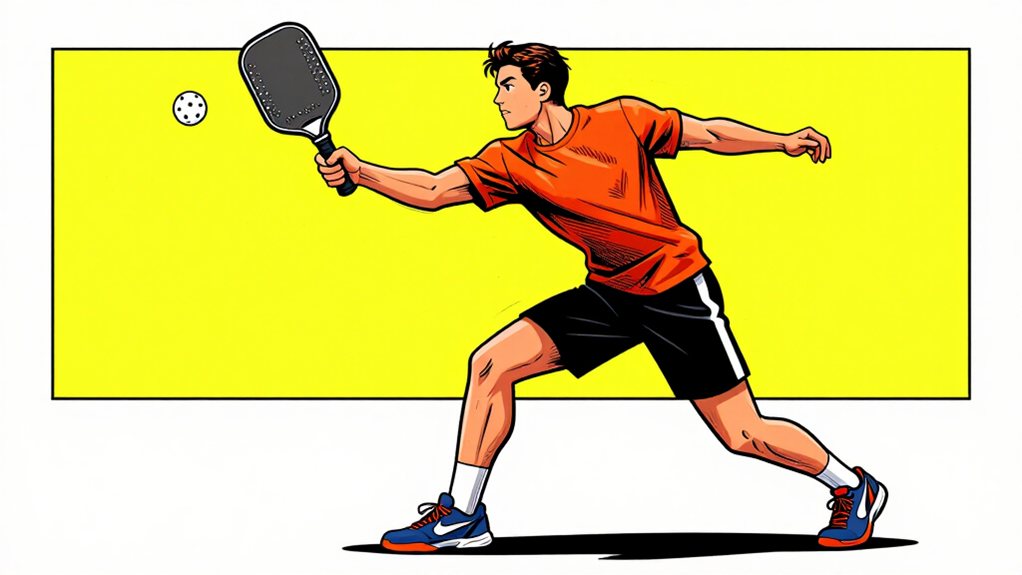
Engage your shoulders and core to create consistent, repeatable backhand volleys. You must involve your whole body, not simply your arm, for repeatability. When you punch the ball, your shoulder naturally engages. Bring the volley back to your shoulder after contact for stability.
Use these three key steps:
- Rotate your shoulder forward during the punch
- Tighten your core to transfer power
- Follow through toward your target
| Body Part | Action | Result |
|---|---|---|
| Shoulders | Rotate and punch | Power and control |
| Core | Tighten and stabilize | Consistent contact |
| Arms | Push forward with forearm | No wrist flick |
Lean away from the ball to create space. Lay back your non-dominant hand for support. This creates a stable platform for repeatable backhand volleys. Your whole body works together for consistent results. Just as a mesh wifi system distributes a reliable signal throughout your home, engaging your shoulders and core distributes power evenly throughout your shot for consistent performance.
Get Into the Ready Position for Fast Reactions
When you step into the ready position, you create a stable base for fast reactions. You hold your paddle at chest height with the tip pointing toward the sky. Your knees stay bent and your feet remain shoulder-width apart.
Your weight stays balanced on the balls of your feet. This athletic stance prepares you to move quickly in any direction.
Your weight stays balanced on the balls of your feet, primed to react in any direction.
- Keep paddle tip angled slightly toward your backhand side
- Maintain firm wrist with paddle face open toward opponent
- Stay low with bent knees for explosive lateral movement
- Position feet inside the baseline for best balance
- Shift weight forward slightly to react faster to shots
Why the Backhand Volley Beats Body Shots
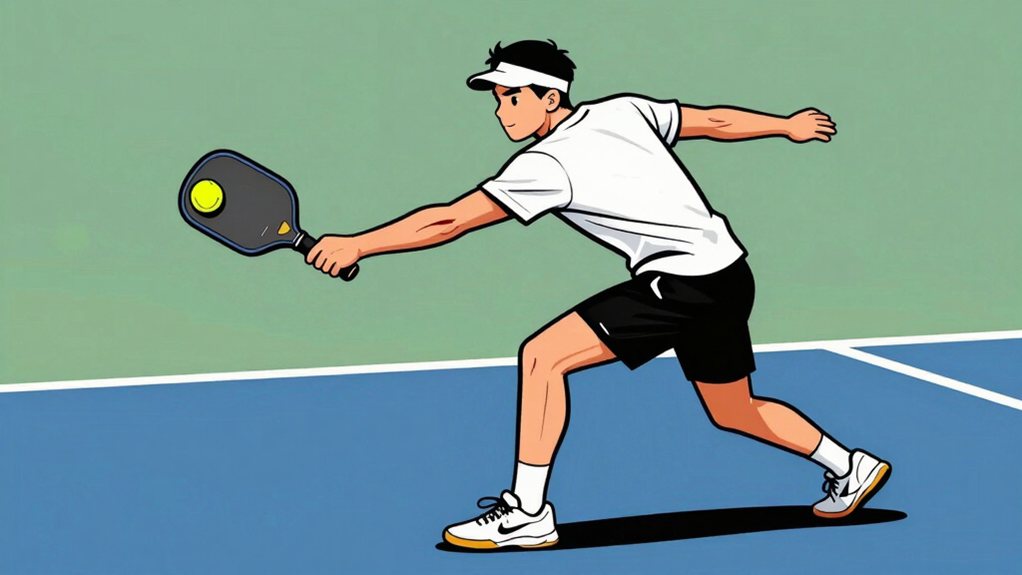
- Paddle placement, Your paddle already leans toward the backhand side in ready position.
- Quicker reaction, Lead with the paddle tip, not the handle, for fastest response.
- Compact motion, Lock your wrist and push with your forearm like a punch.
- Body coverage, The backhand volley protects both the backhand wing and the body.
The backhand volley covers more ground than the forehand. When opponents target your center, you save valuable milliseconds by using this technique.
Practice it until it becomes your automatic response.

Master Dinks: By limiting the range of backwards wrist flexion, this aid keeps your wrist in the proper position for consistent dinks and accurate drop shots. Master your swing mechanics, improve control, and boost confidence in every game.
Master Dinks: By limiting the range of backwards wrist flexion, this aid keeps your wrist in the proper position for consistent dinks and accurate drop shots. Master your swing mechanics, improve control, and boost confidence in every game.

New and improved design with stronger tactile feedback to let you feel what the pros feel.
Drills: From Block to Attacking Volleys
As you build confidence in your backhand volley, progress from simple blocks to aggressive attacking shots. Start with defensive blocks at the kitchen line.
Move to mid-court drives that push your opponent back.
Finish with put-aways when you have court position.
- Drill 1: Stand at the kitchen line. Have a partner hit 20 balls to your backhand. Block each shot to the middle of the court.
- Drill 2: Practice 15 backhand drives from mid-court. Aim for the corners.
- Drill 3: Set up in the shift zone. Hit 10 aggressive backhand volleys at an open target.
- Drill 4: Play a backhand-only mini-game. First to 11 points wins.
- Drill 5: Increase shot speed gradually. Start slow and build pace as your technique improves.
Backhand Volley Mistakes That Are Killing Your Game
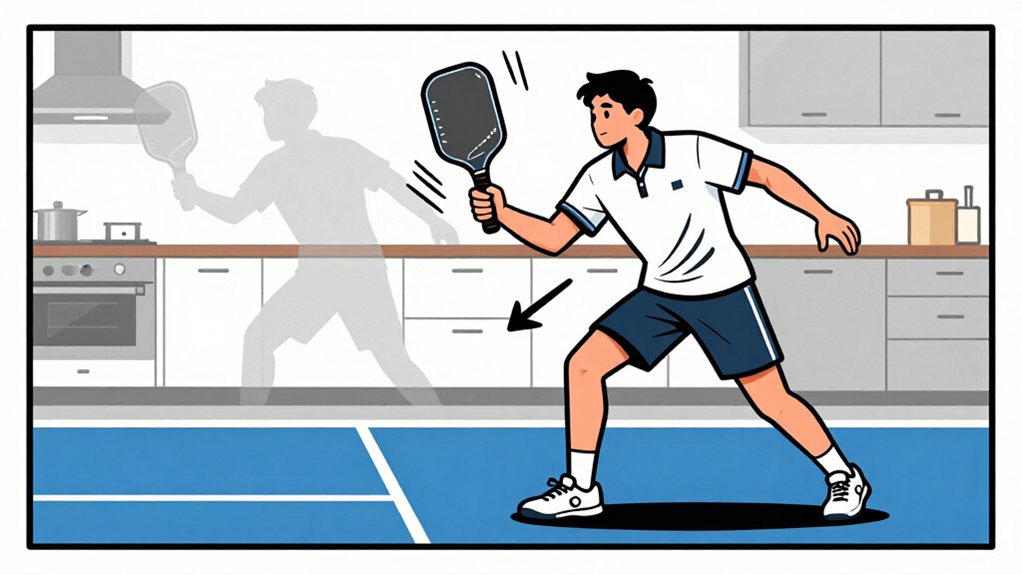
A weak grip kills your backhand volley by removing power and control.
You won’t generate force if your wrist overpowers your forearm on each shot.
We fix these issues by locking your wrist and pushing with your arm instead.
Weak Grip
Weak grip undermines your backhand volley by reducing control and power. You must grip the paddle firmly to transmit energy from your forearm to the ball.
A weak grip causes the paddle to twist at contact, creating inconsistent shots.
Your fingers wrap tightly around the handle while your thumb presses against the paddle face. This connection guarantees clean, predictable volleys.
- Grip pressure stays firm throughout your entire swing motion
- Your index finger wraps around the handle edge for control
- Thumb placement provides stability on the backhand side
- Paddle face stays square to the intended target
- Wrist remains stable while your forearm generates power
Overusing Wrist
When you overuse your wrist, you sacrifice control and consistency on your backhand volley. Your wrist flicks the paddle instead of punching through the ball. This creates erratic direction and weak contact.
We see this mistake in players of all levels.
- Lock your wrist firmly before contact.
- Drive the shot with your forearm and shoulder rotation.
- Keep your paddle motion short and controlled, stopping at chest height.
- Practice the punch feel by holding the paddle handle and pushing forward.
- Visualize your wrist as a locked hinge, not a swinging hinge.
- Engage your whole body, not only your arm, for power.
- Let your shoulder absorb the force after contact.
When you eliminate wrist flick, your backhand volley becomes repeatable and powerful. Your consistency improves.
Your opponents notice the difference immediately. You gain confidence on every backhand exchange.
Frequently Asked Questions
What Paddle Weight Is Best for a Powerful Backhand Volley?
You’ll generate the most power with paddles weighing 7.8-8.5 ounces. The added mass helps drive your backhand volley without requiring extra effort. Test different weights at a shop to find what feels most comfortable controlling at the kitchen line.
How Can I Improve My Reaction Time for Fast Backhand Volleys?
Lighten your grip like a hawk’s feather, stay on the balls of your feet, and keep your paddle high. Anticipate shots by reading your opponent’s paddle angle and practice quick split-steps to react faster.
Should I Use a Two‑Handed Backhand Volley in Doubles?
In doubles, you should stick with one hand unless you’ve mastered the two-handed backhand. It’s slower to set up and leaves your non-dominant hand vulnerable. Use it only if you can swing as fast as your opponents.
What Are the Best Shoes for Quick Lateral Movements in Pickleball?
Look for court shoes with strong lateral support, like ASICS Gel-Resolution or Nike Air Zoom Vapor. Choose non-marking soles, excellent ankle stability, and quick pivot capability for those fast side-to-side movements on the court.
How Do I Stay Mentally Focused During Long Backhand Volley Exchanges?
You stay focused by breathing steadily, committing to each shot, trusting your training, and staying present rather than outcomes. You control your focus by concentrating on the ball, your paddle, and the next moment only.
Final Thoughts
1. Split-step as opponent contacts ball; shift weight to balls of feet, you keep knees slightly bent. 2. Align body, set paddle early, keep wrist firm, punch forward with a short, controlled motion. 3. Transfer energy from legs through core to arm, keep base stable, maintain balanced stance. 4. Recover, stay centered 4 ft from net, keep eyes on ball, stay low. 5. Practice these steps daily, and we’ll gain consistency, reactivity, consistent net dominance.

【Design Features】: Boasting a structured rounded shape, top carry handle, and adjustable shoulder straps, this pickleball activity bag offers comfortable hands carrying...