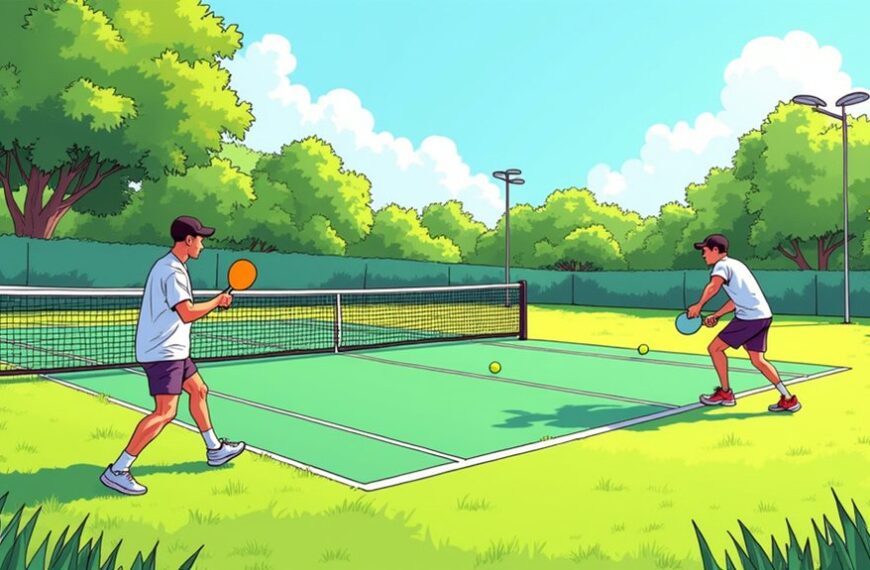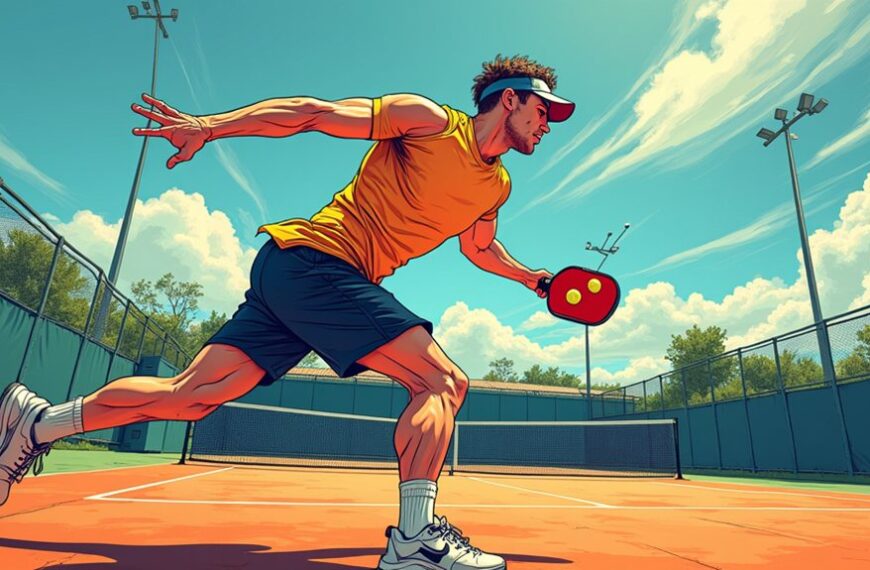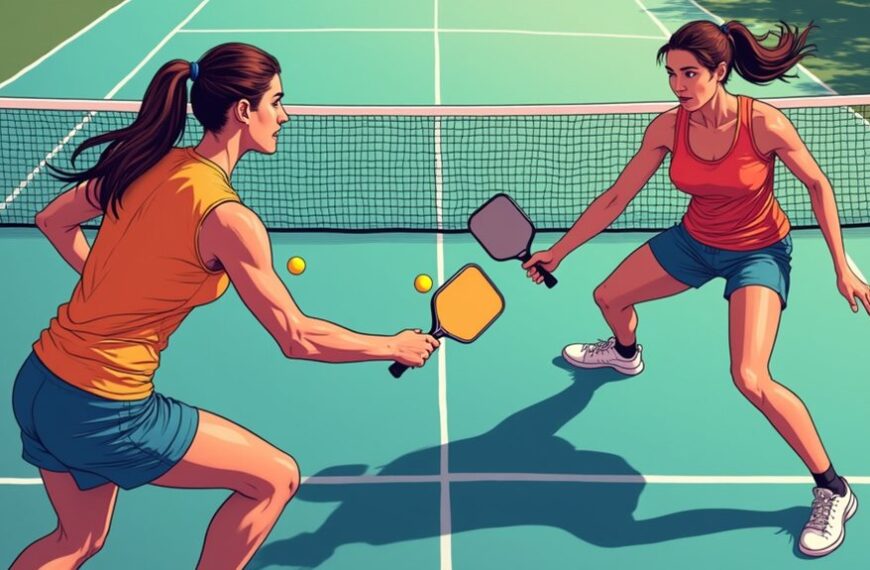
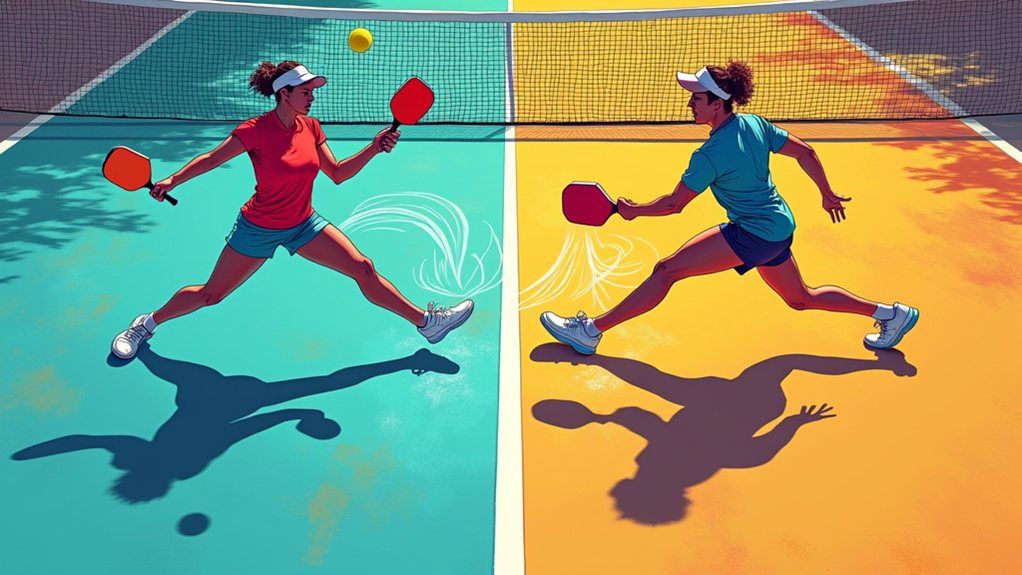
You’ll master backspin and topspin in pickleball. For topspin: start with paddle below the ball, brush upward along its back, keep face closed, accelerate through contact, finish above shoulder.
For backspin: hold paddle face at 30-45 degrees, shift weight from back foot to front foot, brush downward on path. Topspin adds pace and dip; backspin adds control and float. Choose topspin for drives and serves. Choose backspin for rallies and returns. Both expand your options.
Topspin Execution: The Low-to-High Brushing Motion
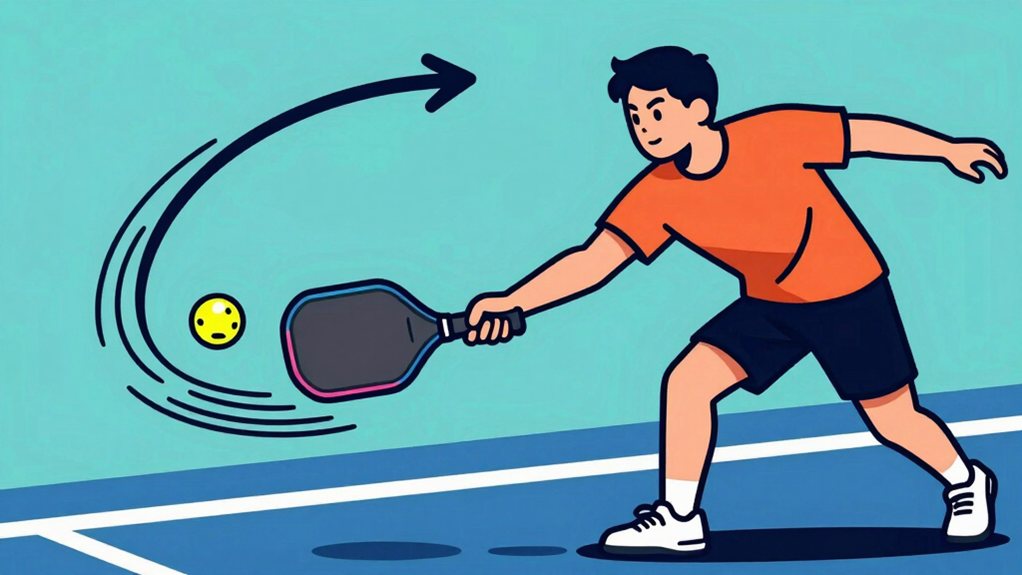
Mastering topspin starts with understanding the low-to-high brushing motion. This is key to the backspin vs topspin pickleball discussion. Let me explain pickleball spin explained simply.
Mastering topspin starts with understanding the low-to-high brushing motion—this is the key to the backspin vs topspin pickleball discussion.
How to spin a pickleball with topspin:
- Start with your paddle below the ball.
- Brush upward along the back of the ball.
- Keep your paddle face slightly closed during the brush.
- Accelerate through contact for more spin.
- Finish high above your shoulder.
Your grip matters. Use a continental, eastern, or semi-western grip. Make contact just above center. Keep your swing compact. This creates forward rotation.
The ball will dip faster after crossing the net. It jumps forward after the bounce. This gives you control and pace.

4th Generation Tech: The CRBN TruFoam Waves professional pickleball paddle is the bold new evolution of foam-core performance. Built with the same 100% TruFoam technology that made Genesis a game-changer, Waves takes things further with an all-new core engineered for maximum power.

Superior Control and Power: Experience the perfect blend of power and control with our carbon fiber pickleball paddle. Designed for players of all levels, this paddle offers a large sweet spot for accurate shots and a comfortable grip for long-lasting play.
Backspin (Slice) Execution: The High-to-Low Cutting Action
When you execute the high‑to‑low cutting action, focus on two key elements: paddle angle control and weight transfer flow.
Maintain a slightly open paddle face, around 45 degrees, to create backspin while keeping your swing compact.
Shift your weight from your back foot to your front foot in a steady, continuous motion as you brush down.
Paddle Angle Control
The paddle angle controls the amount of backspin you create during the high-to-low cutting action. You must angle your paddle face slightly open to generate slice. A 45-degree angle works for most backspin shots. This position lets the paddle brush under the ball for that floating effect.
- Hold your paddle face at 30-45 degrees for standard slice
- Open the angle more for heavier backspin
- Close the angle slightly for lighter backspin control
- Keep your wrist firm to maintain consistent angle through contact
Practice your paddle angle while shadow swinging. Feel how a slightly open face catches the ball differently than a closed face. Consistent angle produces consistent backspin. Adjust your angle based on how much float you need.
Weight Transfer Flow
A steady weight transfer drives the high-to-low cutting action for effective backspin. You shift weight from your back foot to your front foot through each swing. This forward momentum creates the descending paddle path needed for slice.
- Start with feet shoulder-width apart, weight balanced evenly.
- Begin your backswing with 60% weight on your back foot.
- As you swing forward, transfer weight to your front foot.
- Your knees bend slightly during the weight shift.
- The paddle head stays above your wrist throughout the motion.
- You finish with 70% weight on your front foot.
- Your shoulders rotate naturally with the weight transfer.
This weight flow drives the high-to-low cutting action consistently. You maintain control while generating proper slice rotation. The transfer should feel seamless, not jerky. Just as athletes benefit from fluid motion in sport, home setups benefit from wireless multi-room audio that delivers seamless sound throughout every space without interruption.
How Spin Affects Ball Trajectory and Bounce
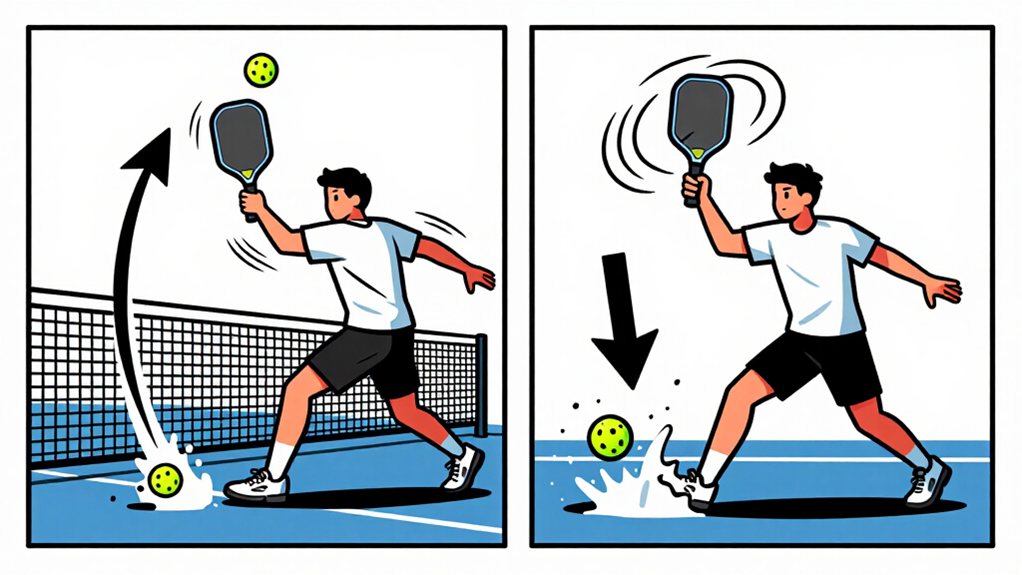
Spin changes how the ball moves through the air and bounces on the court.
Topspin makes the ball curve downward faster and jump forward after bouncing, while backspin makes the ball float and stay low after bouncing.
You can use these behaviors to control your shots and force your opponent into difficult positions.
Spin Trajectory Effects
Understanding how spin affects trajectory and bounce helps you control the ball better. Topspin pulls the ball down, creating a steeper angle that drops quickly after crossing the net. This rapid descent forces opponents to adjust their paddle height quickly.
Backspin lifts the ball slightly, causing it to float and stay in the air longer. This creates hesitation and changes the timing of opponent returns. The amount of spin you apply directly changes how the ball moves through the air.
- Light topspin produces a normal arc with moderate dip
- Heavy topspin creates a sharp, diving trajectory that stays low after the bounce
- Light backspin results in a high, floating trajectory with minimal forward progress
- Heavy backspin generates extreme lift that can slow the ball notably in flight
Bounce Behavior Changes
Now that you understand spin trajectory effects, let’s examine what happens when the ball contacts the ground.
Topspin causes the ball to jump forward after the bounce. The forward rotation drives the ball into the court, creating extra pace. Opponents often misjudge these shots because the ball keeps moving.
Backspin makes the ball skid low after the bounce. The backward rotation counteracts forward momentum. The ball stays close to the ground and can die quickly.
- Topspin bounce characteristics:
- Ball jumps forward after contact
- Creates added pace
- Harder to control for opponents
- Backspin bounce characteristics:
- Ball skids low to the surface
- Reduced pace after bounce
- Tends to stay in the court
You must adjust your positioning based on expected bounce behavior. Predicting spin helps you move to the right spot.
Spin Direction Influence
With topspin and backspin, you’ll control how the ball travels through air and reacts after it hits the ground. Topspin pulls the ball down, so it dips quickly after crossing the net. Backspin lifts the ball slightly, causing it to float and stay low.
After the bounce, topspin forces the ball to jump forward, while backspin makes it skid and stay near the ground. Use the appropriate spin based on your position and the opponent’s stance.
- Topspin makes the ball dive quickly after crossing the net.
- Backspin creates a floating trajectory that extends time in the air.
- Topspin causes a forward jump after bounce.
- Backspin keeps the ball low and causes a skid.
We apply topspin for aggressive drives and backspin for defensive drops.
When Topspin Gives You the Advantage
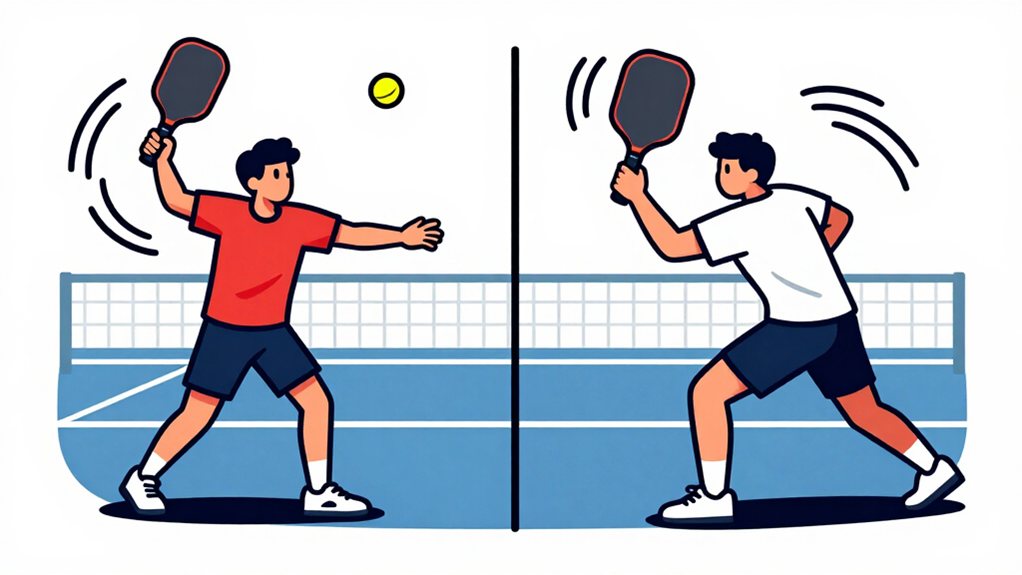
The topspin advantage shows up in several key situations. You use topspin when you want the ball to jump forward after the bounce, making it harder for opponents to attack. Here’s when topspin works best:
- Third-shot drives, You combine pace with margin for aggressive baseline play. Your forward-spinning shots push opponents back.
- Drop shots, You use topspin to dip the ball at your opponent’s feet with reliability from the baseline. The ball dies quickly, preventing easy returns.
- Passing shots, You push net-crowding opponents back and control the rally pace. Your spinning ball stays low after the bounce.
- Aggressive dinks, You maintain control while playing more aggressively. The extra dip keeps your shots tight over the net.
- Serves, You add adjusted height, increased pace, and variable trajectory. Opponents can’t predict your bounce.
Apply topspin in these situations. Your spinning shots create forward momentum. Your opponents face bouncing balls that dive quickly. You control the point.
When Backspin (Slice) Wins Points
While topspin drives the ball forward, backspin creates entirely different advantages. You win points when your slice keeps the ball low and forces opponents into awkward contact points. The ball floats and skids, creating hesitation in their timing.
Use backspin to win points in these situations:
- Return of serve against big hitters, slice reduces their power by taking pace off the ball
- Net exchanges, your slice drops short and dies, forcing weak replies
- Defensive rallies, backspin creates floating pops that buy you time to recover
- Windy conditions, slice travels more predictably than topspin
You neutralize aggressive players by forcing them to generate their own pace against your controlled, floating shot.

🏸 DUAL-SPORT & ALL-IN-ONE PICKLEBALL TRAINER:This pickleball trainer is equipped with interchangeable heads for both pickleball and tennis, featuring an adjustable 15°–75° panel to accurately recreate pro swing trajectories. As core pickleball training aids and essential pickleball accessories, this versatile pickleball training equipment supports baseline rallies, serves, volleys, and no-volley zone defense, delivering comprehensive pickleball training for every aspect of your game.

【Reaction Training for Fast Hands】React Mini Pickleball Balls are designed to boost hand speed, paddle control, and focus. Ideal for pre-game warm-ups, partner drills, and solo wall training to sharpen reflexes and reaction time on court.

Pickleball Training Equipment for Skills & Drills Upgrade your pickleball practice with the Dice & Dink trainer — a unique pickleball training aid that adds variety to drills, challenges shot placement, and builds consistency for players of all levels.
Picking the Right Spin for Any Pickleball Shot
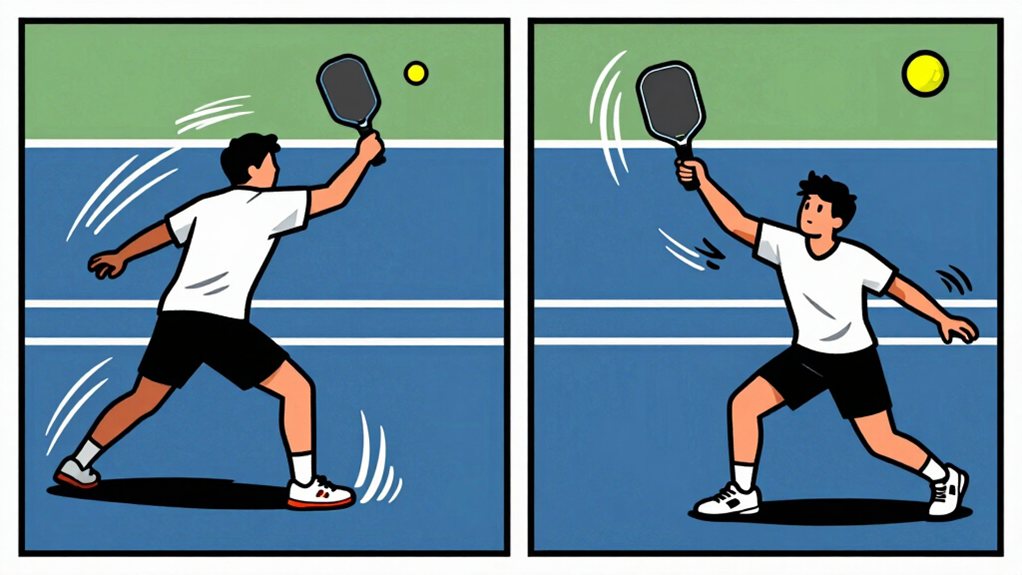
Should you choose topspin or backspin for your next pickleball shot? We evaluate three factors before deciding.
- Consider your position on the court.
- Analyze your opponent’s location and stance.
- Assess wind and weather conditions.
Use topspin when you remain at the baseline. Apply it for aggressive drives, passing shots, and serves. It pushes opponents back and creates extra margin over the net.
The ball dips faster after crossing the net and jumps forward after the bounce.
Use backslice when you move to the kitchen line. Apply it for drop shots, returns, and block volleys. It keeps the ball low and reduces opponent power.
The ball floats slightly in the air and skids after the bounce.
Match your spin to your situation. Topspin adds pace and dip. Backslice adds control and float. Choose the spin that solves your current problem.
Frequently Asked Questions
What Grip Is Best for Generating Maximum Topspin in Pickleball?
You’ll generate maximum topspin using an eastern or semi-western grip. These grips position your paddle face more closed during the low-to-high swing path, allowing you to brush up the ball’s back with greater friction and spin creation.
How Does Ball Temperature Affect Spin Durability and Shot Consistency?
Imagine a ball’s inner air expanding like a balloon in heat, you’ll generate more spin and maintain consistency throughout rallies. Cold balls feel completely dead, reduce your grip, and produce unpredictable bounces that ruin your shots.
Can You Mix Topspin and Backspin on the Same Shot for Tactical Deception?
You can blend both spins into a neutral hybrid shot, creating unpredictable bounces that confuse opponents. The technique requires combining up-and-down brushing motions, but most players find it too difficult to execute consistently and reliably.
What Are Common Drills to Improve Spin Consistency for Beginners?
Get your feet wet with wall drills, hit against a flat surface to master your brushing motion. Then practice feeding drills with a partner, focusing on low-to-high swings for topspin and high-to-low paths for backspin.
Does Using a Heavier Paddle Increase Spin Potential in Slice Shots?
A heavier paddle gives you more mass to generate momentum, but spin comes primarily from your technique. Proper paddle face angle and swing path matter more than paddle weight for generating effective slice shots.
Final Thoughts
1. Commit to daily practice. Set a timer for 15 minutes each day. Focus on low-to-high swings for topspin. Then shift to high-to-low cuts for backspin.
Imagine this: a player who once double-faulted now wins 70% of points after mastering both spins. Your rallies will transform.
Track your stats. Adjust your grip. Win more points.

QUIET PLAY FOR NOISE-SENSITIVE AREAS: Engineered for reduced sound output at approximately 60 dB, making these balls ideal for HOA communities, shared spaces, and quiet practice environments

1.The Jisucute pickleball is made of special TPO material with excellent processing technology.

OPTIMIZED 40-HOLE DESIGN: Engineered specifically for outdoor play with superior aerodynamic stability, reducing wind interference for smooth, consistent shots.