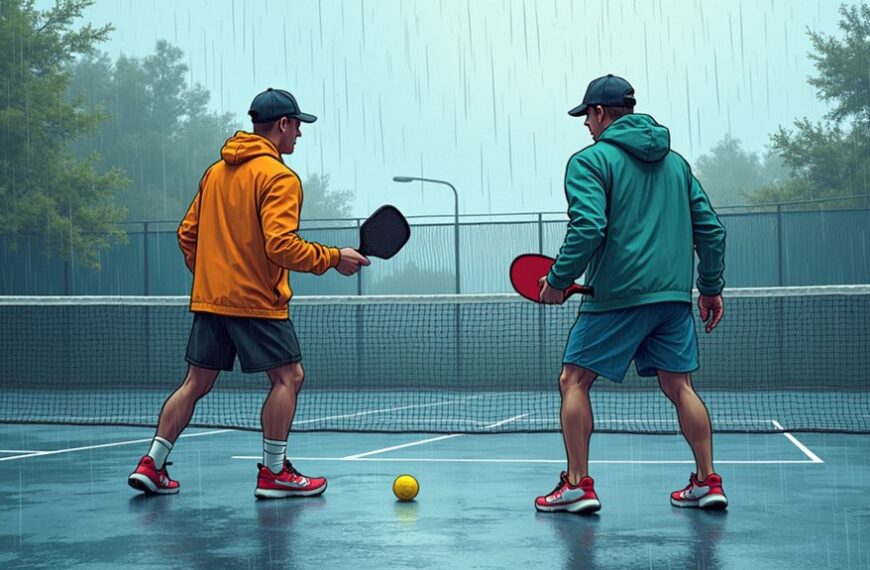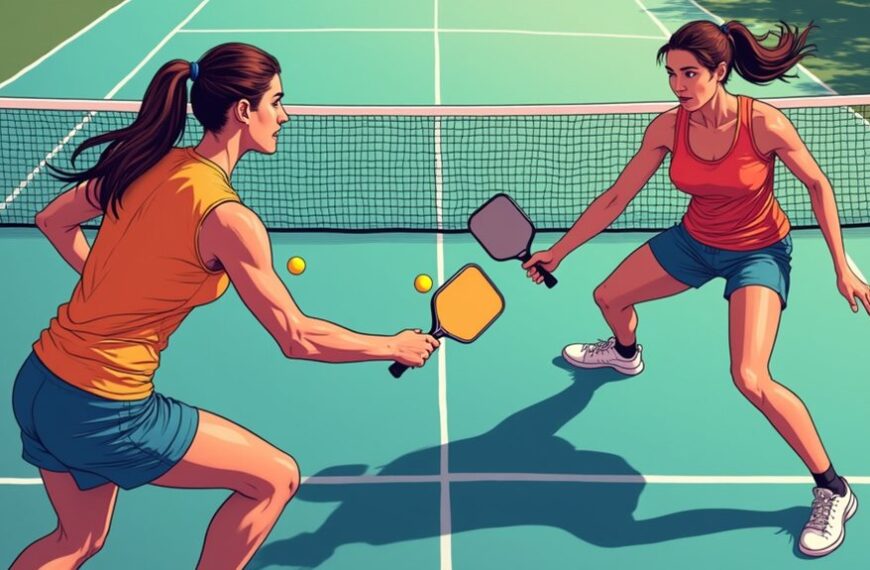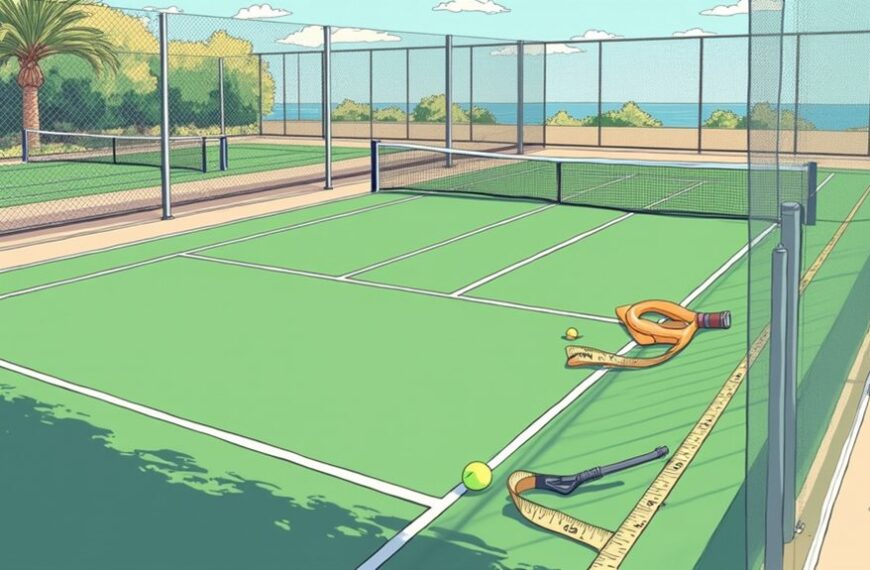
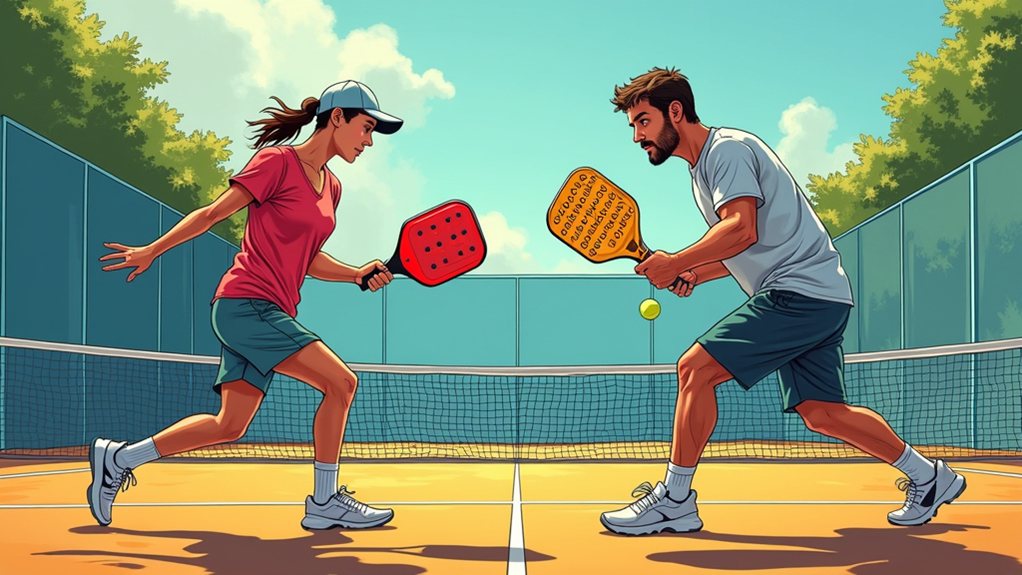
Can you use a pickleball paddle for padel? No, you cannot. Padel paddles must not exceed 45.5cm in length and weigh between 340g and 390g with rigid fiberglass or carbon fiber faces. Pickleball paddles exceed length limits, use laminated plastic faces, and weigh under 350g.
Padel balls generate notably more force, causing pickleball paddle damage like delamination and core warping. Different surface textures affect ball control on wall rebounds. For safety and performance, use sport-specific equipment only. Want to learn the complete specifications and detailed reasons?
Can You Use Pickleball Paddles for Padel? (The Direct Answer)
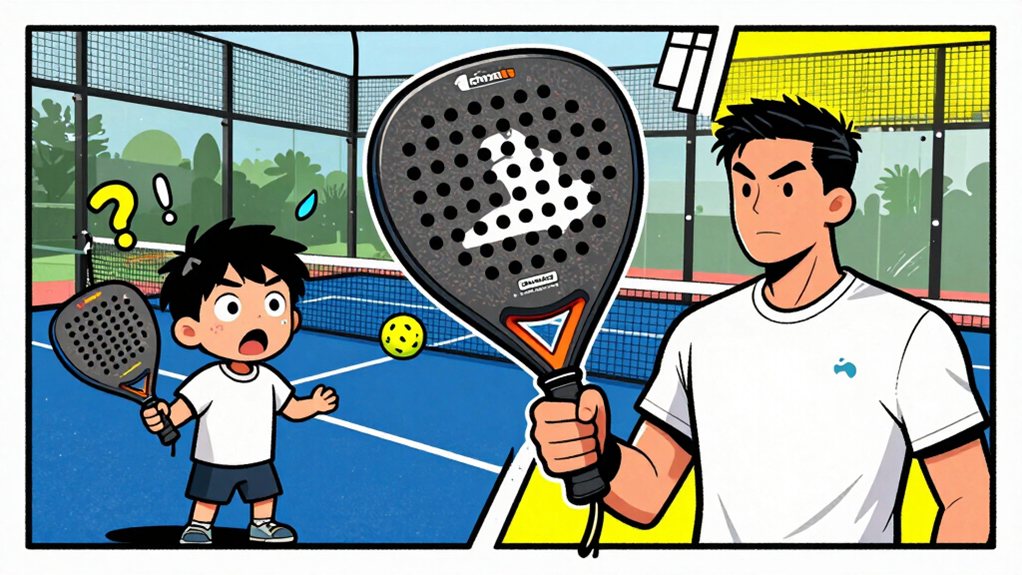
No, you can’t use pickleball paddles for padel. These two sports require equipment that isn’t interchangeable.
- Ball incompatibility: Padel uses low-pressure tennis balls that generate considerably more force than pickleball’s plastic balls. The higher impact will damage or warp a pickleball paddle’s surface.
- Material mismatch: Pickleball paddles have laminated plastic faces. Padel paddles use fiberglass or carbon fiber for the rigidity needed to handle tennis ball impact. The softer construction of pickleball paddles can’t withstand padel ball force.
- Surface design: Pickleball paddles feature grit textures for spin generation on open courts. Padel paddles have slick surfaces optimized for controlled shots against walls. These designs serve fundamentally different gameplay mechanics.
- Certification standards: No governing body permits cross-use of these paddles. Pickleball paddles lack the approval for padel play, and vice versa. Higher-end pickleball paddles built with thermoformed unibody construction still don’t meet padel certification requirements, as the approval process evaluates sport-specific criteria like surface texture, deflection, and noise levels.
You must use sport-specific equipment.
Paddle Size and Shape Differences
Padel and pickleball paddles differ in specific ways that affect your game. Here are the key size and shape differences:
Padel paddles max out at 45.5 cm, always round or oval; pickleball paddles come in round, elongated, and teardrop shapes.
- Length limits: Padel paddles can’t exceed 45.5cm (about 18 inches) total length. You must check that your paddle meets padel regulations.
- Shape: Padel paddles are always round or oval. Pickleball paddles come in round, elongated, and teardrop shapes.
- Surface area: Pickleball paddles usually have larger hitting surfaces. Padel paddles feature smaller faces with strategic sweet spots.
- Handle length: Padel paddles have shorter handles to keep the paddle head balanced for wall shots.
- Weight: Padel paddles weigh between 340g and 390g. Pickleball paddles are often lighter, which affects control during powerful exchanges.
Why Padel Balls Destroy Pickleball Paddles
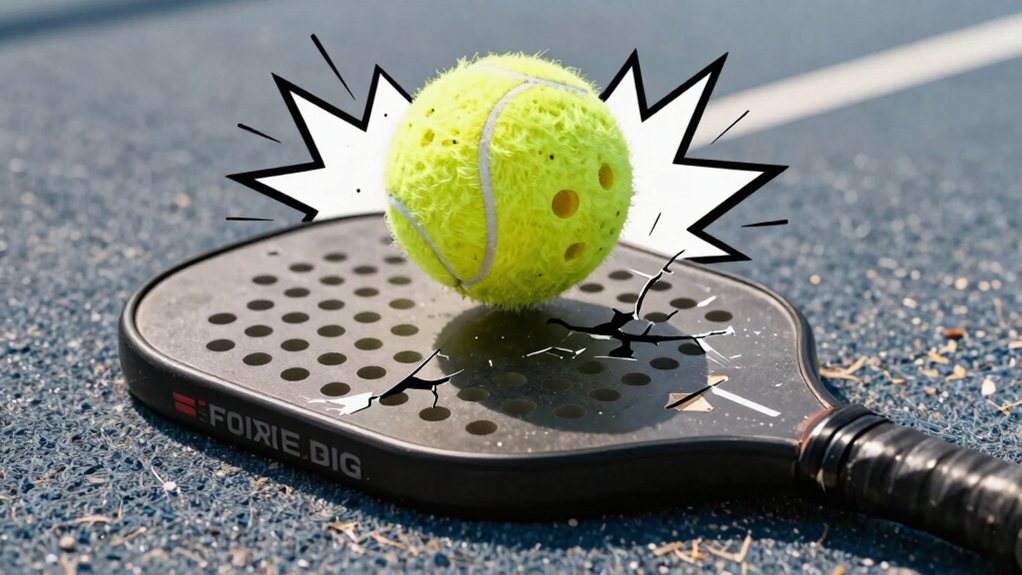
When you use a pickleball paddle in padel, you’ll risk damage because the equipment doesn’t match the game’s demands. You’ll find that the padel ball can generate forces around 150,200 N on impact, far exceeding what a pickleball paddle is built to handle.
Here are the three points we’ll discuss:
1) Impact force breaks paddles, 2) Material mismatch causes damage, 3) High speed destroys surfaces.
Impact Force Breaks Paddles
Because padel balls are low-pressure tennis balls, they strike with far more force than the lightweight plastic pickleball balls you normally use. This force creates serious problems for your pickleball paddle during padel play.
- The core of a pickleball paddle can’t absorb high-velocity impacts from padel balls.
- Repeated strikes from padel balls cause the core to compress and warp permanently.
- Surface delamination occurs when the outer layer separates from the core material.
- Frame cracks develop at stress points where impact force concentrates heavily.
When you play padel with a pickleball paddle, you risk sudden breakage during active play. The paddle may split or collapse mid-rally.
Replace your paddle immediately if you notice cracks, soft spots, or surface bubbles. Always use a padel-specific paddle for each padel game.
Material Mismatch Causes Damage
Beyond impact force, the materials themselves create serious problems. When you use a pickleball paddle with a padel ball, the core and face can’t handle the rubber composition of the tennis-style ball.
The softer polymer core of a pickleball paddle swells and cracks under the pressure of a low,pressure tennis ball.
These material mismatches cause four key failures:
- Core compression leads to permanent deforming.
- Face delamination occurs as fiberglass separates.
- Grip texture erodes, losing spin control.
- Balance shifts, causing arm fatigue.
You shouldn’t ever use a padel paddle made of fiberglass or carbon fiber with a solid, perforated face. That equipment matches the ball’s rubber core and guarantees durability, control, and safety during play. Check the paddle’s label for approved materials before purchasing now.
High Speed Destroys Surfaces
The high velocity of padel balls creates forces that pickleball paddles can’t withstand. Padel balls travel at speeds over 80 mph during hard drives. Your pickleball paddle can’t absorb this impact. The surface cracks under pressure. The core warps from repeated strikes.
Here are the problems:
- Padel balls stay at high pressure. They keep their speed through the court.
- Pickleball balls slow down quickly. The design difference is huge.
- Your paddle surface is too thin. It deforms on contact.
- The harder rubber core breaks down. It loses shape fast.
- Each hit weakens the structure. Damage builds up over time.
We recommend using proper padel equipment for padel play.
Surface Texture: Why Grip and Spin Matter
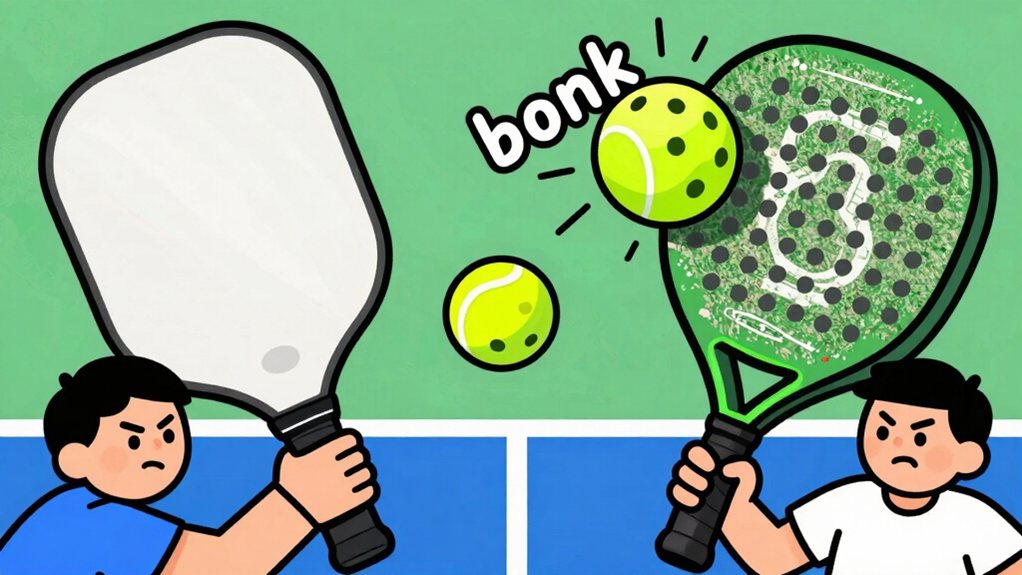
Your paddle’s surface texture affects both grip and spin potential. Pickleball paddles use a gritty texture to generate spin on open courts, while padel paddles have sleek surfaces optimized for wall rebounds.
That’s why you can’t use them interchangeably in different games.
Grip Importance
Because grip affects your shot accuracy and ball control, understanding surface texture matters when selecting a paddle. Padels slick paddle faces provide consistent ball release for wall rebounds. They differ from pickleballs textured surfaces that generate spin on open courts. Your grip must handle rapid direction changes during play.
We recommend testing different grip sizes before purchasing.
- Padels slick surfaces deliver predictable ball reaction against walls, critical for rebounding strategies.
- Pickleballs rough textures create spin that interferes with padsels controlled shot requirements.
- Grip circumference affects your leverage and reduces wrist fatigue during extended rallies.
- Overgrips absorb sweat and maintain firm handling during high-intensity exchanges.
Spin Potential
Spin generation depends largely on paddle surface texture. Pickleball paddles use a rough, gritty face. This texture catches the lightweight plastic ball. It creates spin for placement and curve.
Padel paddles feature even fiberglass or carbon surfaces. You grip the low-pressure tennis ball differently on even material.
Your spin potential with a pickleball paddle in padel will drop notably. The even padel ball behaves unlike a pickleball ball. The gritty texture doesn’t transfer effectively. You lose rotational power on wall rebounds.
Ball control diminishes during angled shots.
Key points affect your spin:
- Pickleball paddle texture targets light balls
- Padel balls require smoother surface interaction
- Friction levels differ between materials
You can’t generate proper spin on padel shots. The ball slides rather than grips your paddle face. Your shots lack the rotation needed for court strategy.
Surface Texture Contrast
When comparing paddle surfaces, you notice two distinct design philosophies at work. Pickleball paddles feature rough, grit-textured faces that generate spin on open courts. Padel paddles use sleek fiberglass or carbon fiber surfaces for wall rebounds. The difference affects your control and shot placement notably.
Key differences to understand:
- Pickleball textures create friction for topspin and backspin shots.
- Padel smooth surfaces allow the ball to grip during wall contact.
- Grit on pickleball paddles reduces control on rebounds.
- Padel requires specific surface properties for angled returns.
You can’t substitute one paddle type for the other without losing performance advantages.
Weight Distribution and Arm Safety
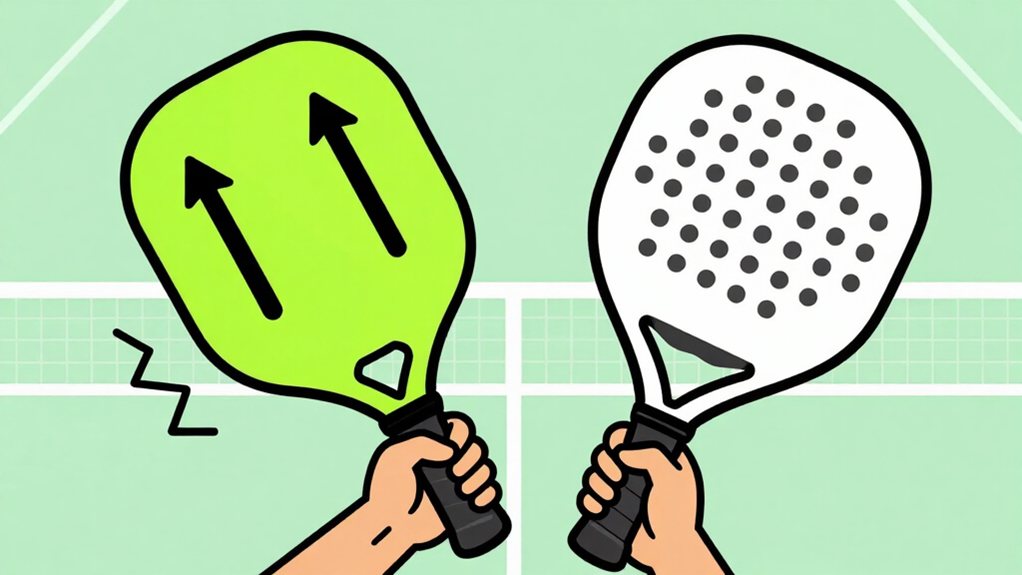
Understanding paddle weight is essential when comparing pickleball paddles to padel rackets.
Adult padel rackets weigh between 340g and 390g. Pickleball paddles typically weigh less than 350g.
This difference directly impacts your arm safety.
Why weight matters:
- Paddles under 350g feel hollow on impact
- You experience more arm fatigue with insufficient mass
- Your muscles work harder to absorb ball force
- You risk developing tennis elbow from repeated strain
- Proper weight absorbs shock effectively
The ideal padel weight sits between 355g and 375g. Standard pickleball paddles fall below this range.
Your body absorbs the consequences when equipment mismatches the sport’s intensity.
The lighter construction creates instability during powerful exchanges.
Your technique suffers without adequate mass behind each shot.
What Actually Happens When You Try It?
Beyond arm fatigue, using a pickleball paddle in padel creates immediate practical problems. The ball bounces erratically off the slick surface. You lose control on wall rebounds. The paddle face warps after repeated hits. Your shots lack power due to improper weight distribution.
Using a pickleball paddle in padel means erratic ball bounce off slick surfaces, lost control on walls, warping faces, and shots lacking power.
You experience four main failures:
- Surface grip fails, pickleball paddles lack the rough texture needed to grip padel balls, causing shots to slide off unpredictably.
- Ball speed overwhelms you, the lighter paddle can’t absorb the higher velocity of padel balls, making returns feel hollow and weak.
- Wall plays break down, you can’t angle shots correctly because the paddle shape and surface don’t support padel’s rebound mechanics.
- Handle comfort mismatches, padel grips are longer and thicker. Your hand fatigues faster holding equipment designed for a smaller grip.
Why Tournaments Ban Cross-Use?
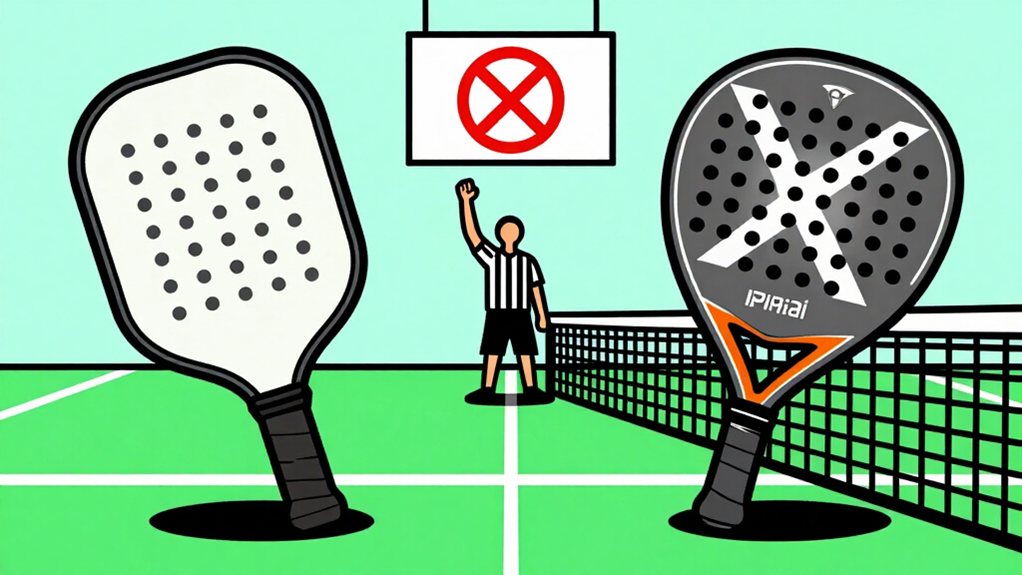
Tournaments ban cross-use because regulatory bodies enforce strict equipment standards. You can’t use a pickleball paddle in padel tournaments because the rules explicitly prohibit it. Here is why:
- The International Padel Federation (IPF) requires all paddles to meet specific length and material rules.
- Pickleball paddles exceed the 45.5cm maximum length allowed in padel.
- USAPA certification doesn’t align with IPF standards.
- Tournament organizers must verify equipment before play begins.
- Using non-compliant gear results in immediate disqualification.
We must follow these regulations to guarantee fair competition. The rules exist to protect player safety and maintain competitive integrity.
Paddle Specifications for Padel
Consider these key specifications when selecting a padel paddle:
- Length limit: Your paddle mustn’t exceed 45.5cm in total length, including the handle.
- Weight range: Choose a paddle weighing between 340g and 390g for optimal power and control.
- Surface material: Select a solid face made of fiberglass or carbon fiber, not the laminated plastic used in pickleball paddles.
- Surface texture: Pick a flat surface designed for controlled shots against walls.
These specifications make sure your paddle meets padel regulations and performs correctly during play.
Using a paddle outside these parameters compromises your game and may violate official rules.
The Bottom Line
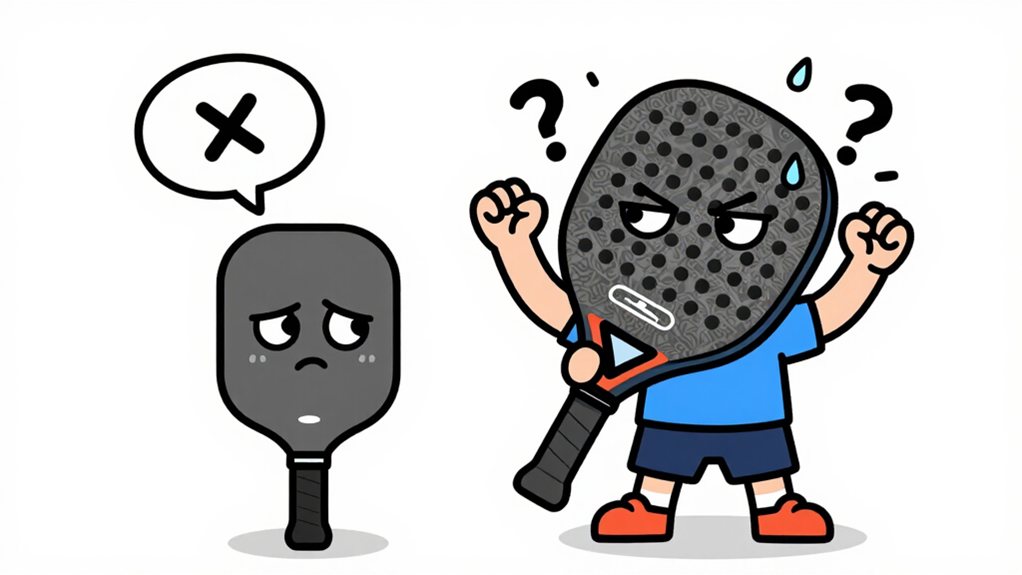
Choose padel-specific gear: fiberglass or carbon fiber paddles, 355-375g weight, smooth surface, approved balls. Standards protect your game.
When selecting equipment for padel, you can’t use a pickleball paddle due to fundamental differences in design and performance. The balls and paddles create different forces. Pickleball paddles can’t handle padel’s low-pressure tennis balls. The lighter construction causes arm fatigue.
Surface textures differ substantially. Padel requires even faces for wall rebounds. Pickleball paddles use grit for spin control.
- Get a padel-specific paddle. Look for fiberglass or carbon fiber faces.
- Check length requirements. Your paddle mustn’t exceed 45.5cm.
- Choose weight between 355g and 375g for best performance.
- Verify smooth surface texture for proper ball control.
- Use only approved padel balls. Never substitute pickleball balls.
These standards protect your game. They prevent injury. They ensure fair play. You’ll enjoy padel more with proper equipment. Choose wisely.
Frequently Asked Questions
Can I Safely Play Padel With a Pickleball Paddle for Fun?
You can use a pickleball paddle for padel for fun, but it’s risky. You’ll lack control, damage the paddle easily, and strain your arm because pickleball paddles aren’t built for padel’s heavier balls and wall rebounds.
Are There Any Hybrid Paddles Approved for Both Padel and Pickleball?
No, you won’t find, you can’t buy, and you shouldn’t expect any hybrid paddles approved for both padel and pickleball, governing bodies strictly enforce distinct specifications, certification standards, and material requirements that make cross-use impossible.
Will Using a Pickleball Paddle Damage the Walls in a Padel Court?
Using a pickleball paddle won’t damage padel court walls, you’ll actually damage your paddle first. Your lightweight equipment lacks the rigidity to handle padel ball impact, and the force will warp its thin core, potentially chipping the fragile surface against the walls.
Does Using a Pickleball Paddle Affect My Padel Skill Development?
You won’t develop proper padel technique because pickleball paddles lack the rigidity, weight distribution, and surface texture needed for padel’s wall-play dynamics. Your technique will suffer, and you’ll struggle to build proper padel skills effectively.
Can I Convert a Pickleball Paddle Into a Legal Padel Paddle?
No, you can’t convert a pickleball paddle into a legal padel paddle. They differ in length, weight, surface texture, and core material, failing padel equipment regulations. You’ll need to purchase a proper padel paddle.
Final Thoughts
Pickleball paddles don’t work for padel. Their size, shape, surface, and weight create safety risks and poor play. Use a proper padel paddle (22–23 cm wide, 38–45 cm long) and padel balls (56–59 g). Follow these steps:
- Choose a padel paddle with a solid core and perforated face.
- Check paddle length and width.
- Use padel balls with proper bounce height.
If you follow these steps, you stay safe, and we keep the game fair always.