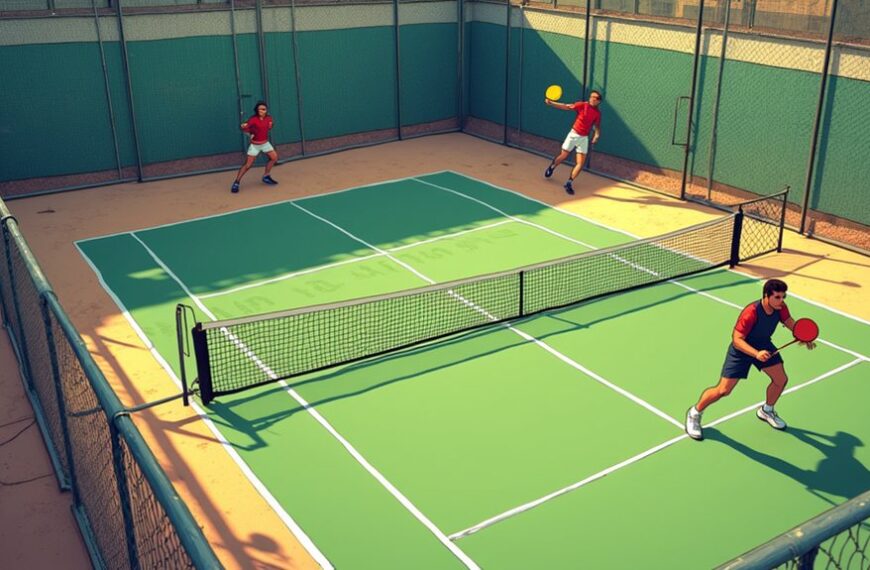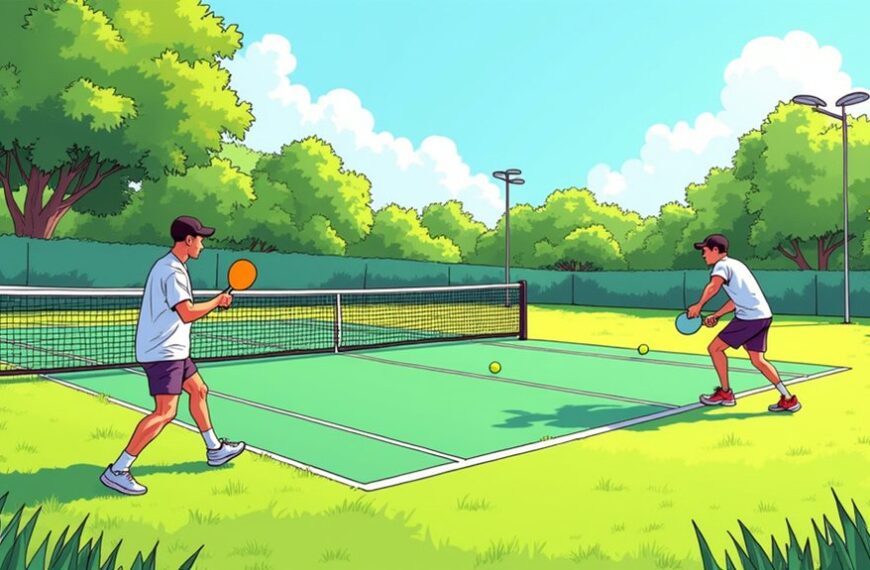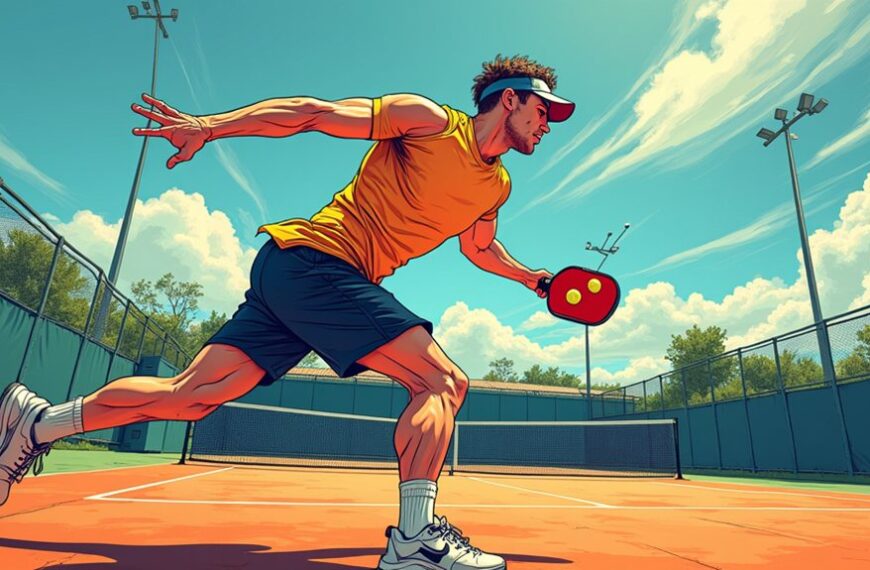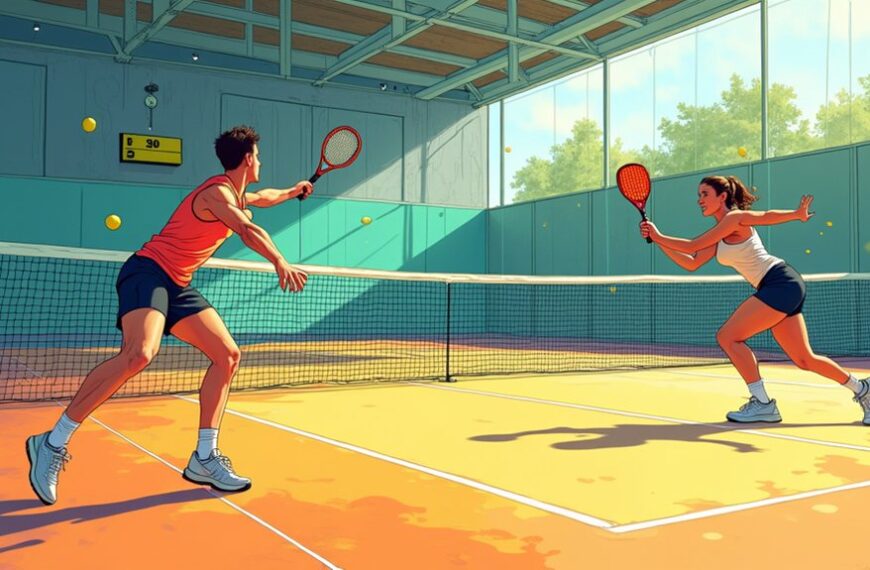
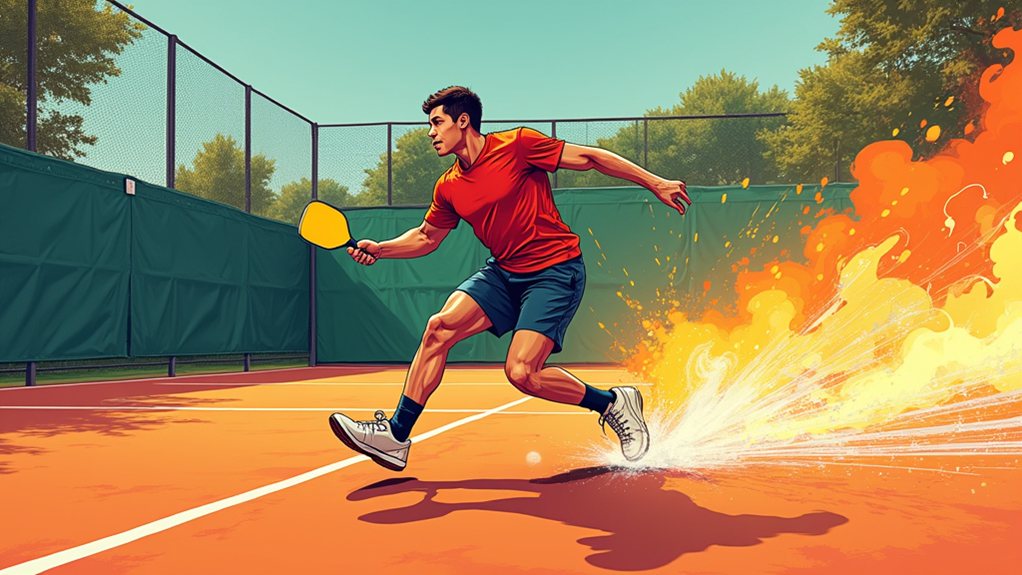
Start with loose, relaxed knees instead of forced deep bends. Stand shoulder-width apart in a closed stance with front foot toward target. Bend knees moderately to create spring-like energy. Transfer weight from back foot to front foot when hitting.
Drive up through legs to release power into the ball. Avoid hinging at waist and pointing bullseye downward. Keep core engaged throughout. Master these mechanics and maximize your leg drive potential.
Loose Knee Foundation: The Key to Natural Power Sinking
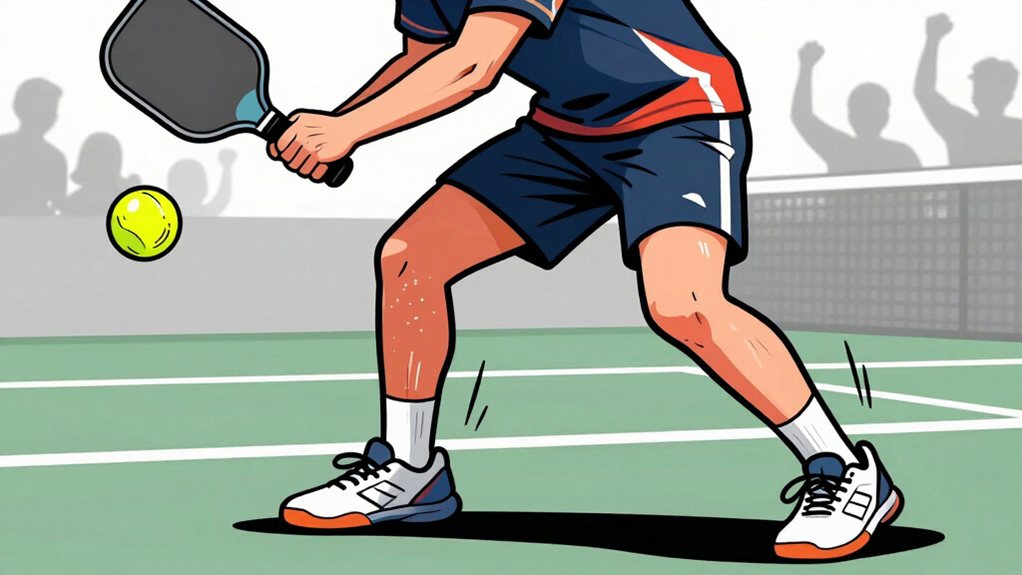
The loose knee foundation serves as the base for natural power sinking in pickleball. You maintain loose knees to allow natural weight sinking rather than forcing deep bends. This approach enables efficient pickleball leg drive and proper pickleball power mechanics.
Key elements:
- Keep knees relaxed, not locked or overly bent
- Allow hips to sink naturally into your stance
- Transfer weight fluidly through your legs
- Maintain balance for quick directional changes
Your steps:
- Start with loose knees
- Let weight settle naturally
- Drive upward through your legs
- Follow through with arms
This foundation supports explosive movement and powerful shots without sacrificing mobility. For optimal court coverage, pairing your training environment with a reliable wifi mesh system premium ensures seamless video analysis across multiple devices without dead zones. Practice this technique consistently for best results.

Court-Ready Agility: Performance-driven minimalist court training shoes with wide toe box engineered for agility, support, and barefoot freedom for tennis, pickleball, and gym workouts

Wilson Pickle Pro Men's Pickleball Shoe - White, Size 10.5 US

Wilson Pickle Pro Women's Pickleball Shoe - White, Size 8 US
Fix These Common Knee Bend Mistakes Killing Your Game
If you want to improve your pickleball game, you must avoid these five common knee bend errors that silently sabotage your power and mobility. These mistakes limit your mobility and reduce shot power.
Here are the errors you must correct:
- Bending your knees too deeply like a football stance slows your movement
- Hinging at your waist puts weight on your heels and disrupts balance
- Pointing your bullseye downward creates improper back bend
- Focusing only on getting low sacrifices core engagement
- Overemphasizing deep bends prevents quick changes between low and high balls
Correct these errors by maintaining relaxed knees, keeping your bullseye aligned toward the ball, and engaging your core throughout each shot. Your game will improve once you eliminate these common mistakes.
Athletic Knee Bend Mechanics for Explosive Shots
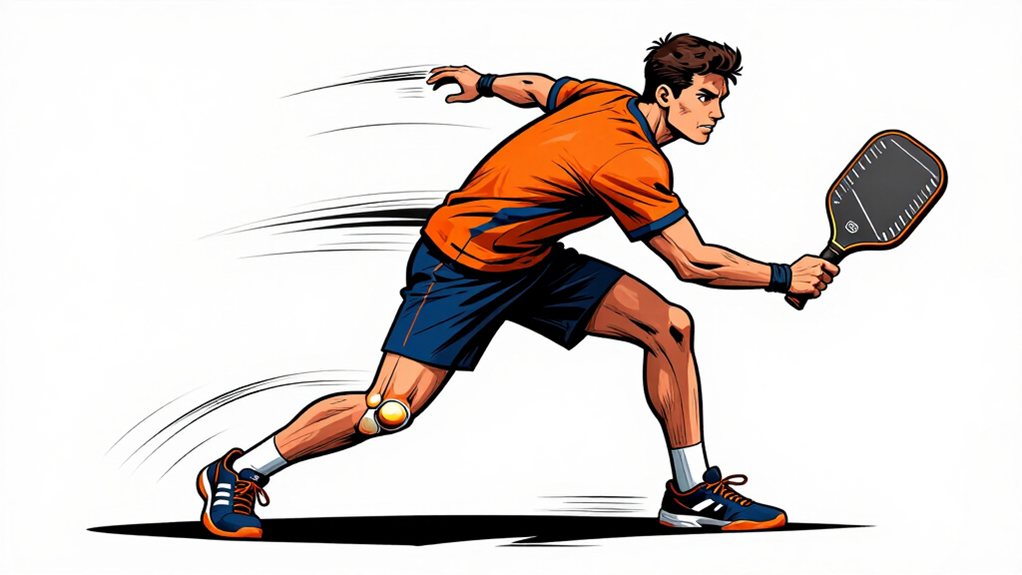
With athletic knee bend, you generate explosive power for your shots. Here is how you develop this mechanics:
Athletic knee bend creates a spring‑like foundation, loading energy that fuels explosive power in every shot.
- Start with loose, relaxed knees rather than forced deep bends.
- Allow natural weight sinking into your athletic stance.
- Keep your bullseye aligned at sternum center toward the ball.
- Maintain core engagement by avoiding hip and back hinging.
- Direct forward knee bend during serves to maximize leg drive.
- Keep shoulders relaxed and head up for balanced positioning.
- Transfer weight steadily from back foot to front foot.
- Use this explosive movement for serves, drives, and volleys.
The athletic knee bend creates a spring-like foundation. Your legs load energy as you bend.
You release that energy through the ball.
Practice this motion daily. Your power output increases meaningfully.
The mechanics work for all shot types. Master this foundational movement.
Your game reaches new levels.
Stance Positioning to Maximize Leg Drive and Power Transfer
Stand in a closed stance: 1) point your front foot toward the target, 2) angle your back foot slightly outward, 3) keep your feet shoulder‑width apart.
Bend your knees moderately to create a spring: 1) keep knees relaxed, 2) sink your weight slightly, 3) drive up through the legs when hitting.
This positioning lets us transfer power from our legs into the ball while staying balanced, and we’ll be ready for quick changes of direction.
Closed Stance Leverage
When you align your body perpendicular to the baseline in a closed stance, you create the ideal foundation for explosive power transfer. This positioning lets your legs drive forward through the shot rather than sideways.
Your back foot braces against the ground while your front leg extends and pushes. You generate maximum force when your hips rotate through contact. The closed stance also protects your balance during quick exchanges at the non-volley zone line.
Key elements of closed stance leverage:
- Point your front foot toward the side fence to set proper angle
- Keep your back foot at approximately 45 degrees for balance
- Drive your front knee toward the net during power generation
- Rotate your hips and shoulders together as one unit
- Transfer weight from your back foot to your front foot through contact
Knee Bend Drive
Master the knee bend drive to transfer your closed stance leverage into explosive power. Position your knees at a 25-degree angle. Keep your weight balanced between both feet. Drive through your legs when you swing.
This creates upward force into your paddle.
| Position | Angle | Action |
|---|---|---|
| Knees | 25° | Bend slightly |
| Feet | Shoulder-width | Plant firmly |
| Hips | Aligned | Rotate forward |
| Shoulders | Level | Stay relaxed |
| Paddle | Chest-high | Prepare to strike |
Follow these steps: 1) Set your stance. 2) Bend knees moderately. 3) Keep shoulders loose. 4) Strike the ball with controlled force. Generate upward momentum by pushing through your legs.
This creates explosive power transfer from your core through your paddle. Maintain a balanced, athletic stance. Your weight stays centered. Your movements remain fluid and precise.
Serve Technique: Forward and Sideways Knee Bend
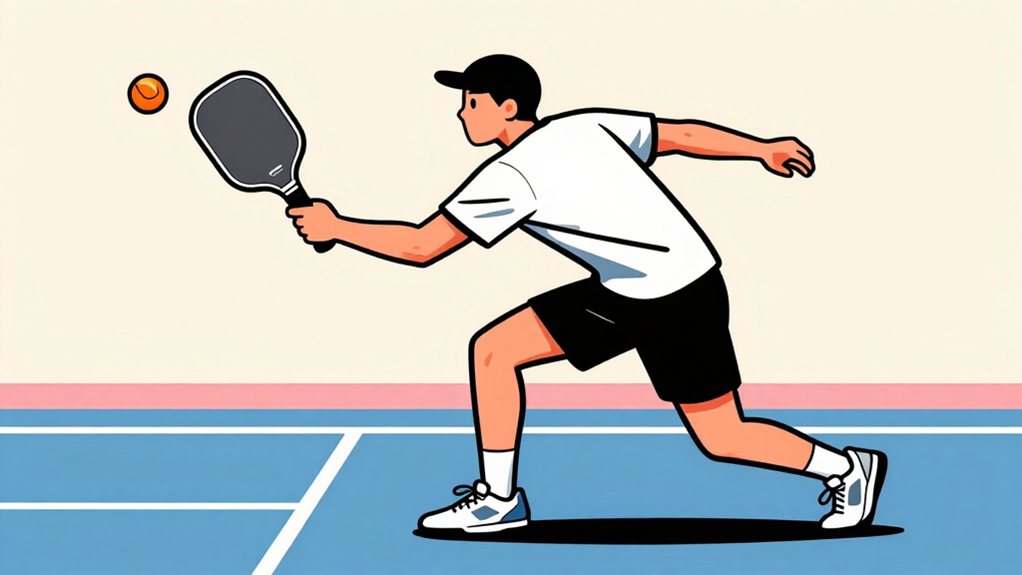
- Forward bend benefits: you’re transferring weight forward, creating a powerful drive, and staying balanced at the contact point while we’re gaining better court coverage.
- Sideways bend benefits: you’re opening your hips, adding a new vector of power, and improving stability, and we’re surprising opponents with angled serves.
- Knee drive execution: bend your knees, shift weight onto the balls of your feet, and push explosively through the legs, and you’ll generate serve speed.


No-sew film covered mesh vamp: Soft mesh materials help increase flexibility and breathability.

EFFORTLESS ENTRY WITH HANDS FREE SLIP-INS TECHNOLOGY: Designed as slip on shoes for men, the Viper Court Reload features Skechers Hands Free Slip-ins technology paired with a Heel Pillow that keeps your foot securely in place — no hands needed, no compromises on fit.
Forward Bend Benefits
As you incorporate forward knee bend into your serve, you’ll direct power effectively through your legs. This technique drives your weight forward toward the court, creating explosive energy that transfers into the ball. Your legs become the primary power source.
Benefits of forward knee bend:
- Transfers weight from back foot to front foot effortlessly
- Creates upward momentum that lifts the ball higher
- Engages your quadriceps and glutes effectively
- Positions your body behind the ball for better control
- Generates consistent power without relying on arm strain
The forward bend helps you maintain proper alignment. Your bullseye points at the ball’s center. You keep your shoulders relaxed and head up. This creates a balanced foundation for powerful serves.
Sideways Bend Benefits
While forward knee bend drives power toward the net, sideways knee bend offers an alternative angle for varied serve placement. You’ve shifted your weight sideways, using the inside of your foot to push the court. Sideways bend also loads the hip muscles, giving you a spring-like launch for the ball.
- Start in a closed stance, feet shoulder-width apart, knees relaxed.
- Shift weight onto the inside of your foot, letting hips rotate.
- Bend knees sideways, keeping torso upright and shoulders level.
- Drive upward through bent knees, follow through to target.
You can aim the serve to the opponent’s backhand or to the sideline, using the sideways angle. The motion keeps your core engaged, prevents heaviness, and it’s quick recovery.
Practice daily.
Knee Drive Execution
Execute the knee drive to generate maximum serve power. You drive your knees forward or sideways to transfer weight into the ball. This creates explosive energy from your legs.
- Stand with feet perpendicular to baseline
- Bend knees slightly, keeping them loose
- Drive forward or shift sideways on contact
- Transfer weight through bent knees
- Follow through toward the target
Your forward knee bend pushes power straight into the serve. Your sideways bend adds lateral force. Both methods maximize weight transfer.
You must keep knees relaxed throughout the motion. This prevents energy loss and maintains balance.
Practice each drive separately before combining them.
Balance and Mobility: The Payoff From Proper Knee Bend
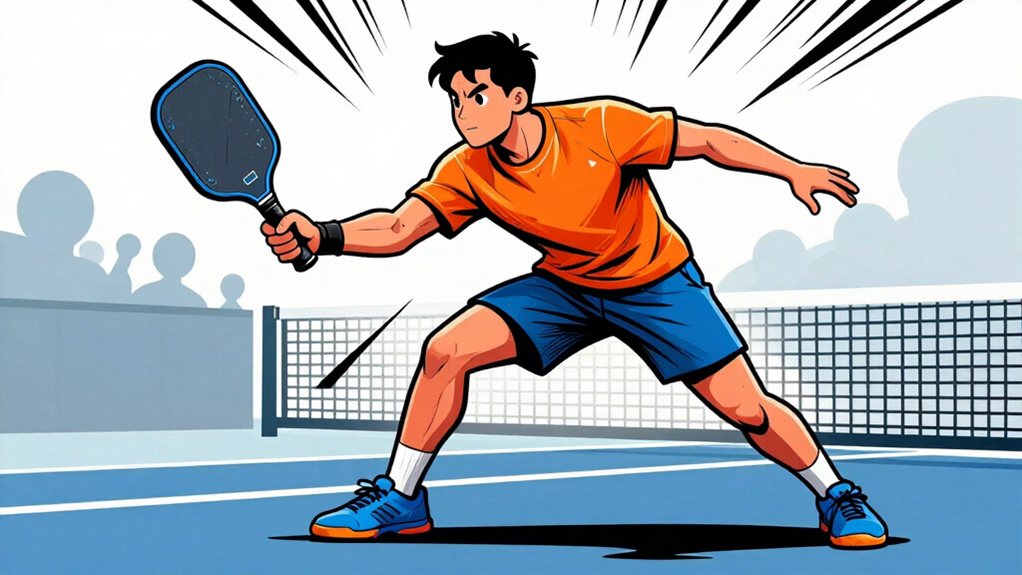
Through proper knee bend, you maintain core engagement for stability throughout each shot. You avoid heaviness at the non-volley zone line. Your body stays ready for quick direction changes.
Bend your knees, keep your core engaged, stay light at the non‑volley zone line, and stay ready for quick direction changes.
Key balance benefits:
- Core stays active. You transfer weight smoothly into each shot.
- Loose knees let you drop low without losing balance.
- Your bullseye stays aligned to the ball. You prevent backward hinging.
- You reset faster by standing upright between rallies.
- Low-to-high transitions become effortless.
Practice these points. Your mobility improves. Your shots gain consistency.
Frequently Asked Questions
Should I Wear Specific Shoes for Better Knee Bend?
You need court-specific shoes with proper ankle support and non-marking soles. They help you maintain balance, move quickly, and execute dynamic knee bends safely. Skip running shoes, they lack lateral support for pickleball’s side-to-side movements.
How Often Should I Practice Knee Bend Drills?
Get those knees in shape! Practice knee bend drills at least three times weekly. Short daily sessions beat occasional marathon practices. Consistency builds muscle memory faster, and proper form becomes second nature over time.
Can Knee Bend Help Prevent Common Pickleball Injuries?
Yes, proper knee bend prevents injuries by maintaining core engagement, keeping you light on your feet, and enabling quick changeovers. You avoid back strain, protect your joints, move efficiently, and stay balanced during play.
Is Knee Bend Effective for Dinks and Drop Shots?
Back in the day, players discovered that loose knees let you drop your weight into dinks and drop shots. Your relaxed bend controls touch, absorbs pace, and sets up seamless transitions for your next shot.
What’s the Best Warm-Up Routine Before Focusing on Knee Bend?
Start with dynamic mobility work, then do arm circles and shoulder rotations. Next, practice shadow swings focusing on proper form. Finally, hit some easy volleys to fully activate your muscles before incorporating knee bend mechanics.
Final Thoughts
Implement the knee bend technique every shot for power. Follow these steps:
- Place feet shoulder width apart.
- Bend knees to 30 degrees.
- Shift weight onto balls of feet.
- Drive upward through legs on each swing.
- Practice 15 reps per side.
When you master this, your shots will blast off like rockets and you’ll dominate every rally.
Keep your core tight, chin up, and stay balanced. This single bend will transform your game.

Ankle Tuck Compression: IRAMY Compression Socks combine advanced air knitting technology with 6 targeted compression rings for optimal ankle and arch support. The even pressure around the ankle relieves swelling, reduces muscle fatigue, and alleviates discomfort from plantar fasciitis, helping you stay active and pain-free throughout the day.

Choose from four sizes: Small, Medium, Large, and X-Large, with 70% Nylon,20%Spandex,10%polyester. Remember to size up for less compression and size down for more compression. Experience the ultimate comfort and protection with IRAMY Compression Socks.

COMPRESSION FIT: Short socks with targeted compression (16-19 mmHg) to provide boost to your blood circulation, anti-swelling, arch support, fit your feet perfectly and no slipping, no bunching, no blisters