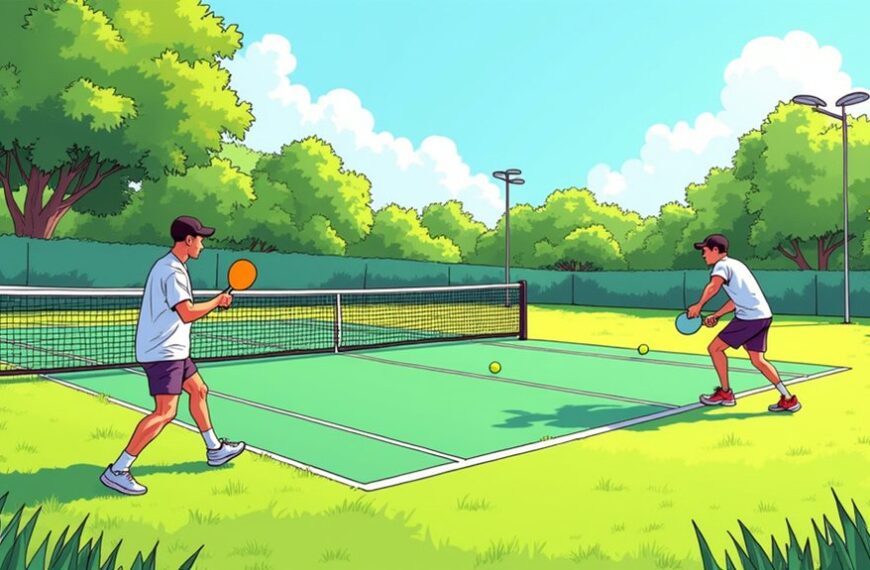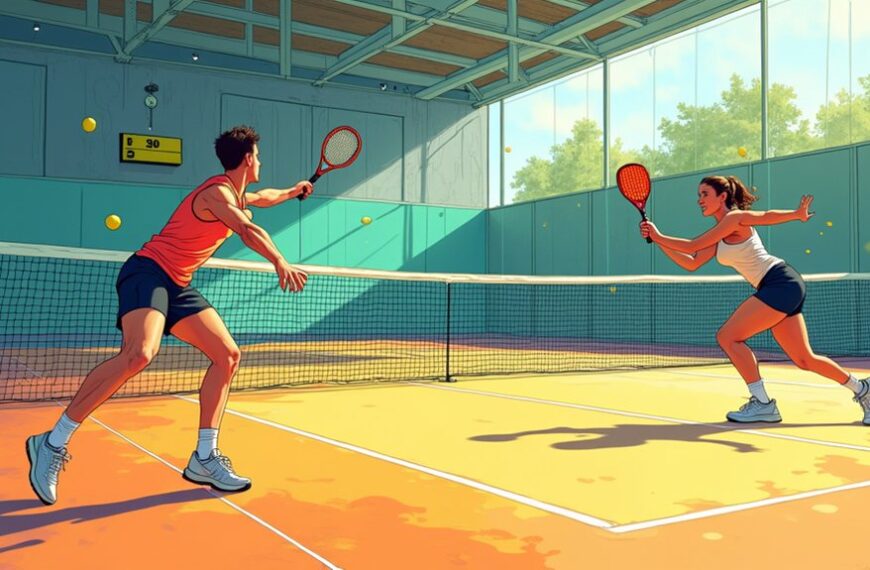
A typical pickleball game to 11 points lasts 8 to 25 minutes. Doubles games take 15 to 25 minutes; singles take 12 to 18 minutes. Rally scoring makes games 30 to 40 percent faster than side-out scoring.
Higher-skilled players create longer rallies, extending games to 25 to 30 minutes. Tournament matches use best-of-three games and last 40 to 75 minutes. You can fit four games into a one-hour session. For more details on timing factors, see the full guide.
How Long Does a Pickleball Game Last?
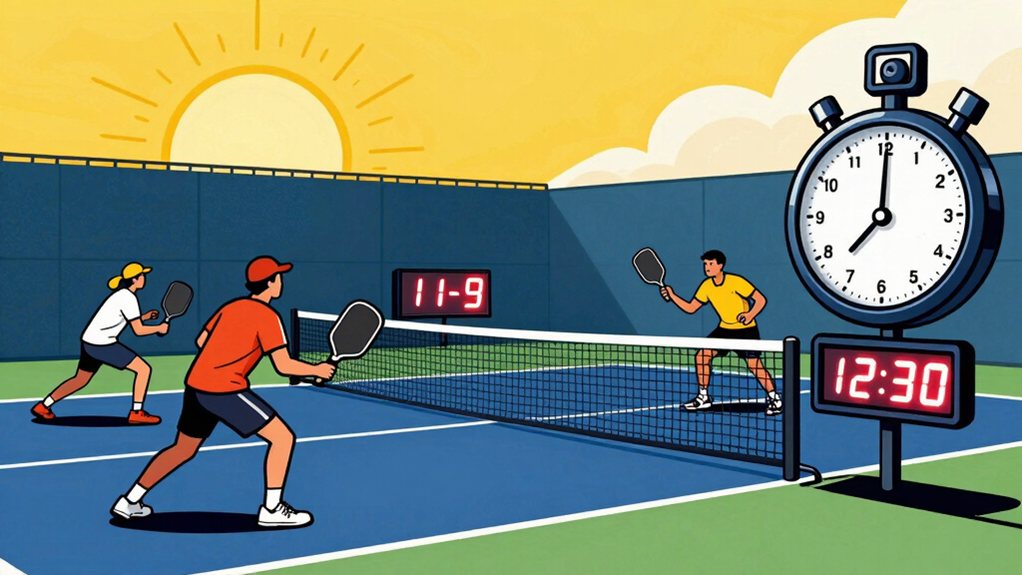
The length of a pickleball game depends on the format you play. Here are typical durations:
- Games to 11 points with rally scoring: 8 to 14 minutes
- Recreational doubles to 11 points: 15 to 25 minutes
- Singles matches to 11 points: 12 to 18 minutes
- Games to 15 points: 25 to 35 minutes
- Games to 21 points: 40 to 60 minutes
- Tournament best-of-three matches: 40 to 75 minutes
Your skill level and the scoring system change these times. Rally scoring makes games faster than side-out scoring. Win-by-two rules can extend games at deuce. Understanding your format helps you plan court time and energy. In padel, competitive sets use tiebreaks at 6-6, which can similarly extend match duration beyond standard time estimates.
What Affects Game Length?
Several factors determine how long your pickleball game lasts.
- Skill level impacts duration. Higher-skilled players (4.0+) create longer rallies. This extends games to 25-30 minutes.
- Match intensity changes timing. Casual games finish in about 15 minutes. Competitive matches can exceed 45 minutes.
- Rally length matters. Longer exchanges between evenly matched opponents can extend games indefinitely under the two-point win rule.
- Breaks add time. Warmups, water stops, line calls, and strategic timeouts add 7-8 minutes to your session.
- Court availability affects session length. Open-play rotations can stretch sessions to 2-3 hours at clubs.
These factors combine to shape your overall playing experience.
Scoring Formats and Their Impact on Duration
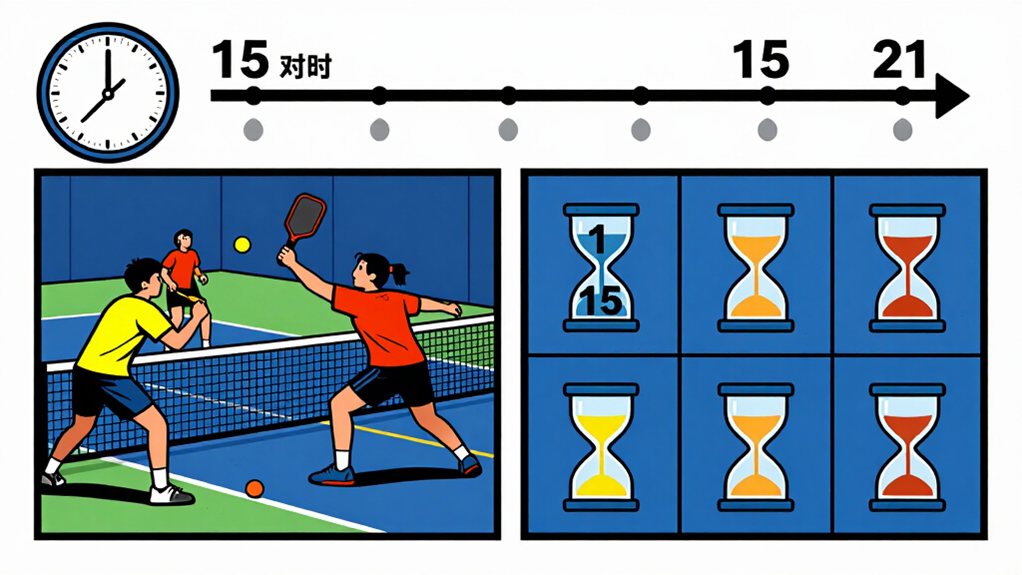
Pickleball uses two main scoring formats that materially affect game length. Rally scoring awards a point on every serve, making games 30-40% faster and completing 11-point games in 8-14 minutes.
Side-out scoring only awards points when you win a rally while serving, which extends game time compared to rally scoring.
Rally Scoring Effects
When you use rally scoring, each serve produces a point regardless of who wins the rally. This format considerably shortens game duration. You gain points on every serve, so rallies end faster. Games to 11 points finish in 8-14 minutes typically.
Rally scoring reduces total match time by accelerating point resolution markedly. Under this system, you don’t wait for your turn to serve to score points. Points accumulate quickly during play. The game moves at a brisker pace.
You should expect shorter games when using rally scoring. For example, a typical 11-point game ends in under 15 minutes. Your matches will feel more compact and more intense. For tournament play, rally scoring is the standard. You play to 11, win by 2 points.
Side-Out Scoring Impact
In contrast to rally scoring, side-out scoring only awards points when the serving side wins a rally. This format directly increases game length. You’ll notice longer games because the receiving team can’t score even if they win the rally.
Here is how side-out scoring affects duration:
- Games to 11 points take 15,25 minutes instead of 8,14 minutes.
- Points come slower since only the server can score.
- Teams must win by 2 points, which can extend games at deuce.
- You experience more dead time between points.
- Recreational matches feel longer than rally scoring games.
Consider this when planning your session. You should expect 30,40% more playing time compared to rally scoring formats. We recommend adjusting your schedule if you use side-out scoring for tournaments.
Singles vs Doubles: Which Takes Longer?
Singles vs Doubles: Which Takes Longer?
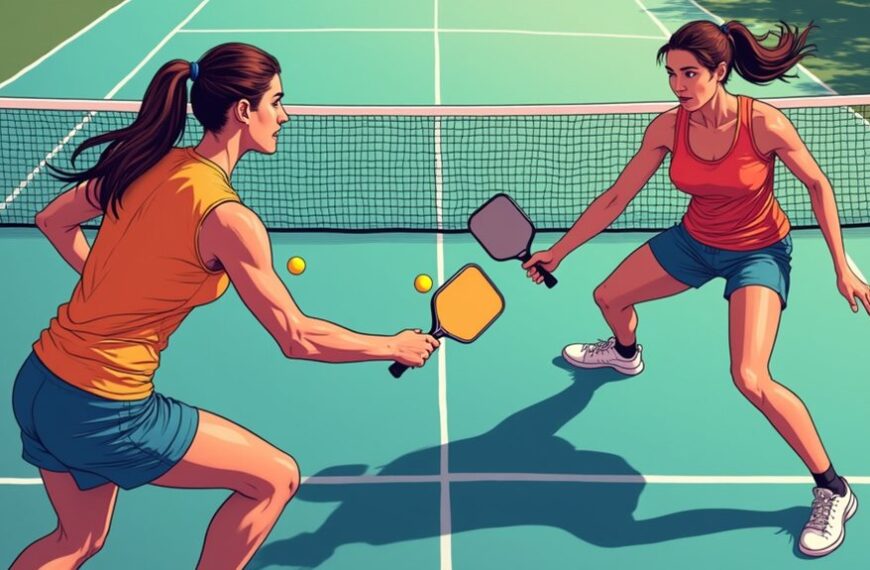
Whether you play singles or doubles changes your game duration. Singles games to 11 points finish in 12 to 18 minutes. Doubles games to 11 points last 15 to 25 minutes. Doubles takes longer because you share the court with a partner.
Singles to 11 points: 12‑18 minutes; Doubles: 15‑25 minutes, about 5‑10 minutes longer.
- Why singles are faster:
- Only two players on court
- Shorter rallies occur
- More unforced errors happen
- Fewer strategic pauses exist
- Why doubles takes longer:
- Four players create longer rallies
- More shot variety extends play
- Communication between partners adds time
- More opportunities for deuce games occur
You can expect doubles to add 5 to 10 minutes per game compared to singles.
How Skill Level Changes Game Time
Higher skill levels will increase your game duration considerably. When you play at a 4.0 level or higher, rallies last longer because both players sustain exchanges. This adds 10 to 15 minutes to your average game.
- Beginner games (2.5-3.0) end quickly with short rallies
- Intermediate play (3.5) creates moderate rally length
- Advanced players (4.0+) extend games through strategic shots
- Points take longer to win at higher skill levels
- Your fitness and shot consistency directly affect duration
We see longer rallies at advanced levels. You’ll notice games last 25-30 minutes when both players maintain consistent shots.
The two clear points rule means games can continue indefinitely when opponents remain evenly matched. Your shot placement and patience determine how long each point lasts.
Tournament Play vs Recreational Games
When you compare tournament play to recreational games, you’ll notice notable differences in how long matches last.
Tournament matches typically run 45 to 75 minutes, while recreational games finish in 15 to 25 minutes.
The higher intensity level in tournaments pushes players to sustain longer rallies and more strategic play, which extends the overall match duration.
Match Duration Contrast
Did you know tournament pickleball matches last three times longer than recreational games? Here’s what you need to know about this duration gap.
Recreational games to 11 points finish in 15-25 minutes. Tournament matches using best-of-three games extend 40-75 minutes. You account for warmups, timeouts, and breaks between games.
Key differences:
- Tournament format adds 7-8 minutes for warmups
- Strategic timeouts extend play by 2-3 minutes each
- Best-of-three format means you play multiple games per match
Competitive matches often exceed one hour. You experience longer rallies and more deuce situations. Your match duration depends on skill level and format chosen.
Intensity Levels
Typically, you notice a stark contrast in intensity between tournament and recreational pickleball. In tournament play, you give maximum effort, you hit harder, and you chase every shot. In rec play, you move more casually, you take longer breaks, and you smile more. The difference changes game length, so we’re adjusting our expectations.
- Rally length: 8,15 seconds in rec, 15,30 seconds in tournament.
- Breaks: 1,2 minutes between games rec, 2,3 minutes in tournament.
- Timeout usage: 1 per match rec, 2 per match tournament.
- Warm,up: 5,7 minutes rec, 7,9 minutes tournament.
- Rally count per game: 30,45 rec, 50,80 tournament.
- Match length: 15,25 minutes rec, 45,75 minutes tournament.
Use these guidelines to plan your session, so you arrive prepared and stay comfortable today.
Planning Your Session: How Many Games Fit in an Hour?
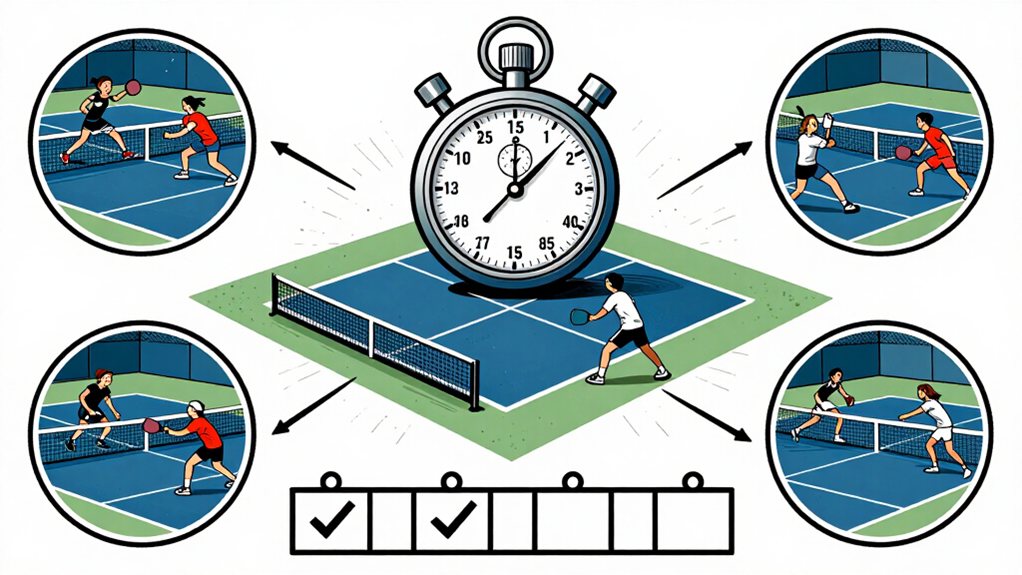
How many pickleball games can you fit into a one-hour session? The answer depends on your format and scoring system.
Most recreational games use rally scoring to 11 points. These games last 8,14 minutes each.
Plan for 3,4 games per hour when you include brief interludes between matches.
Your calculation steps:
- Estimate 10,12 minutes per game
- Add 2,3 minutes for switching sides
- Subtract total from 60 minutes
- Divide remaining time by game length
For example, if you play four 12-minute games with 3-minute breaks, you use 48 minutes of court time.
You have 12 minutes left for warm-up or extra play. Adjust your expectations based on player skill level.
Higher-level players often extend rallies, reducing your total game count.
Pickleball vs Tennis and Badminton: A Comparison
When you compare pickleball to tennis and badminton, you’ll find notable differences in match duration and gameplay intensity.
Pickleball games last 15-25 minutes. Tennis matches take 90 minutes to over 3 hours. Badminton matches run 40-50 minutes. These time differences matter for your scheduling.
Pickleball: 15‑25 min; Badminton: 40‑50 min; Tennis: 90 min‑3 hrs—schedule accordingly.
Key comparisons:
- Pickleball: fastest pace, smallest court
- Badminton: medium duration, highest shuttle speed
- Tennis: longest matches, largest court area
Your choice depends on time availability. A quick game fits a lunch break. Tennis demands a full afternoon. Badminton suits those wanting moderate length with high activity.
Intensity levels vary. Pickleball offers continuous play with brief rests. Tennis allows longer recovery between points. Badminton demands constant explosive movement. Consider your fitness level when selecting your sport.
The Longest Pickleball Game Ever Played
Did you know that the longest continuous pickleball game lasted 24 hours? In 2011, Justin Lawrence and Jeffrey Baker set this record in Dallas, Texas.
The game involved constant switching of partners.
Players traded volleys for twenty-four consecutive hours without stopping.
- Two players competed at a time
- Partners rotated throughout the event
- The game ended after 24 hours
- The game raised funds for charity
The event tested endurance and skill.
Both players demonstrated remarkable stamina.
They maintained intense focus throughout the entire match.
The game became a local community event.
This record shows pickleball can be played for extremely long periods when players commit to continuous play.
Frequently Asked Questions
Does Playing Indoors Vs Outdoors Change Game Length?
Indoors, you’re protected from weather disruptions, so games run consistently 15-25 minutes. Outdoors, wind, sun, and temperature breaks can extend games by 5-10 minutes or create longer rallies that really stretch your match duration time.
How Long Are Typical Breaks Between Games?
Between games, you’ll typically get 7-8 minute breaks for warmups, water, line calls, and strategic timeouts. Club open-play formats also include brief sitting periods while you wait for your next available court slot during rotations.
Do Timeouts Extend the Overall Match Duration?
Time and again, you’ll find timeouts extend match duration. Strategic 1-minute timeouts add 1-2 minutes each, and when combined with warmup breaks and line call discussions, they can tack on 7-8 minutes total.
Does Weather Condition Affect Pickleball Game Length?
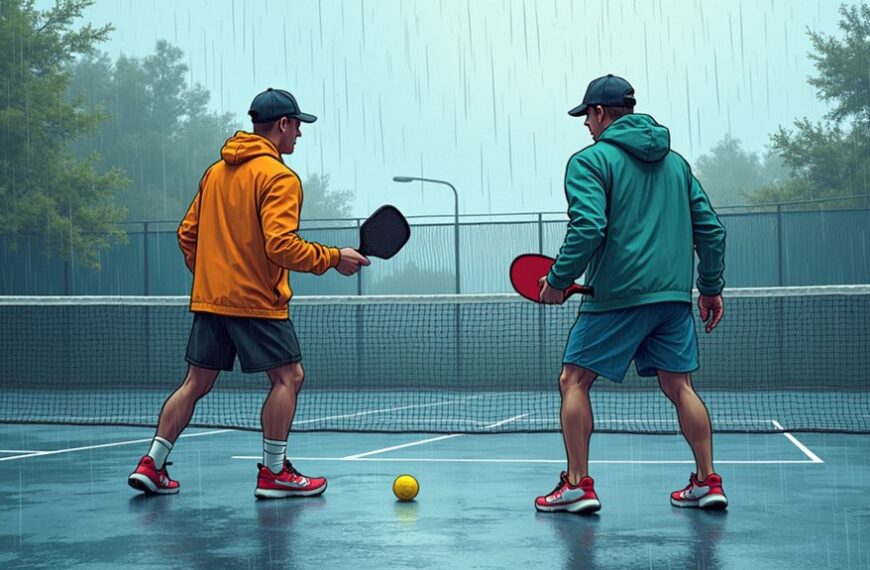
Extreme heat tires you quickly, forcing more water breaks and slower movement, extending match duration. Wind disrupts paddle contact and ball trajectory, creating longer rallies. Cold weather stiffens muscles and reduces flexibility, slowing each point.
Rain interrupts play or cancels outdoor sessions entirely.
Are There Official Time Limits for Pickleball Games?
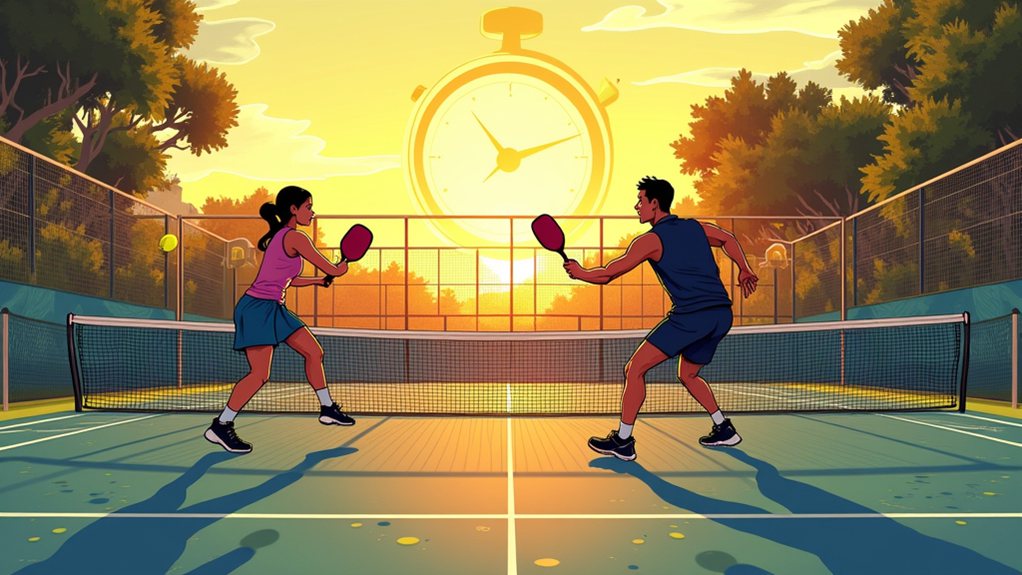
Picture a referee staring at a stopwatch, sighs, then shrugs, no time limits exist in pickleball; you don’t have timer, you finish when you hit winning score unless your club imposes its clock, play extends unpredictably.
Final Thoughts
- Choose the scoring format you’re using.
- Expect each game to last 15‑30 minutes.
- Play three to four games in one hour.
- Adjust time for singles (slightly longer).
- Use a 5‑minute warm‑up before play.
- Keep rallies short to speed play.
- Follow the rule that each rally ends a point.
- Set a clock as metronome for rhythm.
- We plan our session with these timelines.
- You will stay on court and enjoy the flow.
- Clock ticks, you answer.