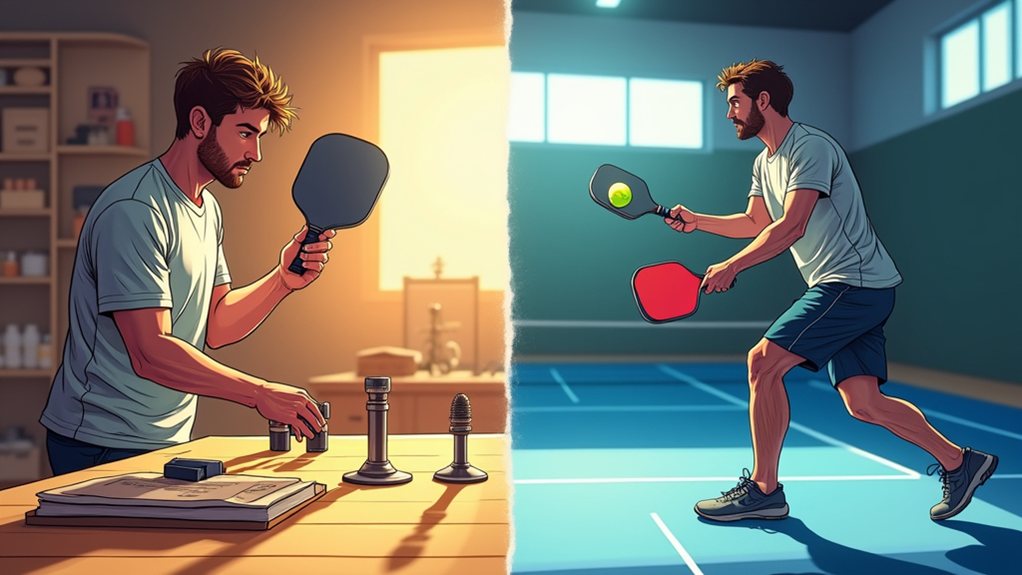
For beginners, choose a paddle between 14mm and 16mm thick. This range gives you a larger sweet spot and more forgiveness on off-center hits. Start with a 16mm paddle for control or a 14mm paddle for power. Test different thicknesses at a local shop before buying.
Switch to a thinner paddle when you’ve developed faster swing speed and technique. Your ideal thickness will match your growing skill and style, and help you improve your game.
Why Paddle Thickness Matters for Your Game
Paddle thickness directly affects how your paddle performs during play. Thickness determines three key factors:
Paddle thickness directly affects how your paddle performs during play, determining power transfer, control feel, and sweet spot size.
- Power transfer – Thinner paddles create faster ball speeds
- Control feel – Thicker paddles absorb more energy
- Sweet spot size – Thickness changes your forgiveness zone
Consider these effects when selecting your paddle:
- Your playing style dictates ideal thickness
- Your skill level influences forgiveness needs
- Your court position affects power requirements
We recommend evaluating your priorities before purchasing. Identify whether you value:
- Offensive power
- Defensive control
- Balanced performance
Match your thickness choice to your primary game objectives. This guarantees your paddle supports rather than hinders your development.
Test different options when possible. Your perfect thickness depends on your specific needs and goals. Just as your paddle controls the ball, your shoes control movement on the court, making footwear equally critical to your overall performance.

OFFICIAL PADDLE SPONSOR OF WORLD #1 PICKLEBALL PLAYER BEN JOHNS & THE PPA TOUR: An innovator & global leader in table tennis for 70+ years, JOOLA teams up with Ben Johns to create a new line of pickleball equipment that will forever change the game

OFFICIAL SPONSOR OF TOP-RANKED FEMALE PICKLEBALL PLAYER ANNA BRIGHT & THE PPA TOUR: An innovator & global leader in table tennis for 70+ years, JOOLA teams up with Anna Bright to design a new line of pickleball equipment to perform at the highest level
How 13mm, 14-15mm, and 16mm+ Paddles Compare
Understanding how thickness categories affect performance helps you make an informed choice. You’ll encounter paddles in three main thickness ranges.
13mm paddles provide a stiffer feel. They deliver faster ball speeds. They suit aggressive play styles.
14-15mm paddles offer balance. You get moderate power. You also receive decent control. This range works well for intermediate players.
16mm+ paddles maximize control. They absorb more ball pace. They provide larger sweet spots. They reduce fatigue during long matches.
Consider your playing goals. Choose thicker paddles for consistency. Select thinner options for aggressive drives. Test multiple thicknesses before committing.
Thin Paddles: Power and Speed for Aggressive Players
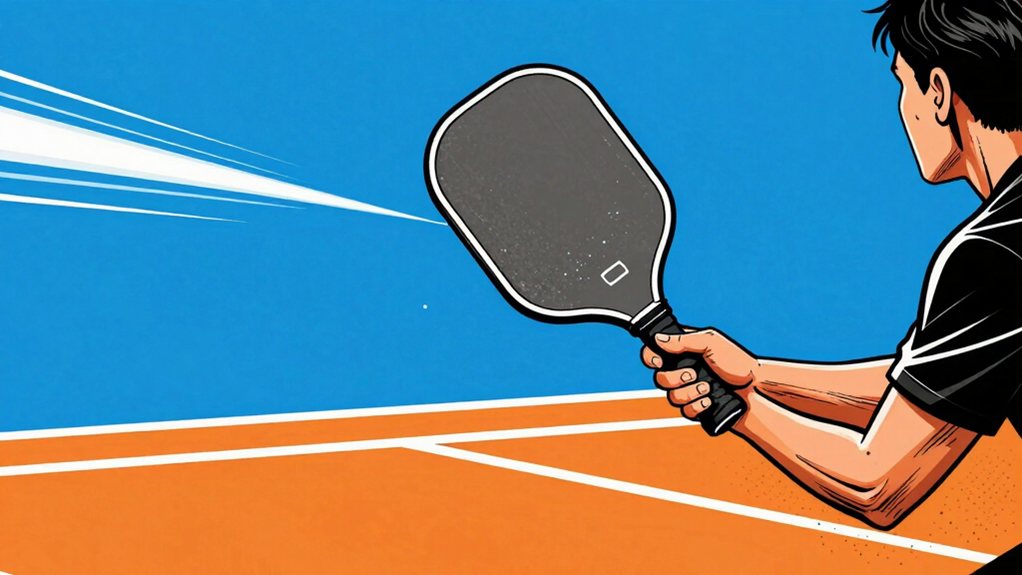
Thin paddles deliver explosive power and speed for aggressive players, but demand precise ball placement.
If you’re an aggressive player who prioritizes offensive power, thin paddles (13mm or below) deliver the speed and pop you need. You generate faster ball speeds. The stiffer feel gives you instant feedback. Your drives travel with more pace.
Your overhead smashes hit harder. Thin paddles excel in singles play. They help you finish points quickly. You control the net more often. Your quick reactions become an advantage.
Expect these tradeoffs: smaller sweet spots demand precision. You must center the ball consistently. Less forgiveness means missed shots feel harsher. Your technique must stay sharp.
You’ll notice reduced vibration on off-center hits. Choose a mid-weight paddle. It balances power with control. Test different grip sizes. Your comfort affects swing speed and accuracy.
Thick Paddles: Control and Forgiveness for Consistent Play
Because you prioritize consistency and control, thick paddles (16mm and above) provide the forgiveness you need. These paddles absorb more ball energy on impact. They create a softer feel that helps your accuracy. The larger sweet spot reduces mishits.
You experience more stability during rallies.
- Superior control and softer touch upon ball impact
- Improved stability and larger sweet spot for more consistent play
- Improved absorption of incoming ball pace, reducing reactive force
- Better performance on blocks, resets, and drop shots
Thick paddles trade offensive power for defensive reliability. You sacrifice some speed and “pop” for forgiveness. This trade-off suits players building foundational skills.
Mid-Thickness Paddles: The Best of Both Worlds
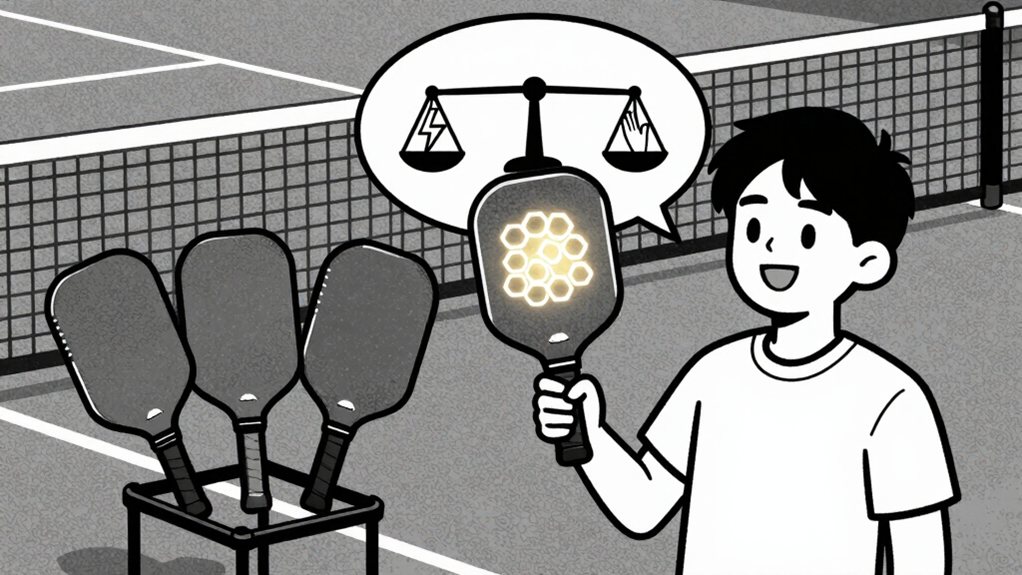
While thin paddles prioritize power and thick paddles emphasize control, mid-thickness paddles (14-15mm) give you a balanced blend of both.
You get enough power to drive the ball. You also get enough control to place it. This thickness range sits in the middle. It absorbs some pace without killing your shot speed. Your sweet spot stays larger than thin paddles provide. The paddle remains maneuverable for quick reactions at the net.
Consider mid-thickness if you want versatility. It adapts to different shots. You can drive, drop, and reset with one paddle.
Many players choose this range when they start. They keep it as their game develops. It prevents early commitment to an extreme.
Best Paddle Thickness for Beginners
For beginners, the best paddle thickness falls between 14mm and 16mm. This range gives you the ideal balance between control and power as you develop your skills.
Thicker paddles around 16mm offer more forgiveness and larger sweet spots. Thinner options in the 14mm range provide slightly more pop.
Consider these factors when choosing:
- Your current skill level and comfort with ball contact
- The types of shots you practice most often
- Your preferred playing style and court position
- How quickly you want to advance to more powerful paddles
You will find that mid-thickness paddles support your long-term development. They adapt as your technique improves.
This thickness range represents the market standard for new players. Most beginners succeed with paddles in this range.

Optimized Paddle Shape for Versatile Play: The Perseus Pro IV features a standard, elongated shape designed to provide an extended sweet spot. This geometry offers players the perfect balance of reach for powerful drives and a reliable, forgiving hitting surface for precise dinks, making it an excellent choice for players who want confidence from all areas of the court

PROFESSIONAL QUALITY: Designed by Franklin pickleball pros, this premium quality paddle has been constructed to compete, and win, at the highest level

OFFICIAL PADDLE SPONSOR OF WORLD #1 PICKLEBALL PLAYER BEN JOHNS: An innovator & global leader in table tennis for 70+ years, JOOLA teams up with Ben Johns to create a new line of pickleball equipment that will forever change the game.
How to Find Your Ideal Thickness Before Buying
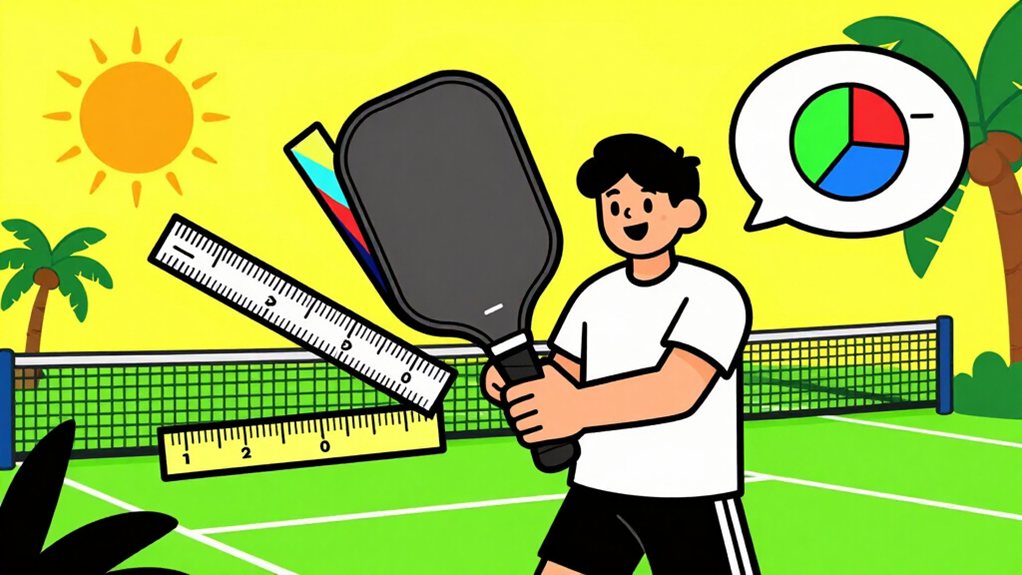
How do you find your ideal paddle thickness before buying? Follow these steps:
- Identify your current skill level. Beginners typically benefit from 14-16mm paddles.
- Consider your playing style. Do you prefer control or power? Thicker paddles (16mm+) offer control. Thinner paddles (13mm or below) provide power.
- Test paddles at a local shop. Hold each thickness for 5-10 minutes.
- Borrow paddles from friends. Try at least 2 different thicknesses.
- Match thickness with weight. Mid-weight paddles in your chosen thickness work best.
- Start with a 14mm or 16mm option. These sizes suit most beginners.
- Research return policies. You may need to exchange if the choice feels wrong.
- Test at least 2-3 paddles. Notice how each feels during dinks and drives. Pay attention to sweet spot size and ball response.
Ask store staff for recommendations. Keep notes on what works. This helps narrow your preference quickly.
Signs It’s Time to Switch Paddle Thickness
You notice performance dropping noticeably when your game stops improving despite consistent practice. Shots feel inconsistent, and you struggle with the same shots you once handled easily. Swing speed decreasing often signals that your paddle no longer matches your skill level.
Watch for these three signs:
- Your accuracy drops by 20% or more during matches
- You mishit shots you routinely made last month
- Your swings feel slower and less powerful than before
Performance Dropping Noticeably
While you may not realize it immediately, certain performance indicators signal that your current paddle thickness no longer serves your game well. You may notice your shots lack the power you once had, or you struggle to control the ball on returns.
Your paddle feels heavier during quick exchanges, and you miss shots you normally make. These signs indicate your thickness choice no longer matches your skill level.
- Your shot distance decreases noticeably during games
- You experience more fatigue in your wrist and arm
- You win fewer points against players at your skill level
- You feel less confident approaching the net
When these patterns emerge, testing a different thickness helps restore your competitive edge.
Shots Feel Inconsistent
Inconsistent shot performance signals your paddle thickness may no longer match your skill level. You notice this when the same swing produces different results. Balls fly long, short, or wide unexpectedly. You struggle to predict where your next shot lands.
This inconsistency often stems from a mismatch between paddle characteristics and your developing technique. Thinner paddles demand precise contact points. Thicker paddles forgive minor mishits but feel dead if your swing has grown powerful.
Consider switching when:
- 60% of your practice shots miss their target
- You can’t replicate successful shots consistently
- Your control has declined despite increased practice time
- Different paddle thicknesses produce noticeably different results
A thickness change restores predictable ball flight and rebuilds your confidence at the kitchen line.
Swing Speed Decreasing
A gradual decrease in swing speed signals that your paddle thickness may no longer suit your game. When you swing slower, the ball loses distance and lands short of the intended line. You may feel extra effort needed to generate the same power you’ve achieved.
Your shots often land deep in the court, indicating it’s reduced ball speed. We recommend checking your swing speed on a regular basis with a simple drill.
- Your paddle feels heavier, causing you to slow the swing.
- The ball fails to clear the net at normal pace.
- You notice a drop in drive distance during practice sessions.
- Your reaction time lengthens, and you often miss quick returns.
If these signs appear, switch to a thinner paddle for more pop.
Final Thoughts: Matching Thickness to Your Playing Style
When selecting your paddle thickness, consider your playing style first.
If you favor aggressive drives and fast rallies, choose a thinner paddle (13mm or below) for maximum power.
If you prioritize accuracy and consistent ball placement, select a thicker paddle (16mm or above) for better control and forgiveness.
Match Thickness To Style
To select the right paddle thickness, you must first understand your playing style and what you want to achieve on the court during matches. Your thickness choice directly impacts your control, power, and overall performance. Use this understanding to guide your selection process.
- Offensive players benefit from thinner paddles (13mm or below) that deliver faster ball speeds and enhanced “pop” for aggressive shots.
- Defensive players gain more stability and forgiveness from thicker paddles (16mm+) that absorb pace and provide larger sweet spots.
- All-court players should consider mid-thickness options (14-15mm) that balance power and control for versatile gameplay.
- Beginners generally progress well with thicker paddles as they build foundational skills before transitioning to thinner options for advanced play.
Prioritize Power Or Control
Since your playing style shapes every shot you make, choosing between power and control defines your paddle thickness selection. You’ve got to decide which goal matters most on the court.
- Choose thin (13mm or less) if you prioritize power. We get a stiff feel, fast ball speed, and aggressive play.
- Choose thick (16mm or more) if you prioritize control. You gain a larger sweet spot, softer touch, and better stability.
- Choose mid-thickness (14-15mm) if you want a balance between power and control.
- Thin paddles suit drives, quick volleys, and singles play.
- Thick paddles suit resets, blocks, and beginners who need forgiveness.
- Mid-thickness adapts to both shots, serving as a versatile compromise.
Match the thickness to your game goal. This improves play.
Frequently Asked Questions
Does Paddle Thickness Affect the Overall Weight of the Paddle?
Absolutely, thicker paddles weigh more because they contain additional core material. A 16mm paddle is heavier than a 13mm paddle of identical size. Your choice affects maneuverability, so consider weight alongside thickness in your selection.
Will a Thicker Paddle Make My Serve More Powerful?
Thicker paddles won’t boost your serve’s power, they prioritize control and stability instead. You’ll actually generate more pop with thinner paddles, which deliver faster ball speeds and less energy absorption on contact.
Are There Any Restrictions on Paddle Thickness in Tournament Play?
There are no specific thickness restrictions in official tournament play. The USPA approves paddles based on overall specifications, so you can choose any thickness from 10mm to 20mm that suits your game and playing style.
How Does Thickness Interact With Paddle Surface Material for Spin?
Ironically, thinner paddles let you pretend you’re generating spin, but thicker cores actually grip the ball longer. Rough textures on thick paddles maximize spin potential, while slick surfaces need extra dwell time thick cores provide.
Can Changing Thickness Help Reduce Wrist or Arm Strain?
Choosing a thicker paddle around 16mm or above you’ll find it reduces wrist and arm strain because it absorbs more impact and provides a softer feel, while thinner paddles transmit force to your arm muscles.
Final Thoughts
1) Pick your paddle thickness based on your skill level, and you’ll find the right fit.
2) Thinner paddles give you power, thicker paddles give you control.
3) Start with a mid-thickness paddle for balance.
4) Test paddles before you commit to one.
5) You’ll improve your game when you use the right thickness.
6) The right paddle becomes your secret weapon on the court.
7) Choose the thickness that matches how you play now, not how you hope to really play.

13mm Honeycomb Polymer Core: The Racket reduce control and feel, but it provides extra power and flexibility. This makes your Smash, Drive, Serve, and Volley shots stronger and more aggressive, helping you take control of the game and pressure your opponent.