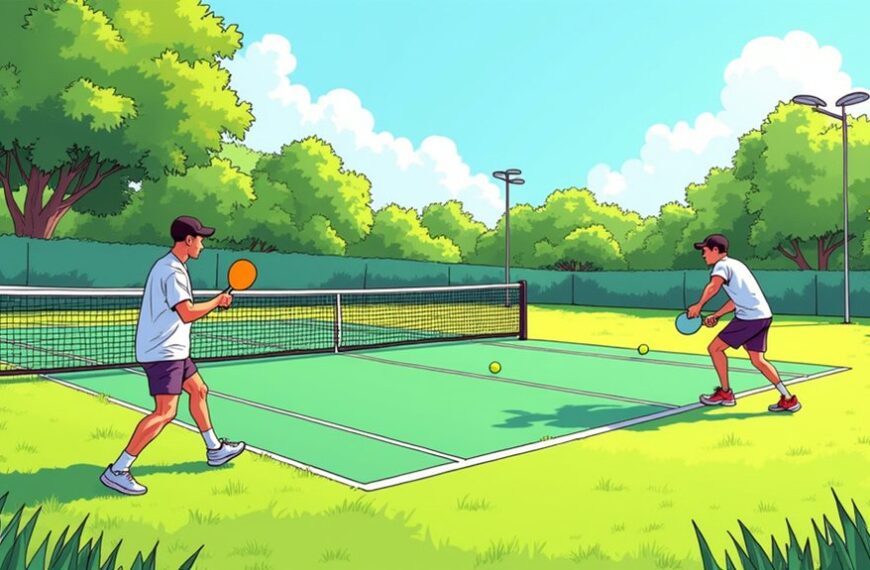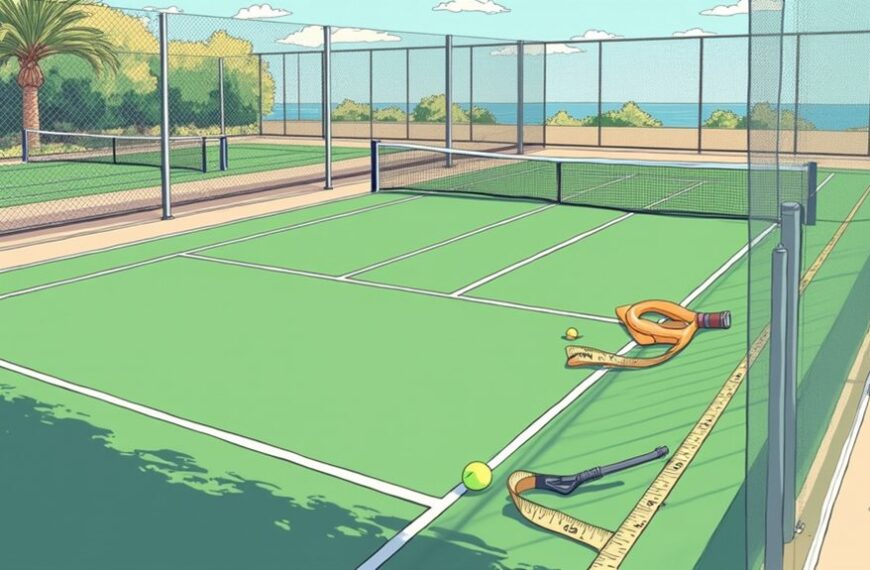
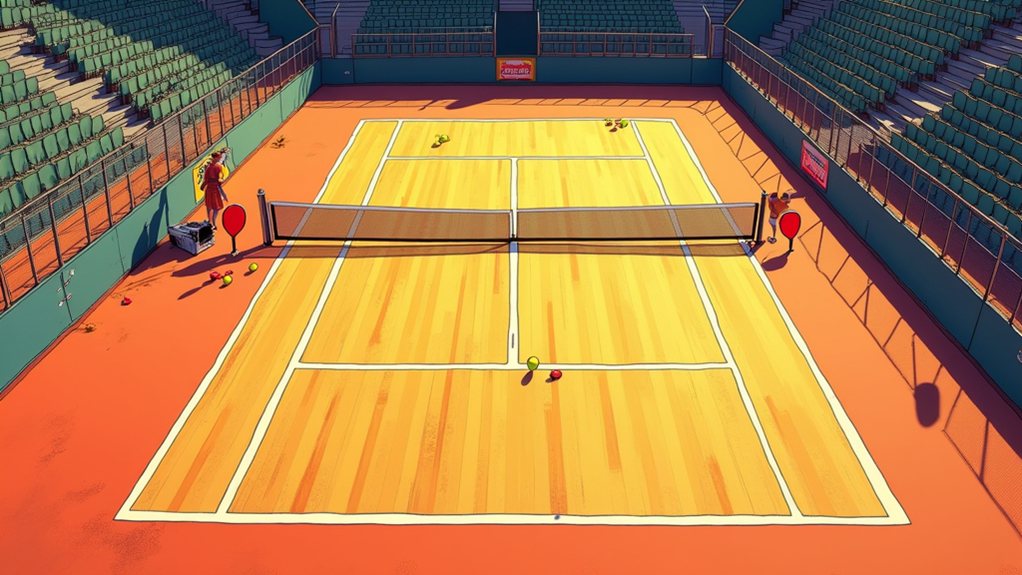
1) You’ll need a court that measures 20 ft wide by 44 ft long (880 sq ft). Space is 30 ft by 60 ft (34 ft by 64 ft recommended). Net height is 34 in at center and 36 in at sidelines; net width is 22 ft with 1 ft overhang each side. Non,volley zone 7 ft from net; service line 15 ft from net.
Orient the court north,south to cut sun glare. For wheelchair play the surface expands to 44 ft by 74 ft. More details are in the guide.
Official Pickleball Court Dimensions: The Complete Guide
Did you know a pickleball court measures exactly 20 feet wide by 44 feet long? This equals one-quarter the area of a doubles tennis court. The same size as a doubles badminton court. Court measurements include all boundary lines. We measure to the outside of perimeter lines.
> A pickleball court: 20 ft × 44 ft, exactly one‑quarter of a doubles tennis court, matching a doubles badminton court.
Total playing space requirements:
- Minimum surface: 30 feet × 60 feet
- Preferred for new builds: 34 feet × 64 feet
- Tournament standard: 34 feet × 64 feet
- Around 1,800 square feet needed
- The apron provides player movement space
The court includes specific areas:
- Non-volley zone (kitchen): 7 feet from net on each side
- Service courts: Two 10 ft × 15 ft rectangles per side
- Baseline: 22 feet from net
Sidelines run the full 44 feet length. All court boundary lines measure 2 inches wide and must be clearly visible on the playing surface.

[Oversized 44x20 Feet Template] Complete pickleball court marking template perfect for backyards, schools, and clubs. Easily create accurate, professional-grade courts for family fun, school sports, or club play, enhancing every pickleball experience with precise and durable court lines.

PORTABLE PICKLEBALL NET - Start a simple paddle game anytime, anywhere with ACELETIQS Portabl e Pickleball Net System! It installs in a matter of minutes and requires no tools to assemble and dismantle – quick and easy setup

【REGULATION 20 X 44 FT PICKLEBALL COURT LAYOUT】Create your own pickleball court with this full-size pickleball court stencil kit, designed for a standard 20 x 44 ft playing area. Whether you're marking a new court or adding pickleball lines to an existing concrete or asphalt surface, this court marking template helps you lay out the playing lines for singles and doubles games.
Net Height and Width Specifications for Tournament Play
Now that you understand the court dimensions, let’s examine the official net specifications for tournament play.
Net height requirements:
- Posts and sidelines sit at 36 inches
- Center of net drops to 34 inches
- This creates the required 2-inch slope
Net width specifications:
- Total width measures 22 feet
- Court coverage is 20 feet
- Each side has 1-foot overhang
Equipment standards:
- Use permanent net systems for tournaments
- Check consistent tension across the entire net
- Check height at posts and center before each match
- Portable nets work for recreational play only
Tournament officials verify net measurements before competition.
You must measure from the ground to the top of the net at posts and center.
The 2-inch difference between center and sides is mandatory.
Your net system should maintain tension throughout match play.
Verify the 20-foot court coverage aligns with sidelines.
The 1-foot overhang on each side provides proper play area.
Court Line Markings: Precise Measurements and Colors
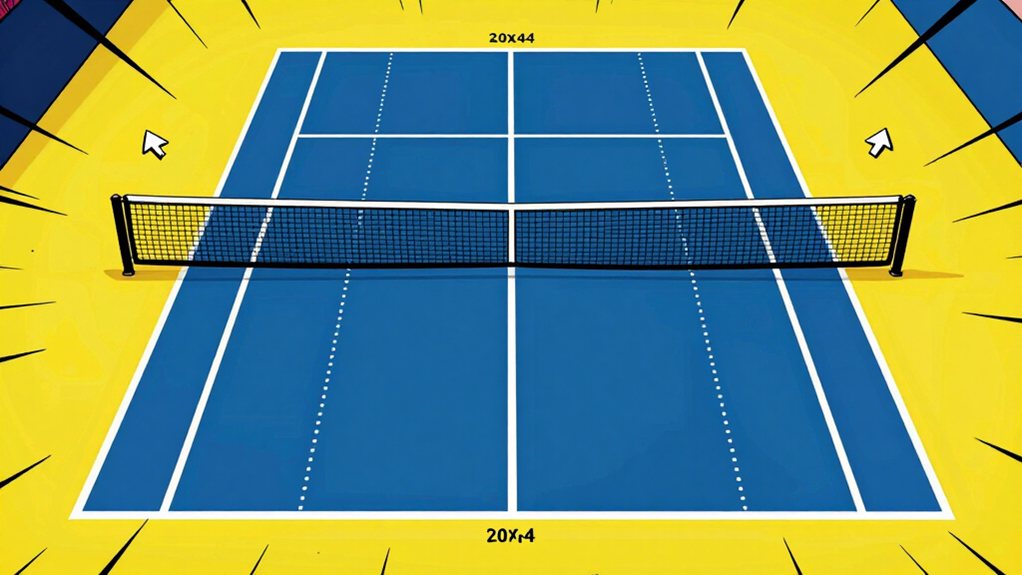
When it comes to court line markings, precision matters for official play. You need to understand the exact specifications to make sure your court meets regulations. Here are the key details:
- Line Width: All lines measure exactly 2 inches wide.
- Line Color: Use white or a high-contrast color that stands out against your playing surface.
- Baseline: This line runs 22 feet from the net. It spans the full 20-foot court width.
- Sidelines: These run the entire 44-foot length of the court. They define the side boundaries.
- Service Lines: Position these 15 feet from the net. Each service court measures 10 feet wide by 15 feet deep.
- Centerline: This line runs from the baseline to the non-volley zone. It divides each service court in half.
We make sure all lines use identical width and color. This consistency creates clear visual boundaries.
You include these lines within the total court dimensions.
Your markings create the exact playing area for both singles and doubles competition.
The Non-Volley Zone (The Kitchen): Rules and Dimensions
The non-volley zone, also known as the kitchen, extends 7 feet from the net on each side of the court.
You can’t volley the ball while standing inside this 20-foot-wide zone that runs the full width of the court.
This rule prevents aggressive smashes near the net and promotes safer, more strategic play.
Kitchen Dimensions
Understanding the non-volley zone, commonly called the kitchen, is critical for proper pickleball play. This area sits along the net and extends toward each baseline. You must know its exact boundaries to visualize court layout.
The kitchen has these key measurements:
- 7 feet deep – The zone extends 7 feet from the net on each side.
- 20 feet wide – It spans the full court width, matching the sidelines.
- 140 square feet – Total area per side (7 × 20).
Combined, both kitchens create a 14-foot middle section across the court. These identical dimensions help maintain consistent play at every official venue. The boundary line runs parallel to the net, marking where the kitchen begins and ends.
Volley Restrictions
In pickleball, you can’t volley the ball while standing inside the non-volley zone. This rule keeps the game fair and prevents aggressive play at the net.
The kitchen extends 7 feet from the net on each side, creating a 14-foot-wide area across the middle of the court.
Key volley restrictions:
- Your feet mustn’t touch the non-volley zone line when volleying.
- You can’t volley while any part of your body is inside the zone.
- You can enter the kitchen after the ball bounces.
- You can’t volley from the kitchen, even if the ball is in the air.
These rules create strategic depth. Players must position themselves carefully.
You must wait for the ball to cross the non-volley zone line before moving forward. Violations result in a fault, giving your opponent the point.
Service Court Layout: Boxes, Lines, and Scoring Areas
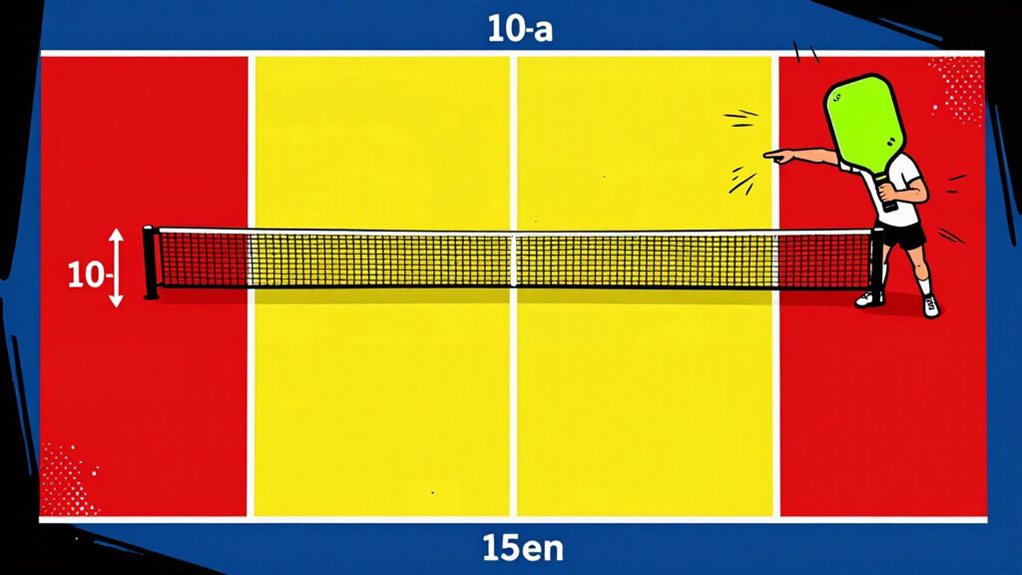
For proper service court setup, we divide each half of the pickleball court into two rectangular service boxes.
Each box measures 10 feet wide by 15 feet long.
The centerline splits the service area, running from the baseline to the non-volley zone.
You serve from behind the baseline, aiming into the box diagonal from your position.
- The baseline sits 22 feet from the net, marking the back boundary for all serves.
- The non-volley zone line sits 7 feet from the net, creating a 14-foot-wide kitchen area in the middle of the court.
- Scoring occurs only when you win a point while your opponent serves, and the server gets two chances to hit the ball correctly.
The service court layout helps ensure fair play and clear boundaries for every pickleball match.
Minimum and Recommended Playing Space Around the Court
You need a minimum playing surface of 30 feet by 60 feet.
We’ve found that a preferred area of 34 feet by 64 feet works best for new construction and tournaments.
This gives you roughly 1,800 square feet with the minimum and about 2,176 square feet with the recommended size for safe player movement.
Minimum Space Requirements
How much space do you need around a pickleball court? You must account for the minimum playing surface and additional clearance.
The minimum playing surface measures 30 feet wide by 60 feet long. This provides approximately 1,800 square feet of space.
You should also include an apron for player movement and safety.
- Minimum playing surface: 30 feet × 60 feet
- Total minimum area: 1,800 square feet
- Apron space: allows player movement and safety around court perimeter
Recommended Playing Area
While the minimum playing surface starts at 30 feet by 60 feet, we recommend expanding the area for better play. A preferred size is 34 feet by 64 feet for new construction and tournaments. This extra space gives you room to move safely. It also lets you set up proper seating and lighting. You will avoid boundary disputes during intense rallies.
| Space Type | Dimensions (feet) |
|---|---|
| Minimum | 30 × 60 |
| Preferred | 34 × 64 |
| Tournament | 40 × 64 |
| Recommended | 34 × 64 |
Consider adding a 10-foot margin around your court. This creates a 40-foot by 64-foot playing area. It provides ample space for player movement.
It also protects spectators and equipment. You get approximately 1,800 square feet with these dimensions.
Outdoor Court Orientation: North-South for Sun Avoidance
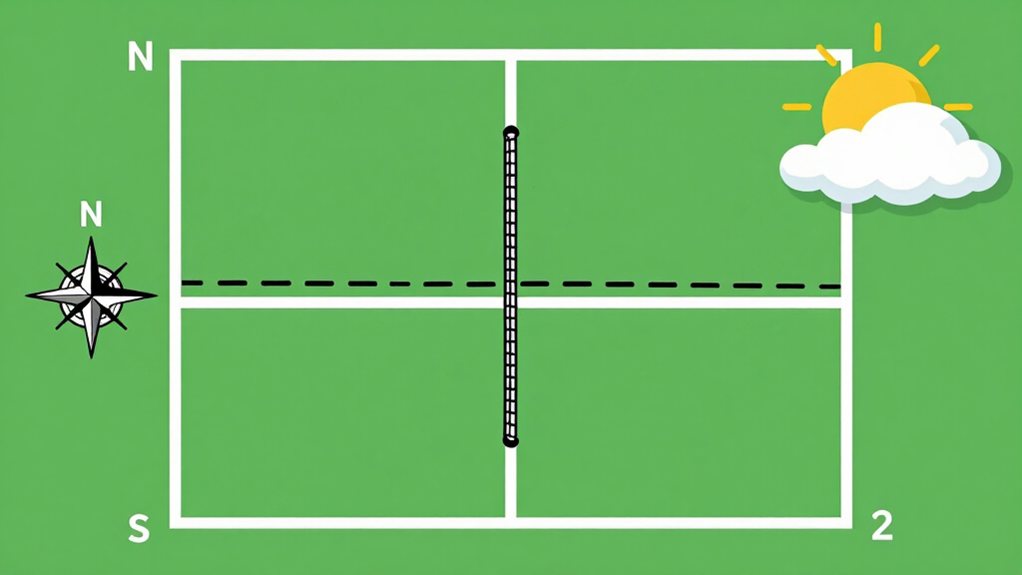
Because sun glare affects player visibility, outdoor courts should face north-south during installation. This orientation stops the sun from blinding you during serves and returns.
Follow these three steps for correct alignment: This layout also helps keep shade patterns consistent throughout the day.
- Place the court so the baseline runs east,west.
- Set the net at the center line with its length pointing north-south.
- Keep surrounding fences or windbreaks low so they don’t cast shadows across the playing surface when the sun is low.
If you’ll live in the northern hemisphere, we aim court’s side toward the north. This direction reduces the sun’s angle during hottest part of the day. Thus, players stay comfortable, and the game stays fair all day.

Official Size Net: Our pickleball net meets the USA Pickleball regulations. It is 22 feet (W) x 36 inches (H), with a height of 34 inches at the center. This ensures that when you play with our portable pickleball net, you are getting an authentic and tournament-approved setup.

REGULATION HEIGHT PICKLEBALL NET: Measures 36 inches at sides and 34 inches at the middle; 22 foot length covers full pickleball court with the recommended extra 12" on each side; Designed for pickleball & quality tested by pickleball players & pros

Complete Set Includes: 22ft metal frame pickleball net with carry bag and center stabilizer.
Wheelchair Pickleball Court Dimensions and Accessibility Requirements
When you adapt your court for wheelchair players, you’ll need to increase the playing surface to 44 feet wide by 74 feet long. This expansion provides room for maneuverability and safe play.
Expand the court to 44 by 74 feet, giving wheelchair players the space needed for maneuverability and safe play.
You must also consider these accessibility requirements:
- Ensure smooth, level surfaces without cracks or obstacles.
- Provide accessible pathways to and from the court.
- Install ramps at court entry points if elevation changes exist.
- Keep the non-volley zone wide enough for wheelchair turns.
- Position seating areas for players and spectators near the playing surface.
These modifications allow inclusive play while maintaining official pickleball rules.
Pickleball Court Size Compared to Tennis and Badminton
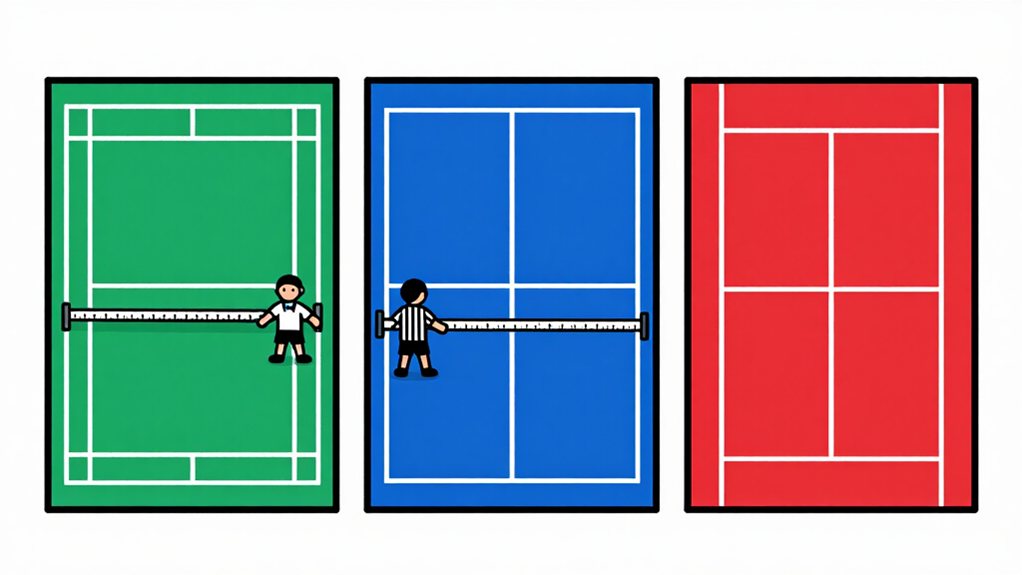
If you want to understand how pickleball fits into the world of racquet and paddle sports, you’ll find it occupies a unique middle ground. Pickleball courts measure 20 feet wide by 44 feet long. This size offers practical advantages for players of all skill levels.
- A doubles tennis court spans 78 feet by 36 feet. You can fit four pickleball courts inside one tennis court. This makes tennis clubs convert their unused space easily.
- A doubles badminton court matches pickleball exactly at 20 feet by 44 feet. If you play badminton, you’ll recognize the familiar dimensions immediately. The shared size explains similar court positioning and strategy.
- Pickleball’s compact area requires less running than tennis. You cover 880 square feet compared to tennis’s 2,808 square feet. This lower physical demand attracts players seeking a less strenuous game.
Top Mistakes to Avoid When Measuring or Building a Court
When you measure or build a pickleball court, you must avoid three common mistakes. Wrong dimensions, net height errors, and insufficient surrounding space can ruin your playing surface.
We’ll now identify these mistakes and explain how to prevent them.
Wrong Dimensions
Overlooking standard dimensions creates problems during gameplay and official tournaments. You must use the correct court size to avoid violations.
Common measurement mistakes include:
- Using 20 feet width instead of the full 20 feet including lines for doubles play
- Cutting the length to 40 feet instead of the required 44 feet
- Failing to account for the 7-foot non-volley zone on each side of the net
You must measure from the outside edge of all boundary lines.
The total playing area requires at least 30 feet by 60 feet, though 34 feet by 64 feet is recommended for new construction. Check local regulations and tournament standards before building.
Net Height Errors
Did you know that the net height at the center must be 34 inches, while the height at the sidelines measures 36 inches? This specification is required for official play. Many builders make the mistake of installing a flat net at 36 inches throughout. That error creates unfair bounces and alters shot angles.
Always measure at the center and at both sidelines.
| Measurement Point | Official Height | Common Error |
|---|---|---|
| Net Center | 34 inches | 36 inches (flat) |
| Net Sidelines | 36 inches | 34 inches (too low) |
| Net Width | 20 feet | 19 feet or less |
| Post Height | 36 inches | Incorrect placement |
| Overhang | 1 foot each side | No overhang |
Check your net with a tape measure before playing. Use a level to confirm the 2-inch drop from sidelines to center. Replace nets that sag or stretch.
Portable nets often need frequent adjustment. Permanent systems provide consistent tension. Remember that even a 1-inch error affects gameplay notably.
Insufficient Surrounding Space
One common mistake involves failing to provide adequate surrounding space around your court. Pickleball demands more room than the playing surface itself. You need a minimum of 30 feet by 60 feet for the playing area, but you should add more space for player safety and comfortable movement.
- Provide at least 10 feet of clearance around all sides of the court
- Account for the non-volley zone extending 7 feet from the net on each side
- Consider adding an apron for players to move safely without hitting walls or fences
Without sufficient surrounding space, players risk collisions, missed shots, and injuries during competitive play.
Frequently Asked Questions
What Is the Average Cost to Build a Pickleball Court?
Building a pickleball court typically costs between $20,000 and $50,000, depending on whether you choose concrete, asphalt, or synthetic surface, your location, and if you install it indoors or outdoors with additional features like lighting or fencing.
Can a Tennis Net Be Used for Official Pickleball Play?
No, you cannot use a tennis net for official pickleball play. Pickleball requires a net 36 inches high at the sidelines and 34 inches at center, significantly lower than a tennis net’s standard 42 inches.
What Surface Material Provides the Best Durability and Grip?
Concrete with an acrylic surface coating provides the best durability and grip for pickleball courts. It withstands weather, offers consistent ball bounce, gives players reliable traction, and requires minimal maintenance over time.
Are There Specific Lighting Standards for Outdoor Pickleball Courts?
Your outdoor court needs 30-50 foot-candles of uniform light. Position fixtures to eliminate shadows and glare. Use 400-watt LED lights angled 60 degrees. Mount poles 10 feet high at corners. Prevent light trespass onto neighboring properties.
How Often Should Pickleball Court Lines Be Repainted?
Those sad, faded lines barely visible during your heated matches? You’d better repaint court lines every 2-3 years for regular play, though competitive venues demand annual *renewal* to maintain professional visibility standards and tournament play.
Final Thoughts
- You’ll measure court 44 ft long, 20 ft wide.
- You’ll set net height 36 in center, 34 in posts.
- You’ll mark non-volley zone 7 ft from net each side.
- You’ll place service line 10 ft from net; coincidentally service box is 10 ft by 10 ft.
- You’ll align courts north-south limit sun; use 2-in-wide lines color.
- We’re confirming wheelchair courts same dimensions plus 4 ft clearance; use white lines tournament, blue lines recreational as required.

Quick And Easy Setup: Transform any space into a pickleball court with our pickleball court marking stencil kit. It's perfect for driveways, home gyms, parks, and indoor facilities. Our versatile court marking kit ensures a professional-quality template for court markings wherever you play. It takes 15-20 minutes to lay out the cardboard stencil kit, then another 15-20 minutes to paint. Let dry for 30 minutes and your pickleball court is ready to play on.

Quick And Easy Setup: Transform any space into a pickleball court with our pickleball court marking stencil kit. It's perfect for driveways, home gyms, parks, and indoor facilities. Our versatile court marking kit ensures a professional-quality template for court markings wherever you play. It takes 15-20 minutes to lay out the cardboard stencil kit, then another 15-20 minutes to paint. Let dry for 30 minutes and your pickleball court is ready to play on.

No Measuring Required: Pre-measured orange line sections create a full 20 x 44 FT temporary pickleball court without painted lines or repeated measuring; A/B/C labels help identify and position each section during setup