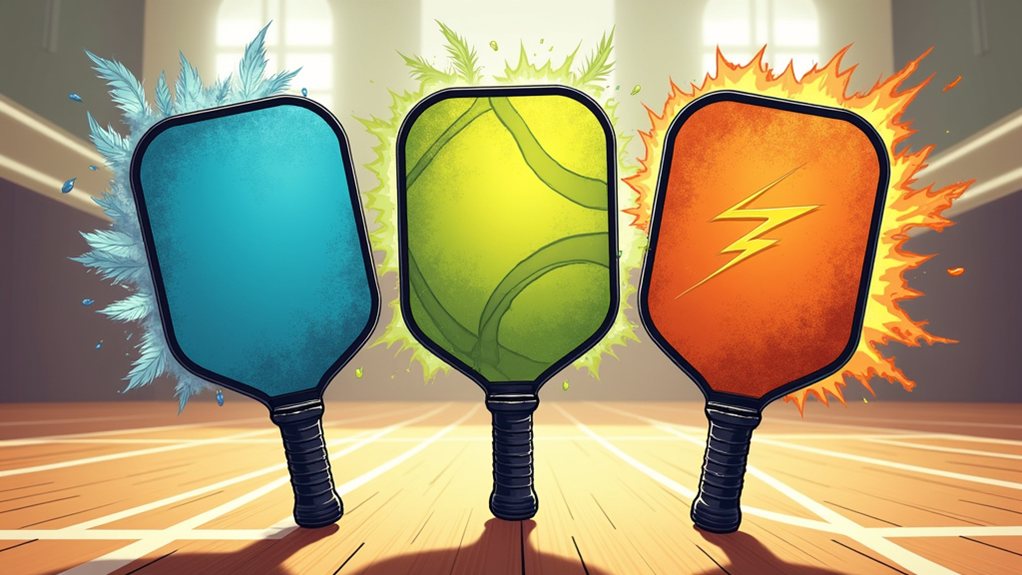
Lightweight paddles under 7.3 oz give you speed and precision for quick net play. Midweight paddles (7.3–8.3 oz) balance power and control for all-court performance. Heavyweight paddles over 8.3 oz provide maximum power and stability.
Test each paddle by holding it for 30 seconds, swinging forehand and backhand, mimicking a serve, and checking fatigue at the net. Find your perfect weight to maximize performance.
Lightweight Paddle Weights: Who Benefits Most and Why
Do you prioritize speed and precision over raw power? If so, lightweight paddle weights under 7.3 ounces deliver the control you need. These paddles excel in three key areas.
- Quick reactions at the kitchen line
- Defensive play and fast exchanges
- Pinpoint accuracy for placement shots
Who benefits most:
- Defensive players who rely on quick returns
- Players with fast hands at net
- Those seeking agility over power
Lightweight paddles offer superior maneuverability. Your reaction time improves. You achieve better ball placement. The trade-off involves moderate power output. Pairing a lightweight paddle with shoes featuring reinforced sidewalls and heel counters helps you maintain the stability needed to fully capitalize on the quick lateral movements this style of play demands.
For players prioritizing speed, control, and precision, lightweight paddles under 7.3 ounces provide the best balance.

Perfect Paddle Size for Your Child: Our kids pickleball paddles are lightweight at 6oz, have a smaller grip size to fit your child's hand, have the ideal dimensions of 13.88" x 7", and are built from the same high-quality materials used in our standard-sized paddles.

USA-Approved Pickleball Paddles for Sanctioned Tournament Play - The niupipo pickleball paddle is made to meet USA standards in core material, surface, size, weight, bounce, hardness, and design; This Pro pickle ball paddle is an excellent choice for World Pickleball Championship, US Open, APP Tour, PPA Tour, Select Medical Orange County Cup, etc.
Midweight vs Heavyweight Paddles: Finding Your Power-to-Control Balance
Now let’s examine midweight and heavyweight paddles. Midweight paddles (7.3-8.3 oz) offer balanced power and control. They provide sufficient heft for serves and deep shots while maintaining forgiveness on off-center hits.
This weight range suits most players and delivers comfortable play during extended sessions.
Heavyweight paddles (more than 8.3 oz) generate maximum power for aggressive shots. They provide highest stability and a dampened feel. These paddles work best for strong players with good conditioning, but they reduce maneuverability and may cause fatigue.
Consider your playing style and physical condition when choosing between these options.
| Feature | Midweight | Heavyweight |
|---|---|---|
| Power | Good balance | Maximum power |
| Control | Versatile | Moderate |
| Best For | All-around play | Power players |
How to Test Paddle Weight Before You Buy?
When testing paddle weight before you buy, hold each paddle for at least 30 seconds to get a true feel. This duration lets your hand experience the full weight impact during actual gameplay moments.
Follow these testing steps:
- Grip the paddle handle firmly. Feel how the weight distributes across your hand and wrist.
- Perform several swing motions. Practice forehands and backhands to gauge maneuverability.
- Mimic a serve motion. Notice if the paddle feels heavy during overhead movements.
- Test at the net. Simulate quick reactions and dinks to assess control.
- Check for fatigue. Hold the paddle in ready position for one minute.
We recommend testing paddles in person rather than online. Visit a local pro shop. Hold multiple weights side by side. Compare at least three different paddles.
Your hand will tell you which weight feels natural. Trust your feel over numbers on a spec sheet.

Massive Sweet Spot: The 3X Power series paddle features a redesigned internal composition for an expanded sweet spot. Helps eliminate vibration and improve shot consistency and control.

Massive Sweet Spot: The 3X Power series paddle features a redesigned internal composition for an expanded sweet spot. Helps eliminate vibration and improve shot consistency and control.

DURABLE, QUALITY PICKLEBALL RACQUETS: A lightweight fiberglass paddle face surface is ideal for those who want power and speed in their hitting and returns, even with a backhand. The wide-body shape creates an ideal surface for spins, slices, and pop on those power shots. The polymer honeycomb core offers an ideal blend of power and precision.
Frequently Asked Questions
Does Paddle Weight Influence Wrist Fatigue During Long Matches?
Yes, heavier paddles increase wrist fatigue during long matches. Your arm muscles work harder with each swing, and added mass accelerates strain. Lightweight paddles reduce fatigue, while heavyweight options cause soreness and decreased performance in extended play.
Can Adding Lead Tape Change a Paddle’s Swingweight Significantly?
A dash of lead tape acts like a secret ballast, instantly boosting your paddle’s swingweight and adding punch to each swing. You’ll feel extra heft, generate more power, and may need to adjust your timing.
Are There Official Weight Restrictions for Tournament Play?
Yes, USAPA sets equipment standards but doesn’t mandate a maximum weight limit. You’ll find most tournaments allow any weight, though some recreational venues restrict paddles to 8.4 ounces or under for player safety and protection.
How Does Paddle Weight Affect the Amount of Spin I Can Generate?
Obviously, heavier paddles don’t magically generate more spin, you’re not rubbing a lamp. Lighter paddles let you brush the ball faster, creating more friction and spin potential.
Will a Heavier Paddle Cause More Strain on My Elbow?
Yes, heavier paddles can strain your elbow, especially if you have joint issues or weak arms. However, they offer dampened feel and superior stability some players find arm-friendly. Test weights to find what works for you.
Final Thoughts
Choose your paddle weight now. You’ll feel the difference in control, power, and endurance. Use this checklist:
- Test a lightweight paddle for reactions.
- Test a midweight paddle for play.
- Test a heavy paddle for drive.
Match the weight to your skill level and court style. Do you want more speed or more force? Pick an 8‑oz, 9‑oz, or 10‑oz paddle still. Check the grip size: 7‑inch, 8‑inch, or 9‑inch options. Decide today.

Comfort & Efficiency: The patented hexagonal design expands the contact surface between hand and handle, increasing grip efficiency by up to 14%. It allows a secure hold with less effort and tension, helping players maintain control and comfort during every shot.

Premium Performance: The leading maker of performance pickleball paddles, balls, and pickleball accessories, ONIX provides players, including national tournament competitors, with the best possible pickleball racquets and balls for their game

PROFESSIONAL QUALITY: Designed by Franklin pickleball pros, this premium quality paddle has been constructed to compete, and win, at the highest level