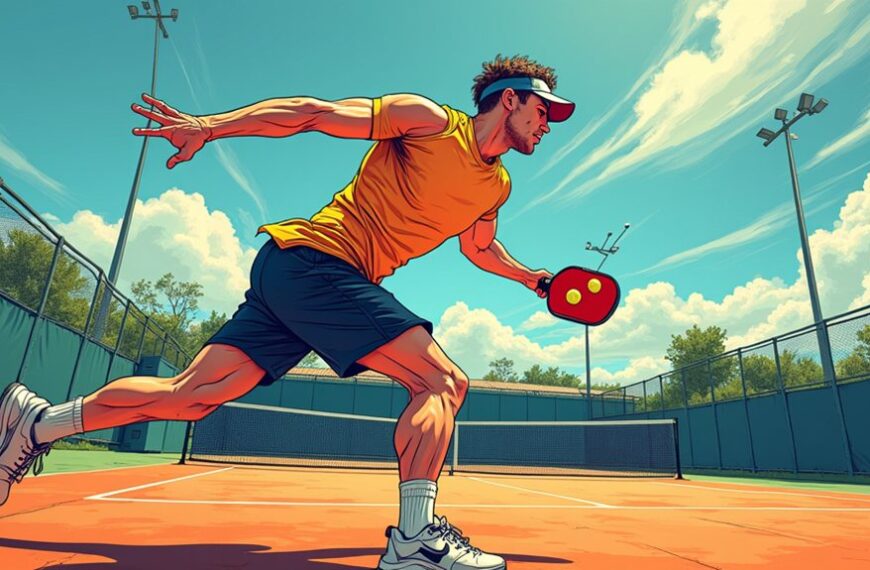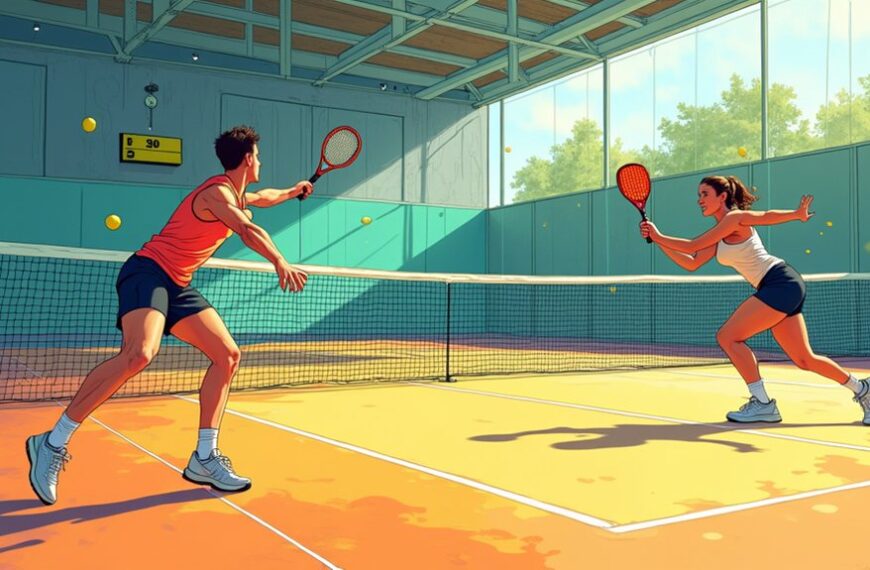
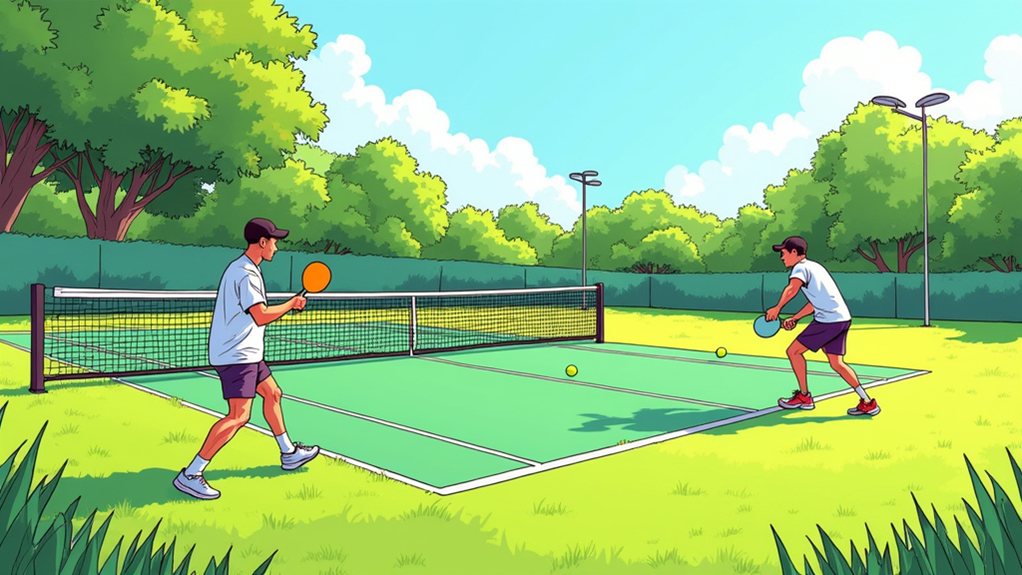
Yes, you can play pickleball on grass if you prepare the surface properly. Mow the grass to 1 inch height across the 20-by-44 foot area. Remove all debris, rocks, and sticks. Fill in low spots and level the ground.
Use a portable net that is 36 inches at the sidelines and 34 inches at center. Choose outdoor wiffle balls and lightweight paddles. Expect slower ball speed and shorter rallies due to grass friction. Use shorter, controlled strokes and focus on placement over power.
Skip grass for official tournaments or USA Pickleball events. We will cover court setup and gameplay adjustments next.
Play Pickleball on Grass: Here’s How to Do It Right
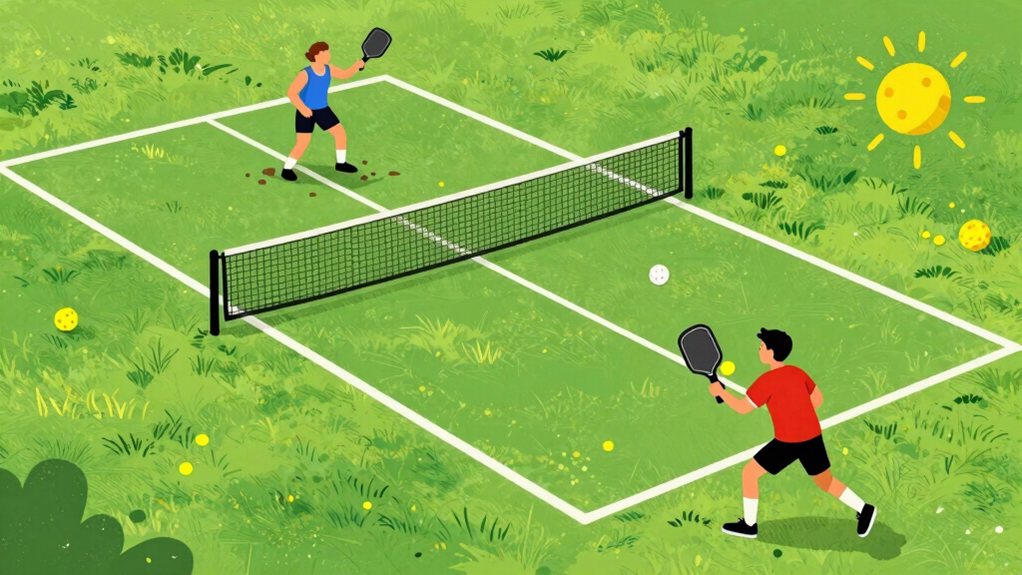
Playing pickleball on grass works well for casual, backyard games with family and friends. Here’s how to do it right.
- Prepare the surface. Mow grass to 1 inch height. Remove divots, bumps, and debris. Choose flat ground with minimal slope.
- Set up your net. Use a portable net with sturdy base. Measure 36 inches at sidelines, 34 inches at center.
- Choose proper equipment. Use outdoor wiffle-style balls. Select lightweight paddles for better control.
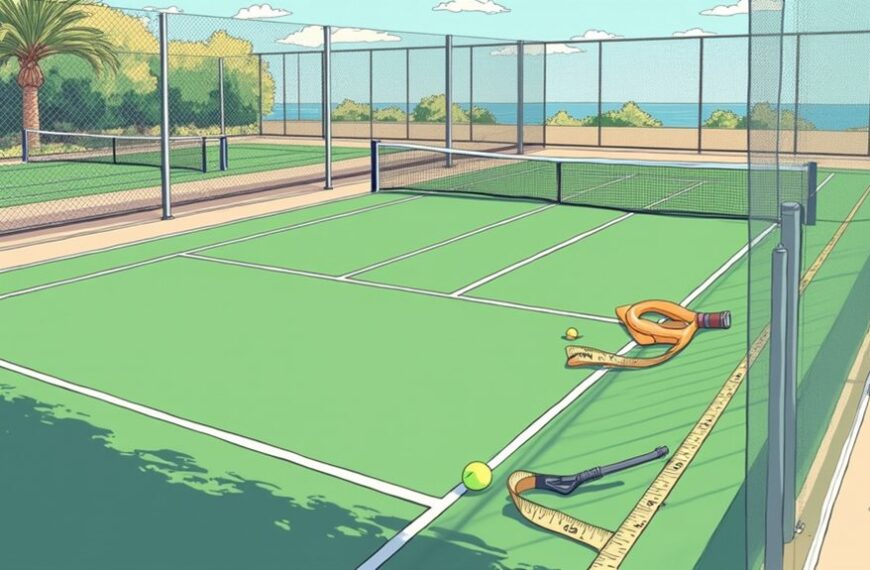
- Mark your court. Use brightly colored string or grass-safe paint. Standard court measures 20 feet wide by 44 feet long.
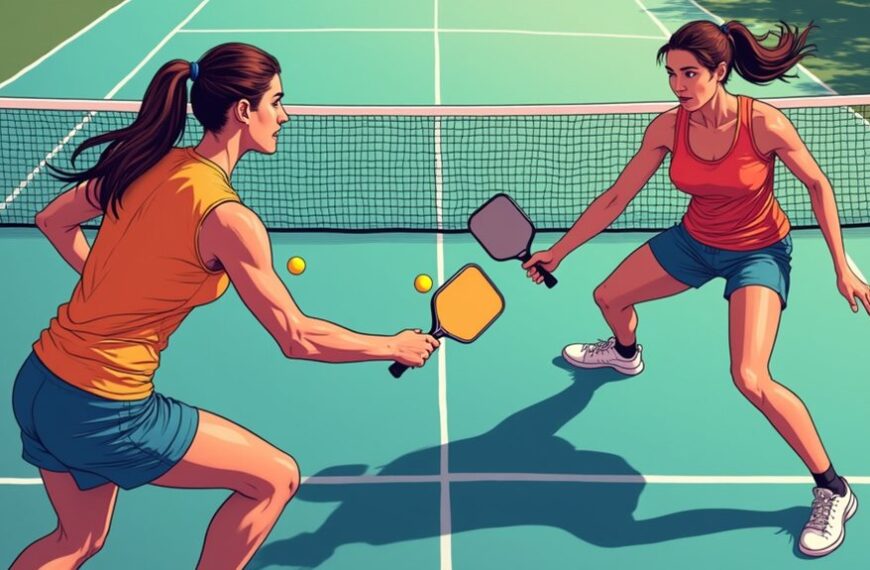
- Adjust your gameplay. Use shorter, controlled strokes. Focus on placement over power. Take smaller steps for balance. Wear supportive shoes with grip, as insoles with firm lateral support help prevent ankle rolling during the side-to-side movements common in pickleball. Avoid playing barefoot.
When Grass Pickleball Works Best: And When to Skip It
While grass pickleball works perfectly for casual backyard games with family and friends, you should skip it if you’re training for competitive play or participating in official tournaments.
Grass works best for family reunions, weekend relaxation, park gatherings, picnic activities, and casual neighborhood play. You should skip grass when you need consistent ball bounce, official scoring matters, you’re developing tournament skills, hard court training is required, or USA Pickleball rules apply.
| Best Uses | Skip When |
|---|---|
| Family fun | Competitive training |
| Casual play | Tournament events |
| Picnic games | Official matches |
| Neighborhood gatherings | Skill development |
| Relaxation sessions | Rule compliance |
We recommend grass only for recreational sessions. Competitive players must use hard surfaces for proper skill development.
Prepare Your Grass Court for Pickleball Play
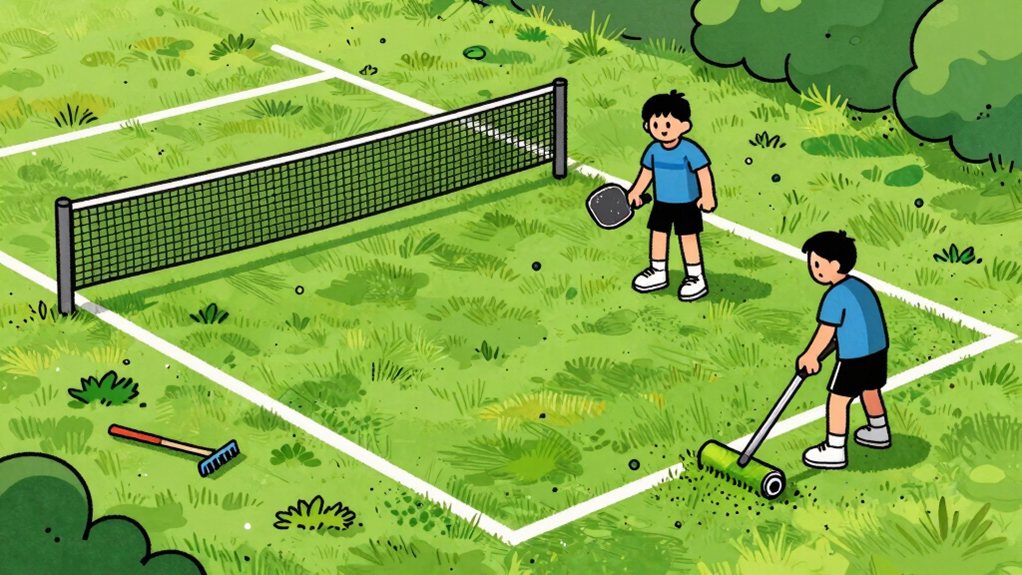
Now that you’ve selected grass for your pickleball game, you must prepare the surface properly for safe play. You need to mow the grass to approximately 1 inch in height. Remove all rocks, sticks, and debris from the playing area.
Fill any divots or low spots with soil and compact the ground. Make sure the surface is level with minimal slopes. Check that the area drains well to prevent water from pooling.
Prepare your court with these important steps:
- Mow grass to a consistent 1-inch height across the entire 20-by-44-foot playing area
- Level the ground by filling low spots and compacting soil to create a steady surface
- Clear all debris, including rocks, sticks, and branches that could cause injury
- Verify proper drainage to prevent water from pooling and creating uneven conditions
Brightly colored string or grass-safe, water-based spray paint marks your boundaries clearly. A flat, well-drained court reduces injury risk and provides more consistent ball bounce.
Choose the Right Equipment for Grass Courts
Because grass reduces ball speed and creates uneven bounce, you need equipment designed specifically for this surface. Select gear that works with natural grass.
| Equipment | Best Choice for Grass |
|---|---|
| Ball | Outdoor wiffle-style ball |
| Paddle | Lightweight control paddle |
| Net | Portable net with sturdy base |
| Shoes | Supportive shoes with grip |
| Markers | Water-based spray paint |
Select outdoor wiffle-style balls with rough surfaces. These balls provide better traction and consistent bounce on grass. Choose lightweight paddles that offer control over power. Your net must include a sturdy base designed for uneven surfaces.
Wear supportive shoes with decent grip to prevent slipping. Use water-based, grass-safe spray paint for court lines.
Adjust Your Gameplay Strategy for Grass Surfaces
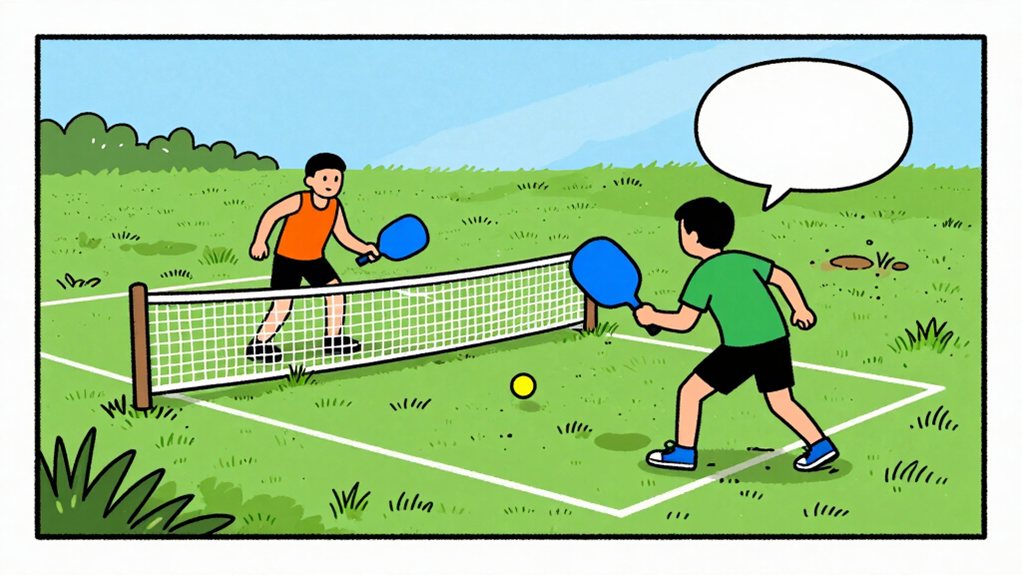
When you play pickleball on grass, you must adjust your gameplay strategy to compensate for the surface. Use short controlled swings, focus on placement over power, and make footwork adjustments by taking smaller steps to maintain balance on the soft ground.
These changes will help you adapt to grass conditions and keep rallies going.
Short Controlled Swings
Grass surfaces slow the ball down significantly. You must adapt your swing technique for grass courts. Use short, controlled strokes instead of full swings. This approach prevents wasted energy and improves accuracy.
Here’s how to master short controlled swings:
- Keep your backswing minimal; swing only 6 to 12 inches behind the ball
- Contact the ball at waist height with a compact motion
- Follow through briefly, stopping at about 12 inches past contact
- Focus on pushing the ball rather than hitting it aggressively
You will notice faster reaction times and more consistent contact. Practice these adjustments during warm-ups. Your game improves when you trust the shorter swing on grass surfaces.
Placement Over Power
Once you master short controlled swings, your strategy must shift to placement over power. Grass reduces ball speed dramatically. You must rely on precise shots rather than raw strength.
Key strategic changes:
- Target corners and sidelines instead of hitting hard
- Use angles to force opponents out of position
- Play dinks and drops close to the net
- Wait for short bounces and attack with placement
- Avoid lob shots that give opponents time to recover
The softer surface absorbs your power. Your precision becomes your weapon.
You control points by placing the ball where opponents struggle to move. Short, smart shots win rallies on grass.
You build point success through placement rather than velocity.
Footwork Adjustments
Because the soft ground shifts beneath your feet, you’ll take smaller steps to maintain balance and avoid ankle strain. This change feels awkward at first, but your body adapts quickly with practice. We adjust our movement patterns to suit the surface beneath us.
- Shorten your stride length by about 50% compared to hard court movement
- Keep your knees slightly bent throughout each rally
- Land softly on the balls of your feet when moving
- Shift your weight gradually instead of making quick lateral cuts
Your feet must stay light and responsive. You can’t rely on the firm, consistent footing that concrete provides. Focus on controlled, measured movements that protect your joints while maintaining your ability to reach the ball.
Why the Ball Bounces Differently on Grass
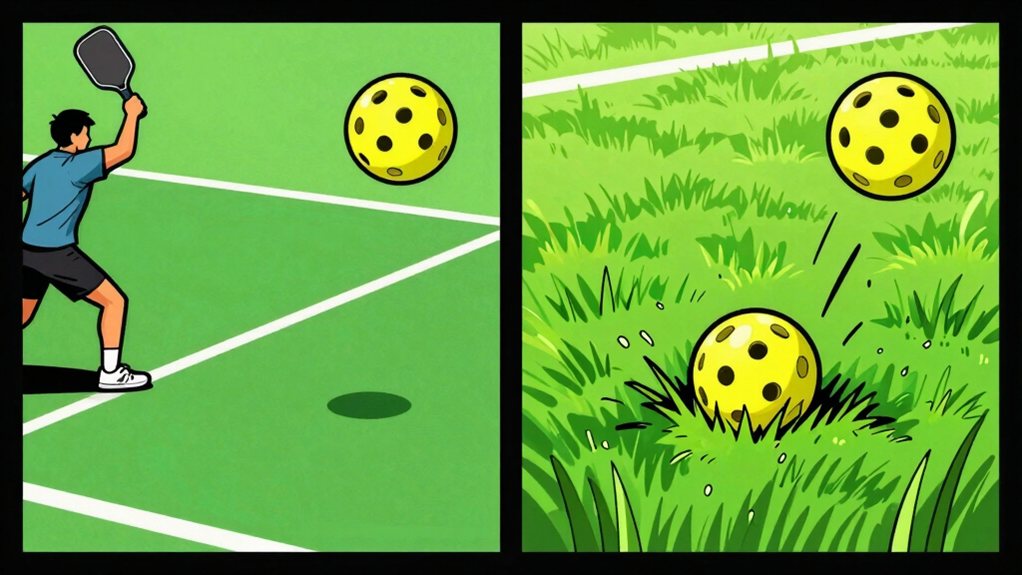
When you play on grass, the surface creates friction that slows the ball down as it contacts the ground.
The uneven nature of grass causes the ball to bounce unpredictably, making consistent rallies difficult.
Additionally, the softer ground absorbs energy, which dampens ball velocity and prevents the ball from rising to proper heights.
Grass Surface Friction
Grass surfaces generate considerable friction that disrupts ball movement. The blades of grass grab the ball and slow it down as it contacts the ground.
You notice this immediately when your shots land shorter than expected.
The ball loses momentum quickly on grass, which changes how you play each rally.
This friction affects your game in several ways:
- Your serves travel shorter distances and drop faster
- Dinks lose energy and struggle to clear the net
- Third-shot drops require more power to reach the kitchen line
- Balls may kick up grass debris during play
We recommend using outdoor-specific balls designed for rough surfaces.
These balls have thicker walls and resist damage from grass contact. You must adjust your shot selection to account for the increased drag.
Expect rallies to end sooner than on hard courts.
The friction makes it harder to maintain long baseline exchanges.
Uneven Ground Impact
While friction slows the ball, uneven ground causes the ball to bounce at unpredictable angles. Natural grass surfaces contain subtle bumps, low spots, and divots that alter ball trajectory mid-bounce.
Key problems you face:
- Bare spots create dead spots where the ball stops completely
- Mole holes or animal burrows cause the ball to jump sideways
- Slight slopes send the ball rolling toward one side
- Wet grass clumps cause inconsistent bounces
You must inspect the court before play. Walk the entire 20-by-44 foot area and press any soft spots with your foot. Mark all hazards with small flags or cones.
When rallies occur, you adjust your stance quickly. Expect the ball to deviate 6 to 12 inches from expected paths. Your reactions must stay sharp throughout each point.
Ball Velocity Dampening
The softer ground on grass acts like a cushion, causing the ball to slow down much faster than on concrete or asphalt.
You feel the ball drop quickly after it hits the ground. The bounce stays low, and you struggle to get the ball up to normal height.
This changes how you play each shot.
You must adjust your game when the grass slows the ball. Consider these effects:
- The ball loses speed on contact, reducing your power shots
- You experience shorter rallies due to quick ball deceleration
- Your returns land shorter, giving opponents less time to react
- You notice inconsistent bounces that disrupt your timing
You adapt by using shorter strokes and focusing on placement over power. Your strategy shifts from speed to accuracy.
Frequently Asked Questions
How Much Does It Cost to Set up a Grass Pickleball Court?
A basic grass court costs you $80-200 total: $50-150 for a portable net, $20-40 for grass-safe paint or string, and $10-25 for outdoor balls. You’ll need your own paddles.
Can You Play Pickleball on Wet Grass Without Slipping?
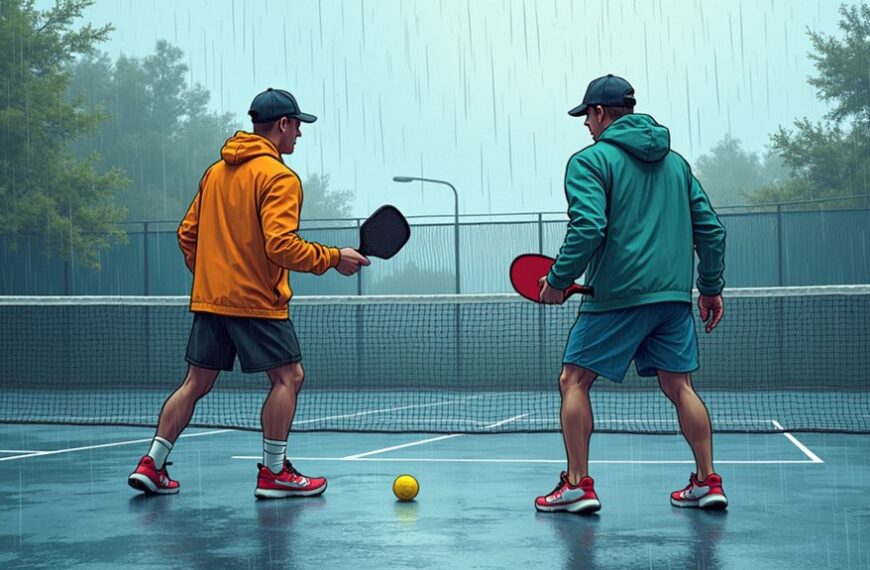
You can play on wet grass, but you’ll slip often. Wear shoes with excellent traction, avoid aggressive movements, stay low, and take smaller steps. Consider waiting for the grass to dry completely for safer play.
What Type of Shoes Are Best for Playing on Grass?
Picture yourself gliding across the green, your feet anchored by sturdy, grippy shoes. You want supportive sneakers with excellent traction and ankle stability, avoid barefoot play to protect yourself from uneven ground hazards and injuries.
Will Playing on Grass Damage the Lawn Over Time?
You’ll cause lawn damage over time from foot traffic, ball impact, and net placement. High-traffic zones near baselines and service boxes wear first. Rotate court position regularly to prevent permanent bare spots and grass death.
Do You Need a Permit to Set up a Public Grass Court?
You may also need a permit from your local parks and recreation department or city council. Requirements vary by jurisdiction, and some public spaces require additional insurance or approval for organized sports use on that land.
Final Thoughts
Finish your session with these actions:
- Remove all balls and nets.
- Check boundary lines for damage.
- Store nets in a dry place.
Example: Last summer a community in Dayton set up your beautiful grass court for a weekend tournament. Players reported fewer injuries and enjoyed the natural feel. The event drew 40 participants, and we’re planning a monthly league. Follow these steps and you’ll keep your court safe and playable all season.