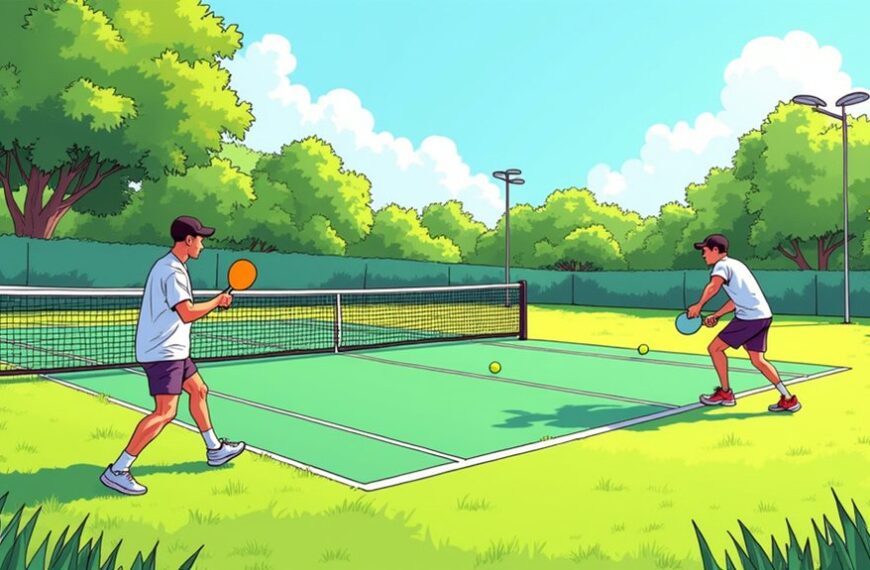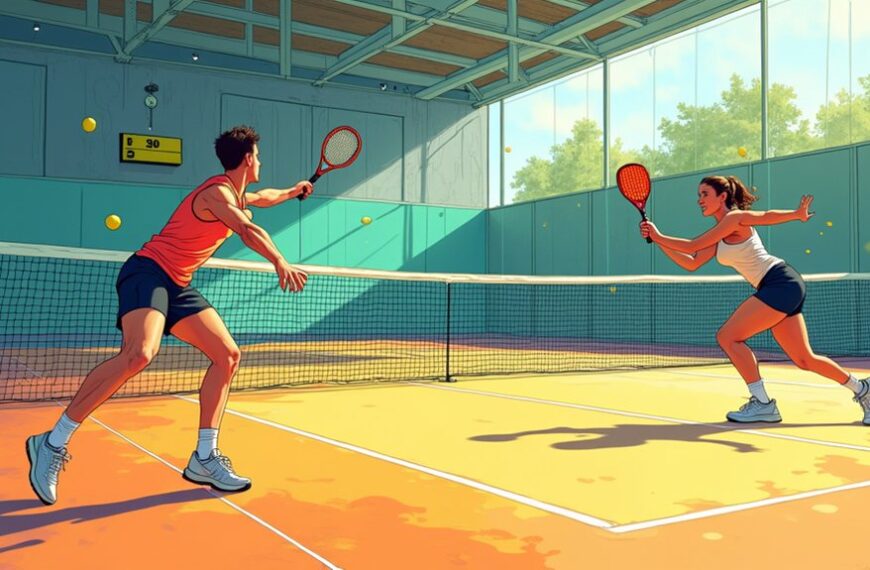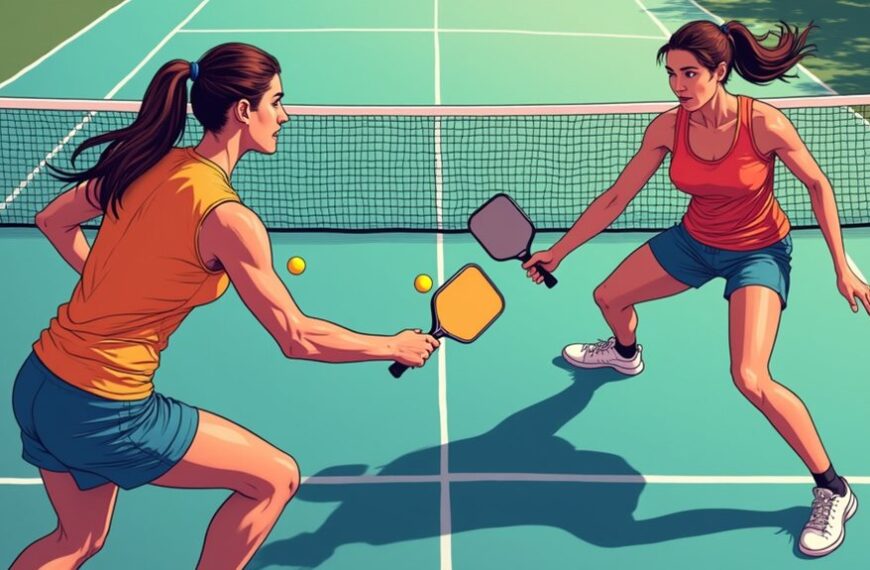
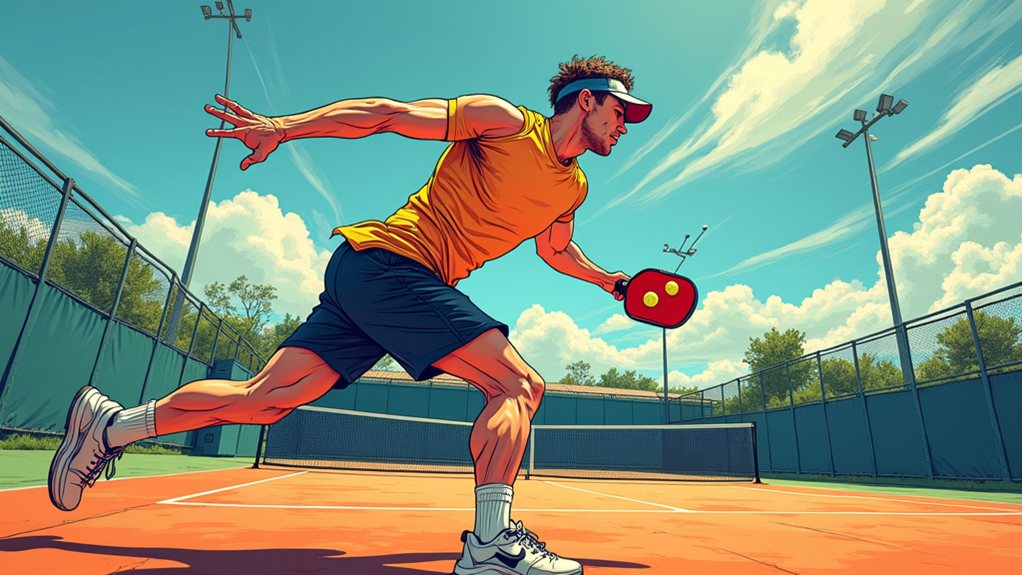
Start with feet shoulder-width apart. Bend knees 15-20 degrees. Rotate hips, shoulders, and non-dominant arm together as one unit. Keep non-dominant arm extended toward target throughout swing. Contact ball in front of body. Let body momentum generate force instead of arm. Lock wrist at contact point. Follow through with full rotation. This unit turn creates effortless power and consistency. For additional techniques and drills to further develop your rotational power, continue exploring the available resources.
How Does Body Rotation Transform Your Pickleball Power?
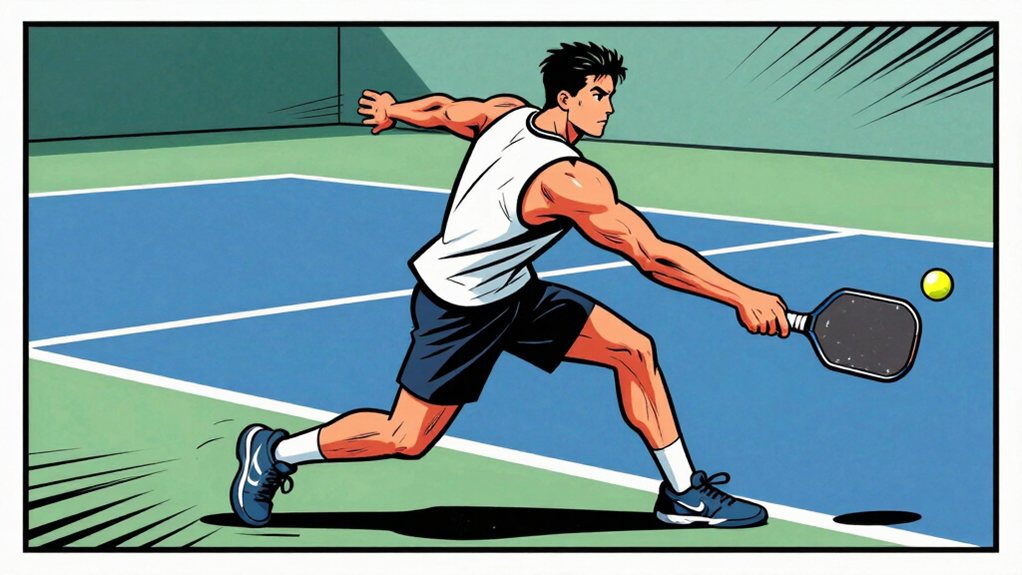
Ever wonder how some players generate effortless power while you struggle? The answer lies in pickleball core rotation and pickleball body mechanics. Your hips, shoulders, and non-dominant arm must rotate together as one unit. Avoid isolating your arm for power generation.
Effortless power comes from core rotation—let your hips, shoulders, and non‑dominant arm move as one.
Here is the transformation process:
- Engage your legs first, then transfer momentum through your core
- Keep your arm relaxed throughout the swing
- Let your body momentum generate the force
- Contact the ball in front of your body
- Follow through with complete rotation
The result? You produce more pace with less effort. Your shots become consistent. You stop relying solely on arm strength. The key to generating power in pickleball is body integration, not arm tension. Practice this connection daily.

Superior Control and Power: Experience the perfect blend of power and control with our carbon fiber pickleball paddle. Designed for players of all levels, this paddle offers a large sweet spot for accurate shots and a comfortable grip for long-lasting play.

【Continuous Rebound】- Pickleball trainer enhances stroke hand feeling, paddle control, reaction speed and hand-eye coordination to enjoy an extraordinary training experience.

🎯 MASTER THE SWEET SPOT WITH PURPOSE-BUILT TRAINING - This compact pickleball trainer is intentionally designed with a reduced hitting surface to sharpen accuracy, improve hand-eye coordination, and build consistent clean contact. Unlike standard paddles, this focused pickleball training equipment forces better mechanics that transfer directly to real match play.
Mastering the Unit Turn for Effortless Pickleball Shots
Now that you see how body rotation transforms your power, you must master the unit turn itself. The unit turn synchronizes your hips, shoulders, and non-dominant arm into one rotating unit. This eliminates arm-only power and creates effortless momentum.
- Start with your feet shoulder-width apart
- Rotate your hips and shoulders together in one motion
- Point your non-dominant arm toward your target throughout the swing
Practice these steps until the motion feels natural. Your paddle follows your body’s rotation rather than leading it.
Keep your grip relaxed throughout the turn.
The unit turn works on every shot you play. Your non-dominant arm creates balance and direction. Master this foundation and your pickleball game transforms.
Using Rotational Power in Pickleball Ground Strokes and Drives
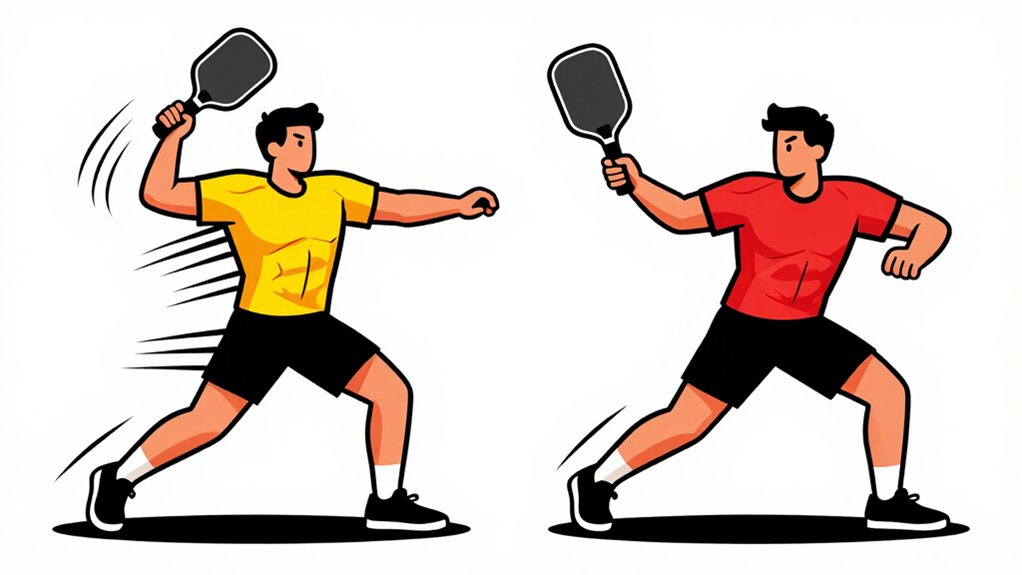
Because your body generates more power than your arm alone, you should focus on rotational power for ground strokes and drives. Follow these steps to develop rotational power:
Use your whole body, not just your arm, to generate rotational power for devastating ground strokes and drives.
- Start with your feet shoulder-width apart
- Rotate your hips and shoulders together as one unit
- Keep your non-dominant arm extended toward the ball
- Let your body momentum do the work
- Contact the ball in front of your body
- Follow through with full rotation
Key points to remember:
- Keep your arm relaxed throughout the swing
- Shift your weight from back foot to front foot
- Engage your core muscles during rotation
- Maintain a compact backswing for quick recovery
Practice these techniques daily. Your ground strokes will gain more pace and consistency.
The rotational power comes from your legs, hips, and core, not your arm. You’ll feel the difference immediately.
Body Rotation for Pickleball Putaways and Overheads
When you approach the kitchen line for putaways and overheads, the same unit turn mechanics you use in ground strokes apply here. You rotate your hips, shoulders, and non-dominant arm together as one unit. This creates effortless power without arm strain. You stay loose at the kitchen line and let your body generate the force.
Here are three key elements for proper putaway rotation:
- Keep your feet planted in an open stance, positioning your body sideways to the net.
- Allow your loose arm to follow the rotational momentum, guiding your swing naturally.
- Contact the ball in front of your body, transferring your weight through your legs and core into the shot.
The overhead follows identical mechanics. You position yourself beneath the ball and rotate your body through the swing.
Common Technique Errors to Avoid in Pickleball
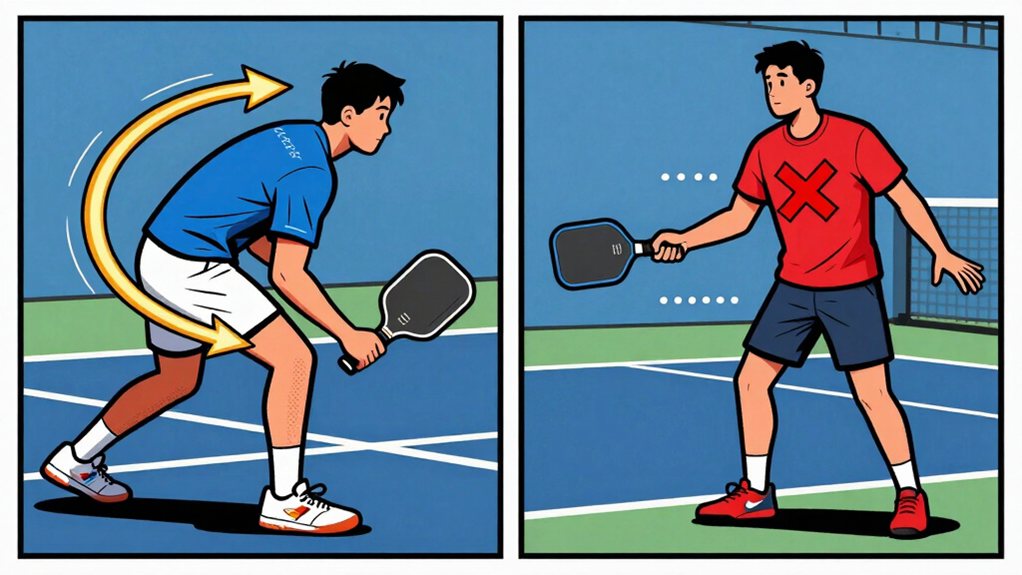
Watch for these three common technique errors that reduce your power and control. You likely use an excessive wrist flick, rely on an arm dominant swing, or skip the leg bend in your strokes.
We’ll examine each error and show you how to fix it.

Retractable Click Feedback System: Features an innovative click mechanism that provides instant auditory feedback to help you develop proper swing technique and timing for pickleball

Swing Mechanics & Timing Development: Master consistent dinks, volleys, and groundstrokes with repetitive ball contact. This trainer builds compact swing paths and accelerates muscle memory through instant rebound feedback. Adjust pulley height (3-12ft) for serve practice, overhead smashes, or wheelchair-level drills. Helps correct late hits and footwork errors
Excessive Wrist Flick
The excessive wrist flick stands as one of the most damaging mistakes in your pickleball strokes. When you flick your wrist at contact, you destabilize the paddle face and lose control. This error removes the stable platform your body creates through proper rotation and timing.
Your strokes suffer in three key ways:
- You sacrifice accuracy because the paddle face opens and closes unpredictably
- You generate less power since wrist flicking breaks the kinetic chain from your core
- You increase error rate as the ball flies beyond intended targets
Fix this by locking your wrist position at contact. Maintain a firm wrist throughout the entire swing. Let body rotation drive the paddle through the ball. Trust your core to produce the power you need consistently.
Arm Dominant Swing
An arm dominant swing undermines your power and consistency in pickleball. You rely on your arm instead of rotating your body. This creates weak shots and inconsistent contact points. Your arm fatigue sets in quickly during long rallies.
Common problems with arm dominant swings:
- Your paddle face stays open or closed at impact
- You generate no core momentum for power
- You over-swing with your arm and lose control
- You can’t sustain pace across multiple shots
Fix this by:
- Rotate your hips and shoulders together
- Keep your arm loose and relaxed during contact
- Let your body carry the paddle through the swing
- Practice unit turns without touching the paddle
Your body generates more power than your arm ever can.
Missing Leg Bend
Alongside arm dominance, another major error is missing leg bend in your pickleball technique. You lose power and stability when you stand tall throughout your swing. Your legs store energy that transfers into every shot. Bend your knees slightly before contact.
This creates a coil that unwinds through your body.
- Keep your knees bent at approximately 15-20 degrees throughout your swing.
- Push off from your back foot during the forward swing motion.
- Rise up through your legs as you make contact with the ball.
This gives you a stable base. You generate power from the ground up. Your shots become more consistent and powerful.
Pickleball Drills to Build Rotational Power
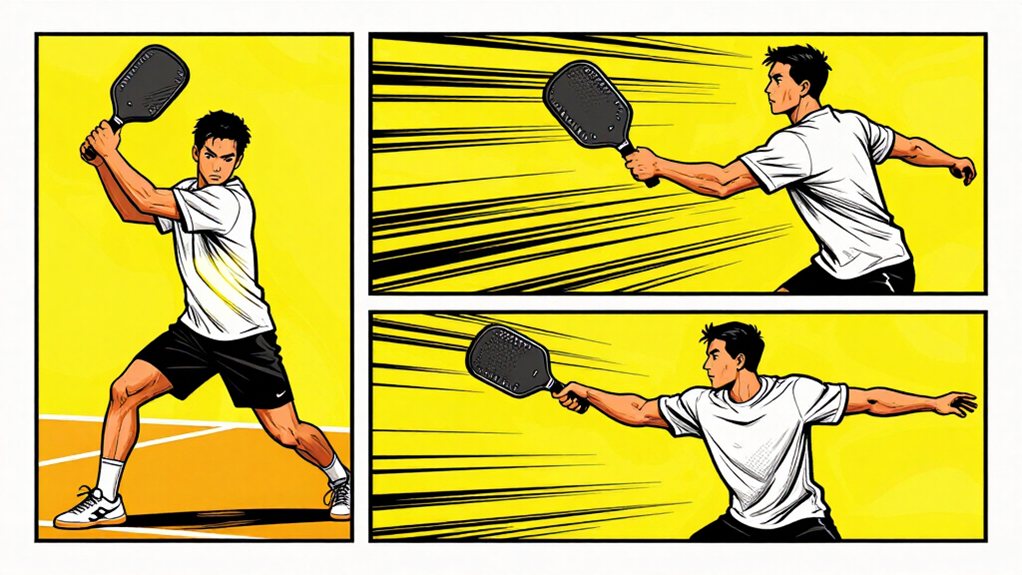
As you develop rotational power in pickleball, incorporate specific drills that train your hips, shoulders, and non-dominant arm to turn as one unified unit.
Shadow swings: Stand in ready position. Rotate hips and shoulders together as one unit. Let your arm relax and follow the body naturally. Do 20 slow repetitions per side. Focus on the feeling of turning your whole body.
Paddle-on-head rotations: Place your paddle flat on top of your head. Rotate your entire body as one unit. Keep your core engaged throughout. Complete 15 slow rotations to each side. Feel your non-dominant arm swing naturally with your body.
Partner feed drill: Have your partner feed balls slowly to you. Focus on turning your body before your arm moves. Keep your paddle face stable at contact. Hit 30 balls while maintaining unit turn. Rest for 30 seconds between sets.
Turn your body before your arm moves. Keep your paddle face stable at contact. Hit 30 balls while maintaining unit turn.
Wall drill: Stand three feet from a solid wall. Hit against it with controlled rotation. Count 20 hits while keeping your body connected. Use medium pace for best feel.
Practice these drills regularly for best results.
Frequently Asked Questions
How Does Body Rotation Improve My Serve in Pickleball?
Body rotation generates serve power by transferring momentum from your legs through your core to the paddle. You’ll engage your hips and shoulders together, creating effortless pace while you maintain control and accuracy over your serve.
What Core Exercises Best Support Rotational Power for Pickleball?
A strong core is your secret weapon for rotational power. You need wood choppers, Russian twists, medicine ball slams, and bicycle crunches to build that lightning-fast hip rotation you want on every powerful shot.
Can Excessive Body Rotation Cause Injury in Pickleball?
Yes, excessive body rotation can cause injury in pickleball. You risk back, shoulder, and knee strains when you over-rotate. You should maintain controlled rotation and warm up properly to protect your joints.
How Does Hip Mobility Affect Effective Unit Turn in Pickleball?
Hip mobility determines your unit turn’s range and power. Limited hips restrict rotation, forcing arm compensation. Flexible hips let your body generate momentum effortlessly, creating unified rotation that drives all pickleball shots with control.
Should I Adjust My Rotation for Different Grip Styles in Pickleball?
Should you modify your unit turn for each grip? No, rotate your hips, shoulders, and arm together regardless of grip. The principle stays the same, your body generates power while your grip controls the paddle face.
Final Thoughts
Apply these body rotation principles in every practice session. You will feel power increase in your shots. Your arm will tire less.
We recommend starting with 10 unit turns per day. Stand with feet shoulder-width apart. Rotate hips first, then shoulders, then arms.
Think of your body like a whip cracking in sequence. Practice this motion until it feels natural. Your pickleball game will reach new levels.

The Original!! Pickleball's #1 Award Winning Trainer! Great for children too! Just adjust the string length and they'll have a blast playing Pickleball! Includes a 15 minute instructional video!

【Continuous Rebound】- Pickleball trainer enhances stroke hand feeling, paddle control, reaction speed and hand-eye coordination to enjoy an extraordinary training experience.

【Enhance Your Pickleball Reaction & Precision】Pikkofun React Mini Balls in a 1.65-inch compact size, are designed to sharpen your skills by promoting quicker reactions and improved hand-eye coordination. Ideal for activating and refining your focus through daily practice or pre-game warm-ups.