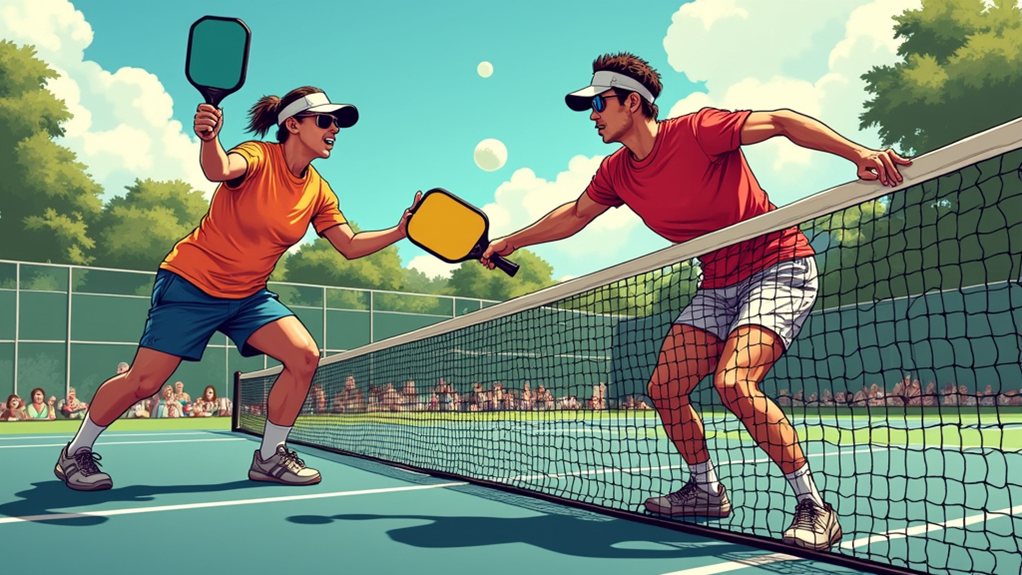
1. Forehand dink rally: stand at kitchen line, use continental grip, hit soft low balls for 10 minutes. 2. Backhand dink: switch to backhand side, keep body sideways, use short controlled swings for 5-10 minutes. 3. Cross-court precision: stand diagonally, aim at specific court areas, keep ball low. 4. Figure 8 pattern: hit diagonally to partner’s outside foot, receive straight return, maintain rhythm. 5. Battleships drill: use cone targets at feet, focus on low trajectory. 6. Third shot drop: practice soft contact landing in non-volley zone. Master these drills for consistent net play and precision.
Master the Forehand Dink Rally for Consistent Net Play
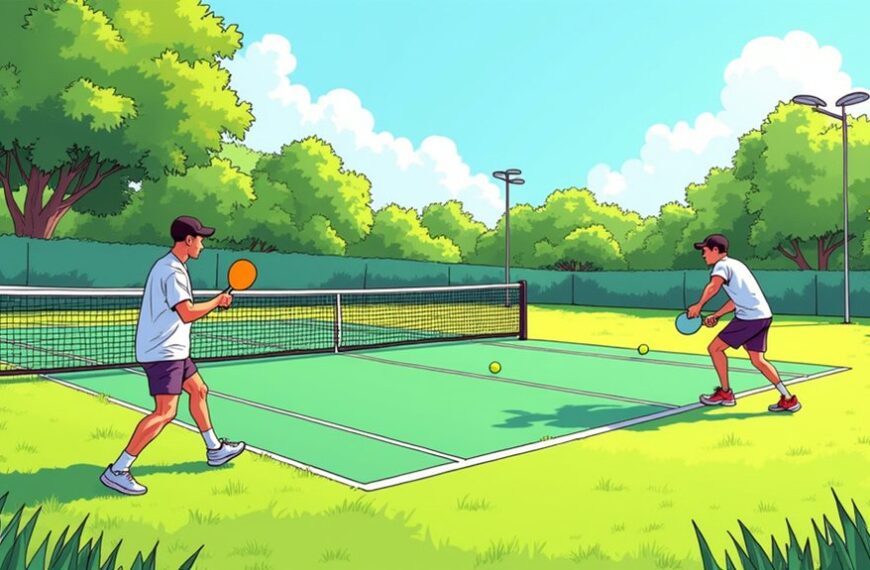
To begin, stand at the kitchen line opposite your partner. This starting position is critical for forehand dink practice.
- Hold your paddle with a continental grip.
- Keep your knees slightly bent.
- Start a forehand-to-forehand dink rally with your partner.
- Hit the ball softly over the net.
- Keep the ball low.
- Keep the ball close to the net.
- Maintain a steady pace.
- Maintain consistent height.
- Focus on control.
- Develop rhythm with your partner.
Focus on consistency. Avoid aggressive swings. Use your wrist for soft touch. The ball must clear the net by a few inches.
Your goal is a steady exchange. Repeat the rally for ten minutes. Build trust with your partner through repeated practice. Keeping your racket head up with elbows slightly bent throughout play allows for quicker reactions when your opponent changes the pace or direction of the ball.

2-in-1 Versatility: Rebounder Net + Mini Practice Net – Transform your training with our innovative 6FT system that functions as both a high-tension rebounder for solo...
Build Backhand Confidence With Backhand Dink Drills
Once you’ve mastered the forehand dink, we can now focus on building your backhand confidence. The backhand dink rally drill transfers your forehand skills to your weaker side.
Once you’ve mastered the forehand dink, build backhand confidence with a focused dink rally drill.
Stand at the kitchen line, facing your partner. Switch to backhand-to-backhand exchanges. Keep the ball low and close to the net. Maintain a steady pace and height over the net. This drill improves backhand dinking skills and footwork.
Practice these key points:
- Position your body sideways to the net.
- Hold your paddle in front.
- Use short, controlled swings.
- Keep your wrist firm.
- Step into each shot with your front foot.
Repeat the drill for 5 to 10 minutes daily. Focus on consistency and soft touch. Your backhand will develop equal confidence with your forehand through repeated practice.
Add Cross-Court Precision to Your Dinking
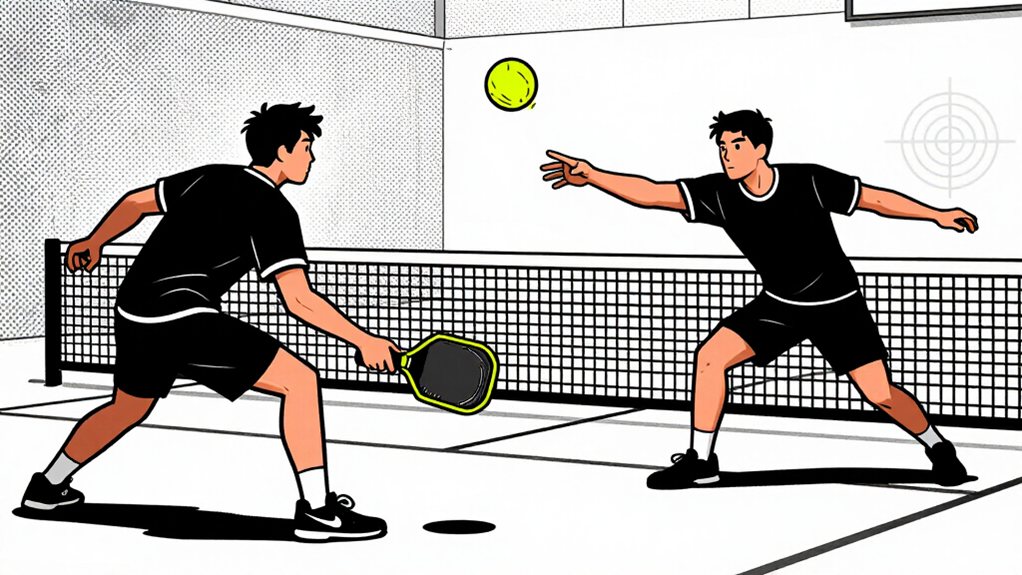
As you advance in your dinking game, adding cross-court precision will make you a more complete player. This drill targets your accuracy and court placement.
Setup:
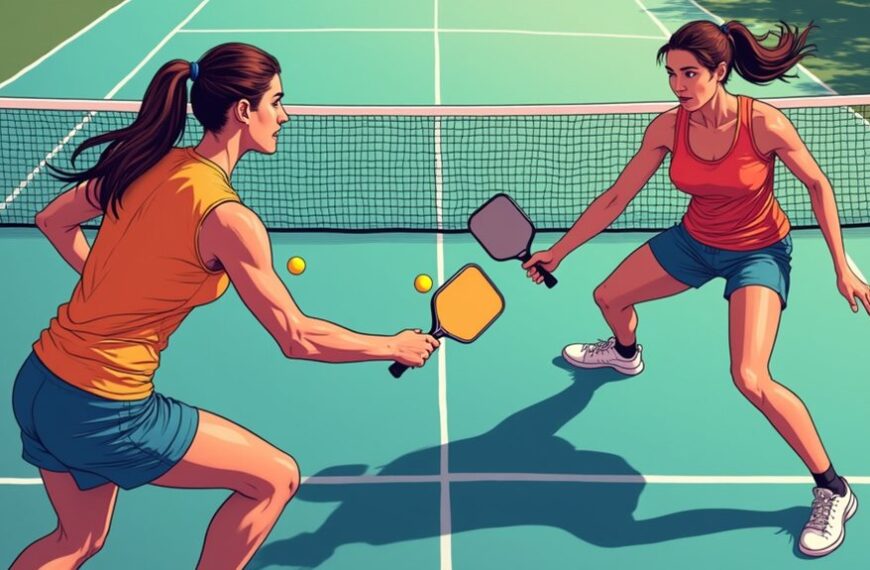
- Stand diagonally across from your partner at the kitchen line.
- Position yourself opposite your partner’s position.
Execution:
- Alternate between forehand and backhand shots.
- Hit the ball cross-court to your partner.
- Keep the ball low over the net.
- Aim for specific court areas to improve precision.
- Maintain a steady pace with your partner.
Focus points:
- React quickly to your partner’s shots.
- Keep your wrists firm.
- Land the ball in the non-volley zone.
- Control your swing speed.
This drill develops your ability to place shots intentionally. You’ll improve anticipation and court awareness.
Practice this drill daily for best results.
Master the Figure 8 Dink Drill Pattern
The Figure 8 Dink Drill develops control in multiple directions and builds consistency while changing shot angles.
Position yourself at the kitchen line opposite your partner. You hit diagonally to your partner’s outside foot. Your partner returns the ball straight back to you. This creates a figure 8 pattern on the court.
Drill steps:
- Start with forehand to forehand
- Alternate hit locations between outside and inside feet
- Keep the ball low over the net
- Maintain a steady rhythm
- Progress to backhand side after mastering forehand
You control pace and spin as your skill grows. This drill sharpens directional changes and improves court coverage.
Use the Battleships Drill for Target Accuracy
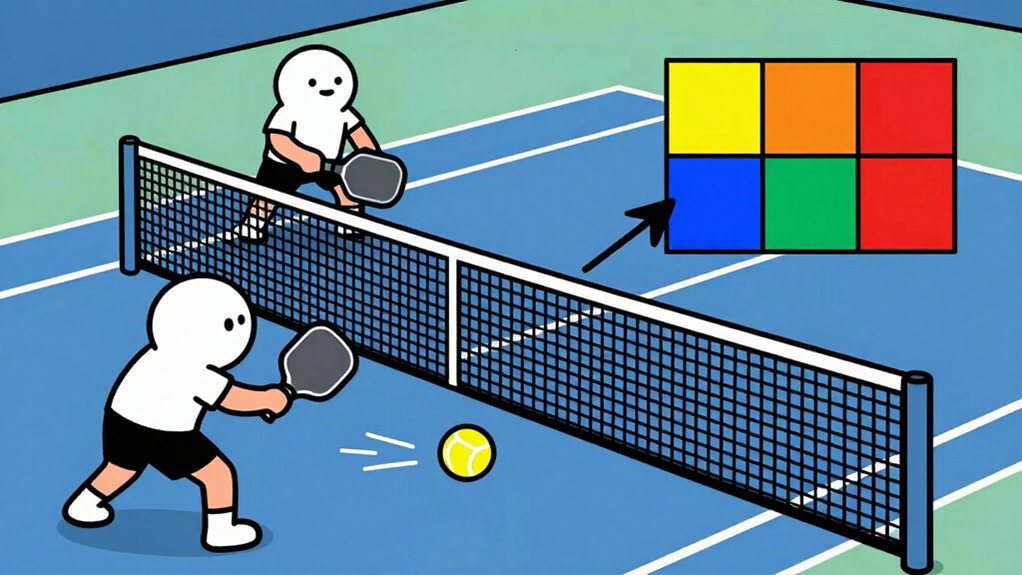
Your accuracy improves when you practice the Battleships Drill. This drill uses cones to create targets on both sides of the court. You aim at specific spots just outside the kitchen line.
Steps to set up:
- Place orange cones at outside feet on each side.
- Place green cones at inside feet on each side.
- Stand at kitchen line opposite your partner.
- Hit cross-court dinks toward the cones.
- Start with orange targets, use green as bailout.
| Court Side | Target Zone | Cone Color |
|---|---|---|
| Left | Outside foot | Orange |
| Left | Inside foot | Green |
| Right | Outside foot | Orange |
| Right | Inside foot | Green |
| Both | Center bailout | Green |
Focus on low trajectory and soft landing. Your goal is hitting the cone consistently before adding pace. This builds precision for match situations.
Improve Your Footwork at the Kitchen Line
You need to improve your footwork at the kitchen line to become a more effective dinker. We’ll focus on step quickness drills and pivot and balance, two key components that keep you agile and stable during net play.
Practice these elements consistently, and you’ll notice quicker reactions, seamless transitions, and greater control over your dink shots.
Step Quickness Drills
Developing fast, precise footwork at the kitchen line gives you better court coverage and reaction time during dinking exchanges. You need quick steps to move laterally and diagonally when your opponent changes dink angles.
Practice lateral shuffles along the kitchen line for 30 seconds, then rest for 15 seconds. Complete 4 rounds total.
| Drill Name | Duration |
|---|---|
| Lateral Shuffle | 4×30 sec |
| Diagonal Step | 3×20 sec |
| Split Step | 4×10 reps |
| Crossover Drill | 3×15 sec |
| Reaction Step | 4×12 reps |
Perform diagonal steps by stepping forward and back toward each corner. Keep your knees bent and your weight centered.
Your partner feeds random dinks to your left, right, and center. You react quickly to each shot. This builds muscle memory for real game situations.
Pivot And Balance
At the kitchen line, pivot and balance drills sharpen your ability to move easily between shots. You need a wide, athletic stance. Your knees stay bent. Your weight stays centered.
This prepares you for quick direction changes.
Practice these key elements:
- Rotate your hips while keeping your shoulders level.
- Transfer your weight from back foot to front foot on each shot.
- Keep your feet shoulder-width apart for stability.
- Step with the ball of your foot, not your heel.
Drill this pattern for 30 seconds, then rest for 15 seconds. Perform 4 sets total. Your balance improves through repetition. You develop muscle memory for fast exchanges at the net.
Develop Soft Hands With Controlled Pace Drills
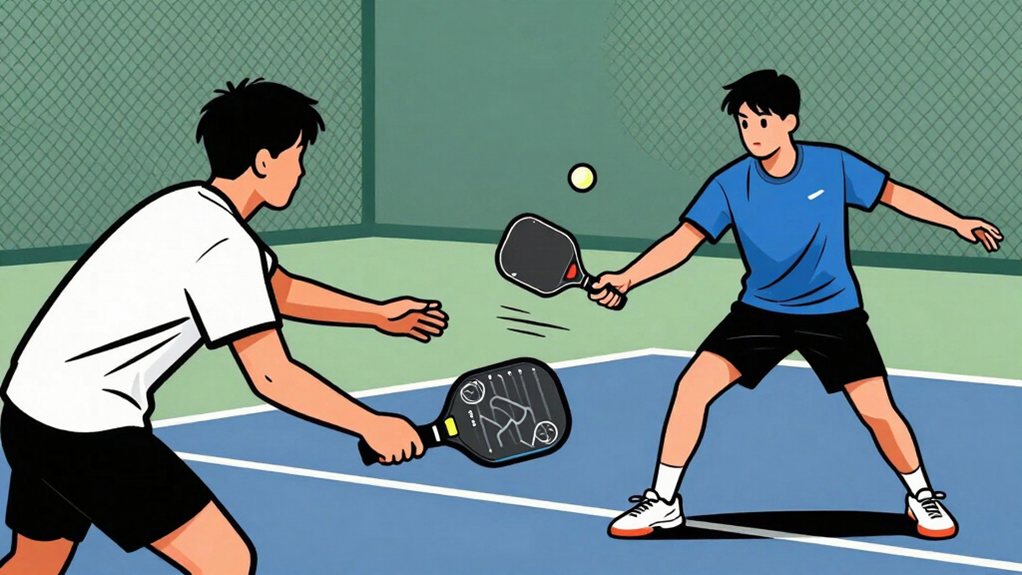
Mastering soft hands with controlled pace takes practice through specific drills designed to improve your touch, consistency, and accuracy at the net.
- Forehand Dink Rally
- Stand opposite partner at kitchen line.
- Begin forehand-to-forehand dink rally at steady pace.
- Keep ball low and close to net.
- Focus on soft touch and consistency.
- Backhand Dink Rally
- Switch to backhand-to-backhand after forehand mastery.
- Position at kitchen line opposite partner.
- Keep ball low at steady pace.
- Improve control through repeated exchanges.
- Cross-Court Dink Drill
- Stand diagonally across from partner at kitchen line.
- Alternate forehand and backhand shots cross-court.
- Target specific court areas for precision.
- React to opponent’s shots effectively.
- Figure 8 Dink Drill
- Hit diagonal to partner’s outside foot, then inside foot.
- Partner hits straight, forming figure 8 pattern.
- Develop control in different directions.

Your Ultimate Training Partner: Take your pickleball game to new heights. Hone your forehands, backhands, dinks with this all-in-one training solution. Perfect for kitchen control and beyond.
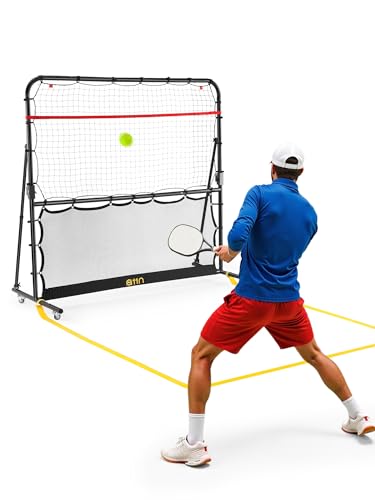
Master Every Shot with Adjustable Angles: Train forehands, backhands, dinks, and volleys with this pickleball rebounder. The 4-angle adjustment simulates real-game scenarios, making it the ultimate pickleball training aid for all skill levels.

Real Continuous Rebounding: You can easily achieve over 100 consecutive hits with a little practice, all thanks to our unique design and high-bounce pickleball. Our pickleball rebounder trainer allows you to experience uninterrupted hitting just like in a real game
Master the Third Shot Drop for Court Transitions
Once you’ve built consistency with your dinks, you can move to the third shot drop drill. This shot bridges the gap between your baseline and the kitchen line. The third shot drop gives your team time to advance while forcing opponents to hit upward.
You must focus on three key elements:
- Soft contact with the ball
- Low trajectory over the net
- Landing in the non-volley zone
- Controlled pace to keep opponents back
Practice this drill by serving to your partner. They return the ball. You then hit a soft drop shot that lands just inside the kitchen line.
Your partner must return it softly. Repeat this sequence twenty times. Focus on consistency. The goal is to build muscle memory for court shift. You’ll notice improved control and better positioning during matches.
Practice Both Straight and Cross-Court Dinks
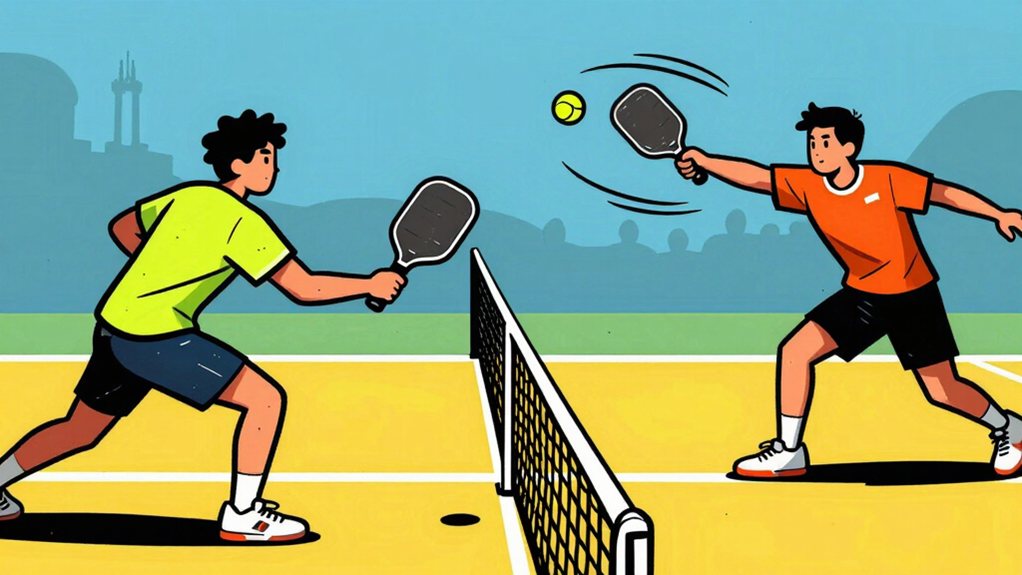
Straight dinks travel parallel to the sidelines, keeping the ball low and close to the net. Cross-court angles push your opponent wide, opening the court for your next shot.
Practice both patterns together to become unpredictable and control the point.
Straight Dinks Basics
When you’re ready to develop consistency at the net, straight dinks form the foundation of your dinking game. You and your partner stand face-to-face at the kitchen line. Hit the ball straight across the net to your partner. Keep your shots low and close to the net.
Develop a steady rhythm with consistent contact points.
- Start with forehand-to-forehand exchanges. Focus on control first, speed second.
- Maintain a soft grip and relaxed wrist. This creates the deadened ball you need.
- Aim for the middle of your partner’s body. Target the lower third for safety.
- Practice for 10-15 minutes daily. Build muscle memory through repetition.
Your feet stay planted. Your paddle stays in front. Your eyes track the ball. You control the point through patience and placement.
Cross‑Court Angles
Adding cross-court dinks to your practice expands your angle options and court coverage. Stand diagonally opposite your partner at the kitchen line. Alternate forehand and backhand shots cross-court. Keep the ball low and close to the net.
Focus on accuracy and placement. React to opponent’s shots effectively. Target specific court areas for precision. This drill improves your dinking accuracy and court coverage.
Combining Both Patterns
Once you’ve mastered both straight and cross-court dinks separately, we can now combine them into one seamless drill. Stand at the kitchen line opposite your partner. Alternate between a straight dink and a cross-court dink every third shot, creating a pattern that forces you to shift weight and adjust aim quickly.
- Hit 5 straight dinks, then 5 cross-court dinks.
- Switch roles after each set of 10 shots.
- Keep the ball low and aim for the target zones.
- Repeat for 3 minutes, then rest 30 seconds.
Stay focused on a soft touch and a steady rhythm. Track your success rate and try to increase the number of successful exchanges each round.
Count each successful rally and note improvements over time daily.
Increase Spin and Pace as You Advance
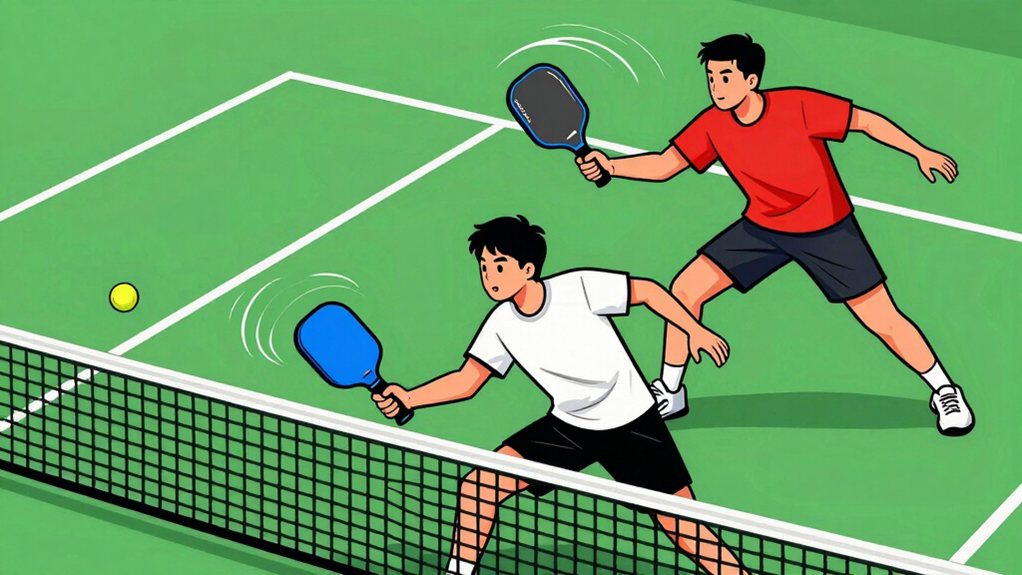
As your dink rallies become consistent, you can begin adding spin and pace to challenge your opponent further. Start with small amounts of topspin on your dinks. The spin makes the ball bounce differently. Your opponent can’t predict the ball movement as easily.
- Add topspin by brushing up on the ball
- Use a continental grip for better spin control
- Increase paddle speed gradually
Once you control spin, add pace. Hit the ball harder while keeping it low. The combination of spin and pace creates difficulty for your opponent.
Practice these tips:
- 10 minutes of spin work per session
- Increase speed by 10% each week
- Focus on consistent contact point
We want you to develop a threatening dink that forces errors. Your net game becomes more effective when you add these elements.
Frequently Asked Questions
How Often Should I Practice Dinking Drills to See Improvement?
Practice your dinking drills at least three to four times per week. You’ll see improvement within two to three weeks if you maintain consistent, focused sessions lasting twenty to thirty minutes each with proper form.
What Is the Best Paddle Weight for Playing Dinks?
Imagine the paddle as a gentle extension of your hand, you’ll find that paddles between 7.3 and 8.3 ounces give you precise control and excellent feel for soft dink shots at the net.
Can Dinking Improve My Overall Footwork and Court Positioning?
Yes, dinking improves your footwork and court positioning. These drills force you to move efficiently at the kitchen line, develop quick steps, and teach effective positioning relative to the ball.
Is It Okay to Use a Two-Handed Backhand for Dinking?
Surprisingly, you can absolutely use a two-handed backhand for dinking! Many players gain extra stability and control with this technique. Practice the backhand dink rally drill consistently, stay balanced, and maintain a soft touch for excellent performance.
How Do I Know if My Dink Shots Are Too High?
You’ll know your dinks are too high when opponents easily volley them overhead. Your shots should barely clear the net. If they arc upward, opponents attack and put them away. You lose points when your dinks sit up for smashes.
Final Thoughts
Add these vital drills to your routine for steady improvement:
- Practice forehand and backhand dinks for 10 minutes daily.
- Focus on soft hands and controlled pace at the net.
- Use the Figure 8 pattern to build footwork and consistency.
- Apply the Battleships drill for target accuracy.
- Mix straight and cross-court shots during rallies.
- Progress to spin and pace variations as your skills develop.
Consistent practice sharpens your net game and boosts your overall performance on the court.

MORE THAN A PICKLEBALL CARD GAME – Deal & Dink adds instant chaos, laughter, strategy, and unexpected twists to every match, turning regular pickleball into a completely different on-court experience.

Features a playful "Just Dink It" design perfect for pickleball players who love the game and know how to stay out of the kitchen while mastering their dinking skills on the court.

Pickleball Training Equipment for Skills & Drills Upgrade your pickleball practice with the Dice & Dink trainer — a unique pickleball training aid that adds variety to drills, challenges shot placement, and builds consistency for players of all levels.