1. Learn the court dimensions: 20 feet wide by 44 feet long, the same as a doubles badminton court. 2. Understand the key lines: baseline, sideline, service line, non-volley line (kitchen), and centerline. 3. Stand behind the baseline to serve. 4. Hit the serve diagonally into the opposite service box. 5. Use a drop serve (ball bounces once) or volley serve (hit before bounce). 6. Return the serve after the ball bounces. 7. Never volley inside the 7-foot kitchen zone. 8. Keep both feet behind the kitchen line when hitting volleys. 9. Score only when your team serves; games go to 11 points, win by 2. 10. Rotate with your partner after each point won. For more detailed instructions on technique and strategy, continue through the next sections.
What a Pickleball Court Looks Like (And What Every Line Means)
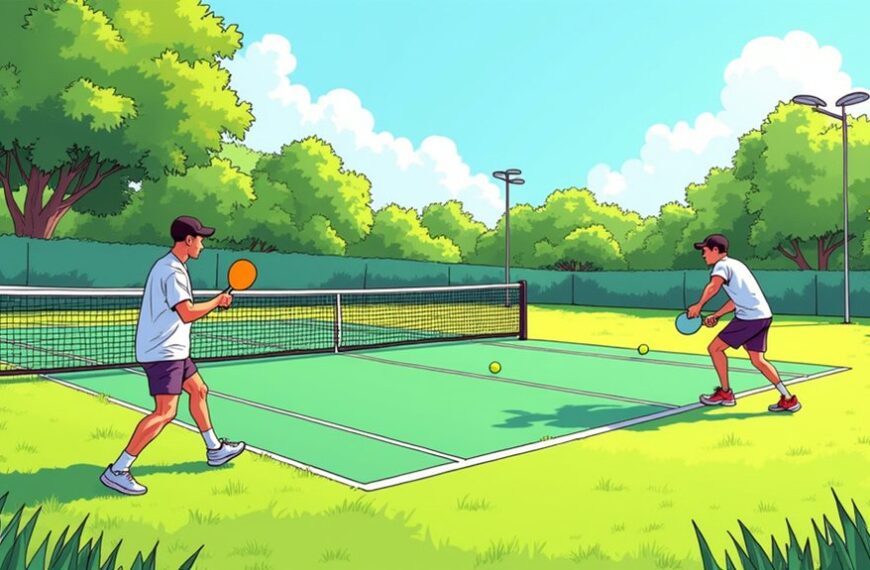
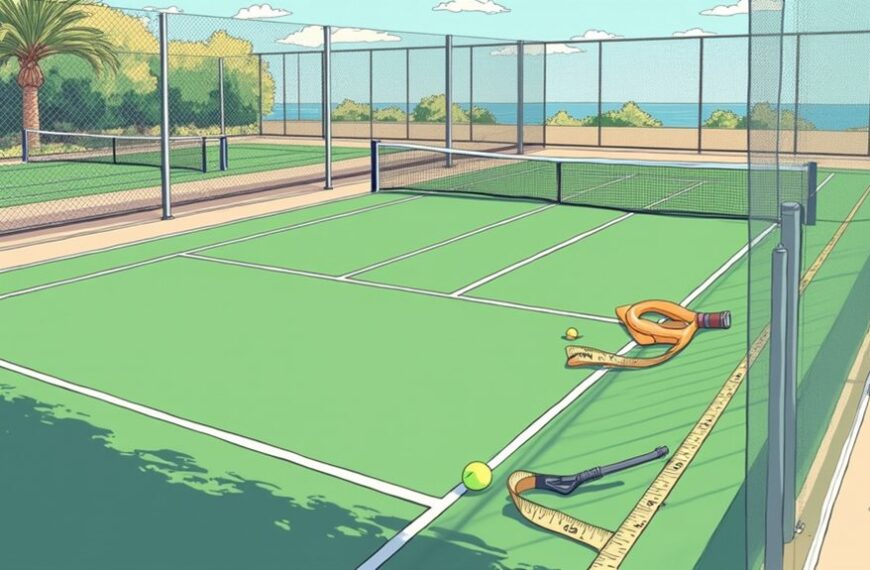
A pickleball court is 20 feet wide and 44 feet long, the same dimensions as a doubles badminton court. The net divides the court into two equal sides. Each side contains a service box and a non-volley zone, also called the kitchen.
20 ft by 44 ft, same as a doubles badminton court, net splits into two sides, each with a service box and kitchen.
Court lines include:
- Baseline: back boundary where you serve
- Sideline: side boundary marking edges
- Service line: front of the service box
- Non-volley line: kitchen line where you can’t volley
- Centerline: divides each side into service boxes
The kitchen extends 7 feet from the net on each side. You can’t volley while standing in this area. The court surface is typically hard court, but concrete or asphalt works. Lines are 2 inches wide and contrasting in color. In singles play, the court uses a 10 foot width rather than the full 20 feet used in doubles.

Crafted from a unique 40 singles tri-blend fabric, offering a lightweight, ultra-soft feel

Clear court layout artwork showing baseline, sideline, service courts, centerline, net, kitchen zone, and recommended playing area.

How to Serve in Pickleball: Drop Serve vs. Volley Serve
How do you serve in pickleball? You have two serving options: the drop serve and the volley serve.
Drop Serve Steps:
- Hold the ball in your non-paddle hand.
- Drop the ball from waist height or lower.
- Let the ball bounce once on the court.
- Hit the ball after it bounces.
- Contact the ball below your waist level.
Volley Serve Steps:
- Hold the ball in your non-paddle hand.
- Toss the ball slightly upward.
- Hit the ball before it touches the ground.
- Keep your paddle head below your wrist at contact.
- Maintain contact below waist height.
Both serves must:
- Clear the net completely.
- Land in the diagonal service box.
- Be hit from behind the baseline.
You choose the drop serve for consistency or the volley serve for power. Both are legal.
The Serving Rules You Can’t Break (Avoid These Faults)
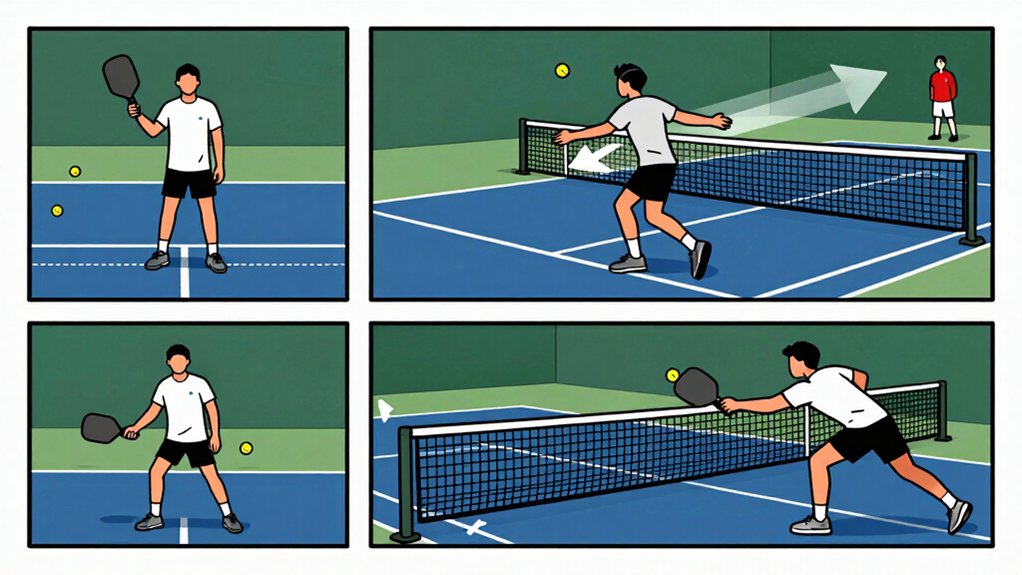
Now that you know both serving techniques, let’s cover the rules you can’t break. These faults will cost you the rally immediately.
Serve rules: stay behind the baseline, hit below waist, aim cross‑court, clear the net, avoid the kitchen; fault ends the rally.
- You must stay behind the baseline when you serve. Your feet can’t cross this line before the ball is hit.
- Your paddle must contact the ball below waist level. The paddle head must be below your wrist at contact.
- You must hit diagonally cross-court. The ball must land in the opponent’s receiving box opposite your position.
- The ball must clear the net and land outside the kitchen. It can’t land in the non-volley zone.
- You can’t hit the ball into the net or out of bounds.
If you commit any fault, the rally ends immediately and your opponent scores.
How Pickleball Scoring Works
Because scoring in pickleball differs from other racket sports, you must learn the point system first.
Points are only awarded to the serving side. When the receiving team wins a rally, no points are given and the serve passes to them.
The server announces the score before each serve using three numbers: your score, opponent’s score, and which player is serving (1 or 2).
Games are played to 11 points, but you must win by 2 points.
If the score reaches 10-10, play continues until one team leads by 2.
In doubles, both partners on the serving team get to serve until they both commit faults, then the other team becomes the serving team.
Where to Stand When Returning the Serve
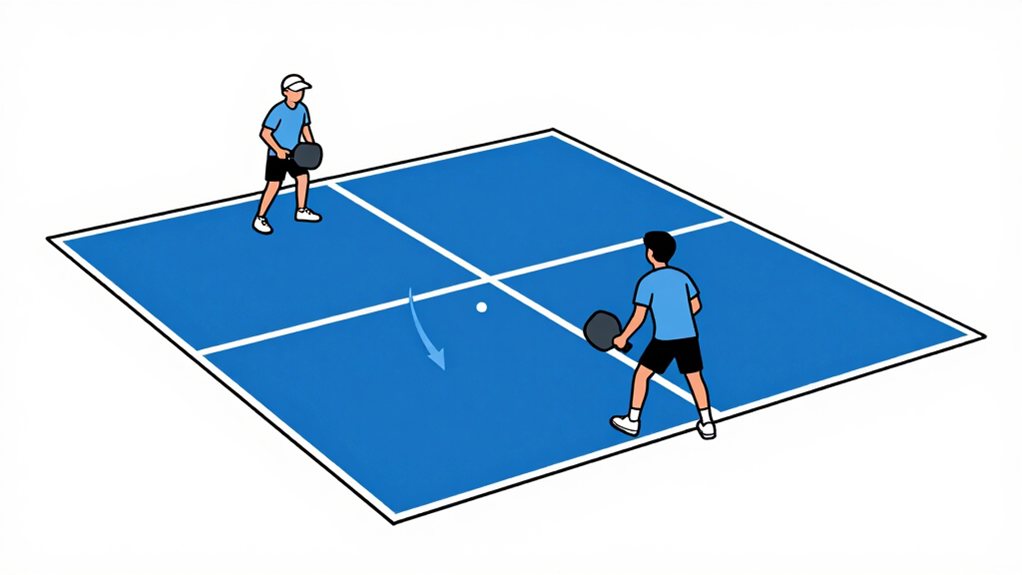
- Stand on the baseline, just behind the line, so you’re sure the serve will bounce before you return it.
- Your partner stays near the kitchen line on his side, he’s ready to move forward after you return the ball.
- After you hit the return, step quickly toward the kitchen line and you’ll anticipate the next shot.
Baseline Position
When you return the serve, you stand behind the baseline on the side that corresponds to the server’s position. You need to position yourself diagonally across from where the server stands. This places you in the correct spot to hit the ball after it bounces.
- Watch which side the server stands on.
- Move to the opposite side of your court.
- Stand approximately two to three feet behind the baseline.
- Keep your feet shoulder-width apart.
- Bend your knees slightly for stability.
- Wait for the ball to bounce before hitting your return.
- After contact, step forward toward the kitchen line.
Your partner stands near the kitchen line on their side of the court. Together, you form a defensive position that covers the width of the court.
You control the angle of your return based on where you stand. Adjust your position if the server consistently hits to one area.
Partner’s Kitchen Spot
Your partner stands near the kitchen line on their side of the court when you’re returning the serve. This position prepares your team to control the point after you make contact with the ball.
- Position yourself behind the baseline, slightly to one side of the center line.
- Have your partner stand just inside the kitchen line, about halfway between the sideline and the center line.
- Your partner stays there until you make contact with the ball.
- After you hit the return, both players move forward together.
- Your partner covers the left or right side of the court depending on where the ball goes.
- This formation lets you both reach shots quickly and maintain good court coverage.
Keep your feet behind the kitchen line until the ball bounces on your side.
Anticipate Return Movement
Now that your partner knows where to stand near the kitchen line, let’s cover where you position yourself as the returner.
You stand behind the baseline on the opposite side from where the server ends. This positioning lets the ball bounce before you strike it. Your feet stay shoulder-width apart. Your knees bend slightly. You watch the server’s paddle. You move forward after hitting your return.
| Your Starting Point | What You Do |
|---|---|
| Baseline center | Wait for serve |
| Ball contact | Let it bounce |
| After return | Step forward |
| Near kitchen | Prepare to dink |
| Partner position | Stays at kitchen |
Your partner stays near the kitchen line on their side. You both form a defensive wall. This setup prepares you for the next shot.
The Two-Bounce Rule: Why the Ball Must Hit the Floor First
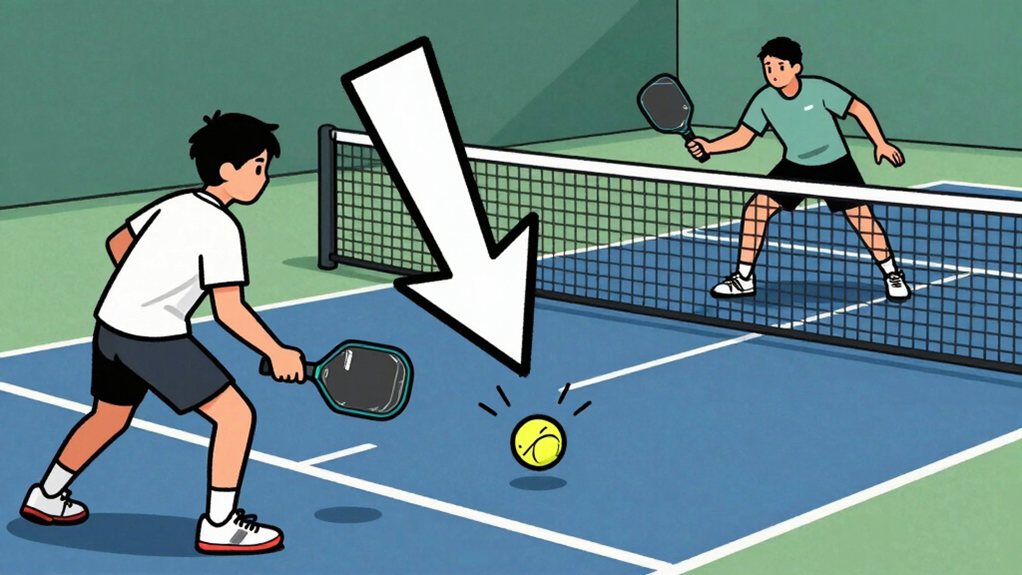
Because pickleball rewards patience over power, the two-bounce rule exists to keep rallies going.
After the serve, you must let the ball bounce once on your side before hitting it. Then your opponent must also let the ball bounce once on their side. This creates longer rallies and gives beginners time to react.
How the rule works:
- Server hits the ball over the net.
- Receiver lets the ball bounce, then hits the return.
- Server lets the ball bounce, then hits the second return.
- After both bounces occur, players can volley.
You can’t hit the ball out of the air before it bounces. If you do, you lose the point. This rule applies to both serving and receiving teams.
The ball must touch the ground twice before anyone can strike it mid-air. Once both bounces happen, the game speeds up and you can hit the ball before it lands. This rule keeps play fair and fun for everyone.
The Kitchen Rule: What You Cannot Do in the Non-Volley Zone
You can’t volley while any part of your body is inside the kitchen line.
Stay out of the non‑volley zone at all times, because stepping in the kitchen while volleying results in a fault.
We must keep our feet just behind the kitchen line, let the ball bounce, and then attack.


No Volley Inside Kitchen
Understanding the kitchen rule prevents you from committing faults during play. You cannot volley the ball while standing inside the non-volley zone. This area extends 7 feet from the net on both sides. If you step into this zone and hit the ball in the air, you commit a fault and lose the point.
Your feet must not cross or touch the kitchen line when you strike the ball. Both feet must stay behind the line until the ball bounces first. This rule forces you to maintain proper court positioning throughout each rally.
| Situation | Action | Result |
|---|---|---|
| Ball in air, you stand in kitchen | Do not hit | Fault called |
| Ball bounces, you stand in kitchen | You may hit | Play continues |
| Ball in air, you behind kitchen line | You may hit | Legal play |
Stay alert. Keep your feet behind the line. Monitor your partner’s position as well.
Stay Out Of Kitchen
Now let’s focus on what you can’t do in the non-volley zone.
The kitchen is the rectangular area that extends seven feet from the net on both sides. You can’t step inside this zone while hitting a volley.
Here are the key restrictions:
- Don’t enter the kitchen while the ball is in the air.
- Don’t step on or cross the kitchen line during a volley.
- Don’t touch the kitchen line with your paddle or body while hitting the ball.
- The ball can’t land inside the kitchen on your serve.
- You can only enter the kitchen after the ball bounces and comes to rest.
The same rules apply to both serving and receiving teams. Stay alert and maintain proper positioning.
Avoid Volleying Near Net
Always remember: you can’t volley the ball while standing in or on the kitchen line. The kitchen, also called the non-volley zone, is the rectangular area extending from the net to the kitchen line on both sides of the court. This area runs the full width of the court.
Key rules to follow:
- Keep your feet behind the kitchen line when you hit volleys
- Step back if you’re in the kitchen and the ball comes to you
- Wait for the ball to bounce before hitting if you’re inside the zone
- Your partner must also stay out of the kitchen when volleying
- The kitchen line itself is part of the non-volley zone
Violating this rule results in a fault. Both serving and receiving teams must follow this restriction. Stay out of the kitchen to keep your rally alive.
How Doubles Partners Rotate on the Pickleball Court
When you step onto the pickleball court for doubles play, the rotation system keeps both partners moving in sync. Here’s how it works:
- The serving team starts from the right side. Only one player serves initially.
- After each point won, the serving player switches sides, right to left, then left to right.
- Both partners on the serving team get chances to serve until both commit faults.
- The receiving team stays at the baseline until the ball is served.
- When your team loses the rally (side-out), the receiving team becomes the serving team.
- Your rotation then resets to the right side again.
The key is that you and your partner move together as one unit, switching sides after every point won. Stay aware of your position at all times.
The Best Pickleball Strategies for Winning Your First Games
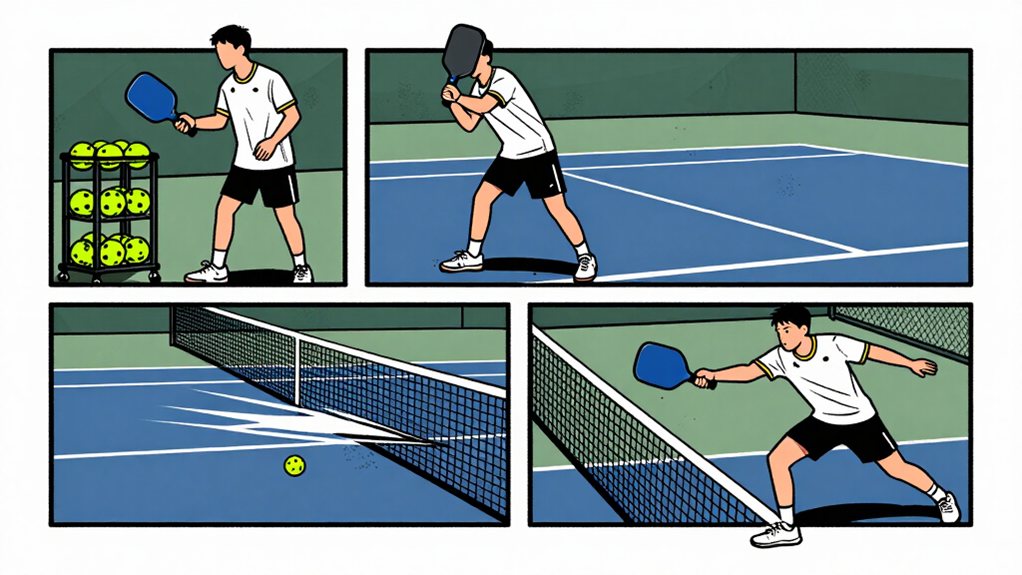
Winning your first pickleball games requires you to master three fundamental strategies.
Focus on mastering the serve, positioning yourself at the net, and using soft shots during rallies.
These strategies form the foundation for competitive play and will help you build confidence on the court.
Master The Serve
Choose your serve type: the drop serve requires you to drop the ball and hit it after one bounce, while the volley serve lets you hit the ball before it bounces.
- Start behind the baseline on the right side of the court.
- Call out the correct score before serving.
- Hold the paddle below your waist with the paddle head below your wrist.
- Hit the ball diagonally cross-court to the opponent’s receiving box.
- Make sure the ball clears the net and lands outside the kitchen.
- Keep your knees bent for power and accuracy.
- Aim for the center of the court to reduce opponent angles.
- Vary your speed and placement to keep opponents guessing.
Position At Net
After you serve, move quickly to the non-volley zone, also called the kitchen. This positioning gives you control over the point and lets you react to your opponent’s return.
Stand with your toes just behind the kitchen line. Keep your paddle up and ready.
Your feet should stay planted until you need to move. When your partner serves, you also move forward to the kitchen line together.
Here are three key positioning rules:
- Stay close to the kitchen line during rallies to cut off angles
- Keep your paddle in front of your body at waist height
- Move side-to-side with your partner to cover the entire width
Your body faces the net. Your weight stays forward on the balls of your feet. You stay alert and watch the ball at all times.
Use Soft Shots
Now that you’re standing at the kitchen line, your next priority is controlling the point with soft shots.
Soft shots keep the ball low. Low balls force your opponents to hit upward. Upward hits give you attacking opportunities. Practice these three soft shot types:
- Dink: Hit the ball softly into your opponent’s kitchen. The ball drops over the net with minimal pace. Your opponent struggles to generate power.
- Drop shot: Hit the ball short into the court. The ball bounces near the net. Your opponent must move forward quickly.
- Block: Absorb pace from hard drives. Redirect the ball softly to an open court area.
Keep your paddle low. Contact the ball below net height. Follow through with a short motion. Your soft shots will frustrate opponents and win points.
The Most Common Pickleball Mistakes (And How to Fix Them)
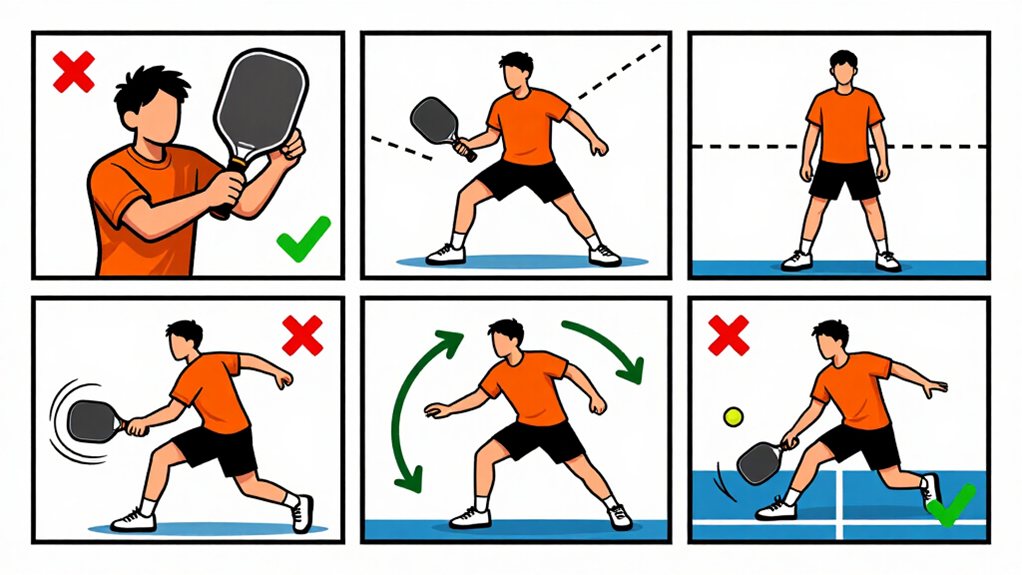
Understanding the most common pickleball mistakes helps you improve faster and win more points.
- Hitting from the wrong position causes weak returns. You stand too far back when returning serves. Wait behind the baseline. Move forward after hitting your return.
- Violating the kitchen rule costs you points. You step inside the non-volley zone while volleying. Keep your feet behind the kitchen line. Stay out until the ball bounces.
- Using too much power reduces accuracy. You swing hard on every shot. Focus on placement instead. Hit soft dinks and drops to force errors.
Avoid these mistakes. Practice proper positioning. Master kitchen boundaries. Choose control over power.
Frequently Asked Questions
What Equipment Do I Need to Start Playing Pickleball?
You’ll need a paddle, pickleball, and comfortable athletic shoes. Dress in athletic clothing, and consider optional gear like a paddle cover, extra balls, court shoes, and a bag to carry your equipment to every match.
How Long Does a Typical Pickleball Game Last?
The clock mocks your optimism, you think you’ve just started, and suddenly the game’s over. Games last 10-15 minutes when played to 11 points, but include warm-up and between-game breaks, and you’ll spend about 30 minutes on a typical match.
Can I Play Pickleball Singles, or Is It Only Doubles?
Yes, you can play pickleball as singles! The rules adapt slightly, you’ll cover the entire court yourself, but serving, scoring, volleying, and kitchen restrictions follow the same fundamental gameplay as doubles play.
What Is the Difference Between Indoor and Outdoor Pickleball Balls?
Think wind versus calm, when you’re outdoors, you’ll grip heavier, perforated balls that battle breezes and concrete. Indoors, you wield lighter, hole-ridden spheres for gliding, controlled play on polished gym floors.
How Do I Choose the Right Paddle Size and Weight?
Choose a paddle that feels in your hand, check grip thickness, and select a weight between 7, 8.5 oz for control or power. Pick the right size matching your arm strength and playing style you’ll like.
Final Thoughts
1. Serve from the baseline, using a drop or volley serve. 2. Call the score before each rally. 3. Stay out of the kitchen; keep your feet behind the non-volley line. 4. Rotate with your partner after each point.
You’ve got basic tools to play pickleball. Follow these steps, we’re ready, keep your eyes on the ball, and enjoy the game.
Remember to call the score clearly, stay behind the baseline, and use proper rotation.


AUTOMATIC LAUNCHER: This electronic pickleball tossing machine launches pickleballs every 8-9 seconds so players can practice their shot making skills on their own

Optimized Paddle Shape for Versatile Play: The Perseus Pro IV features a standard, elongated shape designed to provide an extended sweet spot. This geometry offers players the perfect balance of reach for powerful drives and a reliable, forgiving hitting surface for precise dinks, making it an excellent choice for players who want confidence from all areas of the court