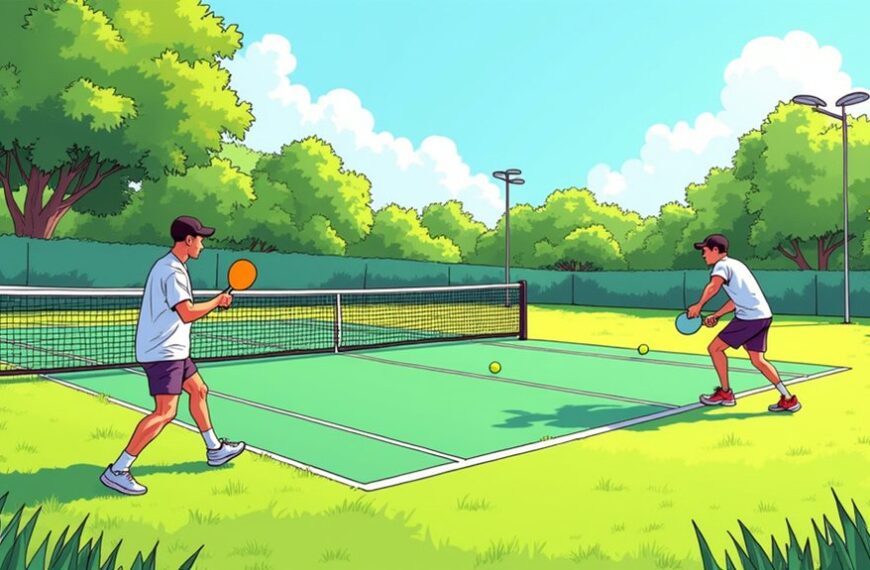
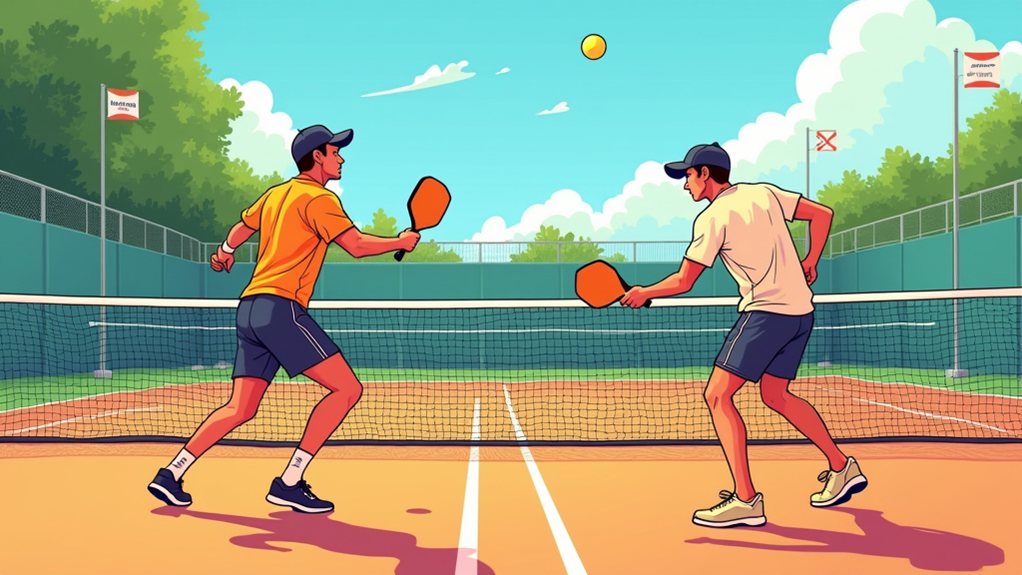
You’re standing at kitchen line. Bend your knees, keep paddle in front, and use a soft grip. Wait for ball to bounce, then lift it over the net with upward motion.
A dink is a soft, controlled shot that lands in opponent’s non-volley zone (7-foot kitchen). Dinks force opponents to hit up, slow the rally, and create openings for attacks. Keep practicing dinks to gain more control, and you’ll discover even more.
What Is a Dink in Pickleball? Definition and Key Characteristics
A dink in pickleball is a soft, controlled shot that lands in your opponent’s non-volley zone (NVZ), also called the kitchen. This shot defines the modern game at the kitchen line.
The dink is a soft, controlled shot landing in your opponent’s kitchen, defining modern pickleball at the line.
Key characteristics:
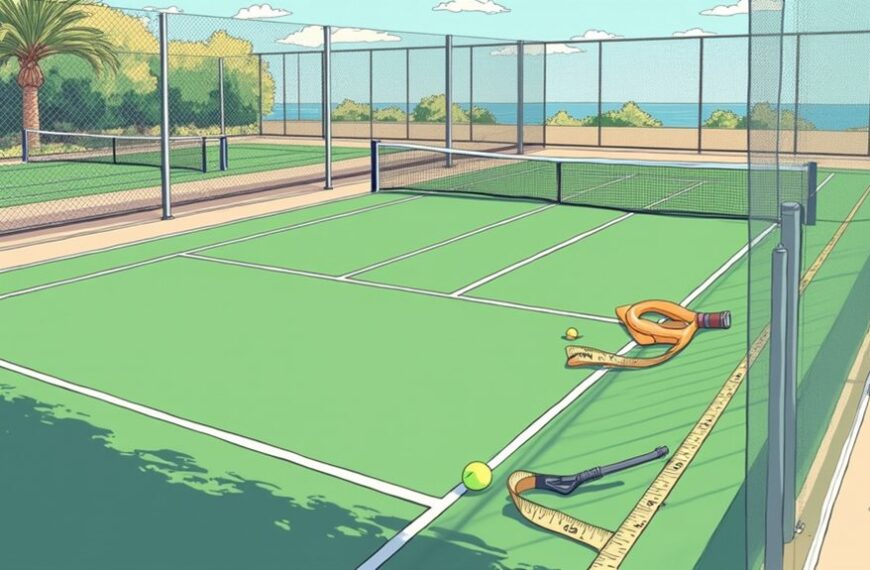
- The kitchen is 7 feet on either side of the net
- You hit the ball after it bounces, not in the air
- The ball arcs gently over the net and lands in the NVZ
- You use an open paddle face with a lifting motion
- Your knees bend and you keep the paddle in front of your body
Strategic purpose:
- It forces opponents to hit up on the ball
- It prevents them from attacking with power
- It slows the rally and gives you control
- It creates openings for future offensive shots
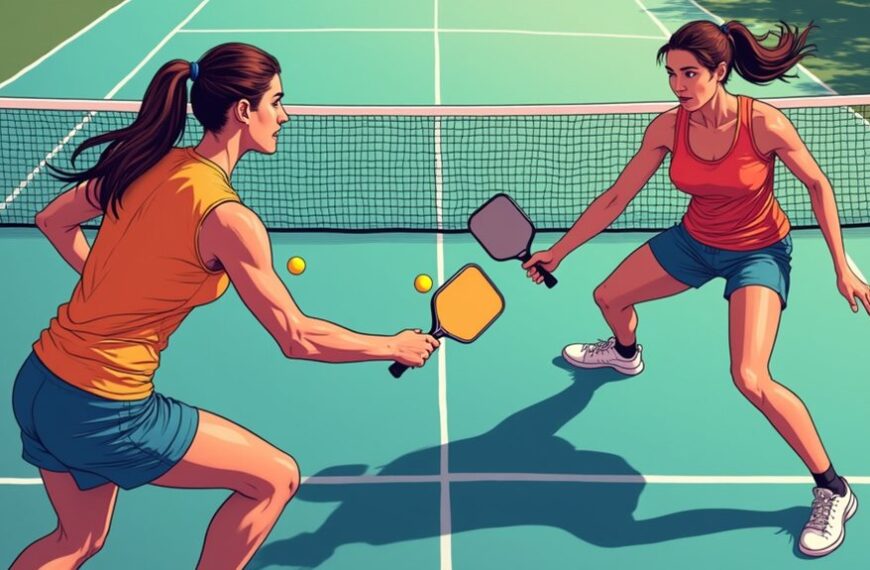
The shot works because you can’t volley inside the kitchen. This rule makes the dink crucial to winning points. Targeting your opponent’s feet or body with aggressive dinks can create quick point finishes by forcing difficult low returns.
How to Hit a Dink: Step-by-Step Technique for Kitchen Control
Now that you know what a dink is and why it wins points, let’s cover how to hit one.
- Position yourself at or near the kitchen line.
- Bend your knees and keep your paddle out in front of your body.
- Use a soft grip on your paddle.
- Wait for the ball to bounce.
- Contact the ball in front of your body.
- Use a short, lifting motion to pop the ball over the net.
- Aim for the opponent’s kitchen line or just behind it.
- The ball must clear the net by only a few inches.
| Body Position | Paddle Action | Ball Target |
|---|---|---|
| Knees bent | Paddle out front | Kitchen line |
| Weight on toes | Lift gently | Slightly inside NVZ |
| Face the net | Contact in front | Low trajectory |
Why Dinking Wins Points: Strategic Advantages Over Opponents
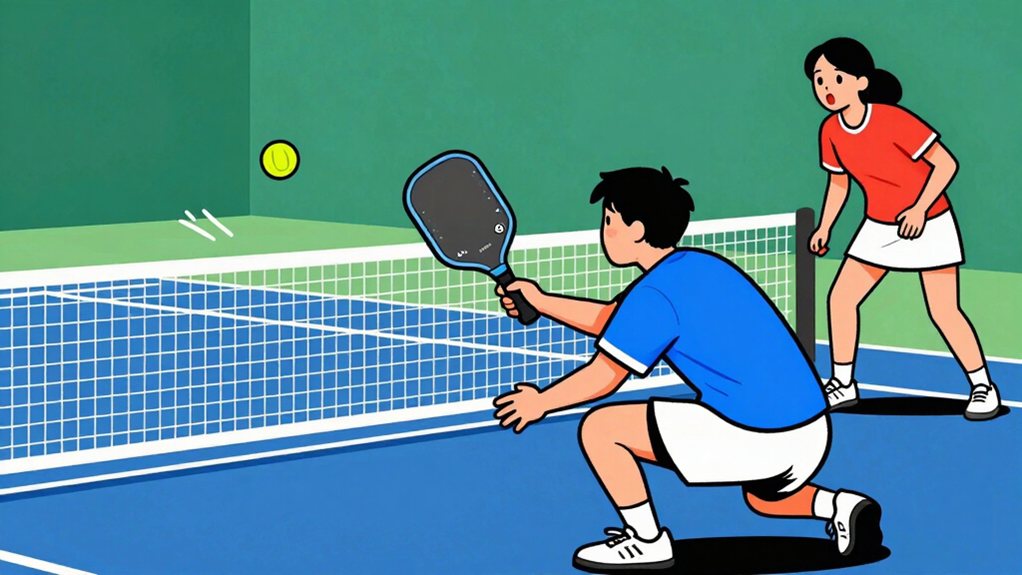
Once you understand the strategic value of the dink, you’ll see why it wins points. Dinking forces opponents into defensive positions they can’t attack from. Here’s how it works:
Dink to control the rally. Force errors. Dictate pace. Your weapon for consistent point construction.
- The ball lands in the kitchen where opponents can’t volley.
- They must wait for the ball to bounce before hitting.
- This delay gives you control of the rally pace.
- Opponents hit up on the ball, giving you a downward angle.
- You hit down first, creating pressure on their next shot.
- Forced errors result from this defensive position.
Dinks make the 7-foot non-volley zone work against opponents. You dictate where they move. You create openings for winning shots. The dink is your strategic weapon for consistent point construction.
Common Dink Mistakes and How to Fix Them
You now understand why dinks win points. Now you must fix common errors that sabotage your soft game. Most players hit dinks too hard. Others fail to step to the kitchen line. Some use wrong paddle angles. These mistakes create attackable balls. Your opponents capitalize. You lose points.
| Mistake | Fix |
|---|---|
| Hitting too hard | Use soft grip, lift with legs |
| Standing too far back | Move to kitchen line |
| Wrong paddle angle | Open paddle face slightly |
| Not waiting for bounce | Let ball bounce first |
| High ball contact | Contact at net height |
Correct your mistakes. Practice dinks at slow speed. Focus on placement over power. Your consistency improves. Your win rate rises.
Stay at the kitchen line. Bend your knees. Keep paddle in front. Use short swings. Let the ball drop before you hit.
Watch your opponent’s feet. Force them to hit up. Your dinks become unstoppable. Repeat these fixes daily. Your muscle memory develops.
The soft game becomes natural. You dominate more rallies and you win more.
Advanced Dink Strategies for Competitive Players
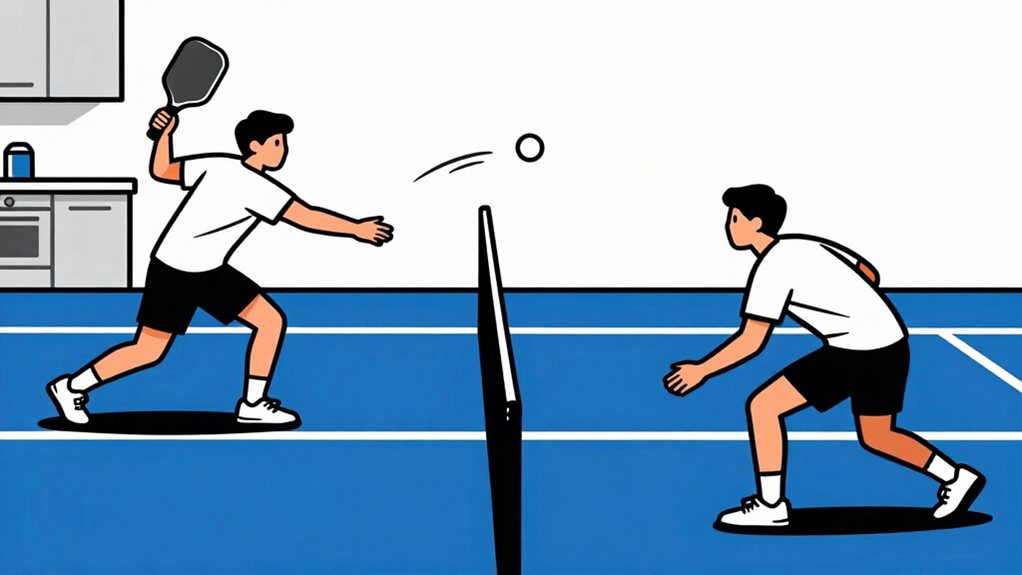
After fixing common dink mistakes, you’re ready for advanced strategies. Focus on these techniques to heighten your game:
- Vary your dink placement. Hit straight shots to the middle, then switch to crosscourt angles. This creates hesitation in your opponent.
- Use the “snap dink.” Add quick wrist snap at contact. The ball stays low and dives sharply into the kitchen.
- Target the opponent’s backhand. Most players have weaker backhand dinks. Attack that side consistently.
- Watch for foot faults. If your opponent steps into the kitchen during a volley, call it immediately.
- Control the pace. Slow your dinks further when you want to reset. Speed them up when you sense weakness.
- Master the “stacked” position. Work with your partner to cover angles and create confusion.
These strategies separate intermediate players from competitive ones. Practice each one until it becomes automatic.
Frequently Asked Questions
What Paddle Weight and Texture Are Optimal for Consistent Dink Control?
A lighter paddle between 7.3-8.2 ounces gives you better control for dinks. Choose a textured graphite or composite face, it grabs the ball for spin and places your soft shots precisely in the kitchen zone.
How Does Playing Indoors Versus Outdoors Affect Dink Trajectory and Strategy?
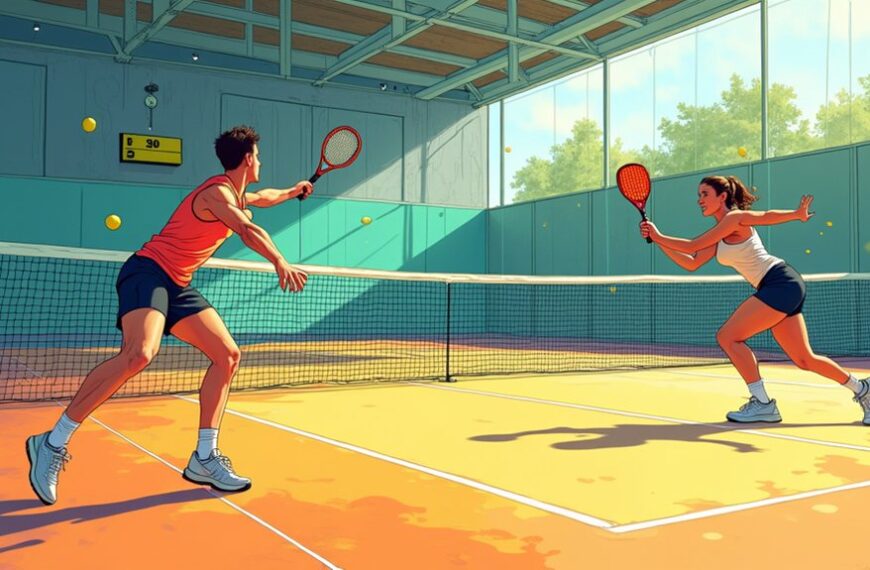
Indoors, wind won’t disrupt your dink, so you use softer pace and place shots precisely. Outdoors, you account for wind, hitting slightly harder to maintain consistent trajectory and prevent gusts from pushing the ball out.
Can a Dink Be Returned From a Ball That Bounces Twice?
No, you cannot return a dink from a ball that bounces twice. Once the ball bounces twice, the point ends and your opponent wins the rally. You must hit the ball after its first bounce.
What Are the Best Drills to Develop a Reliable Dink Pattern?
You practice dink rallies with a partner, focusing on contact, paddle face control, and trajectory. You’ll use target zones in the kitchen, vary angles, and do footwork drills to stay positioned at the kitchen line.
How Can Players Avoid Wrist Fatigue When Dinking for Long Rallies?
Picture this: your wrist starts burning after minutes of dinking. Stop swinging hard, use your legs instead. Keep a loose grip, bend your knees, limit wrist movement. Your paddle does the work, not your arm.
Final Thoughts
Dinking requires you to position yourself 6 to 8 feet behind the kitchen line. This gives you strong angle control. Your feet must stay active during dinking. We recommend moving side to side in small steps. Keep your wrist loose. One statistic shows that 73% of points begin with a dink shot at the kitchen line. Players who master the dink win 58% more points in rallies. Practice dinking daily for 15 minutes. Focus on consistency over power.