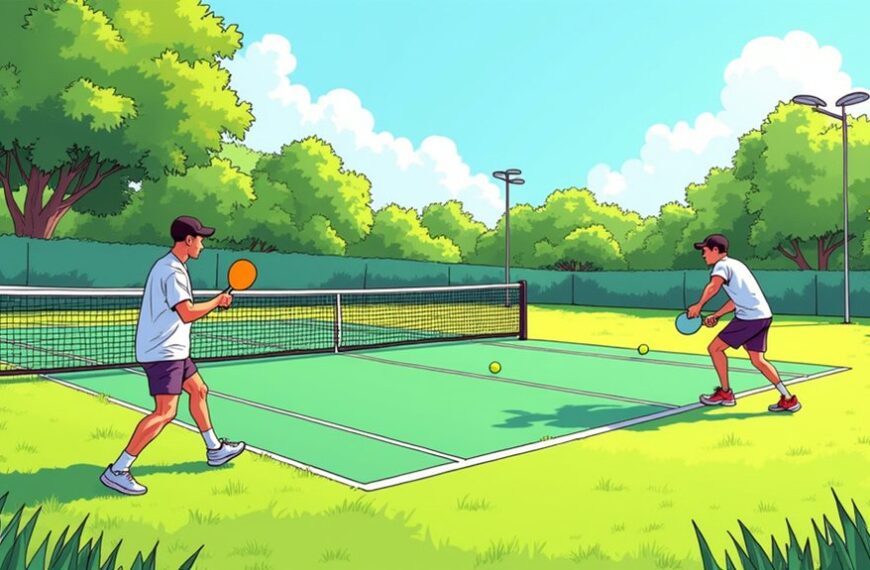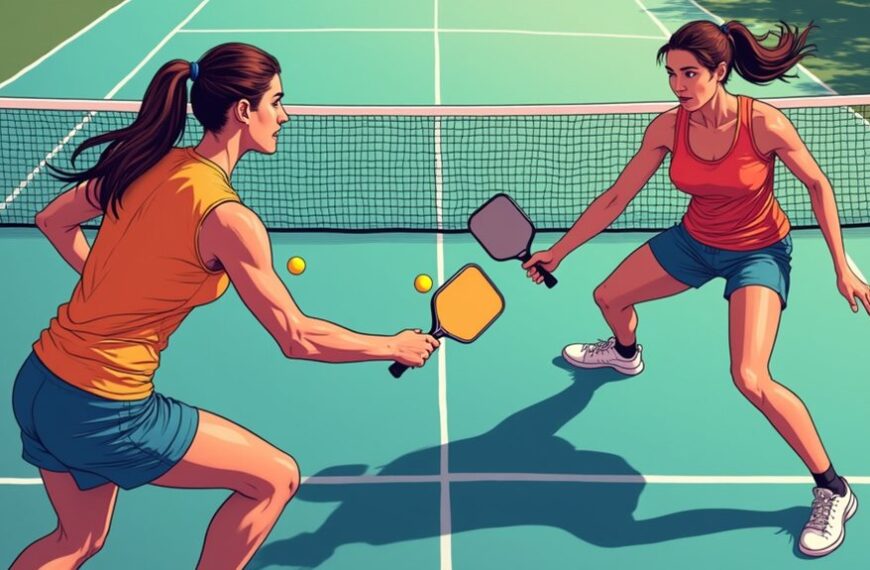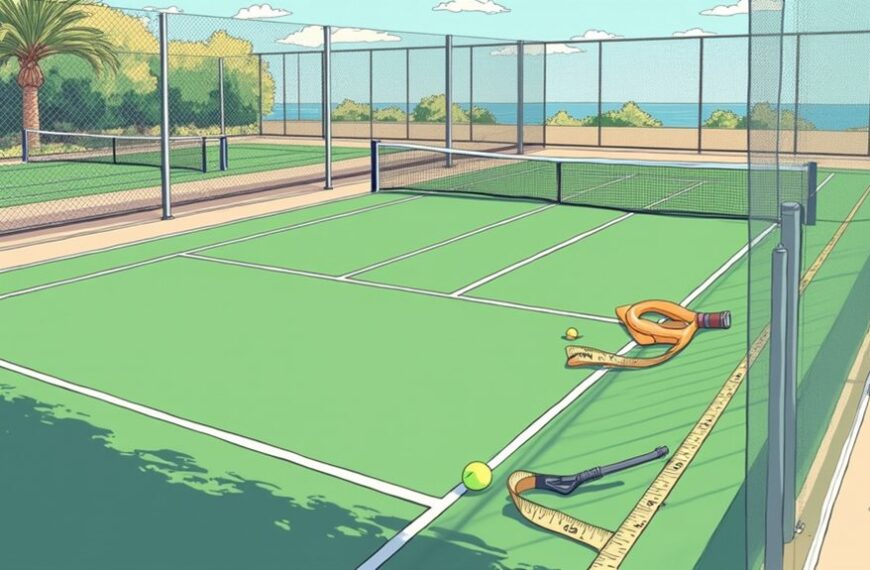
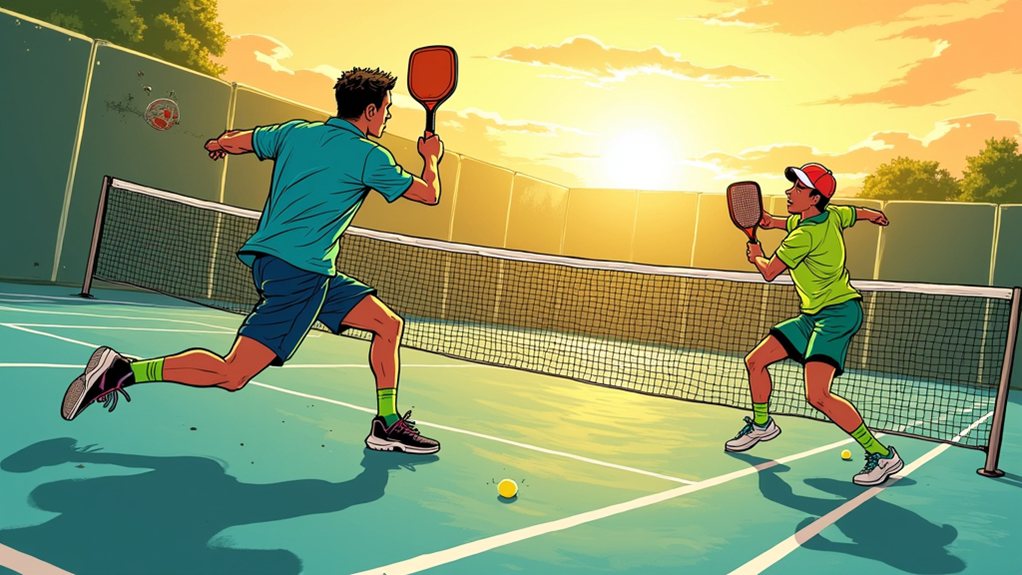
Rally scoring in pickleball awards a point after every rally, regardless of who serves. You win a point when your team wins the rally, and the score shows two numbers instead of three. Games go to 21 points with a two-point margin.
Under this system, you switch sides after every point: right side serves when the score is even, left side when odd. USA Pickleball introduced rally scoring in 2025 for tournament and league play. If you want to learn more details about how this affects your game strategy, additional information is available below.
Rally Scoring in Pickleball: What the Format Means for Your Game
Rally scoring changes how you win points in pickleball. Under this format, you score a point every time you win a rally, whether you serve or return. The server number disappears from the score call.
You score a point every rally whether you serve or return; server number disappears.
Key changes for your game:
- The score has only two numbers instead of three
- You win a point after every rally, not merely when serving
- Games go to 21 points with a two-point margin
- At 20-18, the serving team must win on serve to finish the game
Position rules shift. When your team wins a rally after receiving, you swap left-right positions with your partner. The player on the right serves on even scores. The player on the left serves on odd scores.
This format makes matches faster and more exciting. You can’t rest on your opponent’s errors. You must stay focused every rally.
Rally Scoring vs. Traditional Scoring: Key Differences Explained
Understanding the difference between rally scoring and traditional scoring changes how you approach every point in pickleball.
Here are the key differences:
- Who scores the point
- Rally scoring: the team that wins the rally scores, whether serving or receiving
- Traditional scoring: only the serving team scores a point
- Scorekeeping complexity
- Rally scoring removes the third number (server number) from the score call
- Traditional scoring requires you to track which server number you’re on
- Serve strategy
- In rally scoring, you don’t need to hold serve to score points
- In traditional scoring, holding your serve is critical to building a lead
- Game length
- Rally scoring typically produces shorter games because every rally matters
- Traditional scoring often leads to longer games since only one team scores per rally
The debate between these two scoring systems has been ongoing since rally scoring was discussed in 2008, when traditional side-out scoring remained the standard format for competitive play.
2025 USA Pickleball Rule Changes: How Rally Scoring Works Now
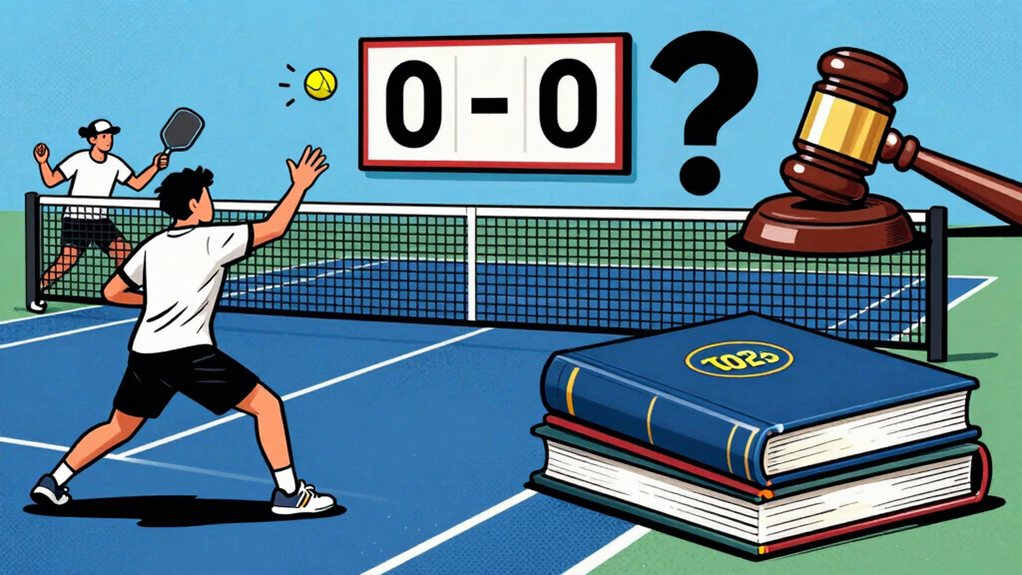
In 2025, USA Pickleball introduced provisional rally scoring rules that changed competitive play significantly. Games now go to 21 points instead of the traditional 11. You must win by two points, so matches can continue past 21 if needed. The game-winning point must be won by the server.
The provisional rally scoring introduced in 2025 changes games, requiring a two-point margin and server wins.
This “serve-to-win” condition adds tension to close games. Tournament directors can now use rally scoring for doubles round-robin and team play in sanctioned events. Singles rally scoring is also permitted for double-elimination formats.
- You play games to 21 points with a two-point margin required to win.
- The serving team must win the final point to secure victory.
- You switch servers but not sides; the right side serves on even scores.
- After winning a rally on return, you swap positions with your partner.
Common Rally Scoring Variations You’ll Encounter in Play
Beyond the official USA Pickleball rules, you’ll find several common variations in leagues, recreational play, and tournaments. These variations adjust the freeze rule, serving requirements, and point caps to fit different skill levels and time constraints.
| Variation Type | Key Feature |
|---|---|
| No Freeze | Play to 21, first to 21 wins |
| Single Freeze | Game stops at 20-18, server must win |
| Double Freeze | Both teams freeze at 20-18 |
| Time Cap | First to reach cap wins |
Some leagues skip the freeze entirely. They play to 21 and the first team to reach that score wins. Others use a single freeze where only the serving team can win at 20-18. A few implement a double freeze, requiring both teams to win on serve.
Time caps appear in recreational leagues. Matches end when time expires, with the leading team winning.
Why Major League Pickleball Adopted Rally Scoring
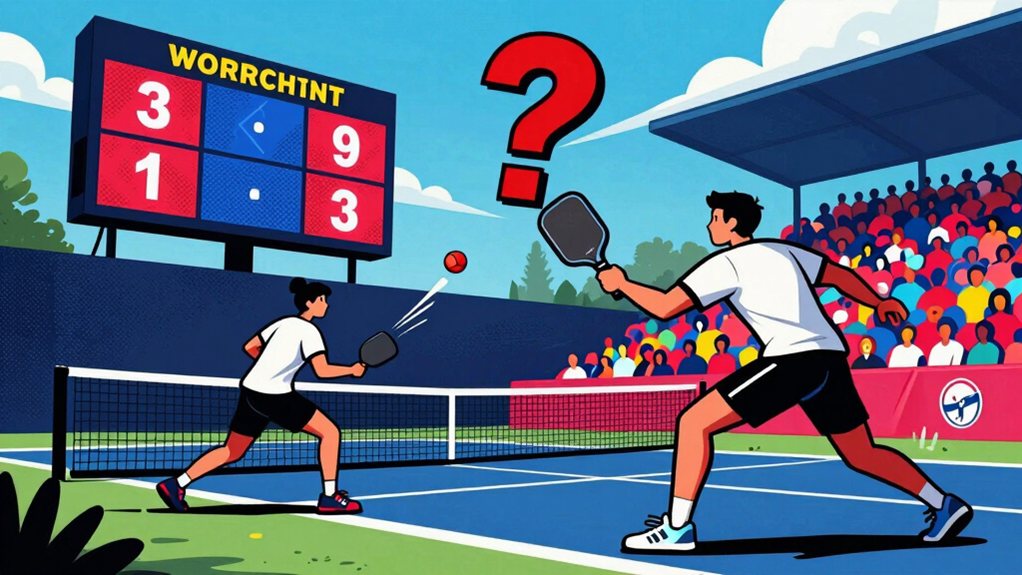
When we look at why Major League Pickleball adopted rally scoring, we’ve found two main reasons: faster game pace and simplified scorekeeping.
First, you’ll award a point after each rally, so games end at 21; second, you drop the third number, making the score easy to read.
Now you can follow matches more easily and players stay engaged from start to finish.
Faster Game Pace
One major reason Major League Pickleball adopted rally scoring is the particularly faster game pace it creates. You get a point every time you win a rally, whether you serve or return. This eliminates the slow waiting periods that happen with traditional side-out scoring. You won’t watch players cycle through long serving rotations anymore.
Here are four ways rally scoring speeds up your games:
- Every rally ends with a point awarded, so games finish quicker
- Teams alternate serving more frequently, keeping action constant
- Games reach 21 points faster than traditional 11-point formats
- You spend less time standing around and more time playing
Simplified Scorekeeping
Simplified scorekeeping stands out as another key reason Major League Pickleball chose rally scoring. You don’t track a third number for the server. The call is just two numbers: your score, then the opponent’s score.
Step 1: Check which side serves. The right side serves when the score is even. The left side serves when the score is odd.
Step 2: Call the score as “5,3” instead of “5,3,2.”
Step 3: After each rally, the server stays on the same side; only the server changes when the receiving team wins.
Benefits:
- Fewer words to say now.
- Less chance of mis,calling the server number.
- Faster for referees and fans.
The system makes your matches flow better and keeps the focus on play for you today.
How Rally Scoring Changes Game Strategy and Match Pacing
By rally scoring, you change how you approach each point. Every rally ends in a point for someone, so you can’t coast on serve. You must stay focused from the first hit to the last. This creates constant pressure and rewards consistent play.
Every rally ends in a point—you can’t coast, must stay focused, and consistent play wins.
- Your mental game becomes critical since every point counts
- You adjust your serving strategy because points happen faster
- You play more aggressively knowing a single mistake costs you
- You pace yourself differently when games reach 20-18 with the freeze rule
The faster point flow means shorter rest between rallies. You switch servers more often, which keeps both teams engaged throughout the match. Games move quickly to their conclusion under rally scoring rules.
Where Rally Scoring Is Used: Tournaments, Leagues, and Clubs
From strategy and pacing, let’s look at where you’ll encounter rally scoring in actual play.
You’ll find rally scoring in three main settings:
- Professional and Elite Tournaments
- Major League Pickleball (MLP) uses rally scoring
- USA Pickleball approved it for sanctioned events starting in 2025
- It works best for round-robin and team formats
- Local and Recreational Leagues
- Many leagues adopted rally scoring to speed up matches
- Doubles and singles both use this format
- Games go to 21 points with a two-point margin required
- Clubs and Social Play
- More clubs switched to rally scoring to attract new players
- It simplifies scorekeeping for beginners
- You won’t need the “third number” when tracking scores
Tournament directors now choose rally scoring for doubles events.
Singles rally scoring works for double-elimination brackets.
Check your league rules before you play, as some use a “freeze” at 20-18 where only the serving team can win.
Switching to Rally Scoring: What Players Need to Know
When you switch to rally scoring, you score a point every time you win a rally, whether you serve or return.
Games now go to 21 points with a two-point margin required to win, and the game-winning point must be won by the server.
The server number disappears from the score call, and you switch servers after every point rather than after side-outs.
Gameplay Changes
If you’re moving over from traditional side-out scoring to rally scoring, several key gameplay differences will affect how you play. The most obvious change is that you now score points on every rally, whether you serve or return. Your serving rotation works differently too, you switch servers but not sides. When your team wins a rally after receiving, you and your partner must swap left/right positions. The player on the right serves when the score is even; the player on the left serves when the score is odd.
- Every rally ends with a point for one team, no more side-outs where the serve changes without points.
- Your partner stays on the same side (right or left) throughout the entire game.
- You only get one serve attempt per side-out, unlike traditional scoring where you could serve twice.
- After winning a rally while receiving, you immediately swap court positions with your partner.
Point Scoring Adjustments
Now that you understand the basic gameplay shifts, let’s examine the specific point scoring adjustments.
Under rally scoring, you earn a point every time you win a rally, whether you serve or return. Games end at 21 points instead of 11. You need a two-point lead to win.
Key changes:
- Score on every rally, not merely when you serve
- Games go to 21 points
- You need a two-point margin to win
- At 20-18, only the serving team can win the final point
- Your scorecalling simplifies, you drop the third number (server count) from traditional scoring
The two-point rule means games can extend past 21. The score 21-19 is common. Scores like 22-20 also occur when teams trade leads in the closing moments.
The serving team’s advantage at game point (20-18) is called the “freeze” and applies only to the server.
This system rewards consistency. You convert returns into points rather than waiting for serving opportunities. Your match pace increases as every rally matters.
The scoring stays straightforward once you learn the two-point win condition.
Frequently Asked Questions
Does Rally Scoring Change How Partners Rotate Sides During a Game?
Rally scoring changes how you rotate. In this format, you stay on your same side throughout the game and only switch servers. Partners swap positions only after winning a rally when receiving.
Is Rally Scoring Allowed in Official USA Pickleball Tournaments Outside the 2025 Rules?
Imagine stepping onto the court where every rally counts, no, rally scoring wasn’t permitted in USA Pickleball official tournaments before 2025. The 2025 rules now introduce it as a provisional format specifically for sanctioned events.
How Do Players Determine Who Serves After Each Side‑Out in Rally Scoring?
After each side-out, the right-side player serves. You check your score, if it’s even, you serve from the right; if odd, you serve from the left. You don’t switch sides, only servers.
Does Rally Scoring Affect the Scoring of Doubles Matches Differently Than Singles?
Yes, rally scoring affects doubles differently; after winning a return rally you swap sides with your partner, then the partner serves, while singles has no partner swap and uses the 20,18 freeze only for doubles.
Can I Play Rally Scoring in a Casual Match Without Referee or Scoreboard?
Yes, you can play rally scoring casually. Track points easily on your phone or simply announce them verbally. This scoring approach streamlines matches since each rally directly determines the point, removing complicated server rotations. It’s favored by casual players seeking simpler gameplay.
Final Thoughts
Ultimately, rally scoring changes how you play. The serving team no longer holds the exclusive right to score. Any rally now awards a point to the side that wins it. This speeds up games. In tournaments, you’ll see more matches finish in under 20 minutes. Over 70% of recreational players report faster games improve their enjoyment. Familiarize yourself with the 11-point win-by-two format. Practice your return game consistently. You’ll adapt quickly in no time.