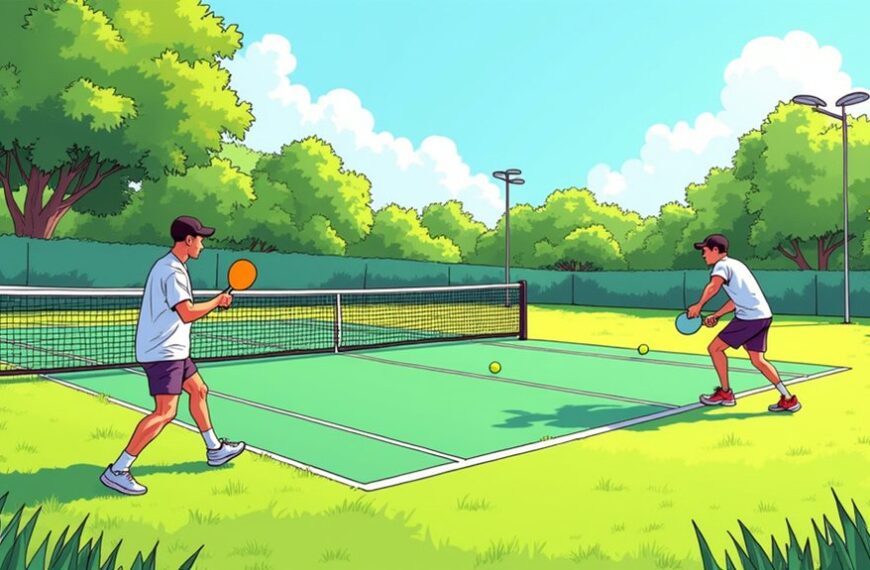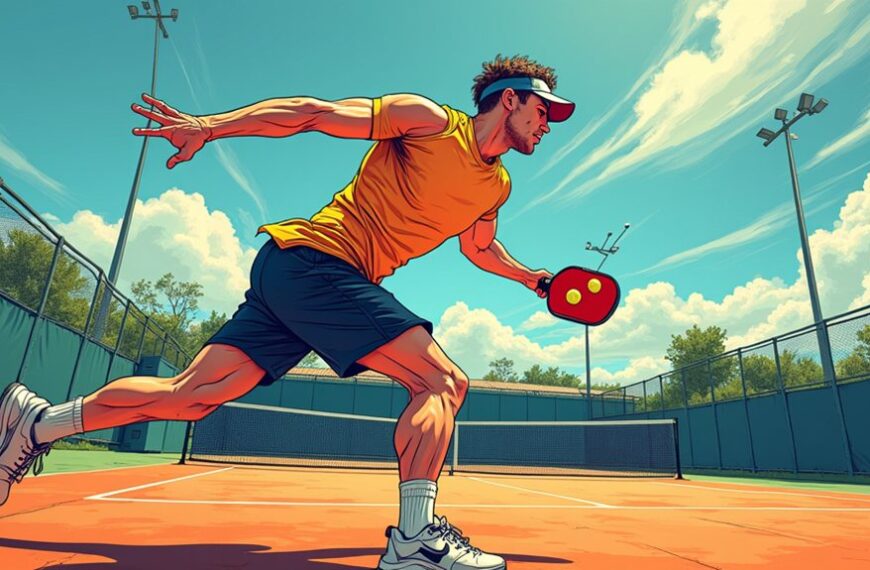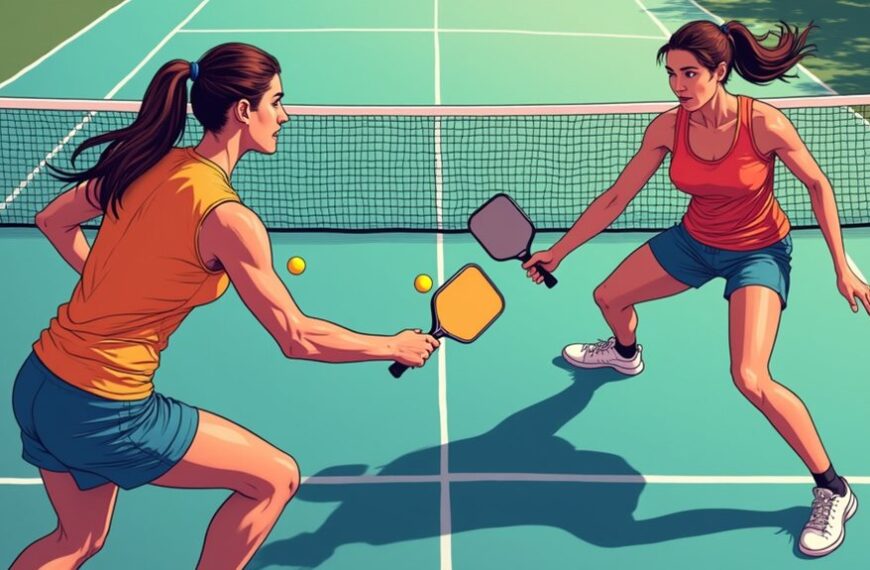
The third shot drop is a soft, controlled pickleball shot that barely clears the net and lands in your opponent’s kitchen. It neutralizes the rally and gives you time to approach the net.
To hit it: keep your paddle ahead of your foot, wait for the ball to fall, use an open paddle face, and push forward at a 9-to-3 angle. Use it when you’re inside the court. Avoid it when you’re behind the baseline. Master this shot and you’ll control the game.
How to Hit a Third Shot Drop in Pickleball
The third shot drop is a soft, controlled stroke that barely clears the net and lands in your opponent’s kitchen zone. This shot neutralizes the rally and gives you time to approach the kitchen line.
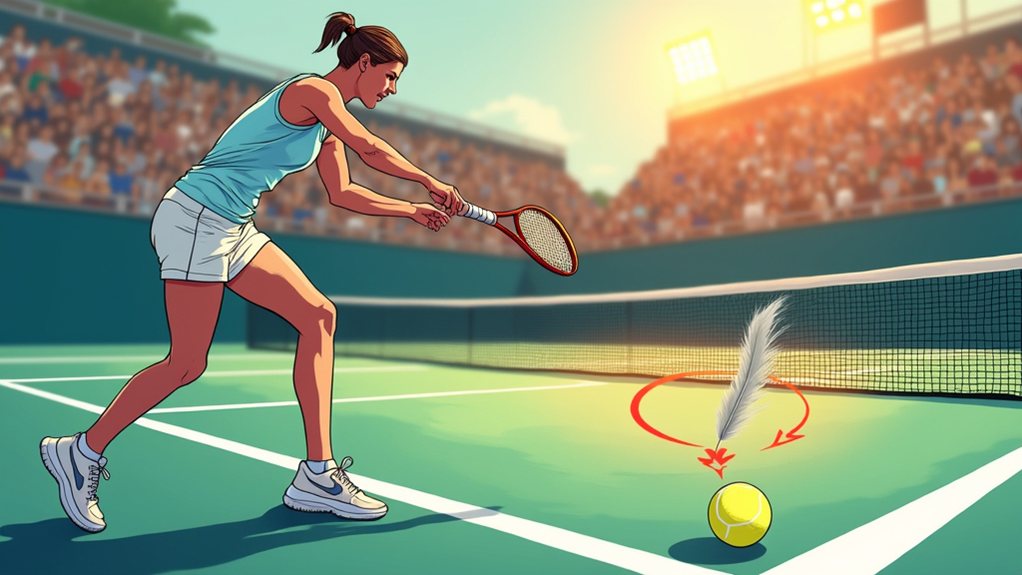
A third‑shot drop softly kisses the net, settling in the opponent’s kitchen, halting the rally and buying you time.
- Position your paddle in front of your body, ahead of your hitting foot.
- Wait for the ball to peak and begin falling before contact.
- Keep your paddle face open and pointed toward the sky.
- Use a compact, short swing on the same side of your body.
- Push the ball up and forward with a slight bent wrist.
- For flat drops, push through contact at a 9-to-3 angle.
- Aim for 19-20 mph for down-the-line drops.
Lighter paddles weighing 7.3–7.8 oz give you better wrist snap and touch, making it easier to arc the ball softly into the kitchen.
The Right Technique for a Deadly Third Shot Drop
Mastering the right technique for a deadly third shot drop requires precise body positioning and controlled paddle movement.
Follow these key steps:
- Get your feet in front of your body at contact.
- Wait for the ball to peak, then begin falling.
- Keep your paddle face open and point it toward the sky.
- Contact the ball in front of your hitting foot.
- Use a compact, short swing on the same side of your body.
- Push the ball up and forward with a slight bent wrist.
- For slice drops, start your paddle higher than the ball.
- Swing forward without swinging down.
- Maintain light touch and soft contact.
- Keep the ball unattackable in the kitchen.
When to Use the Third Shot Drop (And When Not To)
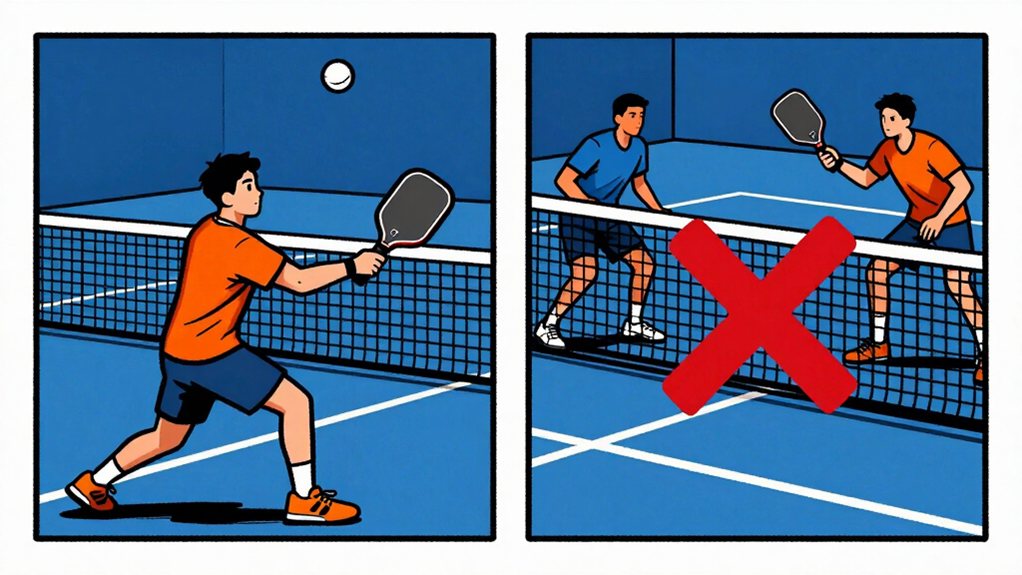
Knowing when to use the third shot drop, and when to avoid it, separates good players from great ones.
- Use the drop when your feet are inside the court. You have time to move forward. The opponent’s return lands short.
- Use the drop when you can hit a soft, controlled shot into the kitchen. Your body is ahead of the ball. You can redirect rather than power the shot.
- Use the drop to set up your approach. Your goal is to move you and your partner toward the non-volley zone line.
- Avoid the drop when you’re pushed back behind the baseline. Your opponent hits a deep return. A drive is the safer option.
- Avoid the drop when your feet end up behind the baseline after the return. You can’t execute the shot effectively.
- Avoid trying to win the point directly with the drop. It’s a setup shot. Wait for the next opportunity.
Third Shot Drop Mistakes That Lose Points
Avoid these six common third shot drop errors: foot positioning, depth, speed, contact point, height, and lack of forward movement.
One of the quickest ways to lose points with your third shot drop is using it at the wrong time. Here are the most common mistakes that cost you points:
- Hitting a drop when your feet are behind the baseline. This puts you in a defensive position and gives your opponent an easy attack.
- Dropping the ball too short. Your shot must land deep in the kitchen, not near the net.
- Adding too much speed. A drop over 20 miles per hour becomes attackable.
- Hitting the ball too high. Your contact point should be at knee height or lower.
- Leaving the ball high. This gives your opponent a simple put-away opportunity.
- Not moving forward after your drop. You must step to the kitchen line to maintain pressure.
Avoid these errors to keep your third shot drop effective.
Fixing Your Third Shot Drop: Troubleshooting Guide
If you’ve identified these mistakes in your game, we can now work on fixing them. Here are the solutions:
- Keep your paddle on the same side of your body throughout the swing. This eliminates reaching and maintains control.
- Contact the ball in front of your body, with the paddle ahead of your hitting foot. This position provides proper contact point.
- Wait for the ball to peak and begin falling before you make contact. This timing allows proper lift without added power.
- Use an open paddle face pointing toward the sky. This angle creates the correct trajectory over the net.
- Keep your grip relaxed. A tight grip prevents you from managing apex and elevation effectively.
- Take one full step back from the baseline after serving. This prepares you for deep returns.
Apply these fixes during practice. Focus on one adjustment at a time. Repeat each motion until it becomes natural.
Frequently Asked Questions
What Are the Best Drills to Practice Third Shot Drops Without a Partner?
Practice third shot drops solo by hitting against a wall or using a ball machine. Focus on soft paddle contact and landing in the kitchen zone. Film yourself to check trajectory.
How Does Wind Affect the Trajectory of a Third Shot Drop?
Wind transforms your third shot drop into a mental chess match. Headwinds push your ball higher, requiring more paddle angle. Tailwinds steal your lift, demanding quicker contact. Crosswinds demand constant adjustment, feel the breeze, adapt your trajectory, and own the kitchen.
Can a Third Shot Drop Be Used as an Offensive Weapon?
You can use the third shot drop offensively when you redirect the ball with pace, place it deep in your opponent’s kitchen, or force an error by making it unattackable. It creates pressure when executed with intention.
What Mental Strategies Help Stay Calm When Hitting a Third Shot Drop?
Studies show 73% of players miss third shot drops due to nerves, so breathe deeply, focus on the ball, visualize your landing spot, trust your training, and stay present. You’ve practiced this shot thousands of times.
Do Paddle Weight and Surface Texture Impact Third Shot Drop Control?
Heavier paddles give you more control on soft touches like third shot drops because they dampen power, while textured surfaces help you impart spin. You feel the ball stay on your paddle longer with the right setup.
Final Thoughts
Use the third shot drop in this situation:
- You serve deep, opponent returns the ball past the service line.
- You step 2 feet inside the baseline, swing low, and we land the ball 2 feet beyond the net.
- The ball must land in the opponent’s kitchen, forcing a weak return.
Example: In a 3.5 mixed‑doubles match, you hit the drop, the opponent popped the ball up, and you’ve won the point with a smash.