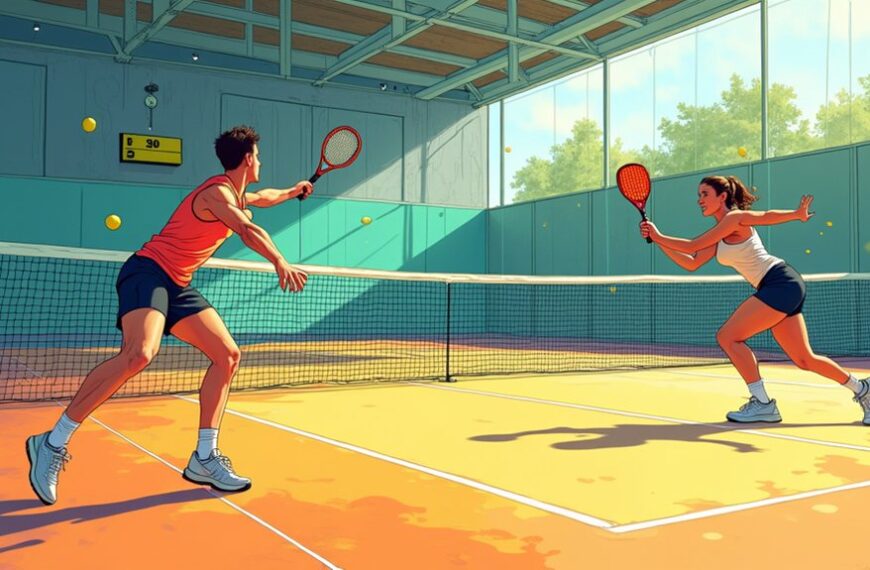
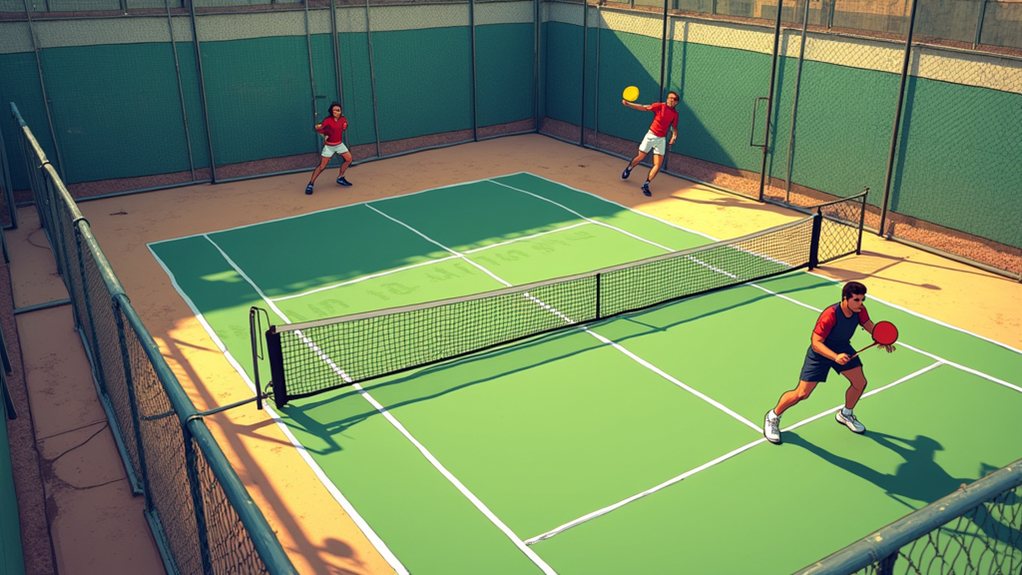
Padel is a racket sport played on a 20m x 10m enclosed court with an 88cm high net at center. You serve underarm, drop the ball so it bounces once, then strike it at or below waist height into the diagonal service box. Keep one foot on the ground and do not touch the service line.
Points follow tennis scoring: 15, 30, 40, game. At deuce (40-40), you need a two-point advantage to win the game. A set is won by reaching six games with at least a two-game lead, and matches are best of three sets.
The ball stays in play after bouncing off side walls, and you can volley during play but not on serve. Mastering these fundamentals will give you a solid foundation for playing padel.
What Is Padel? A Beginner’s Overview
Padel is a racket sport that blends elements of tennis and squash. You play it on an enclosed court with walls you can use during play. The game uses a solid paddle racquet with holes and a low-bouncing ball.
Here’s what makes padel unique:
- Two to four players compete in doubles format
- The ball stays in play after hitting walls and fences
- You serve underarm and the ball must bounce once before hitting
- Points follow tennis scoring: 15, 30, 40, game
- The match ends when a team wins two out of three sets
- The net stands 88 centimeters high
- Glass walls surround the play area
- Back walls measure 3 meters high
Unlike tennis, padel uses a solid paddle racquet with no strings, similar to the solid-faced paddles used in pickleball that typically weigh between 7 and 16 ounces.
You quickly discover why padel grows worldwide. It combines strategy, physical movement, and social interaction in one exciting sport.

Green-Round shaped Design: Ideal for beginners, the enlarged sweet spot centered on the racket provides exceptional flexibility in handling, delivering high playability even for entry-level players.

Light power for casual and advanced players

USAPA Approved Pickleball Paddles: This pickleball paddles set of 2 is approved by USA Pickleball (USAPA). Each paddle carries the official USAPA approval label for high safety and professional quality, and the set can be used in tournaments.
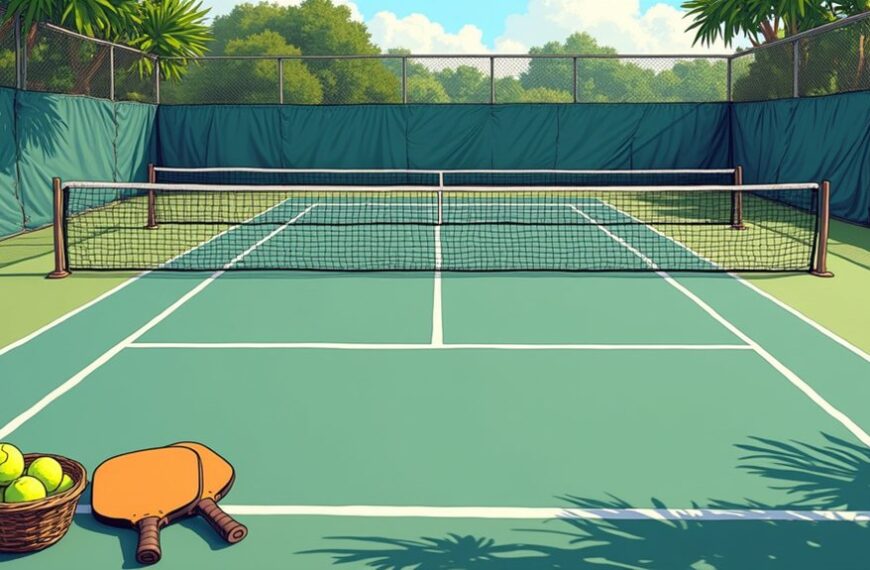
Padel Court Dimensions and Layout
The court serves as your playing canvas, and getting familiar with its dimensions helps you move and position yourself effectively.
- Court size: 20 meters long by 10 meters wide.
- Net divides the court into two equal halves; it stands 88 cm high at the center.
- Glass walls surround the court; they reach 3-4 meters in height.
- Back walls feature 3-meter-high glass panels with mesh fencing above.
- Service boxes are marked 6.95 meters from the net on each side.
The layout includes:
- Two service boxes per side.
- Service lines marking the boxes.
- Clear boundaries defined by glass and mesh.
You position yourself within these boundaries during play.
The walls become part of the game once the ball bounces.
How to Serve in Padel: Rules and Technique
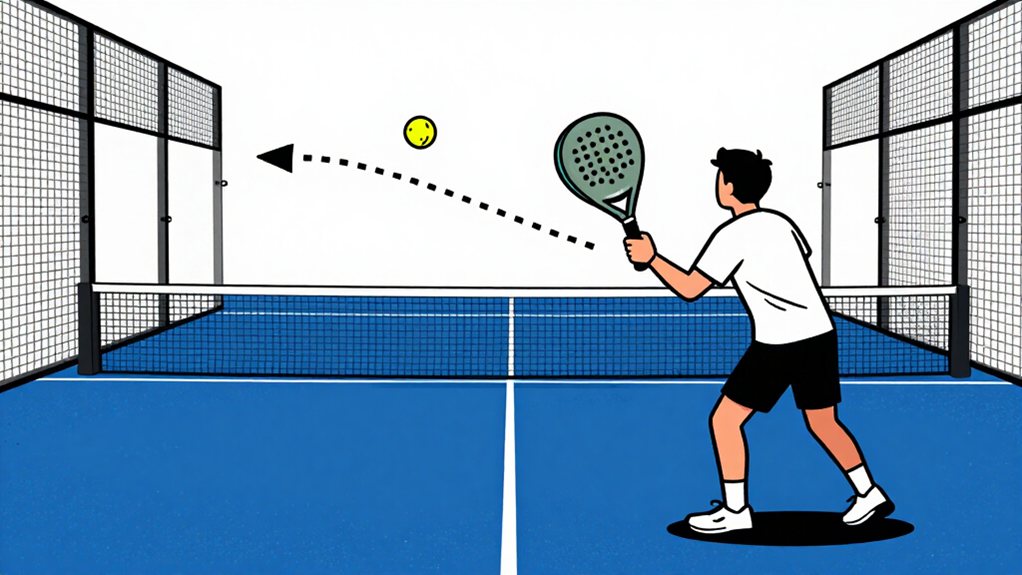
Ready to learn how to serve in padel? Follow these steps to master the serve.
- Stand behind the service line in the right court. Keep one foot on the ground. Don’t touch the service line with your feet.
- Drop the ball and let it bounce once on your side of the court.
- Hit the ball at or below waist height. Use an underarm motion.
- Aim diagonally into the opponent’s diagonal service box.
A valid serve bounces in the correct box, even if it hits a wall after bouncing.
The serve faults if it bounces and then hits the fence.
You receive two attempts per serve; your first fault grants you a second chance.
Safety matters: always keep your wrist strap secured on your racquet.
Padel Scoring: How Points, Games, and Sets Work
After you master the serve, let’s move to how points are counted. Padel uses the same scoring system as tennis.
Scoring in padel mirrors tennis: love, fifteen, thirty, forty—and the drama of deuce.
Points progress in this sequence: 0 is called “love,” 15 is the first point, 30 is the second, and 40 is the third. You win a game when you score one more point after reaching 40.
When both players reach 40-40, this is called “deuce.” From deuce, you need two consecutive points to win the game. The first point gives you “advantage.” If you win the next point, you take the game. If your opponent wins, you return to deuce.
You win a set by reaching 6 games with at least a 2-game lead. If the score reaches 6-5, you must win 7-5.
A match consists of best of 3 sets. The server changes sides after each point.
Ball in Play: Wall Play, Volleys, and Ground Rules
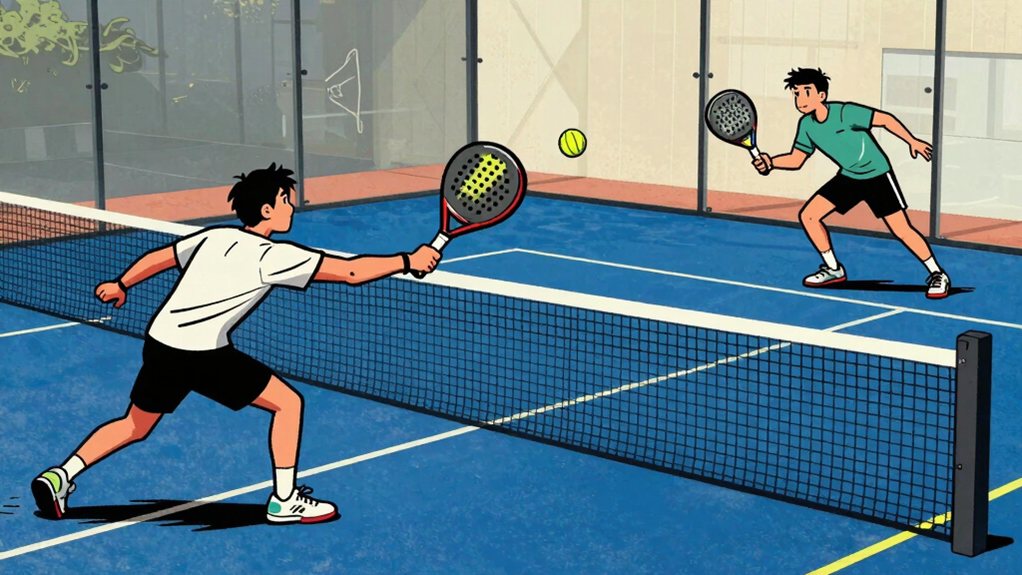
When the ball bounces on your side, you can use the walls to return it.
You have two wall‑play options: 1) hit after it bounces off the back wall, 2) use the side wall after the bounce.
You can also hit a volley, but you can’t volley on the serve.
Wall Play Basics
Understanding wall play fundamentals is important because the walls are always in play during padel. After the ball bounces on your side, you can hit it off a wall. The ball must touch the ground before hitting any wall; hitting a wall from the air isn’t ever allowed.
Use the back and side walls to extend rallies and angles. Stay near the baseline to cover rebounds.
- Ball must bounce on your side before you can use a wall.
- You can hit the ball off any wall on your side after it bounces.
- The ball can go off the back wall and stay in play if it lands inside the court.
- If the ball hits the ground twice on your side, you lose the point.
Volley Techniques
Mastering the volley gives you a decisive advantage at the net. When you volley, you hit the ball before it bounces.
This technique keeps pressure on your opponents and prevents them from using walls effectively.
Key Volley Techniques:
- Position yourself close to the net, about 2-3 meters from the baseline.
- Keep your racquet back and ready.
- Swing short and compact.
- Aim for open spaces away from opponents.
- Use wrist stability to control direction.
Remember: You can’t volley on the serve.
Volleys work best when the ball comes high or at your body.
Practice redirecting pace rather than creating your own power.
Your footwork determines volley success.
Move your feet to get behind the ball every time.
Common Padel Faults That Lose Points
Watch for these five common faults that will cost you points during padel play. These rule violations happen often in matches. You must avoid them to keep your scoreboard clean.
- Touching the net with your body or racquet causes an immediate point loss.
- Double-hitting the ball or hitting it before it crosses the net results in a fault.
- If the ball hits your opponent or teammate while in play, you lose the point.
- Hitting the ball over the net before it contacts your side of the court is a fault.
Stay focused. Practice proper technique. Keep your racquet on your side of the net.
Essential Padel Equipment You’ll Need
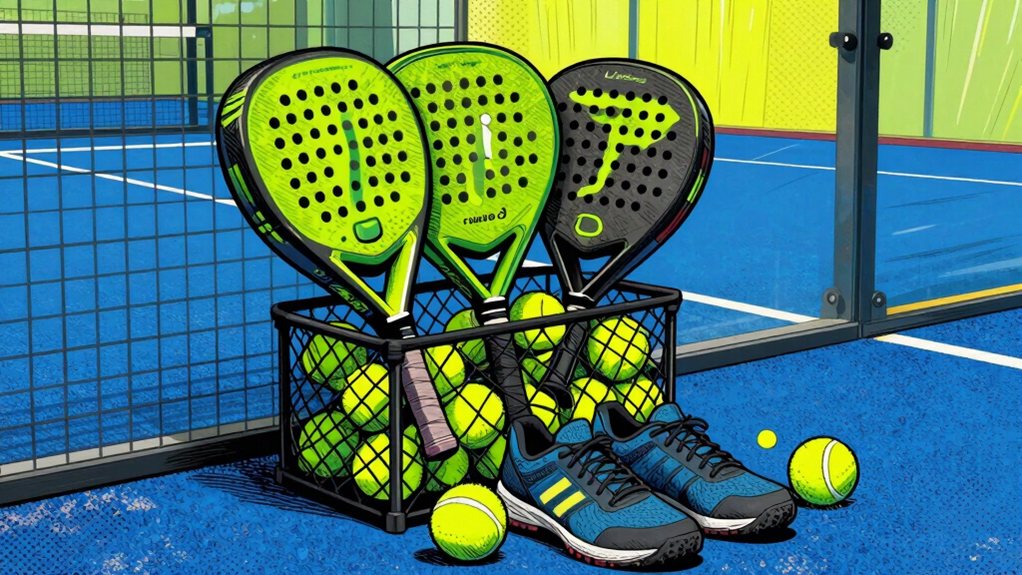
You’ll need the right equipment to play padel properly, starting with your racquet and shoes.
Your padel racquet weighs between 350 and 390 grams, features perforated holes instead of strings, and must have a wrist strap for safety.
You also need proper court shoes with good lateral support and grip.

IMPRESSIVE DURABILITY: Functional and extra resistant, the Babolat Court Padel Ball is one of the best balls currently available.

Better Together On Court padel tennis design featuring two padel rackets, two yellow balls and a sunset outdoor court with bold retro lettering celebrating teamwork and doubles matches.

DESIGNED FOR PADEL: Crafted for padel enthusiasts seeking convenience, the Babolat Court S Padel Bag features a compartment tailored to accommodate two padel rackets alongside a divider. With this bag, you can neatly store your rackets, organize your essentials, and transport all the necessary equipment and accessories to excel on the court.
Racquet Requirements
Racquet Requirements
Because padel uses a unique racquet design, you’ll need specific equipment to play properly. The racquet is solid, has no strings, and is shorter than a tennis racquet. It weighs between 350 and 390 grams, which gives you a stable swing.
Your grip size matters because a proper fit prevents slipping. The wrist strap must be securely fastened to avoid injury. Replace the overgrip when it loses tackiness to maintain control. Check the strap before each rally.
- Weight: 350,390 grams.
- Head: solid with many perforated holes, no strings.
- Grip: choose correct size, use wrist strap for safety.
- Maintenance: replace overgrip when worn, check strap before each session.
Choosing the right racquet helps you control the ball and enjoy the game.
Footwear Essentials
Choosing proper footwear is fundamental for playing padel safely and effectively. You need shoes that give you grip, stability, and ankle support on the glass-covered court. Test the shoes on a trial run before you’re committed. Make sure they’re really comfortable and allow quick direction changes.
- Non-marking rubber soles for indoor surfaces.
- Sturdy ankle collar to prevent twists.
- Low-profile design for quick lateral moves.
- Wear moisture-wicking socks to keep feet dry and reduce blisters.
- Place your foot on a flat surface.
- Check for a thumb’s width between your longest toe and the shoe tip.
- Lace the shoe snugly; the heel shouldn’t ever slip.
Replace shoes every 6-12 months if the tread’s worn down. Clean soles before each match to maintain traction. Check shoes after session.
How Padel Differs From Tennis?
Padel and tennis share the same scoring system, but they differ in several important ways. In padel, you play on a smaller court enclosed by glass walls and mesh fencing. These walls become part of the game. You can hit the ball after it bounces off the walls on your side.
The walls extend the playable area beyond the baseline.
- Court size: Padel courts measure 20 meters by 10 meters. Tennis courts are larger at 23.77 meters long and 10.97 meters wide for doubles.
- Racquets: Padel racquets are shorter, solid with perforated holes, and have no strings. Tennis racquets are stringed and longer.
- Serving: You serve underarm in padel, bouncing the ball before hitting it below waist height. Tennis allows overhead serves.
- Wall play: The ball stays in play after hitting walls on your side of the court. In tennis, the ball is dead after hitting the back fence or walls.
Padel Strategy: Basic Tactics for Beginners
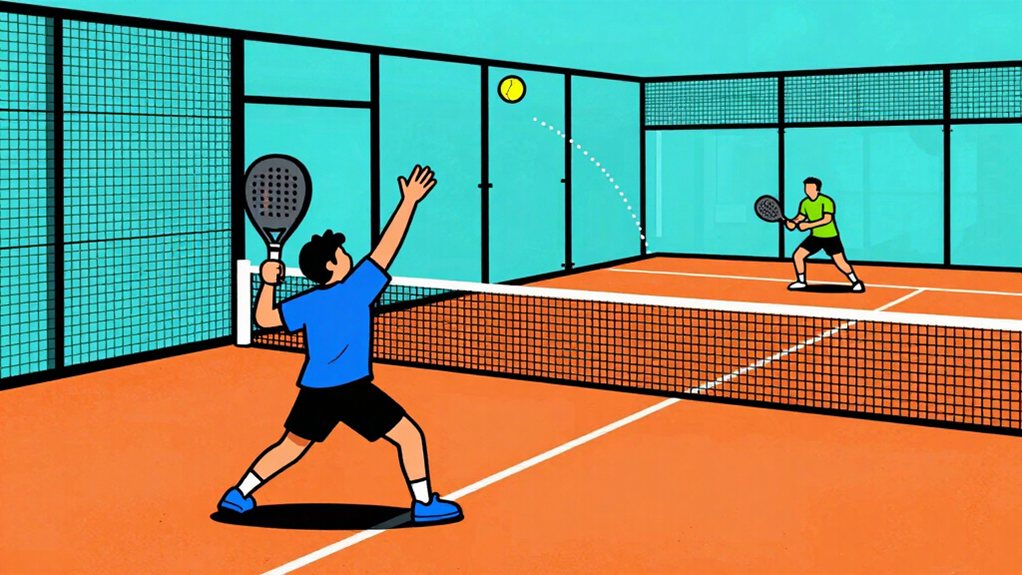
Now that you understand how padel differs from tennis, let’s cover basic tactics to help you play effectively.
Positioning and Movement:
- Stay near the net with your partner to control the court
- Move together as a unit when one of you advances
- Use the walls strategically; bounce shots off the back glass
Shot Selection:
- Hit lobs over opponents to force them back
- Use volleys when you reach the net
- Aim for the corners to open the court
| Tactic | Purpose |
|---|---|
| Net Play | Controls the point |
| Lob Shot | Creates space |
| Wall Use | Extends rallies |
Keep your racket up and anticipate your opponent’s next shot. Practice these tactics during every match session.
Quick Reference: Key Padel Rules Summary
Now let’s look at the key serving rules and scoring system in padel. You must serve underarm, bounce the ball once, and hit it at or below waist height.
We serve diagonally from the right service court into the opponent’s diagonal box, and we get two attempts per point.
Serving Rules
- Underarm serve; bounce ball once before hitting.
- Hit at or below waist height.
- Serve diagonally from right service court to opponent’s diagonal box.
- Keep at least one foot on ground; don’t touch service line.
- Two attempts per serve; first fault allows second.
- Ball is valid if it bounces in the service box, even if it hits a wall after; fault if it hits the fence after the bounce.
Scoring System
- Points: 15, 30, 40, game.
- Win a set with 6 games and at least a 2‑game lead.
- Match is best of 3 sets.
- Use advantage rule after deuce.
- Server alternates sides after each point.
Serving Rules
In padel, you must serve underarm. You bounce the ball once before hitting it at or below waist height. You serve diagonally from the right service court into your opponent’s diagonal service box.
- Keep at least one foot on the ground and don’t touch the service line when you serve.
- You get two attempts per serve; a first fault gives you a second chance.
- Your serve is valid if it bounces in the correct box, even if it hits the wall after.
- Your serve is a fault if it bounces and then hits the fence before landing in the box.
Scoring System
Typically, padel uses the same scoring system as tennis. You score points in this order: 15, 30, 40, then game.
- Point progression is 15, 30, 40, game
- Win a set with 6 games and a 2-game lead
- Play best of 3 sets
- At deuce, you need a 2-point advantage to win
- Alternate serving sides after each point
You win a set when you reach 6 games with at least a 2-game lead. If the score reaches 5-5, you continue until one player leads by 2 games.
At deuce (40-40), you must win two consecutive points to win the game.
The server alternates between the right and left courts after each point.
A match consists of the best of 3 sets, and the first player to win 2 sets takes the match.
Frequently Asked Questions
How Long Does a Typical Padel Match Last?
A typical padel match lasts between 45 and 90 minutes, you’ll usually finish a three-set match in about an hour if you play fast, especially when players take longer breaks between points and intense rallies.
Is Padel Played Indoors or Only Outdoors?
You can play padel both indoors and outdoors, though indoor courts with climate control are increasingly popular because they let you play year-round regardless of weather conditions, while outdoor courts offer a more traditional experience.
Are There Any Age Restrictions for Playing Padel?
Over 10 million players worldwide enjoy padel with no strict age limits, you can start as young as 8 with proper supervision. Most clubs welcome children and seniors, making the sport accessible for your entire family to play together.
Is There a Tie-Break Rule in Padel Sets?
In padel, there is no tie-break rule. If the score reaches 6-6 in a set, you continue playing until one team gains a clear two-game lead. This means sets can extend indefinitely, potentially lasting much longer than in tennis.
Do I Need Special Footwear to Play Padel?
Yes, you need proper padel shoes with good lateral support and grip on artificial turf. Running shoes lack stability and damage the court, increasing injury risk during quick direction changes.
Final Thoughts
Padel provides a quick, exciting sport. Practice, patience, and perseverance pay off. Use these steps to sharpen your game:
- Serve underhand, keep feet behind the service line.
- Let the ball bounce once, then use walls to return.
- Score points, win games, and win sets; first to six games with a two-game lead wins the set.
Let’s play consistently, respect the rules, and enjoy the social side of padel. You’ll improve with practice.